
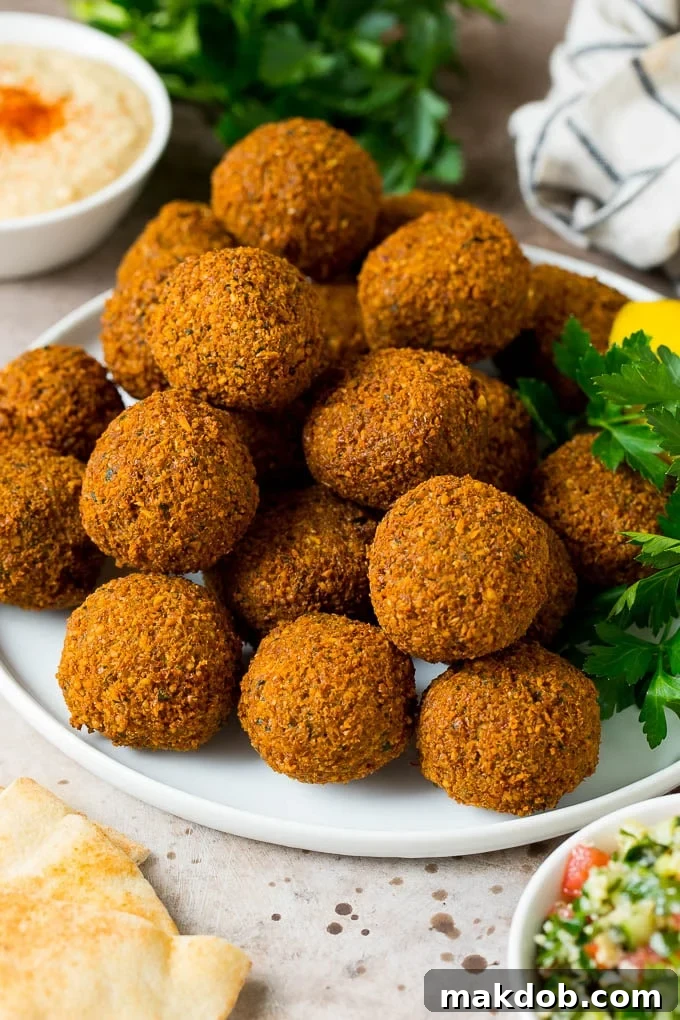
Unlock the secret to restaurant-quality falafel right in your own kitchen! This exceptional falafel recipe features dried chickpeas, a vibrant blend of fresh herbs, and an aromatic symphony of spices, all expertly combined and then fried to golden-brown, crispy perfection. Prepare yourself for a classic, authentic flavor and texture that truly surpasses anything you’ll find in a restaurant.
As a passionate enthusiast of Mediterranean cuisine, I frequently delve into making my favorite dishes at home. From a velvety, ultra-creamy hummus to tender, spiced chicken shawarma, my kitchen is often filled with the tantalizing aromas of the Middle East. Among these culinary treasures, this particular falafel recipe holds a special place, and in my humble opinion, it truly stands as the absolute best falafel you will ever taste. It’s a culinary journey worth taking, bringing vibrant flavors and satisfying textures directly to your dining table.
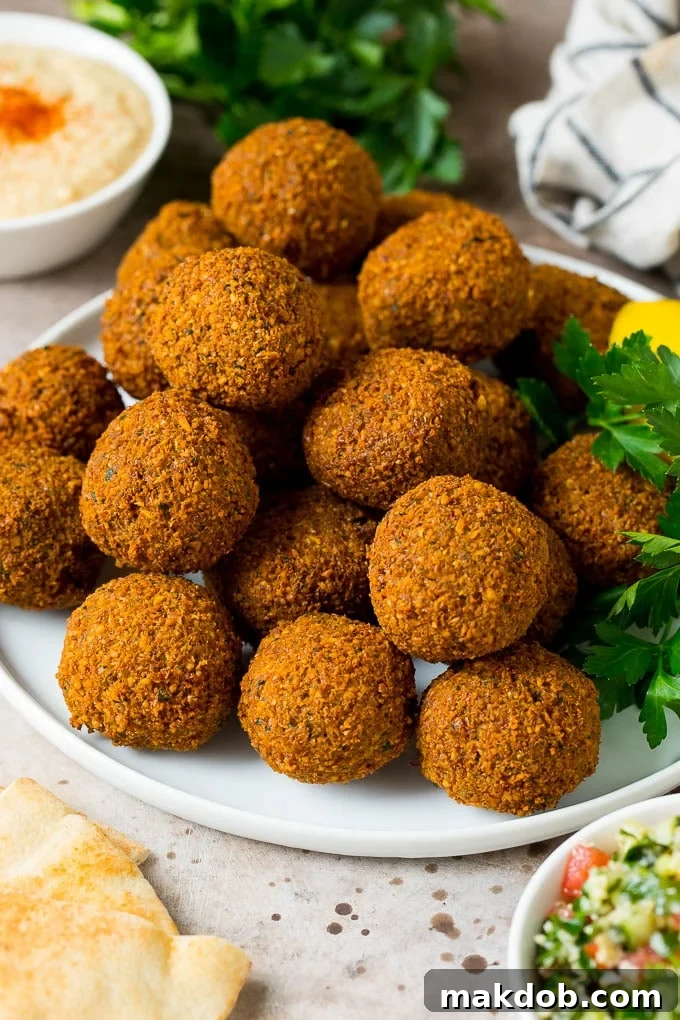
There’s an undeniable allure to falafel. That irresistible combination of a gloriously crunchy exterior and a soft, incredibly flavorful interior is something I simply cannot resist. Whether I’m dining out at my favorite local Mediterranean eatery or preparing a feast at home, falafel is always a must-have on my order list. What’s even more delightful is that this wholesome dish is adored by everyone in my family, including my children! The good news is that crafting this delectable treat yourself is surprisingly straightforward, yielding consistently fabulous results every single time. Homemade falafel offers an unmatched freshness and allows you to tailor the flavors precisely to your liking, making it a truly rewarding culinary endeavor.
Why Make Falafel at Home? The Authentic Difference
While store-bought or restaurant falafel can be good, making it from scratch offers several distinct advantages. Firstly, you have complete control over the quality and freshness of your ingredients, ensuring a healthier and more vibrant dish. Secondly, the texture of homemade falafel, particularly when made with dried chickpeas, is unparalleled – a truly crispy crust encasing a fluffy, aromatic interior. Many commercial falafel mixes or ready-made versions often use pre-cooked or canned chickpeas, which can result in a denser, less authentic texture. By taking the time to soak and grind your own dried chickpeas, you tap into the traditional method that delivers superior results every time. It’s also incredibly satisfying to serve a dish that you’ve meticulously prepared from start to finish, filling your home with wonderful aromas and your family with delicious, wholesome food.
Essential Ingredients for the Perfect Falafel
The beauty of this classic Middle Eastern dish lies in its simplicity. You’ll find that the core ingredients are quite basic and often already present in a well-stocked kitchen, making it easy to whip up a batch whenever the craving strikes. However, choosing the right type of each ingredient is key to achieving that authentic taste and texture.
- Chickpeas (Garbanzo Beans): This recipe emphatically calls for dry, uncooked chickpeas. This is perhaps the most crucial element differentiating authentic falafel. The chickpeas undergo an extended soaking period (typically 24 hours) until they become adequately softened for grinding. This traditional technique is what imparts our falafel with its characteristic earthy flavor and wonderfully light, slightly crumbly interior texture. It is vital not to substitute canned chickpeas, as their pre-cooked nature will result in a mushy, undesirable consistency that will simply not hold up in this recipe.
- Fresh Herbs: A generous amount of fresh herbs is paramount for falafel’s signature vibrant green color and refreshing flavor. You can opt for fresh parsley, fresh cilantro, or an aromatic combination of both. I personally find that using both parsley and cilantro creates a more complex and beautifully balanced flavor profile. However, if you or your guests have an aversion to cilantro, using only fresh parsley will still yield a delicious result. These herbs are not merely garnish; they are central to the falafel’s identity.
- Aromatic Spices: The humble chickpea patties are transformed into a flavor powerhouse through a thoughtful blend of ground cumin, ground coriander, salt, and black pepper. These spices provide the warm, earthy notes that are characteristic of falafel. I also incorporate a touch of cayenne pepper to introduce a subtle warmth and delightful kick, though you can easily adjust this amount based on your personal preference for spiciness.
- Flavorful Vegetables: Fresh onion and garlic are fundamental to building the deep, savory base of the falafel mixture. There’s no need for laborious fine chopping here, as both vegetables will be thoroughly ground up along with the other ingredients in the food processor, distributing their pungent flavors evenly throughout the mixture.
- Leavening Agent (Baking Soda): A small amount of baking soda is a game-changer in this recipe. When combined with the lemon juice, it creates tiny air pockets within the falafel mixture during frying, resulting in a lighter, fluffier interior. It also contributes to the beautiful golden-brown color.
- Acid (Lemon Juice): Fresh lemon juice not only brightens the flavors but also activates the baking soda, aiding in the falafel’s airy texture.
- Cooking Oil: The final, essential step involves cooking the formed patties in oil until they are crispy and golden. For frying, select a neutral-flavored oil with a high smoke point. Excellent choices include vegetable oil, canola oil, or grapeseed oil, ensuring your falafel fries beautifully without imparting unwanted flavors.
Step-by-Step Guide: Crafting Your Own Authentic Falafel
Making falafel from scratch is a rewarding culinary process that, while requiring a bit of foresight for soaking, is relatively simple and incredibly satisfying. Follow these steps for the perfect homemade falafel:
- Soak the Chickpeas: Begin by placing the dried chickpeas in a large bowl. Cover them generously with cold water, ensuring there’s at least an inch or two of water above the chickpeas, as they will expand significantly. Let them soak for a full 24 hours at room temperature. During this period, check occasionally and add more water if the chickpeas absorb too much and become exposed. This crucial soaking process is what softens the beans sufficiently, preparing them to be ground into a coarse, workable paste. Do not skip or shorten this step, as it’s key to the authentic texture.
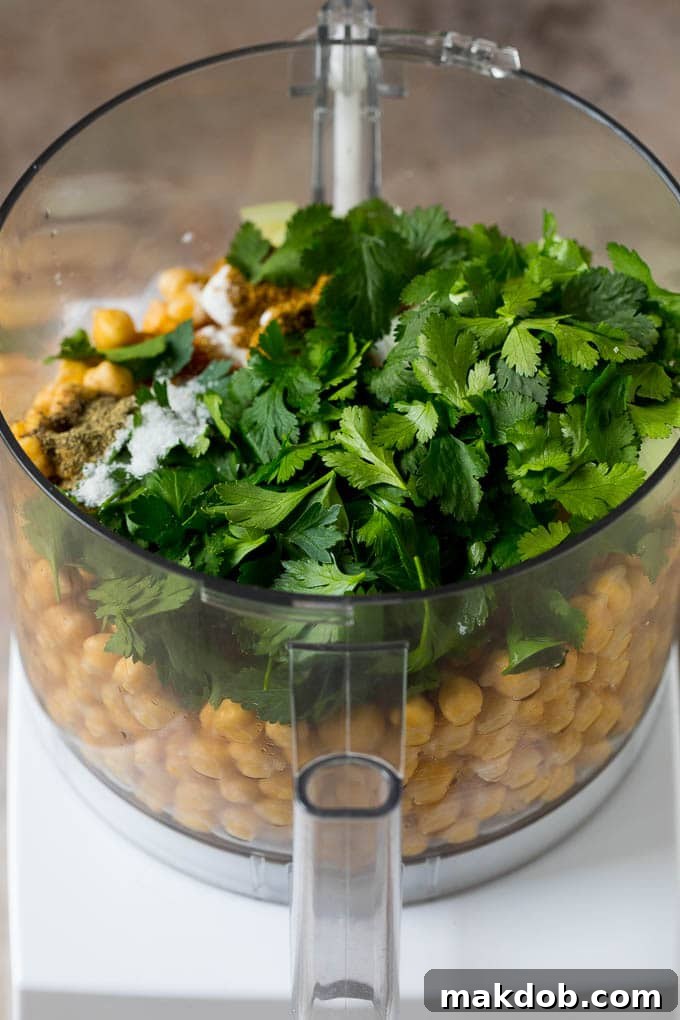
- Prepare the Mixture: After the chickpeas have soaked, drain them thoroughly. You don’t need to cook them further. Transfer the soaked and drained chickpeas into the bowl of a robust food processor. Add the peeled garlic cloves, coarsely chopped onion, ground cumin, ground coriander, cayenne pepper (to taste), fresh parsley leaves, fresh cilantro leaves, kosher salt, black pepper, baking soda, and lemon juice.
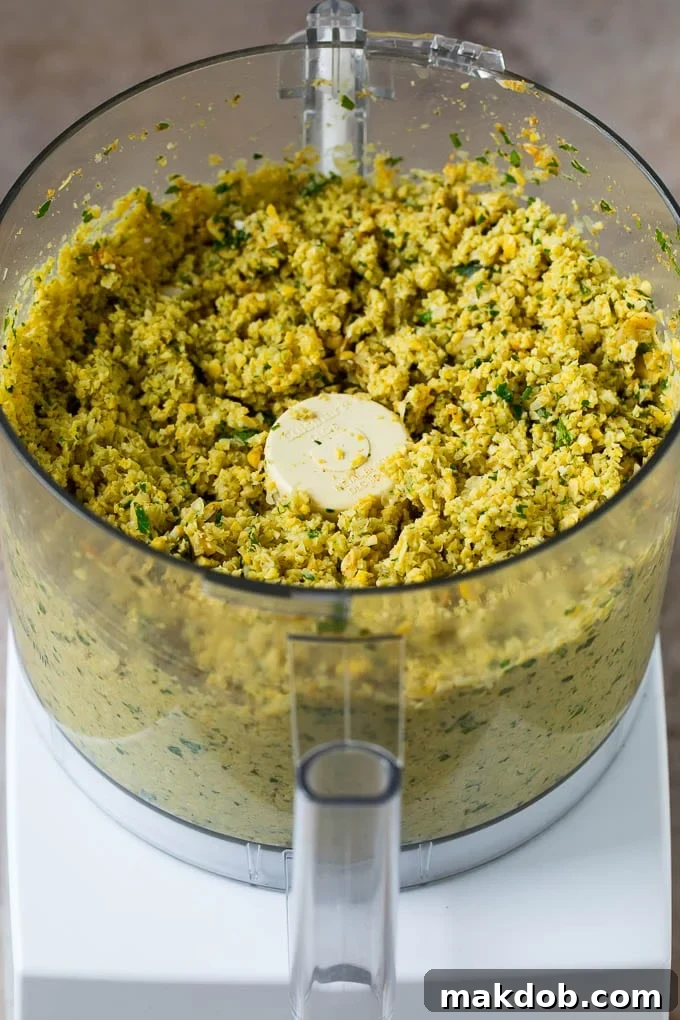
- Process to Perfection: Secure the lid on your food processor and begin to pulse the ingredients. Continue to process until a mostly smooth, yet still slightly coarse, paste forms. The mixture should hold together when pressed, but not be entirely puréed like hummus. You want some texture. If the mixture appears too dry and isn’t coming together, add water one to two teaspoons at a time, pulsing after each addition, until you achieve the desired consistency. Be careful not to over-process, as this can make the falafel dense.
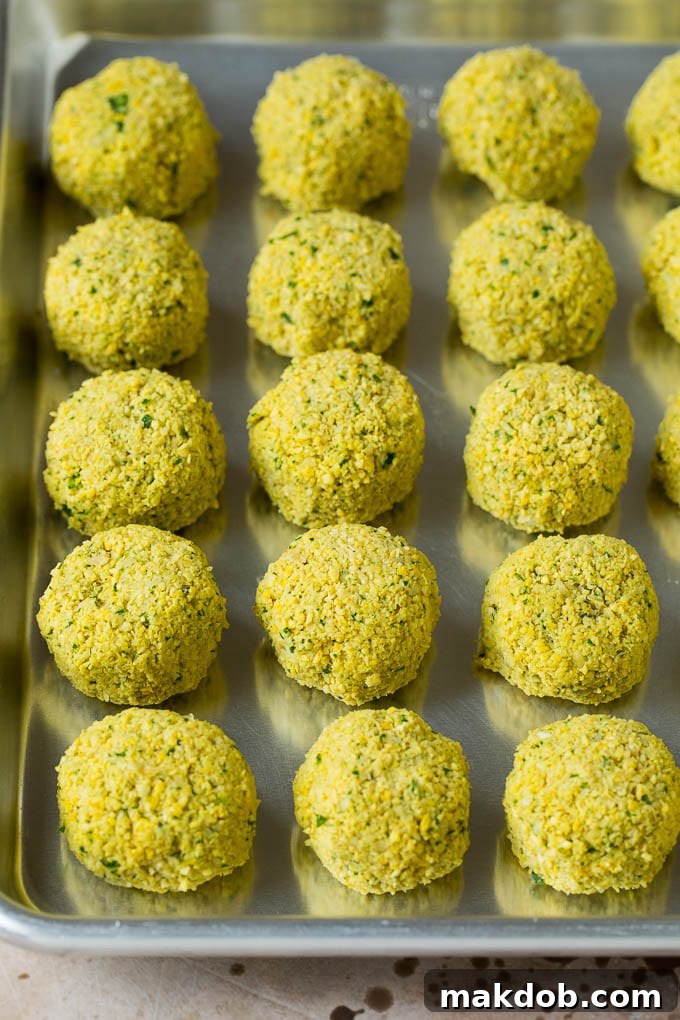
- Form the Patties: Once your falafel mixture is ready, it’s time to shape it. Using your hands, form the mixture into small patties or balls. I typically aim for shapes that are approximately 1 1/2 inches in size. Ensure they are compact enough to hold their shape during frying.
- Heat the Oil: In a large, heavy-bottomed pan or Dutch oven, heat about 1 inch of a neutral-flavored oil (like vegetable or canola) over medium-high heat. The oil should reach a temperature of around 350-375°F (175-190°C). If you don’t have a thermometer, you can test the oil by dropping a tiny pinch of the falafel mixture into it; it should sizzle and float to the surface immediately.
- Fry to Golden-Brown: Carefully place the falafel patties into the hot oil in a single layer, ensuring not to overcrowd the pan. Overcrowding will lower the oil temperature and result in greasy falafel. You will likely need to work in batches.
- Cook Until Crispy: Fry the falafel for 2-3 minutes per side, or until they are deeply golden brown and beautifully crispy on all surfaces.
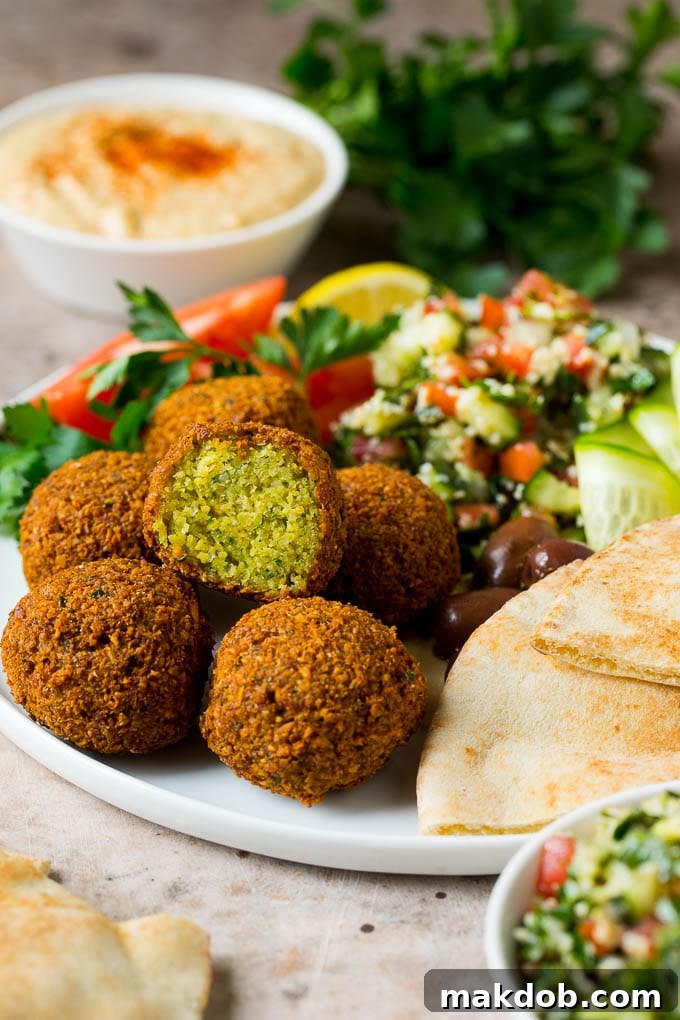
- Drain and Serve: Once cooked, use a slotted spoon to remove the falafel from the pan and transfer them to a plate lined with paper towels. This will help absorb any excess oil. Serve your homemade falafel immediately while they are still warm and at their peak crispiness. Enjoy the fruits of your labor!
Expert Tips for Falafel Perfection
Achieving truly spectacular falafel isn’t difficult, but a few key tips can elevate your homemade batch from good to absolutely phenomenal. Pay attention to these details, and you’ll be consistently churning out crispy, flavorful falafel every time.
- Shape Matters (or Not!): The beauty of homemade falafel is that you have creative control. You can form your chickpea mixture into traditional small balls, which are great for stuffing into pita bread, or into flatter patties, which tend to cook more evenly and offer more surface area for crispiness. I typically opt for balls or patties that are about 1 1/2 inches in size for optimal cooking and serving. Consistency in size ensures even cooking.
- Prepare Ahead: Life gets busy, but delicious meals don’t have to wait! The prepared falafel mixture can be made up to 8 hours in advance. Simply cover it tightly and store it in the refrigerator. When you’re ready to cook, shape the patties right before frying for the best results. This makes entertaining or weeknight meals much easier.
- Storage and Reheating: Leftover cooked falafel will remain fresh and delicious when stored in an airtight container in the refrigerator for up to 4 days. For longer storage, cooked falafel can be frozen for up to 2 months. To reheat, I recommend using an air fryer or oven at 350°F (175°C) until warmed through and crispy again. Microwave reheating is not advised, as it can make them soggy.
- Adjusting Consistency: If, after processing, you find that your chickpea mixture is too dry and isn’t holding together well to form patties, don’t despair! This is an easy fix. Add water, a teaspoon at a time, and pulse the food processor until you reach your desired sticky yet firm consistency. Conversely, if it’s too wet, you can add a tablespoon or two of chickpea flour or all-purpose flour to help bind it, though this is rarely needed if chickpeas are properly drained.
- Oil Temperature is Key: For perfectly crispy falafel that isn’t greasy, maintaining the correct oil temperature is vital. Too cold, and the falafel will absorb too much oil and become soggy. Too hot, and the outside will burn before the inside cooks through. Aim for 350-375°F (175-190°C). If you don’t have a thermometer, test a small piece of the mixture; it should sizzle immediately and float to the surface.
Exciting Flavor Variations to Explore
While the classic falafel recipe is undeniably fabulous as-is, one of the joys of cooking at home is the freedom to customize and experiment. Feel free to unleash your inner chef and introduce other ingredients to make the flavors perfectly suit your personal preferences.
- Bean Blends: For a slightly different flavor and texture profile, consider using a mix of beans. You can substitute half of the dry chickpeas with dry fava beans. This is a common practice in many traditional Middle Eastern falafel recipes, particularly Egyptian style falafel, which often features a higher proportion of fava beans.
- Elevated Seasonings: The world of spices is vast and wonderful! Beyond cumin and coriander, try incorporating other aromatic spices into your chickpea mixture. Sumac adds a tangy, lemony note, smoked paprika offers a subtle smoky depth, and za’atar (a Middle Eastern spice blend) provides a complex, herby, and slightly nutty flavor. A pinch of chili flakes can also amp up the heat if cayenne isn’t enough.
- Herbaceous Twists: Don’t limit yourself to just parsley and cilantro. While these are traditional, you can swap out some of them for fresh dill, which offers a bright, slightly anise-like flavor, or chopped green onions (scallions) for a milder oniony kick. A small amount of fresh mint can also add an unexpected freshness.
- Nutty Additions: For an interesting texture and richness, feel free to substitute up to 1/2 cup of the chickpeas with roasted walnuts. Process them along with the other ingredients to create a unique flavor dimension. Almonds or pistachios could also work well for a gourmet twist.
- Vegetable Boost: Finely grated carrots or zucchini (squeezed dry) can be mixed into the falafel dough for added moisture, nutrients, and a subtle sweetness.
Baked Falafel: A Lighter Alternative
If you’re looking for a healthier or lighter option, or simply prefer to avoid frying, you can certainly bake your falafel instead of pan-frying. While I personally find that the pan-fried version offers the most superior and authentic crispy texture, baked falafel is still wonderfully delicious and a fantastic alternative. Here’s how to bake them to a golden finish:
- Preheat Oven: Preheat your oven to 400 degrees F (200 degrees C).
- Prepare Baking Sheet: Lightly brush a sturdy sheet pan with approximately 1/4 cup of good quality olive oil. The oil is crucial for helping the falafel achieve a nice crust and prevent sticking.
- Arrange Falafel: Carefully place your formed falafel patties (or balls) onto the prepared sheet pan in a single layer. Ensure there’s a little space between each one to allow for even cooking and browning.
- Bake to Perfection: Bake for 20-25 minutes. About halfway through the baking time (around 10-12 minutes), gently flip each falafel patty over to ensure both sides get golden brown and crispy. Continue baking until they are thoroughly cooked through and boast a beautiful golden hue.
- Serve Immediately: Remove from the oven and serve hot. While they may not have the exact same deep crunch as fried falafel, baked falafel still offers a delightful chewiness and all the wonderful flavors of the herbs and spices.
Making falafel at home is not just about preparing a meal; it’s an experience. It’s about bringing the vibrant, comforting flavors of the Mediterranean into your home, creating something truly special with your own hands. So, next time you’re thinking of grabbing takeout, consider making your own falafel instead. I promise, you’ll be incredibly glad you did! It’s a delicious, wholesome, and surprisingly easy dish that will quickly become a favorite in your culinary repertoire.
More Delightful Mediterranean Recipes to Explore
If you’ve enjoyed making this falafel, you’re sure to love exploring other fresh and flavorful dishes from the Mediterranean region. Here are a few more recipes to inspire your next culinary adventure:
- Homemade Tzatziki Sauce
- Grand Mezze Platter
- Classic Spanakopita (Spinach Pie)
- Refreshing Fattoush Salad
- Authentic Tabbouleh Salad
The Ultimate Falafel Recipe Card
Falafel Recipe
Author: Sara Welch

This falafel recipe features dried chickpeas blended with fresh herbs and aromatic spices, then formed into patties and fried to golden brown perfection. A truly classic recipe that tastes even better than what you’d get at a restaurant!
Prep Time: 20 minutes
Cook Time: 30 minutes
Soaking Time: 1 day
Total Time: 1 day 50 minutes
Course: Main
Cuisine: Mediterranean
Serves: 4
Ingredients
- 1 3/4 cups dried chickpeas (uncooked, do not use canned)
- 2 cloves garlic, peeled
- 1/2 cup onion, coarsely chopped
- 2 teaspoons ground cumin
- 1 teaspoon ground coriander
- 1/4 teaspoon cayenne pepper (or more to taste)
- 1/2 cup fresh parsley leaves
- 1/2 cup fresh cilantro leaves
- 1 1/2 teaspoons kosher salt
- 1/2 teaspoon black pepper
- 1/2 teaspoon baking soda
- 1 tablespoon lemon juice
- Vegetable oil for frying
Instructions
- Place the dried chickpeas in a large bowl and cover generously with cold water. Let the chickpeas soak for 24 hours at room temperature, adding more water if needed to keep them covered as they expand.
- Drain the soaked chickpeas thoroughly. Then, place them in a food processor along with the garlic, onion, cumin, coriander, cayenne pepper, parsley, cilantro, salt, pepper, baking soda, and lemon juice.
- Process the mixture until a mostly smooth, yet still slightly coarse, paste forms. If the consistency appears too dry or isn’t binding well, add water, 1-2 teaspoons at a time, pulsing after each addition, until the desired consistency is achieved.
- Using your hands, form the chickpea mixture into approximately 1 1/2-inch patties or balls.
- Heat about 1 inch of vegetable oil in a large, heavy-bottomed pan over medium-high heat until it reaches 350-375°F (175-190°C).
- Carefully place the falafel patties into the hot oil in a single layer, ensuring not to overcrowd the pan. You may need to cook in batches.
- Cook for 2-3 minutes per side, or until the falafel are deep golden brown and crispy all around.
- Remove the cooked falafel from the pan with a slotted spoon and transfer them to a plate lined with paper towels to drain any excess oil. Serve immediately while hot and crispy.
Nutrition
Calories: 339kcal | Carbohydrates: 57g | Protein: 18g | Fat: 13g | Saturated Fat: 1g | Sodium: 747mg | Potassium: 865mg | Fiber: 16g | Sugar: 10g | Vitamin A: 890IU | Vitamin C: 17mg | Calcium: 122mg | Iron: 7mg
Did you make this recipe? Tag @dinneratthezoo on Instagram and hashtag it #dinneratthezoo