
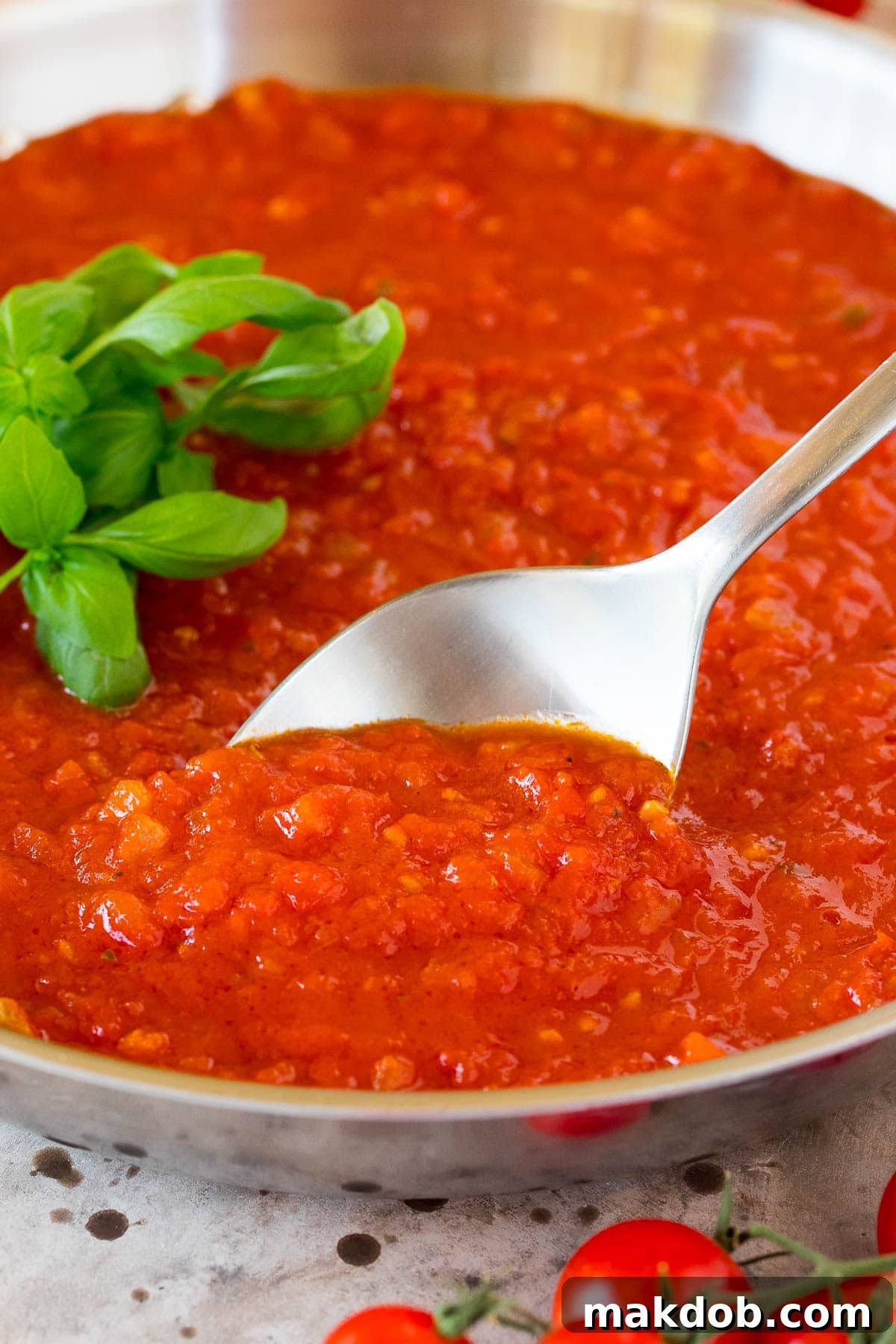
Welcome to the heart of authentic Italian cooking! This homemade marinara sauce is more than just a recipe; it’s an invitation to experience the true essence of fresh, vibrant flavors right in your own kitchen. Crafted from a harmonious blend of sun-ripened tomatoes, fragrant basil, pungent garlic, rich olive oil, and a medley of carefully selected herbs, this sauce simmers gently to create a depth of flavor that is simply unparalleled. Forget those lackluster, sugar-laden jars from the grocery store – once you taste this quick and easy, from-scratch marinara, you’ll understand why homemade truly is the only way to go. It’s a testament to how simple, quality ingredients can transform a meal from ordinary to extraordinary.
For my family, Italian food isn’t just a meal; it’s a tradition, a weekly celebration of comfort and connection. Dishes like our beloved baked chicken parmesan and the robust pasta puttanesca frequently grace our dinner table. Yet, the true MVP in our culinary repertoire, the secret ingredient that elevates every bite, is undoubtedly this glorious homemade marinara. Its versatility means it’s not confined to just pasta; it’s the foundational flavor in countless Italian-inspired meals, bringing warmth and genuine taste to every dish it touches.
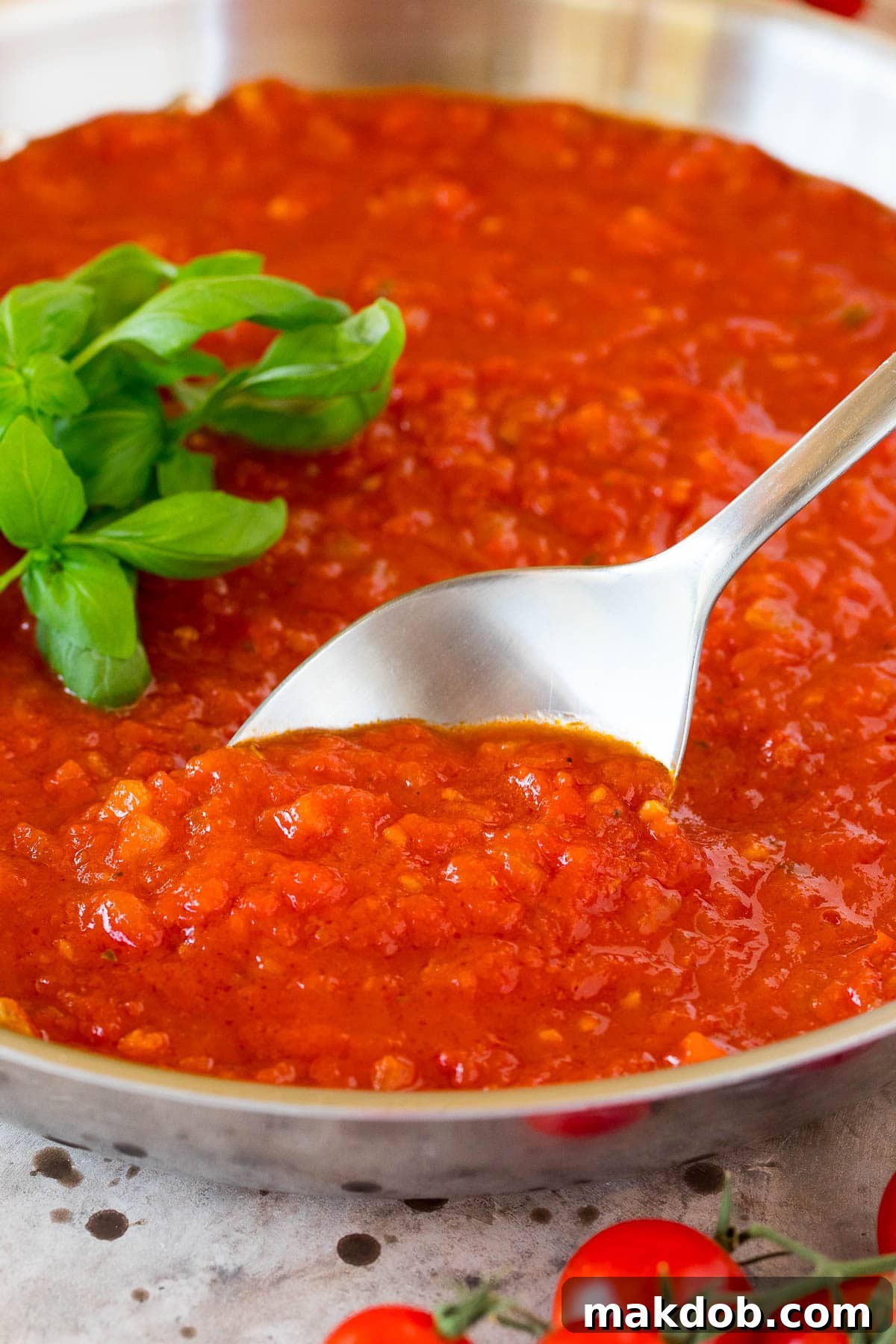
While there’s certainly a time and place for convenience, especially with today’s busy schedules, embracing the art of homemade cooking, particularly for a staple like marinara, offers immense rewards. The difference between a jarred sauce and a homemade one is not merely perceptible; it’s transformative. Our homemade marinara boasts a richness and depth that store-bought versions simply can’t replicate, often bogged down by excessive sugars, preservatives, and artificial flavors. This recipe, with its minimal prep and a remarkably short, wholesome ingredient list, proves that extraordinary flavor doesn’t have to mean complicated cooking. It’s a culinary hack that pays dividends in taste, health, and sheer satisfaction.
Crafting the Core: Essential Marinara Sauce Ingredients
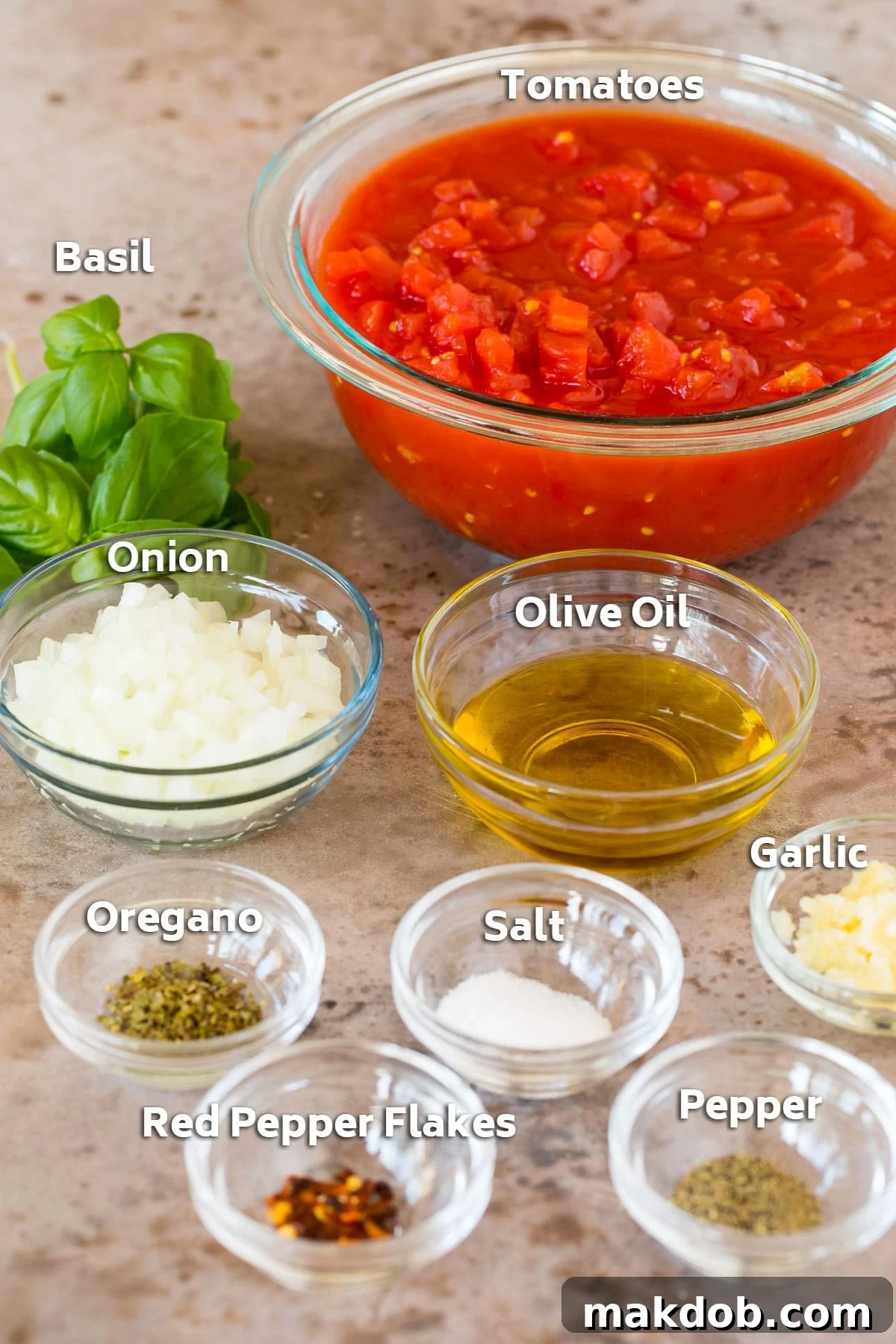
The beauty of a truly great marinara lies in the simplicity and quality of its components. Each ingredient plays a vital role in building the robust flavor profile that defines this classic Italian sauce. Here’s a closer look at what goes into our recipe:
- Extra Virgin Olive Oil: This isn’t just cooking oil; it’s a fundamental flavor enhancer. A high-quality extra virgin olive oil provides a fruity, peppery base that sets the stage for the other ingredients. Its delicate flavor shines through, contributing to the sauce’s overall richness.
- Onion: Finely diced, onion provides a foundational sweetness and aromatic depth. When slowly sautéed, the sugars caramelize, lending a subtle complexity that balances the acidity of the tomatoes.
- Garlic: The cornerstone of Italian cooking, minced garlic infuses the oil with its pungent, warm aroma. It’s crucial to cook it just enough to become fragrant without burning, as burnt garlic can turn bitter and ruin the sauce.
- San Marzano Tomatoes: The undisputed star of authentic marinara. These plum tomatoes, grown in the volcanic soil near Mount Vesuvius in Italy, are famed for their balanced sweetness, low acidity, and thick, meaty flesh with fewer seeds. Look for cans with the “D.O.P.” (Denominazione di Origine Protetta) certification, which guarantees their authenticity and superior quality. This single ingredient can elevate your sauce from good to truly exceptional.
- Dried Oregano: This classic Italian herb brings an earthy, slightly peppery note that complements the tomatoes beautifully. Dried oregano often has a more concentrated flavor than fresh, making it ideal for long-simmered sauces.
- Crushed Red Pepper Flakes (Optional): For those who appreciate a gentle warmth and a subtle kick, red pepper flakes add a fantastic layer of flavor without making the sauce overtly spicy. It provides just enough heat to awaken the palate.
- Salt and Pepper: These basic seasonings are critical for enhancing and balancing all the flavors. Adjusting them to taste throughout the cooking process ensures your marinara is perfectly seasoned.
- Fresh Basil Sprigs: Added towards the end of simmering, fresh basil infuses the sauce with its sweet, anise-like perfume. Using whole sprigs allows the flavor to permeate gently, and they are removed before serving to prevent them from becoming overly wilted or bitter.
Step-by-Step Guide: How to Make Homemade Marinara Sauce
Creating this delicious marinara is a straightforward process, demanding more patience than complex technique. Follow these simple steps for a truly rewarding culinary experience:
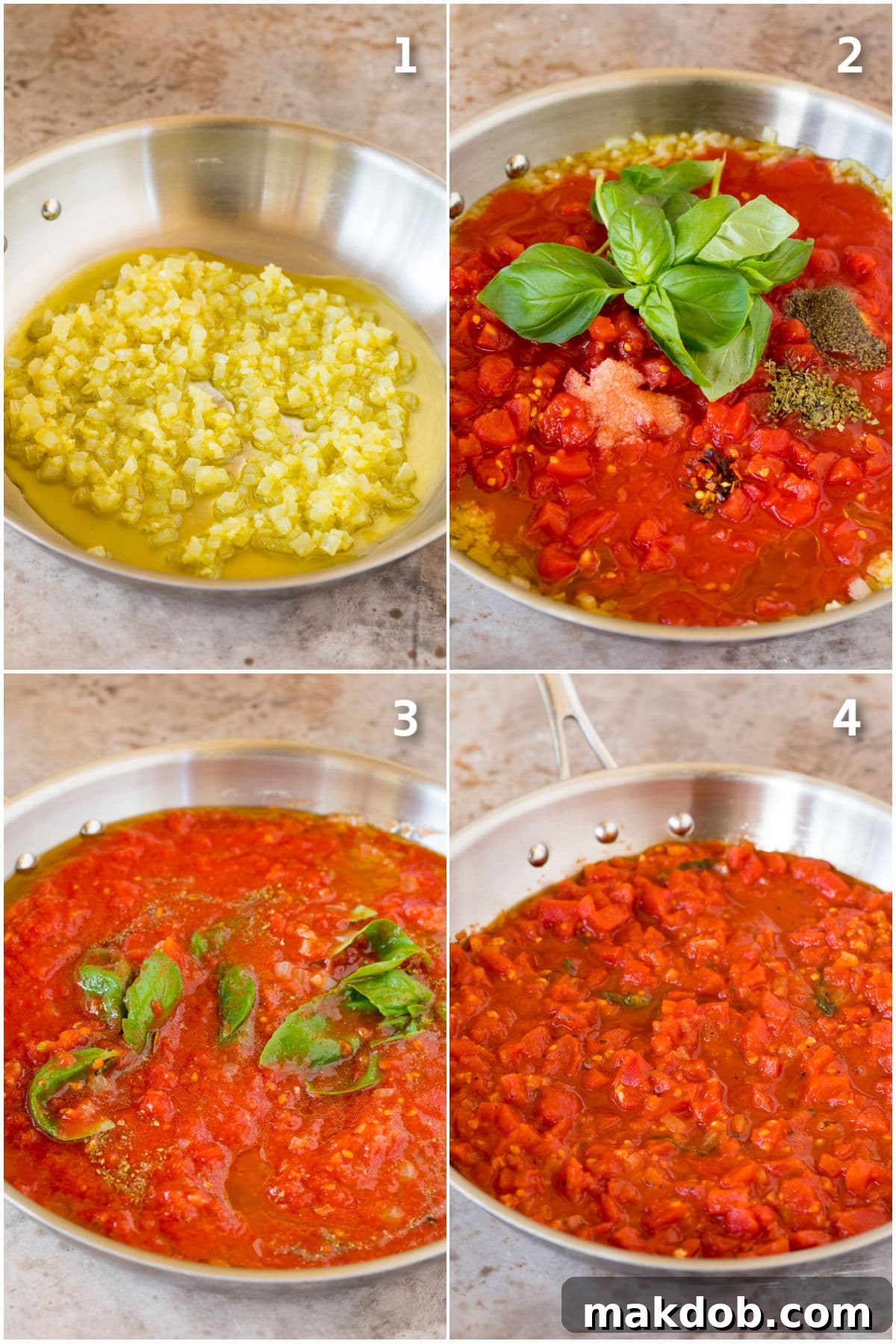
- Sauté the Aromatics: Begin by heating the olive oil in a large, heavy-bottomed pan or Dutch oven over medium heat. Once shimmering, add the finely diced onion. Cook gently for 3-4 minutes, stirring occasionally, until the onion softens and becomes translucent, releasing its natural sweetness. Next, stir in the minced garlic and cook for an additional 30 seconds. Be vigilant here – garlic burns quickly, and a slightly golden hue is perfect, not brown.
- Introduce the Tomatoes and Herbs: Carefully open the can of whole San Marzano tomatoes. You can either crush them by hand directly into the pan (a truly satisfying experience!) or coarsely chop them on a cutting board. Ensure all the valuable juices from the can are added to the pan. Incorporate the dried oregano, crushed red pepper flakes (if using), salt, pepper, and the fresh basil sprigs. Add 1/4 cup of water to the mixture to aid in simmering.
- Simmer to Perfection: Stir all the ingredients thoroughly to combine. Bring the sauce to a gentle simmer over medium heat. Once it begins to bubble, reduce the heat to low, cover the pan partially, and let it cook for at least 20 minutes. This simmering period is crucial; it allows the flavors to meld, deepen, and concentrate, and the sauce will begin to thicken to a beautiful consistency. Taste the sauce periodically and adjust the seasoning with more salt or pepper if needed.
- Finishing Touches: Once the sauce has achieved your desired thickness and flavor, remove the fresh basil sprigs and discard them. They have imparted their essence and are no longer needed. This recipe naturally yields a deliciously chunky sauce. If you prefer a smoother texture, you can use an immersion blender directly in the pot, or transfer portions to a regular blender to puree some or all of the sauce until it reaches your preferred consistency.
- Serve or Store: Your homemade marinara is now ready to be enjoyed! Serve it immediately over your favorite pasta, as a dipping sauce, or as a base for other dishes. Any leftover sauce can be stored in an airtight container in the refrigerator for up to 4 days or frozen for longer enjoyment.
Tips for the Perfect Homemade Marinara Sauce
While the recipe is simple, a few expert tips can elevate your homemade marinara from excellent to unforgettable:
- Ingredient Quality is King: Since this recipe has a short ingredient list, the quality of each component truly shines. Invest in the best extra virgin olive oil you can find, and prioritize authentic Italian San Marzano tomatoes. Look for the “D.O.P.” seal on the can, which guarantees that the tomatoes are genuinely San Marzano, ensuring optimal sweetness and low acidity for a superior sauce.
- Mastering the Simmer: Don’t rush the simmering process. A slow, gentle simmer allows the flavors to meld and deepen over time. Resist the urge to crank up the heat, as this can cause the sauce to scorch and develop a harsh, acidic taste. A low, slow approach yields the best results.
- Adjusting Acidity: If your tomatoes are slightly acidic, a tiny pinch of sugar (about 1/4 teaspoon) can work wonders to balance the flavors without making the sauce sweet. Add it gradually and taste as you go.
- Achieving Your Preferred Texture: This recipe naturally produces a chunkier sauce, which many prefer for its rustic appeal. However, if you crave a silky-smooth marinara, an immersion blender is your best friend. Alternatively, a food mill or even a regular blender (in batches) can achieve a perfectly smooth consistency. Remember to save all the juice when crushing or chopping your tomatoes, as it adds essential liquid and flavor.
- The Power of Fresh Basil: While dried oregano is cooked with the sauce, fresh basil sprigs are typically added during the simmering phase and removed before serving. This infuses the sauce with a delicate, fresh basil flavor without the leaves becoming overcooked or losing their vibrant taste.
- Batch Cooking and Freezing: Homemade marinara is perfect for meal prep. I often double or even triple the recipe to have extra on hand. This sauce stays fresh in an airtight container in the refrigerator for up to 4 days. For longer storage, freeze it in freezer-safe bags or containers for up to 2 months. Thaw frozen sauce overnight in the refrigerator, then gently reheat on the stove over low heat until warmed through.
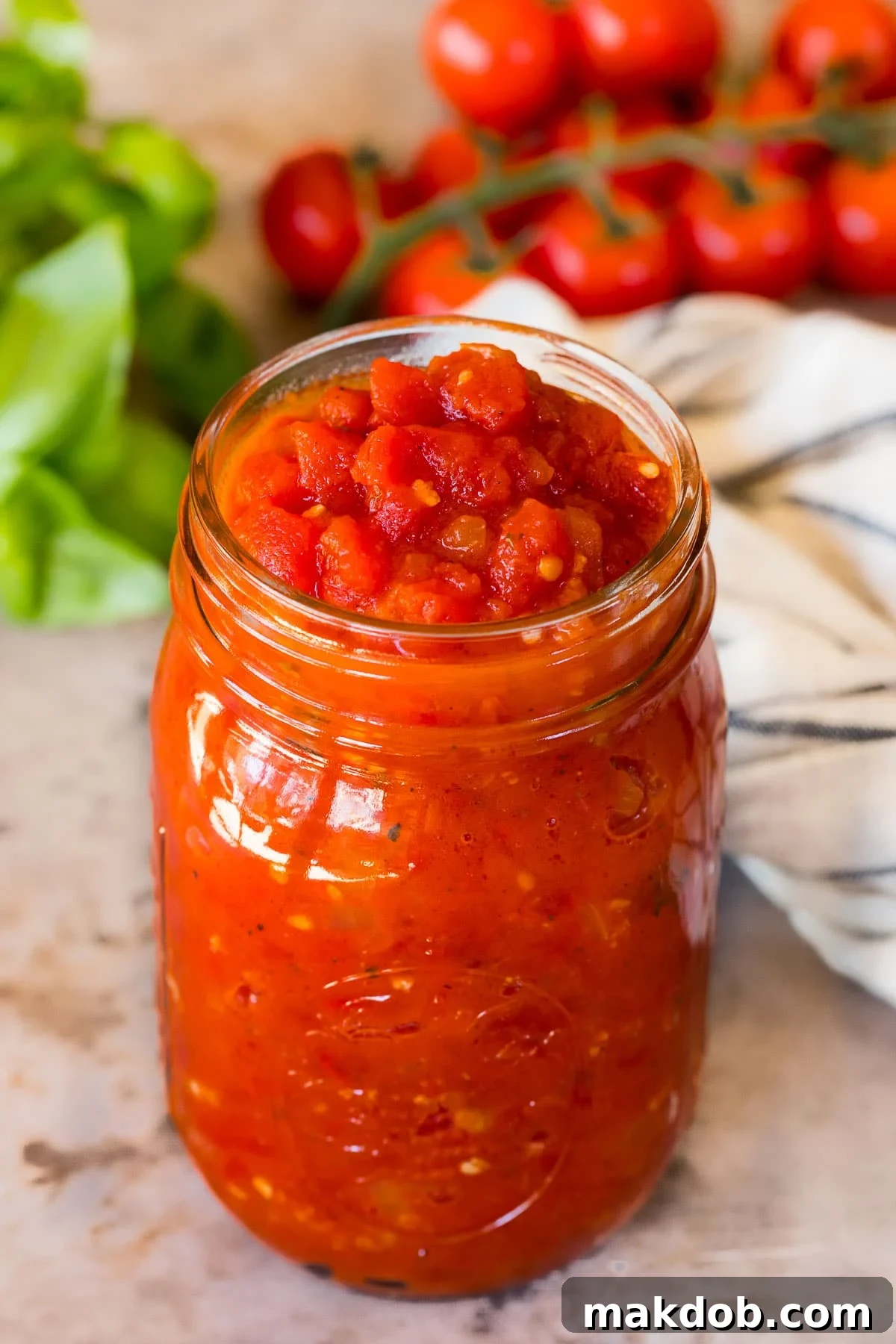
Recipe FAQs About Marinara Sauce
While homemade marinara often shines with high-quality canned San Marzano tomatoes due to their consistent flavor and ripeness, using fresh tomatoes is absolutely possible and yields a wonderfully seasonal sauce. However, fresh tomatoes can sometimes be mealy or underripe, which is why canned are often recommended for consistency. If you choose fresh, aim for ripe, fleshy varieties like Roma or San Marzano if you can find them locally. Here’s how to prepare them:
- Score: Cut a small “X” into the bottom of each tomato.
- Blanch: Carefully place the scored tomatoes into a pot of boiling water for about 30 seconds. You’ll see the skins start to curl at the “X.”
- Shock: Immediately transfer the tomatoes to a bowl of ice water for about 5 minutes. This stops the cooking process and makes peeling easier.
- Peel and Chop: The skins should now easily peel off. Coarsely chop the peeled tomatoes, ensuring you retain all the juices. Then, proceed with the recipe as directed. Keep in mind that fresh tomatoes may release more water, so your simmering time might need to be slightly longer to achieve the desired thickness.
The terms “marinara” and “spaghetti sauce” (or “gravy” in some Italian-American traditions) are often used interchangeably, but there are distinct differences in their traditional preparations and characteristics. Marinara sauce is known for its simplicity and relatively quick cooking time. It’s a light, fresh tomato sauce typically made with tomatoes, garlic, olive oil, and fresh basil, seasoned simply with salt and pepper. Traditionally, marinara does not contain meat and is thinner in consistency. Spaghetti sauce, on the other hand, is generally a heartier, thicker, and more complex sauce that often includes meat (like ground beef, sausage, or meatballs) and a wider array of vegetables (carrots, celery, bell peppers) and herbs. It’s typically simmered for a longer duration, allowing flavors to deepen significantly, resulting in a richer, more robust sauce.
The word “marinara” literally translates to “seafaring” or “mariner’s style” in Italian. This etymology is quite interesting because, ironically, traditional marinara sauce does not contain seafood. The popular theory is that this simple, quick-cooking tomato sauce was a staple dish for Italian sailors who could easily prepare it with pantry ingredients on long voyages, or it was served in ports to hungry mariners. Its fresh, bright flavor was a welcome addition after days at sea, earning it the name “marinara.”
Homemade Marinara Sauce Flavor Variations
One of the many joys of mastering a basic marinara recipe is its incredible adaptability. This classic flavor profile serves as a perfect canvas for culinary creativity, allowing you to customize the sauce to your specific tastes or to match the dish you’re preparing. Don’t be afraid to experiment with these delicious variations:
- Add Protein for Heartiness: Transform your marinara into a more substantial meal by incorporating meat. Brown 1 pound of ground beef, Italian sausage (sweet or spicy), or ground turkey in the pan before adding the onions and garlic, then drain any excess fat. Stir the cooked and crumbled meat into the sauce during the simmering stage for a rich, hearty ragù. For an extra layer of savory depth, cook some diced pancetta until crispy, then add it to the sauce.
- Experiment with Herbs: While fresh basil is traditional and irreplaceable for its sweet aroma, feel free to introduce other complementary herbs. Fresh parsley, thyme, or rosemary can add different dimensions. If using dried herbs, remember they are more potent than fresh, so use them sparingly and add them early in the simmering process. A bay leaf added during simmering and removed before serving can also contribute a subtle, earthy note.
- Incorporate More Veggies: Boost the nutritional value and complexity of your sauce with a variety of sautéed vegetables. Finely diced carrots and celery (a classic soffritto base) can be cooked with the onions to add sweetness and depth. Sautéed bell peppers, zucchini, or mushrooms can also be folded in during the simmering stage, adding color, texture, and additional vitamins. For a subtle green touch, wilt in some fresh spinach towards the very end of cooking.
- Enhance with Additional Flavorings: Elevate your marinara with a few simple additions. A splash of dry red wine (like Chianti or Merlot) simmered down before adding the tomatoes can add a sophisticated depth. Stir in a generous spoonful of freshly grated Parmesan cheese for a salty, umami kick. For a brighter, herbal twist, swirl in a tablespoon of homemade or store-bought pesto just before serving. A handful of sliced Kalamata or black olives can introduce a briny, Mediterranean flair. Even a rind of Parmesan cheese simmered in the sauce (and removed before serving) can add incredible savory richness.
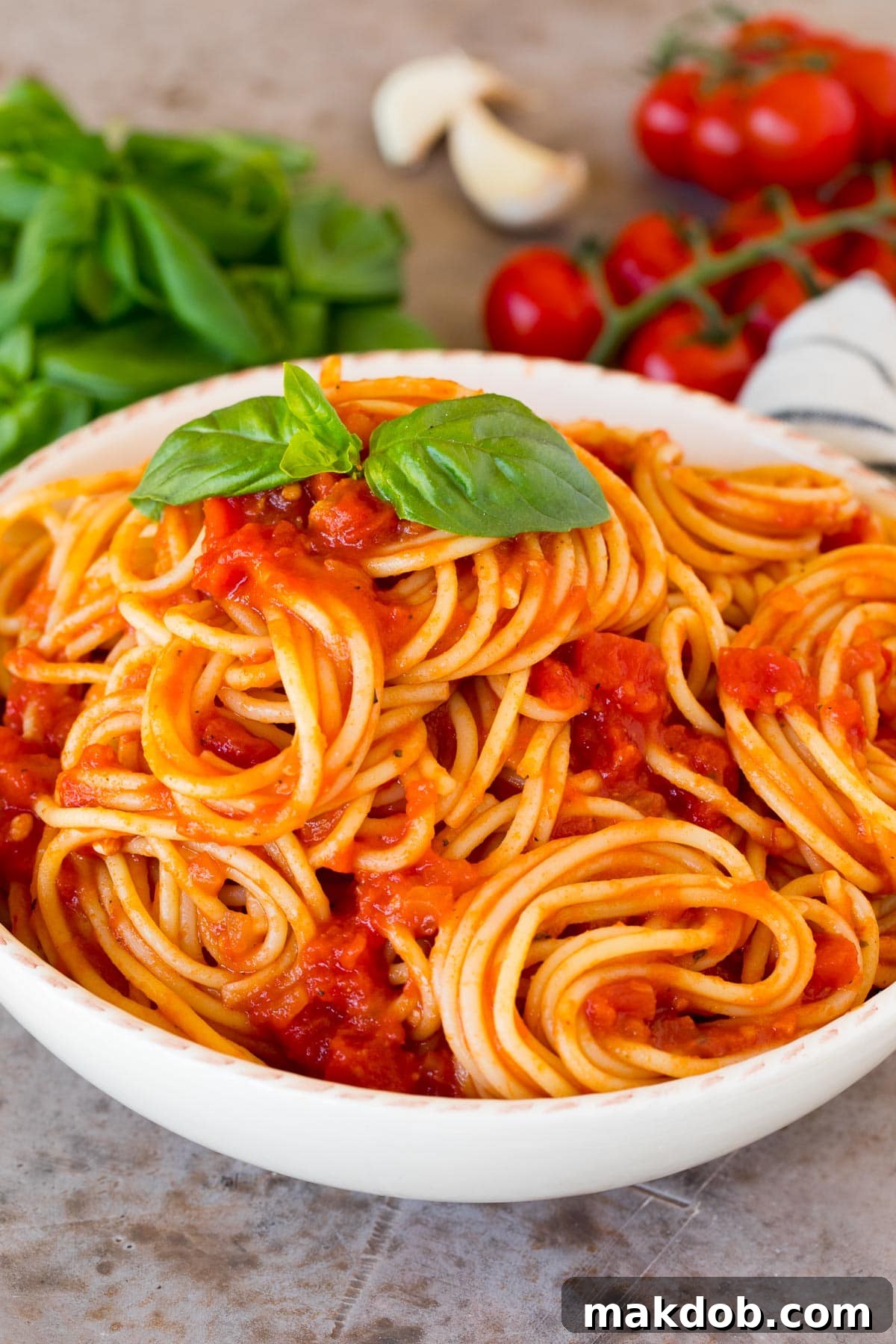
The culinary possibilities with this foundational marinara sauce are truly endless. Whether you’re draping it over a mound of al dente pasta, layering it into a hearty casserole, using it as a vibrant base for chicken or seafood, or simply serving it as a warm dipping sauce for crusty bread, its fresh, homemade flavor consistently earns rave reviews. It’s a versatile, delicious staple that every home cook should have in their repertoire.
Incredible Ways to Use Homemade Marinara Sauce
Beyond the classic spaghetti, homemade marinara sauce is a versatile powerhouse in the kitchen. Its fresh, bright flavor can elevate a wide array of dishes, making it an indispensable part of your meal planning. Here are just a few ideas to inspire your next culinary creation:
- Slow Cooker Chicken Cacciatore: The perfect base for tender chicken and vegetables.
- Eggplant Lasagna: Layered with rich flavor in this vegetarian delight.
- Classic Stuffed Shells: A comforting baked pasta dish that everyone loves.
- Spinach Lasagna: Adds vibrant tomato goodness to this cheesy, green-filled favorite.
- Pasta al Forno: The essential component for this delicious baked pasta casserole.
- Pizza Sauce: Skip the store-bought pizza sauce and spread your homemade marinara on your pizza dough for an authentic, fresh taste.
- Dipping Sauce: Serve it warm with mozzarella sticks, garlic bread, arancini, or even grilled cheese for a simple yet satisfying appetizer.
- Meatball Sub Sandwiches: Simmer cooked meatballs in marinara and pile them onto crusty rolls for an ultimate sandwich experience.
- Shakshuka Base: Use it as the flavorful foundation for this Middle Eastern and North African dish with poached eggs.
- Chicken or Veal Parmesan: The ideal saucy blanket for crispy, breaded cutlets.
- Minestrone or Vegetable Soup: A few spoonfuls can add a wonderful depth of flavor to your favorite soups.
Homemade Marinara Sauce Video
For a visual guide to making this perfect marinara, watch our step-by-step video demonstration. See firsthand how simple it is to transform fresh ingredients into a rich, aromatic sauce that will become a staple in your kitchen.
Watch the Homemade Marinara Sauce Video for a visual guide.

Homemade Marinara Sauce
Pin
Save
Author
Sara Welch
Time
10 minutes
25 minutes
35 minutes
Course
Sauce
Cuisine
Italian
Serves
6
Ingredients
- 3 tablespoons olive oil
- 1/3 cup onion, finely diced
- 2 1/2 teaspoons garlic, minced
- 28 ounce can whole San Marzano tomatoes, coarsely crushed or chopped
- 1/4 teaspoon dried oregano
- 1/4 teaspoon crushed red pepper flakes (optional)
- 1/2 teaspoon salt
- 1/4 teaspoon pepper
- 2 sprigs fresh basil
Instructions
-
Place the olive oil in a large pan over medium heat.
-
Add the onion and cook for 3-4 minutes or until softened. Stir in the garlic and cook for 30 seconds.
-
Add the tomatoes and all their juices from the can, oregano, red pepper flakes, salt, pepper, fresh basil and 1/4 cup water.
-
Stir to combine. Bring to a simmer. Reduce the heat to low and cook for 20 minutes or until sauce has started to thicken. Taste and add more salt and pepper if needed.
-
Remove the basil sprigs and discard. This makes a chunky sauce. If you prefer a smooth sauce, you can puree some or all of it in a blender. Serve immediately or store in the refrigerator for up to 4 days.
Notes
- Since this is such a simple recipe, the quality of the ingredients really count. Look for a high quality extra virgin olive oil and use Italian canned tomatoes. I really prefer to use San Marzano tomatoes as they have the best flavor and texture. Keep an eye out for tomatoes with a “D.O.P” on the label, which guarantees that the tomatoes are authentically the San Marzano variety.
- This sauce stays fresh in the refrigerator for 4 days and can be frozen for up to 2 months. Thaw frozen sauce in the fridge overnight, then reheat on the stove until it’s warmed through.
Nutrition
Calories:
93
kcal
|
Carbohydrates:
7
g
|
Protein:
1
g
|
Fat:
7
g
|
Saturated Fat:
1
g
|
Sodium:
201
mg
|
Potassium:
333
mg
|
Fiber:
2
g
|
Sugar:
4
g
|
Vitamin A:
1137
IU
|
Vitamin C:
20
mg
|
Calcium:
19
mg
|
Iron:
1
mg
Did you make this recipe?
Tag @dinneratthezoo on Instagram and hashtag it #dinneratthezoo
Tweet
Pin