
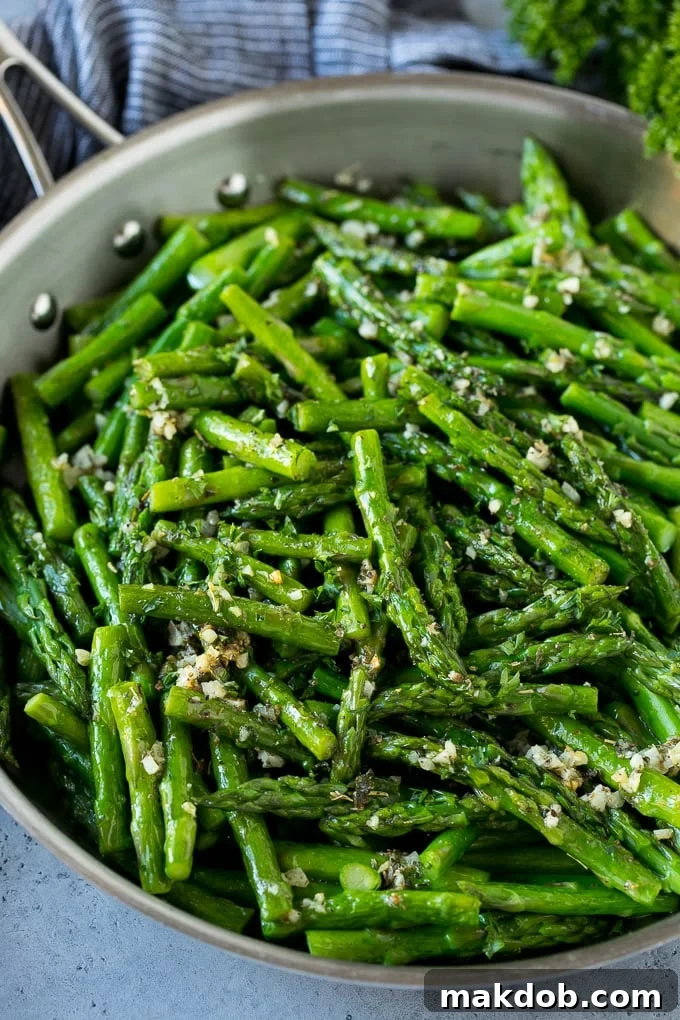
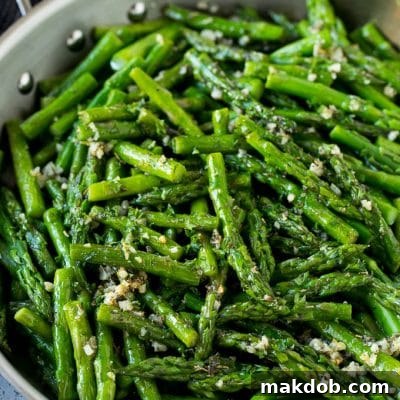
This Sauteed Asparagus recipe transforms fresh asparagus stalks into a tender, flavorful side dish, cooked to perfection in aromatic butter, fragrant garlic, and a thoughtful blend of herbs. Ready in just ten minutes, it’s the ultimate quick and easy accompaniment for a wide array of main courses, from succulent chicken and delicate fish to hearty pasta and fresh seafood.
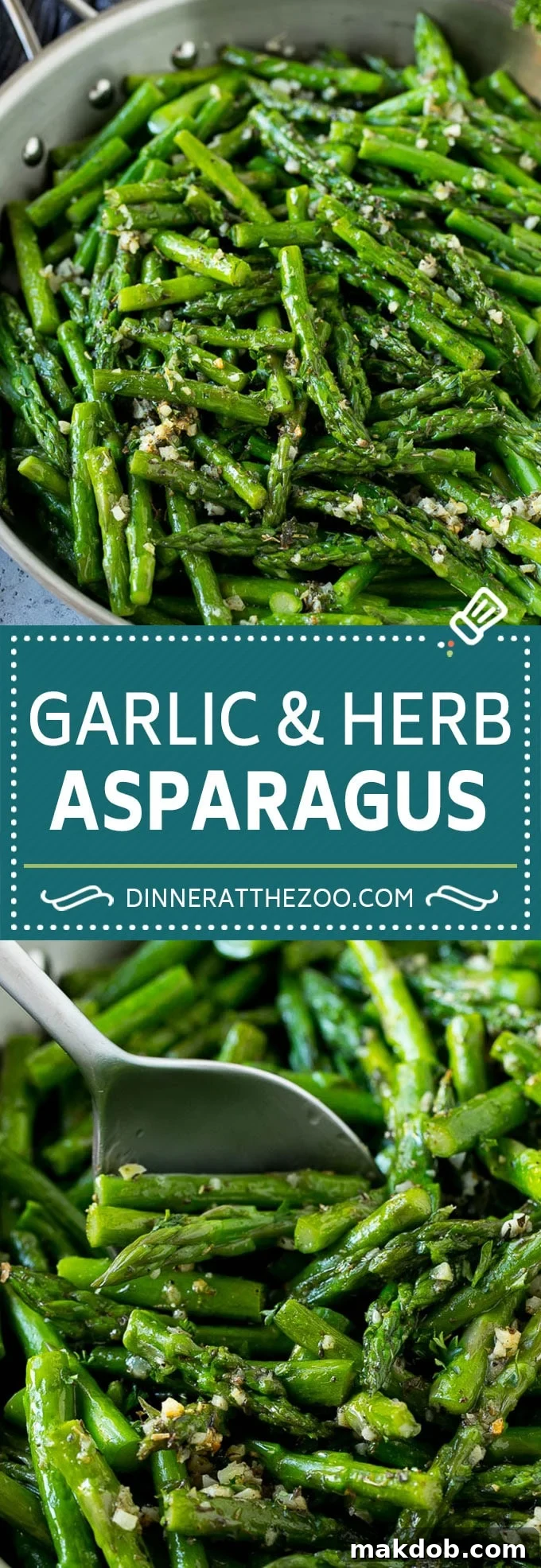
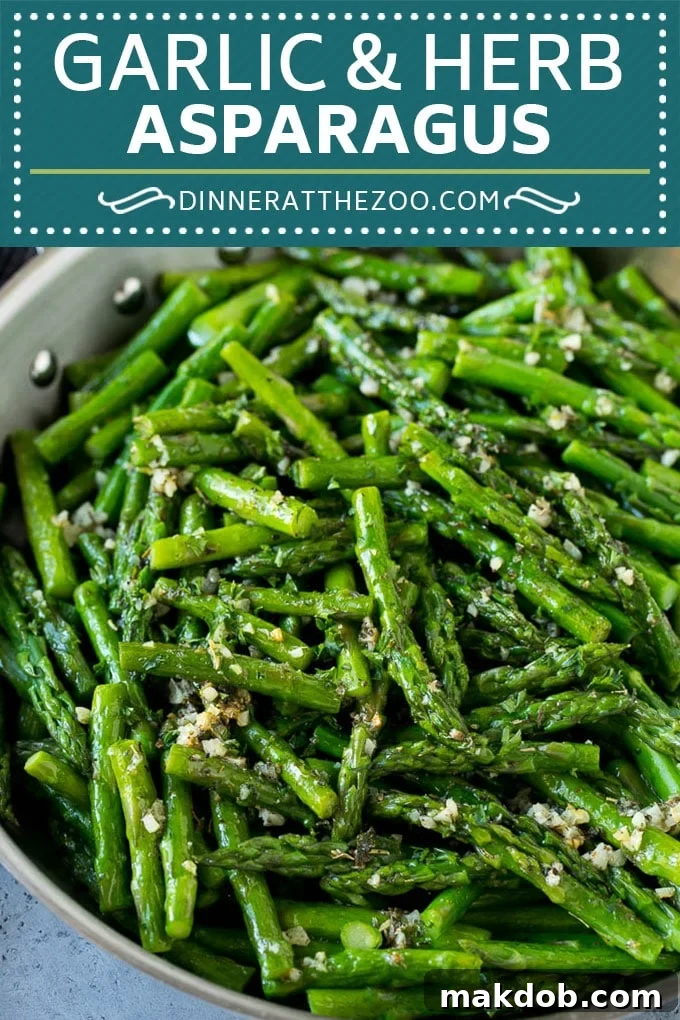
Easy & Delicious Sauteed Asparagus: Your Go-To 10-Minute Side Dish
There are few vegetables as elegant and versatile as asparagus. While options like grilled asparagus foil packets and chicken asparagus stir fry are always welcome, sometimes you need a quick, no-fuss way to bring this vibrant green vegetable to your table. This Sauteed Asparagus recipe delivers on all fronts: it’s simple, incredibly satisfying, and ensures you get your daily dose of greens with minimal effort. It’s a dish I genuinely look forward to preparing, especially when I want a side that complements almost any meal without overshadowing it.
Why Asparagus Deserves a Spot on Your Plate
While broccoli is a frequent flyer in many households, including mine, asparagus offers a delightful change of pace in the green vegetable department. It’s not only incredibly healthy but also widely available for most of the year, making it a reliable choice for any season. What’s even better? My children genuinely enjoy eating it, which is a testament to its mild, appealing flavor when prepared correctly. This sauteed asparagus recipe is designed to bring a delicious, flavorful vegetable to your dinner table in record time, proving that healthy eating doesn’t have to be complicated or time-consuming.
Asparagus has a naturally delicate flavor that pairs wonderfully with rich butter and savory garlic. Its subtle sweetness becomes more pronounced when lightly sautéed, offering a crisp-tender texture that’s far from boring. It’s the kind of side dish that elevates a weeknight meal and impresses guests, all while demanding very little from the cook. If you’re looking to incorporate more vegetables into your diet in a way that’s both appealing and effortlessly chic, sauteed asparagus is an excellent starting point.
The Essential First Step: How to Properly Trim Asparagus
Before you even think about cooking, proper preparation is key to ensuring your asparagus is perfectly tender from tip to end. The bottom section of asparagus stalks tends to be tough, woody, and unpleasantly fibrous. Eating this part can detract significantly from the overall enjoyment of your dish. Fortunately, determining where to trim is surprisingly simple and intuitive.
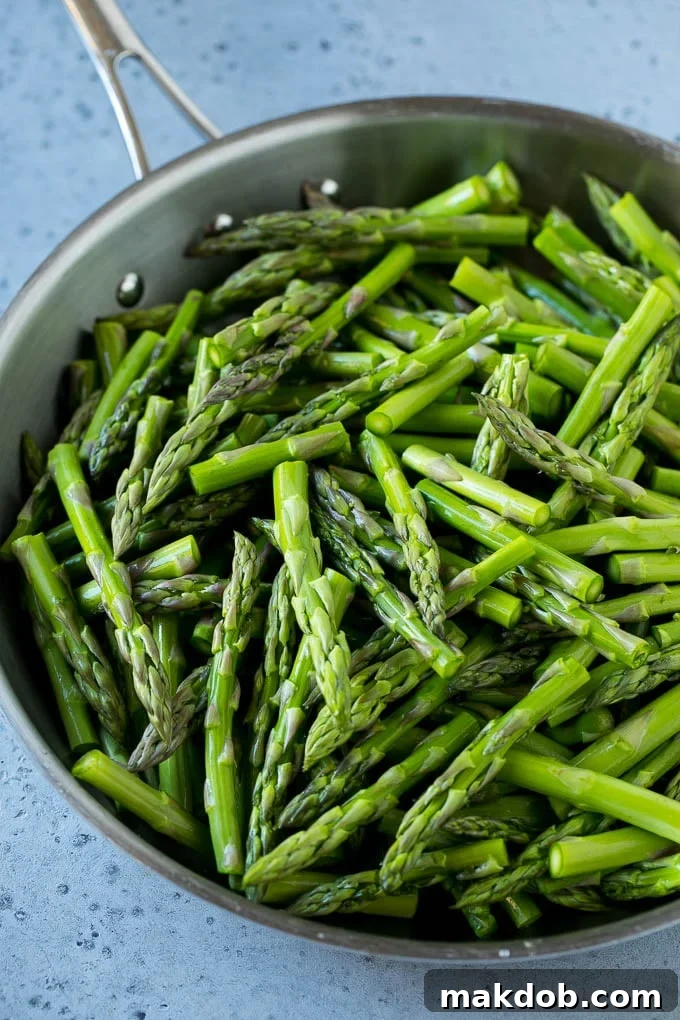
The best method involves taking an individual asparagus stalk and gently bending it. It will naturally snap at the point where the tough, woody base transitions into the tender, edible spear. This natural breaking point is your guide. Once you’ve found this spot on one stalk, you can use it as a reference for the rest of your bunch. Simply line up all your asparagus stalks and, using a sharp knife, trim off the bottom ends in roughly the same place as your test piece snapped. This technique ensures you waste as little as possible while guaranteeing every bite is delicious. For this specific sautéed asparagus recipe, once trimmed, you’ll want to cut the stalks into manageable 1-2 inch pieces, allowing them to cook evenly and absorb all the delightful flavors.
Achieving Perfection: How to Saute Asparagus to Tender Crispness
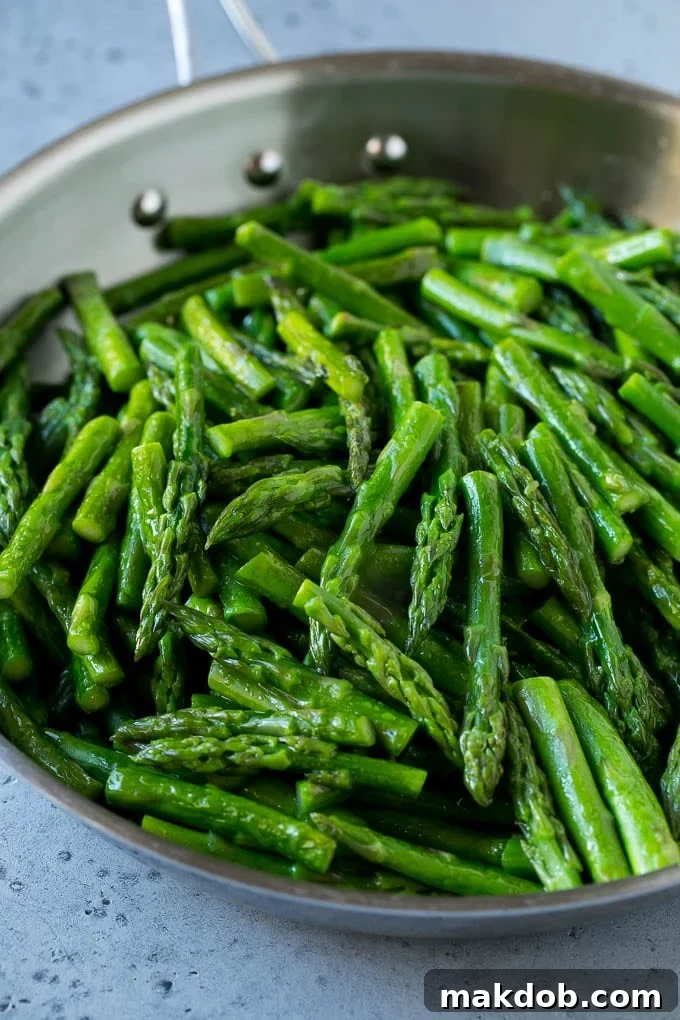
Sautéing asparagus is a quick cooking method that yields wonderfully vibrant and tender-crisp results. The secret lies in precise timing and careful observation. The goal is to cook the asparagus just enough so it loses its raw crunch but retains a slight bite – never mushy or overly soft. You’ll want to keep a close eye on the asparagus as it cooks, as it can go from perfect to overcooked in a matter of seconds. The ideal moment to remove it from the heat is when its color intensifies to a deep, brilliant green.
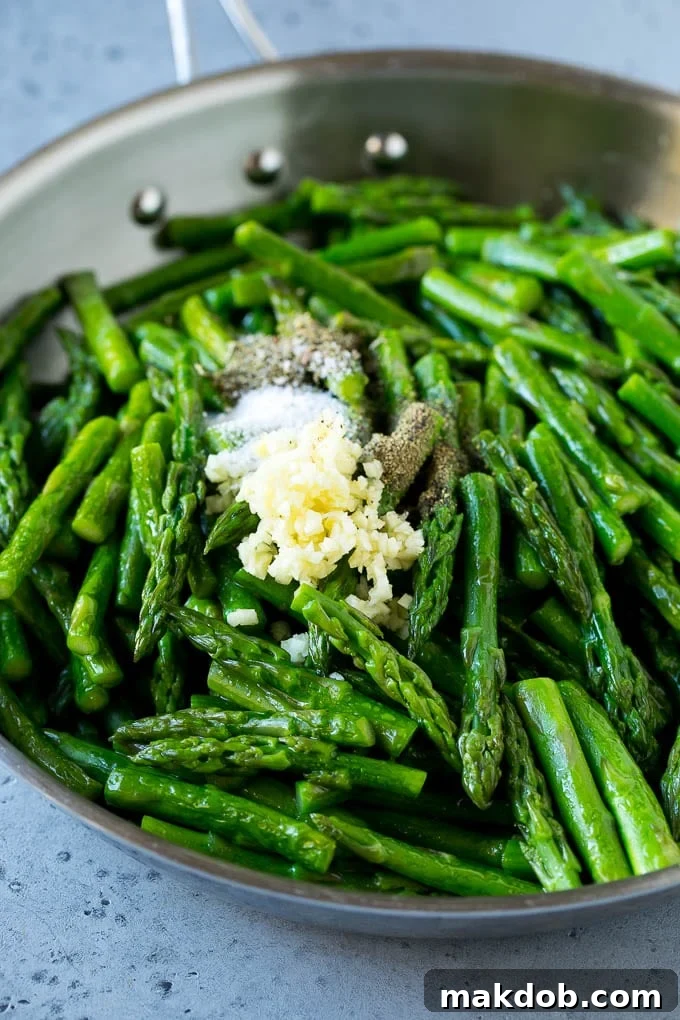
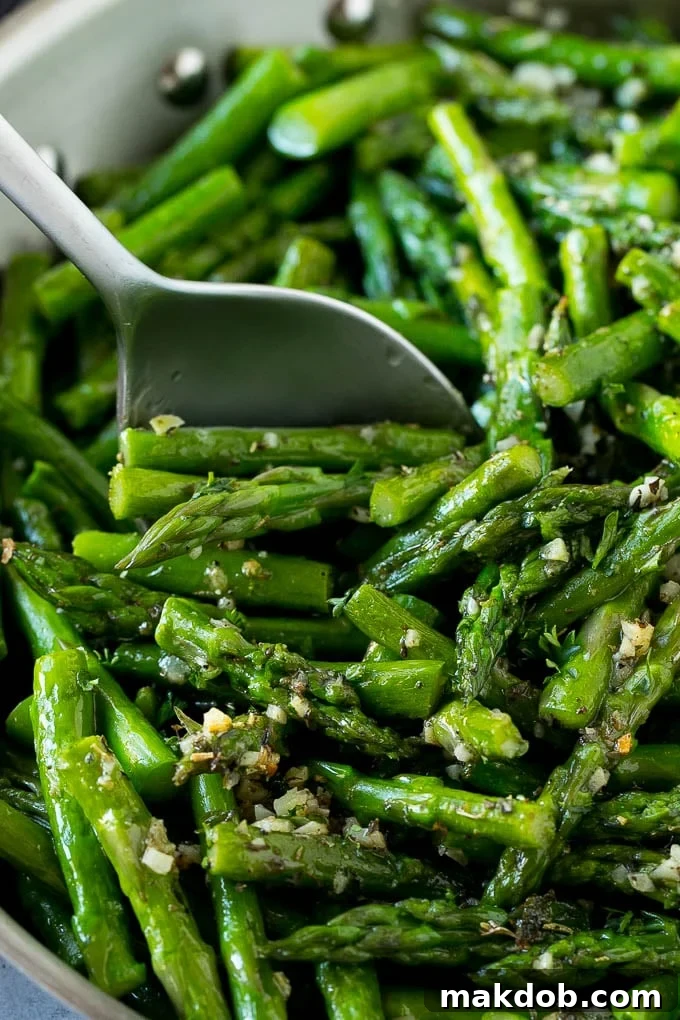
For this Sauteed Asparagus, we elevate its natural goodness with a harmonious blend of flavors. Begin by melting butter in a large skillet over medium-high heat. The butter provides a rich, nutty base that wonderfully coats each asparagus piece. Once the butter is melted and slightly sizzling, add your prepared asparagus pieces and cook for about 3-4 minutes, stirring occasionally, until they start to become tender. Then, introduce the minced garlic, dried Italian seasoning, kosher salt, and freshly ground black pepper. These aromatics and spices infuse the asparagus with an irresistible savory depth. Continue to cook for just 1-2 more minutes, stirring constantly, making sure the garlic doesn’t burn. The warmth of the pan will awaken the flavors of the Italian seasoning, creating a fragrant aroma that fills your kitchen. Finally, a sprinkle of fresh parsley at the end adds a bright, herbaceous finish, providing a lovely contrast to the richness of the butter and garlic. This meticulous approach ensures every bite of your sauteed asparagus is a flavorful delight.
Expert Tips for the Best Sauteed Asparagus Every Time
Achieving perfectly cooked sauteed asparagus is simple when you follow a few key guidelines. These tips will help you avoid common pitfalls and ensure your asparagus is always a culinary success.
- Choose the Right Stalks: This recipe truly shines with medium-sized asparagus stalks. These provide the best balance between tender tips and a firm body. If you opt for very skinny stalks, be cautious, as they tend to overcook very quickly and can become mushy. On the other hand, if you’re working with thicker stalks, you may need to increase the cooking time by a few minutes to ensure they reach desired tenderness. Always trust your taste and texture preference.
- Make it Vegan: For a delightful plant-based option, simply swap out the butter for a high-quality olive oil. The robust flavor of olive oil complements asparagus beautifully and still provides that rich, satisfying mouthfeel. Avocado oil is another excellent neutral-flavored alternative for those seeking a healthier fat option.
- Prevent Burnt Garlic: Garlic can quickly go from fragrant to bitter if overcooked. To prevent this, always add the minced garlic towards the very end of the cooking time, typically in the last 1-2 minutes. This brief cooking period is enough to release its pungent aroma and flavor without risking burning, which can impart an unpleasant taste to the entire dish.
- Italian Seasoning Simplified: The recipe calls for dried Italian seasoning, which is a convenient blend of classic herbs like oregano, parsley, basil, thyme, and rosemary. This blend is readily available in the spice aisle of most grocery stores. However, if you prefer to make your own or don’t have it on hand, you can easily create a substitute using individual dried herbs. You can also follow my Italian seasoning recipe for a fresh, homemade blend.
- Don’t Overcrowd the Pan: For optimal sautéing, ensure your asparagus pieces are in a single layer or at least not heavily stacked in the pan. Overcrowding the pan can lead to steaming rather than sautéing, resulting in less vibrant color and a softer, less desirable texture. If you’re cooking a large batch, consider working in two smaller batches.
- Seasoning to Taste: While the recipe provides guidelines for salt and pepper, always taste and adjust the seasoning before serving. Different palates have different preferences, and fresh asparagus can vary slightly in its natural saltiness.
The Power of Green: Unpacking Asparagus Health Benefits
Beyond its delicious taste and versatility, asparagus is a nutritional powerhouse, packed with a wide array of vitamins, minerals, and beneficial compounds that contribute to overall health. Incorporating this verdant vegetable into your diet is a smart move for anyone looking to boost their nutrient intake.
Asparagus is notably rich in essential vitamins, including Vitamin A, which is crucial for vision, immune function, and skin health; Vitamin C, a powerful antioxidant that supports the immune system and collagen production; and Vitamin K, vital for blood clotting and bone health. Furthermore, it contains a significant amount of folate (Vitamin B9), which is important for cell growth and function, especially during pregnancy. It also provides essential minerals like iron, necessary for oxygen transport in the blood; copper, involved in energy production and iron metabolism; and calcium, fundamental for strong bones and teeth. With its high fiber content, asparagus aids in digestion and helps maintain a healthy gut. Despite its rich nutrient profile, asparagus is remarkably low in calories and carbohydrates, making it an excellent choice for those managing their weight or following ketogenic and low-carb diets. This combination of nutrients makes asparagus a fantastic addition to any balanced meal, contributing to everything from cardiovascular health to antioxidant defense.
Creative Twists: Delicious Sauteed Asparagus Variations
While this Sauteed Asparagus recipe is perfect as written, it also serves as a fantastic blank canvas for culinary creativity. Feel free to experiment with other ingredients you might have on hand to add a unique twist and spice things up a bit, transforming it into an even more personalized dish.
- Sun-Dried Tomatoes: For a burst of concentrated, sweet-tart flavor, stir in about 1/3 cup of chopped oil-packed sun-dried tomatoes right at the end of the cooking process. Their rich umami notes pair wonderfully with the freshness of asparagus.
- Mushrooms: Add an earthy depth by cooking 8 ounces of sliced mushrooms (cremini or button work well) in the pan until tender and lightly browned *before* you add the asparagus. The sautéed mushrooms will release moisture and build a flavorful fond that the asparagus will later absorb.
- Shallots: For a milder, more delicate onion flavor, substitute 1/4 cup of minced shallots for the garlic. Sauté the shallots until translucent before adding the asparagus.
- Olives: Introduce a briny, Mediterranean flair with 1/3 cup of sliced Kalamata olives. Add them with the Italian seasoning for a quick warming, allowing their flavors to meld with the other ingredients.
- Cheese: A sprinkle of your favorite cheese can add a delightful savory finish. Feta cheese offers a tangy, salty crumb, while freshly grated Parmesan cheese provides a nutty, umami kick. Add the cheese just before serving so it slightly melts from the residual heat.
- Pine Nuts: For added texture and a rich, buttery flavor, toast 1/4 cup of pine nuts in a separate dry skillet until golden brown. Sprinkle them over the asparagus right before serving.
- Lemon Zest & Juice: A squeeze of fresh lemon juice and a sprinkle of lemon zest at the very end can brighten the entire dish, cutting through the richness of the butter and adding a refreshing tang.
- Spicy Kick: If you enjoy a bit of heat, add a pinch of red pepper flakes along with the Italian seasoning. Adjust the amount to your preferred spice level.
No matter how you choose to customize and serve this sauteed asparagus, it’s sure to be a hit at your dinner table. We all need those reliable, easy side dishes that effortlessly complement any main course, and this garlic butter asparagus recipe is undoubtedly a keeper. It’s simple, quick, healthy, and incredibly flavorful – truly the perfect addition to your culinary repertoire.
More Delicious Side Dish Recipes
- Roasted Parmesan Broccoli
- Glazed Carrots
- Roasted Garlic Butter Mushrooms
- Zucchini Gratin
- Braised Cabbage
Sauteed Asparagus
Pin
Time
Ingredients
- 3 tablespoons butter
- 1 lb asparagus stalks trimmed and cut into 1-2 inch pieces
- 2 teaspoons minced garlic
- 1 teaspoon dried Italian seasoning
- 1/2 teaspoon kosher salt
- 1/4 teaspoon pepper
- 1 1/2 tablespoons chopped parsley can also use green onions or fresh dill
Instructions
-
Melt the butter in a large pan over medium high heat.
-
Add the asparagus and cook for 3-4 minutes or until just tender.
-
Stir in the garlic, Italian seasoning, salt and pepper. Cook for 1-2 more minutes, stirring constantly.
-
Sprinkle with parsley, then serve.