
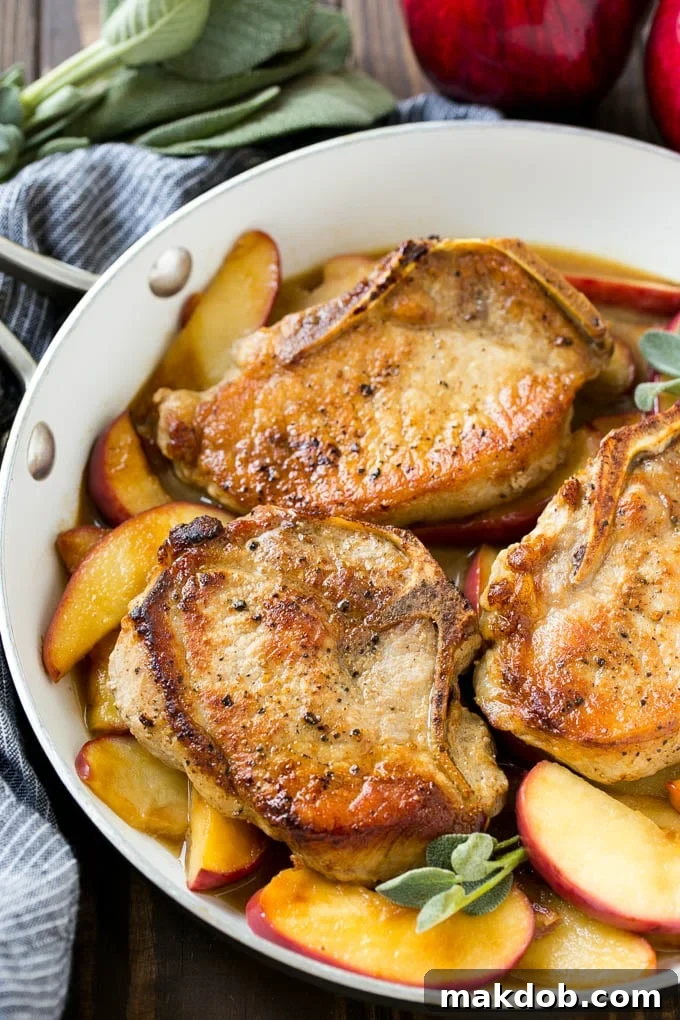
Welcome to the ultimate fall culinary experience! These magnificent Apple Pork Chops are a true celebration of autumn flavors, bringing together succulent pork, crisp apples, and aromatic sage in a rich, savory cider sauce. Imagine golden-brown pork chops, perfectly seared in butter, then gently simmered until tender, absorbing every note of the delicious apple cider and fresh herbs. This dish isn’t just a meal; it’s a comforting embrace, quick enough for a busy weeknight yet elegant enough to impress your most discerning guests.
There’s a reason the pairing of pork and apples has stood the test of time, and in this recipe, it reaches new heights with the addition of a flavorful cider sauce. It’s a classic combination that evokes the cozy spirit of the season, making it an indispensable part of your fall recipe repertoire. Serve these cider-infused pork chops alongside other seasonal favorites like creamy sour cream mashed potatoes or sweet and earthy roasted parsnips for a complete, unforgettable meal that will have everyone asking for seconds.
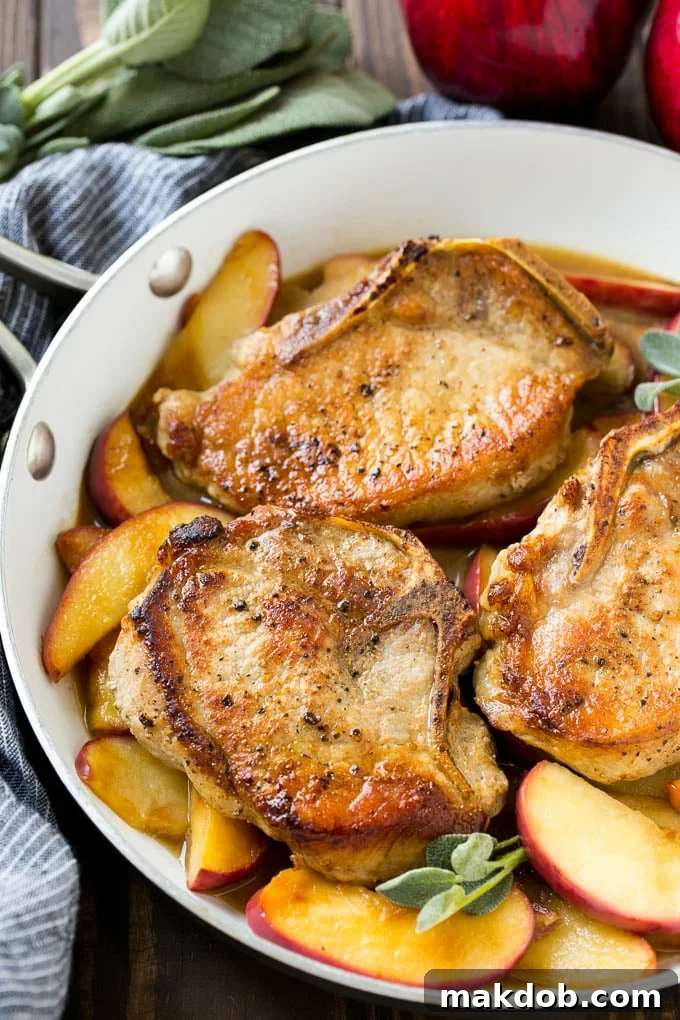
While chicken often graces our dinner table, sometimes it’s wonderful to explore other proteins that offer a different kind of culinary delight. Pork chops, in particular, provide a fantastic canvas for robust flavors, and this recipe perfectly showcases their versatility. With just a handful of thoughtfully selected ingredients, these apple pork chops deliver an enormous impact of flavor. It’s a recipe designed for both efficiency and indulgence – ideal for a quick family dinner after a long day, but also sophisticated enough for entertaining. The harmonious blend of pork, apples, and the rich, spiced cider truly “screams” fall, capturing the essence of the season in every bite. The addition of apple cider transforms a simple pork and apple dish into something truly extraordinary, infusing it with a depth and sweetness that is simply irresistible.
For those who love pork as much as we do, this recipe is a fantastic addition to a collection that might already include mouthwatering dishes like juicy grilled pork tenderloin, tender crock pot pork roast, or smoky pulled pork. If you’re looking to further immerse yourself in the rich tapestry of autumn flavors, be sure to explore our curated list of fantastic fall recipes for more inspiration that celebrates the harvest season.
Essential Ingredients for Perfect Apple Pork Chops
Creating these delectable apple pork chops requires a selection of fresh, high-quality ingredients that work in symphony to build their signature fall flavor. Each component plays a vital role, contributing to the dish’s irresistible aroma and taste. Here’s what you’ll need to gather to bring this incredible meal to life:
- Butter: The foundation for searing your pork chops to a beautiful golden brown and for sautéing the apples, imparting a rich, irresistible flavor. We’ll divide its use for optimal results.
- Bone-In Pork Chops: We recommend bone-in chops, typically 5-6 ounces each, as the bone adds extra flavor and helps keep the meat incredibly moist. They are the star of our dish, providing a hearty, satisfying protein.
- Apple Cider: Crucial for the sauce! You’ll need about 1/2 cup plus 2 tablespoons. Opt for fresh, unfiltered apple cider – the kind that’s cloudy and often found in the refrigerated section of your grocery store, especially during autumn. Its natural sweetness and tartness are key to the sauce’s depth. Avoid apple cider vinegar or clear apple juice, as they will yield a different flavor profile.
- Dijon Mustard: Just one tablespoon of Dijon mustard adds a subtle tang and a wonderfully complex, savory note to the sauce, cutting through the richness of the pork and butter. It also helps to emulsify the sauce, giving it a smooth consistency.
- Fresh Sage: A teaspoon of finely chopped fresh sage is absolutely non-negotiable for this recipe. Its earthy, slightly peppery aroma is the quintessential herb pairing for pork and apples, elevating the entire dish. Dried sage simply won’t achieve the same vibrant, fresh flavor.
- Apples: Approximately 2 cups of cored and thinly sliced apples are needed. Choosing the right variety is important for texture and flavor. We love firm, slightly tart apples such as Honeycrisp, Pink Lady, Gala, or Fuji, which hold their shape well when cooked and offer a pleasant contrast to the savory pork.
- Kosher Salt and Freshly Ground Black Pepper: These essential seasonings are used generously to enhance the natural flavors of the pork and apples, bringing all the components into delicious balance. Seasoning in layers is key to a truly flavorful dish.
Each of these ingredients, simple on their own, combine to create a dish that is far greater than the sum of its parts, promising a delightful culinary journey.
Mastering the Art: A Step-by-Step Guide to Apple Pork Chops
Crafting these exquisite apple pork chops is a straightforward process, designed to bring out the best in each ingredient with minimal fuss. Follow these detailed steps to achieve a perfectly cooked, intensely flavorful dish:
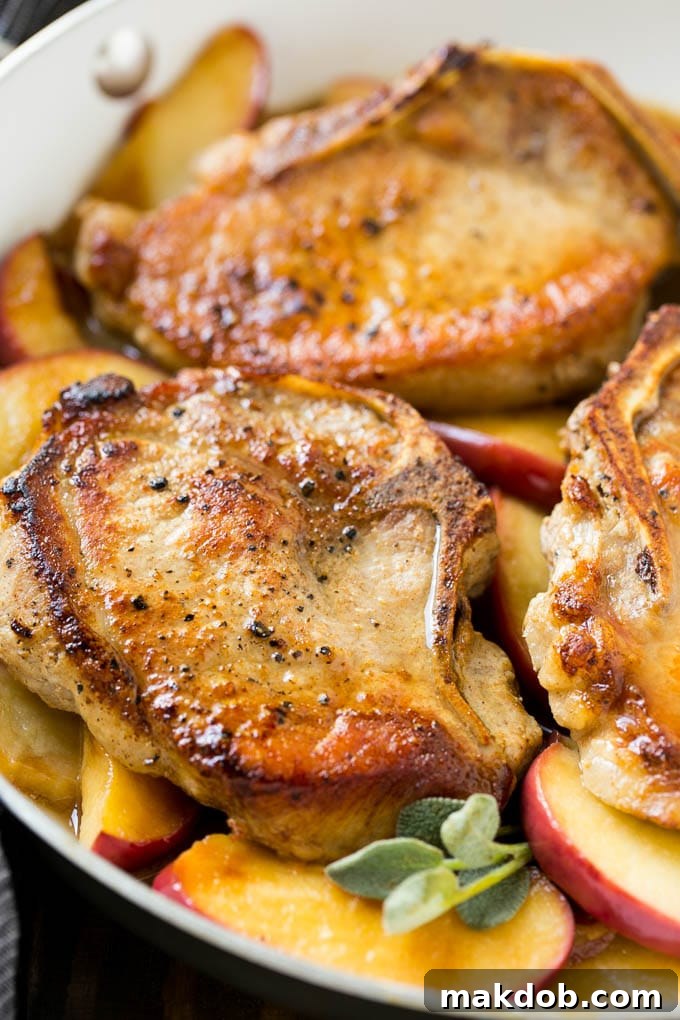
- Prepare and Sear the Pork Chops: Begin by patting your bone-in pork chops dry with paper towels. This crucial step ensures a superior sear. Season both sides generously with kosher salt and freshly ground black pepper. In a large, heavy-bottomed skillet (cast iron works wonderfully here) or a sturdy pan, melt 2 tablespoons of butter over medium-high heat. Once the butter is shimmering, carefully place the seasoned pork chops into the hot pan, ensuring not to overcrowd it. Cook for approximately 6 minutes on each side. You’re looking for a beautiful, deep golden-brown crust, which indicates a flavorful sear and locks in the juices.
- Simmer the Chops in Cider: After the chops are nicely seared, reduce the heat to medium. Pour in 1/2 cup of fresh apple cider. The cider will immediately begin to deglaze the pan, picking up all those delicious browned bits from the bottom – this is where much of your sauce’s flavor will come from! Allow the pork and cider to simmer gently for an additional 6 minutes, or until an instant-read meat thermometer inserted into the thickest part of the pork chops registers an internal temperature of 145 degrees F (63 degrees C). This temperature ensures the pork is cooked through yet remains wonderfully tender and juicy.
- Sauté the Apples: While the pork chops are simmering, begin preparing your apples in a separate pan. In another medium-sized skillet, melt the remaining 2 tablespoons of butter over medium heat. Add your thinly sliced apples and cook for about 5 minutes, stirring occasionally, until they begin to soften and develop a slight caramelization. This gentle cooking brings out their natural sweetness and mellows their tartness.
- Finish the Apples with Cider: To intensify the apple flavor and create a light glaze, add the remaining 2 tablespoons of apple cider to the apples in their pan. Increase the heat to high and cook for another 1-2 minutes, stirring frequently, until the cider reduces slightly and coats the apples beautifully. Taste the apples and season with a pinch of salt to enhance their sweetness.
- Craft the Sage-Dijon Sauce: Once the pork chops have reached their desired internal temperature, transfer them to a clean serving platter and tent loosely with foil to rest. This resting period is vital for juicy pork. Now, turn your attention back to the pork chop pan, which should still contain the flavorful cider drippings. Whisk in the Dijon mustard and chopped fresh sage. Stir continuously over medium heat for 1-2 minutes, allowing the sauce to thicken slightly and the flavors to meld. Taste and adjust the seasoning with salt and black pepper as needed.
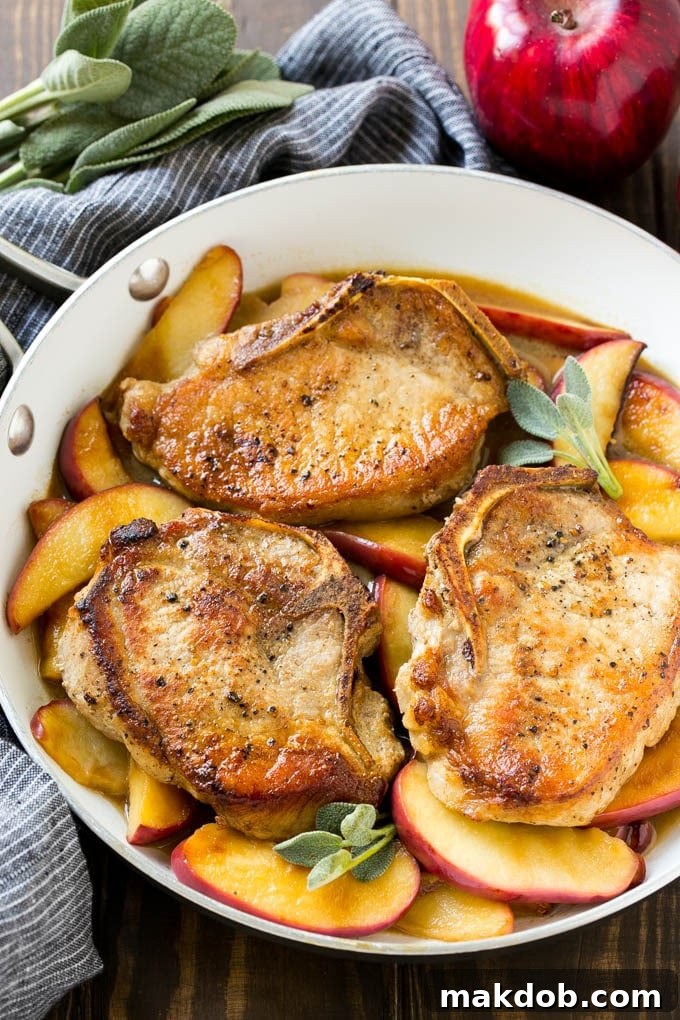
- Assemble and Serve: Arrange the sautéed apples artfully over and around the rested pork chops on the serving platter. Finally, generously spoon the warm, aromatic sage-Dijon cider sauce over the entire dish. Serve immediately, allowing your guests to savor the incredible combination of flavors and textures. This dish is best enjoyed fresh, hot off the stove.
By following these steps, you’ll create a dish that is both impressive and incredibly satisfying, perfect for any fall gathering or a comforting family dinner.
Unlock Culinary Excellence: Expert Tips for the Perfect Apple Pork Chops
Achieving truly exceptional apple pork chops is all about understanding the nuances of the ingredients and techniques. Here are some expanded tips to elevate your dish from delicious to absolutely unforgettable:
- Choosing Your Apples Wisely: The type of apple you select significantly impacts the final flavor and texture of your dish. While many varieties work, aim for firm, crisp apples that offer a good balance of sweetness and tartness, and importantly, hold their shape well during cooking. Excellent choices include:
- Honeycrisp: Sweet, juicy, and incredibly crisp, they maintain their texture beautifully.
- Granny Smith: If you prefer a tart counterpoint to the savory pork and sweet cider, Granny Smith apples are perfect. Their acidity brightens the dish.
- Pink Lady: Sweet-tart with a delightful crunch, these are a fantastic all-rounder.
- Gala: Mildly sweet and crisp, they offer a subtle sweetness that complements the pork without overpowering it.
- Fuji: Very sweet and firm, they will add a rich, caramelized sweetness.
No matter your choice, ensure you slice them thinly and uniformly (about 1/4 inch thick) so they cook quickly and evenly, becoming tender but not mushy.
- Bone-In vs. Boneless Pork Chops: The Flavor Debate: You can absolutely use bone-in or boneless pork chops for this recipe, but there’s a distinct difference.
- Bone-In Chops: Our strong recommendation. The bone contributes significantly to the flavor of the meat and, perhaps more importantly, acts as a natural insulator, helping the chops cook more evenly and stay incredibly moist. They are inherently more forgiving and less prone to drying out.
- Boneless Chops: These cook faster, so you’ll need to adjust your cooking time and monitor the internal temperature even more closely to prevent overcooking, which can lead to dry, tough pork. Choose thicker boneless chops (at least 1 inch thick) if possible.
Regardless of your choice, aim for chops that are at least 1 inch thick for the best results and easier cooking.
- The Unrivaled Power of Fresh Sage: This isn’t a suggestion; it’s a golden rule. Fresh sage is absolutely essential for this recipe. Its pungent, earthy, slightly peppery, and piney aroma is the quintessential flavor companion to pork and apples. The dried, crumbled stuff simply won’t do; it lacks the vibrant, aromatic oils and freshness that truly elevate this dish. Seek out a fresh bunch of sage at your grocery store – you won’t regret it.
- The Secret to the Sauce: Quality Apple Cider: The quality of your apple cider is paramount to the sauce’s success. We strongly advocate for using a fresh, unfiltered apple cider, often found in the refrigerated produce section, especially in the fall. This type of cider is typically richer in flavor, has a cloudy appearance, and often contains natural spices (like cinnamon or allspice) from the pressing process, which adds incredible depth. If you use a clear apple juice (which is often pasteurized, filtered, and lacks the same complexity) or a cider that looks like juice and doesn’t list any spices, your final sauce won’t have the same robust, autumn-inspired deliciousness. The natural pectin in unfiltered cider also contributes to a slightly thicker, more luxurious sauce.
- Don’t Forget to Rest Your Meat: After cooking, always transfer your pork chops to a plate and let them rest, tented loosely with foil, for 5-10 minutes before serving. This allows the juices to redistribute throughout the meat, ensuring every bite is succulent and flavorful.
Quick Tip: Smart Storage & Reheating
Planning for leftovers? Excellent! These apple pork chops are just as delicious the next day. Simply transfer any unused portions to an airtight container and refrigerate for up to 3 days. To reheat, gently warm them in a skillet over medium-low heat with a splash of extra apple cider or broth to keep them moist, or in a preheated oven at 300°F (150°C) until just warmed through. Avoid microwaving if possible, as it can make the pork tough.
Frequently Asked Questions About Apple Pork Chops
These apple pork chops are incredibly versatile and pair beautifully with a variety of side dishes. For a classic comfort meal, serve them over creamy egg noodles, fluffy white rice, or rich garlic mashed potatoes, which can soak up the delicious cider sauce. To add some vibrant color and nutrients, consider a green vegetable on the side, such as tender roasted green beans, crisp bacon-wrapped asparagus, or a simple steamed broccoli with lemon. Other great options include roasted butternut squash, sweet potato puree, or a hearty wild rice pilaf. A simple side salad with a light vinaigrette can also offer a refreshing contrast.
The most reliable way to determine if your pork chops are perfectly cooked is by using a digital probe thermometer. Insert the thermometer into the thickest part of the chop, avoiding the bone. Pork chops are ready to eat when they reach an internal temperature of at least 145 degrees F (63 degrees C). It’s crucial not to let the pork temperature go significantly higher than 145 degrees F, as modern guidelines ensure safety at this temperature, and anything higher will likely result in dry, tough pork. After removing the chops from the heat, they will continue to cook slightly as they rest (this is called carryover cooking), so aiming for 145°F and then letting them rest for 5-10 minutes will yield the juiciest results.
While apple juice can be used in a pinch, we highly recommend fresh, unfiltered apple cider for the best flavor. Apple juice is typically sweeter and lacks the complex, tart notes and natural spiciness that unfiltered cider brings to the sauce. Unfiltered cider also often contains natural pectin, which contributes to a slightly thicker, more luxurious sauce. If you must use apple juice, consider adding a dash of apple cider vinegar (not too much!) or a pinch of cinnamon and allspice to try and replicate the cider’s complexity, but the results will still differ.
A heavy-bottomed skillet is ideal for searing pork chops and developing that beautiful, golden-brown crust. Cast iron skillets are excellent choices because they retain heat exceptionally well and distribute it evenly, leading to a consistent sear. Stainless steel skillets also work very well. The key is to use a pan that can maintain high heat without significant temperature drops when the pork chops are added, ensuring a proper sear and even cooking.
FOLLOW ME FOR MORE DELICIOUS RECIPES
Exciting Flavor Variations to Explore
While this recipe for apple pork chops is undeniably delicious in its classic form, it also serves as a fantastic foundation for creative culinary experimentation. Feel free to customize the flavors to perfectly suit your taste preferences or to use up ingredients you have on hand. Here are some ideas to inspire your next kitchen adventure:
- Protein Swaps: Not a fan of pork, or simply looking for variety? This versatile sauce and apple pairing works beautifully with other proteins.
- Chicken Tenders or Thighs: Chicken breast might dry out, but juicy chicken tenders or bone-in, skin-on chicken thighs would be excellent. Adjust cooking times accordingly; chicken tenders will cook very quickly, while thighs will need a bit longer.
- Pork Tenderloin: For a leaner cut, slice a pork tenderloin into medallions and follow a similar searing and simmering process. It will cook much faster than chops, so monitor closely.
- Turkey Cutlets: Thin turkey cutlets can also be a delightful alternative, offering a lighter flavor profile that still harmonizes with the apples and cider.
- Fruity Alternatives: Apples are classic, but other fruits can introduce exciting new dimensions.
- Pears: Swap out the apples for firm pears, such as Bosc or Anjou varieties. These pears hold their shape well during cooking and offer a slightly different sweetness. Pair them with pear juice instead of apple cider for a cohesive flavor profile.
- Dried Fruits: For an added layer of sweetness and chewiness, consider simmering a handful of dried cranberries, cherries, or apricots alongside the fresh apples.
- Elevated Flavorings: Enhance the sauce and overall complexity with additional seasonings and aromatics.
- Herb Alternatives: If fresh sage isn’t available or you’re seeking a different herbacious note, fresh rosemary and thyme are both fantastic options that pair wonderfully with pork and apples. Use about a teaspoon of finely chopped herbs.
- Warm Spices: Introduce a touch of warmth by adding a cinnamon stick to the simmering cider sauce, or a pinch of ground nutmeg or allspice for a more complex aroma.
- Aromatics: Sliced red onion, caramelized until sweet, can add a wonderful depth. Minced shallots or garlic, sautéed briefly before adding the pork, create a savory base.
- Sweet & Tangy Boosts: A tablespoon of brown sugar can be added to the apples for extra caramelization or to the sauce for a touch more sweetness. A splash of balsamic vinegar can deepen the flavor of the sauce, while a squeeze of fresh lemon juice at the end can brighten the entire dish and cut through its richness. A tablespoon of maple syrup instead of brown sugar can also add a delightful fall sweetness.
- Creamy Finish: For an even richer, more luxurious sauce, stir in a tablespoon or two of heavy cream or a dollop of sour cream right at the end, just before serving.
These Apple Pork Chops are effortlessly easy to prepare, yet they capture and embody all the wonderful, comforting flavors of the fall season. This truly delicious and satisfying dish is destined to become a regular fixture in my home, delighting palates throughout the colder months and beyond!
More Fall Favorites to Inspire Your Kitchen
Cranberry Meatballs (Slow Cooker)
Total Time: 3 hrs 5 mins
Brown Sugar Delicata Squash Recipe
Total Time: 35 mins
Butternut Squash Pasta
Total Time: 30 mins
Cider Glazed Chicken
Total Time: 30 mins
Sweet Potato Casserole with Marshmallows
Total Time: 1 hr 50 mins
Love This Recipe?
We’d be thrilled to hear your thoughts! Please consider leaving a 5-star 🌟🌟🌟🌟🌟 rating in the recipe card below and a review in the comments section further down the page. Your feedback helps us and other home cooks!
Apple Pork Chops
Author: Sara Welch
Prep Time: 5 minutes
Cook Time: 25 minutes
Total Time: 30 minutes
Course: Main
Cuisine: American
Serves: 4

Pin
Ingredients
- 4 tablespoons butter, divided use
- 4 bone-in pork chops, approximately 5-6 ounces each
- 1/2 cup + 2 tablespoons apple cider, divided use (fresh, unfiltered cider is best)
- 1 tablespoon Dijon mustard
- 1 teaspoon chopped fresh sage
- 2 cups apples, cored and thinly sliced (such as Pink Lady or Honeycrisp)
- Salt and pepper to taste
Instructions
- In a large skillet, melt 2 tablespoons of butter over medium-high heat. Season the pork chops generously with salt and pepper; cook for 6 minutes on each side or until deep golden brown and well-seared.
- Reduce heat to medium. Add 1/2 cup of cider to the pan and simmer for an additional 6 minutes, or until a meat thermometer inserted into the thickest part of the pork chops registers 145 degrees F (63 degrees C).
- While the chops are cooking, melt the remaining 2 tablespoons of butter in another large pan over medium heat. Add the thinly sliced apples and cook for 5 minutes or until the apples begin to soften and lightly caramelize.
- Add the remaining 2 tablespoons of apple cider to the apples, turn the heat to high, and cook for 1-2 minutes more, stirring frequently, until the cider reduces slightly and coats the apples. Season the apples with salt to taste.
- Transfer the cooked pork chops to a serving plate and tent loosely with foil to rest. Whisk the Dijon mustard and chopped fresh sage into the cider drippings from the pork pan; stir over medium heat for 1-2 minutes until slightly thickened. Season the sauce to taste with salt and pepper.
- Place the sautéed apples on the plate with the pork chops and pour the warm sage-Dijon cider sauce generously over the top. Serve immediately and enjoy this comforting fall dish!
Notes
- This recipe specifically calls for apple cider, referring to the beverage. Please do not use apple cider vinegar, as the flavor will be completely different.
- Leftovers can be stored in an airtight container in the refrigerator for up to 3 days. Reheat gently in a skillet or oven to maintain moisture.
- Using an instant-read meat thermometer is highly recommended to ensure your pork chops are cooked perfectly to 145 degrees F (63 degrees C). Overcooking can lead to dry and less enjoyable pork.
Nutrition
Calories: 270kcal | Carbohydrates: 4g | Protein: 24g | Fat: 16g | Saturated Fat: 8g | Cholesterol: 98mg | Sodium: 173mg | Potassium: 460mg | Sugar: 3g | Vitamin A: 260IU | Vitamin C: 0.3mg | Calcium: 13mg | Iron: 0.6mg
Did you make this recipe?
Tag @dinneratthezoo on Instagram and hashtag it #dinneratthezoo