
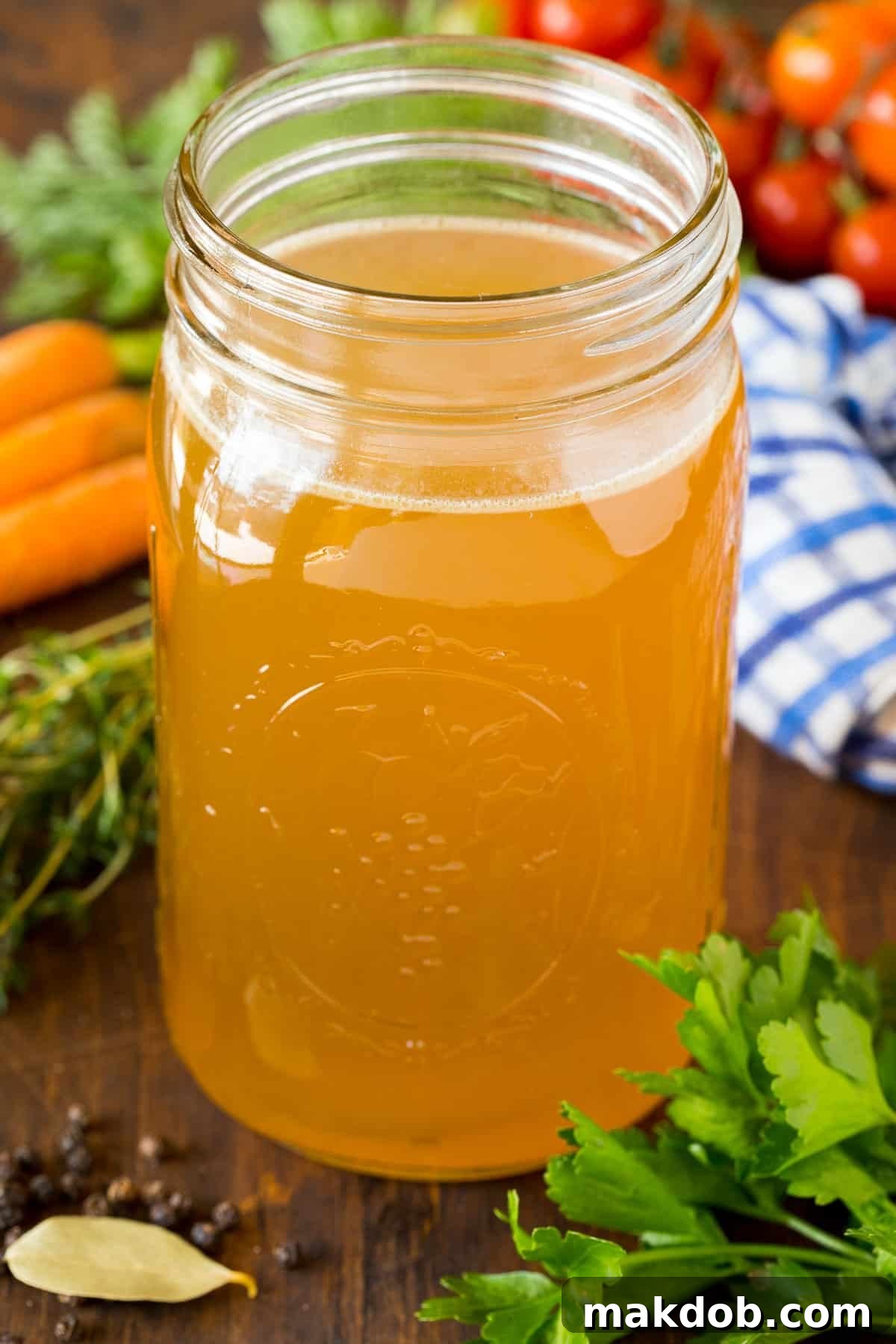
After the festive feast, when the last slice of turkey has been savored, many home cooks are left with a valuable culinary treasure: the turkey carcass. Instead of discarding it, transform this humble leftover into a cornerstone of delicious cooking – a rich, aromatic homemade turkey broth. This recipe guides you through creating a deeply flavorful liquid from a turkey carcass, an assortment of fresh vegetables, aromatic herbs, and savory spices, all gently simmered together with water. The resulting broth is a versatile kitchen staple, perfect for elevating soups, enriching sauces, and crafting the absolute best turkey gravy.
Holidays often bring an abundance of turkey, and with it, the opportunity to maximize every part of the bird. Beyond delightful meals like a comforting turkey casserole or a refreshing turkey salad, turning the carcass into homemade broth is a tradition that not only prevents food waste but also infuses your subsequent dishes with unparalleled depth and character.
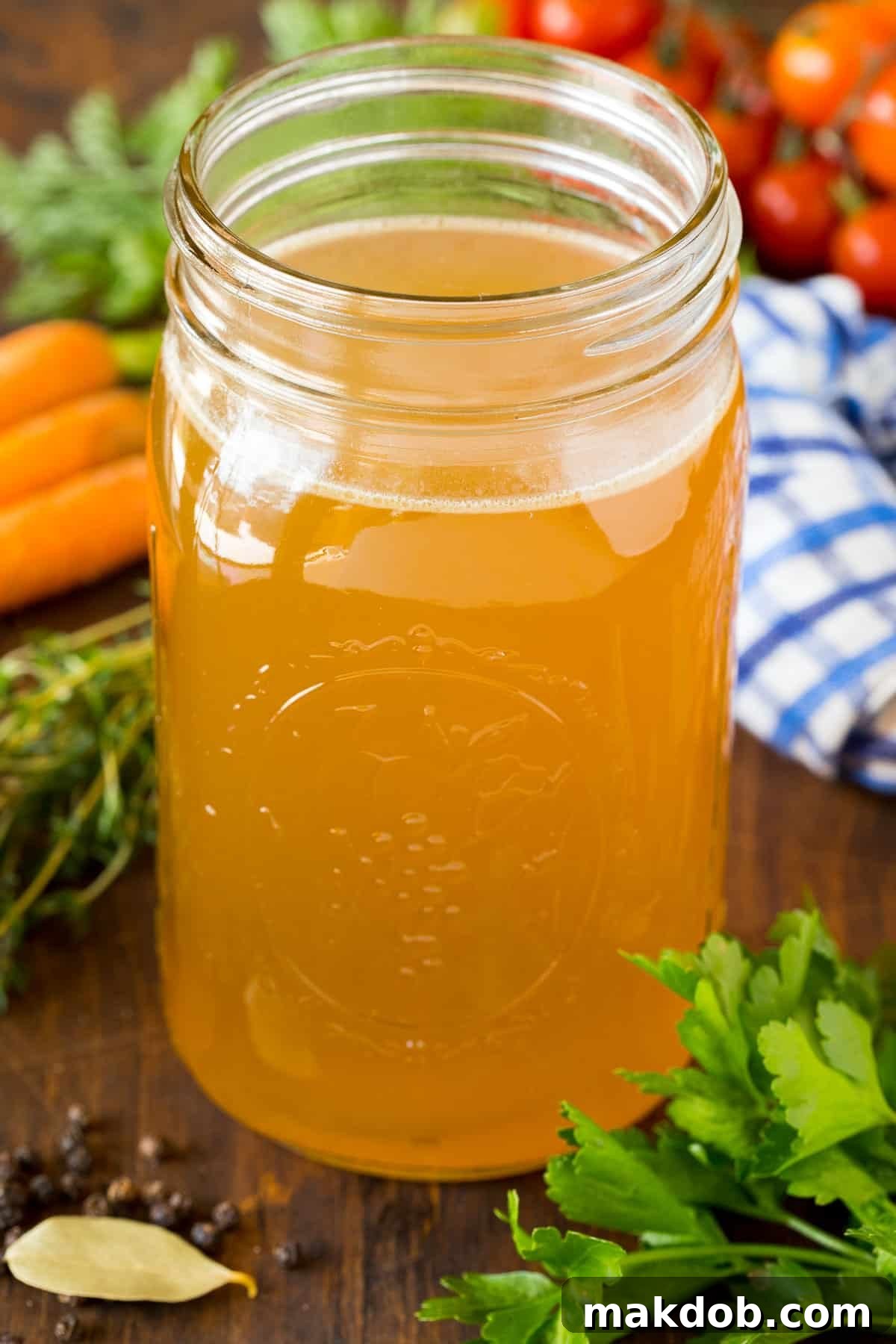
Making your own turkey broth is surprisingly straightforward and incredibly rewarding. It’s an excellent way to utilize vegetable scraps and the leftover turkey frame, ensuring that no part of your holiday bird goes to waste. The process itself is largely hands-off, requiring only a gentle simmer to extract maximum flavor and nutrients, yielding a liquid gold that far surpasses any store-bought alternative in taste and quality.
Table of Contents
- The Unsung Hero of Culinary Flavor
- Why Make Your Own Turkey Broth?
- Essential Ingredients for a Robust Turkey Broth
- Crafting Your Homemade Turkey Broth: A Step-by-Step Guide
- Tips for Achieving the Perfect Broth
- Slow Cooker Method: Effortless Broth
- Turkey Broth vs. Turkey Stock: Understanding the Difference
- Versatile Uses for Your Flavorful Turkey Broth
- Customizing Your Broth: Flavor Variations
- Storing Your Homemade Broth for Longevity
- Conclusion: Elevate Your Culinary Creations
- Turkey Broth Recipe
The Unsung Hero of Culinary Flavor
Turkey broth, especially when made from scratch, is far more than just a liquid; it’s the foundation of countless comforting and delicious meals. Its deep, savory notes provide a complexity that cannot be replicated by water or inferior store-bought versions. From classic Thanksgiving gravy to hearty winter soups, a good turkey broth elevates every dish it touches, imparting a rich, umami flavor that truly makes your food sing. It’s a testament to the idea that some of the best flavors come from simple, whole ingredients given time to meld and develop.
Why Make Your Own Turkey Broth?
While convenience often leads us to store shelves for pre-made broths, the benefits of crafting your own turkey broth are manifold and compelling. Here’s why you should consider making this homemade staple a part of your kitchen repertoire:
- Superior Flavor and Aroma: Homemade broth offers a depth of flavor that commercial products simply can’t match. You control the ingredients, ensuring fresh, high-quality components that simmer together to create a richer, more nuanced taste profile. The aroma that fills your kitchen as the broth simmers is an added bonus, creating a truly comforting atmosphere.
- Nutritional Advantages: When you simmer a turkey carcass, bones, and vegetables for hours, you extract valuable collagen, minerals, and amino acids. This creates a more nutrient-dense liquid compared to many store-bought options that often rely on artificial flavorings and excessive sodium. Homemade broth can contribute to a healthier diet, providing beneficial compounds for gut health, joint support, and overall wellness.
- Cost-Effectiveness and Waste Reduction: Making broth is an excellent way to reduce food waste. Instead of discarding the turkey carcass after a holiday meal, you give it a second life, transforming what might have been thrown away into a valuable ingredient. This practice is not only environmentally friendly but also incredibly economical, saving you money on store-bought broths.
- Control Over Ingredients: You dictate what goes into your broth. This means no artificial flavors, colors, preservatives, or excessive sodium often found in commercial products. If you have dietary restrictions or preferences, making your own broth ensures it aligns perfectly with your needs.
- Versatility in the Kitchen: A well-made turkey broth is an incredibly versatile ingredient. It can be used as a base for soups, stews, and gravies, a cooking liquid for grains like rice and quinoa, a braising liquid for meats and vegetables, or simply enjoyed on its own as a comforting, warming drink.
Essential Ingredients for a Robust Turkey Broth
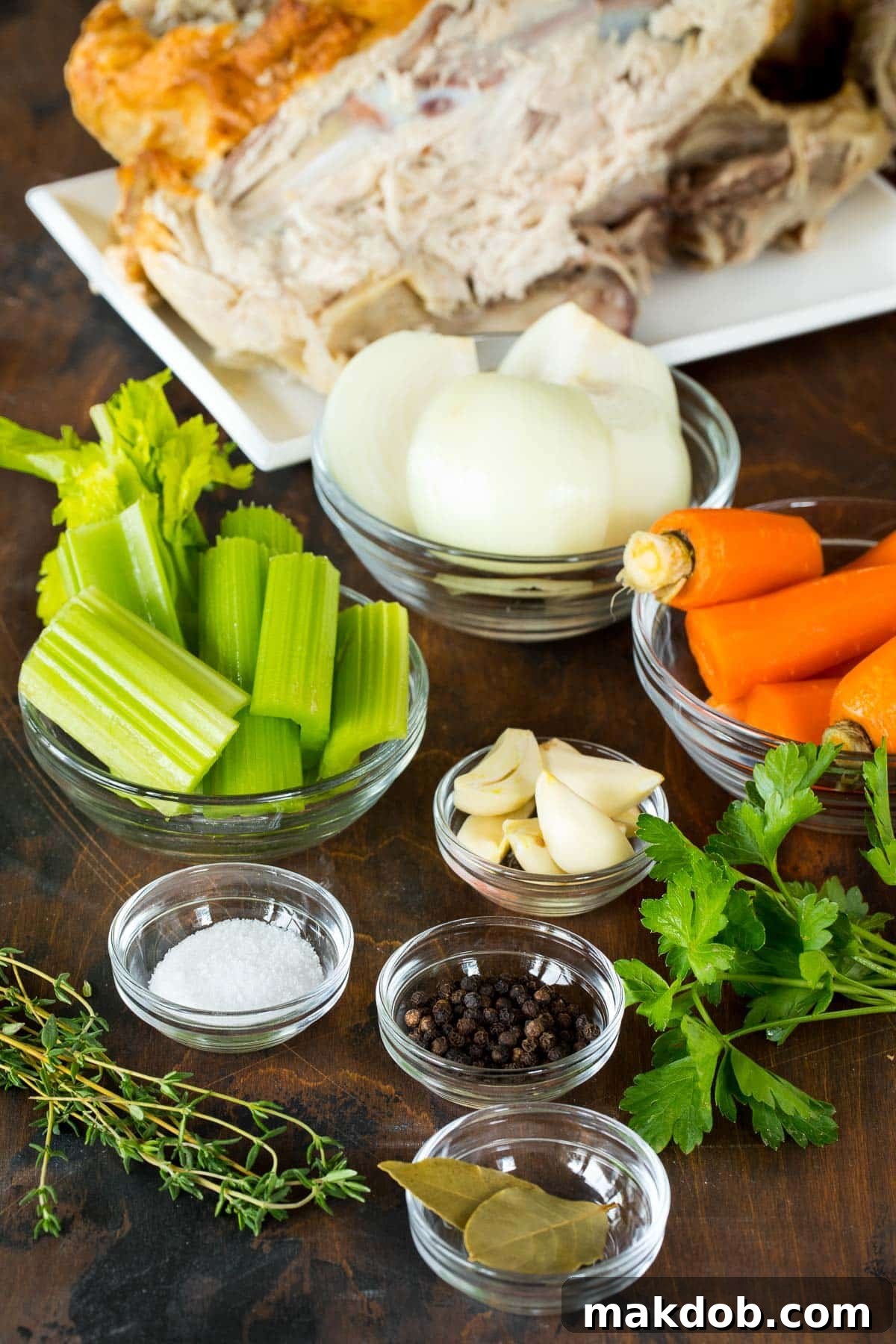
The beauty of homemade turkey broth lies in its simplicity and the use of humble, yet powerful, ingredients. This recipe primarily leverages a leftover turkey carcass, augmented by a classic aromatic base and fresh seasonings:
- Turkey Carcass: This is the star of the show. The bones, leftover meat scraps, and cartilage from a roasted turkey infuse the broth with rich, savory flavor and beneficial gelatin. Don’t worry if there are still some bits of meat; they will only add to the richness.
- Onion, Carrot, and Celery (Mirepoix): This trio forms the foundational aromatic base for nearly all savory broths and stocks.
- Onion: Provides a sweet, pungent undertone. Peel and quarter it.
- Carrot: Adds natural sweetness and a subtle earthy flavor. Peel and cut into large chunks.
- Celery: Contributes a fresh, slightly bitter note, balancing the sweetness. Use stalks with leaves for extra flavor.
- Garlic: Whole cloves of garlic add a deep, aromatic complexity without overpowering the turkey flavor. No need to peel or chop them finely; a quick smash is sufficient.
- Herbs:
- Fresh Parsley: Provides a fresh, herbaceous lift. Sprigs are ideal.
- Fresh Thyme: Offers a delicate, earthy, and slightly floral aroma. Use whole sprigs, or substitute with dried thyme leaves.
- Bay Leaves: These dried leaves impart a distinct herbal, slightly peppery, and subtly sweet note that is essential for a classic broth.
- Black Peppercorns: Whole peppercorns add a gentle, warm spice without the harshness of ground pepper.
- Kosher Salt: While we aim for a lightly seasoned broth, a touch of salt is necessary to draw out and enhance the flavors of all the ingredients. You can always adjust the saltiness later.
- Water: Enough cold water to fully cover all your ingredients is crucial. Typically, this will be around 10 cups or more, depending on the size of your pot and carcass. Using cold water is important as it allows the impurities to rise to the surface, which you can then skim off for a clearer broth.
For those times when a full turkey carcass isn’t available, but you still crave homemade turkey broth, you can substitute the carcass with approximately 2 pounds of raw turkey wings or necks. These parts are rich in bones and cartilage, which yield a beautiful, gelatinous broth, albeit with a slightly different flavor profile. Remember, quality ingredients form the backbone of an exceptional broth.
Crafting Your Homemade Turkey Broth: A Step-by-Step Guide
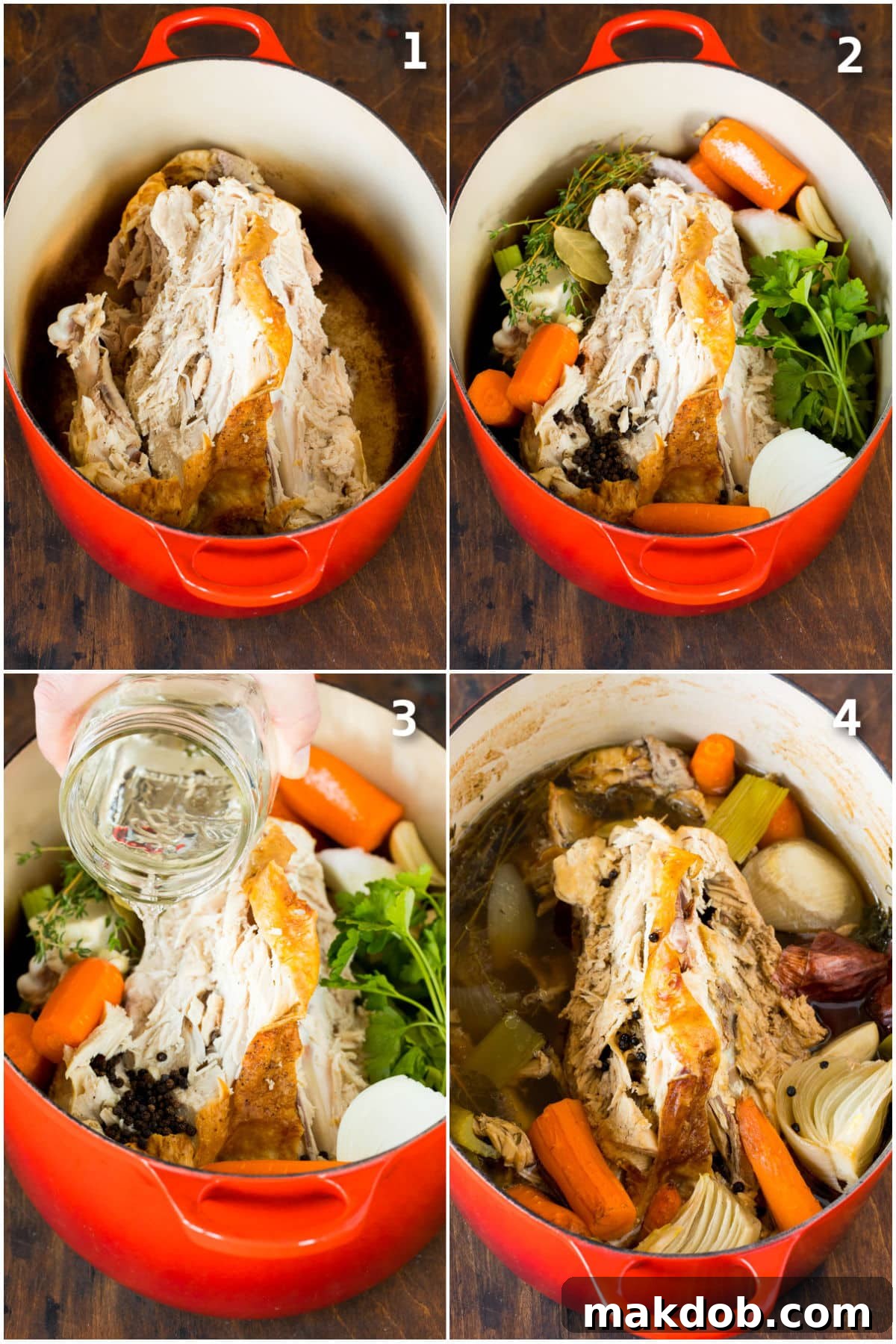
Making homemade turkey broth is a rewarding process that largely involves combining ingredients and letting time do its work. Follow these steps for a perfect batch:
Preparation
- Gather Your Ingredients: Ensure you have your turkey carcass, roughly chopped onion, carrots, celery, garlic cloves, fresh parsley and thyme sprigs, bay leaves, black peppercorns, and kosher salt.
- Prepare the Carcass: If your carcass is large, you might want to break it into a few pieces to better fit into your pot and expose more surface area for flavor extraction. Remove any stuffing or excessive fat deposits, as these can make your broth cloudy or greasy.
- Wash and Chop Vegetables: Give your vegetables a good rinse. There’s no need for fine dicing; large chunks are perfect as they will be strained out later. Quatering the onion, cutting carrots and celery into 3-inch pieces is ideal.
Simmering Process
- Combine in a Large Pot: Place the turkey carcass and all the prepared vegetables, herbs, and spices into your largest stockpot. Make sure the pot is large enough to comfortably hold all ingredients with room for water.
- Add Cold Water: Pour cold water over all the ingredients until they are fully submerged. Aim for at least 10 cups, or more if needed. Using cold water allows impurities to slowly rise to the surface as the temperature increases, which helps create a clearer broth.
- Bring to a Gentle Simmer: Place the pot over medium-low heat and slowly bring the mixture to a gentle simmer. Do not boil vigorously, as this can emulsify fats and impurities, leading to a cloudy broth. A gentle simmer is indicated by small bubbles appearing around the edges and occasionally breaking the surface.
- Skim Impurities: As the broth begins to heat and simmer, you’ll notice foam and impurities rising to the surface. Use a large spoon or a fine mesh skimmer to gently remove and discard this foam. Skimming helps in achieving a clearer, cleaner-tasting broth. Do this periodically during the first hour or so of simmering.
- Slow Cook: Once simmering, reduce the heat to the lowest setting, cover the pot partially (leaving a small gap for steam to escape), and let it cook for at least 3-4 hours. For an even deeper, more concentrated flavor, you can simmer it for up to 6 hours. The longer the simmer, the more flavor and beneficial gelatin will be extracted from the bones and vegetables.
Straining and Cooling
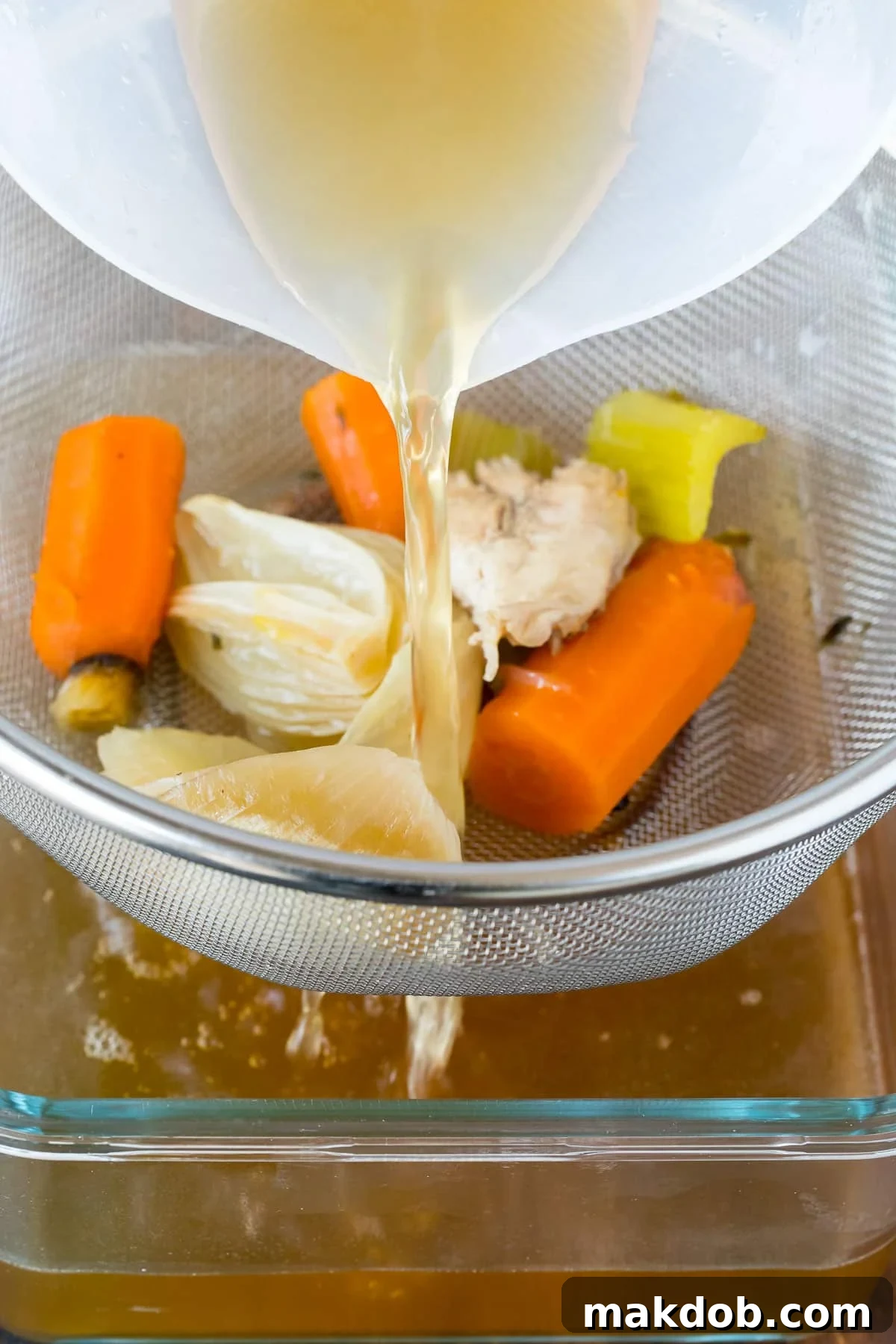
- Strain the Broth: Carefully remove the turkey carcass and large vegetable pieces from the pot using tongs or a slotted spoon. Then, pour the liquid through a fine mesh sieve into a heat-proof container or a second large pot. For an exceptionally clear broth, you can line your sieve with cheesecloth.
- Cool Quickly: Allow the broth to cool down significantly at room temperature (no longer than 2 hours) before refrigerating or freezing. To speed up cooling, you can place the pot in an ice bath. Rapid cooling helps prevent bacterial growth.
- Store or Use: Once cooled, your homemade turkey broth is ready to be used in your favorite recipes, or stored for future culinary adventures.
Tips for Achieving the Perfect Broth
- Salt to Taste, Not Excess: This recipe yields a lightly salted broth, intentionally designed to have a lower sodium content than most store-bought varieties. This gives you the flexibility to adjust the saltiness when you use the broth in a final dish. If you prefer a saltier broth for immediate consumption, you can add an extra teaspoon of salt while simmering, or simply season to taste at the table. Remember, you can always add more salt, but you can’t easily remove it.
- Optimal Yield and Storage: You should expect to yield approximately 8 cups of flavorful broth from this recipe. Proper storage is key to extending its shelf life:
- Refrigeration: Store the broth in airtight containers in the refrigerator for up to 5 days.
- Freezing: For longer storage, freeze the broth for up to 3 months. Portion it into freezer-safe containers, zip-top bags (laid flat), or even ice cube trays for smaller servings, making it convenient for various recipes.
- The Power of Extended Simmering: The longer your broth simmers, the more intensely flavorful and rich it will become. While 3-4 hours is the recommended minimum cook time to extract sufficient flavor, pushing it to 6 hours will develop a deeper, more robust profile. However, simmering for too long (e.g., beyond 8-10 hours) can sometimes lead to a slightly bitter taste, so there’s a sweet spot.
- When No Carcass is Available: Life happens, and sometimes a turkey carcass isn’t on hand. If you need a smaller amount of broth for specific recipes, like gravy, you can easily adapt this recipe. Simply halve the ingredients and use 2 pounds of raw turkey wings, necks, or even drumettes as a substitute for the carcass. These parts are rich in bones and connective tissue, producing a lovely, gelatinous broth.
- Dealing with Fat: Homemade broth typically has less fat than you might expect. However, if you refrigerate or freeze the broth, you may notice a thin layer of solidified fat accumulating on the surface. This fat can be easily scraped off and discarded before reheating, resulting in a cleaner, lighter broth. Some cooks prefer to leave a thin layer of fat, as it can add richness and help preserve the broth slightly.
- Roast for Deeper Flavor: For an even richer, darker, and more complex broth, consider roasting your turkey carcass and vegetables (carrots, onions, celery) until they are nicely browned before adding them to the pot. This caramelization process adds layers of umami that enhance the overall flavor profile of your broth.
- Avoid Cruciferous Vegetables: While many vegetables are great for broth, avoid adding strong-flavored cruciferous vegetables like broccoli, cabbage, or Brussels sprouts. These can impart an undesirable bitter or sulfurous taste to your delicate turkey broth.
Slow Cooker Method: Effortless Broth
Quick Tip
For a truly hands-off approach to making turkey broth, utilize your large crockpot or slow cooker. Simply place all the broth ingredients into the slow cooker, cover with water, and set it to cook on low for 8 hours. The gentle, consistent heat of a slow cooker is perfect for extracting maximum flavor with minimal effort. Once done, strain the broth as directed in the main recipe, and it will be ready to use or store. This method is ideal for busy days or for letting the broth simmer overnight.
Turkey Broth vs. Turkey Stock: Understanding the Difference
Recipe FAQs
The distinction between turkey stock and turkey broth often causes confusion, but it primarily revolves around the ingredients used and the cooking time. Turkey stock is traditionally made primarily from roasted turkey bones, along with a mirepoix (onions, carrots, celery) and aromatics, simmered for a longer period (often 6-12 hours). The longer cooking time extracts more collagen from the bones, resulting in a liquid that is thicker and gelatinous when chilled. Stock usually contains less seasoning, making it a neutral base for many dishes. Turkey broth, on the other hand, typically uses more meat-on-bone (or even just meat) along with vegetables and herbs, and is simmered for a shorter duration (2-4 hours). It tends to be lighter in body and more seasoned, often ready to be consumed on its own. This particular recipe combines elements of both: it utilizes the turkey carcass (bones and some residual meat) and fresh vegetables, resulting in a liquid that is rich in flavor like a broth, yet with some of the body and versatility of a stock.
Turkey broth is incredibly versatile in the kitchen. It’s an ideal base for any soup featuring turkey, such as classic turkey noodle soup, hearty turkey chili, or creamy turkey and wild rice soup. It’s an indispensable component for crafting a rich, flavorful gravy, especially after a roast turkey. Beyond these, turkey broth can elevate pasta dishes, lending depth to sauces, or be used as a flavorful liquid in casseroles, stuffing, and risottos, often serving as an excellent substitute for chicken broth. Its savory profile also makes it a fantastic braising liquid for various meats and vegetables.
Properly stored homemade turkey broth will remain fresh and safe to use in the refrigerator for up to 5 days. Always ensure it’s stored in an airtight container to maintain freshness and prevent absorption of other food odors. For longer storage, freezing is highly recommended. When freezing, allow the broth to cool completely before transferring it to freezer-safe containers or resealable bags. Frozen turkey broth can maintain its quality for up to 3 months.
FOLLOW ME

Versatile Uses for Your Flavorful Turkey Broth
Once you’ve made a batch of homemade turkey broth, you’ll find it an indispensable ingredient in your kitchen. Its rich, savory profile can transform everyday dishes into extraordinary meals. Here are some of the most popular and delicious ways to utilize your homemade turkey broth:
- Soups and Stews: This is arguably the most common use. Turkey broth forms the perfect base for hearty turkey noodle soup, robust turkey chili, comforting creamy turkey and wild rice soup, or any vegetable-based soup that benefits from a poultry foundation. Its depth of flavor makes your soups taste more authentic and satisfying.
- Rich Gravies and Sauces: A fundamental ingredient for the perfect gravy, especially after a holiday roast. Deglazing the pan with homemade turkey broth adds incredible flavor and body, creating a velvety, savory sauce that complements turkey, mashed potatoes, and stuffing beautifully. It’s also excellent in pan sauces for chicken or pork.
- Casseroles: Elevate your favorite casseroles, such as Turkey Tetrazzini, by using homemade turkey broth instead of plain water or commercial broth. It adds moisture, flavor, and a cohesive element that makes the dish truly special.
- Cooking Grains: Use turkey broth as the cooking liquid for rice, quinoa, couscous, or stuffing. This simple swap infuses your grains with a savory taste, making them a flavorful side dish or a more interesting component of a main meal. Think of the depth it can add to a holiday stuffing!
- Braising Meats and Vegetables: For succulent, fall-off-the-bone meats and tender, flavor-packed vegetables, use turkey broth as a braising liquid. It imparts its savory notes into the food, creating a deeply satisfying dish.
- Risotto and Pasta Dishes: Homemade broth is key to a truly flavorful risotto. Gradually adding warm broth as you stir helps create that creamy texture and deep taste. Similarly, a splash of broth can enhance pasta sauces, adding richness and a silky consistency.
- Simple Comfort Drink: Sometimes, a warm mug of savory turkey broth is all you need. It’s comforting, nourishing, and a great way to warm up on a chilly day, or even to soothe a cold.
The difference homemade broth makes in these dishes is truly remarkable. There’s an added level of richness, a complex flavor profile, and a natural goodness that simply cannot be replicated with store-bought varieties. It transforms ordinary meals into extraordinary culinary experiences.
Explore More Turkey Broth Recipes
Turkey Tetrazzini
Total Time: 1 hr
Turkey Noodle Soup
Total Time: 5 hrs 25 mins
Turkey Gravy Recipe
Total Time: 15 mins
Turkey Soup Recipe
Total Time: 5 hrs 20 mins
Turkey Chili Recipe
Total Time: 1 hr
Customizing Your Broth: Flavor Variations
While this base recipe for turkey broth is wonderful on its own, it also serves as an excellent canvas for customization. Don’t hesitate to experiment with different ingredients to tailor the broth to your specific taste preferences or the requirements of future dishes.
- Alternative Meats:
- Chicken Broth: Easily transform this into a homemade chicken broth by simply swapping the turkey carcass for a chicken carcass or about 2-3 pounds of chicken wings/backs. The cooking method remains the same.
- Mixed Poultry: Combine turkey and chicken bones for a broader poultry flavor profile.
- Expanded Vegetable Profile:
- Leeks: Add cleaned, chopped leeks for a milder, sweeter onion flavor.
- Parsnips: These root vegetables contribute a delicate sweetness and earthy notes.
- Mushrooms: A handful of dried or fresh mushrooms (like shiitake or cremini) can add a deep umami richness to your broth.
- Green Onions/Scallions: Add these towards the end of the simmering process for a fresh, slightly pungent kick.
- Bell Peppers: Red or yellow bell peppers can add a subtle sweetness and aromatic quality.
- Enhanced Seasonings and Spices:
- Sage or Rosemary: These classic poultry herbs pair wonderfully with turkey. Add a few sprigs along with the thyme and parsley.
- Smoked Paprika: For a subtle smoky depth, a teaspoon of smoked paprika can work wonders, particularly if you plan to use the broth in chili or stews.
- Dried Chili Peppers: If you enjoy a hint of heat, toss in a dried ancho or guajillo chili pepper. Remove it before straining if you prefer a milder flavor.
- Fennel Seeds: A teaspoon of fennel seeds can impart a lovely, subtle anise-like aroma and flavor, especially good if you’re making an Italian-inspired soup.
- Star Anise or Ginger: For an Asian-inspired twist, add a star anise pod and a few slices of fresh ginger. This variation would be excellent for pho or ramen.
- Roasted Vegetables: As mentioned in the tips, roasting your mirepoix alongside the carcass before simmering will develop a deeper, more caramelized flavor in your broth.
By experimenting with these flavor variations, you can create a custom broth that perfectly complements any dish you have in mind. In my opinion, soups and stews that are made with fresh, homemade broth taste so much better. There’s just an added level of richness, an authentic depth, and a comforting quality that simply can’t be recreated with the store-bought variety. The effort is minimal, but the culinary rewards are immense.
Storing Your Homemade Broth for Longevity
Once you’ve gone through the effort of making delicious homemade turkey broth, proper storage is crucial to ensure its freshness and make it readily available for future meals. Here’s how to store your liquid gold:
Cooling is Key
Before storing, it’s essential to cool the broth down as quickly as possible to prevent bacterial growth. While it’s safe to let it cool at room temperature, aim to get it into the refrigerator within two hours of cooking. To speed up the cooling process:
- Divide the broth into smaller, shallow containers.
- Place the pot of strained broth into an ice bath in your sink, stirring occasionally.
Refrigeration
For short-term use, the refrigerator is your best friend:
- Containers: Transfer the cooled broth to clean, airtight containers. Glass jars (like mason jars) or BPA-free plastic containers work well.
- Duration: Homemade turkey broth typically stays fresh in the refrigerator for up to 4-5 days. Beyond this, it’s best to freeze it.
- Fat Layer: As the broth chills, you might notice a layer of solidified fat on top. This acts as a natural seal and can be left until you’re ready to use the broth, or it can be easily scraped off and discarded for a leaner broth.
Freezing for Long-Term Storage
Freezing is the best method for preserving your broth for extended periods:
- Containers: Use freezer-safe containers, heavy-duty freezer bags, or even ice cube trays.
- Freezer Bags: For space-saving storage, pour cooled broth into zip-top freezer bags, remove as much air as possible, and lay them flat on a baking sheet in the freezer until solid. Once solid, they can be stacked vertically to save space.
- Ice Cube Trays: For small, single-serving portions (perfect for deglazing a pan or adding a boost to sauces), pour broth into ice cube trays and freeze until solid. Once frozen, pop the cubes out and transfer them to a larger freezer bag.
- Jars/Containers: When using glass jars or rigid plastic containers, remember to leave some headspace (about an inch) to allow for expansion as the liquid freezes, preventing cracks or bursts.
- Duration: Frozen turkey broth can maintain its quality for up to 3 months. While it’s generally safe to consume beyond this, the flavor and quality may start to degrade.
- Thawing: When ready to use, thaw frozen broth overnight in the refrigerator, or gently reheat it in a saucepan over low heat. For smaller portions, you can often add frozen broth cubes directly to simmering soups or sauces.
Labeling your containers with the date of preparation is a good practice to keep track of freshness. With these storage tips, you’ll always have a supply of rich, flavorful turkey broth ready to elevate your cooking.
Conclusion: Elevate Your Culinary Creations
Crafting your own homemade turkey broth is a simple yet profoundly impactful culinary endeavor. It’s a journey from leftover carcass to liquid gold, transforming discarded components into a rich, flavorful foundation for countless dishes. By embracing this practice, you not only reduce food waste and save money but also infuse your cooking with a depth and authenticity that store-bought alternatives simply cannot rival.
The time invested in simmering a turkey carcass with fresh vegetables and aromatic herbs yields a broth that is not just delicious but also more nutritious, giving you complete control over its ingredients and sodium content. Whether it’s enhancing a comforting bowl of soup, enriching a decadent gravy, or adding savory notes to grains and casseroles, your homemade turkey broth will undoubtedly elevate your culinary creations to new heights.
So, the next time you finish a magnificent turkey meal, don’t let that valuable carcass go to waste. Seize the opportunity to create a pantry staple that will inspire countless delicious meals. Your taste buds, and your kitchen, will thank you for it.
Love This Recipe?
Please leave a 5-star 🌟🌟🌟🌟🌟 rating in the recipe card below & a review in the comments section further down the page.
Turkey Broth
Pin

Ingredients
For the broth
- 1 turkey carcass
- 1 medium onion, peeled and quartered
- 2 medium carrots, peeled and cut into 3-inch pieces
- 3 stalks celery with leaves, cut into 3-inch pieces
- 1 tablespoon black peppercorns
- 4 sprigs fresh parsley
- 3 sprigs fresh thyme or 1 teaspoon dried thyme leaves
- 6 cloves garlic
- 2 bay leaves
- 1 tablespoon kosher salt
Instructions
- Place the turkey carcass, onion, carrots, celery, peppercorns, parsley, thyme, garlic, bay leaves, and kosher salt in a large pot. Cover all ingredients with cold water (at least 10 cups).
- Bring to a gentle simmer over medium-low heat. Cook, uncovered, for at least 3-4 hours, or up to 6 hours for a more intense flavor. Skim any foam or impurities from the surface occasionally during the first hour.
- Once simmering is complete, carefully pour the broth through a fine mesh sieve into a clean container, discarding the solids.
- Allow the broth to cool significantly at room temperature (within 2 hours) before refrigerating or freezing for later use.
Notes
- This recipe yields a lightly salted broth, making it versatile for various dishes. If you prefer a saltier broth, you can add an extra teaspoon of salt during simmering, or simply adjust to taste when using the broth in your final recipe.
- You should get about 8 cups of broth. Store in the refrigerator for up to 5 days, or freeze in airtight containers for up to 3 months.
- If you don’t have a turkey carcass, you can use 2 pounds of raw turkey wings or necks as a substitute. Halve the other ingredients for a smaller batch.