
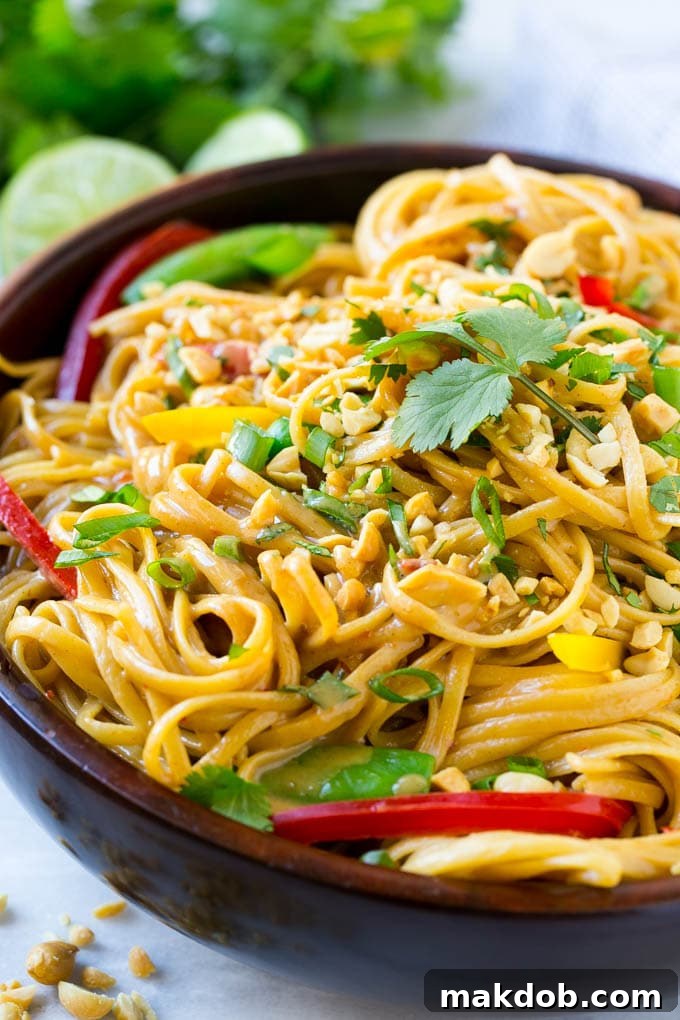
Thai Peanut Noodles: Your 20-Minute Culinary Escape to Flavor Paradise
Craving a vibrant, flavor-packed meal that transports your taste buds to Thailand without leaving your kitchen? Look no further than these incredible Thai Peanut Noodles. This recipe is a culinary triumph, brimming with colorful, crisp vegetables and generously coated in an irresistibly creamy, homemade peanut sauce. Forget waiting for takeout; with this easy-to-follow guide, you can whip up a restaurant-quality meal in just 20 minutes, making it the ultimate weeknight dinner solution or a fantastic option for a quick, satisfying lunch.
The beauty of this dish lies in its simplicity and the explosion of flavors it delivers. It’s the kind of meal that consistently impresses, earning its spot as a family favorite. Whether you serve it as a standalone vegetarian delight or pair it with complementary dishes like a zesty Thai Chicken Curry or a refreshing Thai Cucumber Salad, these peanut noodles promise an authentic and deeply satisfying experience. Its versatility means it’s perfect for any occasion, from a casual weeknight dinner to a vibrant potluck contribution.
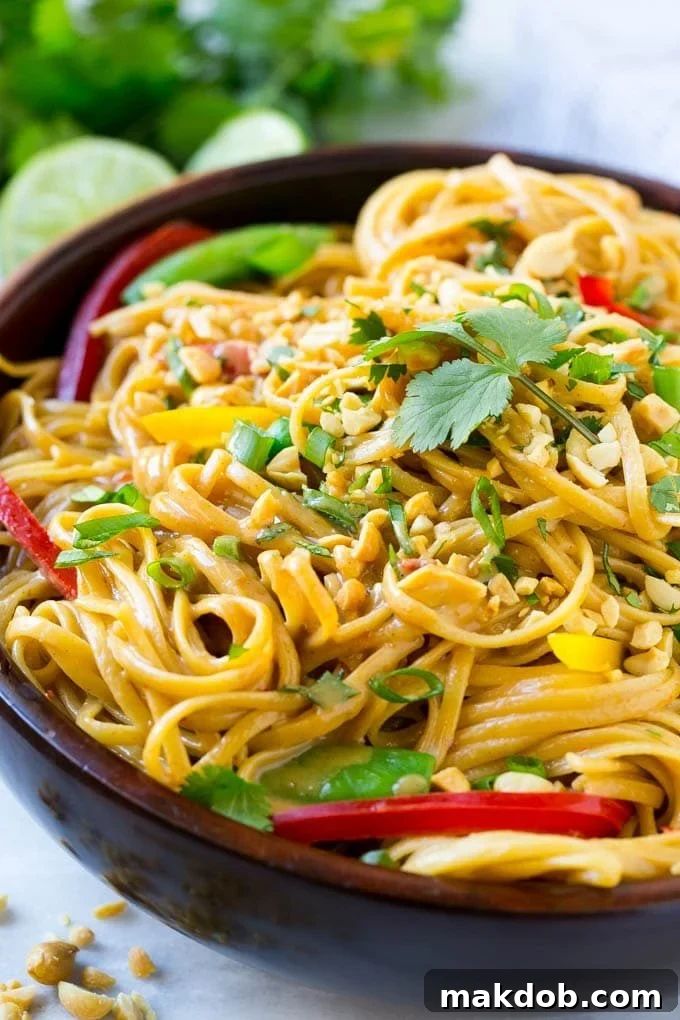
Why You’ll Fall in Love with This Easy Thai Peanut Noodle Recipe
There are countless reasons why these Thai peanut noodles have become a staple in so many households. Here’s what makes them truly special:
- Unbeatable Speed: In a mere 20 minutes, from prep to plate, you can have a wholesome, delicious meal ready. This makes it an ideal choice for busy evenings when time is precious.
- Explosive Flavor: The star of this dish is undoubtedly the rich, nutty, sweet, spicy, and tangy homemade peanut sauce. It perfectly coats every strand of noodle and vegetable, creating a symphony of tastes with every bite.
- Incredible Versatility: This isn’t just a single recipe; it’s a template for culinary creativity. Easily customize it with your favorite proteins, an array of seasonal vegetables, or by adjusting the spice level to suit your palate.
- Health-Conscious Comfort: Packed with fresh vegetables, this dish offers a nutritious boost. It’s a fantastic way to incorporate more greens and vibrant colors into your diet, proving that comfort food can also be good for you.
- Budget-Friendly: Making your own Thai peanut noodles at home is significantly more economical than ordering takeout, allowing you to enjoy gourmet flavors without the hefty price tag.
- Satisfying & Filling: The combination of hearty noodles, crunchy vegetables, and protein-rich peanut sauce creates a meal that leaves you feeling full and contented without being overly heavy.
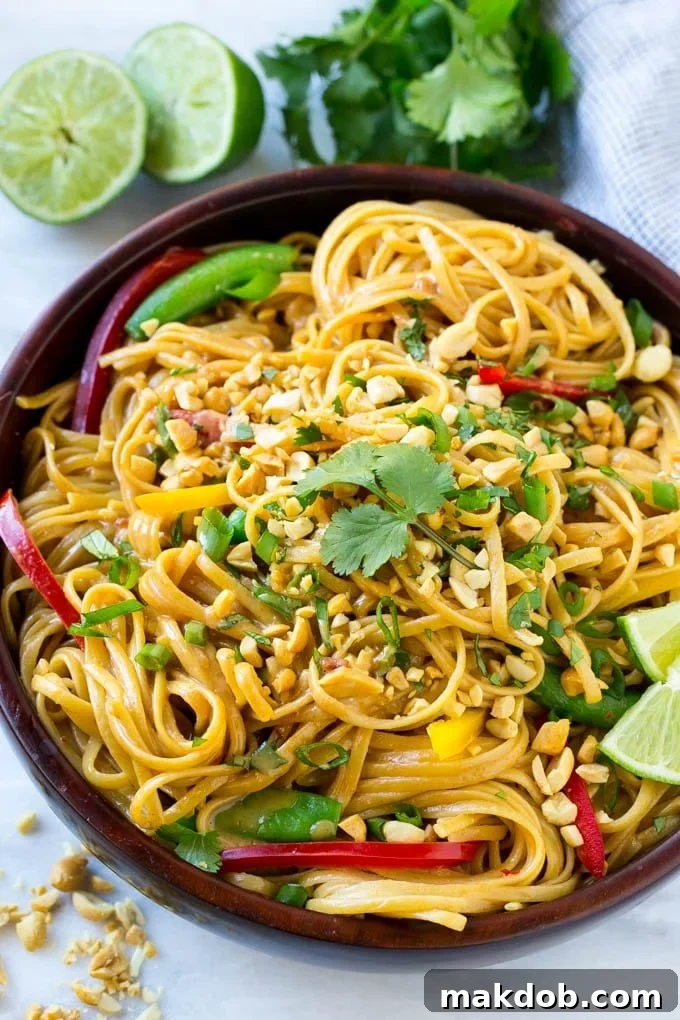
The Star of the Show: Our Irresistible Homemade Peanut Sauce
If you’ve followed my recipes before, you know my adoration for a good Thai peanut sauce is no secret. I’ve featured it in dishes like Thai Peanut Chicken and Thai Chicken Tacos because, frankly, it’s addictively delicious and remarkably simple to prepare. This time, we’re letting this incredible sauce shine as the star alongside perfectly cooked noodles.
What makes this peanut sauce truly outstanding is its balance. It hits all the right notes: the creamy richness of peanut butter, the savory depth of soy sauce, a touch of sweetness from honey, the bright acidity of lime juice, the aromatic warmth of sesame oil, and a gentle kick from chili garlic sauce. These ingredients come together in a harmonious blend that elevates simple noodles and vegetables into an extraordinary meal. Best of all, most of these pantry staples can be found readily available in the ethnic foods aisle of your local grocery store, making this gourmet-tasting sauce incredibly accessible.
Crafting Your Perfect Thai Peanut Noodles: A Step-by-Step Guide
Creating these delightful Thai Peanut Noodles is a straightforward process that anyone can master. Here’s a detailed breakdown of how to achieve peanut noodle perfection:
Choosing Your Noodles
The foundation of any great noodle dish begins with the noodles themselves. While I’ve opted for linguine in this recipe for its comforting texture and ability to hold the sauce beautifully, the choice of noodle is quite flexible. You can experiment with various long pasta types, such as spaghetti, fettuccine, or even thin vermicelli. For an authentic Asian touch, consider using wide rice noodles or traditional wheat-based Asian noodles. The key is to select a noodle that you enjoy and that will adequately soak up all that delicious peanut sauce. Just be sure to cook them al dente according to package directions, as they’ll continue to soften slightly when tossed with the warm sauce.
Selecting Your Vibrant Veggies
To add texture, nutrition, and a burst of color, fresh vegetables are essential for these Thai peanut noodles. The original recipe calls for red and yellow bell peppers and sugar snap peas, a fantastic combination that provides both sweetness and crunch. I prefer the bell peppers thinly sliced and raw to maintain their crispness and vibrant color. For the sugar snap peas, a quick blanching ensures they are tender-crisp without being mushy. Simply add them to the boiling pasta water during the last 2 minutes of the noodles’ cooking time, then drain everything together.
But don’t stop there! This recipe is incredibly adaptable to a variety of vegetables. Consider adding:
- Carrots: Thinly julienned or shredded carrots add sweetness and a beautiful orange hue.
- Broccoli: Steamed or lightly blanched broccoli florets provide a satisfying bite and earthy flavor.
- Cabbage: Finely shredded red or green cabbage offers a delightful crunch and slightly peppery taste.
- Edamame: Shelled edamame (fresh or frozen, thawed) adds a lovely pop of green and extra protein.
- Cucumber: Thinly sliced cucumber can add a cool, refreshing element, especially if serving chilled.
- Spinach or Bok Choy: Wilted spinach or baby bok choy can be stirred in at the very end for a boost of greens.
The finishing touches are crucial for enhancing both flavor and visual appeal. A generous sprinkle of chopped roasted peanuts provides an extra layer of crunch and nutty flavor, while fresh cilantro and sliced green onions add a burst of herbaceous freshness and a slight oniony zest. These garnishes not only make the dish look more appetizing but also contribute significantly to the overall taste experience.
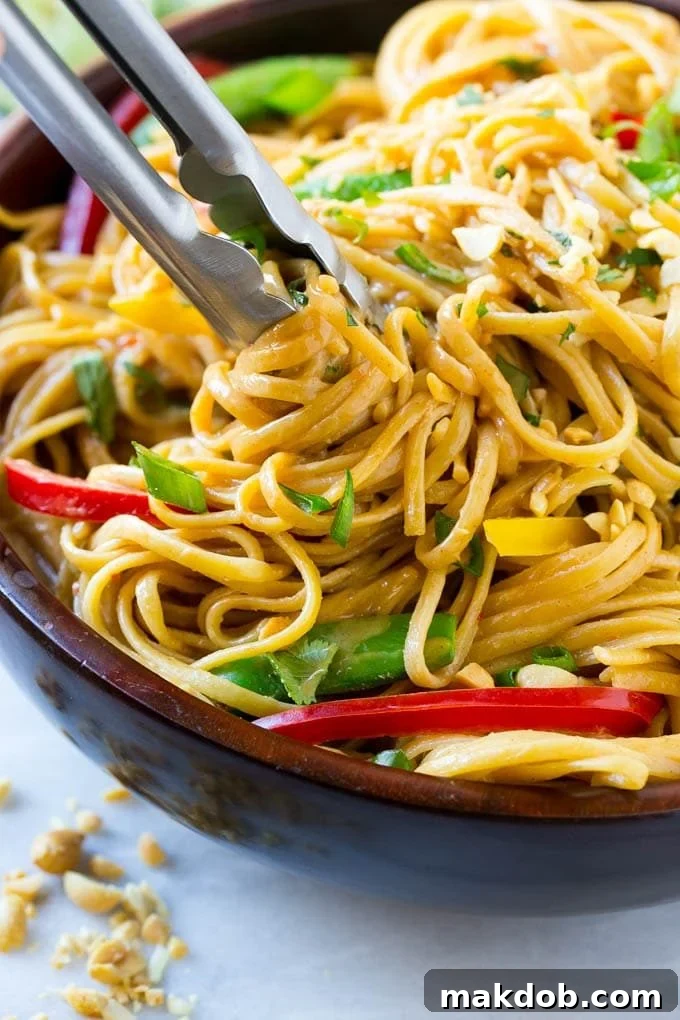
Thai Peanut Noodles
This recipe for Thai peanut noodles is full of colorful veggies and tossed in an easy homemade peanut sauce. No need for take out when you can make your own in just 20 minutes!
Rating: 5 out of 5 stars from 11 votes
Author: Sara Welch
Prep Time: 10 minutes | Cook Time: 10 minutes | Total Time: 20 minutes
Course: Main Course | Cuisine: Asian | Serves: 4
Ingredients
- 12 ounces linguine or other long pasta/noodle
- 1 1/2 cups thinly sliced bell peppers (red and yellow suggested, but any color will work)
- 1 1/2 cups sugar snap peas, trimmed
- 1/3 cup chopped roasted peanuts
- 1/4 cup chopped cilantro
- 1/4 cup sliced green onions
For the sauce:
- 1/2 cup creamy peanut butter
- 2 tablespoons soy sauce
- 1 1/2 tablespoons honey
- 2 tablespoons lime juice
- 1 tablespoon sesame oil
- 2 teaspoons chili garlic sauce
- 1/4 cup warm water
Instructions
- Bring a large pot of salted water to a rolling boil. Add the linguine (or chosen noodles) and cook according to package directions until al dente. During the last 2 minutes of the cooking time, add the trimmed sugar snap peas to the pot with the noodles.
- While the noodles are cooking, prepare the sauce. In a medium bowl, whisk together the peanut butter, soy sauce, honey, lime juice, sesame oil, chili garlic sauce, and warm water until completely smooth and well combined. If the sauce seems too thick, add more warm water, 1 teaspoon at a time, until it reaches your desired consistency.
- Once cooked, drain the noodles and snap peas thoroughly. Return them to the pot or a large mixing bowl. Add the thinly sliced bell peppers. Pour the prepared peanut sauce over the noodles and vegetables, then toss gently until everything is evenly coated in the rich sauce.
- Divide the sauced noodles among individual serving bowls. Garnish generously with the chopped roasted peanuts, fresh chopped cilantro, and sliced green onions before serving immediately.
Nutrition Information (per serving)
Calories: 655kcal | Carbohydrates: 82g | Protein: 24g | Fat: 27g | Saturated Fat: 5g | Sodium: 783mg | Potassium: 582mg | Fiber: 6g | Sugar: 13g | Vitamin A: 400IU | Vitamin C: 24.3mg | Calcium: 60mg | Iron: 3.2mg
Customizing Your Thai Peanut Noodle Experience
One of the most appealing aspects of this Thai peanut noodle recipe is its incredible adaptability. It’s a fantastic base that invites customization, allowing you to tailor it to your preferences or whatever ingredients you have on hand.
Add Protein for a Heartier Meal
While delicious on its own as a vegetarian dish, these noodles are also an excellent vehicle for adding your favorite protein. This transforms them into an even more substantial and satisfying main course:
- Chicken: Cooked and shredded or diced chicken breast or thigh is a classic choice. Stir it in with the noodles and sauce.
- Shrimp: Sautéed shrimp adds a delightful seafood element. Add cooked shrimp during the final tossing.
- Tofu: For a plant-based protein boost, pan-fried or baked tofu cubes work wonderfully. Press the tofu, cube it, and cook until golden brown before adding.
- Edamame: Already mentioned as a veggie, but its high protein content makes it a great addition for a vegetarian meal.
- Eggs: A fried egg on top or scrambled eggs mixed in can provide a quick protein fix.
Veggie Swaps & Additions
Don’t feel limited by the bell peppers and snap peas! The world of vegetables is your oyster. Here are more ideas:
- Spicy Greens: Add a handful of baby spinach or chopped bok choy right after draining the noodles; the residual heat will wilt them perfectly.
- Crunchy Delights: Water chestnuts or bamboo shoots can provide an interesting texture.
- Sweet & Earthy: Thinly sliced carrots, shredded purple cabbage, or even roasted sweet potato cubes can be fantastic.
- Broccoli or Asparagus: Lightly steamed or blanched, these green powerhouses are always a good choice.
Adjusting the Flavor Profile
The peanut sauce is perfectly balanced, but your taste buds are unique! Feel free to adjust it:
- More Heat: Increase the chili garlic sauce, or add a pinch of red pepper flakes for an extra kick.
- Sweeter: Add a touch more honey or a dash of brown sugar.
- Tangier: A squeeze of extra lime juice or a splash of rice vinegar can brighten the flavors.
- Saltier: A bit more soy sauce, but taste as you go to avoid over-salting.
Serving Suggestions & Storage Tips
One of the many charms of these Thai peanut noodles is their versatility in serving temperature. They are equally delicious served warm right after preparation, at room temperature for a casual gathering, or even chilled as a refreshing noodle salad, making them perfect for meal prep or picnics.
For storage, any leftovers should be transferred to an airtight container and refrigerated promptly. They will keep well for 3-4 days. The noodles may absorb more sauce as they sit, so you might want to add a splash of water or a little extra lime juice when reheating (or serving cold) to restore the ideal consistency and freshness of flavor.
Frequently Asked Questions (FAQ) About Thai Peanut Noodles
Can I make the peanut sauce ahead of time?
Absolutely! The homemade peanut sauce can be prepared up to 3-4 days in advance and stored in an airtight container in the refrigerator. If it thickens too much, you can thin it out with a little warm water or lime juice before using.
What kind of noodles are best for Thai peanut noodles?
While this recipe uses linguine, many types of long pasta or Asian noodles work well. Spaghetti, fettuccine, ramen noodles, or even wide rice noodles are excellent choices. The key is to choose a noodle that can hold the sauce effectively.
Is this recipe vegetarian/vegan friendly?
Yes, as written, this recipe is vegetarian. To make it completely vegan, simply substitute the honey with an equal amount of maple syrup or agave nectar.
How long do leftovers last, and how should I reheat them?
Leftover Thai peanut noodles can be stored in an airtight container in the refrigerator for up to 3-4 days. To reheat, you can microwave them until warmed through, adding a splash of water if the noodles seem dry. They are also delicious served cold or at room temperature, making them perfect for lunchboxes.
Can I add more vegetables?
Definitely! Feel free to add any vegetables you enjoy. Broccoli, carrots, shredded cabbage, edamame, and spinach are all fantastic additions. You can blanch harder vegetables with the snap peas or stir in tender greens at the end.
Explore More Asian-Inspired Delights
If you loved these Thai Peanut Noodles, you’re in for a treat with these other fantastic Asian-inspired recipes:
- Crab Rangoon
- Sesame Chicken
- Shrimp Chow Mein
- Teriyaki Salmon
- Korean Beef Bowls
We hope you enjoy making and devouring these delicious Thai Peanut Noodles! Don’t forget to connect with us and share your creations.
Did you make this recipe?
Tag @dinneratthezoo on Instagram and hashtag it #dinneratthezoo
Share this recipe with the world!
- Share on Facebook
- Tweet on Twitter
- Pin on Pinterest