
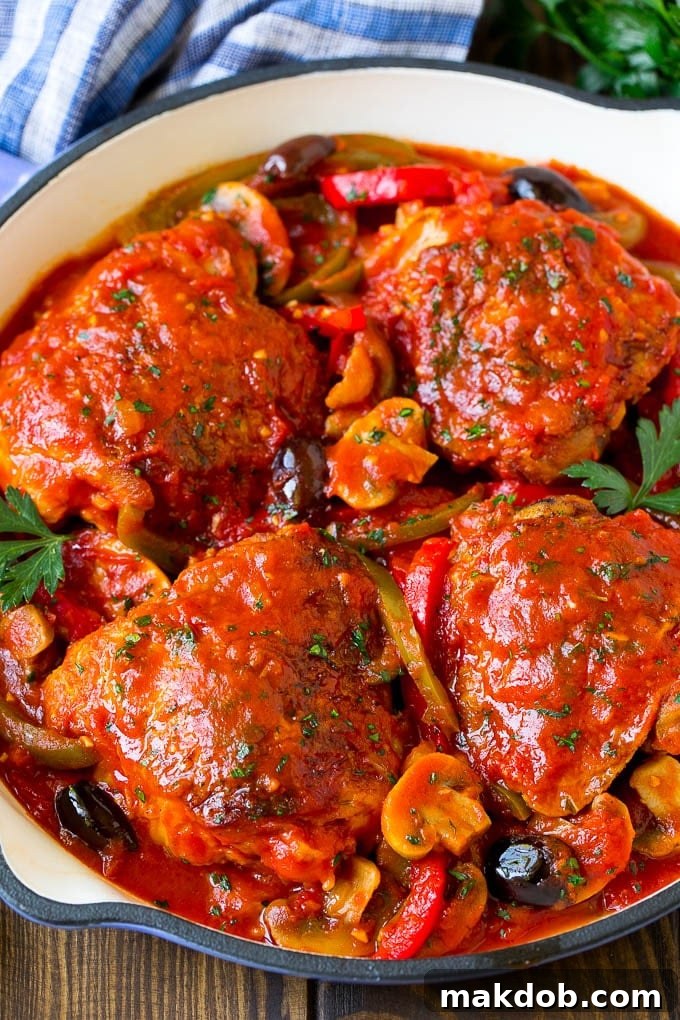
Classic Chicken Cacciatore: An Italian Family Favorite for Ultimate Comfort
Experience the rich, heartwarming flavors of Italy with this ultimate Chicken Cacciatore recipe. Featuring tender, succulent braised chicken enveloped in a savory tomato sauce with an abundance of vibrant bell peppers, mushrooms, and briny olives, this classic dish is surprisingly easy to make and guaranteed to become a cherished family dinner. Forget bland weeknight meals – embark on a culinary journey that brings the rustic charm of Italian countryside cooking right to your kitchen.
When it comes to creating memorable and satisfying meals, chicken dishes often take center stage in my household. While we adore lighter options like chicken and green beans or comforting classics such as a creamy chicken casserole, there’s something uniquely fulfilling about a truly robust and flavorful stew. That’s where Italian Chicken Cacciatore shines, offering a depth of flavor and a comforting embrace that few other meals can rival. It’s more than just food; it’s an experience that transports you straight to the heart of Italian cooking.
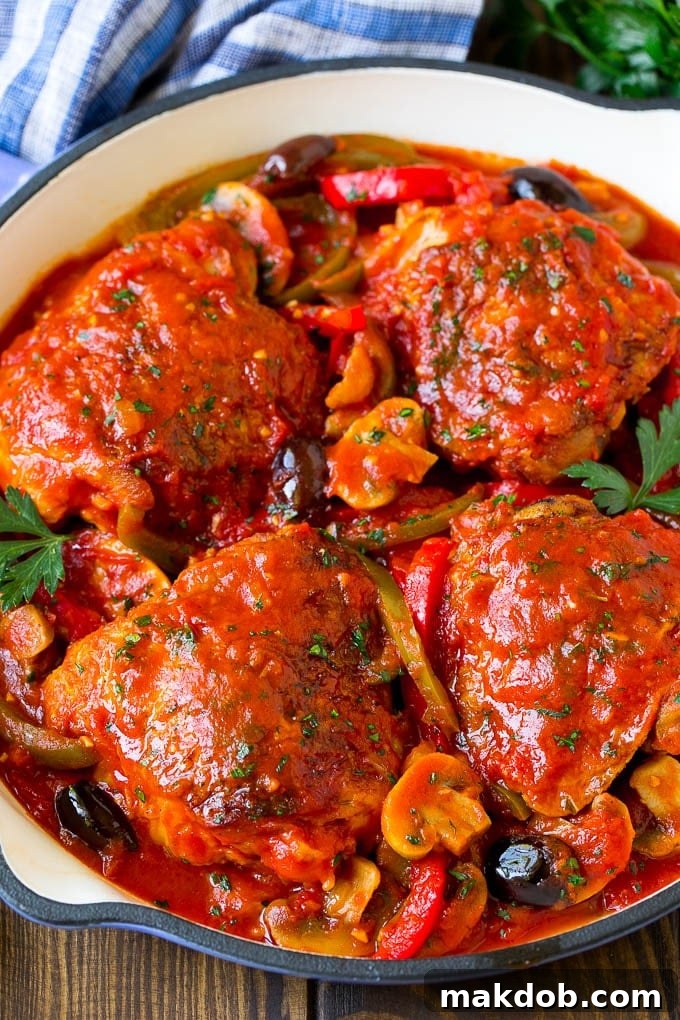
What Exactly is Chicken Cacciatore? Unraveling the “Hunter-Style” Tradition
The word “Cacciatore” translates to “hunter” in Italian, giving a direct clue to the rustic, hearty nature of this beloved dish. True to its name, hunter-style dishes historically featured ingredients that were readily available to a hunter after a day in the field. These typically included wild game, aromatic onions, bell peppers, robust tomatoes, a medley of herbs, and often a splash of wine to tenderize the meat and deepen the sauce.
Our modern take on Chicken Cacciatore perfectly embodies this tradition, combining tender chicken with a vibrant medley of bell peppers, earthy mushrooms, and briny olives, all slow-cooked in a rich, savory tomato sauce. It’s a dish that speaks of simple pleasures and robust, earthy goodness, making it an ideal choice for a comforting family meal.
While the core ingredients remain consistent, regional variations of Cacciatore exist throughout Italy. Some recipes might call for different herbs, a splash of brandy instead of wine, or a unique array of local vegetables. However, the essence remains the same: a deeply flavorful, slow-cooked stew designed to warm the soul and satisfy the heartiest of appetites. This particular recipe captures the quintessential flavors that have made Chicken Cacciatore a global favorite, focusing on a balanced blend of sweet, savory, and tangy notes.
Why You’ll Fall in Love with This Easy Chicken Cacciatore Recipe
If you’re searching for a dinner that combines incredible flavor with straightforward preparation, look no further. This Chicken Cacciatore recipe stands out for several compelling reasons, making it a staple in any home cook’s repertoire:
- Uncomplicated Comfort: Despite its sophisticated taste, the cooking process is surprisingly simple, making it accessible even for novice cooks. It’s the perfect one-pot (or one-pan-to-oven) meal for a cozy night in, minimizing cleanup without compromising on flavor.
- Rich & Robust Flavor: The slow braising process allows the chicken to become incredibly tender and fall-off-the-bone succulent. Meanwhile, the medley of fresh vegetables, fragrant herbs, and a savory tomato-wine sauce meld together to create an exceptionally deep, complex, and utterly satisfying flavor profile that gets better with every bite.
- Family-Friendly Appeal: This is a hearty, wholesome, and nutritious meal that appeals to all ages. The mild sweetness of bell peppers, the earthy undertones of mushrooms, and the zesty tang of olives create a balanced taste that even picky eaters often find delightful. It’s a guaranteed crowd-pleaser!
- Versatile & Customizable: One of the greatest attributes of Chicken Cacciatore is its adaptability. You can easily adapt the ingredients to suit your family’s preferences, dietary needs, or simply what fresh produce you have on hand. It’s a forgiving recipe that encourages creativity in the kitchen.
- Fantastic for Meal Prep: Like many braised dishes, Chicken Cacciatore often tastes even better the next day, as the flavors have more time to fully develop and meld. This makes it an excellent candidate for delicious leftovers, healthy lunch prep, or preparing in advance for busy weeknights.
Key Ingredients for an Authentic & Flavorful Cacciatore
The magic of a truly outstanding Chicken Cacciatore lies in its carefully selected ingredients, each playing a vital role in building the incredible layers of flavor and texture:
- Chicken Thighs (Bone-in, Skin-on): We highly recommend using bone-in, skin-on chicken thighs. The bone contributes significantly to the richness and body of the sauce, infusing it with unparalleled depth. The skin, when properly seared, adds a beautiful crispy texture and flavor to the chicken before it softens during the slow braising process. While boneless, skinless thighs or even chicken breasts can be substituted for a leaner option, be aware they may cook faster and offer slightly less depth of flavor to the overall dish.
- Fresh Bell Peppers (Red & Green): A combination of vibrant red and green bell peppers provides a lovely balance of sweet and slightly bitter notes, along with a burst of color and essential vitamins. These soften beautifully in the sauce, adding a delicate sweetness.
- Onion & Garlic: The quintessential aromatic foundation of almost any great Italian dish. These humble yet powerful ingredients are sautéed until fragrant, creating a savory base that elevates and complements all other flavors in the cacciatore.
- Mushrooms (Sliced): Sliced button or cremini (baby bellas) mushrooms are fantastic here. They absorb the rich tomato and wine sauce beautifully, adding an earthy umami dimension that perfectly complements the chicken and other vegetables, giving the dish a more robust character.
- Kalamata Olives (Pitted & Halved): Their distinctive briny, slightly fruity, and tangy flavor adds a crucial layer of complexity and a distinct Mediterranean touch, truly defining the “hunter-style” profile. They provide a delightful pop of flavor in every bite.
- Dry White Wine: A dry white wine, such as Pinot Grigio, Sauvignon Blanc, or even a dry Chardonnay, is used to deglaze the pan. This step is essential as it adds acidity, depth, and a subtle fruitiness to the sauce. Don’t worry about the alcohol content; it cooks off, leaving only its delicious essence behind.
- Quality Tomatoes (Crushed, Sauce, Paste): Crushed tomatoes, tomato sauce, and a touch of concentrated tomato paste form the robust backbone of the cacciatore sauce. Using a combination of these ensures a rich, full-bodied texture and deep, authentic tomato flavor that clings perfectly to the chicken and vegetables.
- Italian Seasoning: This convenient blend of dried herbs, typically including oregano, basil, thyme, and rosemary, provides the quintessential Italian aroma and taste that ties all the flavors together harmoniously.
- Fresh Parsley (Chopped): A final generous sprinkle of freshly chopped parsley is more than just a garnish. It brightens the dish with a touch of herbaceous freshness and vibrant color before serving, adding a lovely contrast to the rich sauce.
Step-by-Step Guide: Crafting Your Perfect Chicken Cacciatore
Creating this flavorful dish is a delightful and rewarding process. Here’s how we bring all those wonderful ingredients together to create an unforgettable meal that tastes like it came straight from a Tuscan trattoria:

1. Prepare and Sear the Chicken: The Flavor Foundation
Begin by preheating your oven to 375°F (190°C). In a large, heavy-bottomed, oven-safe Dutch oven or deep skillet, heat 2 teaspoons of olive oil over medium-high heat. Pat your bone-in, skin-on chicken thighs thoroughly dry with paper towels; this is crucial for achieving crispy skin. Season them generously on both sides with salt and freshly ground black pepper. Place the chicken skin-side down in the hot pan and sear for 5-6 minutes until the skin is a beautiful, deep golden brown and wonderfully crispy. Flip the chicken and cook on the other side for another 5-6 minutes until well-browned. This initial searing creates a delicious crust and forms a flavorful fond (browned bits) at the bottom of the pan, which are essential for building the foundational flavor of your cacciatore. Once browned, remove the chicken from the pan and set it aside on a clean plate.
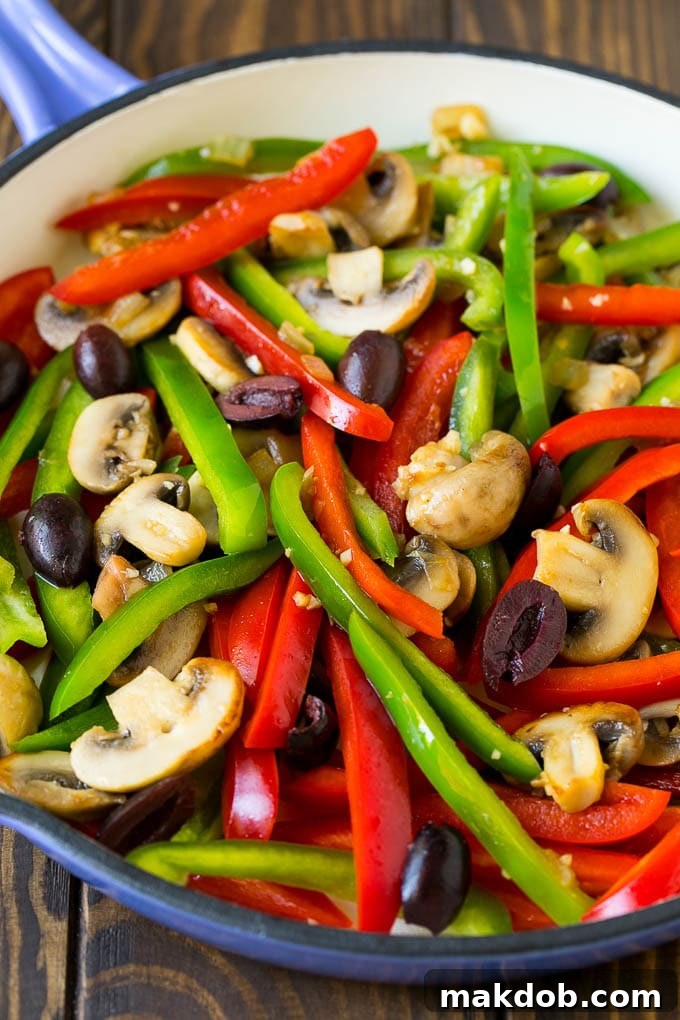
2. Sauté the Aromatic Vegetables: Building the Sauce Base
Add the remaining 1 teaspoon of olive oil to the same pan, taking full advantage of the flavorful fond left behind by the chicken. Add the thinly sliced onions, bell peppers, and mushrooms. Sauté these vegetables for 7-9 minutes over medium heat, stirring occasionally, until they have softened and begun to brown slightly. This crucial caramelization adds a wonderful natural sweetness and depth to the sauce. Next, stir in the minced garlic and pitted, halved Kalamata olives, cooking for just 30 seconds until the garlic is fragrant. Be very careful not to burn the garlic, as it can turn bitter quickly. Season the sautéed vegetables lightly with salt and pepper.
3. Deglaze and Simmer the Sauce: Developing Richness
Pour the dry white wine into the pan with the aromatic vegetables. Bring the mixture to a vigorous simmer, using a wooden spoon to vigorously scrape up any browned bits (the fond) from the bottom of the pan – these bits are pure concentrated flavor! Let the wine simmer for about 5 minutes, allowing it to reduce by half. This step concentrates the wine’s flavor and burns off its raw alcohol taste, leaving only its delicious essence. Then, add the crushed tomatoes (do not drain the can), tomato sauce, tomato paste, and Italian seasoning. Stir all the ingredients together until they are thoroughly combined and the sauce is smooth. Taste the sauce at this stage and adjust seasonings with additional salt and pepper as needed.
4. Braise to Perfection: Tender Chicken, Deep Flavor
Gently place the seared chicken thighs back into the pan, nestling them among the vibrant tomato-vegetable mixture. Ensure they are partially submerged in the sauce. Spoon some of the luscious sauce over the chicken pieces to ensure they are beautifully coated and can absorb all the wonderful flavors. Cover the pan tightly with a lid (or tightly seal with heavy-duty foil if your pan isn’t oven-safe or lacks a proper lid) and transfer it to your preheated oven. Bake for approximately 35 minutes, or until the chicken is cooked through, incredibly tender, and easily pulls away from the bone. The internal temperature of the thickest part of the chicken should reach 165°F (74°C).
5. The Finishing Touch: Freshness and Presentation
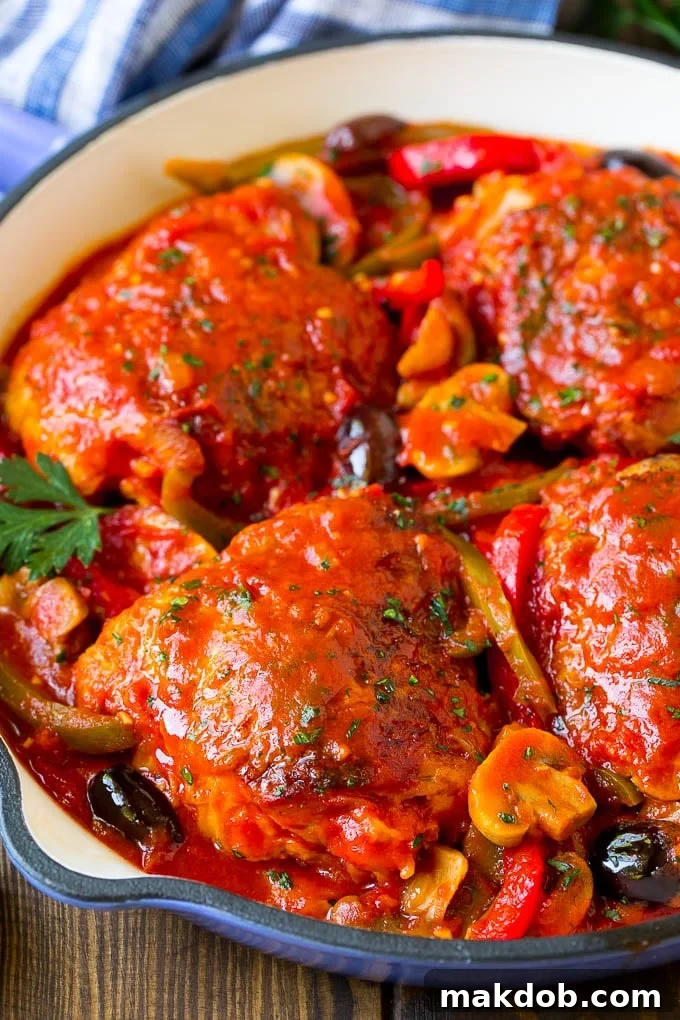
Once the chicken cacciatore is cooked to perfection, carefully remove the pan from the oven. Before serving, sprinkle generously with freshly chopped parsley. The vibrant green of the parsley not only adds a beautiful visual contrast but also provides a burst of fresh, herbaceous flavor that brightens the entire rich dish. Serve hot and prepare for compliments!
Expert Tips for Making the Best Chicken Cacciatore Every Time
To ensure your Chicken Cacciatore turns out perfectly flavorful, tender, and absolutely delicious every time, keep these expert tips in mind:
- Choose the Right Chicken: While boneless, skinless thighs or breasts can be used for convenience, bone-in, skin-on chicken thighs truly offer superior flavor and moisture. The bone contributes significantly to the richness of the sauce, and the skin, when properly seared, adds a delightful texture before it softens into the sauce during braising.
- Don’t Skip the Browning Step: Searing the chicken until it achieves a deep golden-brown color is absolutely crucial. This step develops a flavorful crust on the chicken and creates a dark, sticky fond (caramelized bits) at the bottom of the pan. This fond is essential for a rich, complex, and deeply flavored sauce, so don’t rush it!
- Quality Tomatoes Matter: Since tomatoes form the very base of your sauce, using good quality crushed tomatoes and tomato sauce can make a noticeable difference in the final taste. If available, look for brands that use high-quality San Marzano tomatoes for their exceptional sweetness and low acidity.
- Deglaze Properly for Maximum Flavor: When you add the white wine to the pan, make sure to actively scrape up all those browned bits from the bottom with a wooden spoon. This process, known as deglazing, incorporates all the concentrated caramelized flavors from the searing stage directly into your sauce.
- Always Adjust Seasoning: It’s vital to taste your sauce before and after the braising process. Seasoning is a dynamic process; flavors will concentrate as the dish cooks, so adjust the salt, pepper, and Italian seasoning as needed to achieve your perfect balance.
- Avoid Overcrowding the Pan: When searing the chicken or sautéing the vegetables, work in batches if necessary to avoid overcrowding the pan. Overcrowding lowers the pan’s temperature, causing ingredients to steam rather than brown, which results in less flavor development and a less appealing texture.
- Allow for Resting Time: After removing the cacciatore from the oven, let it rest, covered, for at least 5-10 minutes before serving. This brief resting period allows the flavors to meld further and, more importantly, permits the chicken to reabsorb its juices, resulting in a more tender, succulent, and flavorful dish.
Delicious Cacciatore Variations and Customizations
One of the beauties of Chicken Cacciatore is its inherent adaptability. Feel free to personalize this dish to your family’s tastes, accommodate dietary preferences, or simply make use of whatever fresh ingredients you happen to have on hand:
- Vegetable Power-Ups: Experiment with different colored bell peppers like orange or yellow for a sweeter profile. Instead of common button mushrooms, try cremini (baby bella) mushrooms for deeper earthy notes, or even a mix of wild mushrooms for a truly gourmet touch. Other vegetables like thinly sliced carrots, tender zucchini, or even eggplant cubes can be added during the initial sautéing step for extra nutrition and flavor.
- Cheesy Indulgence: For an extra layer of savory richness, sprinkle freshly grated Parmesan or Pecorino Romano cheese over the finished dish just before serving. For a truly decadent and melty addition, melt some fresh mozzarella cheese over the top of the chicken during the last 10 minutes of baking.
- Olive Options: If the strong, distinctive flavor of Kalamata olives isn’t your preference, feel free to substitute them with milder ripe black olives, bright and buttery Castelvetrano olives, or any variety of green olives for a different briny kick.
- A Touch of Spice: If you enjoy a bit of heat in your food, add 1/2 to 1 teaspoon of crushed red pepper flakes along with the minced garlic. Adjust the quantity to your desired level of spice for a fiery twist on this classic.
- Enhanced Herb Appeal: While dried Italian seasoning is excellent for convenience, fresh herbs can elevate the dish significantly. Add a few sprigs of fresh rosemary, thyme, or bay leaves to the sauce during the braising step for a more pronounced herbaceous aroma and flavor. Remember to remove them before serving.
- Meat Alternatives: While chicken is traditional, this robust sauce base works wonderfully with other proteins. Consider using tender pork shoulder, lean veal, or even a mix of chicken and spicy Italian sausage for a different flavor profile. Adjust cooking times accordingly based on the meat chosen.
- Wine Alternatives: If you prefer not to cook with wine, you can substitute the white wine with an equal amount of chicken broth, adding a teaspoon of red wine vinegar or balsamic vinegar for a touch of acidity.
What to Serve with Your Perfect Chicken Cacciatore
This hearty and incredibly flavorful dish pairs beautifully with a variety of sides, making it a versatile centerpiece for any meal, whether it’s a casual family dinner or a special gathering. Here are some of our favorite serving suggestions to complete your Italian feast:
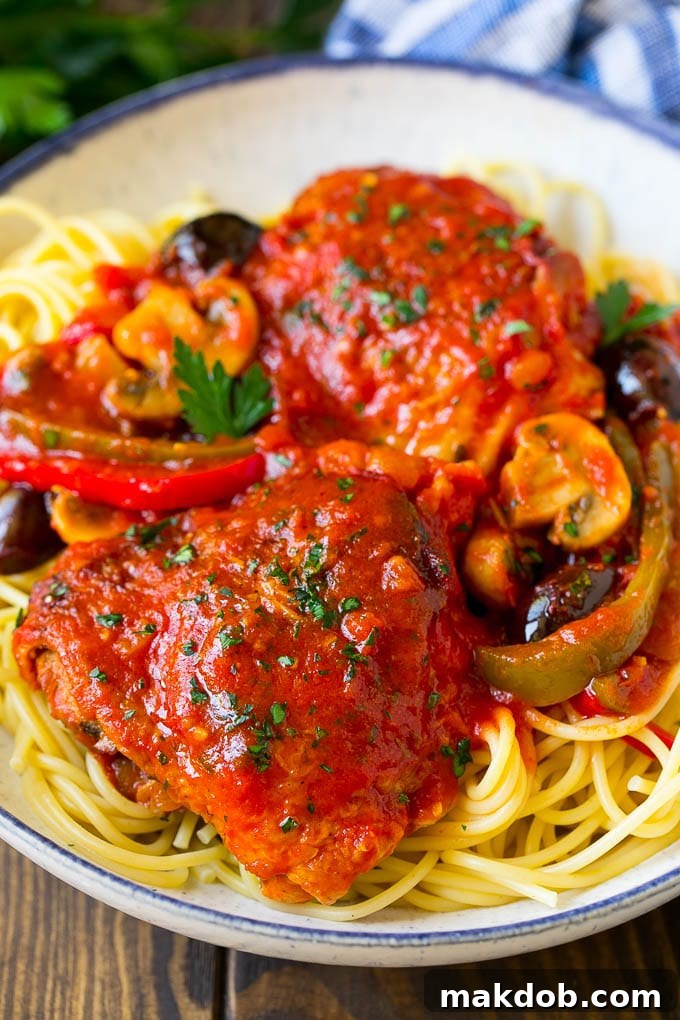
- Pasta, the Classic Companion: A quintessential choice! Serve your cacciatore generously ladled over a bed of al dente spaghetti, linguine, fettuccine, or a short pasta like penne or rigatoni. The pasta provides the perfect vehicle to soak up every last drop of that rich, savory sauce.
- Creamy Polenta: For a true Italian experience that hails from Northern Italy, a soft, warm, and creamy polenta provides a wonderful textural contrast and absorbs the robust sauce perfectly, creating a truly comforting dish.
- Crusty Italian Bread: Do not underestimate the power of a fresh, crusty loaf of Italian bread or garlic bread. It’s absolutely essential for dipping into the exquisite sauce and ensuring no flavor goes to waste – a truly satisfying experience!
- Fluffy Rice: A simple side of plain white rice or healthier brown rice can be a great, neutral alternative to pasta. It offers a light base that allows the bold flavors of the cacciatore to truly shine.
- Creamy Mashed Potatoes: On a chilly evening, a mound of fluffy, buttery mashed potatoes makes another wonderfully comforting pairing. Their smooth texture provides a delightful contrast to the hearty stew.
- Crisp Green Salad: To cut through the richness of the dish and provide a refreshing balance, a light, crisp green salad tossed with a simple vinaigrette dressing is an excellent choice.
- Roasted or Steamed Vegetables: Complement the cacciatore with an additional side of roasted asparagus, steamed broccoli florets, or blanched green beans for added nutrition, vibrant color, and fresh texture.
Make-Ahead, Storage, and Reheating Instructions
Chicken Cacciatore is one of those fantastic dishes that often tastes even better the next day, as the flavors have more time to meld and deepen. This characteristic makes it an ideal candidate for meal preparation, entertaining, or simply enjoying throughout the week.
- Refrigeration: Any leftover chicken cacciatore should be transferred to an airtight container and stored in the refrigerator. It will keep beautifully for up to 3-4 days, making it perfect for enjoyable weekday lunches or quick dinners.
- Freezing for Future Enjoyment: This dish freezes exceptionally well! Once completely cooled to room temperature, transfer the cacciatore (including both the chicken and the sauce with vegetables) to a freezer-safe container or heavy-duty freezer bags. Ensure as much air as possible is removed from bags to prevent freezer burn. It can be frozen for up to 3 months. For best results, thaw overnight in the refrigerator before reheating.
- Reheating Instructions: For optimal flavor and texture, reheat thawed or refrigerated cacciatore gently on the stovetop over medium-low heat until it is thoroughly warmed through. You may need to add a splash of chicken broth or water to loosen the sauce if it has thickened too much during storage. Alternatively, you can reheat it in the oven at 300°F (150°C) for about 20-30 minutes, or until hot, covering the dish with foil to prevent the chicken from drying out.
Whether the weather outside is bright and sunny or cold and dreary, this Italian Chicken Cacciatore unfailingly hits the spot, bringing warmth, comfort, and joy to your dining table. It’s a timeless classic that embodies the very essence of homemade, comforting food. What’s your go-to comfort meal? This cacciatore is undeniably a perennial favorite in my culinary repertoire, and I hope it becomes one of yours too!
More Easy & Delicious Dinner Ideas You’ll Love
- Hearty Beef Noodle Casserole
- Creamy Shrimp Alfredo
- Savory Bacon Wrapped Chicken
- Quick Sausage and Pepper Pasta
- Sweet & Tangy Honey Mustard Chicken
Classic Chicken Cacciatore
Pin Recipe
This traditional Chicken Cacciatore recipe delivers tender braised chicken and a medley of colorful vegetables in a rich, flavorful tomato sauce. An easy, satisfying dinner the whole family will adore!
Sara Welch
15 minutes
1 hour
1 hour 15 minutes
Main Course
Italian
4 servings
Ingredients
- 1 tablespoon olive oil, divided use
- 4 bone-in, skin-on chicken thighs (can substitute boneless skinless chicken thighs or chicken breasts)
- 1 1/2 cups thinly sliced bell peppers (I used both red and green)
- 1/2 cup thinly sliced onion
- 1 cup sliced mushrooms
- 2 teaspoons minced garlic
- 1/2 cup pitted and halved Kalamata olives
- 1/2 cup dry white wine
- 15 ounce can crushed tomatoes, undrained
- 8 ounce can tomato sauce
- 2 tablespoons tomato paste
- 1 teaspoon Italian seasoning
- Salt and freshly ground black pepper to taste
- 2 tablespoons chopped fresh parsley
Instructions
- Preheat the oven to 375°F (190°C).
- In a large, oven-safe deep pan or Dutch oven, heat 2 teaspoons of olive oil over medium-high heat. Season the chicken generously on both sides with salt and pepper.
- Place the chicken, skin-side down, in the pan and cook for 5-6 minutes or until deep golden brown and crispy.
- Flip the chicken and cook on the other side until browned, another 5-6 minutes.
- Remove the chicken from the pan and place it on a plate; set aside.
- Add the remaining 1 teaspoon of olive oil to the pan, along with the sliced onions, bell peppers, and mushrooms. Sauté for 7-9 minutes or until the vegetables have softened and are starting to brown slightly.
- Stir in the minced garlic and halved Kalamata olives; cook for an additional 30 seconds until fragrant. Season the vegetables lightly with salt and pepper.
- Pour the white wine into the pan. Bring to a simmer, scraping up any browned bits from the bottom of the pan. Cook for 5 minutes or until the wine has reduced by half.
- Add the crushed tomatoes (undrained), tomato sauce, tomato paste, Italian seasoning, and salt and pepper to taste. Stir until well combined.
- Nestle the browned chicken back into the pan on top of the tomato-vegetable mixture. Spoon some of the sauce mixture over the chicken to coat it.
- Cover the pan tightly with a lid and transfer it to the preheated oven. Bake for 35 minutes or until the chicken is cooked through and fork-tender (internal temperature 165°F/74°C).
- Remove the pan from the oven. Sprinkle with fresh chopped parsley, then serve immediately.
Nutrition Facts (Approximate per serving)
Calories: 445kcal | Carbohydrates: 16g | Protein: 27g | Fat: 30g | Saturated Fat: 7g | Cholesterol: 141mg | Sodium: 523mg | Potassium: 870mg | Fiber: 4g | Sugar: 9g | Vitamin A: 2165IU | Vitamin C: 84.9mg | Calcium: 71mg | Iron: 2.9mg
Did you make this recipe? Tag @dinneratthezoo on Instagram and hashtag it #dinneratthezoo
This post was originally published on March 15, 2016, and extensively updated on June 12, 2024, to provide more comprehensive information, expert tips, and enhanced details for an even better culinary experience.