
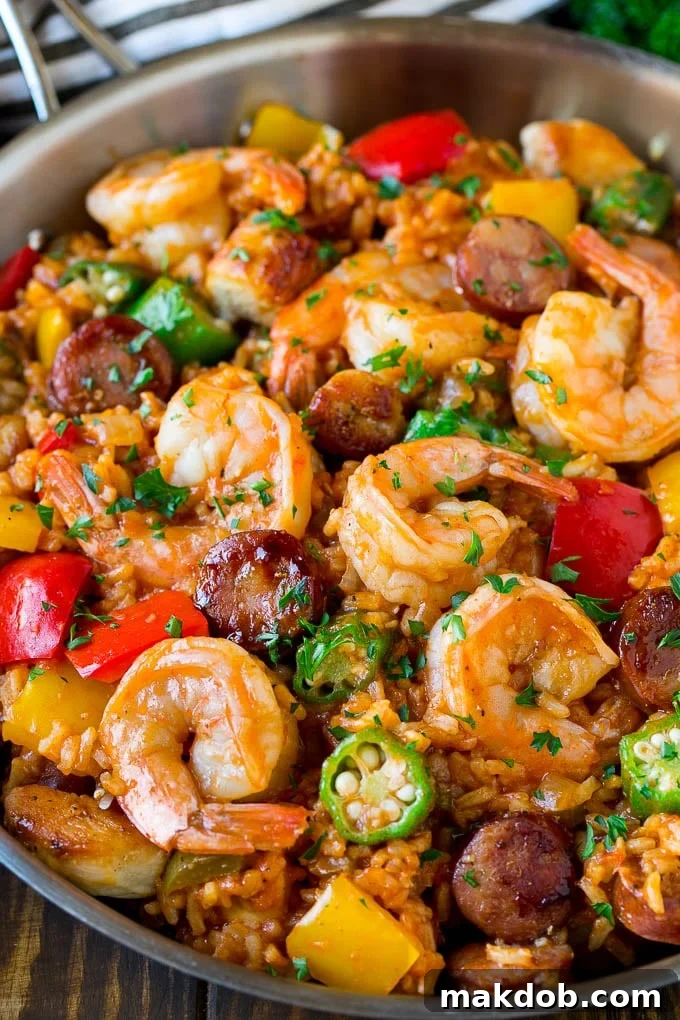
This comprehensive jambalaya recipe offers a delightful blend of tender chicken, succulent shrimp, and savory sausage, all cooked to perfection with fluffy rice and vibrant vegetables in a rich, zesty sauce. Master this easy one-pot meal and bring the authentic flavors of Louisiana right to your dinner table – a dish so delicious, your family and friends will think it came straight from a renowned restaurant!
For those who cherish the bold and hearty flavors of Cajun and Creole cuisine, jambalaya is an absolute must-try. As a fervent admirer of New Orleans-style cooking, I often find myself preparing dishes like New Orleans BBQ shrimp and gumbo for my loved ones. This homemade jambalaya recipe has quickly risen to the top of our family favorites list, brimming with a harmonious blend of meats, fresh seafood, crisp vegetables, and an explosion of robust flavors that will tantalize your taste buds.
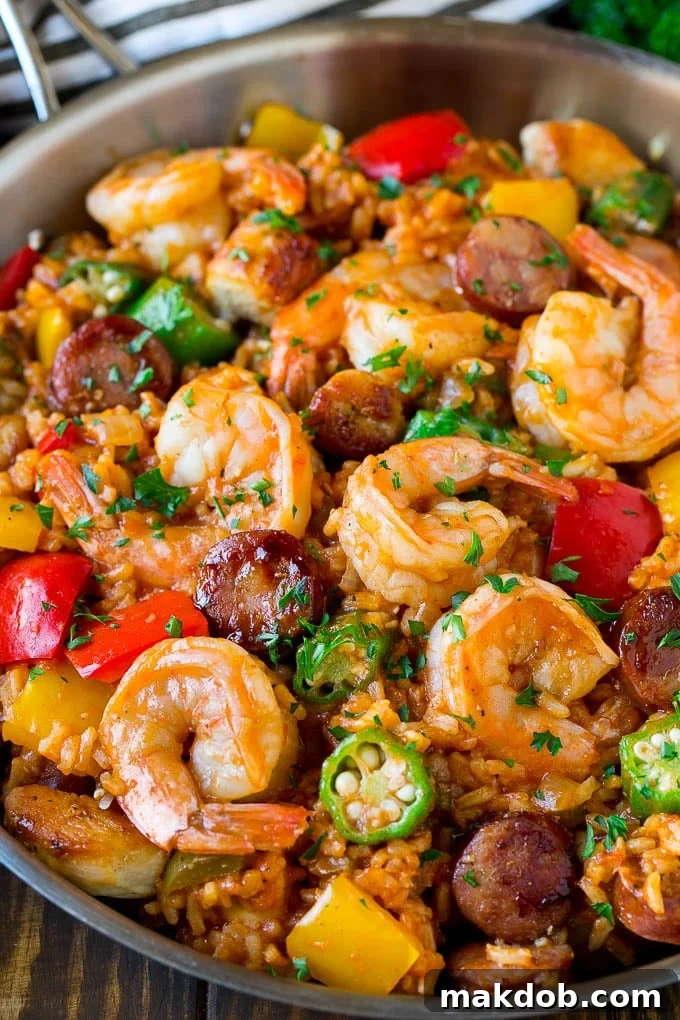
There’s an undeniable allure to jambalaya that makes it irresistible. Anytime I spot it on a restaurant menu, my order is almost a given. The magical combination of diverse proteins, aromatic seasonings, and perfectly cooked rice is simply unparalleled! Driven by this passion, I dedicated myself to crafting an easy-to-follow jambalaya recipe that home cooks can master, one that promises a flavor profile as exquisite, if not superior, to any restaurant-quality version.
What Exactly Is Jambalaya? Exploring Its Rich Origins and Flavor Profile
Jambalaya is more than just a dish; it’s a culinary icon primarily served in Louisiana, a testament to the state’s vibrant multicultural heritage. Its roots are deeply intertwined with Spanish paella, African cooking traditions, and French influences, creating a unique and deeply satisfying meal. At its core, jambalaya is a hearty one-pot dish where various meats and/or seafood are simmered alongside a flavorful medley of vegetables and rice until everything is cooked through and infused with rich spices. While sausage is a nearly universal component, other proteins can vary widely, from tender chicken and savory pork to various shellfish, making each pot a unique culinary adventure.
There are two main styles of jambalaya: Creole (or “red”) jambalaya, which typically includes tomatoes, and Cajun (or “brown”) jambalaya, which often omits tomatoes, resulting in a browner color and often a more rustic, spicier flavor profile. This particular recipe leans towards the Creole style with its inclusion of crushed tomatoes, offering a bright, rich, and deeply savory sauce that perfectly complements the robust ingredients.
Crafting Your One-Pot Jambalaya: A Simplified Cooking Method
Creating this flavorful one-pot chicken, shrimp, and sausage jambalaya is surprisingly straightforward, designed for ease without compromising on taste. The process begins with building a strong flavor base:
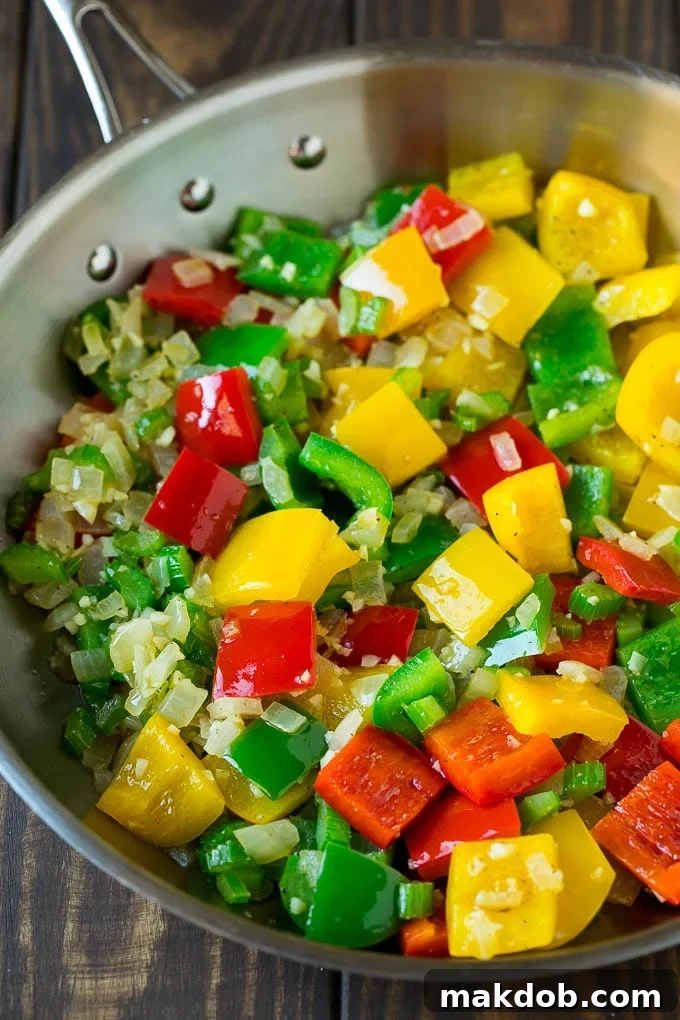
- Building the “Holy Trinity”: The initial step involves sautéing the foundational aromatic vegetables – a blend of onions, bell peppers, and celery, often referred to as the “holy trinity” in Cajun and Creole cooking. These are gently cooked until softened and fragrant, setting the stage for the deep flavors to come. Garlic is added towards the end of this step for its pungent aroma.
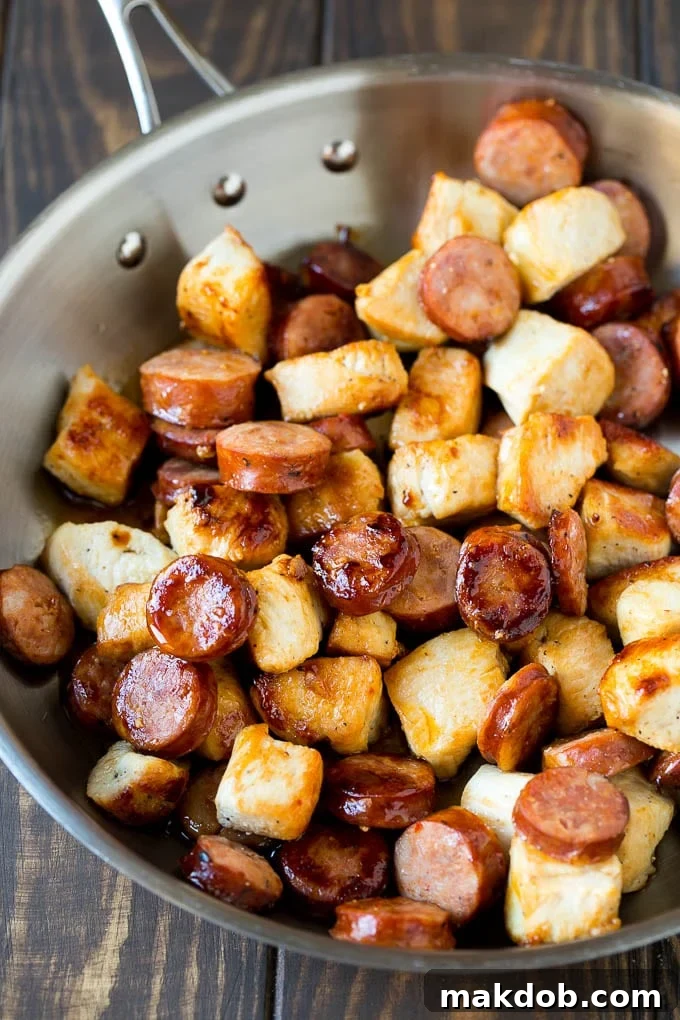
- Browning the Proteins: Next, the chicken pieces are browned to develop a rich, savory crust, followed by the robust andouille sausage, which adds depth and a hint of spice. This browning step is crucial for enhancing the overall flavor of the dish.
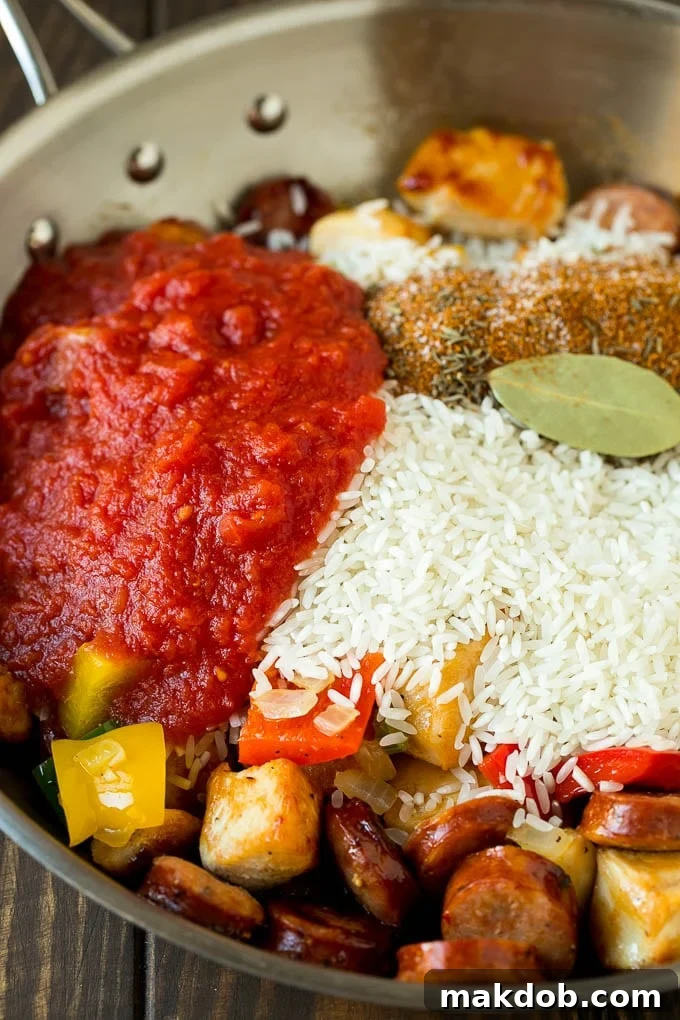
- Simmering to Perfection: The browned meats and sautéed vegetables are then combined in a large pot with uncooked long-grain rice, chicken broth, crushed tomatoes, and a generous blend of Cajun seasoning, dried thyme, and a bay leaf. Everything simmers together, allowing the rice to slowly absorb the flavorful liquid and seasonings, becoming wonderfully tender.
- Adding the Final Touches: In the last few minutes of cooking, peeled shrimp and sliced okra are stirred into the simmering pot. These ingredients cook quickly, ensuring the shrimp remain tender and succulent, and the okra adds a distinctive texture without becoming overly slimy. A sprinkle of fresh parsley at the end adds a burst of color and freshness.
Expert Tips for Making the Best Homemade Jambalaya
- Bell Pepper Variety: Feel free to use any color of bell pepper you prefer. I often opt for a vibrant mix of red, green, and yellow bell peppers to enhance the visual appeal of the dish, but using a single color is perfectly fine and won’t compromise the flavor.
- Spice it Up: If you’re a fan of extra heat in your jambalaya, consider adding a seeded and minced jalapeño pepper to the mix when you’re sautéing the vegetables. For an even more intense kick, a pinch of cayenne pepper can be added with the Cajun seasoning.
- Shrimp Size Matters: For a more substantial and satisfying bite, I recommend using larger shrimp, typically a 16-20 count size. This ensures they don’t get lost in the dish and maintain a pleasing texture.
- Andouille Sausage is Key: This recipe specifically calls for andouille sausage, a distinctively spicy, smoked pork sausage that is fundamental to authentic Cajun and Creole flavors. You can usually find pre-cooked andouille alongside other smoked sausages in most well-stocked grocery stores. If it’s unavailable, a good quality smoked kielbasa can be a milder substitute, though it will alter the classic taste.
- Choose the Right Pot: Given the volume of ingredients, a very large, heavy-bottomed pot, such as a Dutch oven, or a spacious 12-inch deep skillet is essential. This ensures all ingredients fit comfortably and cook evenly without overcrowding.
- To Tail or Not to Tail?: Whether to remove the tails from the shrimp or leave them on is entirely up to your preference. Leaving the tails on can offer a more elegant presentation, especially if serving guests, but removing them makes the dish easier to eat.
- Fresh vs. Frozen Okra: While fresh okra is wonderful if you can find it, frozen sliced okra works just as effectively in this dish. There’s no need to thaw frozen okra before adding it; simply toss it in during the final cooking stage.
- Rice Type: Long-grain white rice is traditionally used for jambalaya as it tends to stay separate and fluffy, preventing the dish from becoming overly starchy or mushy. Avoid using short-grain or medium-grain rice, which can release too much starch.
- Seasoning Adjustments: Taste your jambalaya before serving and adjust the seasoning as needed. You might want to add a bit more salt, pepper, or Cajun seasoning to achieve your desired flavor balance.
Distinguishing Jambalaya from Gumbo: A Louisiana Culinary Guide
While both jambalaya and gumbo are quintessential Louisiana dishes, they are fundamentally different in their structure and preparation. The key distinction lies in the role of rice:
- Jambalaya: At its heart, jambalaya is a rice-based dish. The rice is cooked directly in the same pot with the meats, seafood, vegetables, and broth, absorbing all the rich flavors as it simmers. The result is a cohesive, savory rice dish where all components are integrated.
- Gumbo: In contrast, gumbo is a thick, flavorful stew or soup, typically thickened with a roux (a mixture of fat and flour) and/or okra and filé powder. While gumbo is almost always served over rice, the rice itself is prepared separately and added to the bowl just before serving, not simmered within the stew. Both dishes frequently feature a similar array of proteins, such as chicken, sausage, and various types of seafood, but their textural and structural compositions set them distinctly apart.
Once you experience the incredible depth of flavor in this homemade jambalaya, it’s bound to become a regular fixture in your cooking rotation. This recipe offers a pleasant medium level of spice, providing warmth without overwhelming the palate. If you are preparing this dish for children or those who prefer milder flavors, consider using a less spicy smoked sausage like kielbasa instead of andouille, and slightly reduce the amount of Cajun seasoning. You can always add extra seasoning or a dash of hot sauce to individual servings for those who crave more heat.
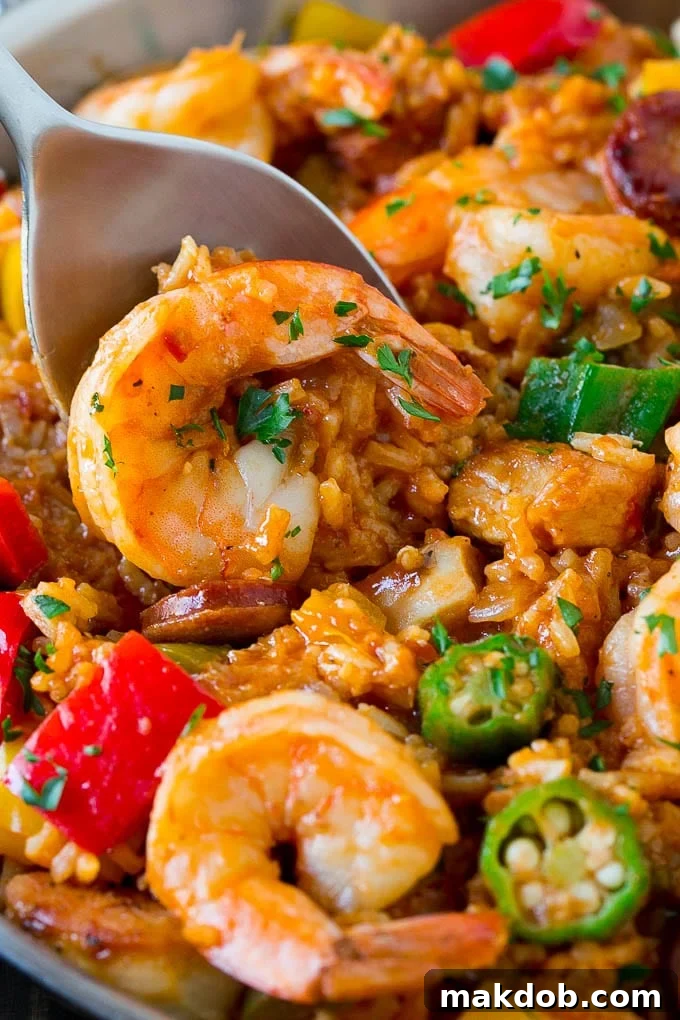
Whether you’re seeking a hearty, satisfying meal for a busy weeknight or planning a festive gathering for Mardi Gras with friends and family, this chicken, shrimp, and sausage jambalaya is guaranteed to be a crowd-pleaser. Its rich flavors and comforting warmth make it perfect for any occasion, evoking the spirit of Louisiana with every delicious bite.
More Delicious One-Pot Meals to Try
- Arroz con Pollo
- Chicken and Rice Casserole
- Salsa Chicken
- Greek Meatballs with Rice
- Chicken and Broccoli Casserole
Jambalaya Recipe Video Guide
While the interactive video player is not included here, you can typically find a helpful video guide to making this delicious jambalaya recipe on the original source website. Visual instructions can often clarify cooking techniques, especially for browning the meats and stirring the rice.
Jambalaya Recipe
This vibrant, one-pot jambalaya combines tender chicken, succulent shrimp, and spicy sausage with aromatic vegetables and rice, all simmered in a zesty, flavorful sauce. It’s an easy-to-make dish that delivers restaurant-quality taste right to your kitchen.
Prep Time: 15 minutes
Cook Time: 45 minutes
Total Time: 1 hour
Servings: 6
Cuisine: Cajun
Course: Main
Ingredients
- 4 teaspoons olive oil, divided use
- 3/4 cup onion, diced
- 1 cup bell peppers (red, green, and yellow combination recommended), cut into 1/2 inch pieces
- 1/2 cup celery, thinly sliced
- 2 teaspoons garlic, minced
- 1/2 pound boneless, skinless chicken breast, cut into bite-sized pieces
- 1 pound cooked andouille sausage, sliced
- Salt and pepper to taste
- 3 1/2 cups chicken broth
- 14 ounce can crushed tomatoes, undrained
- 1 1/2 cups long grain rice, uncooked
- 1 1/2 tablespoons Cajun seasoning
- 1/2 teaspoon dried thyme
- 1 bay leaf
- 1/2 pound peeled large shrimp (tails can be removed or left on for presentation)
- 3/4 cup sliced okra (fresh or frozen)
- 2 tablespoons chopped fresh parsley, for garnish
Instructions
- Heat 2 teaspoons of olive oil in a very large pot or Dutch oven over medium heat. Add the diced onion, bell peppers, and thinly sliced celery to the pan.
- Cook for 4-5 minutes, stirring occasionally, until the vegetables have softened. Add the minced garlic and cook for an additional 30 seconds until fragrant.
- Remove the softened vegetables from the pot and transfer them to a plate; cover the plate to keep them warm.
- Add the remaining 2 teaspoons of olive oil to the pot. Season the bite-sized chicken pieces generously with salt and pepper.
- Add the seasoned chicken to the pot and cook until it is browned on all sides, about 5-6 minutes, stirring occasionally.
- Add the sliced andouille sausage to the pot with the chicken and cook for approximately 2-3 minutes, browning the sausage lightly.
- Return the cooked vegetables to the pot with the chicken and sausage. Stir in the chicken broth, undrained crushed tomatoes, uncooked long grain rice, Cajun seasoning, dried thyme, and the bay leaf. Season with additional salt and pepper to taste.
- Stir all the ingredients thoroughly to combine. Bring the mixture to a gentle simmer. Once simmering, cover the pot tightly and reduce the heat to low. Cook for 25 minutes, or until the rice is tender and has absorbed most of the liquid. Stir the jambalaya every 6-8 minutes to prevent sticking and ensure even cooking.
- Remove and discard the bay leaf. Add the peeled shrimp and sliced okra to the pot and stir them gently into the jambalaya.
- Cover the pot again and continue to cook for an additional 3-4 minutes, or until the shrimp turn pink and opaque, and the okra is heated through.
- Sprinkle generously with fresh chopped parsley before serving. Enjoy your homemade, flavorful jambalaya!
Nutrition Information (per serving, approximate)
Calories: 387kcal | Carbohydrates: 47g | Protein: 13g | Fat: 16g | Cholesterol: 24mg | Sodium: 645mg | Potassium: 639mg | Fiber: 3g | Sugar: 5g | Vitamin A: 1830IU | Vitamin C: 49.9mg | Calcium: 61mg | Iron: 2.3mg
Did you make this delicious jambalaya recipe?
We’d love to see your culinary creations! Tag @dinneratthezoo on Instagram and use the hashtag #dinneratthezoo to share your photos with our community!
Share this amazing recipe with the world!
Share on Facebook |
Tweet on Twitter |
Pin on Pinterest