
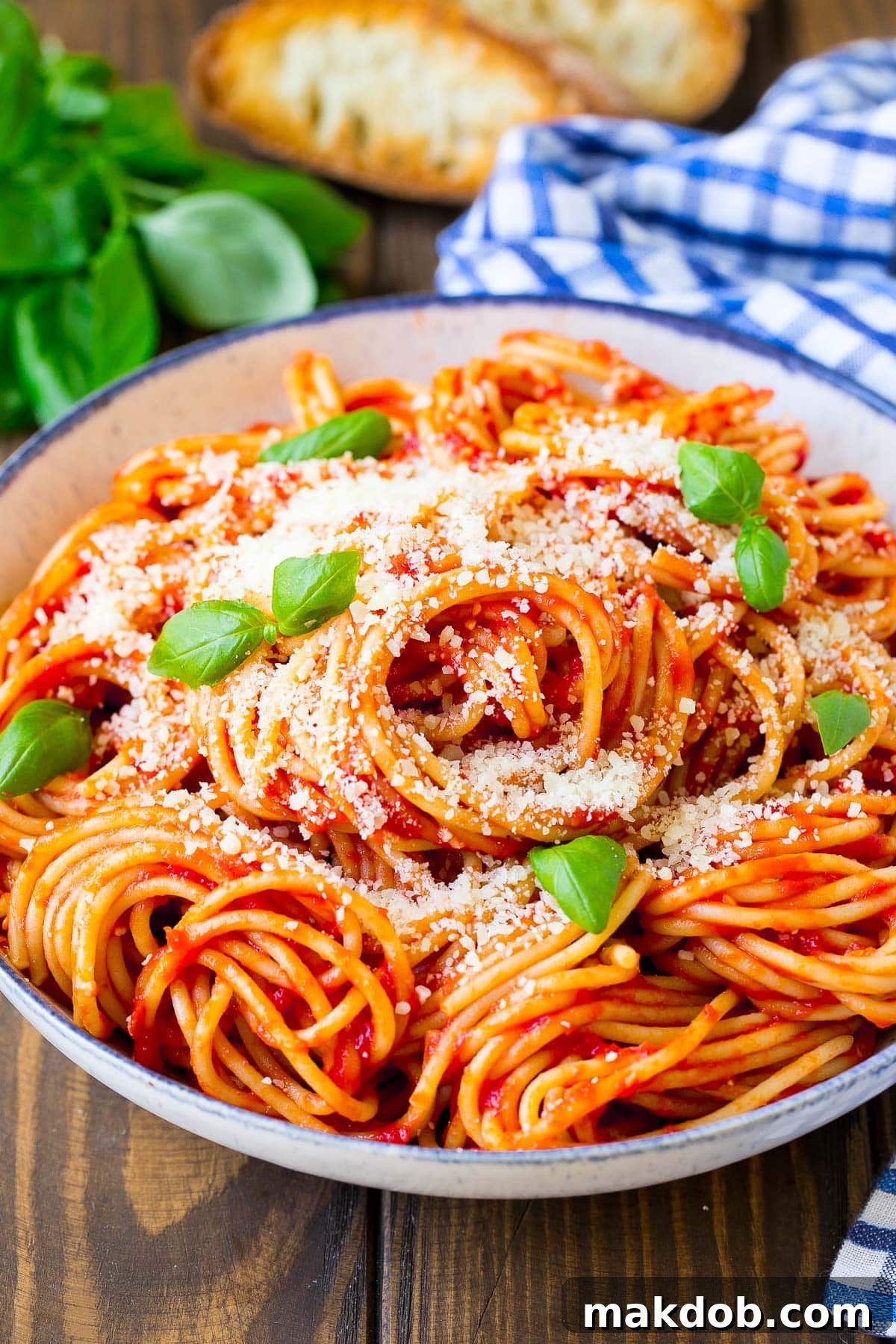
Delve into the heart of Italian cooking with this exquisite Pasta Pomodoro recipe. A quintessential Italian classic, this dish transforms simple ingredients into a symphony of flavors. Imagine perfectly cooked spaghetti, lovingly coated in a rich, homemade tomato sauce, then generously adorned with freshly grated Parmesan cheese and fragrant basil leaves. It’s more than just a meal; it’s an experience, ideal for both a comforting weeknight dinner and impressive entertaining.
There’s an undeniable charm in hearty pasta recipes, especially when you’re preparing for a gathering. While I cherish diverse pasta dishes like Cajun jambalaya pasta, buffalo chicken mac and cheese, manicotti, chicken broccoli Alfredo, and penne alla vodka, this humble yet incredibly satisfying pasta pomodoro holds a special place. Its elegance lies in its simplicity, proving that sometimes, less truly is more.
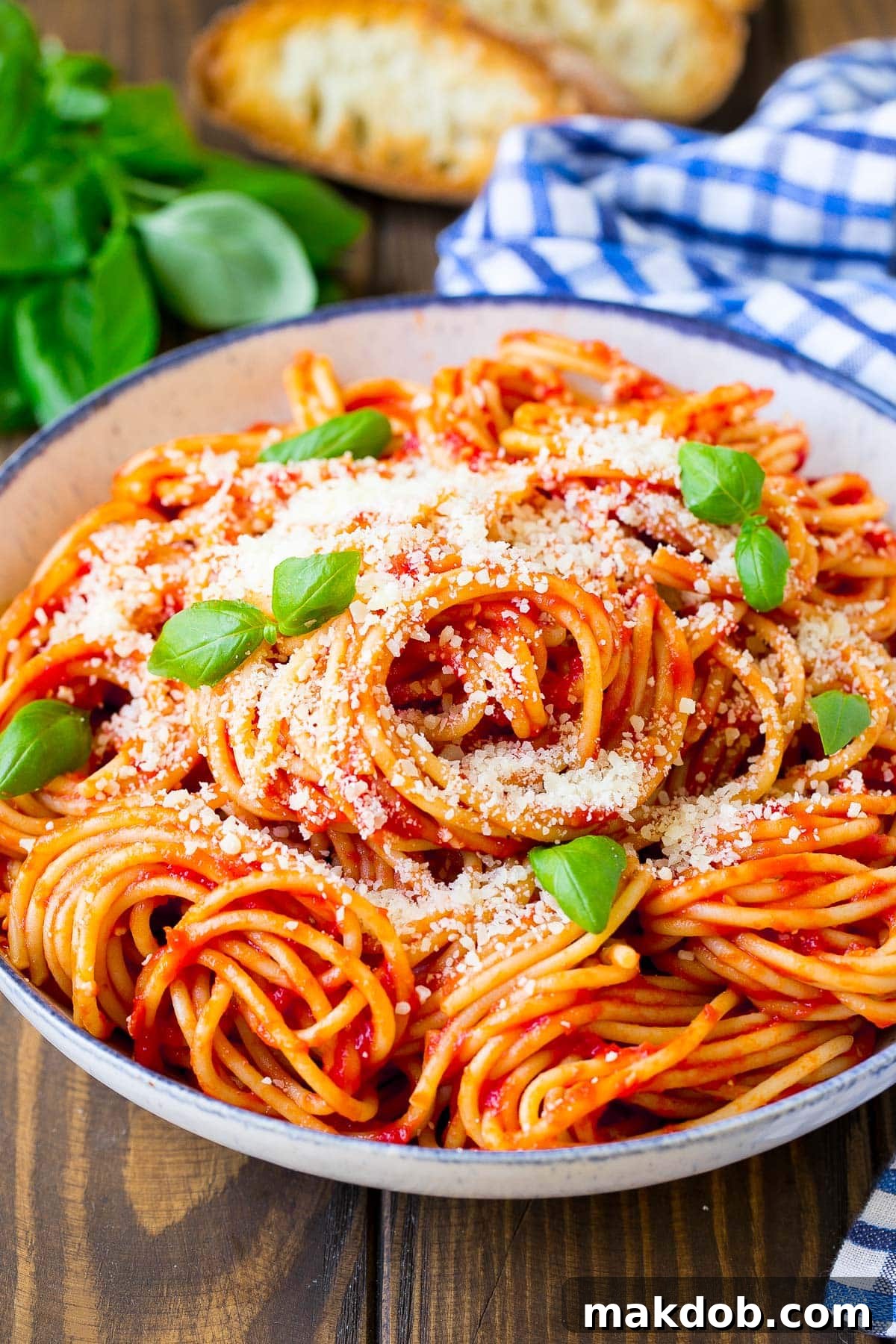
The essence of true Italian cuisine often resides in its ability to elevate a few high-quality ingredients into something extraordinary. This classic Italian favorite, pasta pomodoro, is a testament to that philosophy. Each strand of pasta is lovingly coated in a homemade tomato sauce so delicious, you’ll swear it came straight from a gourmet Italian eatery. The secret? Uncompromising quality in every component, creating an authentic and unforgettable flavor profile that will astonish your taste buds.
Table of Contents
- The Soul of Italian Cooking: Pasta Pomodoro
- Pasta Pomodoro: The Core Ingredients
- Crafting Your Pasta Pomodoro: Step-by-Step Guide
- Expert Tips for the Perfect Pasta Pomodoro
- Quick Tip: The Parmesan Difference
- Recipe FAQs: Your Pasta Pomodoro Questions Answered
- Elevate Your Dish: Pomodoro Variations
- More Irresistible Pasta Recipes You’ll Enjoy
- Love This Recipe?
- Pasta Pomodoro Recipe
The Soul of Italian Cooking: Pasta Pomodoro
Pasta Pomodoro, literally meaning “tomato pasta,” is a foundational dish in Italian culinary tradition. It embodies the art of simplicity, where the natural sweetness and acidity of ripe tomatoes are celebrated. Unlike more complex sauces, pomodoro focuses on fresh, vibrant flavors, allowing the quality of each ingredient to shine. This dish is a true symbol of Italian home cooking – comforting, robust, and utterly delicious. It’s proof that you don’t need an elaborate list of exotic components to create a profoundly satisfying meal. The magic happens when fresh ingredients are treated with respect and allowed to marry into a harmonious blend. Its versatility makes it a beloved choice for any occasion, from a quick family dinner to an elegant dinner party where its classic appeal is always a crowd-pleaser.
Pasta Pomodoro: The Core Ingredients
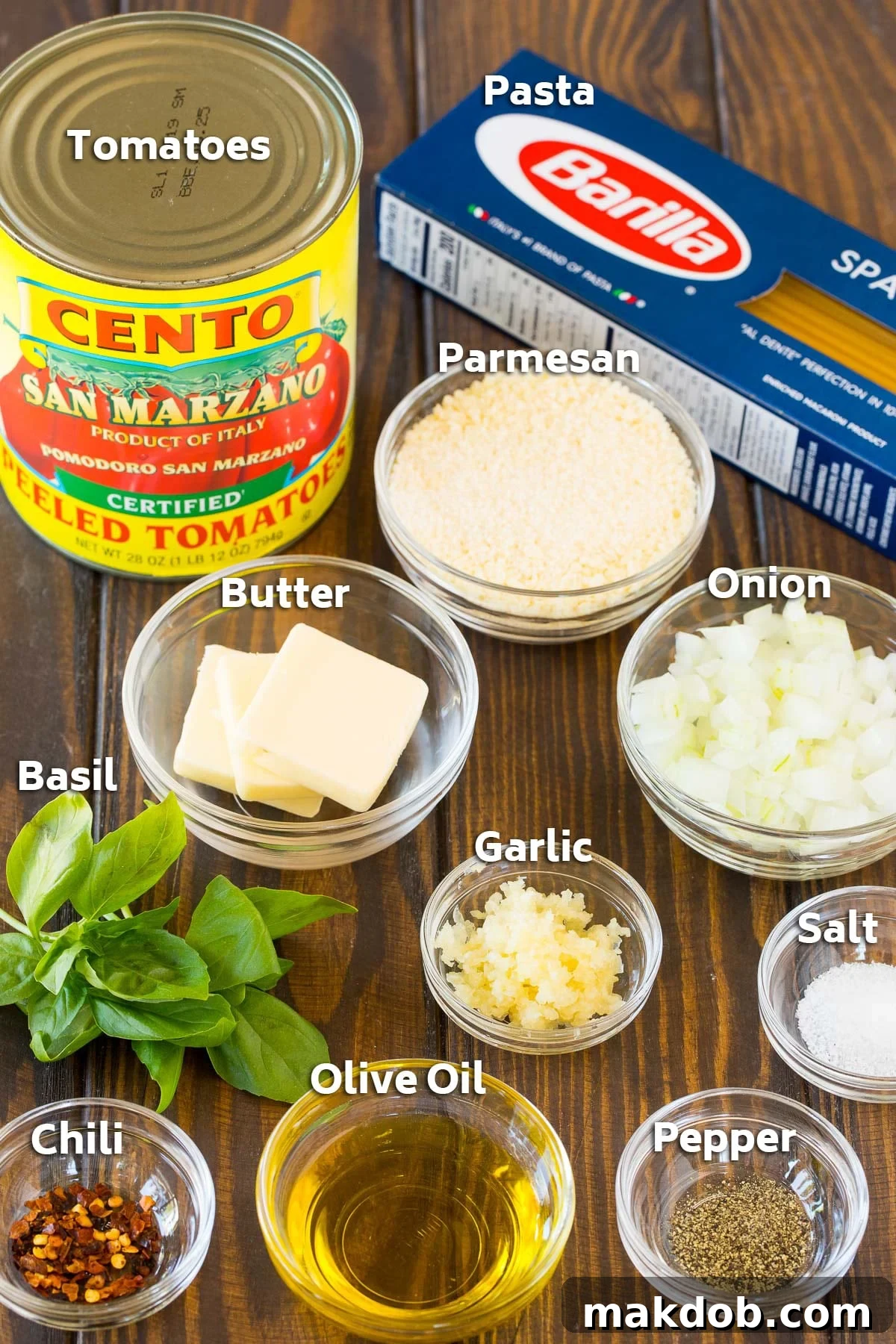
The secret to an exceptional Pasta Pomodoro lies in its meticulously chosen, yet simple, components. This exquisite dish relies on:
- **Extra-Virgin Olive Oil:** The foundation of the sauce, providing a fruity, peppery base. Opt for a high-quality, cold-pressed olive oil for the best flavor.
- **Onions & Garlic Cloves:** These aromatic vegetables are sautéed to create a sweet and pungent depth, crucial for the sauce’s character. Finely chopping them ensures they melt into the sauce seamlessly.
- **Red Pepper Flakes:** An optional but highly recommended addition that introduces a subtle warmth and a gentle kick, elevating the overall flavor profile without overpowering the tomatoes.
- **Tomatoes:** The undisputed star! While fresh, ripe tomatoes are wonderful in season, high-quality canned tomatoes (especially San Marzano) provide consistent flavor year-round. They are pureed for a smooth, velvety sauce.
- **Salt & Pepper:** Essential seasonings to enhance the natural flavors and balance the sweetness and acidity of the tomatoes.
- **Butter:** Stirred in at the end, butter adds an incredible richness and silkiness to the sauce, helping it cling beautifully to the pasta.
- **Pasta:** While spaghetti is traditional, the key is using a good quality pasta that can hold its texture. Cooked al dente, it provides the perfect chew.
- **Parmesan Cheese:** A sprinkle of freshly grated Parmesan adds a salty, umami depth and a creamy texture when tossed into the hot pasta. More is used for garnish.
- **Fresh Basil:** The final, indispensable flourish. Its sweet, aromatic notes cut through the richness of the sauce and provide a burst of freshness. Never substitute dried basil here.
Crafting Your Pasta Pomodoro: Step-by-Step Guide
Creating this classic Italian favorite is a delightful and straightforward process, culminating in a dish bursting with fresh flavors. Here’s how you bring together the perfect pasta pomodoro:
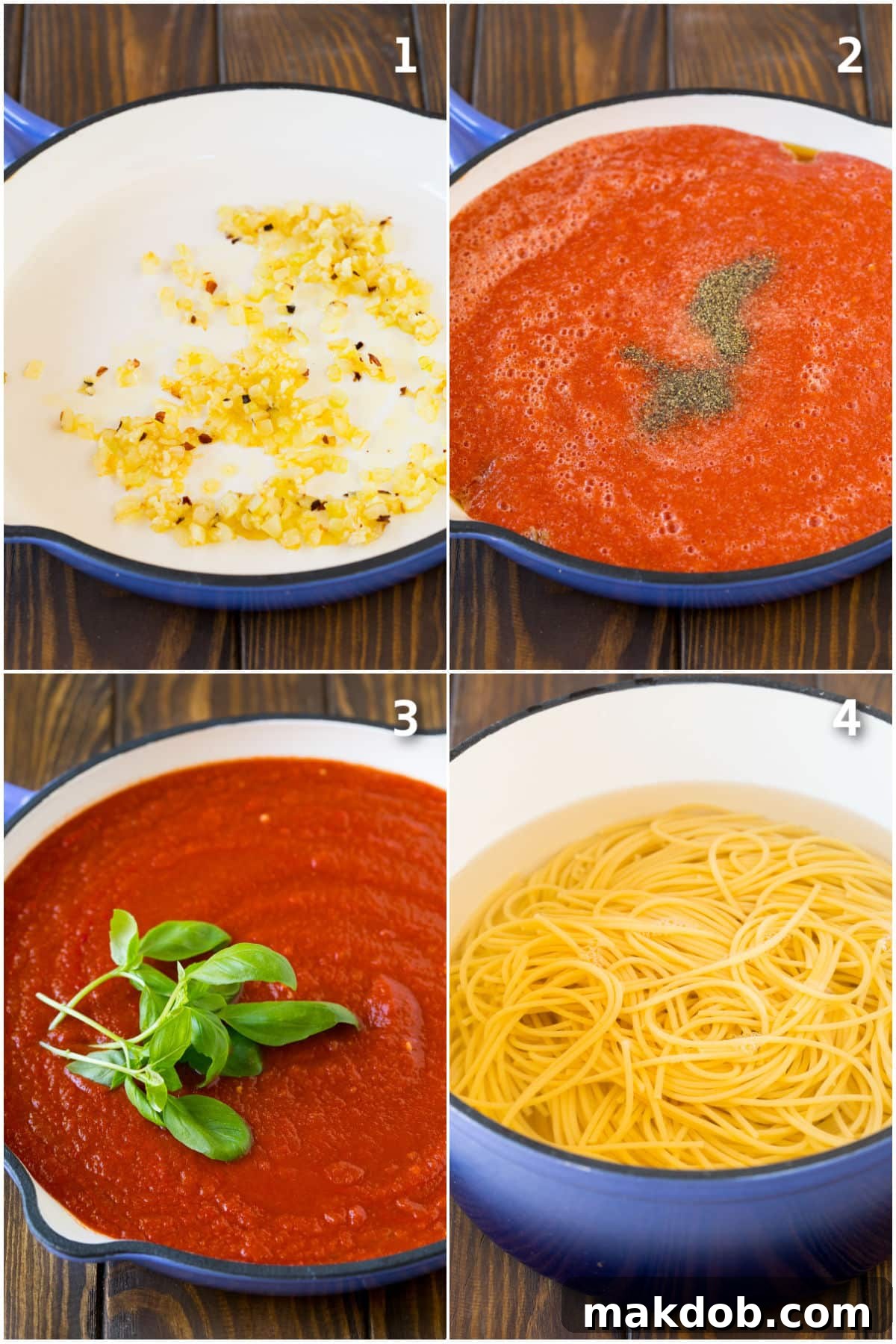
- **Begin with the Sauce Base:** Start by heating a generous amount of extra-virgin olive oil in a large skillet over medium heat. Add the finely chopped onions and sauté them gently for about 4-5 minutes, until they become soft and translucent, releasing their natural sweetness. Then, introduce the minced garlic, cooking for just one more minute until fragrant. Be careful not to burn the garlic, as it can turn bitter quickly.
- **Add a Touch of Spice & Tomatoes:** If you enjoy a little heat, stir in a pinch of crushed red pepper flakes. This subtle warmth adds another layer of complexity to the sauce. Immediately after, pour in your pureed tomatoes. Season generously with salt and freshly ground black pepper to taste.
- **Simmer to Perfection:** Bring the sauce to a gentle simmer. Reduce the heat to low and let it cook uncovered for at least 20 minutes, or until the sauce has slightly thickened and the flavors have had a chance to meld beautifully. The longer it simmers, the deeper the flavor. During the last few minutes, stir in a few sprigs of fresh basil, allowing their aroma to infuse the sauce. Remove the basil sprigs before tossing the pasta.
- **Cook the Pasta:** While your exquisite sauce is simmering, prepare your pasta. Cook the spaghetti (or your preferred long pasta) in a large pot of generously salted boiling water according to package directions, aiming for an al dente texture. This means it should be firm to the bite, not mushy.
- **Reserve Pasta Water:** Before draining the pasta, crucially reserve about 1/4 cup of the starchy cooking liquid. This liquid is your secret weapon for achieving a perfectly emulsified and glossy sauce.
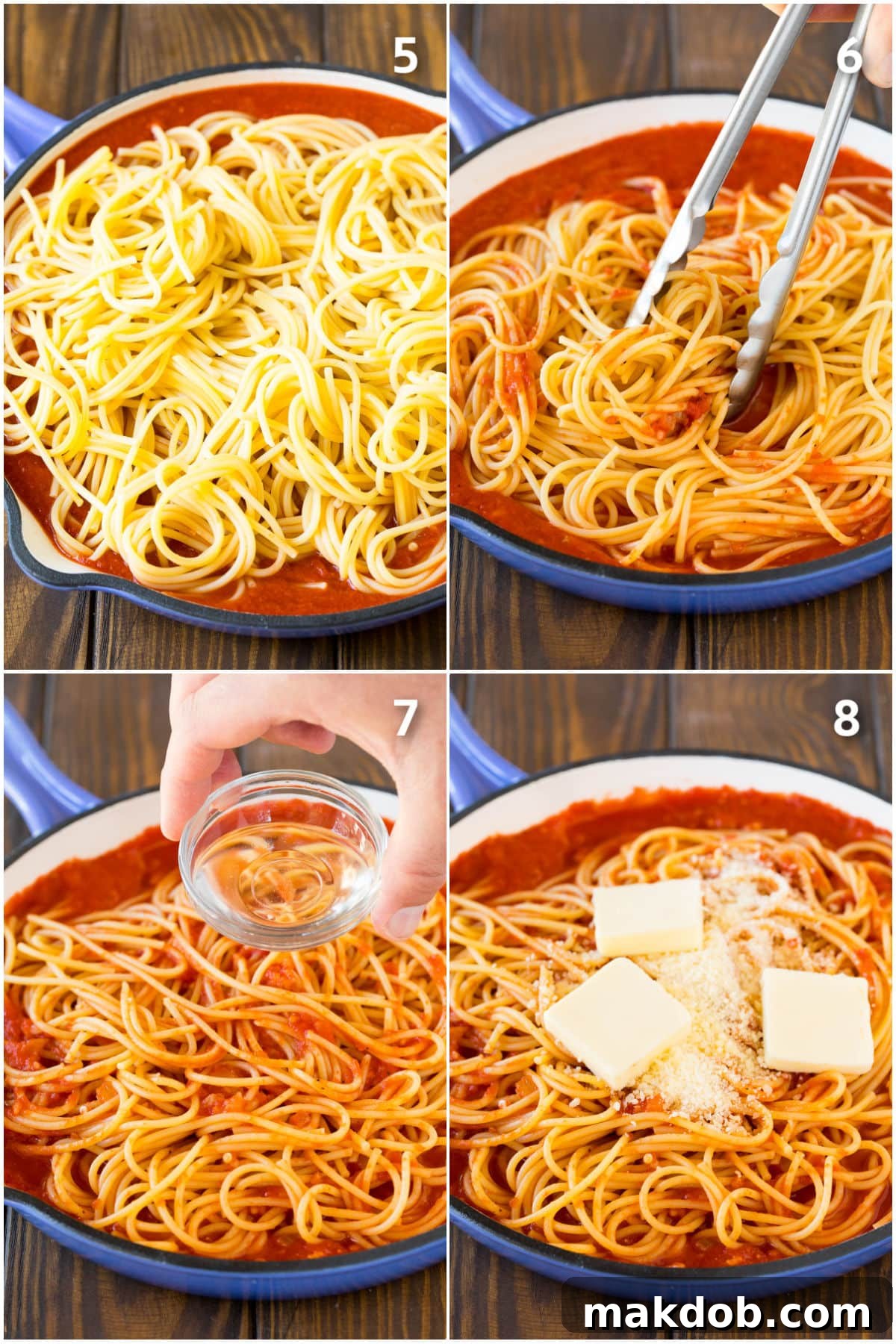
- **Combine & Enrich:** Once the pasta is drained and the basil sprigs are discarded from the sauce, add the al dente pasta directly into the pan with the warm tomato sauce. Toss thoroughly to ensure every strand is coated. Place the pan over medium heat.
- **Achieve Desired Consistency:** Gradually add the reserved pasta water, one tablespoon at a time, continuously tossing until the sauce reaches your desired consistency. The pasta water helps bind the sauce to the pasta and creates a wonderfully silky texture.
- **Final Touches:** Remove the pan from the heat. Stir in the butter and half of the freshly grated Parmesan cheese. Continue to toss the pasta until both the butter and cheese have completely melted, creating a luxurious, creamy coating.
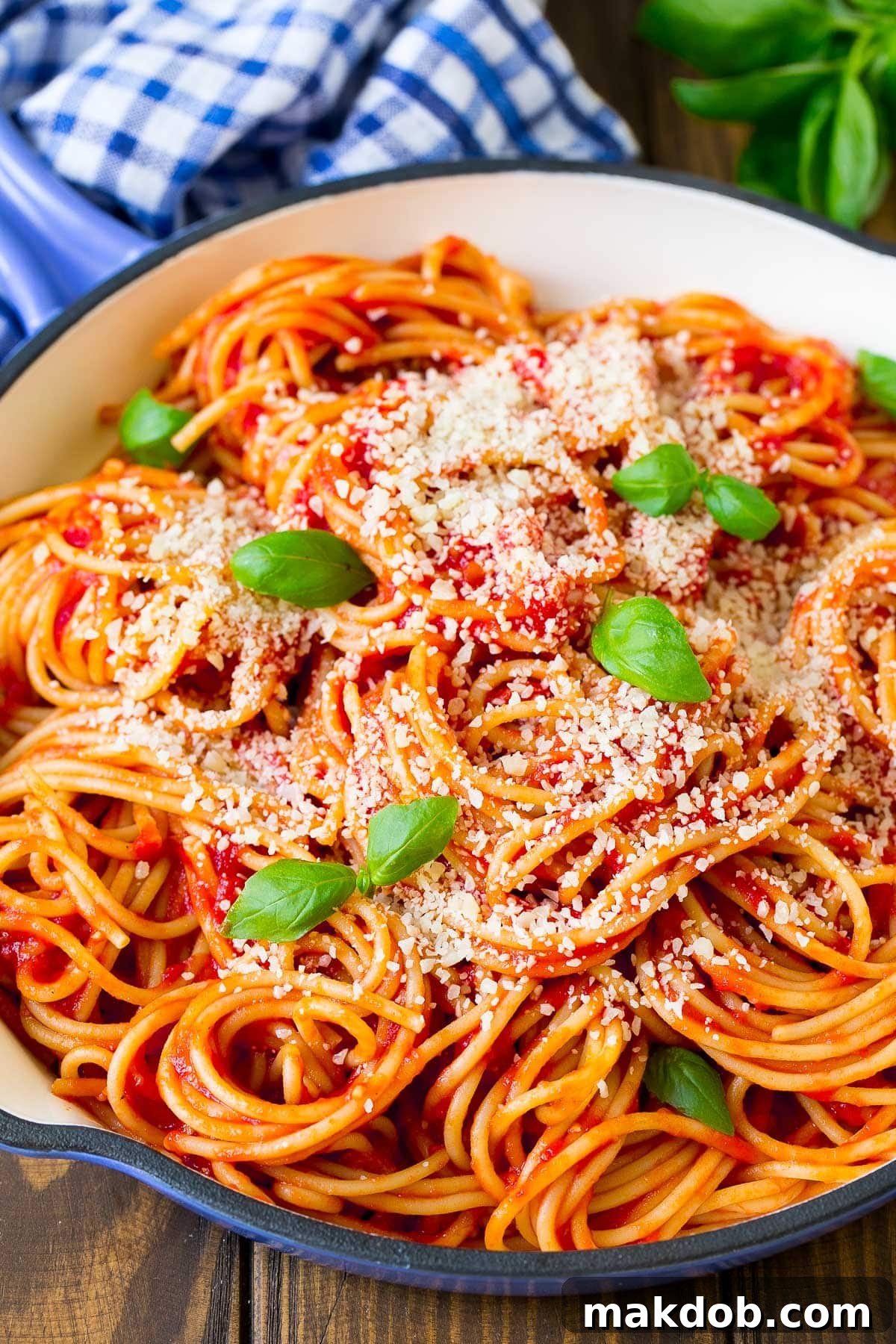
- **Serve & Garnish:** Transfer the pasta to serving bowls. Finish with the remaining freshly grated Parmesan cheese and a generous sprinkle of fresh basil leaves. Serve immediately and savor the rich, authentic flavors of your homemade Pasta Pomodoro!
Expert Tips for the Perfect Pasta Pomodoro
- **Choose Your Pasta Wisely:** While spaghetti is the traditional choice for pasta pomodoro, its beauty truly shines with other long pasta varieties. Feel free to experiment with fettuccine, bucatini (a thicker, hollow spaghetti), or delicate angel hair pasta. The key is to select a pasta that can gracefully hold the rich, smooth sauce. Always ensure you cook your pasta to an ideal al dente texture; it should offer a slight bite and not be overly soft.
- **Complementary Sides:** To create a complete and balanced meal, serve your pasta pomodoro alongside a fresh salad or a vibrant vegetable dish. Some excellent pairings include a refreshing Mediterranean salad, a hearty succotash, a crisp wedge salad, or tender asparagus salad. For an extra touch of indulgence, I often suggest offering warm garlic knots or decadent cheesy pull-apart bread to sop up every last bit of that delicious sauce.
- **Make Ahead Magic:** The tomato sauce for your pomodoro is incredibly forgiving and can be prepared up to 2 days in advance. Store it in an airtight container in the refrigerator. When ready to serve, gently reheat the sauce in a pan, then cook your fresh pasta and toss everything together with the butter and Parmesan cheese just before serving. This makes entertaining a breeze! For longer storage, the sauce freezes beautifully for up to 2 months. Thaw it in the refrigerator overnight before reheating.
- **The Secret to Superior Tomatoes:** You don’t need to wait for peak season fresh tomatoes to enjoy an exceptional pasta pomodoro. This sauce can be made year-round with high-quality canned tomatoes. The true secret ingredient for a truly great sauce is a can of premium San Marzano whole tomatoes. These Italian plum or Roma tomatoes are renowned for their sweet, mild flavor and low acidity, making them the absolute perfect foundation for an authentic pomodoro sauce. San Marzanos are readily available in most grocery stores under various reputable labels; look for the “D.O.P.” certification for authenticity.
- **The Importance of Pasta Water:** Never underestimate the power of reserved pasta cooking water! The starch in the water helps to emulsify the sauce, creating a silky, glossy texture that clings beautifully to the pasta. It’s the key to transforming your sauce from good to truly exceptional.
- **Taste and Adjust:** Throughout the cooking process, particularly when simmering the sauce, make sure to taste and adjust the seasonings. Add more salt, pepper, or a pinch of sugar if your tomatoes are a bit acidic, until the flavor profile is perfectly balanced.
Quick Tip: The Parmesan Difference
Freshly grated parmesan cheese is paramount for this dish. Pre-grated cheeses often contain anti-caking agents and stabilizers, which prevent them from melting smoothly and integrating properly into the sauce, resulting in a less luxurious texture and flavor. Invest in a block and grate it yourself!
Recipe FAQs: Your Pasta Pomodoro Questions Answered
“Pomodoro” is the Italian word for tomato. Pasta Pomodoro is a classic Italian pasta dish featuring a vibrant, smooth, and often thick tomato-based sauce, typically made with whole canned tomatoes, onion, garlic, butter, Parmesan cheese, and fresh basil. While spaghetti is frequently used, various pasta shapes can be paired with this delightful sauce.
Both pomodoro and marinara are tomato-based sauces, but they have distinct characteristics. Pomodoro sauce tends to be smoother and thicker, often pureed or finely crushed for a refined texture. Marinara, on the other hand, is typically a chunkier sauce, with more visible pieces of tomato, and is generally lighter and thinner in consistency. Marinara also tends to cook more quickly than pomodoro.
Absolutely! When fresh, ripe, in-season tomatoes (like Roma or plum tomatoes) are available, they make an exceptional pomodoro sauce. You’ll typically need to blanch, peel, and seed them before pureeing. However, for consistent flavor and convenience, especially outside of peak season, high-quality canned San Marzano tomatoes are often preferred by chefs for their balanced sweetness and low acidity.
Leftover pasta pomodoro can be stored in an airtight container in the refrigerator for up to 3-4 days. For best results, it’s sometimes better to store the sauce and pasta separately if possible, and combine them when reheating to maintain pasta texture. The sauce alone can be frozen for up to 2 months.
Yes, you can easily adapt this pasta pomodoro recipe to be vegan. Simply omit the butter and Parmesan cheese. To maintain richness, you can add a tablespoon of vegan butter or a swirl of good quality extra-virgin olive oil at the end. Nutritional yeast can also be used as a cheesy substitute for a savory, umami flavor.
FOLLOW ME
Elevate Your Dish: Pomodoro Variations
While this pasta pomodoro recipe is utterly delicious in its classic form, it also serves as a fantastic canvas for customization. Feel free to incorporate other ingredients to tailor it perfectly to your family’s preferences and whatever fresh produce you have on hand.
- **Add Protein:** Boost the heartiness of your pasta by adding cooked protein. Consider succulent baked chicken breast, tender garlic butter shrimp, savory Italian meatballs, or crumbled Italian sausage. Cook the protein separately and stir it into the sauce right before tossing with the pasta.
- **Incorporate Vegetables:** Enhance the nutritional value and texture by folding in cooked vegetables. Excellent choices include wilted spinach, vibrant roasted cherry tomatoes (which add another layer of concentrated tomato flavor), earthy sautéed mushrooms and onions, tender grilled zucchini, briny artichoke hearts, or smoky grilled eggplant.
- **Extra Cheesy Goodness:** For those who adore cheese, consider adding a generous layer of shredded mozzarella, provolone, or creamy fontina cheese over the top of your finished pasta. Then, place the entire pan under a broiler for 2-3 minutes, just until the cheese is bubbling and beautifully golden brown. This creates an irresistible cheesy crust.
If you’re constantly seeking new ways to enjoy the versatility of pasta, don’t miss exploring my extensive collections of slow cooker pasta recipes for effortless meals and refreshing pasta salad recipes perfect for any gathering!
More Irresistible Pasta Recipes You’ll Enjoy
Caprese Pasta
15 mins
Turkey Pasta Carbonara
30 mins
Cajun Chicken Pasta
40 mins
Taco Pasta
20 mins
Tuscan Chicken Pasta
30 mins
Love This Recipe?
We hope you cherish this classic Pasta Pomodoro as much as we do! Please leave a 5-star 🌟🌟🌟🌟🌟 rating in the recipe card below & a review in the comments section further down the page. Your feedback is truly appreciated!
Pasta Pomodoro
Pin
Time
Ingredients
- 2 tablespoons olive oil
- 1/2 cup onion finely chopped
- 2 teaspoons garlic minced
- 1/4 teaspoon crushed red pepper flakes optional
- 28 ounce can San Marzano Whole Tomatoes pureed in a blender or food processor
- salt and pepper to taste
- 3 tablespoons butter
- 1/2 cup parmesan cheese divided use
- 3 sprigs fresh basil plus more basil leaves for garnish.
- 12 ounces spaghetti or other long pasta
Instructions
-
Heat the olive oil in a large pan over medium heat. Add the onions and cook for 4-5 minutes or until softened. Add the garlic and cook for 1 more minute.
-
Stir in the red pepper flakes (optional), then add the pureed tomatoes. Season with salt and pepper to taste.
-
Bring to a simmer and cook for 20 minutes or until sauce has just started to thicken. Stir in the sprigs of basil, then remove the sauce from the heat.
-
While the sauce is simmering, cook the spaghetti in a large pot of salted water according to package directions.
-
Drain the pasta, reserving 1/4 cup of the pasta cooking liquid.
-
Discard the basil sprigs. Add the pasta to the pan with the tomato sauce, toss to coat. Place the pan of pasta over medium heat.
-
Add the pasta water, 1 tablespoon at a time, until pasta sauce is at your desired consistency.
-
Stir in the butter and half of the parmesan cheese. Toss the pasta until the cheese and butter are melted.
-
Remove the pasta from the heat. Top with remaining parmesan cheese and fresh basil leaves, then serve immediately.
Notes
- Freshly grated parmesan cheese works best in this dish. Pre-grated cheese often contains stabilizers and anti caking agents and does not melt as well.
- You can make the sauce up to 2 days in advance, then reheat the sauce in a pan and toss the pasta, butter and parmesan cheese in the sauce right before serving. The sauce can also be frozen for up to 2 months.