
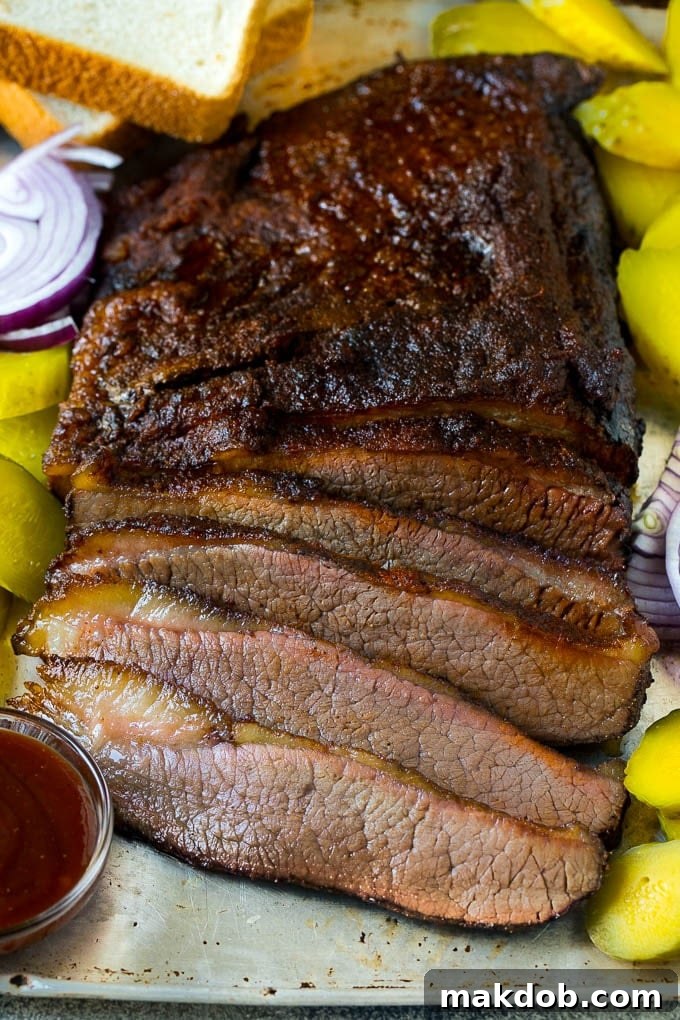
Welcome to the ultimate guide for creating truly exceptional smoked brisket that will rival any restaurant’s offering. This comprehensive smoked brisket recipe transforms a humble cut of beef into a culinary masterpiece, coated in a rich, homemade spice rub and then slow smoked to achieve unparalleled tenderness and deep, smoky flavor. Thinly sliced and ready to impress, this is the beef dish that epitomizes classic barbecue perfection.
There’s an undeniable magic to slow-cooked beef brisket, making it arguably the finest creation you can achieve with a smoker. The journey from raw meat to succulent slices is one of patience and passion, resulting in a dish that consistently garners rave reviews. Imagine serving your perfectly smoked brisket alongside quintessential barbecue sides like creamy stove-top mac and cheese, savory baked beans with bacon, and vibrant corn on the cob. This combination promises a feast that delights every palate and leaves a lasting impression.
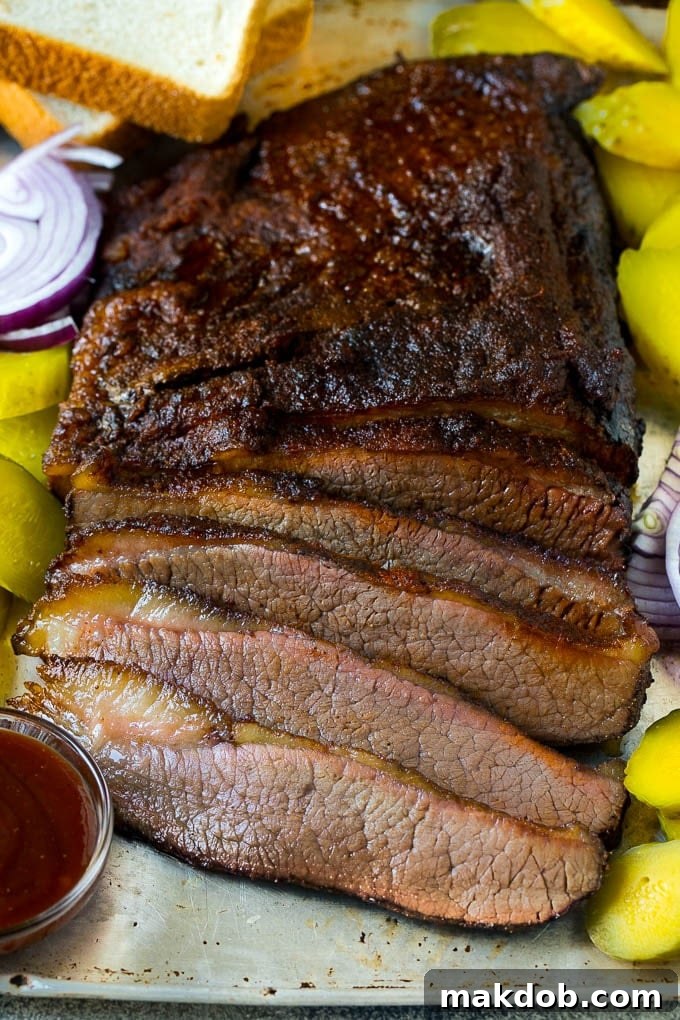
Many barbecue enthusiasts, myself included, consider smoked brisket the undisputed monarch of all smoked meats. Its texture, meltingly tender with every bite, combined with a profoundly rich and complex flavor profile, makes it truly stand out. What’s more, mastering smoked brisket is surprisingly straightforward, provided you understand the fundamental principles of low-and-slow cooking. The primary challenge isn’t complexity but rather the patience required to allow the meat to slowly transform over many hours in the smoker, evolving into its perfect, delectable state.
Should you not yet own a smoker, don’t despair! You can still experience the joy of tender, juicy brisket through alternative cooking methods. Explore our popular recipes for slow cooker brisket for hands-off convenience, Instant Pot brisket for a significantly faster cook time, or our classic beef brisket recipe designed for your oven. Each method promises a delicious result, ensuring no one misses out on this incredible beef dish.
Table of Contents
- Smoked Brisket Ingredients: The Foundation of Flavor
- How to Make Smoked Brisket: A Step-by-Step Guide
- Tips for the Perfect Smoked Brisket: Achieving BBQ Excellence
- Quick Tip: The Butcher Paper Advantage
- Smoked Brisket FAQs: Your Questions Answered
- Smoked Brisket Flavor Variations: Customizing Your Cook
- More Smoker Recipes to Explore
- Love This Recipe?
- Smoked Brisket Recipe Card
Smoked Brisket Ingredients: The Foundation of Flavor
To embark on your journey to cook tender, juicy smoked beef brisket, you’ll need three primary components: a high-quality brisket, a flavorful BBQ rub, and a complementary BBQ sauce. While readily available store-bought options can suffice, for truly exceptional results, we wholeheartedly recommend crafting your own from scratch. Our homemade BBQ rub recipe is meticulously balanced to enhance the beef’s natural richness with a savory, slightly sweet, and subtly spicy profile. Pair it with our tangy and rich homemade BBQ sauce to elevate every slice. Beyond these essentials, consider a thin layer of mustard as a binder for your rub, and for that authentic smoky aroma, select your preferred wood chips or chunks.
Choosing the right brisket is paramount. Ideally, look for a “whole packer” brisket, which includes both the flat and point cuts. This cut offers the best of both worlds – the leaner, uniformly shaped flat for perfect slices, and the fattier, richly marbled point, ideal for shredding or making savory burnt ends. If a whole packer isn’t available, either the flat or the point can be smoked individually, though they may require slightly different cooking considerations due to their fat content and size.
How to Make Smoked Brisket: A Step-by-Step Guide
Crafting the perfect smoked brisket is a patient art, but with these clear steps, you’ll achieve restaurant-quality results every time.
- Prepare the Brisket: Begin by carefully trimming off the excess fat from your brisket. The goal is to leave a consistent fat cap of about 1/4 to 1/2 inch on the top (fat side) of the brisket. This fat will render during the long smoke, basting the meat and contributing to its juiciness and flavor. Remove any hard, thick pieces of fat that won’t render down, especially from the sides and between the flat and point if you have a packer cut.
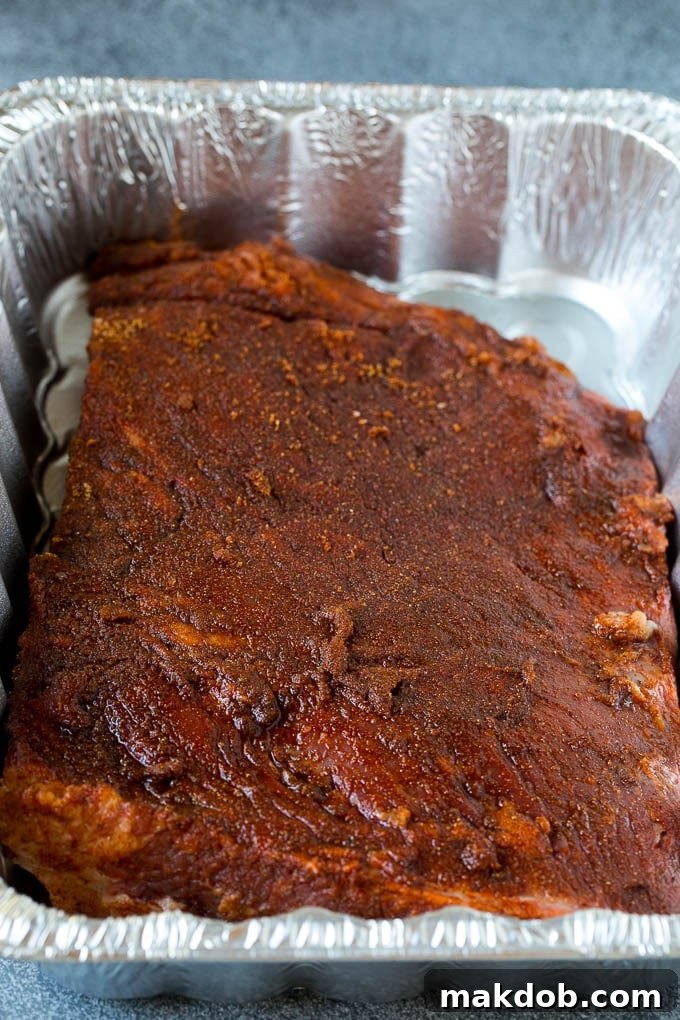
- Apply the Rub: Once trimmed, generously cover the entire surface of the brisket with your chosen BBQ rub. Don’t be shy; ensure a thorough, even coating. The rub acts as a flavorful crust and aids in forming the coveted “bark.”
- Refrigerate (Dry Brine): For optimal flavor penetration and moisture retention, place the seasoned brisket in the refrigerator, uncovered, for 10 to 12 hours. This dry brining process helps the salt in the rub draw out moisture, which then reabsorbs, resulting in a more flavorful and tender final product.
- Preheat Your Smoker: When you’re ready to begin the smoking process, preheat your smoker to a consistent 250 degrees F (121 degrees C). Maintaining a stable temperature is crucial for a successful low-and-slow cook.
- Initial Smoke (The First Phase): Place the brisket fat side down on an aluminum foil tray (or directly on the grates, if preferred, with a drip pan underneath). Insert a reliable meat thermometer into the thickest part of the flat, avoiding any large pockets of fat. Smoke the meat for several hours until its internal temperature reaches approximately 170 degrees F (77 degrees C). This phase is critical for developing the smoke ring and forming the flavorful bark. Expect this to take anywhere from 4 to 8 hours, depending on the brisket’s size and the smoker’s consistency.
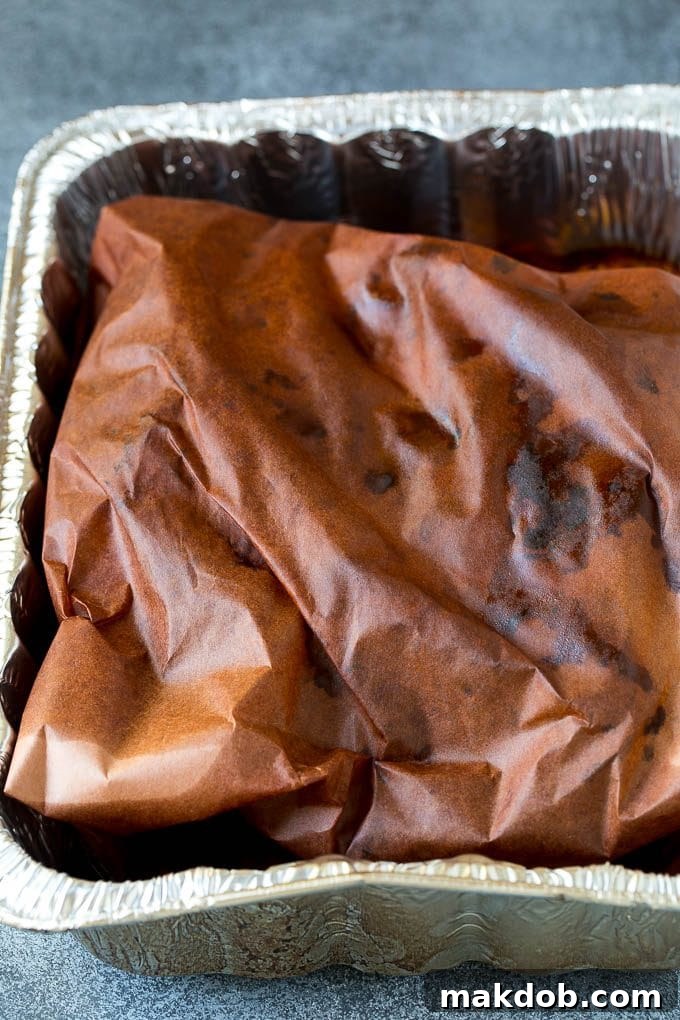
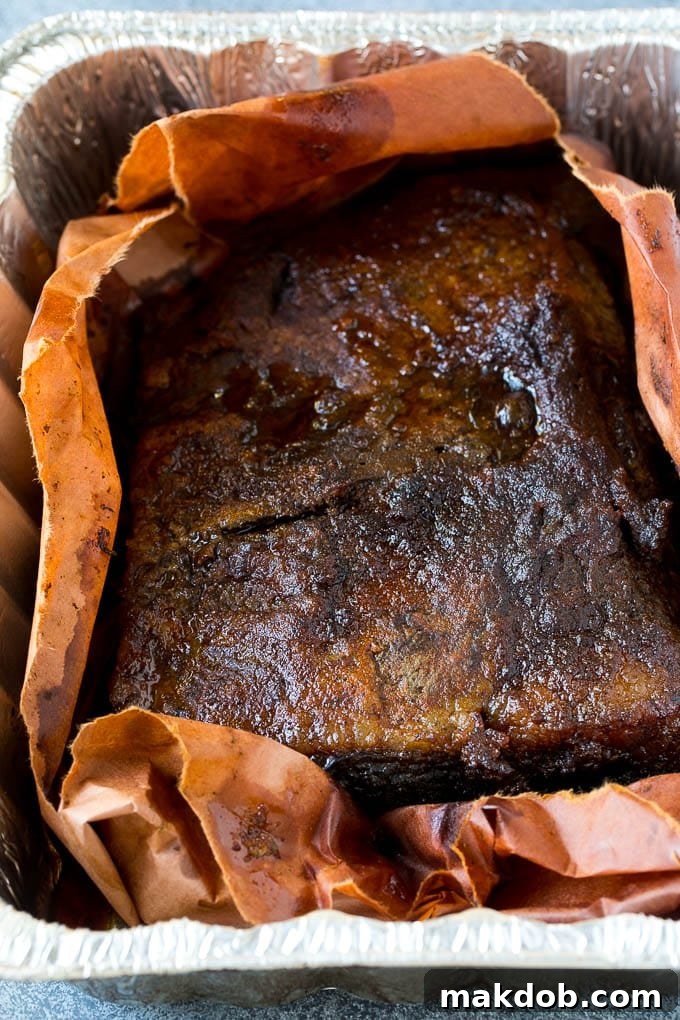
- The Wrap (Pushing Through the Stall): Once the brisket hits 170 degrees F, it typically enters the “stall,” where its internal temperature plateaus for an extended period. To push through this and retain moisture, remove the brisket from the smoker and tightly wrap it. You can use heavy-duty aluminum foil or, for a superior bark, opt for peach butcher paper. Butcher paper allows the brisket to breathe slightly, letting more smoke penetrate while still retaining moisture.
- Final Smoke & Tenderness: Return the wrapped brisket to the smoker. Continue cooking for several more hours until the meat reaches an internal temperature of 200 degrees F to 205 degrees F (93 degrees C to 96 degrees C). More importantly, the brisket should feel “probe tender” – meaning a meat thermometer or skewer slides into the meat with very little resistance, much like pushing it into warm butter. This indicates that the collagen has broken down, resulting in that desired melt-in-your-mouth texture. This final stage can take an additional 5-10 hours. If you wish to expedite the last few hours, you can increase the smoker temperature to 275 degrees F (135 degrees C).
- The Essential Rest: This step is non-negotiable! Remove the brisket from the smoker and, keeping it wrapped, let it rest on your counter or in an insulated cooler (without ice) for at least 1-2 hours, and preferably up to 4 hours. Resting allows the muscle fibers to relax and reabsorb the juices, ensuring a supremely moist and tender brisket. Do not skip this!
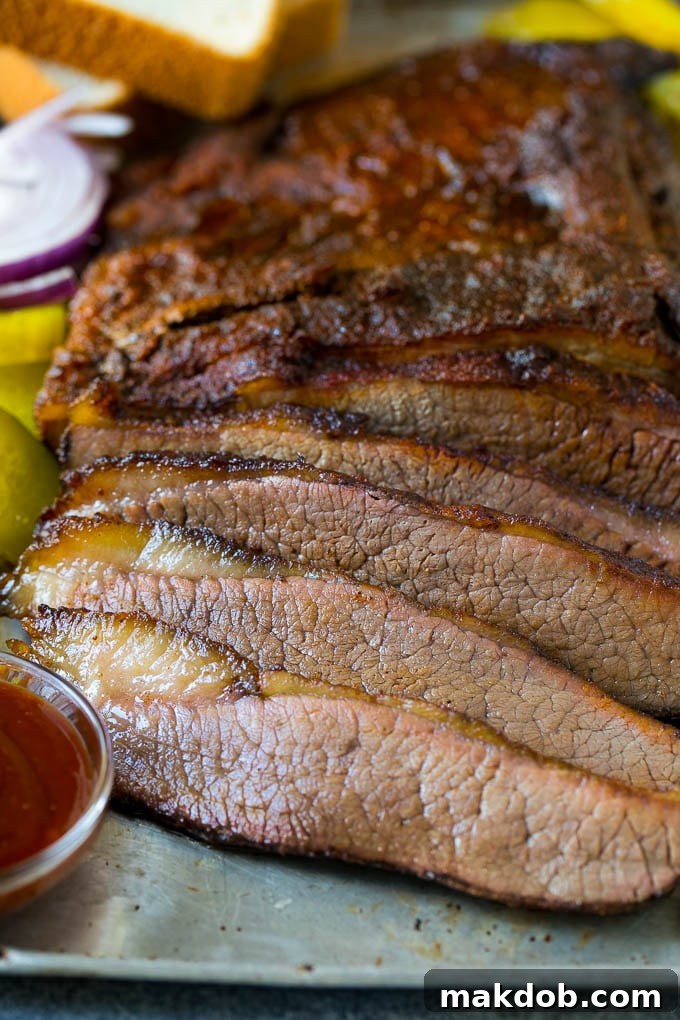
- Slice and Serve: Finally, unwrap the brisket. Using a very sharp knife, slice the brisket thinly against the grain. Slicing against the grain shortens the muscle fibers, making each bite incredibly tender. If you notice excessive juice pooling after slicing, it might need a few more minutes of rest. Serve your magnificent smoked brisket immediately with your favorite BBQ sauce on the side.
Tips for the Perfect Smoked Brisket: Achieving BBQ Excellence
Achieving truly perfect smoked brisket involves a blend of technique, patience, and a few insider tricks. Here are some essential tips to guide you:
- Opt for a Whole Packer Brisket: For the most authentic and versatile result, always try to smoke a whole packer brisket. This cut includes both the flat (leaner) and point (fattier) sections. The flat yields beautiful, uniform slices, while the point is rich in marbling, perfect for shredding or transforming into irresistible burnt ends after a second smoke.
- Master Temperature Control: While any smoker can produce great brisket, an electric smoker or pellet smoker often simplifies temperature management, allowing you to set and forget for longer periods. If using an offset or charcoal smoker, consistent monitoring and fuel management are key. Aim for a steady 250°F throughout the cook.
- The Right Tools for Slicing: A sharp knife is indispensable for achieving clean, even slices of brisket. Always slice it against the grain (perpendicular to the direction of the muscle fibers) to ensure the most tender and palatable texture. A dull knife will tear the meat and make it tough.
- Plan for Time: Brisket is a long haul. Start smoking early in the day, or even the night before, as the total smoking process can take anywhere from 12 to 18 hours or more, depending on the size and characteristics of your brisket. Never rush the process.
- Utilize a Water Pan: Maintain humidity in your smoker by placing a water pan inside. This helps keep the brisket moist and encourages better smoke absorption, leading to a more flavorful and tender product.
- Choose Your Wood Wisely: The type of wood you use significantly impacts the final flavor. Hickory and oak are classic choices for beef, offering a strong, savory smoke flavor. Apple or cherry wood provide a milder, slightly sweet fruitwood smoke, which can be excellent for balancing the richness of the beef. Avoid overly strong woods like mesquite for the entire cook, as it can be overpowering.
- Embrace the Stall: Don’t panic when your brisket’s temperature plateaus around 150-170°F (the “stall”). This is a natural phenomenon caused by evaporative cooling. Wrapping the brisket (see Quick Tip below) is the most common way to push through it.
- Feel for Probe Tenderness: While internal temperature guides you, the ultimate indicator of doneness is “probe tenderness.” A skewer or thermometer probe should slide into the thickest part of the meat with minimal resistance, feeling like it’s going into warm butter. This confirms the collagen has fully broken down.
Quick Tip: The Butcher Paper Advantage
When it comes to wrapping your brisket, consider using peach butcher paper instead of aluminum foil. Peach butcher paper offers a unique advantage: it allows the meat to continue absorbing smoke, enhancing the bark’s flavor and texture, while simultaneously trapping vital moisture. This results in a superior, more flavorful bark and a juicier brisket compared to the steam bath effect often created by aluminum foil.
Smoked Brisket FAQs: Your Questions Answered
For smoking, the “packer cut” or “Texas cut” is universally considered the best. This whole brisket includes both the point and the flat. The point is a more rounded, highly marbled, and incredibly tender section, perfect for shredding or making burnt ends. The flat is a leaner, more uniform muscle, which yields those beautiful, even slices often seen in barbecue restaurants. Opting for a packer cut allows you to enjoy both textures and gives you the flexibility to prepare both sliced brisket and savory burnt ends from the same cook.
Proper fat trimming is crucial for a great brisket. You’ll want to trim the thick, hard fat cap down to a consistent layer of about 1/4 to 1/2 inch. This allows enough fat to render and baste the meat, keeping it moist and flavorful, without being excessive or preventing bark formation. Also, remove any silver skin or overly thick, non-rendering fat from other areas of the brisket. Don’t worry about being absolutely exact; the goal is an even fat layer across the surface.
For smoking brisket, a robust wood that complements beef is ideal. Hickory wood chips or chunks are a classic choice, imparting a distinct savory, almost bacon-like smoky flavor. Oak is another excellent option, offering a medium-strong, pleasant smoke that pairs wonderfully with beef without overpowering it. For a milder and slightly sweeter note, fruit woods such as apple or cherry can be used, often blended with hickory or oak to create a balanced profile. Mesquite provides a very strong, bold flavor, which some love but can be too intense for others; if using mesquite, consider using it sparingly or mixing it with milder woods.
The “stall” refers to a phenomenon during the low-and-slow smoking process where the brisket’s internal temperature unexpectedly plateaus, often for several hours, typically occurring between 150°F and 170°F (65°C and 77°C). This happens due to evaporative cooling: as moisture evaporates from the surface of the meat, it cools the brisket, much like sweat cools your skin. Wrapping the brisket (in foil or butcher paper) helps push through the stall by retaining moisture and heat, allowing the internal temperature to rise again.
To keep leftover smoked brisket fresh and juicy, allow it to cool completely, then slice it or keep it in larger pieces. Store it in an airtight container or wrap it tightly in aluminum foil. Brisket will keep in the refrigerator for 3-4 days. For longer storage, tightly wrap individual portions in plastic wrap and then foil, and freeze for up to 2-3 months. Reheat slowly in the oven with a little beef broth or in a skillet to prevent drying out.
Follow me
Smoked Brisket Flavor Variations: Customizing Your Cook
While classic smoked brisket is truly outstanding on its own, it also serves as a fantastic canvas for various flavor adaptations. Don’t hesitate to customize this recipe to perfectly suit your personal taste preferences:
- Economical Meat Alternative: If you’re seeking a more budget-friendly option that still delivers a brisket-like experience, consider smoking a chuck roast. Often referred to as “poor man’s brisket,” chuck roast, when smoked low and slow, becomes incredibly tender and flavorful, offering a rich, beefy alternative that is undeniably delicious. Its texture is more akin to pulled beef, making it excellent for sandwiches.
- Asian-Inspired Twist: For an exciting fusion of flavors, try mixing a little teriyaki sauce with your barbecue sauce. The savory-sweet glaze adds a wonderful depth and umami richness that complements the smoky beef beautifully. You can also incorporate a touch of ginger and garlic into your rub for an even more pronounced Asian profile.
- Bring the Heat: If you crave a spicier brisket, there are several ways to kick up the heat. Blend some of your favorite hot sauce into your barbecue sauce, or add a pinch of cayenne pepper or smoked paprika with extra heat to your dry rub. You could even finely chop some fresh jalapeños and sprinkle them on the brisket before the initial smoke for a vibrant, fresh spice.
- Sweet & Savory Profile: Enhance the natural sweetness of the brisket by incorporating brown sugar or a maple-based rub. A spritz of apple juice or cider vinegar during the smoking process can also add a subtle sweetness and help tenderize the bark.
- Herbaceous Aromas: Introduce aromatic herbs like fresh rosemary or thyme into your spice rub for a fragrant and sophisticated twist. These herbs pair wonderfully with beef and add an unexpected layer of flavor to the traditional barbecue profile.
This recipe is not only incredibly satisfying but also an ideal choice for feeding a large gathering. Be prepared for enthusiastic praise and countless compliments from family and friends when they experience the exquisite flavor and tenderness of your homemade smoked brisket.
More Smoker Recipes to Explore
Smoked Chicken Recipe
4 hrs 10 mins
Smoked Turkey Recipe
6 hrs 10 mins
Smoked Chicken Wings
2 hrs 10 mins
Smoked Pork Chops
1 hr 10 mins
Smoked Chicken Thighs
3 hrs 10 mins
Love This Recipe?
Please leave a 5-star 🌟🌟🌟🌟🌟 rating in the recipe card below & a review in the comments section further down the page.
Smoked Brisket Recipe
Pin Recipe
Ingredients
- 1 10-13 pound brisket (packer, point, or flat cut)
- 1 cup BBQ rub (enough to completely cover the meat)
- BBQ sauce for serving with the meat
Instructions
- Trim the excess fat off the brisket. You want to remove most of the thick fat cap if you have a point or packer cut, leaving about 1/4 to 1/2 inch. Other excess fat should be removed until you can see the beef through the fat.
- Completely cover the brisket generously in BBQ rub.
- Cover the meat loosely and refrigerate for 10-12 hours for best results.
- Preheat your smoker to 250 degrees F (121 degrees C).
- Insert a meat thermometer (into the meat, not fat) and place the brisket fat side down in the smoker until the internal temperature reaches 170 degrees F (77 degrees C). This initial phase may take 4-5 hours.
- Once the meat reaches 170 degrees F, remove it and wrap it tightly in peach butcher paper or heavy-duty aluminum foil. Place the meat back in the smoker until it reaches an internal temperature of 200-205 degrees F (93-96 degrees C) and is probe tender. This stage may take an additional 9-10 hours. For faster cooking during this phase, you can increase the smoker temperature to 275 degrees F (135 degrees C) for the last couple of hours.
- Once the meat reaches the desired internal temperature and is probe tender, remove it from the smoker and let it rest, still wrapped, for a minimum of 1-2 hours (preferably longer, up to 4 hours). Then, unwrap and let it rest uncovered for another 5 minutes before slicing.
- Slice the brisket thinly against the grain. If you notice excessive juice pooling when cutting, let it rest for a few more minutes. Serve with your favorite BBQ sauce.
Notes
- For the best bark and smoke absorption, use peach butcher paper to wrap the brisket instead of aluminum foil during the cooking process.
- Always use a very sharp knife to cut even, thin slices of brisket. Slice against the grain for maximum tenderness.
- Smoking a brisket is a long process that depends on the meat’s size and your smoker’s consistency. Plan to start early, allowing ample time for the cook and the crucial resting period.