
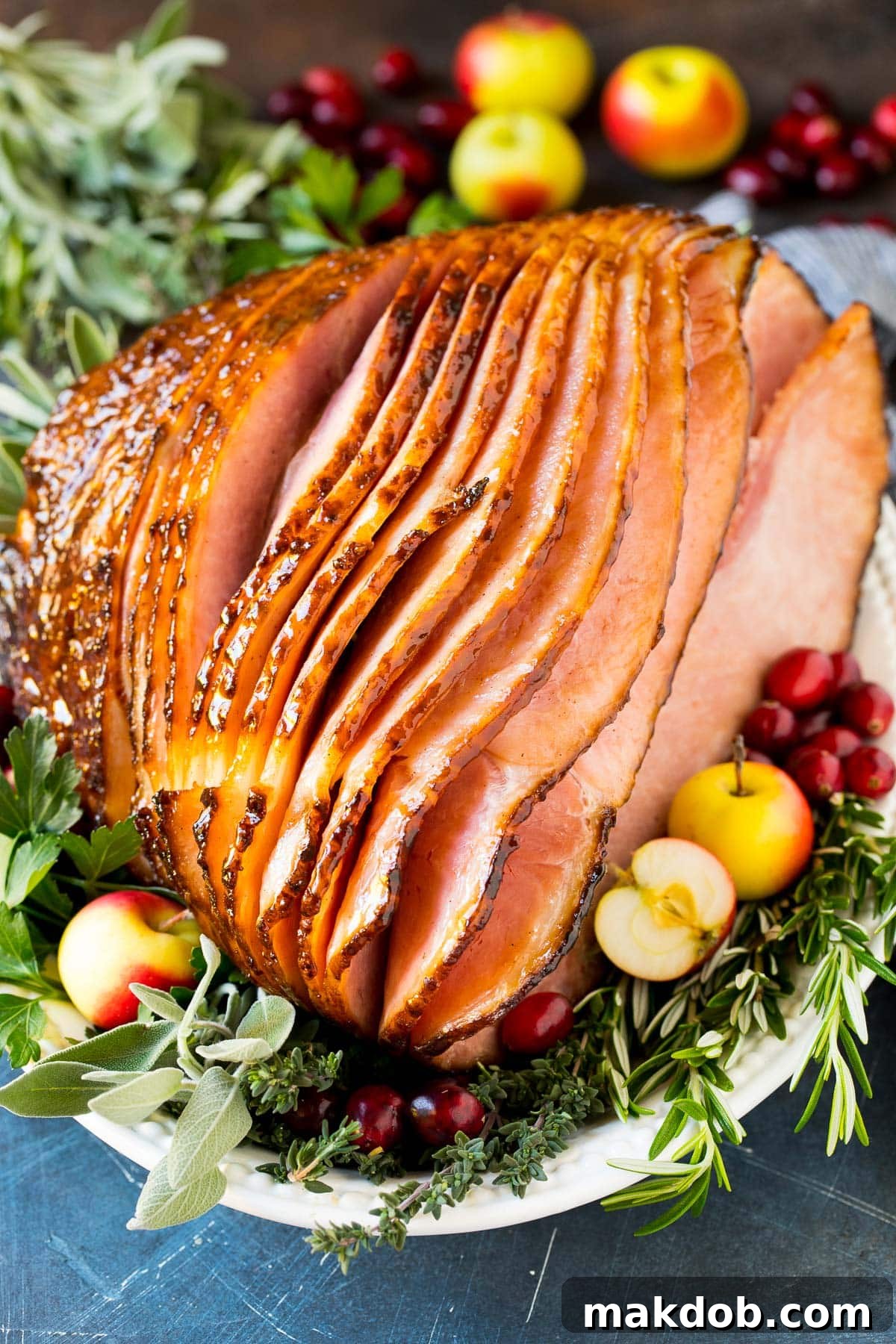
The Ultimate Guide to Cooking a Perfect Ham for Any Holiday
Cooking a ham doesn’t have to be an intimidating task; in fact, it’s one of the most rewarding and straightforward ways to create a show-stopping centerpiece for any festive occasion. This comprehensive guide will equip you with everything you need to know, from selecting the right ham to mastering the perfect glaze, ensuring you turn out a succulent, flavorful holiday ham that will impress family and friends year after year.
Hams are a fantastic choice for gatherings because they are inherently impressive, relatively simple to prepare, and universally loved by guests of all ages. Pair your beautifully cooked ham with classic festive sides such as a vibrant Christmas salad, homemade Instant Pot cranberry sauce, creamy sweet potato casserole with marshmallows, and savory bacon green beans, and prepare for an outpouring of rave reviews.
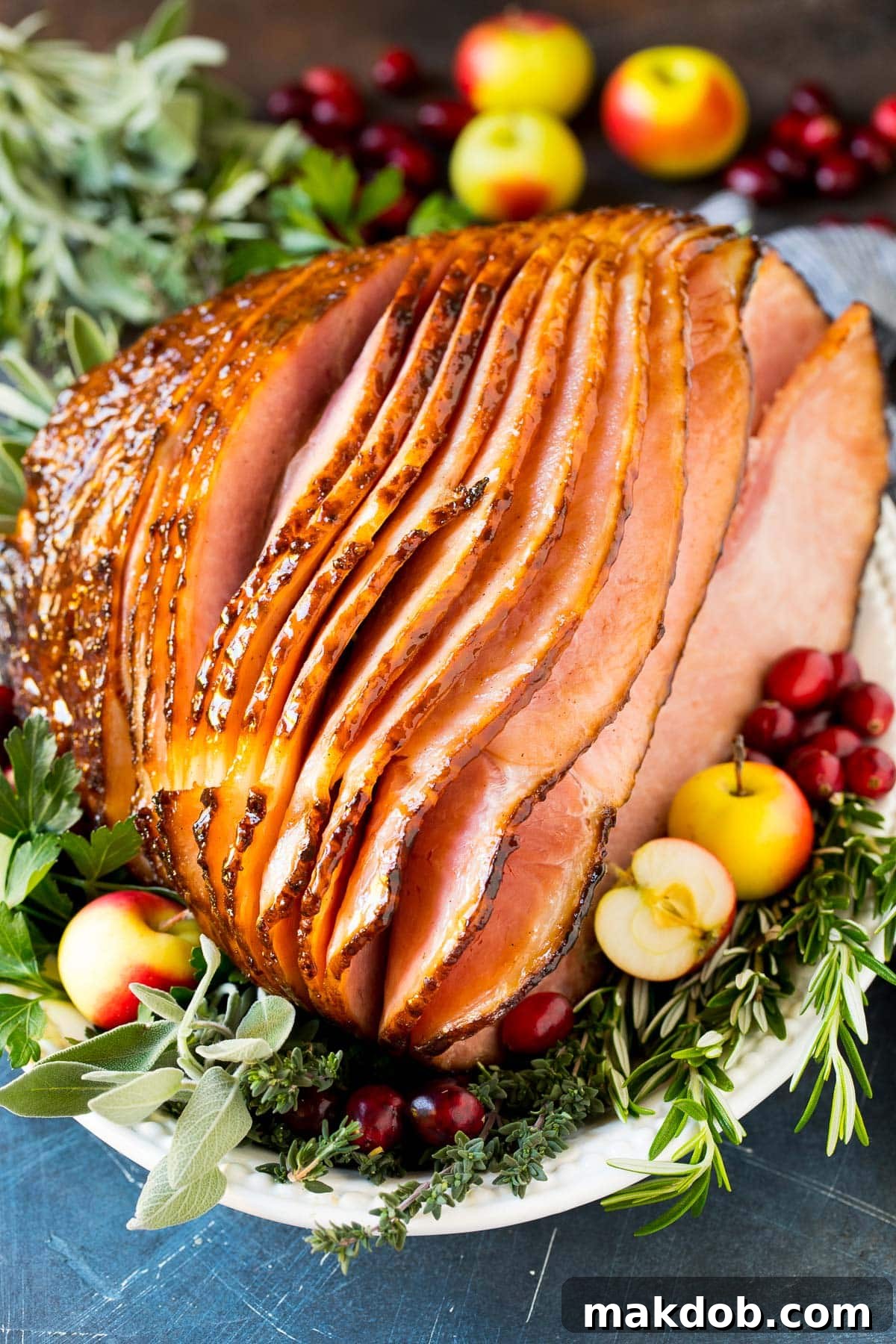
Whether you’re hosting Easter brunch, Christmas dinner, or simply looking for a delightful family meal, understanding the nuances of ham preparation can elevate your cooking. This ultimate guide will walk you through every step, ensuring foolproof results and a truly memorable dining experience.
Table of Contents
- Choosing Your Holiday Ham: A Comprehensive Guide
- Essential Ham Ingredients
- How To Prepare A Ham For Cooking
- Baking a Ham in the Oven: The Classic Method
- Slow Cooker Ham: Effortless Perfection
- Crafting Your Signature Ham Glaze
- How To Cook A Ham With A Savory Ham Rub
- Achieving Ham Perfection: Tips and Tricks
- How To Reheat Ham
- Delicious Ideas For Leftover Ham
- Frequently Asked Questions About Cooking Ham
- Complementary Side Dishes for Your Ham
- More Ham Recipes To Try
- How To Cook A Ham Video
- Rate and Share Your Perfect Ham
- How to Cook A Ham – The Best Baked Ham Recipe
Choosing Your Holiday Ham: A Comprehensive Guide
The journey to a perfect ham begins with selecting the right one. The market offers a variety of hams, and understanding their differences is key to achieving your desired outcome. Most hams sold in stores today are pre-cooked, which simplifies the cooking process significantly as you are essentially just reheating them to a safe serving temperature. However, you might also encounter uncooked hams that require more extensive preparation.
Types Of Hams You’ll Encounter
Hams are generally categorized by how they are cured and whether they are cooked. The vast majority of hams available for purchase, especially around holidays, are fully cooked. These include options like spiral-cut hams, boneless hams, and bone-in shank or butt half hams.
- Spiral-Cut Hams: These are the easiest to prepare, as they come pre-sliced around the bone, making carving a breeze. They are always fully cooked and often come with a glaze packet.
- Bone-In Hams (Shank or Butt Half): These hams offer superior flavor and moisture due to the bone. The shank end is leaner and has a single, straight bone, making it easier to carve, while the butt end is meatier and fattier but has a more irregular bone structure. They are typically fully cooked but not sliced.
- Boneless Hams: These hams are convenient for carving and serving, as they are pressed into a uniform shape with no bone. While easier to handle, some argue they may lack the depth of flavor found in bone-in varieties. They are almost always fully cooked.
- Uncooked Hams: Less common in standard supermarkets, these hams require cooking to a safe internal temperature. They may need to be soaked to reduce saltiness if they are country hams. Always check the label to determine if your ham is “cook before eating” or “fully cooked.”
City Ham vs. Country Ham
Beyond the cut and bone presence, hams can also be distinguished by their curing method:
- City Hams: These are the most common type, typically wet-cured (brined) and often smoked. They are usually fully cooked and have a milder, sweeter flavor.
- Country Hams: Predominantly found in the Southern US, country hams are dry-cured with salt and aged for months. They are very salty and require soaking and longer cooking times. Most country hams are uncooked and must be fully cooked before consumption.
For most holiday preparations and the recipe provided here, a fully cooked, city ham (especially spiral-cut or a bone-in shank half) is recommended for its ease and delicious results.
Essential Ham Ingredients
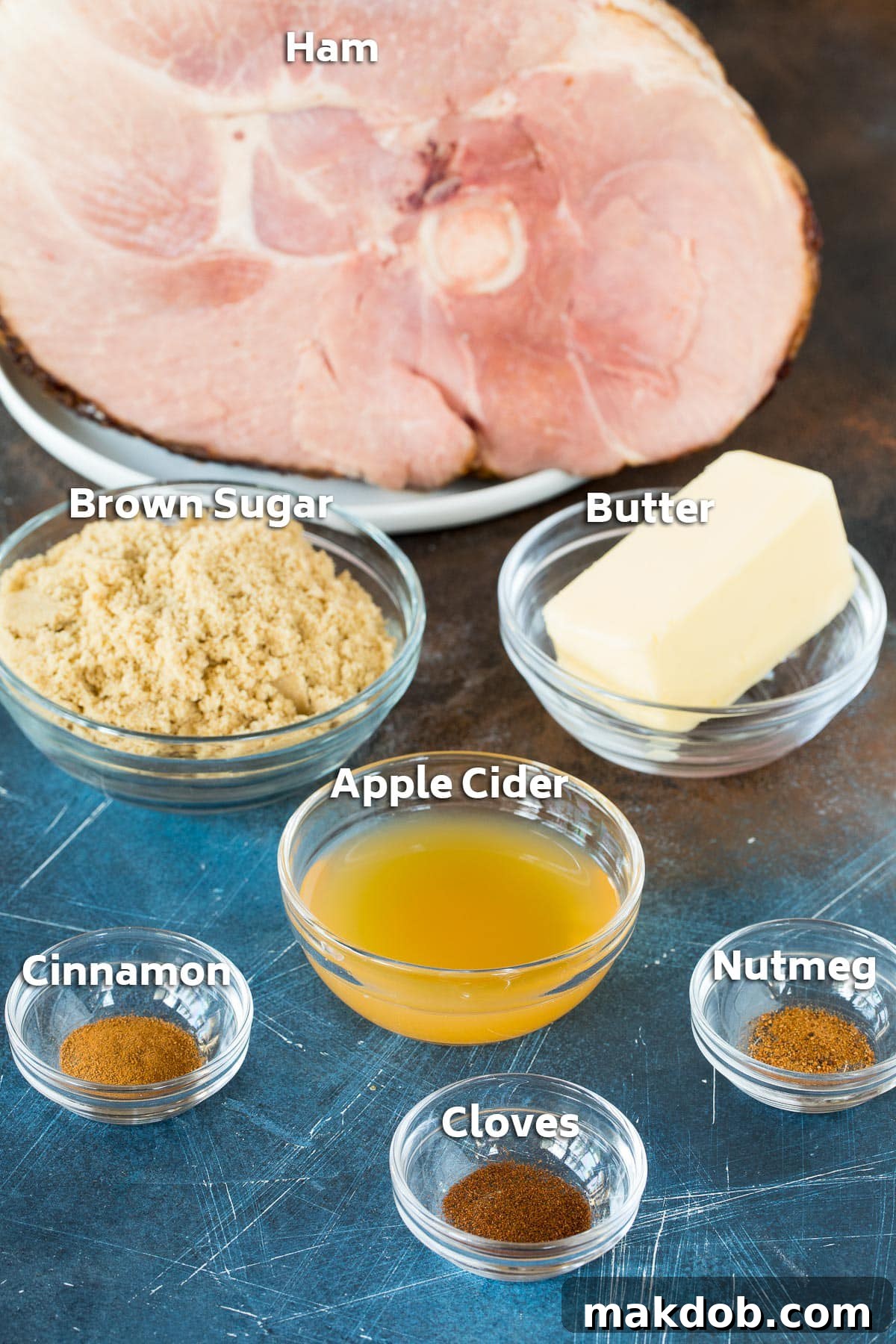
To craft the exquisite ham recipe detailed below, you’ll need a quality ham and a handful of pantry staples for an irresistible glaze. For the classic version, gather:
- Your chosen ham: An 8 lb bone-in spiral cut ham is ideal for this recipe, offering ease of carving and rich flavor.
- Unsalted butter: Forms the rich base of your glaze.
- Light brown sugar: Provides the essential sweetness and caramelization for a golden crust.
- Apple cider: Adds a subtle fruity tang that complements the ham beautifully. Orange juice or pineapple juice are excellent alternatives for different flavor profiles.
- Ground cinnamon, nutmeg, and cloves: These warm spices infuse the glaze with traditional holiday aromas and a deep, comforting taste.
- Cooking spray: For easy cleanup and to prevent sticking.
- Optional garnishes: Fresh cranberries and sprigs of herbs like rosemary or thyme add a beautiful touch to your finished dish.
How To Prepare A Ham For Cooking
Proper preparation ensures your ham cooks evenly and absorbs maximum flavor. Follow these simple steps before it goes into the oven or slow cooker:
- Unpack and Discard Liquid: Remove all packaging from the ham. If there’s any excess liquid in the bottom of the package, drain and discard it.
- Thaw Completely: If you’re starting with a frozen ham, ensure it’s fully thawed in the refrigerator before cooking. This can take several days for a large ham (allow about 4-7 hours per pound).
- Remove Plastic Bone Guard: Many bone-in hams have a small plastic piece covering the bone. Be sure to locate and discard this before proceeding.
- Bring to Room Temperature: For more even cooking, let the ham sit at room temperature for 1-2 hours before baking.
- Prepare Your Pan: Use a sturdy roasting pan, ideally with a rack, to allow for even heat circulation. Lightly coat the pan with cooking spray.
Scoring Your Ham: For Maximum Flavor Infusion
If you’re using a spiral-cut ham, it’s already perfectly sliced and ready for glazing. However, if you have a bone-in shank half ham or a boneless ham that isn’t pre-sliced, scoring the surface is a crucial step:
Using a sharp knife, carefully score a diamond pattern across the top fatty layer of the ham. Make cuts about 1/4 to 1/2 inch deep. This not only creates an attractive presentation but, more importantly, provides numerous crevices for your delicious glaze to seep into, infusing the ham with flavor as it bakes and creating a beautiful caramelized crust.
Baking a Ham in the Oven: The Classic Method
Baking a ham in the oven is the most traditional and often preferred method, yielding a beautifully browned and juicy result. This process is especially forgiving for fully cooked hams, as your primary goal is to reheat it thoroughly while developing a fantastic exterior.
- Preheat and Prepare: Preheat your oven to 350°F (175°C). Place your prepared ham, cut-side down if applicable, in a roasting pan. If using a rack, place the ham on it to allow drippings to collect below.
- Initial Glaze Application: Pour about half of your prepared glaze evenly over the top and sides of the ham. This initial layer will begin to soak into the meat as it heats.
- Cover and Bake: Tightly cover the roasting pan with aluminum foil. This helps to lock in moisture, preventing the ham from drying out. Bake the ham on the center rack of your preheated oven.
- Baking Time Calculation: For a fully cooked ham, you’ll typically need to bake it for approximately 15 minutes per pound. For example, an 8-pound ham would bake for about 2 hours. Always check the ham’s internal temperature with a meat thermometer (see FAQs section for details).
- Final Glaze and Caramelization: About 15-20 minutes before the end of the baking time (or once the ham reaches about 135°F / 57°C internally), carefully remove the foil. Brush the remaining glaze generously over the entire surface of the ham. If your reserved glaze has thickened too much, a few seconds in the microwave can loosen it.
- Increase Heat and Finish: Increase the oven temperature to 400°F (200°C). Continue to bake or, if desired, briefly broil (watching carefully to prevent burning) until the glaze is beautifully caramelized and browned, and the internal temperature reaches 145°F (63°C).
- Rest and Serve: Once done, remove the ham from the oven, tent it loosely with foil, and let it rest for 15-20 minutes before carving. This resting period allows the juices to redistribute, ensuring a tender and succulent ham. Don’t forget to reserve the ham bone for a delicious soup later!
Slow Cooker Ham: Effortless Perfection
For an incredibly moist ham with minimal effort, the slow cooker is your secret weapon. This method is perfect for freeing up oven space during holiday feasts.
To cook a ham in a slow cooker, select a ham that fits comfortably inside your crockpot, ideally leaving a little room around the edges for even heating. Place the ham cut side down in the slow cooker. Pour your desired glaze over the top, ensuring it coats the ham thoroughly and pools slightly at the bottom. Cook for 3-4 hours on low heat for a fully cooked ham, or until the internal temperature reaches 145°F (63°C). The low, slow cooking ensures incredible tenderness and allows the glaze to deeply penetrate the meat, creating a rich and flavorful ham.
Crafting Your Signature Ham Glaze
While a ham is delicious on its own, it truly transforms into a festive showstopper when coated in a rich, flavorful glaze. The glaze adds moisture, sweetness, and a beautiful caramelized crust that is undeniably appealing. Starting with a basic brown sugar and butter base, you can easily customize it with various flavorings to create a glaze that perfectly suits your taste.
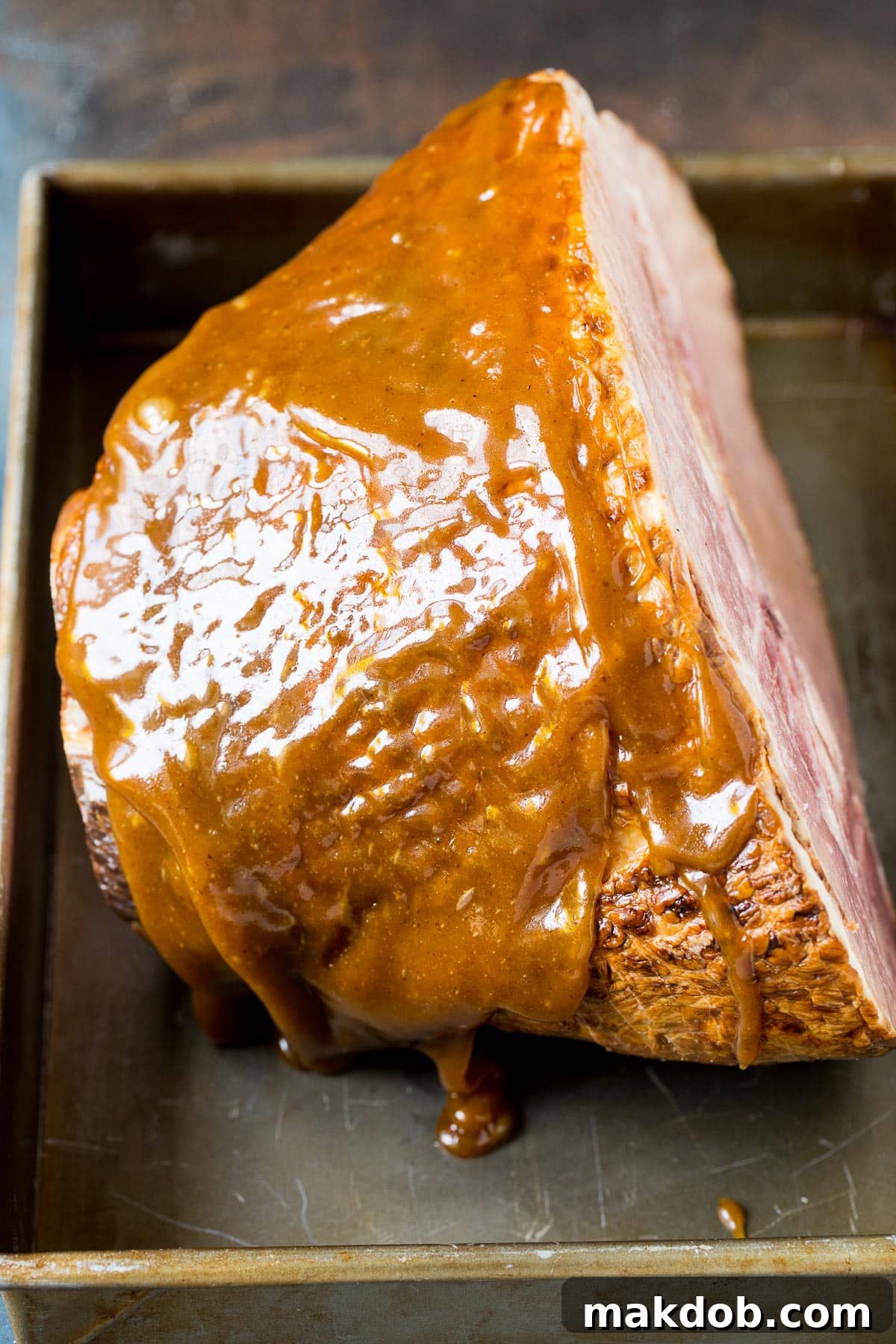
To begin your homemade ham glaze, melt 1/2 cup of unsalted butter in a saucepan over medium heat. Stir in 1 cup of light brown sugar until it dissolves. Once the base is ready, incorporate any of the following flavor combinations. Simmer the glaze for 5-7 minutes, stirring occasionally, until it thickens to a syrupy consistency. Feel free to substitute up to 1/2 cup of honey or maple syrup for half of the brown sugar for different sweet undertones.
Exquisite Ham Glaze Flavor Variations:
- Zesty Orange Glaze: Add 1/2 cup of freshly squeezed orange juice, the zest of one orange, 1/2 teaspoon of ground cinnamon, and a pinch of ground cloves. The citrus brightens the ham’s rich flavor, while the spices add warmth.
- Sweet Pineapple Glaze: Stir in 1/2 cup of pineapple juice, 1/4 teaspoon of ground cinnamon, and a pinch of ground cloves. For added texture and a burst of fruity sweetness, you can also mix in 1/2 cup of drained crushed pineapple.
- Savory Dijon Mustard Glaze: For a piquant kick, incorporate 2 tablespoons of Dijon or grainy mustard and 1/2 teaspoon of garlic powder into the basic glaze. The mustard provides a wonderful contrast to the ham’s sweetness.
- Classic Apple Spice Glaze: Blend 1/2 cup of apple cider, 1/2 teaspoon of ground cinnamon, a pinch of ground cloves, and a pinch of ground nutmeg. This combination evokes comforting autumn and winter flavors that perfectly complement ham.
- Spicy Apricot-Ginger Glaze: Add 1/2 cup of apricot preserves, 1 tablespoon of grated fresh ginger, and a dash of red pepper flakes for a sweet and spicy kick.
- Maple-Bourbon Glaze: Replace half the brown sugar with pure maple syrup and add 2 tablespoons of bourbon. The rich, smoky notes of bourbon beautifully enhance the ham.
How To Cook A Ham With A Savory Ham Rub
If you prefer a less sweet, more savory profile for your ham, or simply want to try something different, a dry rub is an excellent alternative to a glaze. A well-balanced rub can create a delicious crust and infuse the meat with deep, aromatic flavors without the sticky sweetness of a glaze.
To prepare a versatile and flavorful ham rub, combine the following ingredients in a small bowl:
- 1/2 cup brown sugar (for a touch of sweetness and caramelization)
- 1 1/2 tablespoons paprika
- 1 tablespoon smoked paprika (for an added layer of smoky depth)
- 2 teaspoons black pepper
- 1 teaspoon kosher salt
- 2 teaspoons garlic powder
- 1 teaspoon onion powder
- 1 teaspoon mustard powder
Mix all the rub ingredients thoroughly until well combined. To apply, ensure your ham is patted dry. Generously coat the entire surface of the ham with the rub, gently pressing it into the meat to ensure it adheres. If your ham is scored, make sure to work the rub into the diamond patterns. Once coated, bake your ham as directed in the oven baking method (covered for most of the cooking, then uncovered for the last 15-20 minutes to allow the rub to form a crust).
Achieving Ham Perfection: Tips and Tricks
Even with a fully cooked ham, a few key practices can elevate your results from good to exceptional:
- Don’t Overcook: This is perhaps the most critical tip. Fully cooked hams only need to be reheated to 145°F (63°C). Overcooking will dry out the meat, making it tough. Use a reliable meat thermometer.
- Rest Your Ham: After removing the ham from the oven, cover it loosely with foil and let it rest for 15-20 minutes. This allows the juices to redistribute throughout the meat, resulting in a more tender and juicy slice.
- Baste Regularly (Optional): While not strictly necessary for fully cooked hams, basting the ham with its pan drippings or additional glaze during the uncovered portion of baking can enhance flavor and help achieve an even more beautiful crust.
- Carving Wisdom:
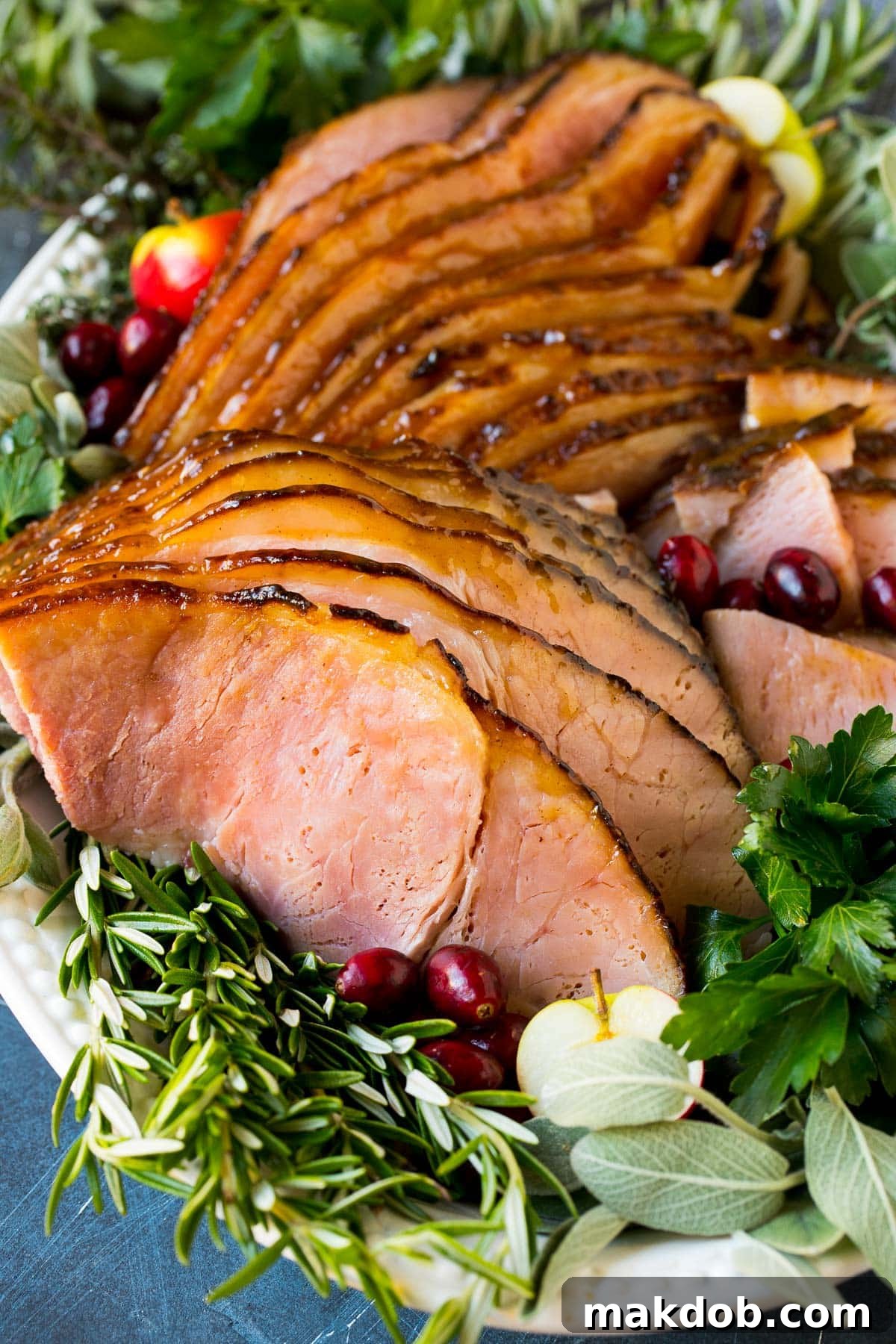
- Spiral-Cut: Simply slice along the bone to free sections, then carve individual slices.
- Bone-In (Unsliced): Place the ham on a cutting board with the shank end facing you. Make a few long, vertical cuts down to the bone, parallel to the bone. Then, make a horizontal cut along the bone to release the slices.
- Boneless: These are the easiest to carve; simply slice against the grain to your desired thickness.
- Utilize the Pan Drippings: The flavorful liquid accumulated at the bottom of your roasting pan can be spooned over slices of ham for extra moisture and taste. It can also be thickened to make a gravy or sauce.
How To Reheat Ham
Leftover ham is a treasure, and reheating it properly ensures it remains tender and delicious. The best way to reheat a larger portion of leftover ham is to place it in a covered, oven-safe dish with a splash of broth or water to maintain moisture. Bake it at a moderate temperature, around 325°F (160°C), for approximately 20 minutes per pound, or until it’s heated through to an internal temperature of 140°F (60°C). For individual slices, the microwave can be a quick option; just be careful not to overcook, as this can make the ham tough and rubbery.
Delicious Ideas For Leftover Ham
One of the true joys of preparing a large ham is the bounty of leftovers! Ham is incredibly versatile and can be transformed into a myriad of delicious meals. Don’t let a single savory morsel go to waste:
- Hearty Soups and Stews: The ham bone, if you have one, is a fantastic base for rich, flavorful broths. Use leftover ham in split pea soup, navy bean soup, or a comforting ham and corn chowder. Dice leftover meat and add it to any vegetable or potato soup.
- Satisfying Casseroles: Ham pairs beautifully with pasta, potatoes, or rice in baked casseroles. Think ham and cheesy potato casserole, or a creamy pasta bake with peas and ham.
- Gourmet Sandwiches and Wraps: Elevate your lunch game with ham sandwiches on crusty bread, layered with Swiss cheese, mustard, and pickles. Or, create a vibrant wrap with thinly sliced ham, fresh greens, and a honey-mustard dressing.
- Breakfast and Brunch Staples: Add diced ham to omelets, quiches, breakfast burritos, or frittatas. It’s also a fantastic addition to savory pancakes or waffles.
- Flavorful Salads: Incorporate cubes of ham into green salads, pasta salads, or potato salads for a protein-packed meal.
- Quick Snacks and Appetizers: Make ham and cheese pinwheels, ham roll-ups with cream cheese, or simply serve with crackers and your favorite cheese.
Be sure to explore this detailed post for a wealth of leftover ham recipes that will keep your taste buds delighted for days after your holiday feast.
Now that you have all the knowledge on how to cook a ham, you’re more than ready to conquer the holidays with confidence! Use the detailed recipe below for the absolute best tender, juicy ham crowned with a succulent glaze. Need more inspiration for your holiday menu? Dive into my curated list of 35 holiday entertaining recipes for a complete celebratory spread!
Frequently Asked Questions About Cooking Ham
For a fully cooked ham, you are essentially reheating it. The general guideline is approximately 15 minutes per pound when baking in the oven at 350 degrees F (175°C). For example, an 8-pound ham would take around 2 hours. Always use a meat thermometer inserted into the thickest part of the ham to confirm it reaches the proper internal temperature of 145 degrees F (63°C) for safety and optimal taste.
A fully cooked ham is safely reheated and ready to eat when a meat thermometer inserted into the thickest part of the ham (without touching any bone) registers 145 degrees F (63°C). For an uncooked fresh ham, the safe internal temperature is 145 degrees F (63°C) with a 3-minute rest time. It is crucial that your thermometer does not touch any bone, as this will give an inaccurate reading. The glaze should also appear caramelized and browned on the exterior.
To ensure generous servings and account for delicious leftovers, plan on approximately 3/4 pound of bone-in ham per person. If you’re using a boneless ham, you can plan for about 1/2 pound per person. These estimates typically allow for a hearty portion at the main meal, plus a good amount for sandwiches, soups, or other leftover creations.
Yes, it’s generally recommended to cover your ham with aluminum foil for the majority of the baking time. This helps to retain moisture, preventing the ham from drying out. Uncover it for the last 15-20 minutes of baking to allow the glaze to caramelize and develop a beautiful golden-brown crust.
A sturdy roasting pan with a rack is ideal. The rack elevates the ham, allowing hot air to circulate evenly around it and preventing the bottom from getting soggy. It also collects the flavorful drippings, which can be used to baste the ham or create a delicious pan sauce.
Complementary Side Dishes for Your Ham
A perfectly cooked ham deserves equally delicious accompaniments. Here are some classic and delightful side dishes that complement the rich, savory flavor of ham:
- Fresh and Festive Salads: A crisp Christmas salad with cranberries, nuts, and a light vinaigrette provides a refreshing contrast to the richness of the ham.
- Sweet and Tangy Cranberry Sauce: Homemade Instant Pot cranberry sauce offers a perfect balance of tartness and sweetness that cuts through the ham’s richness.
- Creamy Potato Dishes: Scalloped potatoes, mashed potatoes, or a rich potato gratin are comfort food staples that pair wonderfully with ham.
- Decadent Sweet Potato Casserole: A sweet potato casserole with marshmallows adds a touch of sweetness and a velvety texture that contrasts beautifully with the savory ham.
- Savory Green Beans: Green beans with bacon or a vibrant green bean almondine offer a fresh, slightly crisp element to the meal.
- Roasted Vegetables: Glazed carrots, roasted asparagus, or Brussels sprouts can add color, nutrients, and complementary flavors.
- Fluffy Dinner Rolls: Essential for soaking up any extra glaze or pan drippings, or for making delightful ham sandwiches with leftovers.
More Ham Recipes To Try
Honey Baked Ham Recipe
2 hrs 20 mins
Brown Sugar Glazed Ham
3 hrs 10 mins
Smoked Ham with Brown Sugar Glaze
4 hrs 10 mins
Ham with Pineapple and Cherries
2 hrs
Coca Cola Ham
2 hrs 5 mins
How To Cook A Ham Video
Rate and Share Your Perfect Ham
We love hearing from you! If you enjoyed this recipe, please consider leaving a 5-star rating and a review in the comments section below.
How to Cook A Ham – The Best Baked Ham
Pin
Author
Sara Welch
Time
10 minutes
3 hours
3 hours
10 minutes
Course
Main
Cuisine
American
Serves
12
Ingredients
-
8
lb
bone-in spiral cut ham -
1/2
cup
butter -
1
cup
brown sugar -
1/2
cup
apple cider
(can also use orange juice or pineapple juice) -
1/2
teaspoon
cinnamon -
pinch of nutmeg -
pinch of ground cloves -
cooking spray -
cranberries and herbs for garnish
(optional)
Instructions
-
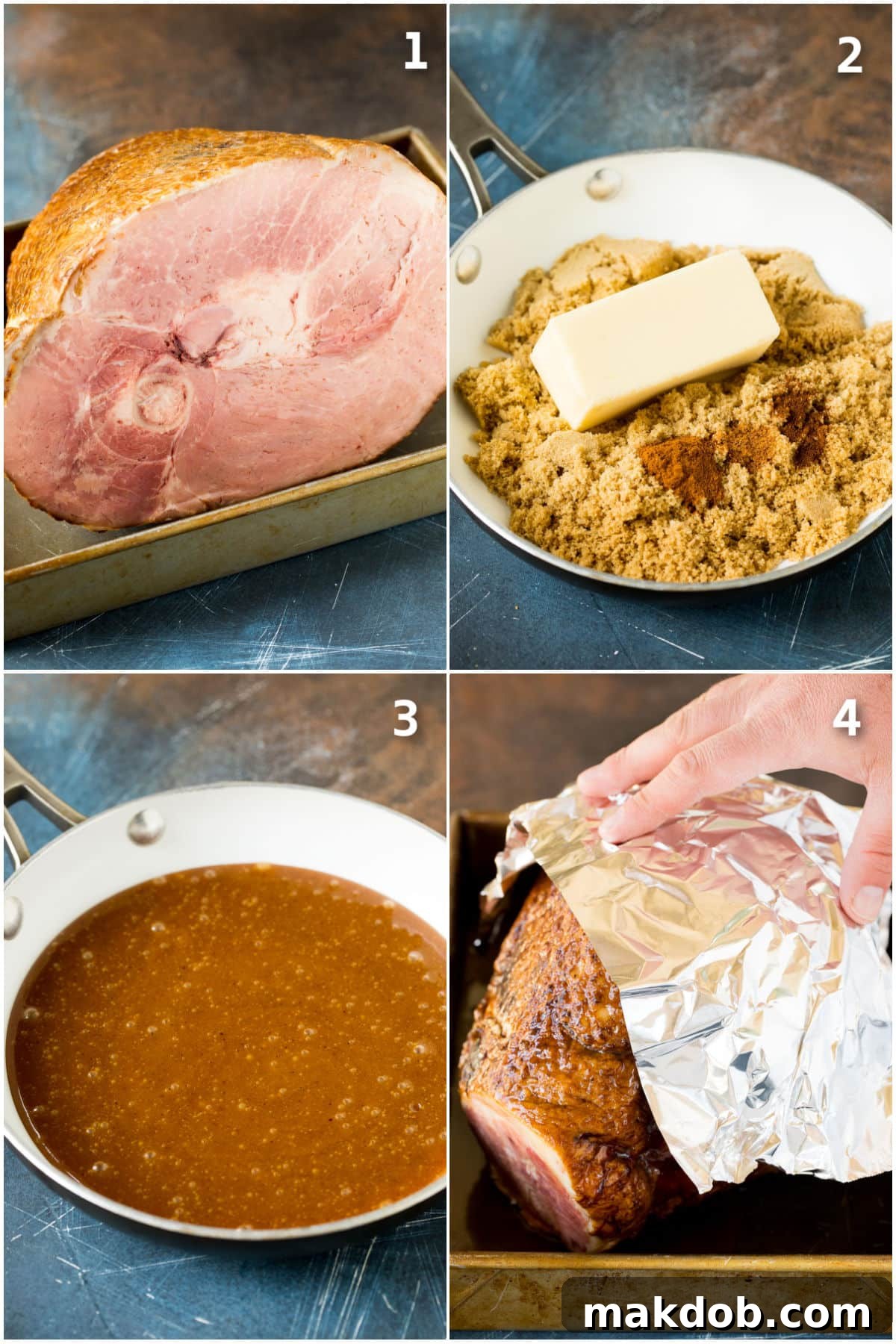
Preheat your oven to 350 degrees F (175°C). Prepare a baking pan by coating it generously with cooking spray to prevent sticking.
-
In a medium pot, combine the butter, brown sugar, apple cider (or your chosen juice), cinnamon, nutmeg, and cloves. Place the pot over medium heat on your stovetop.
-
Bring the mixture to a gentle simmer, stirring occasionally. Continue to cook for 5-7 minutes, or until the glaze has thickened to a syrupy consistency. Remove from heat.
-
Carefully place the prepared ham in the baking pan. Pour approximately half of the prepared glaze evenly over the top and sides of the ham. Reserve the remaining glaze for later use. Cover the ham tightly with aluminum foil.
-
Bake the covered ham in the preheated oven for 2 hours (for an 8lb ham, adjust timing for larger/smaller hams). After this time, carefully remove the foil from the ham.
-
Evenly pour the remaining glaze over the now uncovered ham. If your reserved glaze has hardened, microwave it for a few seconds to loosen it back to a pourable consistency.
-
Increase the oven temperature to 400 degrees F (200°C).
-
Return the uncovered ham to the oven. Continue to bake for an additional 15-20 minutes, or until the glaze is beautifully caramelized and browned to your liking, and a meat thermometer registers 145 degrees F (63°C) in the thickest part of the ham.
-
Transfer the cooked ham to a serving platter. Tent it loosely with foil and let it rest for 15-20 minutes before carving. Before serving, spoon the flavorful pan drippings over the ham for extra moisture and taste. Slice and serve hot.
Notes
- This recipe yields the best results with a pre-cooked spiral cut ham due to its convenience and even slicing. If you are using a bone-in or boneless ham that is not pre-cut, simply score the top in a diagonal diamond pattern with a sharp knife before applying the glaze and proceeding with the recipe as directed.
- The provided cooking times are based on an 8 lb ham. You can certainly use a larger or smaller ham; just remember to adjust the overall baking time accordingly. A good rule of thumb for fully cooked ham is about 15 minutes per pound at 350°F (175°C). Always rely on a meat thermometer to confirm internal temperature.
Nutrition
Calories:
488
kcal
|
Carbohydrates:
36
g
|
Protein:
24
g
|
Fat:
26
g
|
Saturated Fat:
14
g
|
Cholesterol:
100
mg
|
Sodium:
855
mg
|
Potassium:
373
mg
|
Sugar:
36
g
|
Vitamin A:
355
IU
|
Calcium:
34
mg
|
Iron:
1.2
mg
Did you make this recipe?
Tag @dinneratthezoo on Instagram and hashtag it #dinneratthezoo
Tweet
Pin