
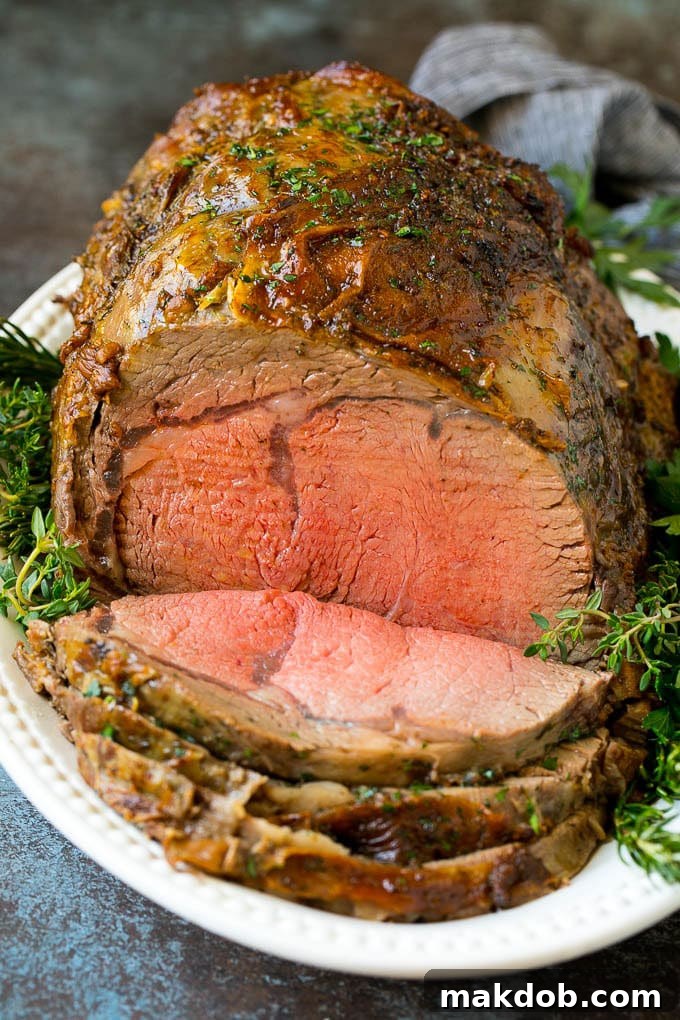
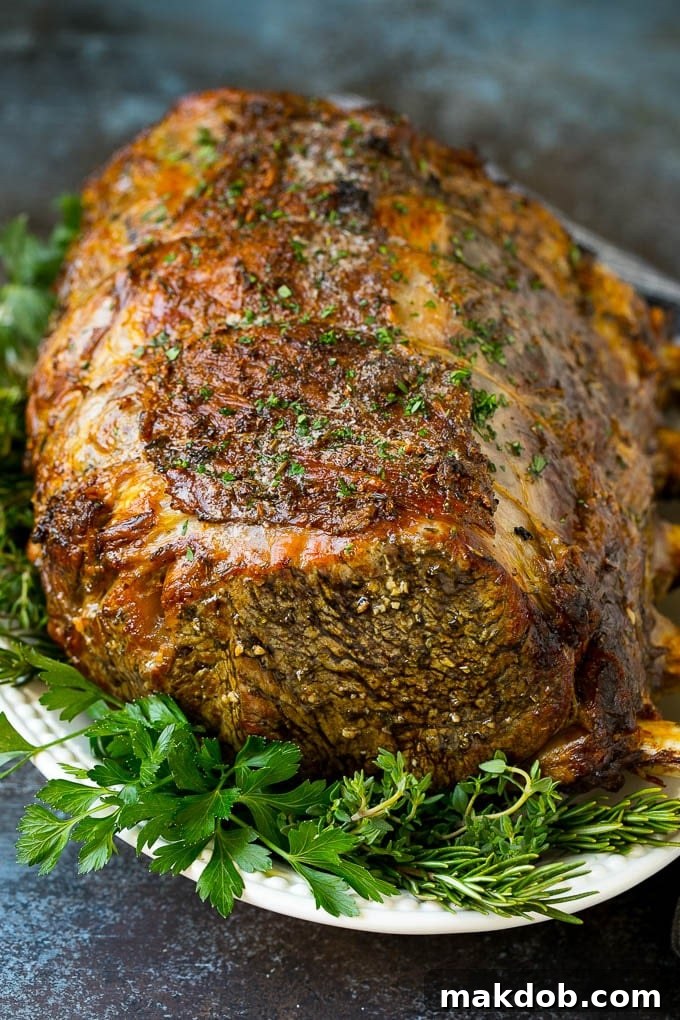
Unlock the secret to a truly unforgettable meal with this comprehensive guide to crafting the perfect **Slow Roasted Prime Rib**. This exquisite recipe promises a succulent, incredibly tender prime rib with a perfectly seasoned, golden-brown crust, infused with the aromatic essence of garlic and fresh herbs. Ideal for those momentous occasions like holiday feasts or significant celebrations, this dish is guaranteed to impress even the most discerning palates and become a cherished family tradition.
There’s nothing quite like the majestic presence of a beautifully roasted prime rib to elevate a holiday gathering. Whether it’s Thanksgiving, Christmas, or any special event, this slow-roasted masterpiece delivers unmatched flavor and tenderness. The best part? Despite its grand appearance, preparing a phenomenal prime rib is surprisingly straightforward, making it an accessible luxury for any home cook.
When I prepare this show-stopping roast, I love to surround it with an array of complementary side dishes that enhance the celebratory feel. Some of my favorite pairings include the sweet and savory notes of a pineapple casserole, the vibrant freshness of a Thanksgiving salad, crispy zucchini fritters, the comforting indulgence of a Ruth’s Chris sweet potato casserole, and the irresistible crunch of bacon-wrapped green beans. These sides don’t just fill out the table; they create a harmonious symphony of flavors and textures that always earn rave reviews from family and friends.
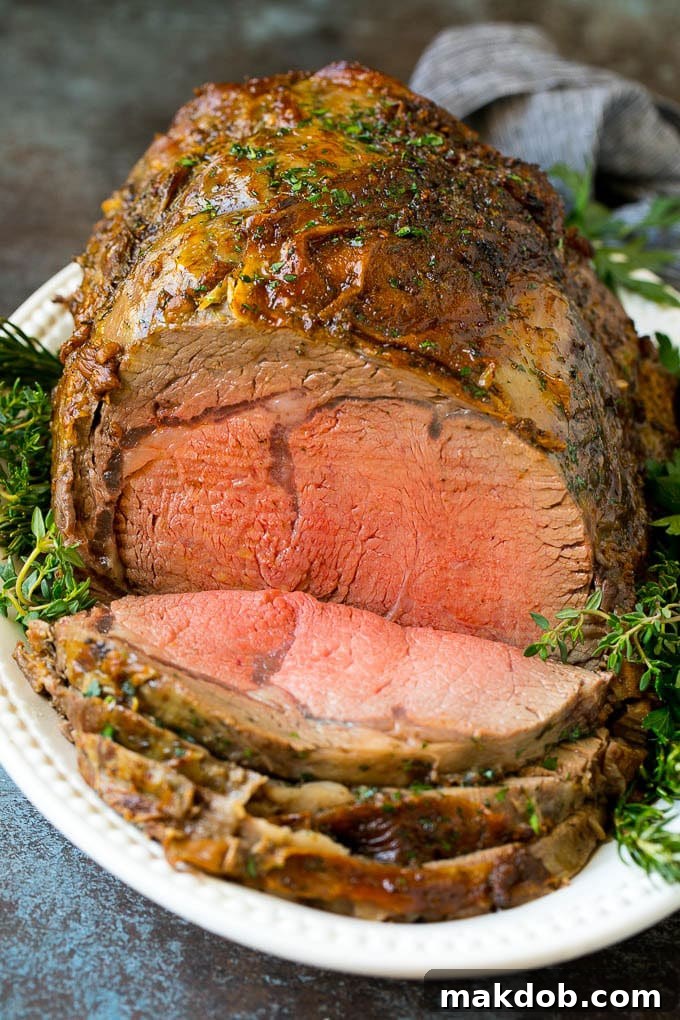
For those special moments when you truly want to spoil your guests, especially during the festive holiday season like Thanksgiving or Christmas, a succulent **prime rib roast** stands out. In my experience, few dinner recipes command such admiration while being incredibly straightforward to master. Its rich, deep beef flavor, coupled with its consistent tenderness when prepared correctly, makes it the ultimate center-of-the-table dish.
Table of Contents
- Slow Roasted Prime Rib Ingredients
- How Do You Cook Prime Rib?
- How To Buy A Prime Rib
- Tips For The Best Roast
- Quick Tip: Leftovers
- Slow Roasted Prime Rib Cooking Time
- Beef Temperatures for Perfect Doneness
- Recipe FAQs
- Flavor Variations to Customize Your Roast
- More Great Beef Recipes
- Love This Recipe?
- The Ultimate Slow Roasted Prime Rib Recipe
Slow Roasted Prime Rib Ingredients
Creating an incredibly flavorful **slow roasted prime rib** starts with a few simple, high-quality ingredients that truly enhance the natural richness of the beef. For this recipe, you’ll need:
- A magnificent **prime rib roast** (bone-in is highly recommended for maximum flavor and moisture).
- Good quality **olive oil** to bind the seasonings and help form a beautiful crust.
- Freshly **minced garlic** for a pungent, aromatic kick.
- Fragrant fresh **thyme** and **rosemary**, finely chopped, to infuse the meat with classic herbal notes.
- Coarse **kosher salt** to draw out moisture and season the meat deeply.
- Freshly ground **black pepper** for a subtle spice and added depth of flavor.
These ingredients, while basic, combine to create a rub that transforms the prime rib into an extraordinary culinary experience.
How Do You Cook Prime Rib? The Art of Slow Roasting
Cooking a prime rib to perfection might seem daunting, but it’s a remarkably straightforward process that yields consistently delicious results with the right technique. The key lies in a two-stage slow roasting method that ensures a beautifully browned exterior and an incredibly tender, juicy interior.
- **Bring to Room Temperature:** First, allow your prime rib to rest on the counter for at least 30 minutes, or up to 2 hours, before cooking. This crucial step helps the beef cook more evenly, preventing the outer layers from overcooking while the center remains underdone.
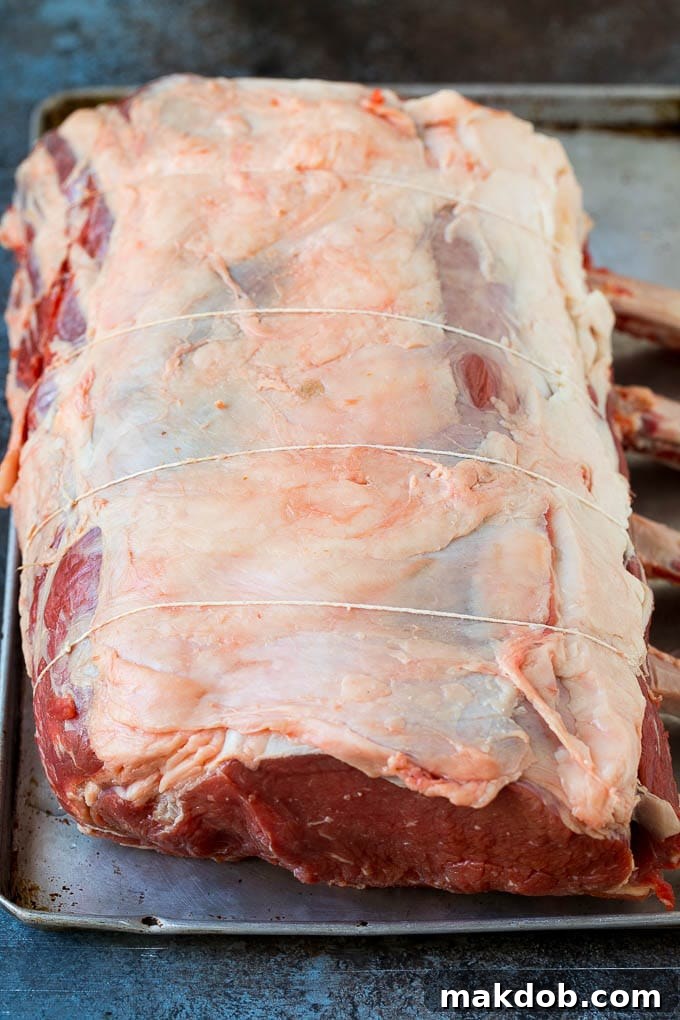
- **Prepare the Roast:** While the beef is coming to temperature, prepare it for roasting. If your roast isn’t already tied, use kitchen twine to secure it tightly between the ribs. This technique helps the roast maintain its shape during cooking and promotes even cooking. You can also wrap the ends of the bones with aluminum foil to prevent them from scorching.
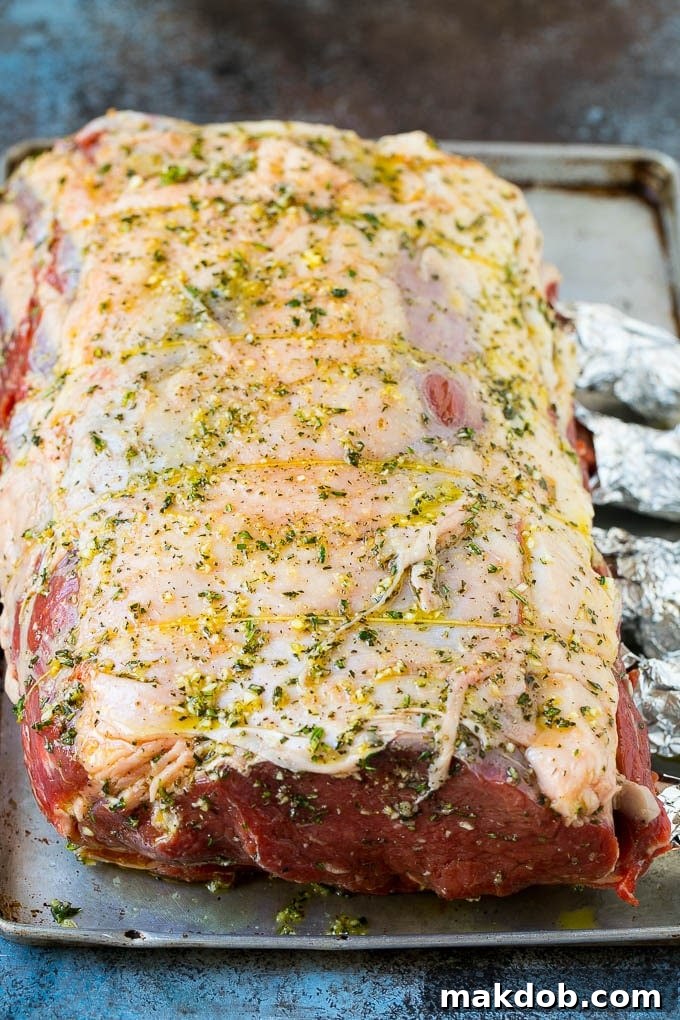
- **Craft the Flavorful Rub:** In a small bowl, combine the olive oil, minced garlic, fresh thyme, fresh rosemary, kosher salt, and black pepper. Mix them thoroughly to create a vibrant, aromatic paste.
- **Generously Coat the Roast:** Apply the herb and garlic rub generously over the entire surface of the prime rib. Don’t be shy; this rub forms the foundation of the roast’s incredible crust and flavor.
- **Pre-Sear at High Heat:** Transfer the seasoned prime rib to a sturdy roasting pan, ideally one with a rack to allow for even heat circulation. Place a reliable meat thermometer into the thickest part of the roast, avoiding the bone. Begin by roasting the prime rib in a preheated 500°F (260°C) oven for 15-20 minutes. This initial high heat creates a magnificent, deeply browned crust, locking in juices and developing incredible flavor. Keep a close eye on it to prevent burning.
- **Slow Roast to Perfection:** After the initial high-heat sear, reduce the oven temperature significantly to 325°F (160°C). Continue to cook the prime rib slowly until the internal temperature, as measured by your meat thermometer, reaches approximately 5 degrees Fahrenheit (about 3 degrees Celsius) below your desired final doneness. Slow roasting ensures the meat cooks gently and evenly, resulting in maximum tenderness.
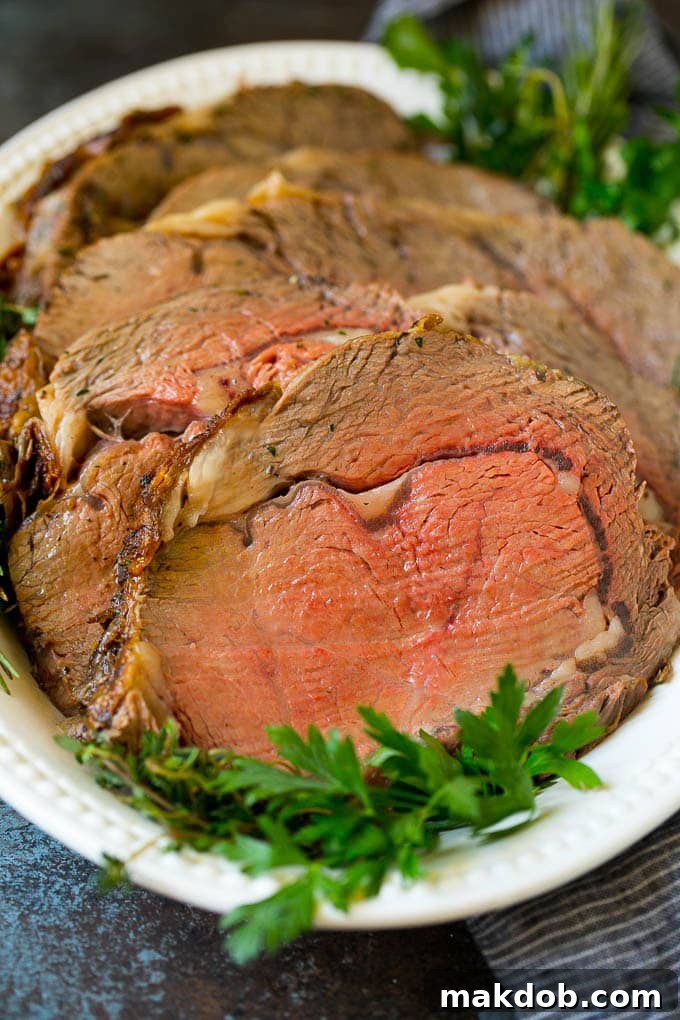
- **The Essential Rest:** Once the roast reaches the target temperature, remove it from the oven immediately. Cover it loosely with aluminum foil and let it rest undisturbed for at least 20 to 30 minutes. This resting period is critical; it allows the muscle fibers to relax and the internal juices to redistribute throughout the meat, guaranteeing a supremely tender and moist prime rib. During this time, the internal temperature will also rise by a few degrees, known as carryover cooking, reaching your ideal doneness.
- **Carve and Serve:** After resting, carefully remove the twine and carve the prime rib. You can slice it directly off the bone by holding the roast vertically and cutting downwards between the bone and the meat. Serve with the delicious pan juices, if desired, and prepare for a chorus of compliments!
How To Buy The Best Prime Rib for Your Holiday Feast
Selecting the right prime rib is the first step to ensuring a spectacular roast. Prime rib, also known as a standing rib roast or a bone-in rib roast, is cut from the rib section of the cow, typically comprising ribs 6 through 12. This cut is renowned for its exceptional tenderness, rich marbling, and robust beefy flavor.
A full standing rib roast can weigh upwards of 17 pounds, which is often too large for most home gatherings. Fortunately, butchers typically cut these into smaller, more manageable sections. To determine the size you need, plan on about one rib for every two people, or consider one rib per person for a more generous serving or impressive presentation. For example, a 3-rib roast typically serves 6-8 people, while a 6-rib roast can feed 10-12, sometimes more.
For the highest quality, seek out prime rib graded as “USDA Prime” or “USDA Choice.” These grades indicate a higher degree of marbling (intramuscular fat), which translates directly to a more flavorful, juicy, and tender roast. While USDA Prime is the pinnacle of quality, USDA Choice offers excellent value and is widely available. Don’t hesitate to purchase your roast from a reputable butcher shop or a grocery store with a knowledgeable butcher counter. They can offer advice, custom cut your roast, and even “french” the bones for you. Frenching involves trimming the fat and meat from the ends of the rib bones, creating a clean, elegant presentation that really makes the roast visually stunning.
When choosing between bone-in and boneless, I strongly advocate for a bone-in roast. The bones act as natural insulation, helping the meat cook more evenly and preventing it from drying out. They also contribute significant flavor to the pan drippings, which can be used to make a phenomenal gravy or jus.
Expert Tips for the Best Slow Roasted Prime Rib
Achieving a truly exceptional **slow roasted prime rib** involves a few crucial techniques that can make all the difference. Follow these tips to ensure your roast is a triumph every time:
- **Embrace the Bones:** While some recipes suggest removing the bones before cooking, I strongly advise against it. The bone-in structure is not merely for presentation; the bones significantly contribute to the flavor profile and moisture retention of the roast. They insulate the meat, promoting more even cooking and imparting a deeper, richer beefy taste. Keeping them attached for roasting is a non-negotiable step for a truly superior prime rib.
- **Room Temperature is Key:** Never put a cold prime rib directly into a hot oven. If your roast comes straight from the refrigerator, its cold core will cause it to cook unevenly, potentially leading to overcooked edges and an undercooked center. Always allow the roast to sit at **room temperature** for at least 30 minutes to 2 hours before cooking. This ensures more uniform heat penetration and a beautifully consistent doneness throughout.
- **Master the Resting Period:** One of the most critical steps for a juicy roast is the resting period. Remove your prime rib from the oven when its internal temperature is about 5 degrees Fahrenheit (approx. 3°C) lower than your desired final doneness. Immediately cover the roast loosely with aluminum foil. As it rests for 20-30 minutes, the internal temperature will continue to rise (this is called carryover cooking), and more importantly, the muscle fibers will relax, allowing the precious juices to redistribute evenly throughout the meat. Cutting it too soon will result in a significant loss of those flavorful juices, leaving you with a drier roast.
- **Use a Reliable Meat Thermometer:** An accurate meat thermometer is your best friend when roasting prime rib. Digital, leave-in thermometers that can stay in the roast while it cooks are highly recommended. This eliminates guesswork and ensures you hit your precise target temperature for perfect doneness.
- **Don’t Forget the Pan Drippings:** The flavorful juices that collect in the roasting pan are liquid gold. After the roast rests, deglaze the pan with a little wine or broth to create an incredible au jus or gravy. These drippings are packed with concentrated beef flavor that beautifully complements the sliced prime rib.
- **Consider Dry Brining:** For an even more flavorful and tender crust, consider dry brining your prime rib. Pat the roast dry, then generously rub it with kosher salt (about ½ teaspoon per pound). Place it uncovered in the refrigerator for 24-48 hours. The salt will draw out moisture, then reabsorb, seasoning the meat deeply and helping to create that coveted crispy crust.
Quick Tip: Perfecting Your Leftovers
Don’t let any of that delicious **slow roasted prime rib** go to waste! Leftovers will stay wonderfully fresh in the refrigerator for up to 3 days when stored in an airtight container. For reheating, gently warm slices in a low oven or a pan with a splash of beef broth to prevent drying out. Prime rib leftovers are also fantastic in sandwiches, salads, or even a hearty beef hash.
Mastering Slow Roasted Prime Rib Cooking Time
The total cooking time for your **slow roasted prime rib** is ultimately determined by its weight and your desired level of doneness. This recipe utilizes a “reverse sear” method – an initial blast of high heat followed by low, slow roasting – which is excellent for developing a beautiful crust while gently cooking the interior.
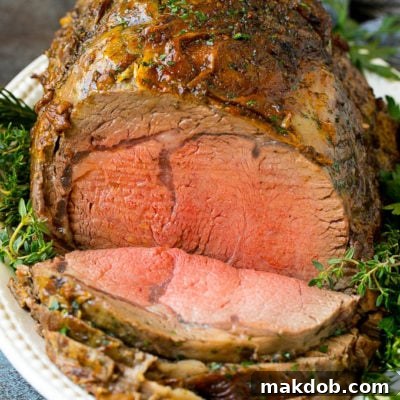
After an initial 15-20 minutes at 500°F (260°C) to achieve that coveted browned exterior, you will reduce the oven temperature to 325°F (160°C). As a general guideline, at this lower temperature, a bone-in prime rib will cook to a perfect rare (pulled at 120-125°F) in approximately 10-11 minutes per pound. For instance, a 12-pound prime rib, as used in this recipe, took roughly 2 hours and 5 minutes to reach rare doneness. Keep in mind that this is an estimate for planning; the true measure of doneness is the internal temperature.
If you prefer your beef more done, simply add a few more minutes per pound. For medium-rare, you might aim for 12-13 minutes per pound; for medium, 13-14 minutes per pound, and so on. Always remember to pull the roast out of the oven when it’s about 5 degrees Fahrenheit (3 degrees Celsius) below your final target temperature, as it will continue to cook as it rests. A reliable meat thermometer inserted into the thickest part of the meat (avoiding the bone) is your most valuable tool for precision. Do not rely solely on time; the thermometer is your ultimate guide to a perfectly cooked prime rib every single time.
Beef Temperatures for Perfect Doneness
Achieving your ideal doneness for **roast beef** like prime rib is all about monitoring the internal temperature of the meat. Use a high-quality meat thermometer for accurate readings. Remember to remove the meat from the oven about 5 degrees Fahrenheit (approximately 3 degrees Celsius) below your target temperature, as it will continue to cook during the crucial resting period.
- **Rare:** Pull from oven at 120-125°F (49-52°C) – final temperature after resting: 125-130°F (52-54°C)
- **Medium Rare:** Pull from oven at 125-130°F (52-54°C) – final temperature after resting: 130-135°F (54-57°C)
- **Medium:** Pull from oven at 130-135°F (54-57°C) – final temperature after resting: 135-140°F (57-60°C)
- **Medium Well:** Pull from oven at 140-145°F (60-63°C) – final temperature after resting: 145-155°F (63-68°C)
- **Well Done:** Pull from oven at 150-155°F (66-68°C) – final temperature after resting: 155°F (68°C) and above
Carefully monitor the meat as it rests to ensure it reaches your ideal temperature, then get ready to carve into a perfectly cooked prime rib!
Recipe FAQs: Your Prime Rib Questions Answered
Prime rib refers to a rib roast, a tender and incredibly flavorful section of beef. A cow typically has 13 ribs, and the full rib roast usually consists of ribs 6 through 12. For a good roast, you’ll generally want to purchase a section containing at least 3 ribs. The cut can be sourced from either the “loin end” (near the back of the cow, closer to the sirloin), which tends to be leaner but exceptionally tender, or the “chuck end” (closer to the shoulder), which is typically more marbled and boasts a richer, more robust beef flavor. Both ends yield a delicious roast, so your choice might depend on your preference for marbling versus extreme tenderness.
The optimal method for cooking prime rib is undoubtedly slow roasting, often employing a “reverse sear” technique. This involves first searing the exterior at a high temperature (around 500°F or 260°C) for a short period (15-20 minutes) to create a beautiful, crispy brown crust. Following this, the temperature is significantly lowered (to 325°F or 160°C) and the meat is slow-roasted until it gently reaches the desired internal temperature. This two-stage approach ensures a perfectly seared exterior without overcooking the interior, resulting in a roast that is tender, juicy, and evenly cooked from edge to center.
Absolutely! Preparing the herb and garlic rub a day or two in advance can actually enhance the flavors. Store it in an airtight container in the refrigerator. For best results, apply the rub to your prime rib roast several hours, or even up to 24 hours, before roasting. This allows the flavors to deeply penetrate the meat and acts as a dry brine, further tenderizing and seasoning the roast.
Carving a prime rib effectively maximizes its presentation and tenderness. After the roast has rested, place it on a large cutting board. If it’s bone-in, carefully slice along the length of the bones to remove the entire roast from the bone section in one piece. Then, slice the boneless roast against the grain into desired thickness (usually ½ to ¾ inch slices). If you prefer, you can also slice individual ribs directly off the roast for serving, then cut the meat from those ribs. Always use a sharp carving knife for clean cuts.
FOLLOW ME
Flavor Variations to Customize Your Slow Roasted Prime Rib
While this **slow roasted prime rib recipe** is a proven winner as written, it’s also wonderfully adaptable. Feel free to unleash your culinary creativity and customize the flavors to perfectly suit your preferences or the occasion:
- **A World of Herbs:** The classic combination of thyme and rosemary is exceptional, but don’t limit yourself! Experiment with other fresh or dried herbs that complement beef. Consider adding savory sage, bright parsley, pungent oregano, or even a pre-made Italian seasoning blend for a different aromatic profile. A touch of marjoram or bay leaf can also add subtle depth.
- **Spice it Up:** For an extra layer of complexity and warmth, incorporate various spices into your rub before the prime rib goes into the oven. Excellent choices include robust garlic powder, savory onion powder, earthy smoked paprika for a hint of smokiness, or a pinch of cayenne pepper if you enjoy a subtle kick. A dash of ground mustard or coriander can also work wonders.
- **Divine Sauces and Accompaniments:** While the pan drippings make a fantastic au jus, serving your prime rib with an additional sauce can elevate the experience. Consider a rich and savory mushroom steak sauce, a classic horseradish cream, or my tangy homemade A-1 style steak sauce recipe. A vibrant chimichurri or a classic red wine reduction can also provide a sophisticated counterpoint to the rich beef.
No matter how you choose to customize it, prime rib remains a tender and profoundly flavorful cut of meat, making it the quintessential choice for holidays and all special occasions. With this detailed recipe and these creative variations, preparing prime rib will be not only easy but also consistently deliver picture-perfect, incredibly delicious results every single time!
More Great Beef Recipes to Explore
Steak Kabobs with Garlic Butter
30 mins
Slow Cooker Beef Stroganoff
4 hrs 15 mins
Smoked Prime Rib
3 hrs 30 mins
Slow Cooker Corned Beef and Cabbage
8 hrs 10 mins
New York Strip Steak with Garlic Butter
25 mins
Love This Recipe? Let Us Know!
If you found this recipe for **Slow Roasted Prime Rib** as delightful as we do, we’d be thrilled to hear from you! Please consider leaving a 5-star 🌟🌟🌟🌟🌟 rating in the recipe card below and sharing your thoughts in the comments section further down the page. Your feedback helps other home cooks discover and enjoy this incredible dish!
★
★
★
★
Slow Roasted Prime Rib
Pin
Ingredients
- 12 pounds bone in prime rib roast (approximately 6 ribs)
- 5 tablespoons olive oil
- 5 cloves garlic minced
- 4 teaspoons fresh thyme leaves minced
- 2 teaspoons fresh rosemary leaves minced
- 2 tablespoons kosher salt
- 1 teaspoon freshly ground black pepper
Instructions
-
Preheat your oven to a high temperature of 500 degrees F (260°C).
-
Allow your prime rib to rest on the counter for at least 30 minutes, or up to 2 hours, before cooking. This helps the beef cook more evenly and prevents a drastic temperature shock.
-
While the prime rib is resting, prepare it for roasting. Use kitchen twine to tie the roast securely between each rib. This technique helps hold the meat together as it cooks, ensuring a uniform shape and even roasting. For added protection, wrap the ends of the exposed bones with aluminum foil to prevent them from burning and charring too quickly.
-
In a small bowl, create the aromatic rub for the prime rib by thoroughly mixing together the olive oil, minced garlic, fresh thyme, fresh rosemary, kosher salt, and freshly ground black pepper.
-
Generously apply the prepared olive oil and herb rub over the entire surface of the prime rib, ensuring it is well coated for maximum flavor and crust development.
-
Insert a reliable meat thermometer into the thickest part of the roast, making sure it doesn’t touch any bone. Place the seasoned roast on a rack in a sturdy roasting pan or a large baking dish.
-
Place the roast into the preheated 500°F (260°C) oven and cook for 15 minutes. This initial high-heat blast will create a beautiful, browned, and flavorful exterior crust. Be sure to watch your roast closely during this phase; if the crust begins to get too dark for your preference, you can reduce the oven temperature slightly sooner.
-
After the initial 15 minutes of high-heat cooking, immediately reduce the oven temperature to 325°F (160°C). Continue to roast the meat until your meat thermometer registers an internal temperature that is approximately 5 degrees Fahrenheit (3 degrees Celsius) below your desired final doneness (refer to the beef temperatures chart above).
-
Once the prime rib reaches the target temperature, remove it from the oven. Cover it loosely with aluminum foil and allow it to rest undisturbed for a minimum of 20 minutes, up to 30 minutes. This critical resting period allows the juices to redistribute, ensuring a tender and moist roast.
-
After resting, carefully remove the prime rib from the roasting pan. To carve, hold the roast firmly and slice along the rib bones vertically, separating the entire roast from the bone section. Then, slice the boneless roast against the grain into desired thicknesses.
-
Slice the magnificent prime rib and serve immediately, ideally with any delicious pan juices collected during roasting. Enjoy!
Notes
- **Bone-In for Best Flavor:** Some cooks opt to remove the bones before cooking, but I find this step unnecessary and even detrimental to flavor and moisture. Keeping the bones attached helps to insulate the meat, promoting more even cooking and imparting a deeper, richer beefy flavor. The meat gets wonderfully seasoned with the bone in place.
- **Room Temperature is Crucial:** For a roast that cooks evenly throughout, it is essential to let your prime rib come to room temperature before placing it in the oven. If it goes in cold, the exterior will cook much faster than the interior, leading to uneven doneness. Allow it to sit on the counter for at least 30 minutes to 2 hours, depending on its size.
- **Don’t Forget the Resting Period:** This cannot be stressed enough! Resting the prime rib after it comes out of the oven is just as important as the cooking process itself. It allows the meat’s juices to redistribute, ensuring every slice is incredibly tender and moist. Always cover loosely with foil and let it rest for 20-30 minutes before carving.