
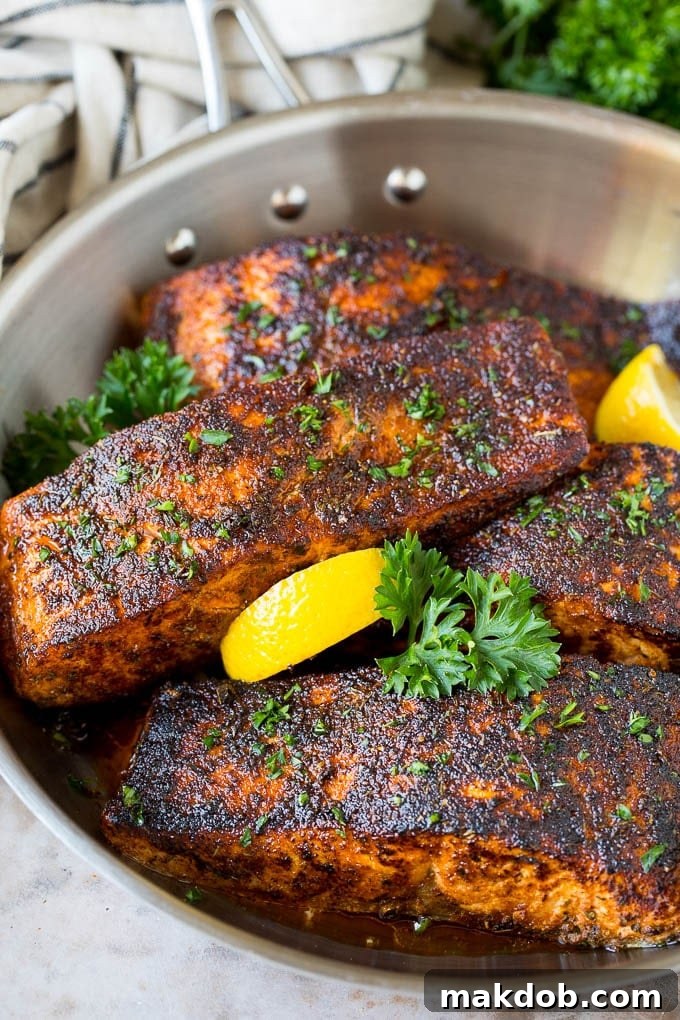
Welcome to the ultimate guide for creating exquisite Blackened Salmon – a dish renowned for its bold flavors, striking appearance, and incredibly quick preparation. Imagine succulent salmon fillets, generously coated in a rich, homemade seasoning blend, then expertly seared to develop a captivating dark, crusty exterior that seals in all the juicy tenderness within. This isn’t just a meal; it’s a culinary experience that promises to impress, whether you’re a seasoned chef or a busy home cook seeking a simple yet satisfying weeknight dinner. Blackened salmon consistently earns rave reviews, making it a staple in many households, and once you try this recipe, you’ll understand why.
For those moments when you crave seafood that’s both effortless and intensely flavorful, blackened salmon emerges as a true culinary champion. While classics like broiled salmon and marinated salmon hold their own, this versatile blackened preparation offers a unique depth of taste that transforms a simple fillet into something extraordinary. It’s the perfect dish to elevate your dinner table with minimal fuss, delivering a sophisticated profile that belies its ease of execution.
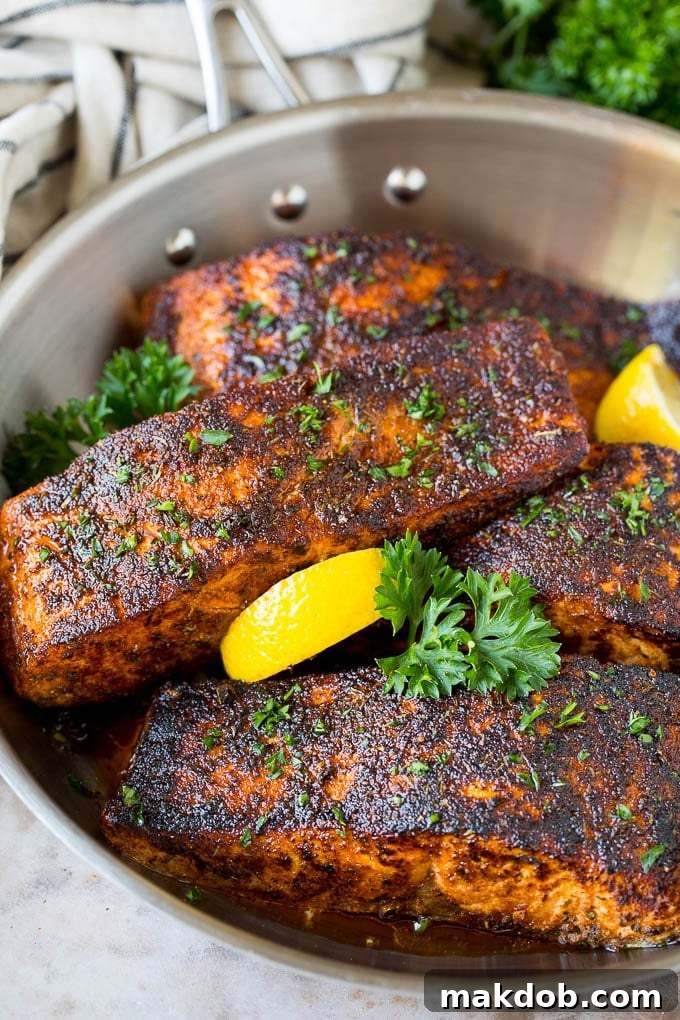
My passion for seafood runs deep, encompassing everything from the delicate notes of steamed mussels to the rich complexity of French bouillabaisse. However, salmon remains a consistent favorite, making an appearance on my dinner table almost every week. Its inherent health benefits, incredible versatility, and straightforward preparation make it an ideal choice for any meal. This particular blackened salmon recipe takes those qualities to the next level, infusing the fish with bold, savory, and subtly spicy notes that promise an unforgettable dining experience with surprisingly little effort.
Understanding Blackened Salmon: A Culinary Technique Explained
The term “blackened” refers to a distinct cooking technique rather than an actual charring or burning of the food. Originating from the vibrant Cajun cuisine of Louisiana, this method involves coating a protein – most commonly fish, but also chicken, pork, or shrimp – in melted butter and a robust spice mixture, then searing it in an extremely hot cast iron pan. The high heat, combined with the butter and spices, creates a dark, crusty, almost “black” layer on the exterior of the food. This crust is not burnt; rather, it’s a caramelized and toasted layer of butter and seasoning that provides an intense burst of flavor and a delightful textural contrast to the tender, flaky interior of the fish. It’s a technique that delivers maximum flavor with impressive speed, making it a favorite for those who appreciate a dramatic and delicious result.
Crafting Your Perfect Blackened Salmon: A Step-by-Step Guide
Achieving perfectly blackened salmon is surprisingly simple, transforming fresh fillets into a culinary masterpiece in just minutes. Here’s how to do it:
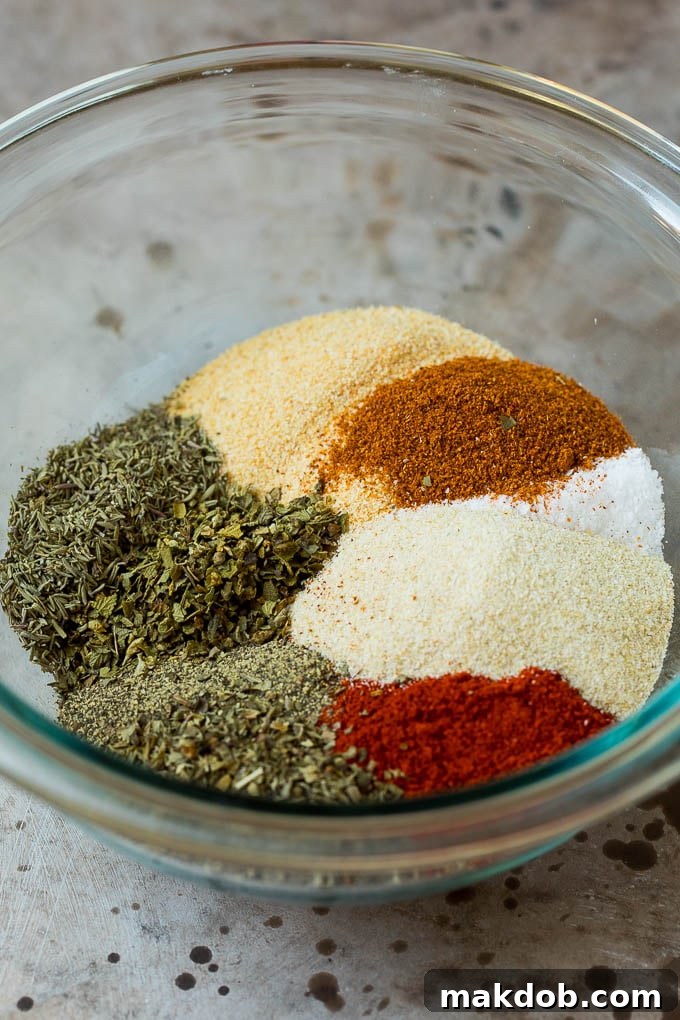
- Prepare Your Seasoning: Begin by combining all the spices for your blackening blend in a small bowl. Ensuring this is ready beforehand is crucial, as the cooking process is quick.
- Coat the Salmon: Pat your salmon fillets dry thoroughly with paper towels. This is a critical step for achieving a crisp crust. Then, generously brush each fillet with melted butter. The butter not only adds richness but also helps the seasoning adhere and contributes to the signature dark crust.
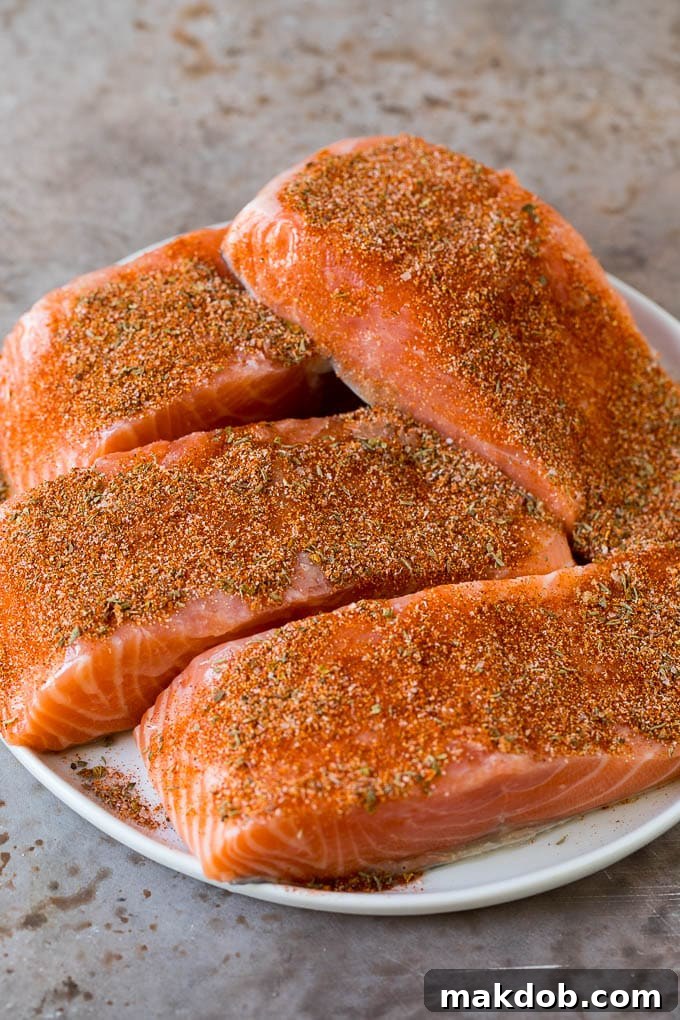
- Apply the Spice Blend: Liberally sprinkle your homemade blackening seasoning all over the buttered salmon fillets. Don’t be shy! Use your hands to gently press the spices into the fish, ensuring an even and thick coating.
- Preheat Your Skillet: Heat a cast iron skillet over high heat until it’s smoking hot. This extreme heat is what creates the “blackened” effect. Add a tablespoon of vegetable oil to coat the bottom of the pan just before cooking.
- Sear the First Side: Carefully place the seasoned salmon fillets, flesh side down (skin side up, if using skin-on fillets), into the scorching hot skillet. Cook for 3-4 minutes. Resist the urge to move the fish during this time, allowing that beautiful, dark crust to form undisturbed.
- Flip and Finish: With care, flip the salmon fillets over. Reduce the heat to medium-high and continue to cook for an additional 7-8 minutes, or until the fish is cooked through, opaque, and flakes easily with a fork.
- Garnish and Serve: Once cooked, transfer the salmon to serving plates. Sprinkle with freshly chopped parsley for a burst of freshness and color, and garnish with lemon wedges. A squeeze of fresh lemon juice brightens the rich flavors of the dish beautifully.
The Heart of Blackened Salmon: Crafting Your Own Seasoning Blend
The magic of blackened salmon truly lies in its distinctive seasoning blend. While pre-made options exist, making your own ensures freshness, quality, and the ability to customize to your exact taste preferences. This homemade blackening seasoning is a harmonious symphony of savory, smoky, and subtly spicy notes, designed to complement the rich flavor of salmon without overpowering it. Typically, it includes a blend of:
- Sweet Paprika: For vibrant color and a mild, sweet peppery flavor.
- Smoked Paprika: Adds a wonderful smoky depth that enhances the “blackened” character.
- Garlic Powder: Provides an aromatic foundation.
- Onion Powder: Contributes a savory, slightly sweet undertone.
- Kosher Salt and Black Pepper: Essential flavor enhancers.
- Dried Basil, Oregano, and Thyme: A classic herbal trio offering earthy, aromatic notes.
- Brown Sugar: A touch of sweetness that aids in caramelization, contributing to the dark crust and balancing the spices.
- Cayenne Pepper: The source of the characteristic Cajun heat, adjustable to your preference.
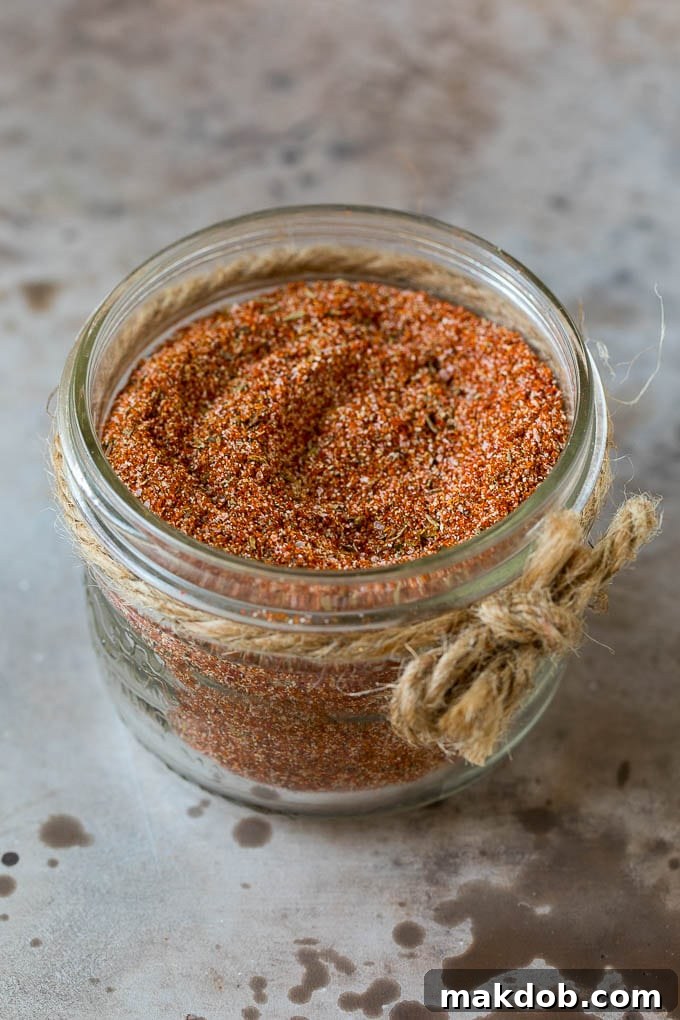
To prepare your blend, simply stir together all the herbs and spices in a small bowl until thoroughly combined. Once made, transfer the seasoning mix to an airtight, resealable container or jar. Stored in a cool, dry place, your homemade blackening seasoning will remain fresh and flavorful for several months, ready to transform not only salmon but also chicken, shrimp, or any protein craving a burst of Cajun flair.
Expert Tips for Achieving the Perfect Blackened Salmon Every Time
Mastering blackened salmon involves a few key techniques and considerations that can elevate your dish from good to absolutely phenomenal:
- Select Uniform Fillets: For even cooking, always choose salmon fillets that are similar in size and thickness. This ensures all pieces cook at the same rate, preventing some from being overcooked while others are undercooked. Aim for fillets roughly 1 to 1.5 inches thick.
- Embrace the Cast Iron: The traditional and most effective way to sear blackened salmon is in a heavy cast iron skillet. Cast iron excels at retaining and distributing extremely high heat, which is crucial for forming that signature dark crust. If a cast iron skillet isn’t available, a heavy-bottomed stainless steel or enamelware pan can work, but you may need to adjust cooking times slightly and monitor heat more closely.
- Pat Dry for Crispness: Before applying butter and seasoning, always pat your salmon fillets thoroughly dry with paper towels. Excess moisture on the fish surface will steam rather than sear, preventing the formation of a crisp, flavorful crust.
- Watch Carefully, Don’t Burn: The goal is a dark golden-brown, almost black crust – not burnt. Keep a close eye on your salmon as it sears on the first side. If you notice the spices beginning to smoke excessively or turn truly black, reduce the heat immediately. A little smoke is normal for blackening, but burning the spices will result in a bitter taste.
- Ensure Good Ventilation: Blackening food produces a significant amount of smoke due to the high heat and butter. Make sure your kitchen is well-ventilated; turn on your range hood or open a window to prevent smoke alarms from going off.
- Customize the Heat: The recipe’s cayenne pepper measurement provides a fairly mild heat level. If you prefer a spicier salmon, feel free to increase the amount of cayenne pepper to taste. You can also add a pinch of red pepper flakes for an extra kick.
- Mind the Butter: While butter is key for flavor and crust, don’t douse the pan in it. The butter is primarily for coating the fish, and a small amount of vegetable oil in the pan helps prevent sticking and handles high heat better.
- Rest the Fish: Like any cooked protein, letting your salmon rest for a couple of minutes after cooking allows the juices to redistribute, resulting in a more tender and moist fillet.
Knowing When Your Blackened Salmon is Perfectly Cooked
Determining when salmon is done cooking is essential for both food safety and optimal texture and flavor. Overcooked salmon can be dry and tough, while undercooked salmon is unsafe and unappetizing. Here are the most reliable ways to tell when your blackened salmon is ready:
- The Flake Test: This is the easiest and most common method. Insert a fork into the thickest part of the salmon fillet and gently twist. If the salmon easily flakes apart, it’s done. The flakes should separate without resistance.
- Color Change: As salmon cooks, its flesh transforms from a translucent, dark pink or orange to an opaque, lighter pink. When you perform the flake test, observe the color in the center. It should be fully opaque. Any dark, translucent spots indicate it needs more time.
- Internal Temperature: For the most accurate assessment, use an instant-read meat thermometer. Insert it into the thickest part of the fillet. The FDA recommends cooking salmon to an internal temperature of 145°F (63°C). Remove the salmon from the heat when it reaches about 140-142°F, as it will continue to cook slightly from residual heat.
- Juicy Appearance: Properly cooked salmon will still appear moist and juicy, not dry or crumbly. The delicate fats in salmon render beautifully when cooked correctly, contributing to its luscious texture.
The Nutritional Powerhouse: Is Blackened Salmon Truly Good for You?
Absolutely! Blackened salmon is an excellent choice for a healthy and balanced diet. Salmon itself is a nutritional powerhouse, celebrated for its abundance of beneficial nutrients. Here’s why it’s so good for you:
- Rich in Omega-3 Fatty Acids: Salmon is one of the best sources of omega-3s, specifically EPA and DHA. These essential fatty acids are crucial for heart health, reducing inflammation, supporting brain function, and maintaining healthy vision.
- High-Quality Protein: Each serving of salmon provides a significant amount of lean protein, essential for muscle repair and growth, satiety, and overall body function.
- Packed with Vitamins and Minerals: Salmon is a great source of Vitamin D, which is vital for bone health and immune function, as well as B vitamins (B3, B5, B6, B12) which play key roles in energy production. It also contains important minerals like selenium, potassium, and phosphorus.
- Antioxidant Properties: The rich orange-red color of salmon comes from astaxanthin, a powerful antioxidant that helps protect cells from damage and may contribute to skin health.
- Calorie-Conscious Choice: When prepared as blackened salmon, it avoids excessive amounts of heavy oils or high-calorie ingredients like cream or cheese, which are often found in other fish preparations. This makes it a fantastic option for those monitoring their calorie intake while still enjoying a hearty and satisfying meal. The fats come primarily from the salmon itself and a small amount of butter, contributing to its overall healthy profile.
By opting for blackened salmon, you’re not just indulging in incredible flavor; you’re also nourishing your body with a wealth of essential nutrients, making it a truly smart choice for any health-conscious individual.
Perfect Pairings and Serving Suggestions
Blackened salmon’s robust and savory flavor profile makes it incredibly versatile when it comes to side dishes. Here are some ideas to complete your meal:
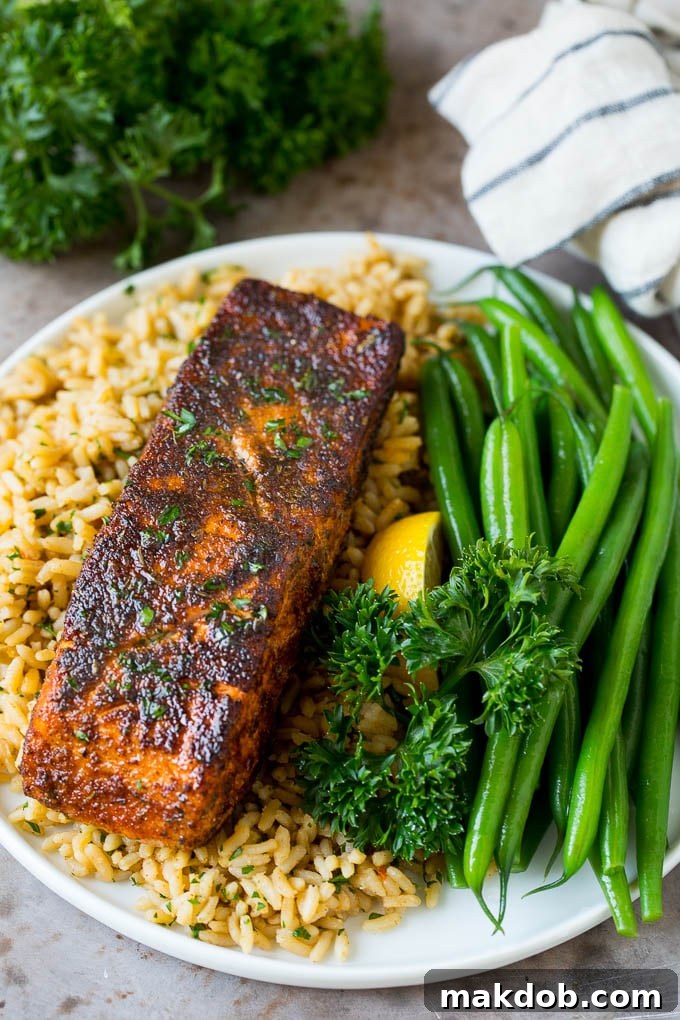
- Classic Southern Sides: For a hearty and authentic experience, serve your blackened salmon with dirty rice and a side of collard greens or green beans. The richness of the rice and the earthiness of the greens beautifully complement the spicy fish.
- Light and Fresh Options: If you’re looking for a lighter meal or watching your carbohydrates, blackened salmon is fantastic served over a fresh, crisp salad. Think mixed greens with a light vinaigrette, or a refreshing cucumber and tomato salad.
- Creamy Indulgence: For a more decadent touch, flake the blackened fish and add it to a creamy pasta dish, such as fettuccine Alfredo or a lemon-garlic cream sauce. The spices cut through the richness of the sauce perfectly.
- Roasted Vegetables: A medley of roasted vegetables like asparagus, broccoli, bell peppers, or zucchini makes for a simple, healthy, and delicious pairing.
- Potatoes or Grains: Mashed potatoes, roasted potatoes, quinoa, or couscous can provide a comforting base that absorbs the delicious juices and spices from the salmon.
- Corn on the Cob: Sweet corn, whether grilled or boiled, offers a delightful contrast to the savory salmon.
This blackened salmon recipe is more than just a dish; it’s an invitation to savor the incredible flavors of the sea, enhanced by a blend of aromatic spices and a perfect sear. The combination of tender, flaky fish with that irresistibly savory and slightly spicy crust is truly unbeatable. Give this recipe a try – your taste buds will thank you, and you’ll undoubtedly find yourself adding it to your regular rotation.
More Delicious Salmon Recipes to Explore
- Pan Seared Salmon
- Grilled Salmon with Garlic and Herbs
- Honey Glazed Salmon
- Greek Salmon Salad
- Salmon Foil Packets
Blackened Salmon Recipe
Blackened Salmon
This blackened salmon features fresh fillets coated in butter and a robust homemade seasoning blend, then seared to perfection for a dark, flavorful crust. A delicious and highly acclaimed salmon recipe that’s incredibly quick to prepare.
Author: Sara Welch
Prep Time: 10 minutes
Cook Time: 15 minutes
Total Time: 25 minutes
Course: Main
Cuisine: Cajun
Serves: 4
Ingredients
- 1 tablespoon smoked paprika
- 2 teaspoons sweet paprika
- 1 1/2 teaspoons kosher salt
- 1 teaspoon garlic powder
- 3/4 teaspoons onion powder
- 1 teaspoon brown sugar
- 1/2 teaspoon black pepper
- 1/2 teaspoon dried thyme
- 1/4 teaspoon dried oregano
- 1/4 teaspoon dried basil
- 1/4 teaspoon cayenne pepper (or more to taste)
- 1 tablespoon vegetable oil
- 4 salmon fillets (about 1 1/4 lbs total)
- 2 tablespoons butter, melted
- 1 tablespoon parsley, chopped
- Parsley sprigs and lemon wedges for garnish
Instructions
- Place the smoked paprika, sweet paprika, salt, garlic powder, onion powder, brown sugar, black pepper, thyme, oregano, basil, and cayenne pepper in a small bowl. Stir until thoroughly combined to create your blackening seasoning.
- Pat the salmon fillets dry. Brush the melted butter all over the top and sides of the salmon fillets. Sprinkle the seasoning mix generously over the buttered salmon, using your hands to gently press the spices into the fish, ensuring an even coat.
- Heat a cast iron skillet over high heat until it is very hot (it may begin to smoke lightly). Brush the skillet with vegetable oil.
- Carefully place the salmon fillets into the hot skillet, skin side up (flesh side down). Cook for 3-4 minutes, or until a dark brown, crusty exterior forms. Do not move the salmon during this time.
- Carefully flip the salmon fillets over. Reduce the heat to medium-high and continue to cook for an additional 7-8 minutes, or until the fish flakes easily with a fork and is opaque throughout.
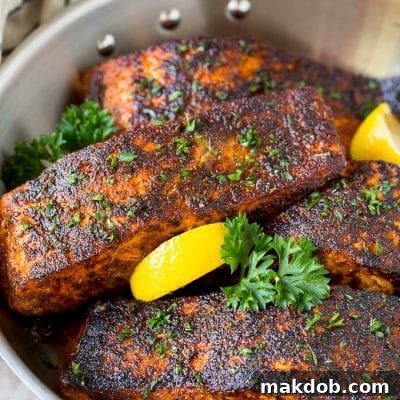
- Remove the salmon from the skillet and transfer to serving plates. Sprinkle with freshly chopped parsley, then serve immediately, garnished with fresh lemon wedges and additional parsley sprigs.
Nutrition
Calories: 364kcal | Carbohydrates: 4g | Protein: 34g | Fat: 23g | Saturated Fat: 10g | Cholesterol: 116mg | Sodium: 1025mg | Potassium: 905mg | Fiber: 1g | Sugar: 1g | Vitamin A: 1821IU | Vitamin C: 1mg | Calcium: 27mg | Iron: 2mg
Did you make this recipe? Tag @dinneratthezoo on Instagram and hashtag it #dinneratthezoo