
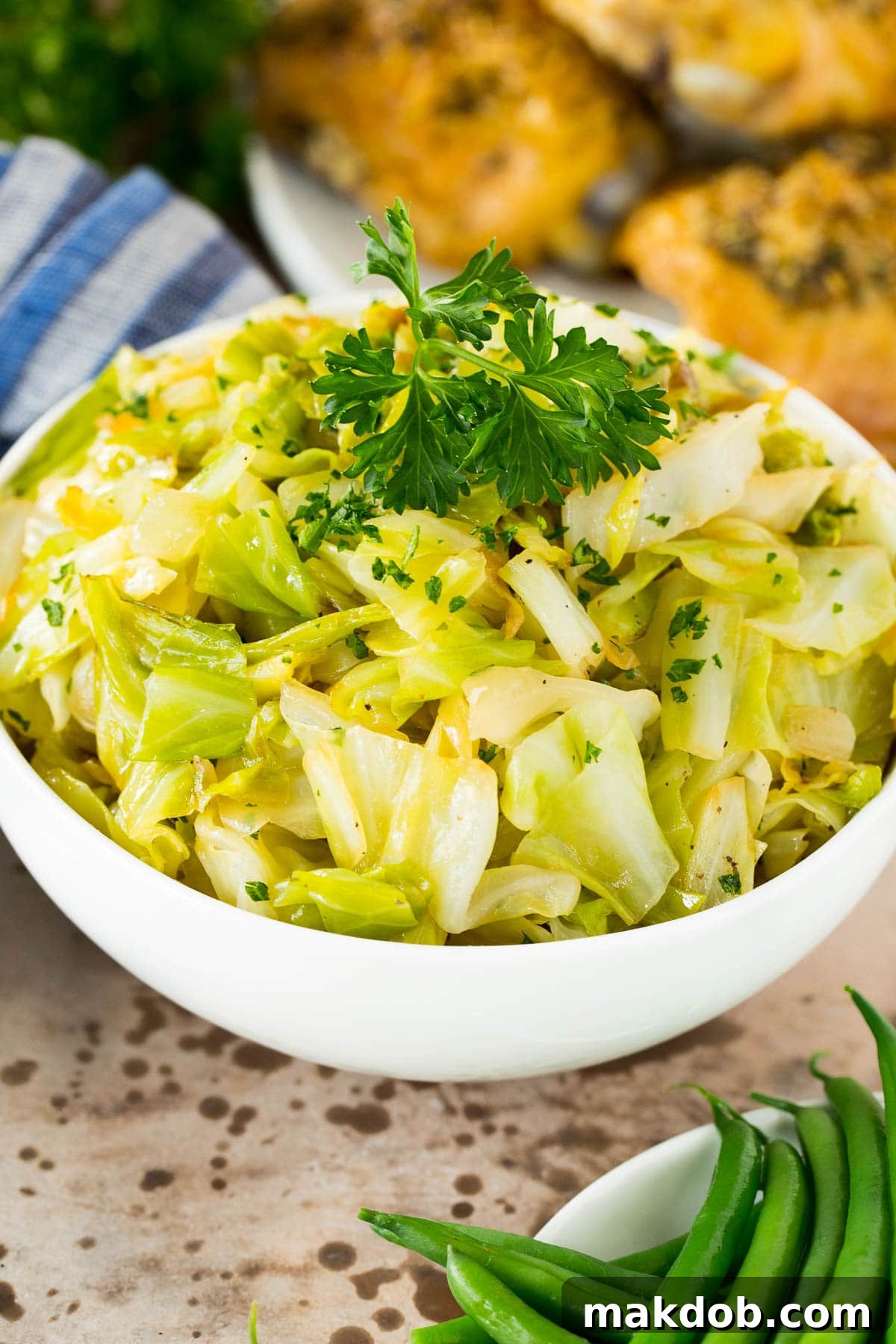
Transforming humble cabbage into a delectable side dish is surprisingly simple, and this **sauteed cabbage recipe** stands as a testament to that ease. Featuring coarsely chopped green cabbage, gently cooked in rich butter with aromatic onions, fresh garlic, and vibrant herbs, it’s an incredibly easy and budget-friendly accompaniment. This versatile dish effortlessly complements a wide array of main courses, from succulent chicken and juicy steak to tender pork, making it a staple for any home cook.
Cabbage is a true kitchen hero in my household. Its year-round availability, minimal cost, and impressive longevity in the refrigerator make it an indispensable ingredient. Whether I’m crafting comforting roasted cabbage, preparing a hearty cabbage roll soup, or whipping up this quick and simple sauteed cabbage, I always ensure a head of this nutrient-rich vegetable is on hand. When time is short and I need a fast yet flavorful vegetable dish to complete dinner, this ultra-speedy sauteed cabbage is my go-to choice.
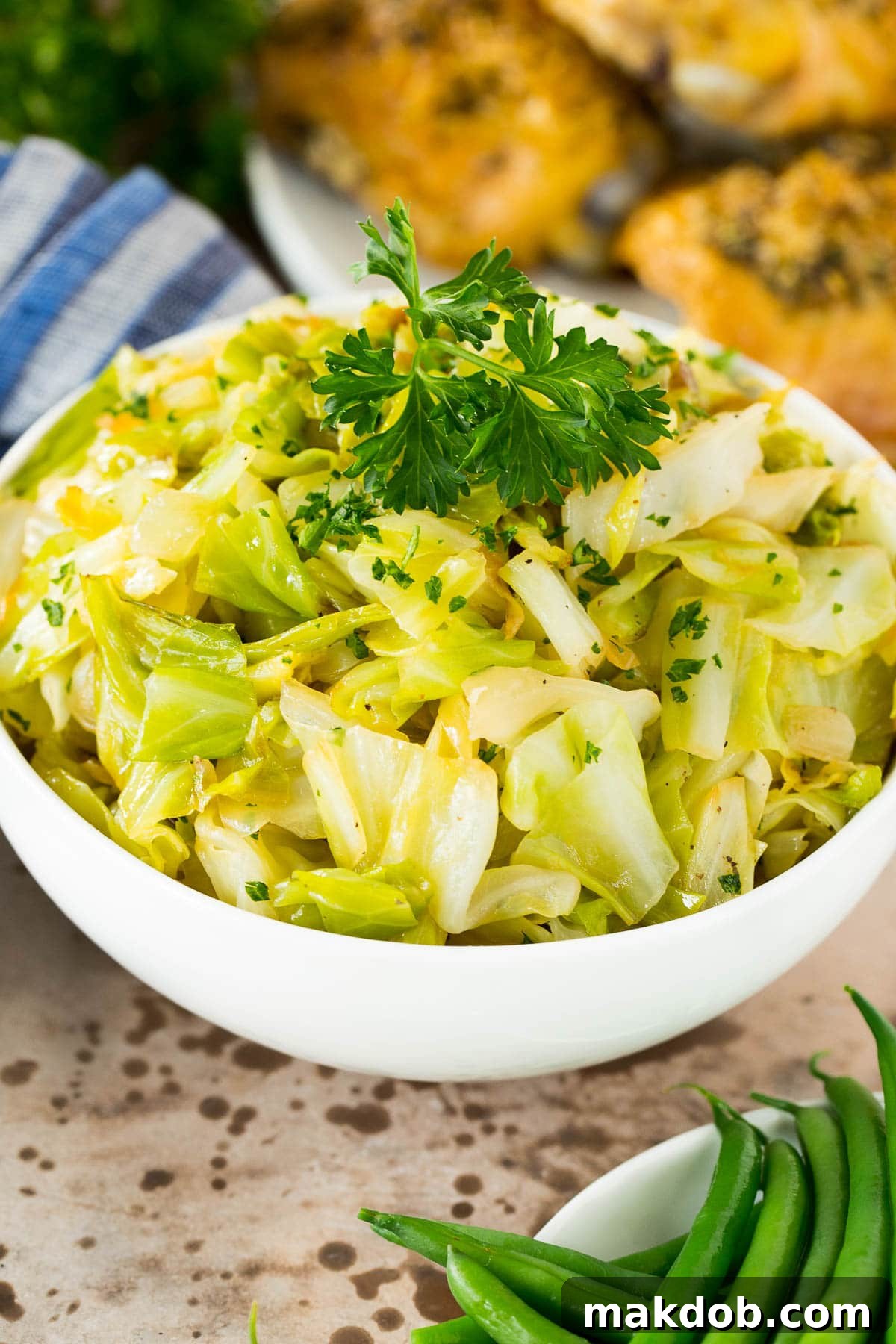
This savory cabbage dish is the perfect side dish recipe for countless meals. Imagine it alongside marinated salmon, crispy air fryer chicken breast, or a perfectly grilled flank steak. Its comforting flavors also make it an ideal addition to your holiday spread. Pair this simple yet elegant cabbage with your favorite Thanksgiving recipes or Christmas recipes for a truly festive and memorable meal.
Table of Contents
- The Humble Cabbage: A Culinary Gem
- Selecting and Preparing Your Cabbage
- Sauteed Cabbage Ingredients: Essentials for Exceptional Flavor
- Mastering the Sauté: How to Make Perfect Sauteed Cabbage
- Expert Tips For A Flawless Dish
- Recipe FAQs
- Sauteed Cabbage Flavor Variations and Serving Suggestions
- More Cabbage Recipes You’ll Enjoy
- Sauteed Cabbage Recipe Card
The Humble Cabbage: A Culinary Gem
Before diving into the recipe, let’s take a moment to appreciate the unsung hero of this dish: cabbage. Often overlooked, cabbage is a powerhouse of nutrition, offering a wealth of health benefits. It’s an excellent source of Vitamin C, which is vital for immune health, and Vitamin K, crucial for blood clotting and bone health. Beyond vitamins, cabbage is packed with dietary fiber, aiding digestion and promoting a feeling of fullness. It also contains powerful antioxidants and anti-inflammatory compounds, contributing to overall well-being. Furthermore, its incredibly low cost and long shelf life make it an economical choice for feeding a family healthy meals throughout the year. From crunchy slaw to hearty soups and, of course, this delightful sauté, cabbage proves its versatility time and again in kitchens worldwide.
Selecting and Preparing Your Cabbage
The foundation of any great dish starts with quality ingredients. When choosing a head of green cabbage for sautéing, look for one that feels firm and heavy for its size, indicating dense, fresh leaves. The outer leaves should be shiny, crisp, and vibrant green. Avoid any heads with browning, wilting, or significant blemishes, as these are signs of an older cabbage past its prime. Once you bring your cabbage home, proper preparation is key. First, remove any bruised or discolored outer leaves. Rinse the cabbage thoroughly under cool running water. For sautéing, you’ll want to cut the cabbage into quarters or thick slices, then carefully remove the tough, fibrous core. After coring, you can either shred it finely for a quicker cook or chop it into larger, more rustic pieces, which will offer a satisfying texture in the finished dish. The size of your chop will influence the cooking time and the final mouthfeel, so choose according to your preference.
Sauteed Cabbage Ingredients: Essentials for Exceptional Flavor
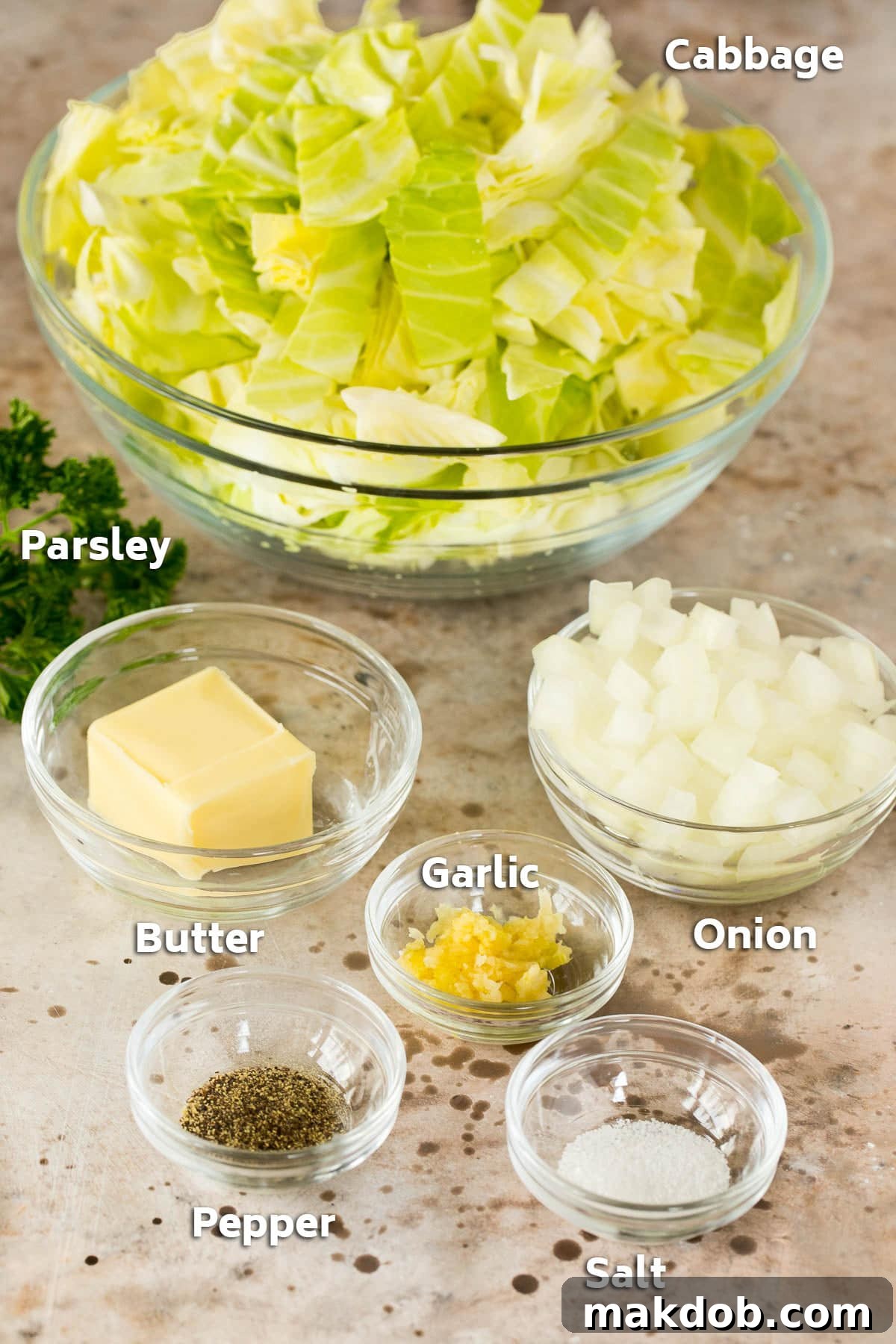
Crafting this flavorful sauteed cabbage requires only a handful of simple ingredients, each playing a crucial role in the final taste and texture. Here’s a closer look at what you’ll need and why:
- Butter: We use butter not just for its rich, indulgent flavor that beautifully complements the cabbage, but also because it helps achieve those coveted browned edges. For those seeking a vegan alternative or a lighter option, high-quality olive oil can be used instead, though the flavor profile will be slightly different.
- Onion: Finely diced onion provides a foundational layer of sweetness and aromatic depth as it caramelizes in the pan. While any type of onion will work, a sweeter yellow onion is typically preferred for its balanced flavor, which enhances rather than overpowers the cabbage.
- Green Cabbage: As discussed, the star of our dish. Fresh, firm green cabbage is essential. Look for vibrant, unblemished leaves to ensure the best flavor and texture. Coarsely shredded or chopped pieces are ideal for sautéing, allowing them to soften while still retaining a slight bite.
- Garlic: Freshly minced garlic is paramount here. Its pungent, aromatic notes are released during the last minute of cooking, infusing the dish with an irresistible fragrance and taste. While garlic powder can be a quick substitute in a pinch, remember to use only about 1/3 of the amount, as its flavor is much more concentrated.
- Seasonings: Simple yet essential. A balance of salt and black pepper is all that’s needed to enhance the natural flavors of the vegetables. Season to taste, adjusting as needed after cooking to achieve perfect balance.
- Fresh Parsley: A final flourish of chopped fresh parsley not only adds a burst of vibrant green color but also a fresh, herbaceous note that brightens the entire dish, providing a lovely contrast to the rich, savory cabbage.
Mastering the Sauté: How to Make Perfect Sauteed Cabbage
Achieving perfectly tender and flavorful sauteed cabbage is a straightforward process. Follow these detailed steps to ensure a delicious outcome:
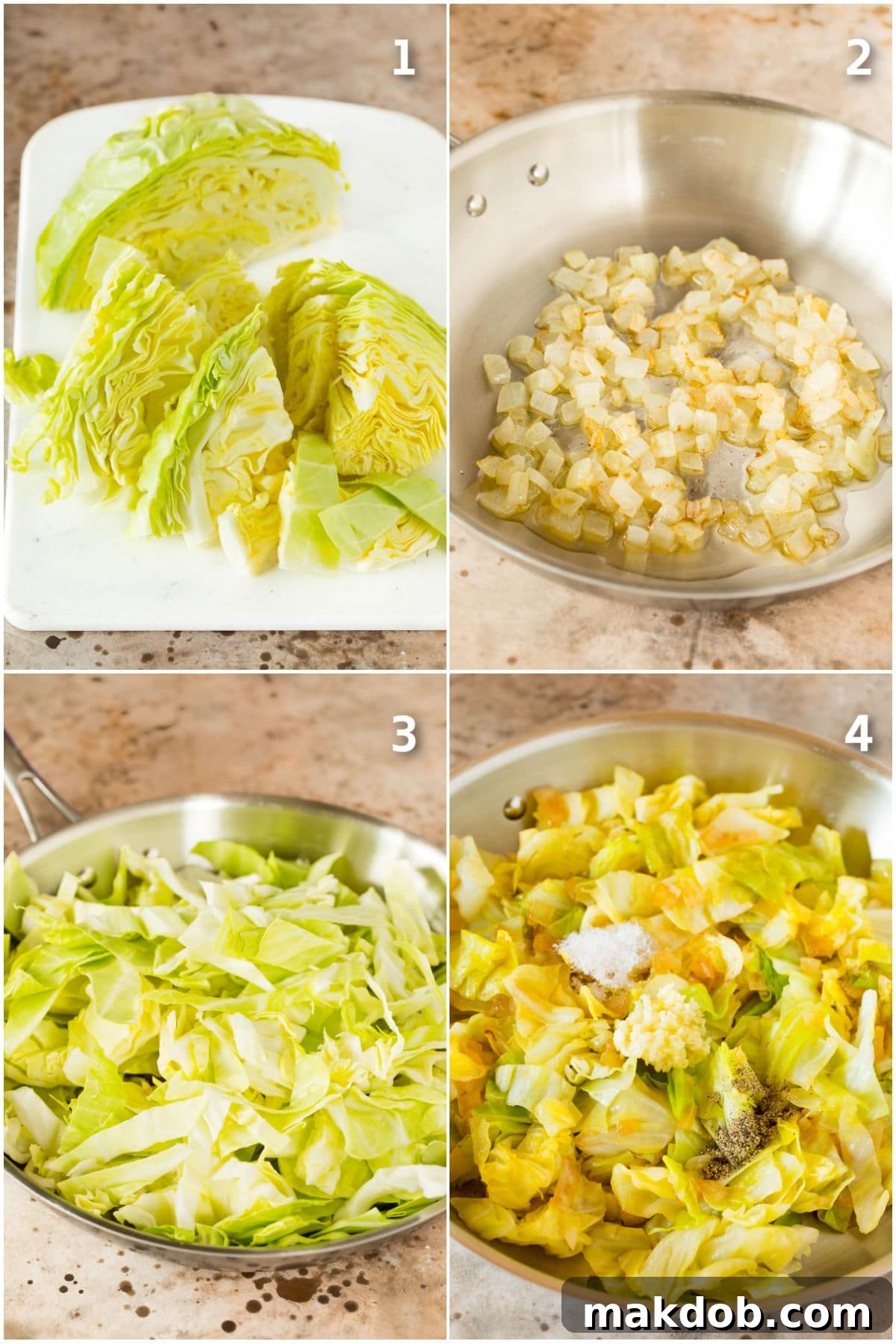
- Prepare the Cabbage: Begin by taking your head of cabbage. Cut it into quarters or thick, manageable slices. Carefully remove the tough, inedible core from each section. Once cored, either coarsely shred the cabbage using a mandoline or a sharp knife, or chop it into large, rustic pieces. The goal is consistent pieces for even cooking.
- Melt the Butter: Heat a large, sturdy skillet or frying pan over medium-high heat. Add the butter (or olive oil, if preferred) and allow it to melt completely, ensuring it coats the bottom of the pan evenly.
- Sauté the Onions: Add the finely diced onion to the melted butter. Sauté the onions for 3-4 minutes, stirring occasionally, until they become translucent and tender. This step softens their flavor and brings out their natural sweetness.
- Introduce the Cabbage: Place the prepared cabbage into the pan with the softened onions. It might look like a lot at first, but cabbage wilts down significantly as it cooks.
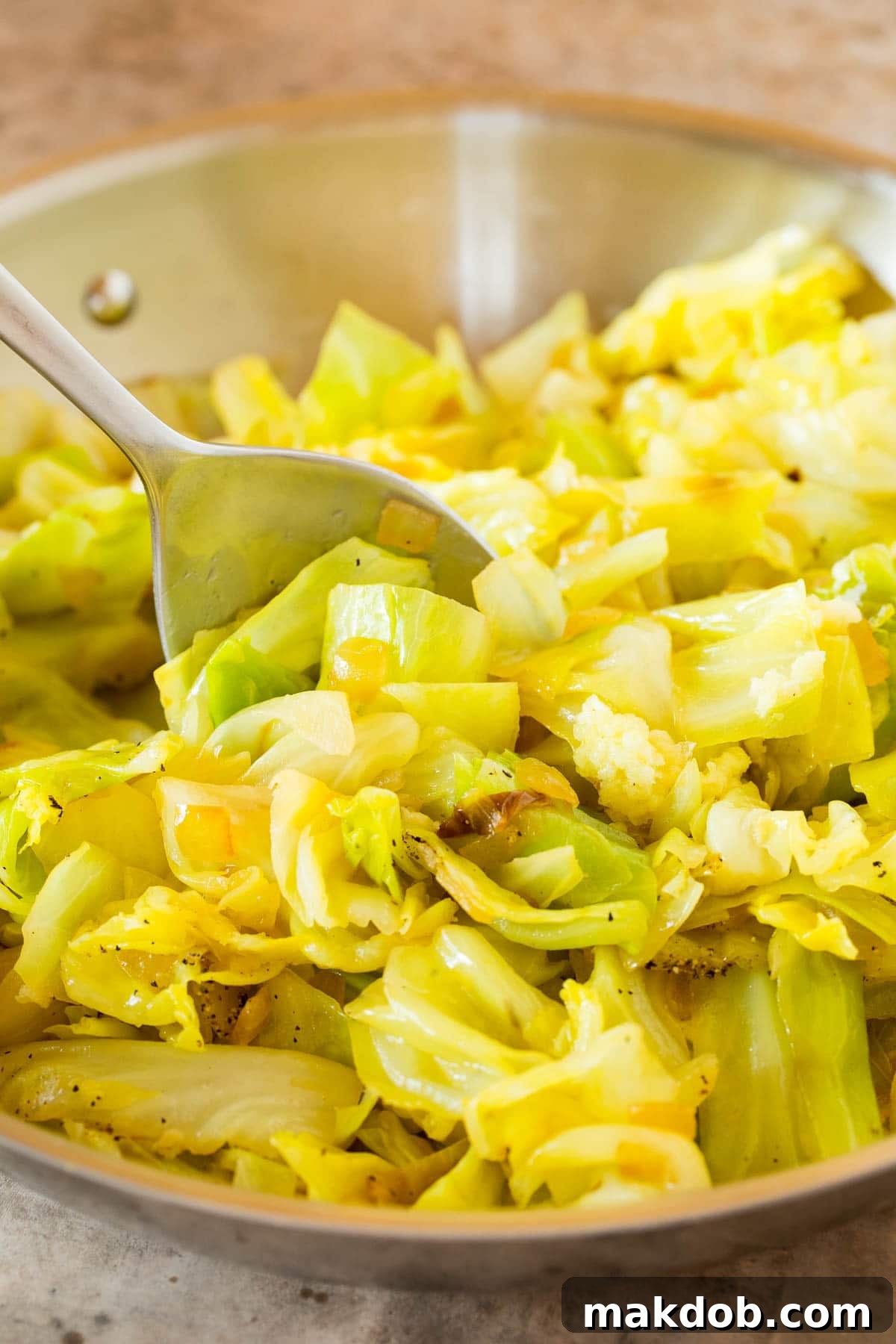
- Cook the Cabbage to Perfection: Continue to cook the cabbage, stirring occasionally to ensure even exposure to the heat. This process will take approximately 8-10 minutes. During this time, the cabbage will soften and begin to wilt. Crucially, allow some of the cabbage edges to slightly brown, which adds a wonderful depth of flavor and caramelization. If you notice the cabbage browning too quickly on the outside but not softening enough internally, or if the pan seems dry, don’t hesitate to add a tablespoon or two of water. This creates steam that helps the cabbage cook through without burning.
- Add Garlic and Seasonings: Once the cabbage is tender and has achieved some nice browning, reduce the heat slightly. Add the minced garlic, salt, and black pepper to the pan. Cook for just one more minute, stirring constantly, to allow the garlic to become fragrant without burning.
- Finish and Serve: Remove the pan from the heat. Sprinkle the freshly chopped parsley generously over the sauteed cabbage. Toss gently to combine. Serve immediately as a hot, flavorful side dish and enjoy!
Expert Tips For A Flawless Dish
Achieving the best sauteed cabbage is all about technique and a few key considerations. Keep these tips in mind for a consistently delicious outcome:
- Achieving Perfect Browning Without Burning: The goal for this dish is cabbage with beautifully **browned edges** that hint at caramelized flavor, while the core remains tender. However, it’s a fine line between browned and burned. Use medium-high heat and stir regularly. If your cabbage is browning too rapidly on the outside but still feels a bit tough or undercooked, add a small splash of water (1-2 tablespoons) to the pan. Cover it briefly with a lid for a minute or two. The steam created will help the cabbage cook through and become tender without further browning or scorching.
- Storage and Freezing Guidelines: Cooked sauteed cabbage will stay fresh and delicious in an airtight container in the refrigerator for up to 3 days. It makes for excellent leftovers that can be quickly reheated. However, I generally **do not recommend freezing** sauteed cabbage. Upon thawing, the texture tends to become watery and mushy, losing its desirable crisp-tender quality.
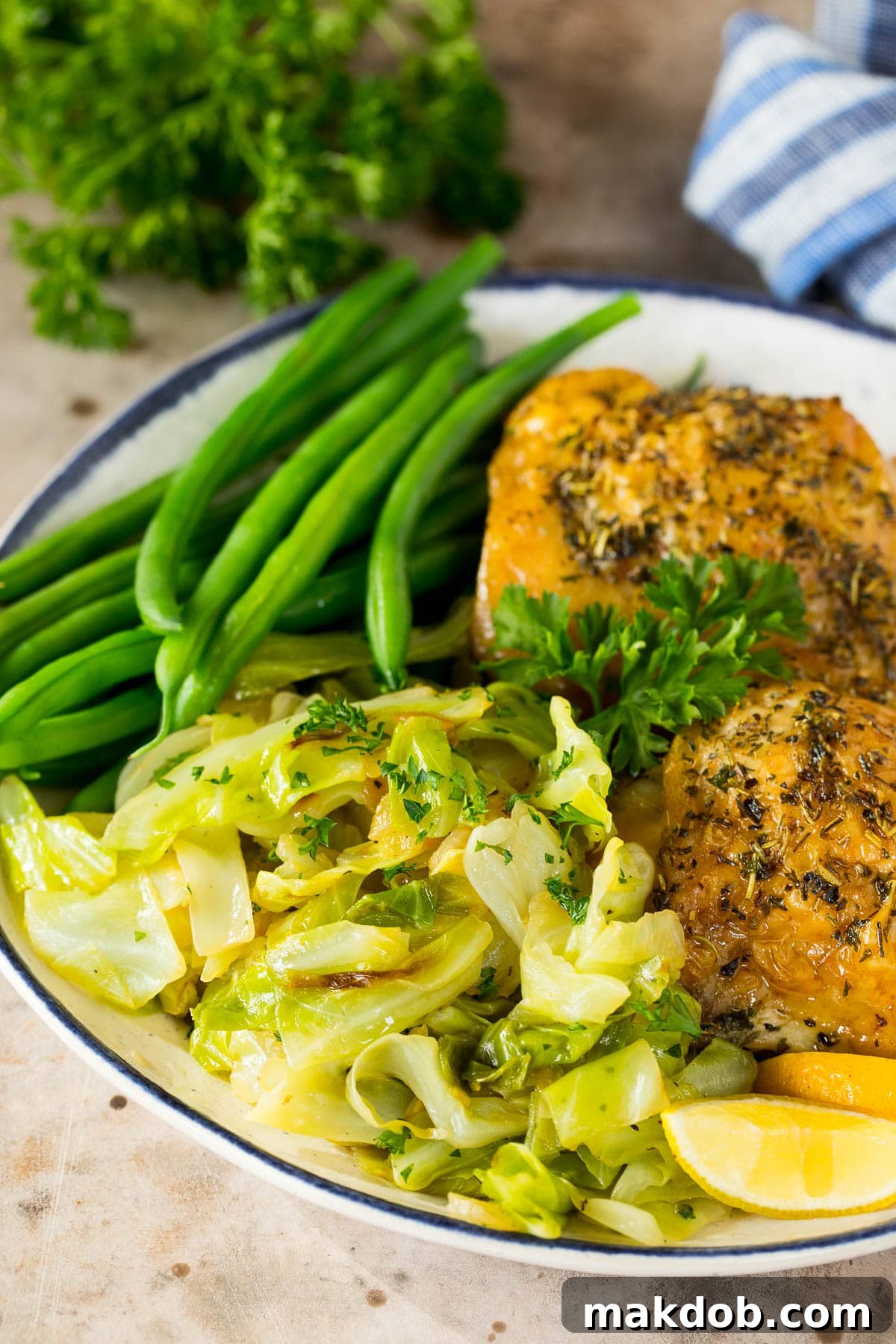
- Versatile Serving Suggestions: This versatile side dish truly shines alongside a variety of main courses. Consider serving your flavorful cabbage with perfectly grilled chicken tenders, a savory instant pot corned beef, or rich smothered pork chops. Beyond traditional pairings, it can be a fantastic addition to stir-fries, mixed into pasta dishes, incorporated into hearty soups, or even served over rice for added texture and flavor.
- Don’t Overcrowd the Pan: For best results, avoid overcrowding your skillet. If you’re making a larger batch, it’s better to cook the cabbage in two smaller batches. An overcrowded pan will steam the cabbage rather than sauté it, preventing those delicious browned, caramelized edges from forming.
Quick Tip
To make this recipe even faster on busy weeknights, simply buy a **bag of pre-shredded cabbage** from your local grocery store. You can even use a bag of coleslaw mix (without the dressing) if that’s what you have on hand – it works perfectly!
Recipe FAQs
A whole, raw head of cabbage can remain fresh in the refrigerator for up to 2 weeks. For maximum freshness, it’s best to wrap it loosely in plastic wrap or store it in a produce drawer. If you’ve already cut into the head of cabbage, try to use the remainder within 3 to 5 days. Cooked cabbage, like this sautéed version, is best enjoyed within 3 days when stored properly in an airtight container.
When coarsely chopped or cut into strips for stove-top cooking, cabbage typically takes about 8 to 10 minutes in a hot pan over medium-high heat. The exact time can vary depending on how finely it’s chopped and your desired level of tenderness. The key is to look for it to wilt and develop some browned edges.
Cabbage is incredibly versatile, offering many delicious ways to enjoy it. Some of my personal favorites include braised cabbage, crispy fried cabbage, and, of course, this simple and flavorful sauteed cabbage. It’s also fantastic raw in salads and slaws, fermented as sauerkraut or kimchi, or added to soups and stews for extra body and nutrition.
Absolutely! Sauteed cabbage is a wonderfully healthy addition to any meal. Cabbage itself is low in calories and rich in vitamins (especially C and K), fiber, and antioxidants. While this recipe uses butter, which adds flavor and a modest amount of fat, you can easily make it even healthier by using olive oil or reducing the amount of fat. It’s a fantastic way to boost your vegetable intake.
A large skillet or frying pan with a wide surface area is ideal for sautéing cabbage. This allows the cabbage to spread out in a single layer, ensuring it browns rather than steams. Cast iron skillets, stainless steel pans, or large non-stick pans all work well. The key is ample space to avoid overcrowding.
Follow Me
Sauteed Cabbage Flavor Variations and Serving Suggestions
While this sauteed cabbage recipe is fantastic in its simplicity, its true beauty lies in its adaptability. You can easily customize the flavors to suit your palate or complement any meal. Here are some ideas to inspire your culinary creativity:
- Cabbage Varieties: While standard green cabbage is our go-to, feel free to experiment with other types. Savoy cabbage offers a more delicate texture, red cabbage adds a beautiful color (though it might bleed), and Napa cabbage brings a slightly sweeter, milder flavor that’s great for an Asian twist.
- Add Protein for a Heartier Dish:
- For an extra layer of savory flavor, stir in some cooked, crumbled bacon or crispy pancetta towards the end of cooking.
- To transform it into a light meal, mix in sliced kielbasa sausage, diced ham steak, or even leftover shredded chicken or turkey.
- For vegetarian protein, consider adding cooked lentils, chickpeas, or pan-fried tofu cubes.
- Introduce More Vegetables: Enhance the nutritional value and texture by incorporating other fast-cooking vegetables. Sliced mushrooms, colorful bell peppers, diced carrots, fresh green beans, or even small broccoli florets can be added to the pan alongside or shortly after the cabbage.
- Creative Toppings and Garnishes:
- A sprinkle of grated Parmesan or crumbled feta cheese adds a salty, tangy kick.
- Toasted slivered almonds or chopped walnuts provide a delightful textural contrast.
- A drizzle of toasted sesame oil and a sprinkle of sesame seeds can transform it into an Asian-inspired side.
- Experiment with Seasonings and Acids:
- For an Italian flair, stir in a teaspoon of Italian seasoning during the last few minutes of cooking.
- A squeeze of fresh lemon juice or a splash of apple cider vinegar brightens the flavors and adds a pleasant tang.
- Spice it up with a pinch of red pepper flakes or a dash of Cajun seasoning for a bolder profile.
- For an Asian-inspired version, add a splash of soy sauce (or tamari for gluten-free) and a tiny amount of brown sugar for caramelization.
- A touch of smoked paprika can add a subtle smoky depth.
- What to Serve With It:
- Classic Meat Pairings: Grilled chicken, roasted turkey, pan-seared steak, pork chops, corned beef, or sausage are all excellent choices.
- Hearty Vegetarian Mains: Pair it with lentil loaf, black bean burgers, or roasted root vegetables.
- Grains and Starches: Serve over fluffy white rice, brown rice, quinoa, or alongside mashed potatoes or polenta for a complete meal.
- Eggs: Sauteed cabbage makes a surprisingly delicious and filling addition to scrambled eggs or omelets for breakfast or brunch.
This recipe may be simple in its core, but its versatility and delicious flavor make it an essential and much-loved dish in any home kitchen. Don’t hesitate to make it your own!
More Cabbage Recipes You’ll Enjoy
Slow Cooker Corned Beef and Cabbage
Total Time: 8 hrs 10 mins
Cabbage Soup
Total Time: 40 mins
Stuffed Cabbage Rolls
Total Time: 1 hr 30 mins
Braised Cabbage
Total Time: 2 hrs 25 mins
Yakisoba Noodles with Chicken
Total Time: 40 mins
Love This Recipe?
We’d love to hear from you! Please leave a 5-star rating in the recipe card below & share your thoughts in the comments section further down the page. Your feedback is greatly appreciated!
Sauteed Cabbage
Pin Recipe
Save Recipe
Sara Welch
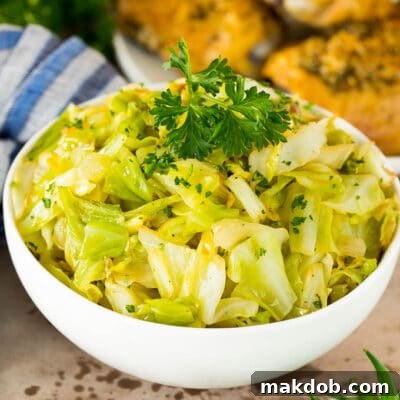
This sauteed cabbage is coarsely chopped green cabbage cooked with butter, onions, garlic and fresh herbs. An easy and inexpensive side dish that pairs well with chicken, steak and pork.
10 minutes
15 minutes
25 minutes
Side Dish
American
4
Ingredients
- 3 tablespoons butter
- 1/2 cup onion finely diced
- 6 cups green cabbage coarsely shredded or chopped
- 1 teaspoon garlic minced
- 1/2 teaspoon salt or more to taste
- 1/4 teaspoon pepper
- 1 tablespoon chopped parsley
Instructions
-
Melt the butter in a large pan over medium-high heat.
-
Add the onions to the pan and cook for 3-4 minutes or until they are translucent and softened.
-
Add the cabbage to the pan.
-
Cook, stirring occasionally for about 8-10 minutes, or until cabbage is wilted and starting to brown. You may need to add a bit of water to help the cabbage cook through if it’s browning too fast externally but still tough internally.
-
Add the garlic, salt and pepper to the pan. Cook for 1 minute, stirring constantly, until fragrant.
-
Sprinkle with fresh parsley and serve immediately.
Notes
- The cabbage in this dish should have browned edges for optimal flavor, but be careful not to burn it. If it’s browning quickly but not yet tender, add a small amount of water to the pan and cover briefly to steam it.
- Leftover cooked cabbage can be stored in an airtight container in the refrigerator for up to 3 days.
- For a quicker prep, use a bag of pre-shredded cabbage or coleslaw mix (without dressing) from the grocery store.
Nutrition Information (Approximate)
|
Carbohydrates: 8g
|
Protein: 2g
|
Fat: 9g
|
Saturated Fat: 5g
|
Trans Fat: 1g
|
Cholesterol: 23mg
|
Sodium: 386mg
|
Potassium: 215mg
|
Fiber: 3g
|
Sugar: 4g
|
Vitamin A: 366IU
|
Vitamin C: 40mg
|
Calcium: 51mg
|
Iron: 1mg
Did you make this recipe?
Tag @dinneratthezoo on Instagram and hashtag it #dinneratthezoo