
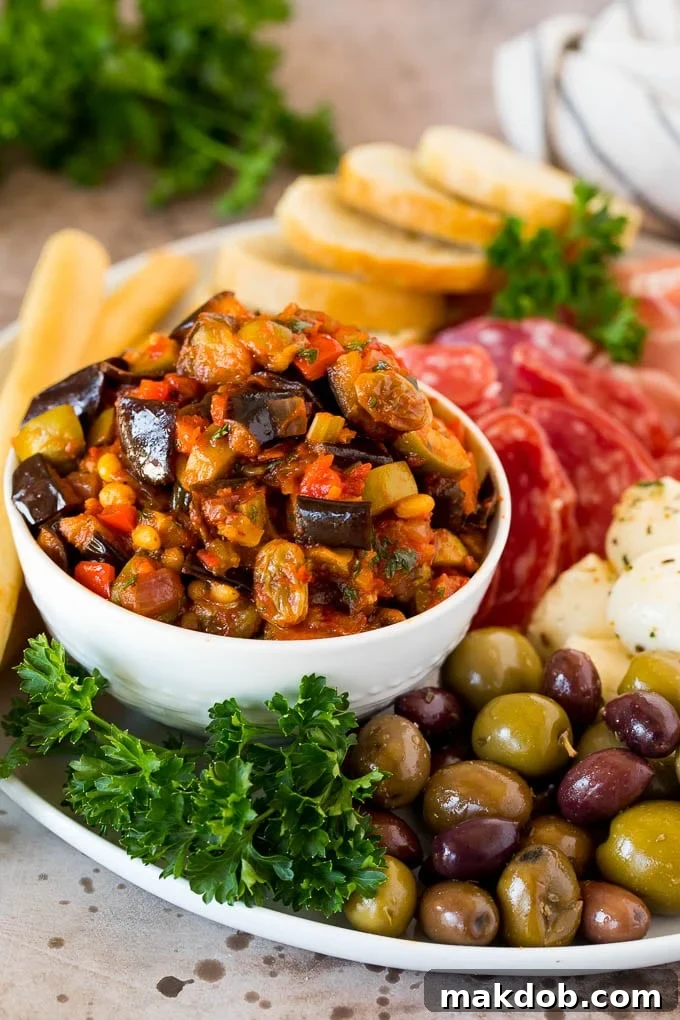
Embark on a culinary journey to the sun-drenched island of Sicily with this exquisite authentic caponata recipe. This traditional Italian delicacy is a harmonious symphony of sweet and savory notes, blending tender eggplant, vibrant bell peppers, ripe tomatoes, and briny olives into a rich, flavorful stew. Whether served as a delightful appetizer to kick off a feast, a versatile side dish to complement any meal, or even a light vegetarian main, this eggplant caponata promises an unforgettable taste experience. It’s a unique Mediterranean offering that’s surprisingly simple to prepare and consistently earns rave reviews from all who taste it.
When planning a gathering or simply craving a sophisticated yet comforting dish, our homemade caponata stands out. Its complex layers of flavor make it a perfect companion to other beloved appetizer recipes. Imagine pairing it with the diverse delights of a mezze platter, the delicate charm of mini quiches, or letting this vibrant and hearty eggplant caponata shine as the star. Its robust profile makes it ideal for entertaining, offering a taste of true Italian hospitality.
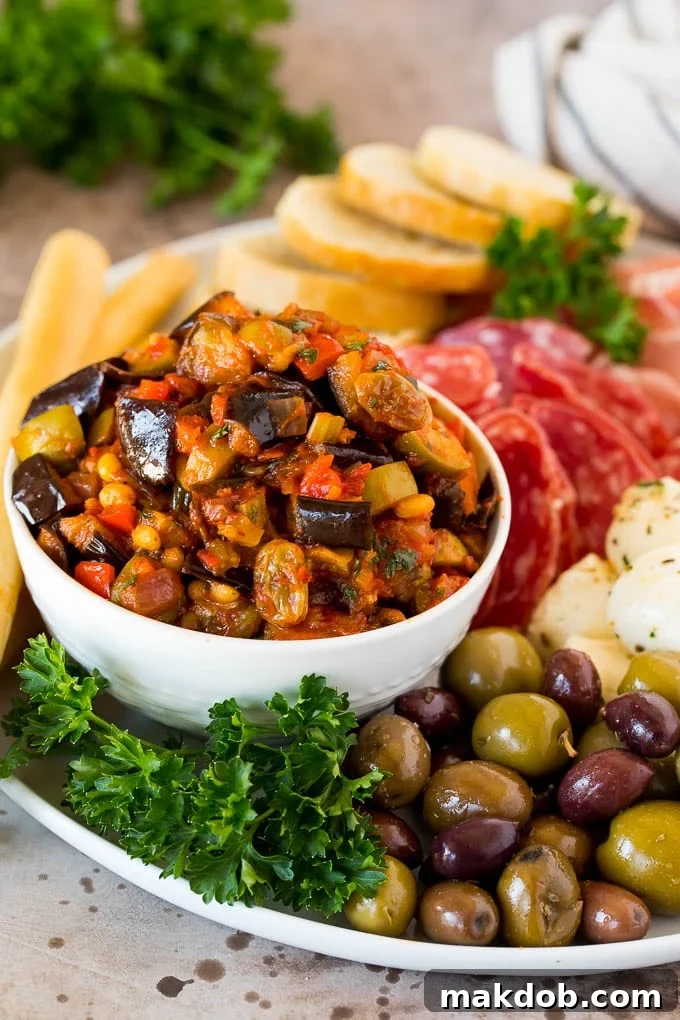
There’s something truly special about caponata. For many, catching sight of it on a restaurant menu is an immediate invitation to indulge. The rich, sweet-and-sour symphony of its ingredients creates a profound depth of flavor, especially when savored atop a crisp piece of toasted bread or a warm slice of focaccia. While this Italian classic may seem like a gourmet endeavor, the good news is that mastering homemade caponata is remarkably straightforward. Our recipe demystifies the process, allowing you to recreate this beloved Mediterranean relish in your own kitchen with surprising ease, bringing the authentic tastes of Italy directly to your table.
Table of Contents
- Caponata: Origins & Why You’ll Love It
- Essential Ingredients for Authentic Caponata
- Mastering Caponata: Step-by-Step Guide
- Pro Tips for the Perfect Sicilian Relish
- Frequently Asked Questions About Caponata
- Creative Ways to Serve Your Caponata
- Explore More Appetizer Recipes
- Enjoyed This Caponata Recipe?
- Caponata Recipe Card
Essential Ingredients for Authentic Caponata
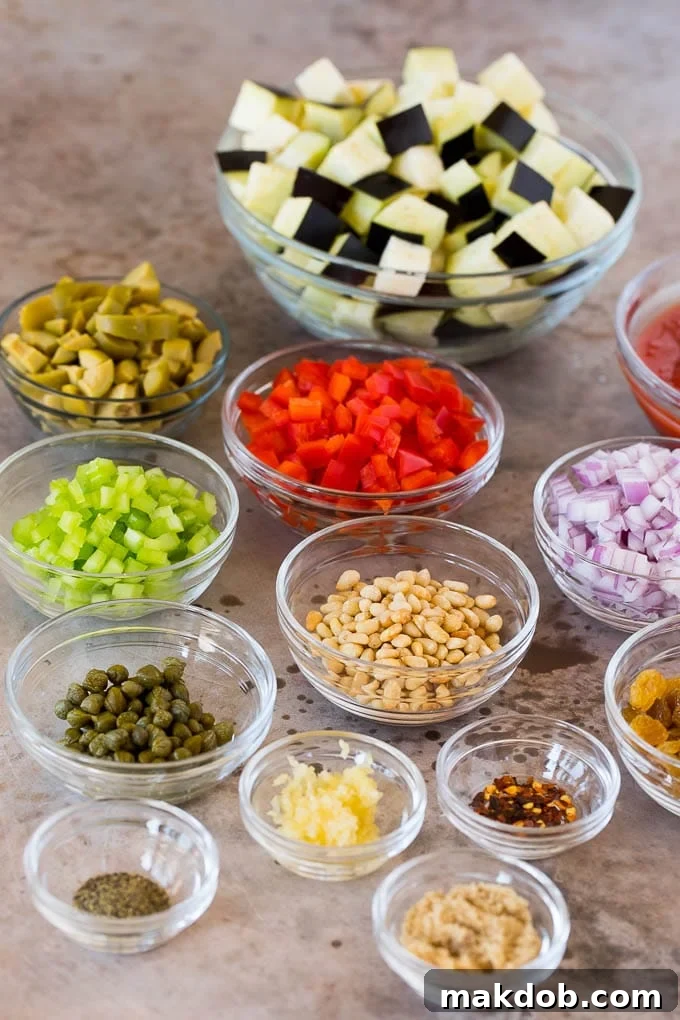
Crafting a truly authentic and deeply flavorful caponata begins with selecting the finest ingredients. Each component plays a vital role in achieving that signature sweet and sour balance and rich texture that defines this beloved Sicilian dish. Here’s a detailed look at what you’ll need:
- Eggplant (1 pound): The star of the show. Choose firm, shiny eggplants with no blemishes. Globe or Italian eggplants are ideal. Cutting them into 3/4-inch pieces ensures they cook evenly and absorb flavors beautifully.
- Olive Oil (6 tablespoons, divided): High-quality extra virgin olive oil is crucial. It’s used for roasting the eggplant and sautéing the aromatics, contributing significantly to the overall Mediterranean flavor profile.
- Salt and Black Pepper: Essential for seasoning at every stage, enhancing the natural flavors of the vegetables. Adjust to your personal preference.
- Red Onion (3/4 cup, diced): Provides a foundational sweetness and pungent depth that softens beautifully during cooking.
- Red Bell Pepper (1, diced): Adds a vibrant color, mild sweetness, and a fresh, crisp texture that becomes tender when simmered.
- Celery (1/2 cup, diced): A classic component of the soffritto, offering a subtle herbaceous note and a pleasant crunch that mellows in the stew.
- Garlic (1 teaspoon, minced): Infuses the dish with aromatic warmth. Freshly minced garlic yields the best results.
- Capers (2 tablespoons, drained): These small, briny flower buds are non-negotiable for caponata’s distinctive tangy, salty kick. Ensure they are well-drained.
- Green Olives (1/4 cup, chopped): Preferably Sicilian green olives or Castelvetrano olives, which offer a buttery, mild brininess that complements the other strong flavors. Pit them yourself or buy them pre-pitted and chop roughly.
- Canned Crushed Tomatoes (1 1/4 cups, undrained): Provides the necessary acidity and body for the sauce, creating a rich base that binds all the ingredients together. High-quality crushed tomatoes will make a noticeable difference.
- Golden Raisins (1/4 cup): A key sweet element that balances the acidity of the tomatoes and vinegar. Golden raisins are traditional and add a lovely hue, but dark raisins can also be used.
- Brown Sugar (2 teaspoons): Further enhances the sweetness, contributing to the agrodolce (sweet and sour) profile. It also helps to achieve that desirable jam-like consistency.
- Red Wine Vinegar (3 tablespoons): Provides the essential sourness for the agrodolce balance, brightening the entire dish. Don’t skimp on quality.
- Crushed Red Pepper Flakes (1/4 teaspoon or to taste): Adds a subtle warmth and gentle heat, which can be adjusted based on your preference for spice.
- Pine Nuts (1/4 cup, toasted): Offers a delicate nutty flavor and a pleasing textural contrast. Toasting them beforehand is vital to release their full aroma and flavor.
- Fresh Herbs (2 tablespoons, chopped): A final flourish that adds freshness and vibrancy. Traditional choices include fresh parsley, mint, or basil, or a delightful combination of these.
- Cooking Spray: For preparing the baking sheet, ensuring the eggplant doesn’t stick.
Mastering Caponata: A Step-by-Step Guide
Creating this delicious Sicilian caponata is a rewarding culinary experience, designed for both novice and experienced cooks. Follow these clear steps to achieve a perfectly balanced and flavorful dish:
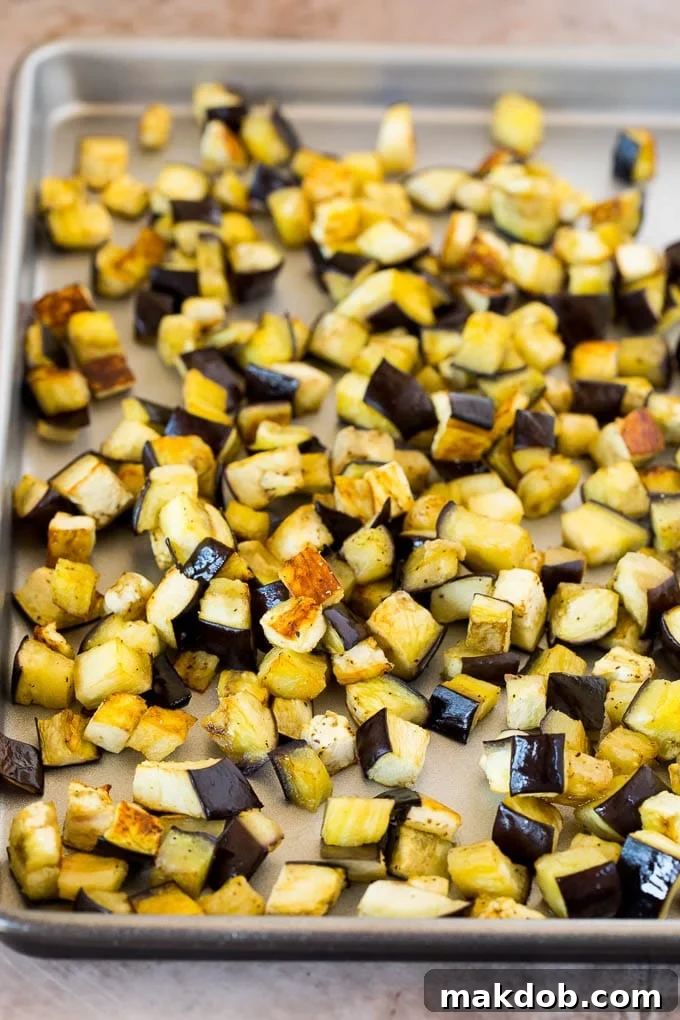
- Prepare and Roast the Eggplant: Begin by preheating your oven to 400°F (200°C). This high temperature is key to achieving beautifully caramelized eggplant without it becoming greasy. Cut your eggplant into uniform 3/4-inch cubes. Place them in a single layer on a sheet pan lightly coated with cooking spray. Drizzle generously with 3 tablespoons of olive oil, then season with salt and black pepper. Roast for approximately 25-30 minutes, or until the eggplant pieces are fork-tender and possess a golden-brown hue, indicating a rich depth of flavor has developed. Roasting is preferred over frying as it uses less oil and yields a lighter, more evenly cooked eggplant.
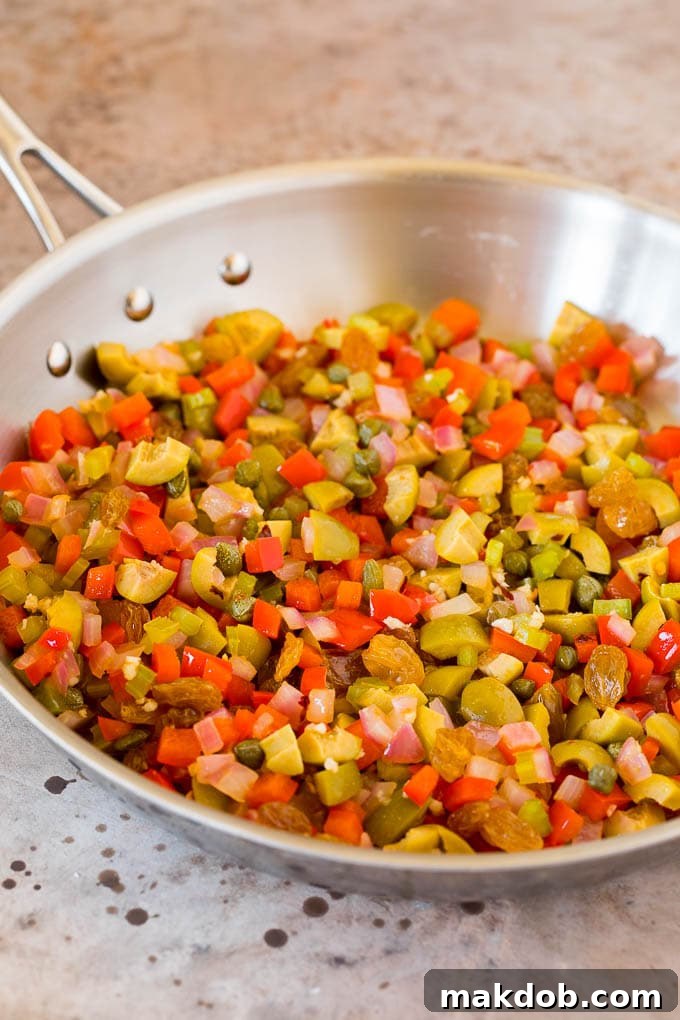
- Sauté the Aromatics: While the eggplant roasts, warm the remaining 2 tablespoons of olive oil in a large, heavy-bottomed pan or Dutch oven over medium heat. Add the diced red onions, celery, and red bell peppers. Sauté gently for 5-7 minutes, stirring occasionally, until the vegetables have softened and become tender, but not browned. This step creates the essential aromatic base for your caponata.
- Infuse with Garlic: Stir in the minced garlic and cook for an additional 30 seconds. Be careful not to burn the garlic, as this can impart a bitter taste to the dish. The goal is to release its fragrant aroma.
- Combine and Simmer: To the pan, add the chopped green olives, drained capers, crushed tomatoes (undrained), golden raisins, brown sugar, red wine vinegar, and crushed red pepper flakes. Stir all these ingredients together thoroughly to combine.
- Incorporate Eggplant and Thicken: Gently fold in the roasted eggplant, ensuring it’s fully coated by the simmering sauce. Bring the mixture to a gentle simmer, then reduce the heat to low. Allow the caponata to cook for 10-15 minutes, or until the sauce has thickened considerably and achieved a rich, almost jam-like consistency. This simmering period is crucial for all the flavors to meld and deepen into that characteristic sweet and sour profile.
- Finish and Season: Remove the pan from the heat. Stir in the toasted pine nuts and the freshly chopped herbs (parsley, mint, or basil work wonderfully). Taste the caponata and adjust the seasoning with additional salt, pepper, or even a touch more vinegar or sugar if needed, to perfectly balance the flavors.
- Serve and Enjoy: Caponata can be served warm, at room temperature, or even chilled. For optimal flavor development, many connoisseurs recommend refrigerating it for at least 24 hours before serving, allowing the ingredients to truly marry. Serve it with crusty Italian bread, crostini, or as a vibrant side. Caponata will stay fresh in an airtight container in the refrigerator for up to 5 days.
Pro Tips for the Perfect Sicilian Relish
Achieving caponata perfection is all about understanding a few key principles. These tips will help elevate your homemade caponata from good to absolutely extraordinary:
- The Magic of Making Ahead: One of caponata’s most celebrated qualities is that it tastes even better the next day, or even up to 3 days after preparation. The reason is simple food science: allowing the dish to rest in the refrigerator for at least 24 hours gives the diverse flavors—the sweetness of raisins, the tang of vinegar, the brininess of olives, and the savory depth of eggplant—ample time to thoroughly meld and harmonize. This process creates a more complex, unified, and deeply satisfying taste profile. Prepare it, chill it, and then enjoy the enhanced flavors!
- Embrace Herb Variations: While the recipe suggests classic choices like fresh parsley, mint, or basil, feel free to experiment with your favorite fresh herbs. A combination of parsley and mint offers a bright, refreshing lift, while basil adds a more traditional Italian aroma. For a slightly different twist, a touch of fresh oregano or thyme can introduce an earthy undertone. Remember to stir them in at the very end to preserve their vibrant color and delicate flavors.
- Mastering the Jam-Like Consistency: The ideal caponata has a rich, thick, almost jam-like consistency. It shouldn’t be watery or soupy. Don’t be afraid to let the mixture simmer on low heat until you reach this perfect level of thickness. The reduction of liquids concentrates the flavors and creates a wonderfully luxurious texture that clings beautifully to bread or pasta. Stir occasionally to prevent sticking, and observe as the liquid evaporates and the ingredients become tender and cohesive.
- Freezing for Future Enjoyment: Caponata is an excellent candidate for meal prepping and freezing. You can store it in an airtight container in the freezer for up to 2 months without significant loss of quality. To enjoy it later, simply thaw the dish overnight in the refrigerator. When ready to serve, reheat it gently over low heat on the stovetop. If any excess water has accumulated during thawing, continue to simmer until it evaporates, restoring that desired thick consistency. This makes it a fantastic make-ahead option for unexpected guests or busy weeknights.
- Choosing the Right Eggplant: While globe eggplant is common, consider Asian eggplants or Italian varieties for fewer seeds and a slightly milder flavor, which can lead to a less bitter caponata. Regardless of the type, choose firm, heavy eggplants with shiny, smooth skin.
- The Role of Quality Olive Oil: Using a good quality extra virgin olive oil not only enhances the flavor of the caponata but also contributes to its overall health benefits. The fruity, peppery notes of a fine olive oil will shine through in the final dish.
Quick Tip: Elegant Presentation
To elevate the visual appeal of your caponata, garnish it with a sprinkle of extra toasted pine nuts, a drizzle of high-quality extra virgin olive oil, and a few fresh sprigs of your chosen herbs just before serving. This adds a burst of color, aroma, and a professional touch that is sure to impress.
Frequently Asked Questions About Caponata
Caponata is a classic Sicilian sweet and sour vegetable relish, deeply rooted in Mediterranean culinary traditions. At its core, it’s an eggplant-based dish where the eggplant is typically fried or roasted until tender, then simmered with a vibrant medley of other vegetables like tomatoes, onions, celery, and bell peppers. What truly sets caponata apart is its distinctive agrodolce flavor profile—a delicate balance of sweetness, often from raisins or sugar, and tanginess, usually from red wine vinegar and capers. While historically it might have been served as a main course, today it’s most commonly enjoyed as a flavorful appetizer with crusty bread, a delicious side dish alongside grilled meats or fish, or even as a versatile spread.
While both caponata and the French ratatouille are vegetable-rich stews featuring eggplant, tomatoes, and often bell peppers and onions, they differ significantly in their flavor profiles, traditional serving temperatures, and key ingredients. Ratatouille is known for its savory, herbaceous taste and is almost always served hot, either as a side or a vegetarian main. Caponata, however, is distinguished by its unique sweet and sour (agrodolce) balance, achieved through the addition of ingredients like raisins, sugar, and red wine vinegar. Caponata also typically includes briny elements such as capers and olives, and often toasted pine nuts for texture. It is traditionally served at room temperature or chilled, making it more akin to a relish or a flavorful salad, offering a refreshing contrast to its warm French counterpart.
Absolutely! Caponata is a fantastic example of a healthy Mediterranean dish. It’s packed with nutrient-dense vegetables like eggplant, tomatoes, bell peppers, and celery, which are rich in vitamins, minerals, and antioxidants. The use of olive oil provides healthy monounsaturated fats. While it does contain a touch of sugar and raisins for its characteristic sweetness, these are balanced by the acidity of vinegar and the savory elements. Overall, caponata is a fiber-rich, flavorful option that supports a balanced diet, especially when prepared with mindful oil usage (like roasting the eggplant instead of deep-frying).
For caponata, the best eggplants are typically globe or Italian varieties. Look for firm, heavy eggplants with shiny, smooth skin and no soft spots. These types hold their shape well during cooking and absorb flavors beautifully. Smaller eggplants tend to have fewer seeds and a milder flavor, reducing any potential bitterness. While salting eggplant used to be common to draw out bitterness, many modern varieties are less bitter and may not require this step, especially if you’re roasting them.
While the sweet element (traditionally raisins, honey, or sugar) is a hallmark of authentic caponata, contributing to its signature agrodolce flavor, you can adjust it to your taste. If you prefer a less sweet profile, you can reduce the amount of raisins and brown sugar or omit them entirely. However, be aware that this will alter the traditional flavor balance, leaning more towards a savory and tangy relish. Some chefs might compensate by adding a touch more vinegar or balancing with extra savory ingredients.
FOLLOW ME
Creative Ways to Serve Your Caponata
Caponata is renowned for its versatility, offering a world of culinary possibilities beyond the traditional appetizer. Its rich, complex flavors make it a fantastic accompaniment or star ingredient in many dishes. Here are numerous delightful ways to enjoy your homemade caponata:
- The Quintessential Appetizer: The most classic way to enjoy caponata is as an appetizer or part of an antipasto platter. Serve it with thinly sliced, toasted baguette or ciabatta bread (crostini), artisan crackers, or warm focaccia. It’s also exquisite alongside a selection of cheeses, cured meats, and other Mediterranean dips.
- Elevated Pizza & Flatbread Topping: Transform a simple cheese pizza or a plain flatbread into a gourmet experience. After your pizza comes out of the oven, dollop generous spoonfuls of caponata over the top. The vibrant flavors will add a sophisticated twist to a weeknight favorite.
- A Hearty Pasta Sauce: Caponata makes an unexpectedly delicious and flavorful vegetarian pasta sauce. Toss it with your favorite pasta shape—penne, spaghetti, or rigatoni work beautifully. Serve it simply as-is for a light meal, or enhance it further with crumbled feta, a sprinkle of fresh Parmesan, or even some grilled chicken or shrimp on top.
- Gourmet Vegetarian Sandwich or Wrap: Create an extraordinary vegetarian sandwich by spreading a generous layer of caponata onto a crusty Italian roll, ciabatta, or a warm pita. Add slices of fresh mozzarella, provolone, or goat cheese, along with a handful of peppery greens like arugula or spinach. It’s a flavor explosion in every bite.
- Exceptional Main Dish Topping: Caponata is a magnificent spoon-over topping that can elevate any main course. Its bright, savory-sweet profile perfectly complements grilled proteins. Try spooning this exquisite eggplant relish over tender grilled chicken tenders, a perfectly cooked sirloin steak, or delicate grilled swordfish or salmon. It adds an incredible depth of flavor and moisture, transforming a simple meal into something truly special.
- Alongside Roasted Meats: Serve caponata as a vibrant, chunky side dish with roasted lamb, pork loin, or even a classic roast chicken. Its acidity and sweetness cut through the richness of the meat beautifully.
- Bruschetta with a Twist: Instead of traditional tomato bruschetta, try a caponata bruschetta for a unique and flavorful twist.
- In Salads: Incorporate chilled caponata into grain bowls or green salads for a burst of Mediterranean flavor and texture.
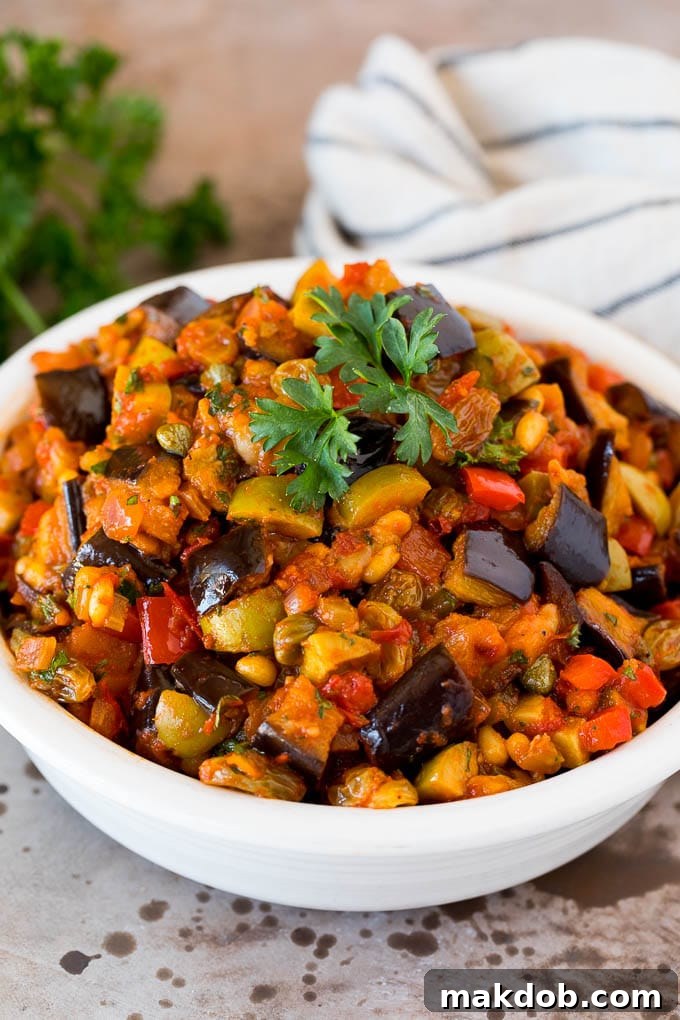
This dish is truly a flavor powerhouse, boasting a complex yet perfectly balanced profile that will have you reaching for seconds. Its incredible depth and versatility make it a regular staple in many kitchens, and once you taste it, you’ll understand why it’s just that good!
Explore More Appetizer Recipes
Easy Mini Pizzas
15 mins
The Best Veggie Tray
21 mins
Cheese Fries with Bacon
45 mins
Spinach Artichoke Dip
30 mins
Bacon Wrapped Smokies
50 mins
Enjoyed This Caponata Recipe?
We’d love to hear your thoughts! Please consider leaving a 5-star 🌟🌟🌟🌟🌟 rating in the recipe card below and share your experience in the comments section further down the page.
Caponata
Pin
Author: Sara Welch
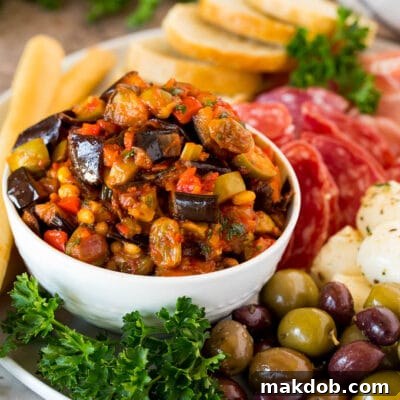
This authentic Caponata recipe delivers a perfect sweet and savory blend of eggplant, peppers, tomatoes, and olives, slow-simmered to create a rich and versatile Italian appetizer or side dish. It’s surprisingly easy to make and guaranteed to impress!
Time:
Course: Appetizer
Cuisine: Italian
Serves: 6
Ingredients
- 1 pound eggplant, cut into 3/4 inch pieces
- 6 tablespoons olive oil, divided use
- Salt and pepper, to taste
- 3/4 cup red onion, diced
- 1 red bell pepper, diced
- 1/2 cup celery, diced
- 1 teaspoon garlic, minced
- 1/4 cup green olives, chopped
- 2 tablespoons capers, drained
- 1 1/4 cups canned crushed tomatoes (do not drain)
- 1/4 cup golden raisins
- 2 teaspoons brown sugar
- 3 tablespoons red wine vinegar
- 1/4 teaspoon crushed red pepper flakes, or more to taste
- 1/4 cup pine nuts, toasted
- 2 tablespoons chopped fresh herbs (such as parsley, mint, or basil)
- Cooking spray
Instructions
- Preheat the oven to 400°F (200°C). Coat a sheet pan with cooking spray.
- Place the eggplant on the sheet pan in a single layer. Drizzle with 3 tablespoons of the olive oil and season with salt and pepper to taste.
- Bake for 25-30 minutes, or until eggplant is tender and browned.
- While the eggplant is in the oven, warm the remaining 2 tablespoons of olive oil in a large pan over medium heat.
- Add the red onion, red bell pepper, and celery to the pan. Cook for 5-7 minutes, or until vegetables are tender.
- Add the garlic and cook for 30 seconds, or until fragrant.
- Add the olives, capers, raisins, brown sugar, red wine vinegar, red pepper flakes, and tomatoes. Stir to combine.
- Add the cooked eggplant to the pan. Stir gently and bring the mixture to a simmer.
- Cook for 10-15 minutes, or until the mixture has thickened and achieved a jam-like consistency. Stir in the toasted pine nuts and chopped fresh herbs. Season with additional salt and pepper to taste.
- Serve warm, at room temperature, or chilled. Caponata will stay fresh in an airtight container in the refrigerator for up to 5 days. For best flavor, allow it to rest for at least 24 hours before serving.
Notes
- This dish benefits greatly from being prepared in advance. Making it up to 3 days beforehand allows the flavors to deepen and meld beautifully, making it even more delicious.
- Feel free to customize the fresh herbs used. While parsley, mint, and basil are classic, a blend of these or even a touch of fresh oregano can add wonderful aromatics to your caponata.
- The desired consistency for caponata is thick and rich, almost like a chunky jam. Don’t rush the simmering process; allow it to cook down until it reaches this perfect texture, ensuring a concentrated and robust flavor.
- Caponata freezes well for up to 2 months. Thaw overnight in the refrigerator and reheat gently on the stovetop, allowing any excess moisture to evaporate to restore its ideal consistency.
Nutrition
Carbohydrates: 14g |
Protein: 2g |
Fat: 19g |
Saturated Fat: 2g |
Sodium: 173mg |
Potassium: 303mg |
Fiber: 3g |
Sugar: 9g |
Vitamin A: 77IU |
Vitamin C: 4mg |
Calcium: 21mg |
Iron: 1mg
Did you make this recipe?
Tag @dinneratthezoo on Instagram and hashtag it #dinneratthezoo
Tweet
Pin