
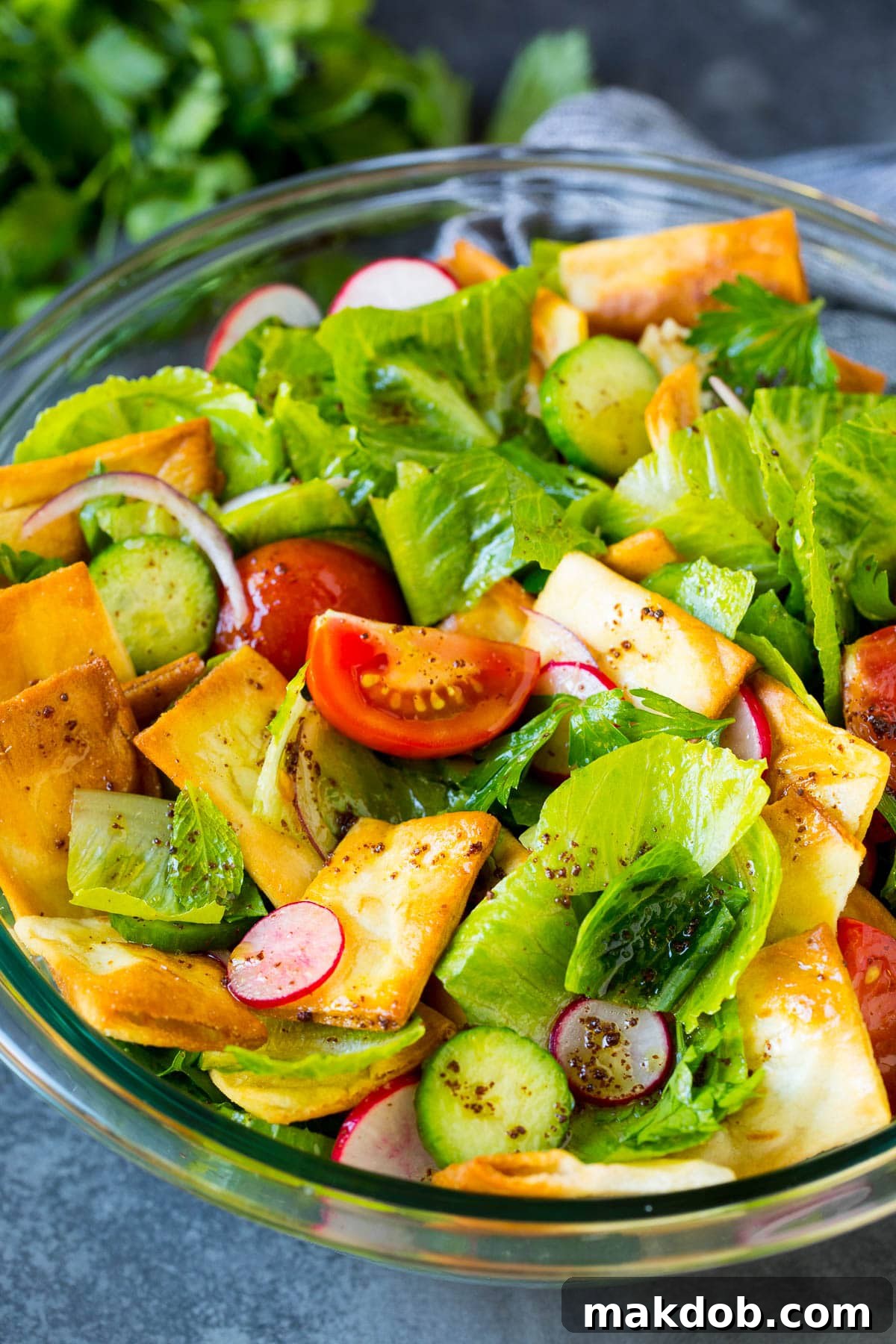
Welcome to the world of Fattoush, a vibrant and refreshing Middle Eastern salad that promises a burst of fresh flavors and a satisfying crunch with every bite. This iconic dish, hailing from the heart of the Levant region, particularly Lebanon, is much more than just a salad; it’s a celebration of seasonal vegetables, aromatic herbs, and a distinctive lemony sumac dressing, all crowned with crispy pieces of toasted or fried pita bread. Forget your average side salad; Fattoush is an experience, offering a delightful balance of textures and tastes that make it an instant favorite.
Whether you’re looking for the perfect accompaniment to a hearty meal, such as succulent grilled chicken, flaky baked fish, or robust beef dishes, or simply craving a light and wholesome lunch, Fattoush fits the bill. Its invigorating qualities make it particularly popular during warmer months, though its vibrant ingredients can brighten any table, any time of year. Unlike many salads that rely on traditional croutons, Fattoush uses toasted pita chips, which absorb the dressing beautifully while retaining a delightful crispness, adding a unique character that sets it apart.
My culinary journey often leads me to explore diverse green salads that complement various meals. While classics like a peppery arugula salad or a sweet and savory apple kale salad have their special place, it’s the distinctive charm of Fattoush that consistently captures my heart. The interplay of crisp vegetables, fragrant herbs, and that unforgettable lemon-sumac dressing truly elevates it to a dish I eagerly anticipate and frequently recreate.
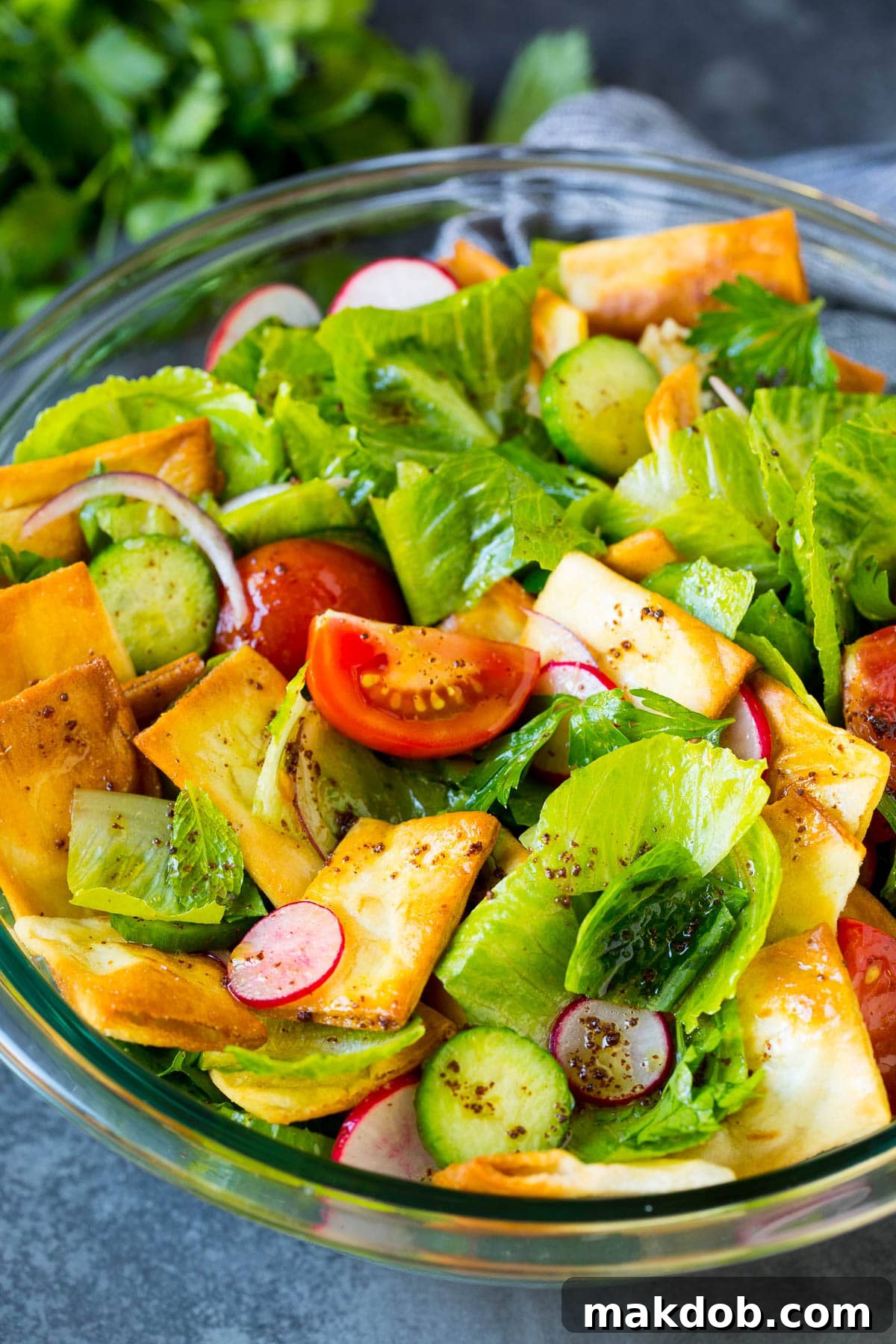
For many, including myself, a visit to a Middle Eastern restaurant is incomplete without ordering a generous portion of Fattoush. There’s something undeniably captivating about its simplicity and the complex layers of flavor it delivers. The ingenious use of pita chips, which offer a more substantial and flavorful crunch than standard croutons, coupled with the bright, tangy kick of the lemon-sumac dressing, transforms a simple blend of greens and vegetables into an extraordinary culinary delight. It’s this unique combination that makes Fattoush not just a dish, but a culinary statement.
Unveiling the Essential Fattoush Ingredients
At its core, Fattoush is a celebration of fresh, high-quality ingredients. The beauty of this salad lies in its ability to bring together humble garden vegetables and transform them into a symphony of flavors and textures. Each component plays a vital role, contributing to the overall harmony of the dish. Here’s a closer look at what goes into creating this magnificent salad:
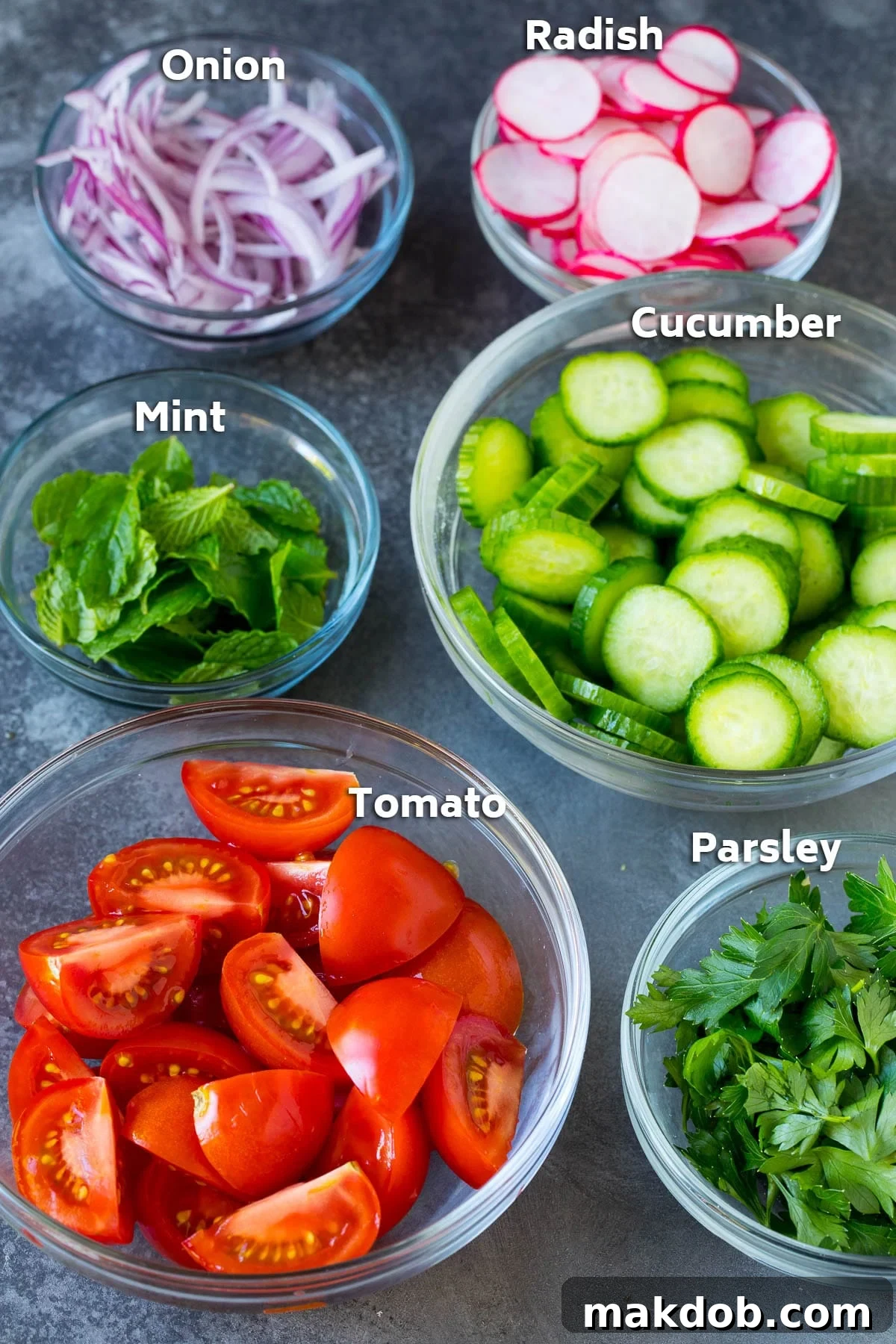
The Salad Base: Freshness and Crunch
- Romaine Lettuce: The foundation of the salad, romaine provides a crisp texture and a mild, slightly bitter taste that holds up well to the dressing. Coarsely chopped ensures good bite-sized pieces.
- Cucumbers: Essential for a refreshing element, cucumbers add a cool, hydrating crunch. Persian cucumbers are often preferred for their thinner skin and fewer seeds, offering a sweeter and less watery profile.
- Tomatoes: Juicy, ripe tomatoes contribute natural sweetness and a vibrant acidity. Dicing them into one-inch pieces allows their flavor to meld beautifully with the other ingredients.
- Radishes: Thinly sliced radishes introduce a peppery bite and a striking visual appeal, adding another layer of crisp texture.
- Red Onion: A small amount of thinly sliced red onion provides a sharp, pungent flavor that is mellowed by the dressing, adding depth without overpowering.
Aromatic Herbs: The Soul of Fattoush
- Fresh Parsley: A generous amount of fresh parsley brings a clean, earthy, and slightly peppery flavor. It’s a foundational herb in Middle Eastern cuisine.
- Fresh Mint Leaves: Mint is crucial for that characteristic invigorating freshness in Fattoush. Its cool, sweet, and aromatic notes elevate the salad to new heights.
The Signature Crunch: Pita Chips
- Pita Chips: Instead of traditional croutons, toasted or fried pita bread pieces are what give Fattoush its unique identity. They absorb the dressing wonderfully, offering a satisfying crunch that contrasts with the fresh vegetables.
The Zesty Dressing: A Symphony of Flavors
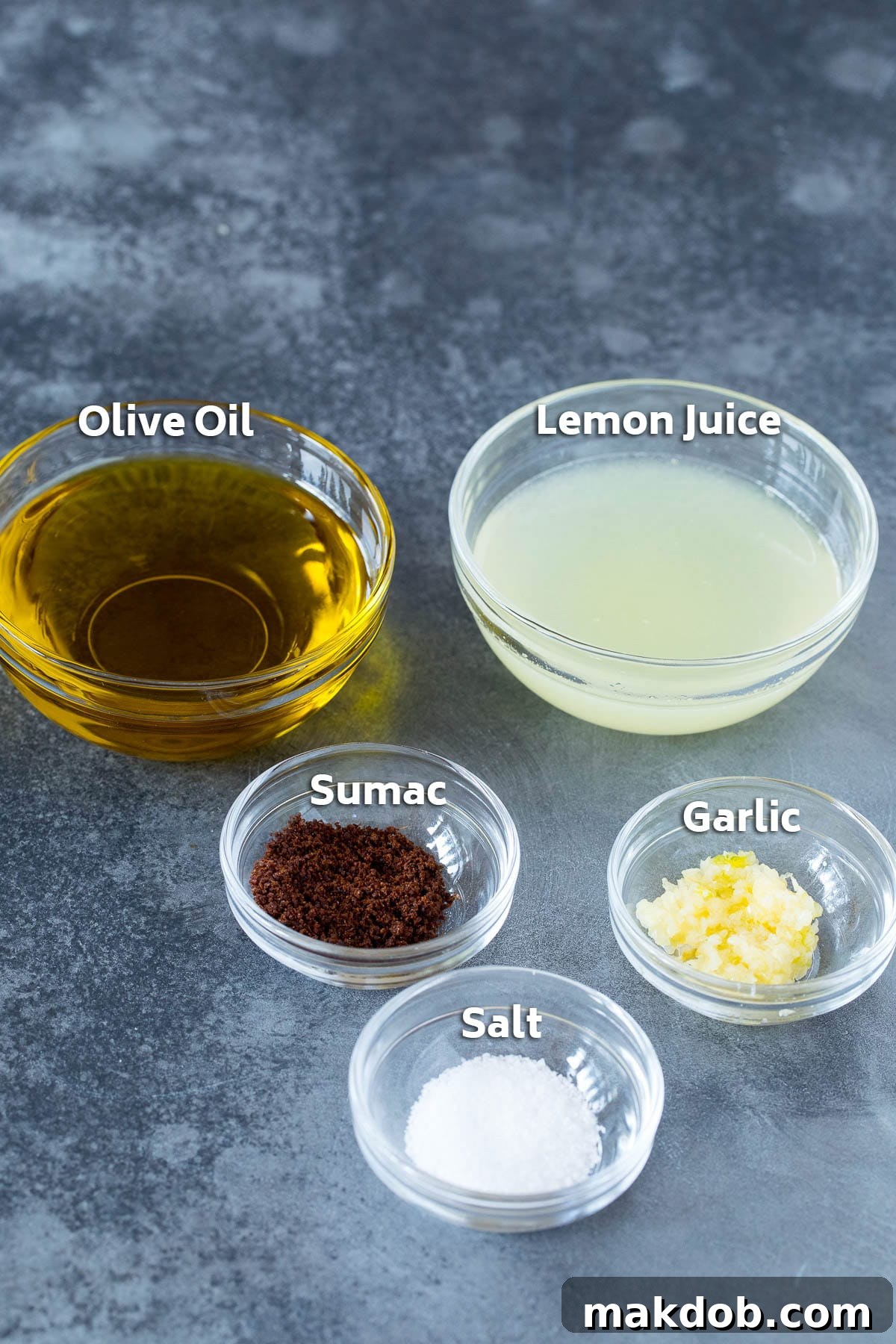
The dressing is arguably the star of the show, tying all the ingredients together with its bright, tangy, and savory profile. It’s simple yet incredibly flavorful, requiring just a few key components:
- Olive Oil: A good quality extra virgin olive oil forms the rich base of the dressing, providing a smooth texture and fruity notes.
- Fresh Lemon Juice: The fresh squeeze of lemon juice is vital for acidity and brightness, cutting through the richness of the olive oil and enhancing all the vegetable flavors.
- Minced Garlic: Fresh garlic adds a pungent, aromatic kick that is indispensable in Middle Eastern cooking.
- Sumac: This maroon-colored spice, derived from the dried and ground berries of the sumac bush, is what gives Fattoush its distinctive tangy, slightly fruity, and tart flavor. It’s not just a seasoning; it’s a defining characteristic of the dressing, easily found in the spice aisle of most major grocery stores or ethnic markets.
- Salt: To season and balance all the flavors, enhancing the natural taste of each ingredient.
Crafting Your Homemade Fattoush Salad
Creating this refreshing Fattoush salad is remarkably straightforward, requiring minimal cooking and mostly simple assembly. The beauty lies in the freshness of the ingredients and the vibrant dressing that brings everything to life. Follow these steps to prepare your own authentic Fattoush:
Step-by-Step Preparation:
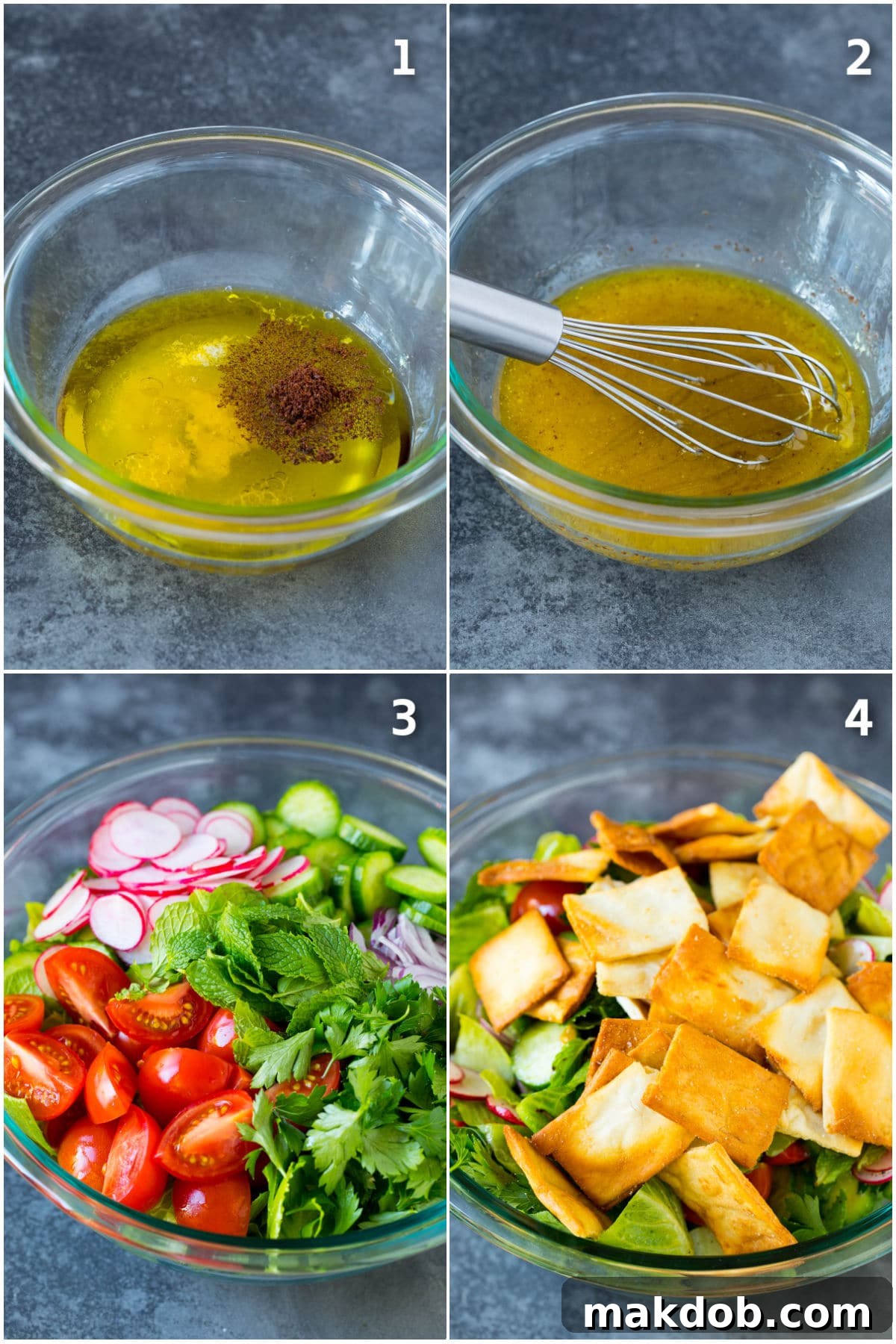
- Prepare the Salad Base: Begin by combining all your fresh salad ingredients in a large mixing bowl. This includes the coarsely chopped romaine lettuce, diced tomatoes, thinly sliced Persian cucumbers, thinly sliced radishes, and finely sliced red onion.
- Add the Herbs: Gently toss in the fresh parsley leaves and mint leaves. For maximum visual appeal and an intense burst of flavor, I recommend keeping the herb leaves whole.
- Whisk the Dressing: In a separate small bowl, whisk together the dressing ingredients until well combined. This includes the olive oil, fresh lemon juice, minced garlic, sumac, and salt. Ensure the garlic is finely minced to evenly distribute its flavor.
- Dress the Salad: Pour the freshly prepared dressing over the mixed salad ingredients.
- Toss to Coat: Gently toss the salad, ensuring that all the vegetables and herbs are evenly coated with the zesty dressing. This step is crucial for allowing the flavors to meld.
- Incorporate the Pita Chips: Just before serving, add the pita chips to the salad.
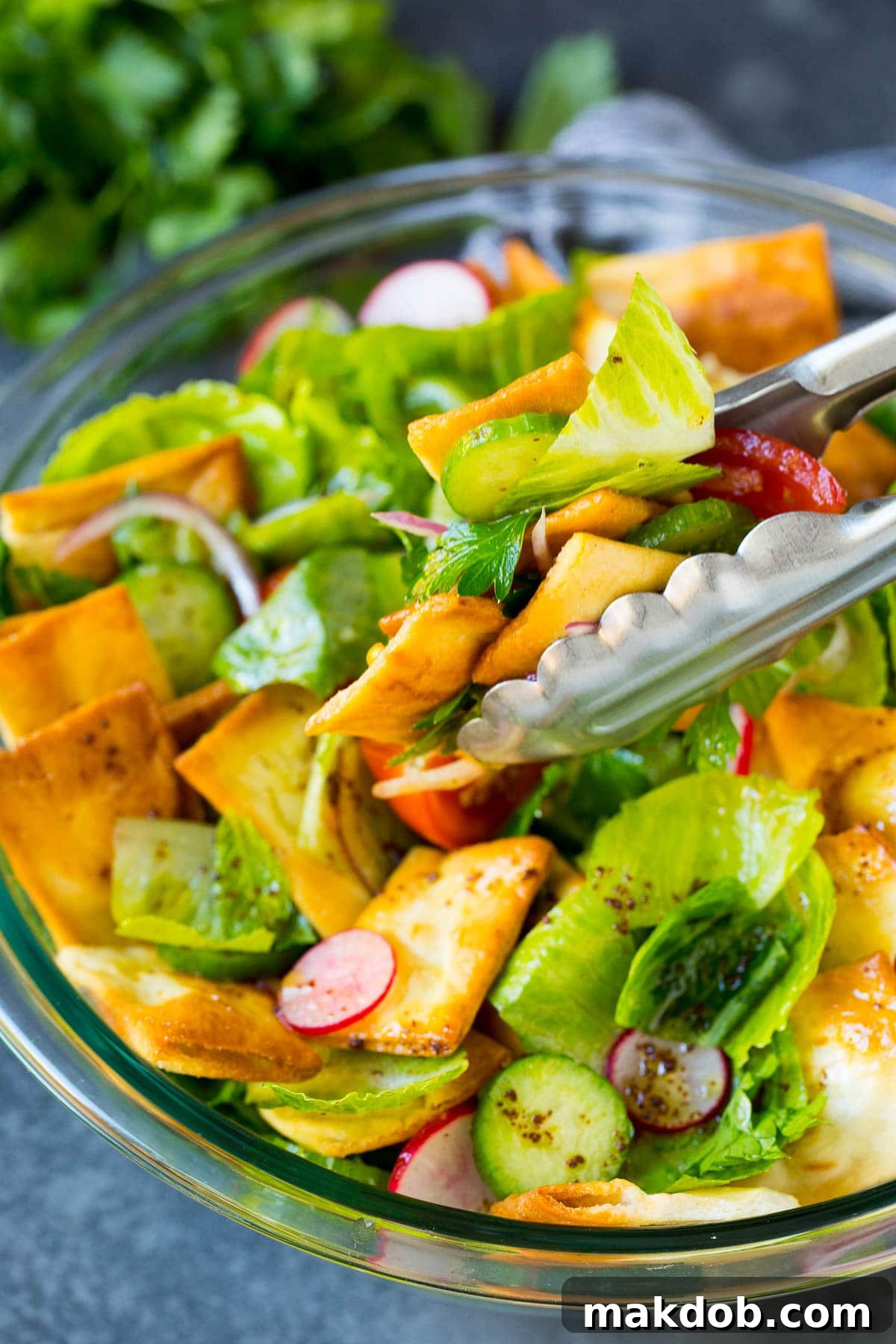
- Final Toss and Serve: Give the salad one last gentle toss to incorporate the pita chips without making them soggy. Serve your Fattoush immediately to enjoy its optimal freshness and crunch.
Expert Tips for the Ultimate Fattoush Salad
While Fattoush is simple to make, a few key techniques and considerations can elevate your salad from good to truly exceptional. These tips focus on maximizing flavor, texture, and presentation, ensuring a delightful experience every time:
- Precision Slicing for Texture: For uniform, paper-thin slices of radishes, red onion, and cucumbers, a mandoline slicer is an invaluable tool. Consistent thinness not only improves the salad’s appearance but also ensures that each component integrates perfectly with the dressing, offering a harmonious bite. If you don’t have a mandoline, a very sharp knife and a steady hand will also work, just aim for the thinnest possible slices.
- Cucumber Choice Matters: While larger English cucumbers can be used (quartered and sliced), I highly recommend seeking out small Persian-style cucumbers. They are celebrated for their firm texture, minimal seeds, and sweeter flavor, which contribute significantly to the refreshing quality of the Fattoush. They also tend to be less watery, helping to prevent the salad from becoming soggy too quickly.
- Embrace Whole Herbs: The debate between minced and whole herbs often comes down to personal preference. For Fattoush, I often choose to leave my parsley and mint leaves whole. This allows their fresh, aromatic flavors to burst more intensely with each mouthful and adds a beautiful, rustic visual appeal to the salad. However, if you prefer a more subtle herbaceous note or a finer texture, mincing them and adding them directly to the dressing is also a perfectly acceptable and delicious option.
- Homemade Pita Chips for Extra Flair: While store-bought pita chips offer undeniable convenience, making your own can add an extra layer of freshness and flavor. To create homemade pita chips, preheat your oven to 400 degrees F (200 degrees C) and lightly coat a baking sheet with cooking spray or olive oil. Cut 4 pita rounds into 8 wedges each, arranging them in a single layer on the prepared pan. Brush the pita wedges with approximately 1/3 cup of olive oil and sprinkle them generously with seasonings of your choice. Zatar, a Middle Eastern spice blend, is a fantastic option, or simply use salt, pepper, and a touch of garlic powder. Bake for 10-12 minutes, or until the chips are golden brown and wonderfully crispy. Keep a close eye on them, as they can burn quickly.
- Dressing Application Timing: For the freshest taste and crispest texture, always dress the Fattoush just before serving. The acidity in the lemon juice will begin to soften the vegetables and pita chips over time. If preparing ahead, keep the dressing separate and toss it with the salad and pita chips right before you plan to eat.
- Serving Temperature: Fattoush is best served chilled or at room temperature. Allowing the dressed salad to sit for just 5-10 minutes before serving can help the flavors to meld beautifully, but avoid prolonged waiting.
Frequently Asked Questions About Fattoush
Delve deeper into the background and characteristics of this beloved Middle Eastern salad with these common questions:
What is Fattoush?
Fattoush is a popular Middle Eastern bread salad, originating from Lebanon. It is characterized by its delightful blend of mixed greens and a variety of fresh vegetables such as lettuce, tomatoes, cucumbers, radishes, and onions, often combined with fresh herbs like parsley and mint. The distinguishing feature of Fattoush is the inclusion of toasted or fried pieces of flatbread, typically pita, which provide a unique crunch. All these ingredients are tossed in a vibrant dressing made primarily with olive oil and lemon juice, seasoned with the distinct tartness of sumac.
Why is it called Fattoush?
The name “Fattoush” is derived from the Arabic word “fatta,” which refers to various dishes that incorporate toasted or stale bread as a key ingredient. This term highlights the essential role of the crispy pita bread in the salad, distinguishing it from other types of salads and emphasizing its traditional roots in utilizing leftover flatbread.
What is Fattoush dressing made of?
The signature dressing for Fattoush is a simple yet incredibly flavorful concoction. It typically consists of extra virgin olive oil, fresh lemon juice for acidity, minced garlic for aromatic depth, and the pivotal spice, sumac. Salt is added to taste to balance these flavors. Sumac is a vibrant, reddish-purple spice made from the dried and ground berries of the sumac bush. It imparts a unique tangy, slightly fruity, and tart flavor profile that is indispensable to authentic Fattoush and is a staple in Middle Eastern cuisine. You can usually find sumac in the spice aisle of well-stocked supermarkets or at local ethnic markets.
Delicious Fattoush Salad Variations to Explore
While Fattoush is exquisite in its traditional form, its versatile nature makes it an excellent candidate for customization. You can easily adapt this refreshing salad by adding various ingredients, transforming it from a light side dish into a more substantial main course or simply adding new dimensions of flavor and nutrition. Here are some fantastic variations to consider:
- Add Protein for a Complete Meal: To make Fattoush a hearty main course, incorporate your favorite cooked protein.
- Grilled Chicken: Cubes of perfectly grilled chicken breast or thigh add lean protein and a smoky flavor that pairs beautifully with the tangy dressing.
- Shrimp: Sautéed or grilled shrimp offers a delicate seafood option, complementing the fresh flavors of the salad.
- Steak: Thinly sliced grilled or pan-seared steak can turn Fattoush into a truly luxurious meal.
- Lamb: Shredded slow-cooked lamb or seasoned ground lamb can also add a rich, traditional Middle Eastern touch.
- Boost with Beans: For added fiber, protein, and a satisfying texture, consider incorporating legumes.
- Chickpeas (Garbanzo Beans): Canned chickpeas, rinsed and drained, are a popular addition, offering a creamy texture and nutty flavor that complements the vegetables.
- White Beans: Cannellini or great northern beans can also work wonderfully, adding a mild flavor and hearty substance.
- Introduce Creamy Cheeses: A touch of cheese can add a delightful creaminess and savory depth.
- Crumbled Feta Cheese: Its salty, tangy profile is a classic pairing with Mediterranean flavors and adds a pleasant brininess to the salad.
- Halloumi: Slices of grilled or pan-fried halloumi cheese offer a chewy texture and a salty, rich flavor that holds its shape well.
- Experiment with More Vegetables: The beauty of Fattoush is its adaptability to various garden offerings. Feel free to add other crisp and colorful vegetables to the mix:
- Bell Peppers: Sliced green, red, or yellow bell peppers add sweetness, crunch, and a vibrant color.
- Mushrooms: Thinly sliced fresh mushrooms can contribute an earthy umami note.
- Artichoke Hearts: Quartered marinated artichoke hearts add a tangy, tender element.
- Olives: Pitted Kalamata or green olives offer a salty, briny burst of flavor.
- Scallions (Green Onions): Sliced scallions can offer a milder onion flavor if red onion is too strong.
Once you experience the captivating medley of fresh ingredients, invigorating dressing, and satisfying crunch of Fattoush, it’s highly likely to earn a permanent spot in your recipe rotation. Its bold, harmonious flavors provide a perfect counterpoint to a wide array of main dishes, making it an incredibly versatile and cherished salad.
More Refreshing Salad Recipes You’ll Enjoy
If you’ve fallen in love with the fresh, vibrant flavors of Fattoush, you’ll surely appreciate these other delightful salad recipes, each bringing its own unique charm to the table:
- Green Bean Salad: A fantastic way to enjoy tender-crisp green beans, often tossed with a light vinaigrette and other fresh ingredients.
- Caprese Salad: A classic Italian salad featuring the simple yet perfect combination of fresh mozzarella, ripe tomatoes, basil, and a drizzle of balsamic glaze.
- Italian Pasta Salad: A hearty and flavorful salad with pasta, an assortment of vegetables, cheeses, and a tangy Italian dressing, perfect for potlucks.
- Tomato Avocado Salad: A simple, creamy, and refreshing salad that highlights the sweetness of tomatoes and the rich texture of avocado.
- Broccoli Slaw: A crunchy and nutrient-packed alternative to traditional cabbage slaw, often dressed in a creamy or zesty dressing.
Fattoush Salad
This Fattoush salad is a perfect blend of crisp lettuce, refreshing cucumbers, juicy tomatoes, aromatic herbs, and crunchy pita chips, all brought together with a zesty lemon-sumac dressing. It’s a light, refreshing, and incredibly flavorful side dish that pairs wonderfully with grilled chicken, fish, or beef.
Author: Sara Welch
Preparation Details
- Prep Time: 20 minutes
- Cook Time: 1 minute
- Total Time: 21 minutes
- Course: Salad
- Cuisine: Mediterranean
- Serves: 6
Ingredients
For the Salad
- 4 cups romaine lettuce, coarsely chopped
- 2 cups tomatoes, cut into 1-inch pieces
- 2 cups Persian cucumbers, thinly sliced
- 1/2 cup radishes, thinly sliced
- 1/4 cup red onion, thinly sliced
- 1 cup parsley leaves
- 1/2 cup mint leaves
- 1 1/2 cups pita chips
For the Dressing
- 1/2 cup olive oil
- 1/4 cup lemon juice
- 1/2 teaspoon garlic, minced
- 1 teaspoon sumac
- 3/4 teaspoon salt
Instructions
- Place the lettuce, tomatoes, cucumbers, radishes, red onion, parsley leaves, and mint leaves in a large bowl.
- In a small bowl, whisk together the dressing ingredients until fully combined.
- Pour the dressing over the salad and toss gently to coat all the ingredients. Add the pita chips and toss one more time just before serving. Serve immediately for best crispness.
Notes
- For uniformly thin slices, consider using a mandoline for the radishes, red onion, and cucumbers.
- Persian cucumbers are recommended for their ideal texture and flavor in this recipe.
- Keeping parsley and mint leaves whole enhances the salad’s fresh flavor and aesthetic, but mincing them into the dressing is also a great option.
Nutrition Information (per serving)
- Calories: 244 kcal
- Carbohydrates: 16g
- Protein: 3g
- Fat: 20g
- Saturated Fat: 3g
- Sodium: 390mg
- Potassium: 378mg
- Fiber: 3g
- Sugar: 5g
- Vitamin A: 4181 IU
- Vitamin C: 29mg
- Calcium: 46mg
- Iron: 2mg
Did you make this recipe?
Share your creation! Tag @dinneratthezoo on Instagram and hashtag it #dinneratthezoo