
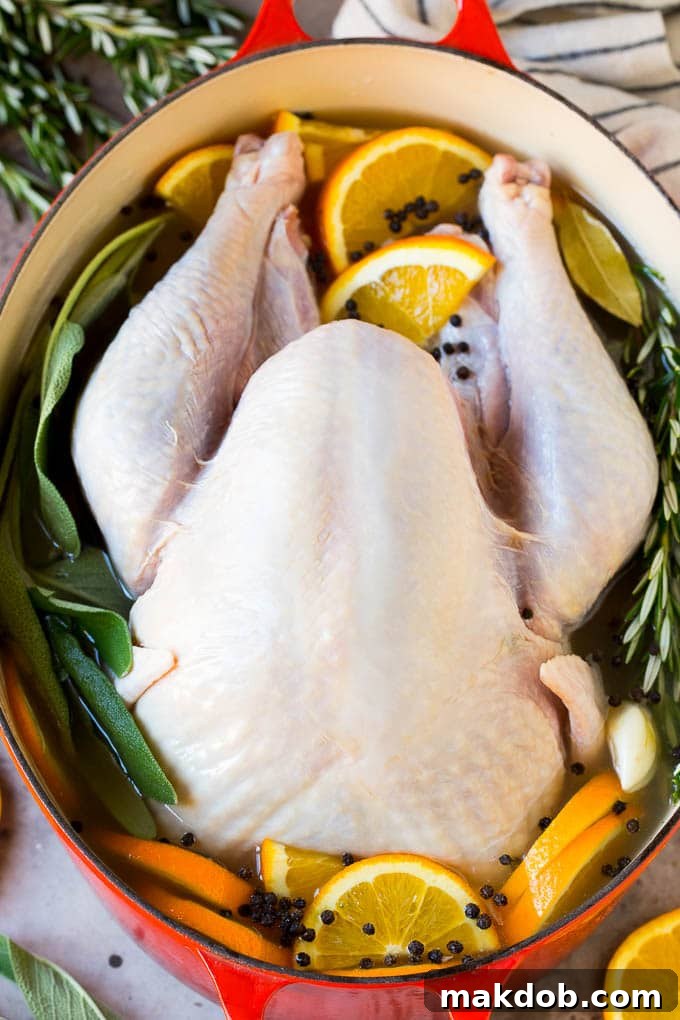
Welcome to the ultimate guide on how to brine a turkey, your essential companion for achieving the most tender, succulent, and exquisitely flavorful bird every single time. Elevate your holiday table and prepare for an abundance of rave reviews, as brining truly stands as the superior method to ensure a truly unforgettable feast!
Whether you’re a seasoned chef or a first-time holiday host, preparing a grand meal doesn’t have to be daunting. My comprehensive guides, including how to cook a turkey and how to cook a ham, are designed to empower even novice cooks to create elegant and delicious dishes. This guide focuses specifically on the transformative power of brining, a technique that promises unparalleled moisture and taste for your centerpiece.
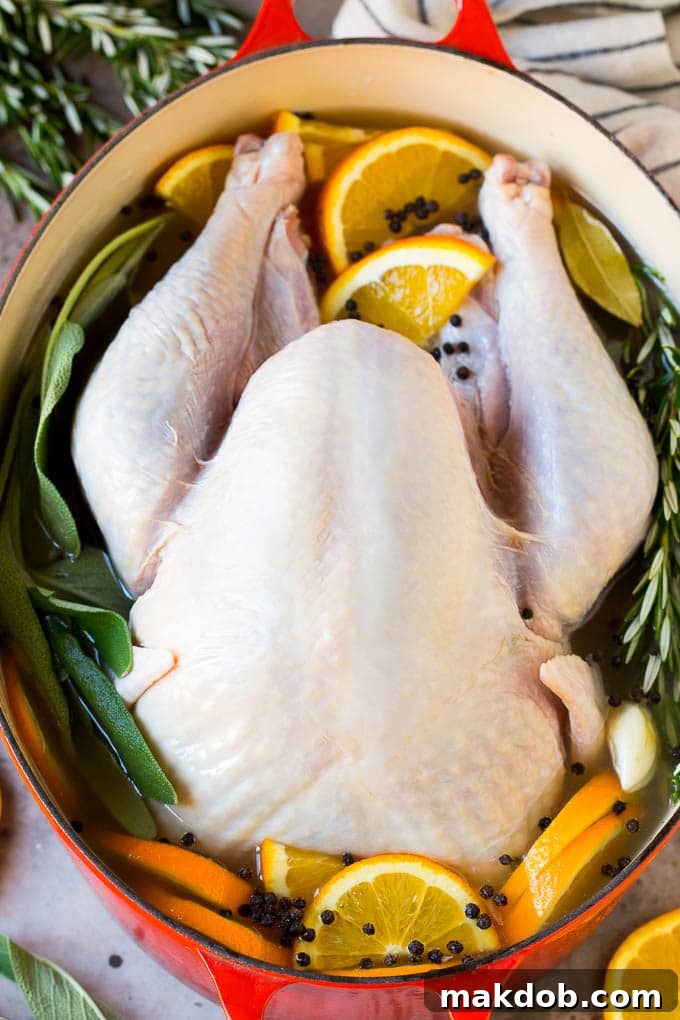
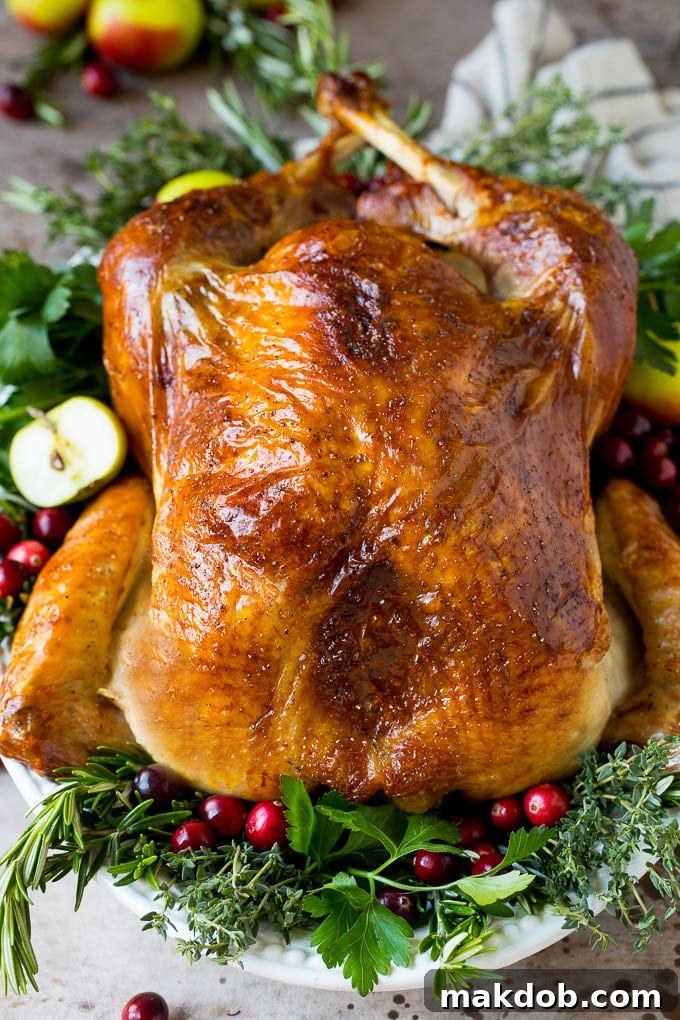
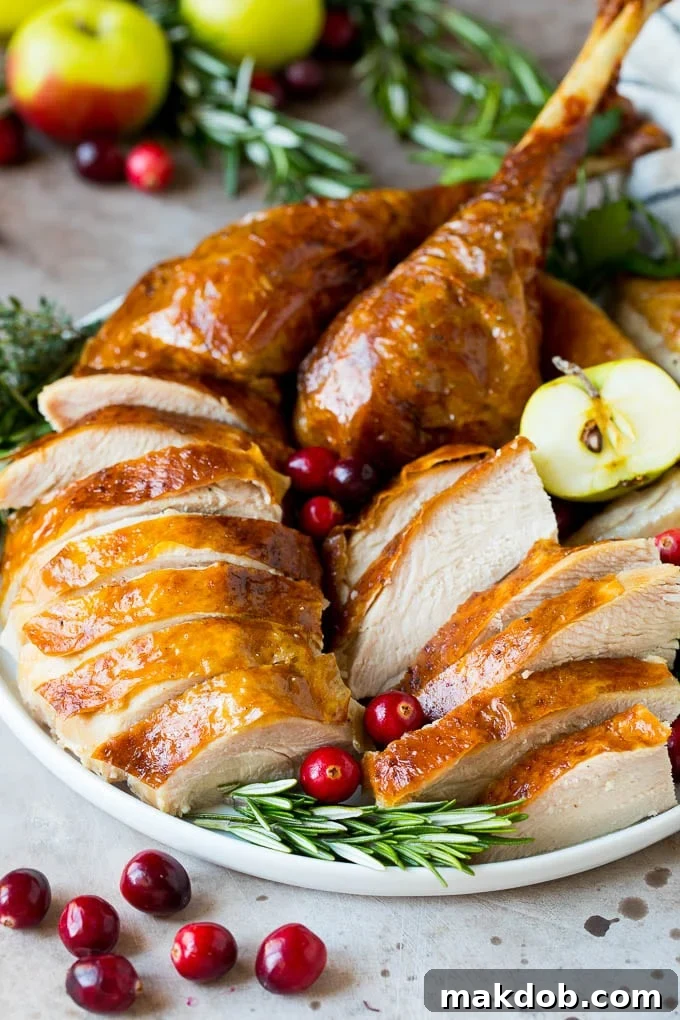
Mastering the art of how to brine a turkey is, in my opinion, absolutely critical for Thanksgiving success and any other occasion where a turkey takes center stage. The benefits of brining are manifold, and my carefully crafted turkey brine recipe is designed to infuse your bird with an incredible depth of flavor and maintain exceptional moisture. This versatile technique isn’t limited to a whole turkey; it can also be effectively applied to smaller cuts like turkey breast or even a whole chicken, promising the same delightful results.
A perfectly brined turkey deserves equally spectacular accompaniments. Enjoy your beautifully prepared bird with some of my all-time favorite Thanksgiving side dishes, such as hearty Thanksgiving stuffing, rich sweet potato casserole with pecans, bright homemade cranberry sauce, and vibrant glazed carrots.
Table of Contents
- Introduction to Brining Turkey
- Why Brine a Turkey? The Science Behind the Juiciness
- Essential Equipment for Brining Your Turkey
- Crafting Your Perfect Turkey Brine: Ingredients Explained
- Step-by-Step Guide: How to Brine a Turkey
- Cooking Your Brined Turkey: Popular Methods
- Expert Tips for a Flawless Brine and a Perfectly Cooked Turkey
- Quick Tip: Apple Cider vs. Apple Cider Vinegar
- Frequently Asked Questions About Turkey Brining
- Unlock New Flavors: Brine Variations for Your Turkey
- Perfect Pairings: Complementary Turkey Dinner Side Dishes
- Watch How to Brine a Turkey: Video Guide
- Loved This Recipe? Share Your Experience!
- Printable Turkey Brine Recipe Card
Introduction to Brining Turkey: Your Secret to a Spectacular Holiday Feast
For many, the holiday turkey is the undisputed star of the meal, and achieving that perfect balance of crispy skin, tender meat, and rich flavor is the ultimate goal. The secret to consistently reaching this culinary ideal lies in a simple yet incredibly effective technique: brining. This guide will walk you through everything you need to know about wet brining a turkey, transforming it from a good bird into an extraordinary one.
Brining isn’t just about adding salt; it’s a scientific process that significantly enhances the turkey’s moisture retention and flavor profile. By submerging your turkey in a carefully balanced salt solution infused with aromatic ingredients, you set the stage for a truly show-stopping center-piece. Say goodbye to dry, bland turkey and hello to a moist, seasoned-through masterpiece that will leave your guests asking for your secret.
Why Brine a Turkey? The Science Behind the Juiciness
Brining is more than just a step; it’s a commitment to culinary excellence, ensuring your turkey is nothing short of magnificent. The science behind this age-old technique is surprisingly straightforward and incredibly effective:
- Enhanced Moisture: The primary benefit of brining is its ability to lock in moisture. Through osmosis, the turkey meat absorbs some of the brining liquid, which contains water, salt, and flavor compounds. This additional moisture acts as a safeguard against drying out, even if the turkey is slightly overcooked.
- Tender Texture: Salt in the brine helps to denature the proteins in the turkey’s muscle fibers. This process unwinds the proteins, making them less likely to contract excessively during cooking. The result is a more tender, less chewy texture that melts in your mouth.
- Flavor Infusion: Beyond just saltiness, a good brine is a vehicle for flavor. The herbs, spices, citrus, and other aromatics in the brine are absorbed into the meat, seasoning it from the inside out. This creates a much more complex and delicious flavor profile compared to simply seasoning the exterior.
- Even Seasoning: While surface seasoning is good, brining ensures that every bite of the turkey, from the deepest part of the breast to the leg, is seasoned perfectly. This leads to a consistently flavorful experience throughout the entire bird.
In essence, brining acts as a tenderizer, a moisturizer, and a flavor enhancer, all rolled into one. It’s a small investment of time for a monumental return in taste and texture.
Essential Equipment for Brining Your Turkey
Before you begin the brining process, ensure you have the right tools on hand. Having the proper equipment will make the process smooth, safe, and efficient:
- Large Stockpot: You’ll need a very large pot (at least 12-16 quarts) to prepare your brine solution. It should be big enough to hold all the liquid ingredients and allow them to simmer without overflowing.
- Food-Grade Brining Bag or Container: This is crucial for submerging your turkey. A specialized brining bag, often found online or in kitchen stores, is incredibly convenient as it’s disposable and minimizes cleanup. Alternatively, a large, food-grade plastic bucket or a very large cooler (lined with a brining bag for hygiene) can work. Ensure it’s clean and safe for food contact.
- Measuring Cups and Spoons: For accurate ingredient measurements.
- Long-Handled Spoon or Ladle: For stirring the brine and safely placing/removing the turkey.
- Instant-Read Thermometer: Essential for verifying that your cooked turkey has reached a safe internal temperature. While not directly for brining, it’s a vital tool for the overall turkey preparation.
- Plenty of Paper Towels: For thoroughly drying the turkey after brining, which is key for crispy skin.
Crafting Your Perfect Turkey Brine: Ingredients Explained
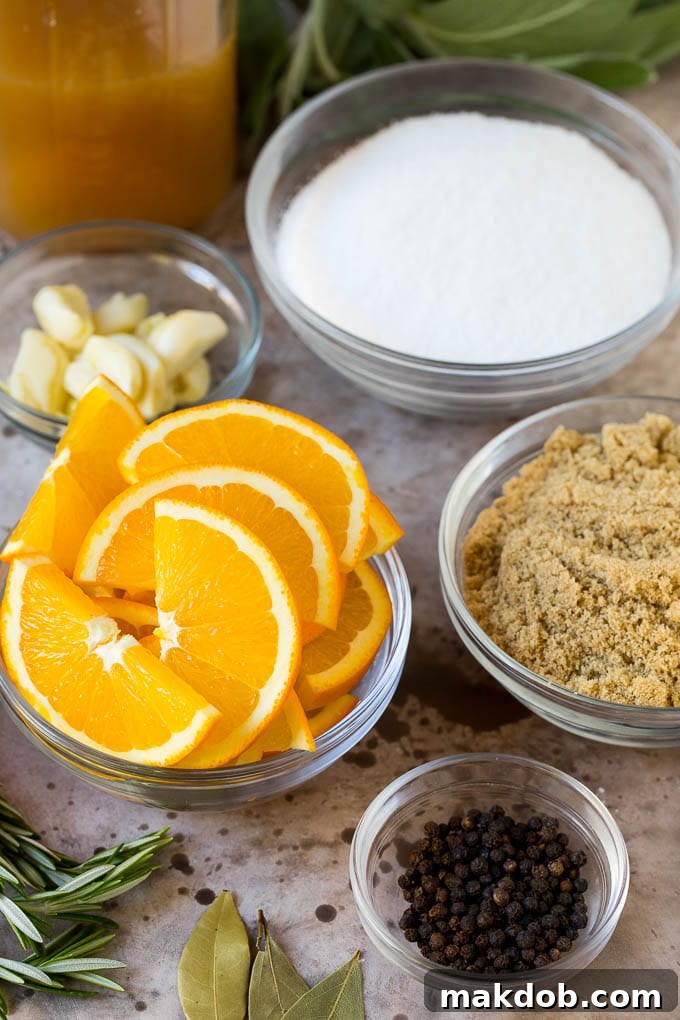
The magic of a truly flavorful turkey brine lies in the quality and balance of its ingredients. My signature recipe uses a harmonious blend that imbues the turkey with a wonderfully complex taste. Here’s a closer look at each component and its role:
- Apple Cider: This recipe specifically calls for apple cider, which is unfiltered apple juice, typically darker and richer in flavor than clear apple juice. It contributes a subtle sweetness and fruity aroma that complements poultry beautifully. Do NOT use apple cider vinegar, as its acidity will drastically alter the brine. If apple cider is unavailable, regular apple juice can be a suitable substitute, though it may offer a slightly milder flavor.
- Cold Water: This forms the base of your brine, dissolving the salt and sugar and providing the liquid for the turkey to absorb. Starting with cold water is important for safety and allows for controlled heating.
- Kosher Salt: This is the star of the brine, responsible for the tenderizing and moisturizing effects. Kosher salt has larger crystals and a less intense, more balanced salty flavor compared to table salt, which often contains anti-caking agents. Its unique structure allows for better dissolution and absorption.
- Light Brown Sugar: Adding brown sugar introduces a touch of sweetness that balances the saltiness and aids in browning the turkey’s skin during roasting, giving it a beautiful, caramelized hue. It also adds a molasses-like depth of flavor.
- Garlic Cloves: Garlic is a powerhouse of savory flavor. Simply remove the papery skins and gently smash the cloves with the flat side of a knife. You want them bruised and slightly broken to release their aromatic oils, but generally in one piece for easy removal later.
- Black Peppercorns: These add a subtle, earthy heat and complexity to the brine. Whole peppercorns are ideal as their flavor slowly infuses the liquid without becoming overpowering. Since they are typically discarded with the brine, there’s no need to use expensive varieties.
- Oranges: Fresh oranges, thinly sliced with their peels included, contribute bright, zesty, and slightly sweet citrus notes. The essential oils in the peel are particularly aromatic. You can slice them into full rounds or half-moon shapes.
- Rosemary, Bay Leaves, and Sage Sprigs: These classic poultry herbs are essential for a traditional, aromatic turkey. Rosemary offers a piney, fragrant note; bay leaves provide a subtle, earthy depth; and sage adds its signature warm, savory, and slightly peppery flavor. Using fresh sprigs maximizes their aromatic impact on the brine.
Step-by-Step Guide: How to Brine a Turkey for Maximum Flavor
Brining a turkey is a straightforward process that yields remarkable results. Follow these steps carefully to ensure a perfectly prepared bird:
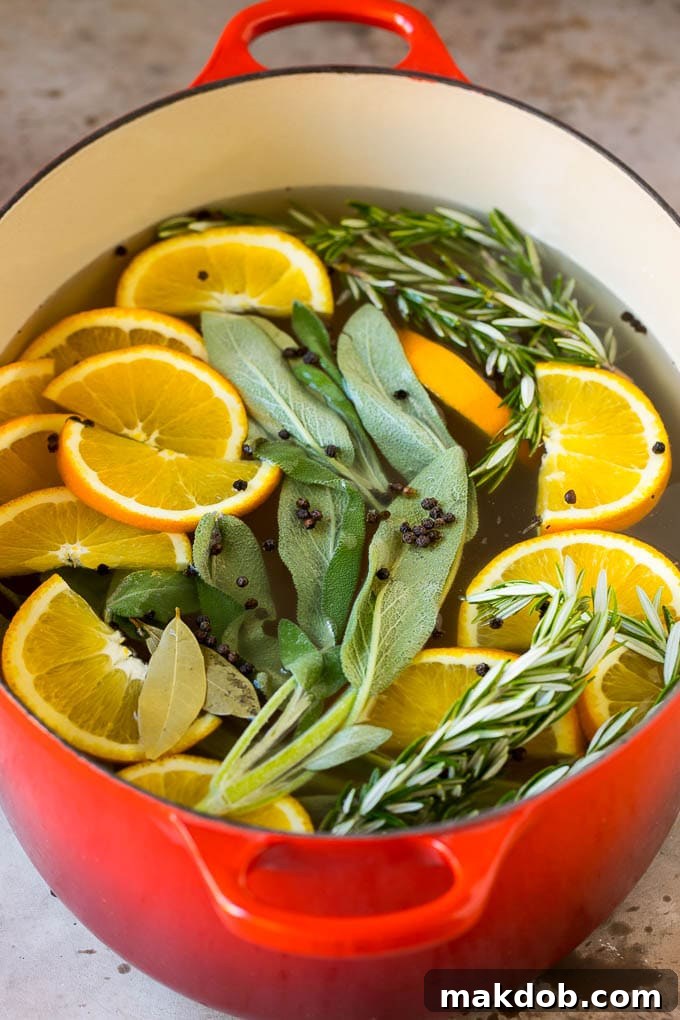
- Prepare Your Wet Brine Solution: Begin by combining all your brine ingredients—apple cider, cold water, kosher salt, brown sugar, smashed garlic cloves, black peppercorns, thinly sliced oranges, rosemary sprigs, bay leaves, and sage sprigs—in a very large stockpot.
- Simmer to Dissolve: Place the stockpot over medium heat and bring the mixture to a gentle simmer. Cook for just a few minutes, stirring occasionally, until both the salt and sugar have completely dissolved into the liquid. This ensures even distribution of the key brining agents.
- Cool Completely: This is a critical food safety step. Remove the pot from the heat and allow the brine liquid to cool down completely to room temperature. Introducing a raw turkey to warm liquid can create a dangerous environment for bacterial growth. You can speed up the cooling process by adding a few handfuls of ice cubes to the brine once it’s no longer hot, but ensure it’s fully chilled before the next step.
- Prepare the Brining Vessel: Once the brine is thoroughly cooled, carefully pour it into your chosen large container or brining bag. Ensure your container is large enough to accommodate the entire turkey and enough liquid to fully submerge it.
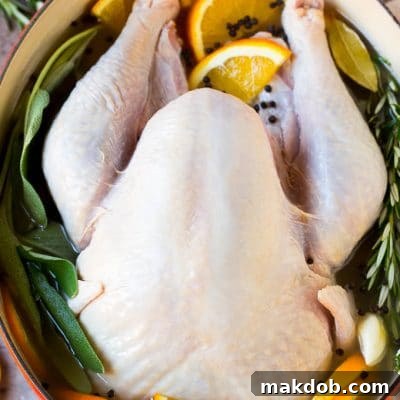
- Submerge the Turkey: Remove any giblets from the turkey cavity. Carefully place the whole turkey into the cooled brine solution, ensuring it is completely submerged. If using a brining bag, seal it tightly, expelling as much air as possible. If using a container, ensure it has a tight-fitting lid.
- Refrigerate and Brine: Place the container or brining bag with the turkey into the refrigerator. Allow the turkey to brine for 18-24 hours. For optimal flavor and moisture, aiming for the full 24 hours is highly recommended. Ensure your refrigerator is cold enough to maintain food safety during this period.
- Remove, Rinse, and Dry: After the brining period, remove the turkey from the liquid. Discard the brine solution along with any herbs or aromatics. Rinse the turkey thoroughly inside and out under cool running water to remove any excess salt from the surface.
- Pat Dry: Using plenty of paper towels, pat the turkey completely dry, both inside and out. A dry skin is essential for achieving that desirable crispy, golden-brown exterior during cooking. Remove any remaining herbs from the surface.
- Cook as Desired: Your turkey is now perfectly prepared for cooking! Proceed with your preferred method, whether it’s roasting, smoking, deep-frying, or grilling. You’re just steps away from enjoying a beautifully tender, juicy, and flavorful turkey.
Cooking Your Brined Turkey: Popular Methods for Perfect Results
Once your turkey has been expertly brined, the next exciting step is to cook it to perfection. Brining prepares the bird for excellent results across a variety of cooking methods, ensuring a moist and flavorful outcome. Here are some of my favorite ways to cook a turkey, each offering a unique culinary experience:
- Herb Roasted Turkey: A classic and elegant choice, roasting a brined turkey with fresh herbs creates a golden-brown, crispy skin and incredibly juicy meat.
- Cajun Turkey: For a bold flavor profile, a brined turkey seasoned with Cajun spices offers a delicious kick and a distinct, savory taste.
- Spatchcock Turkey: This method involves removing the backbone and flattening the bird, leading to faster, more even cooking and exceptionally crispy skin, especially when brined first.
- Deep Fried Turkey: Achieve an unbelievably moist interior and a famously crispy skin with deep frying. Brining ensures it stays juicy through the high heat.
- Smoked Turkey: Infuse your brined turkey with incredible smoky flavor and tenderness. The brine helps maintain moisture during the long smoking process.
If you’re looking to prepare just a turkey breast, brining still makes a huge difference in moisture and flavor. Try these fantastic turkey breast recipes:
- Slow Cooker Turkey Breast: Effortlessly tender and juicy, perfect for a smaller gathering.
- Instant Pot Turkey Breast: A quick and efficient way to achieve moist, flavorful turkey breast.
- Smoked Turkey Breast: Get all the smoky goodness with a convenient, smaller cut.
- Grilled Turkey Breast: Ideal for outdoor cooking, yielding a nicely charred exterior and tender interior.
- Roasted Turkey Breast: A classic approach that showcases the brining benefits beautifully.
Expert Tips for a Flawless Brine and a Perfectly Cooked Turkey
- Cool the Brine Completely: This cannot be stressed enough for food safety. After simmering, ensure your brine liquid has cooled entirely to room temperature before submerging the raw turkey. Adding a handful of ice cubes to the room-temperature brine can accelerate the cooling process if you’re in a rush, but always verify it’s chilled.
- Choose the Right Container or Brining Bag: Finding a container large enough to hold a whole turkey and its ample brining liquid can be challenging. For ease and minimal cleanup, I highly recommend using specialized brining bags. These robust, sealable bags are available online or at most kitchen supply stores and are often disposable. For added security and to maintain shape, you can place the brining bag inside a large pot or cooler.
- Consider Dry Brining as an Alternative: If you prefer not to deal with a large volume of liquid, dry brining is an excellent alternative. This method involves rubbing the turkey with a salt-based seasoning blend and letting it rest in the refrigerator, allowing the salt to draw out moisture, create its own brine, and then reabsorb it. It yields a wonderfully crispy skin and concentrated flavor.
- Salt Type Matters: This recipe specifically calls for kosher salt. Its larger crystals and lack of additives provide a cleaner, more balanced salty flavor compared to fine table salt. If you must substitute with table salt, reduce the amount by one-third (e.g., if the recipe calls for 1.5 cups of kosher salt, use 1 cup of table salt) to prevent over-salting.
- Dealing with Pre-Brined Turkeys: Always check the label of your store-bought turkey. Many turkeys are “enhanced” or “pre-brined” with a salt solution. If your turkey already contains added salt, you should skip the brining step entirely, or your final product will be excessively salty.
- Thawing Your Turkey for Brining: If you’re using a frozen turkey, it must be completely thawed before brining. This typically takes several days in the refrigerator (allow 24 hours for every 4-5 pounds of turkey). You can technically brine a partially frozen turkey, but it will require a significantly longer brining time to both thaw and absorb the brine, often adding an extra day or two to the process.
- Making Delicious Gravy: Don’t let those flavorful pan drippings go to waste! After cooking your brined turkey, use them as the base for a rich and savory turkey gravy. The drippings will be incredibly flavorful, though keep in mind they might be saltier than usual due to the brining process, so adjust your gravy seasoning accordingly.
Quick Tip: Apple Cider vs. Apple Cider Vinegar
It is absolutely essential to use apple cider—the drinking beverage—for this brine recipe. Do NOT use apple cider vinegar, which has a very different flavor and acidity profile. If genuine apple cider is difficult to find, pure apple juice can be used as a suitable substitute.
Frequently Asked Questions About Turkey Brining
Absolutely! Brining a turkey is unequivocally worth the effort for several compelling reasons. A turkey soaked in a salt solution becomes significantly more flavorful and remarkably resistant to drying out during cooking. The meat absorbs some of the brining liquid through osmosis, which directly contributes to its juiciness. This means that even if you accidentally slightly overcook your turkey, it will remain moist and tender. Furthermore, the absorption of the salt solution ensures that the bird is seasoned all the way through, not just on the surface, yielding a complex and perfectly balanced flavor with every bite.
Yes, it is highly recommended that you rinse your turkey thoroughly after removing it from the brine. This step helps to wash away any excess salt from the surface, preventing the skin from becoming too salty. After rinsing, it is crucial to pat the turkey completely dry with paper towels. A dry surface is key to achieving a beautifully crispy and golden-brown skin when the turkey is cooked in the oven or by any other method.
Yes, you absolutely can and often should season your turkey after brining, but with a crucial adjustment regarding salt. I typically coat my brined turkey with flavorful additions such as softened butter, minced garlic, a variety of fresh or dried herbs, and other spices. However, because the turkey has already absorbed salt from the brine, I usually do not add any additional salt to the exterior. If I do, it’s in a very minimal amount, such as half a teaspoon or less, depending on the overall flavor profile I’m aiming for. The primary goal of post-brine seasoning is to add surface flavor and aid in browning.
You can certainly brine most store-bought turkeys, but it’s essential to check the label first. Many commercial turkeys are “pre-brined,” “self-basting,” or injected with a sodium solution. If the label indicates that the turkey already contains added salt, you should skip the brining process. Brining an already brined turkey will likely result in an excessively salty and unpleasant end product.
Yes, you can use a frozen turkey with this brining technique, but it requires careful planning. A frozen turkey will need a significantly longer period in the brining liquid compared to a fresh or fully thawed bird. This extended time allows the turkey to completely defrost while simultaneously absorbing the brine. Depending on the size of your bird, you’ll want to add an extra day or two onto the typical 18-24 hour brining process to ensure it’s fully thawed and saturated with flavor.
For an average-sized fresh or fully thawed turkey (typically 12-16 pounds), it should be submerged in the brining liquid for 18 to 24 hours. This duration allows sufficient time for the salt and flavor compounds to penetrate the meat effectively. I generally aim for the full 24 hours whenever possible, as this provides the most consistent and superior results in terms of moisture and flavor.
FOLLOW ME
Unlock New Flavors: Brine Variations for Your Turkey
While the base brine recipe is exceptional, it also serves as a fantastic canvas for customization. Feel free to experiment with different flavor profiles to match your personal taste or specific holiday theme. Here are some delicious ideas for flavor variations:
- Herbs: Beyond the classic rosemary, bay leaves, and sage, consider adding other fresh herbs to your brine. Parsley offers a fresh, clean note; thyme provides an earthy, peppery flavor; and marjoram brings a delicate, sweet, and slightly spicy aroma. Feel free to use a combination or focus on one you particularly love.
- Sweetener: Swap out the light brown sugar for alternative sweeteners to introduce different nuances. Honey will lend a rich, floral sweetness, while maple syrup will contribute a deep, earthy, and distinctly autumnal flavor. Adjust the amount to your preference, remembering it also aids in browning.
- Spices: Broaden the aromatic scope of your brine with additional spices. Whole cinnamon sticks can add a warm, festive note, especially for holiday turkeys. Allspice berries bring a complex blend of clove, nutmeg, and cinnamon. Star anise offers a distinct licorice-like aroma, and fennel seeds impart a delicate, sweet, and aromatic anise flavor.
- Citrus: While oranges are fantastic, you can also use lemon slices, lime slices, or a combination of different citrus fruits. Lemon adds a brighter, tangier note, while lime offers a more pungent, exotic zest. The oils in the citrus peels are key for flavor infusion.
- Alcohol: For an extra layer of depth, consider adding a splash of alcohol to your brine. A cup or two of dry white wine, hard cider, or even bourbon can infuse a sophisticated, boozy complexity into the turkey meat. Ensure the alcohol is added after the brine has cooled.
Once you experience the incredible tenderness and deep flavor of a turkey prepared with this brining technique, especially with your own unique twist, you’ll likely never want to make turkey any other way again!
Perfect Pairings: Complementary Turkey Dinner Side Dishes
A magnificent turkey deserves an array of equally impressive side dishes to complete your holiday spread. Here are some beloved recipes that perfectly complement a brined turkey:
Southern Cornbread Dressing
Total Time: 1 hr 15 mins
Candied Yams Recipe
Total Time: 55 mins
Honey Roasted Carrots
Total Time: 35 mins
Cranberry Relish
Total Time: 11 mins
Thanksgiving Salad
Total Time: 16 mins
Watch How to Brine a Turkey: Video Guide
For those who prefer visual learning, we’ve prepared a detailed video guide on how to brine a turkey. This step-by-step demonstration will walk you through the entire process, from preparing the brine to submerging your bird, ensuring you master this essential technique with confidence and ease. Watch it to perfect your brining skills and prepare for an exceptional holiday meal!
Loved This Recipe? Share Your Experience!
We love hearing from you! If you tried this recipe and loved it, please consider leaving a 5-star 🌟🌟🌟🌟🌟 rating in the recipe card below and share your thoughts in the comments section further down the page. Your feedback helps other home cooks discover and enjoy these recipes too!
How to Brine a Turkey – The Ultimate Brine Recipe
Pin Recipe
Cook Time: 3 minutes
Brining Time: 1 day (18-24 hours)
Total Time: 1 day 15 minutes
Cuisine: American
Serves: 28
Ingredients
- 2 cups apple cider (the juice, not apple cider vinegar)
- 2 gallons cold water
- 1 1/2 cups kosher salt
- 1 cup light brown sugar
- 8 cloves garlic, smashed
- 2 tablespoons peppercorns
- 2 oranges, thinly sliced
- 5 rosemary sprigs
- 3 bay leaves
- 4 sage sprigs
Instructions
-
Combine apple cider, water, kosher salt, brown sugar, smashed garlic, peppercorns, orange slices, rosemary, bay leaves, and sage sprigs in a very large stockpot.
-
Bring the mixture to a simmer over medium heat, stirring occasionally, until the salt and sugar have completely dissolved (about 2-3 minutes).
-
Remove the pot from the heat and allow the brine mixture to cool down completely to room temperature. This step is crucial for food safety.
-
Once cooled, carefully pour the brine into a large brining bag or a food-safe container spacious enough to fully submerge your turkey.
-
Place your whole, thawed turkey into the cooled brine solution, ensuring it is completely submerged. Seal the bag or cover the container tightly.
-
Refrigerate the turkey in the brine for 18-24 hours. For optimal flavor and moisture, aiming for the full 24 hours is recommended.
-
When ready to cook, remove the turkey from the brine. Discard the brine solution and any herbs or aromatics clinging to the bird.
-
Rinse the turkey thoroughly under cool running water to remove any excess salt from the surface. Pat the turkey completely dry with paper towels.
-
Proceed with your preferred turkey cooking method (roasting, smoking, frying, etc.) and prepare for a beautifully tender and flavorful result!
Notes
- It’s crucial that you let the liquid cool before you add the turkey so that your raw turkey does not come to an unsafe temperature sitting in warm brine. Sometimes when I need to speed up the process, I add a handful of ice cubes to the brine to cool it off quickly.
- I find that it can be difficult to find a container large enough to hold a turkey for brining. The easiest way to contain a turkey and brine is to buy brining bags. You can find these bags online or in kitchen stores. The bags seal shut and there is minimal cleanup because they are disposable.