
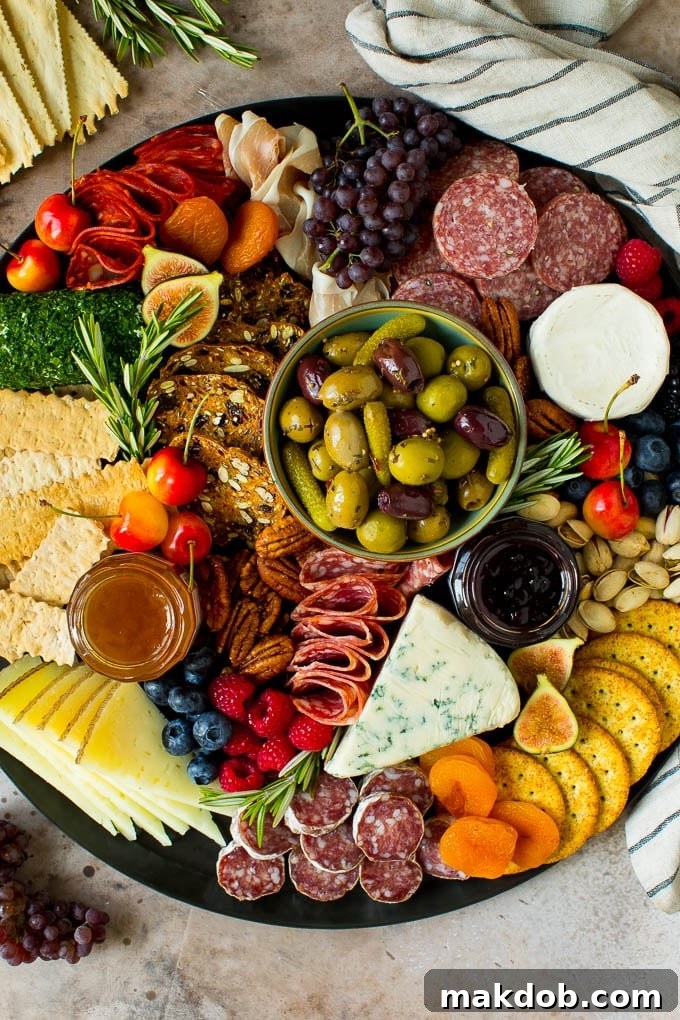
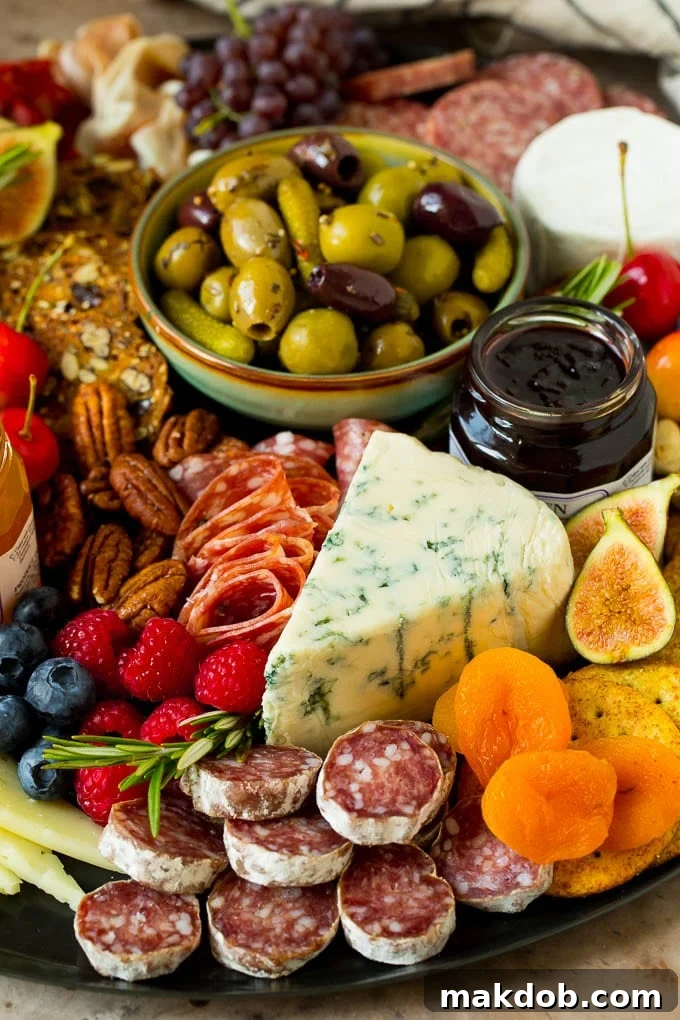
Embark on a culinary journey to craft the perfect **charcuterie board**, an exquisite assembly of gourmet meats, artisanal cheeses, crisp crackers, vibrant fruits, fresh vegetables, and an array of delightful snack foods. More than just an appetizer, a thoughtfully curated charcuterie board is the ultimate party centerpiece, promising a sophisticated and satisfying experience that consistently earns glowing reviews from every guest.
When hosting, I revel in presenting a diverse spread of appetizers that caters to every palate. Alongside perennial favorites like baked chicken wings, creamy spinach dip, savory bacon-wrapped jalapeño poppers, elegant baked brie, and fun pigs in a blanket, a lavish charcuterie board always takes center stage, offering both visual splendor and an abundance of flavors.
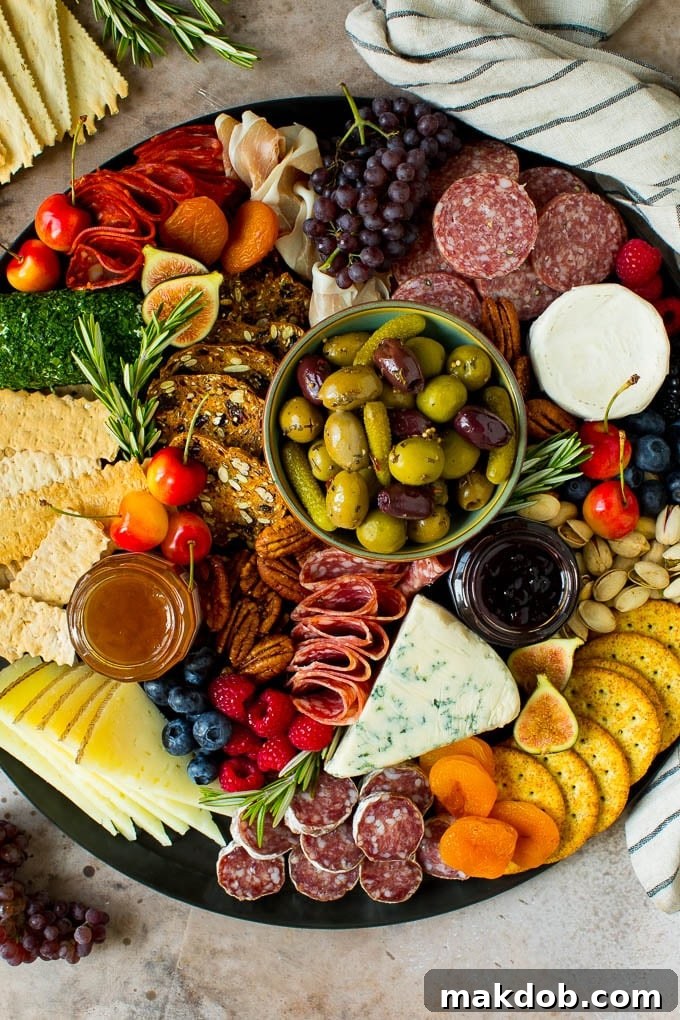
The charcuterie board, often affectionately known as a grazing board or even a full-fledged grazing table for larger gatherings, has become a beloved fixture in contemporary entertaining. Its immense popularity stems from its unparalleled versatility, aesthetic appeal, and the sheer joy it brings to guests. The beauty of crafting a stunning charcuterie board lies in its simplicity; it requires no cooking, minimal preparation, and yet consistently delivers an impressive culinary presentation. It truly stands out as one of the most effortless yet impactful appetizer creations you can master, perfect for any occasion from casual get-togethers to elegant soirées.
Table of Contents
- Charcuterie Board Ingredients
- How to Master Charcuterie Board Assembly
- Expert Tips for the Perfect Charcuterie Board
- Charcuterie Board FAQs
- Make-Ahead Instructions
- More Delightful Appetizer Recipes
- Charcuterie Board Video Tutorial
- Love This Recipe?
- Charcuterie Board Recipe
Charcuterie Board Ingredients: A Symphony of Flavors and Textures
The true magic of a charcuterie board lies in its endless possibilities. Almost any bite-sized delicacy can find its place on this magnificent platter. Here’s a comprehensive guide to the most popular and impactful items that will elevate your grazing experience:
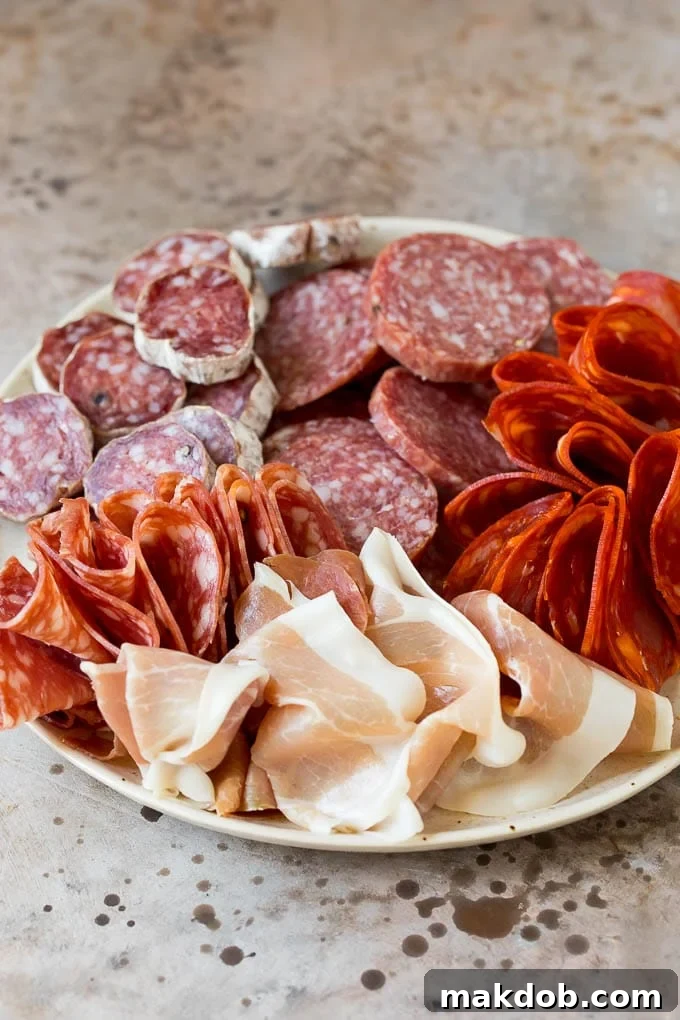
- Cured Meats (Charcuterie): As the namesake suggests, cured meats are the heart and soul of any traditional charcuterie display. Aim for a variety of textures and flavors.
- Soft & Silky: Prosciutto (draped beautifully), thinly sliced coppa.
- Firm & Flavorful: Hard salami (folded into quarters or rolled), pepperoni.
- Pâté & Terrines: For a touch of gourmet sophistication, offer a small dish of creamy pâté or a rustic terrine.
- Spicy Options: Chorizo for a kick, or spicy salami.
- Arrangement Tip: Roll thinner slices into tubes, fold larger slices into ribbons or quarters, and layer them for visual interest.
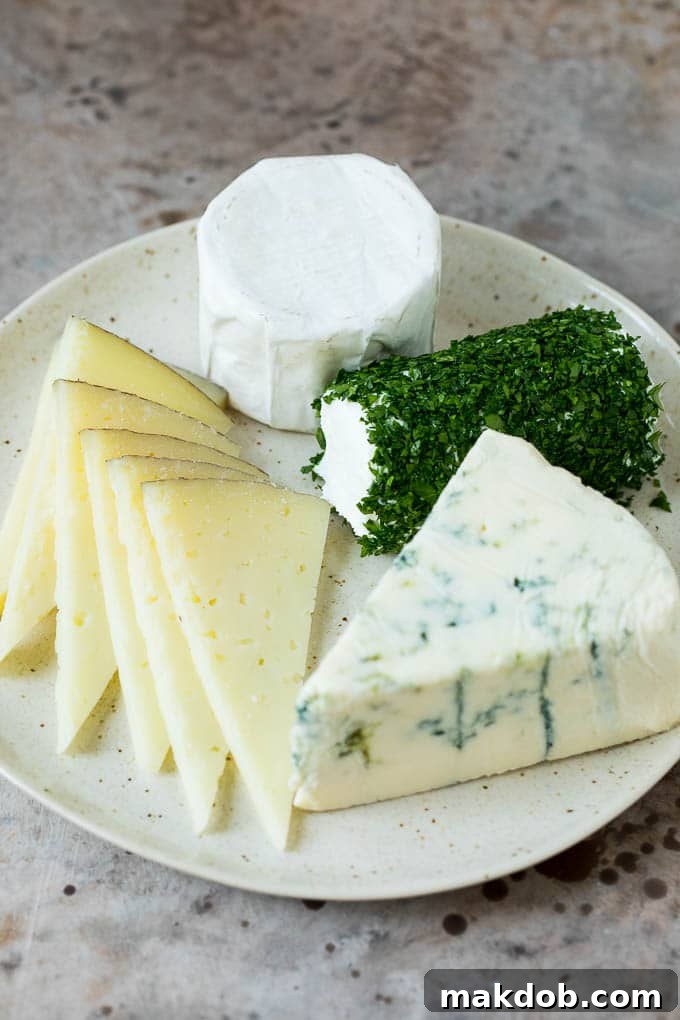
- Artisanal Cheeses: A well-rounded cheese selection is crucial. I recommend including at least three types to provide a good variety of flavors, textures, and milk types (cow, goat, sheep).
- Aged & Hard: Sharp cheddar (cubed or sliced), Parmigiano-Reggiano (shaved), Manchego, Gruyère. These offer a robust, nutty flavor and firm texture.
- Soft & Creamy: Brie or Camembert (served whole with a small cheese knife), creamy goat cheese (chevre), fresh mozzarella balls, or burrata. These provide a delightful contrast in texture.
- Bold & Crumbly: A blue cheese or gorgonzola for adventurous palates.
- Mild & Semi-Hard: Havarti or Swiss for a more approachable option.
- Serving Tip: Label your cheeses if possible, and pre-cut some harder cheeses into cubes or slices for easy access.
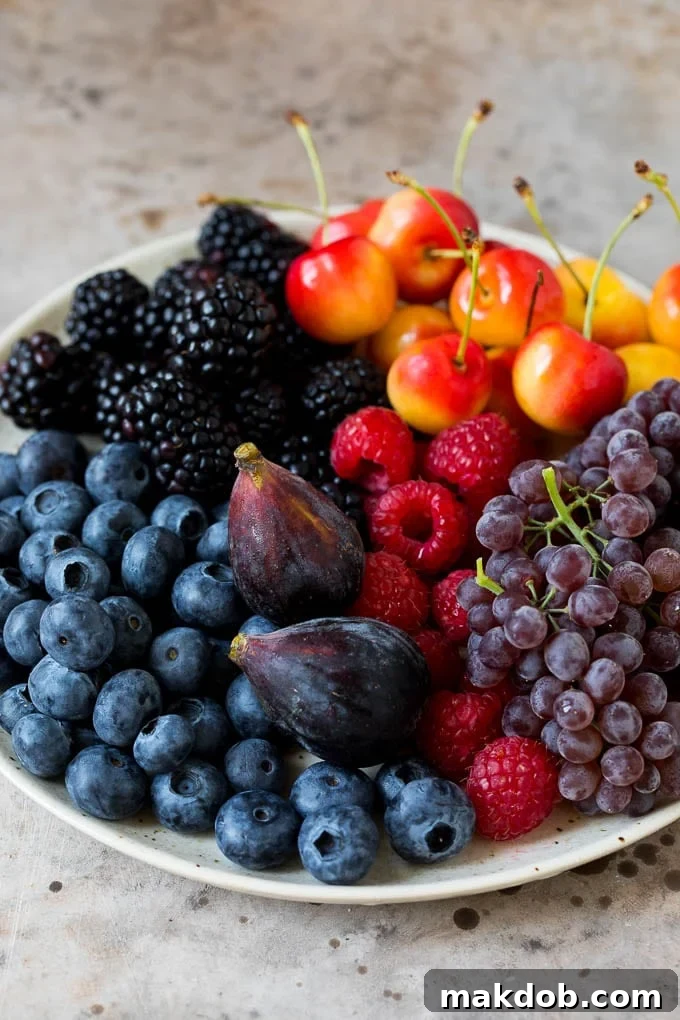
- Fresh & Dried Fruits: Fruits add a burst of color, natural sweetness, and often a refreshing counterpoint to the rich meats and cheeses.
- Fresh Berries: Strawberries, blueberries, raspberries – vibrant and sweet.
- Sliced Fruits: Crisp apple slices, pear slices, figs (especially seasonal), juicy grapes.
- Citrus: Thin orange slices or kumquats can add a bright, zesty note and visual appeal.
- Dried Fruits: Chewy dried apricots, dates, cranberries, or cherries. These offer a concentrated sweetness and different texture.
- Crunchy Cracker & Bread Selection: Essential vehicles for scooping and layering.
- Assorted Crackers: Water crackers, whole-grain crackers, sesame crackers, pita chips.
- Fresh Bread: Thinly sliced baguette (toasted or fresh), mini breadsticks.
- Gluten-Free Options: Consider offering gluten-free crackers to accommodate dietary needs.
- Colorful Vegetables: Incorporate a variety of fresh or pickled vegetables for crunch, acidity, and vibrant hues. Place any wet items in small bowls to prevent sogginess.
- Crisp Veggies: Baby carrots, cucumber slices, cherry tomatoes, bell pepper strips, blanched green beans.
- Pickled Delights: Gherkins, cornichons, marinated artichoke hearts, pickled asparagus.
- Olives: A mix of green and black olives, such as Kalamata or Castelvetrano.
- Nuts & Seeds: These add a delightful crunch and earthy flavor profile.
- Varieties: Almonds (Marcona almonds are especially decadent), pistachios, candied pecans, candied walnuts.
- Serving Tip: Place a handful or two in small clusters around the board.
- Dips & Spreads: Enhance the experience with complementary savory and sweet options.
- Savory: Olive tapenade, basil pesto, hummus, garlic aioli.
- Sweet: Fig jam, fruit preserves, honeycomb (pairs beautifully with cheese), mustard (Dijon or whole grain).
- Garnishes & Accents: The finishing touches that make your board truly shine.
- Fresh Herbs: Sprigs of rosemary, thyme, or basil add a touch of green and aromatic fragrance.
- Edible Flowers: For an extra elegant touch.
How to Master Charcuterie Board Assembly: A Step-by-Step Guide
Creating a visually appealing and utterly delicious charcuterie board is an art that’s surprisingly easy to master. Follow these steps to build a board that will impress and delight your guests:
- Choose Your Canvas: Start with a large board, platter, or tray. Wooden boards, slate, or even large ceramic platters work wonderfully. Consider the number of guests to ensure your board is adequately sized.
- Plan Your Layout: Before placing anything, visualize the categories of items you want to include. Aim for a balanced distribution of colors, textures, and flavors across the board.
- Anchor with Bowls & Large Items: Begin by placing any small bowls for dips, olives, or nuts onto the board. These act as anchors and create natural divisions. Next, strategically place larger items like cheese wedges or whole wheels of brie.
- Arrange the Meats: Now for the star charcuterie! Fold or roll your cured meats. For instance, thinly sliced prosciutto can be delicately draped or folded into ribbons. Salami can be folded into quarters, creating lovely rosettes, or simply fanned out. Vary the arrangement to add visual interest. Spread them out, leaving some space for other components.
- Position the Cheeses: Place your chosen cheeses. For harder cheeses like cheddar or Gruyère, cut some into cubes or slices and leave some as wedges for guests to cut themselves. Arrange soft cheeses like brie or goat cheese with a dedicated cheese knife.
- Fill in with Crackers and Bread: Arrange your assortment of crackers and bread around the cheeses and meats. Fan them out, stack them, or create small piles. Ensure they are easily accessible for scooping and pairing.
- Add Fruits and Vegetables: Now, infuse your board with color! Place fresh fruits like grapes, berries, and sliced apples in clusters. Scatter dried fruits. Arrange your vibrant vegetables, tucking some into gaps and fanning others out. Remember to put pickled items in small bowls.
- Scatter the Nuts: Fill in any remaining small gaps with your chosen nuts, creating small piles for easy grabbing.
- Add Dips and Spreads: Spoon your chosen dips and spreads into the small bowls you placed earlier.
- The Finishing Touches: Garnish your masterpiece with fresh herbs like rosemary or thyme for an aromatic and elegant final flourish. Add small metal tongs and cheese knives for hygienic and easy serving.
Expert Tips for the Perfect Charcuterie Board
Elevate your charcuterie game with these insider tips to ensure your board is not only delicious but also visually stunning and a joy to experience for everyone:
- Embrace Variety in Texture and Flavor: The key to an exciting board is contrast. Pair soft cheeses with crunchy crackers, smooth pâté with rustic bread, and chewy dried fruit with crisp fresh fruit. For meats, combine delicate, melt-in-your-mouth prosciutto with robust, chewy salami cubes. Offer both mild and bold cheeses to cater to different preferences.
- Think Visually: Color and Composition: A beautiful charcuterie board is a feast for the eyes. Use a rainbow of colors from fresh berries, vibrant bell peppers, and different shades of cheese and meat. Arrange items in an artful, yet organic way. Don’t be afraid to create small clusters and then fill in the gaps for a bountiful look. Overlapping items can add depth and appeal.
- Start with Anchors, Build Around Them: As mentioned in the assembly guide, always place your larger items and bowls first. These act as foundational elements around which you can artfully arrange smaller components like crackers, fruit, and individual pieces of meat or cheese. This strategy helps ensure a balanced and well-distributed display.
- The Power of Small Utensils: Provide a few pairs of small metal tongs for hygienic self-service, especially for items like olives or cubed cheese. Small cheese knives for wedges and spreaders for dips are also essential. These can be easily purchased online or at specialty kitchen stores.
- Thematic Boards for Special Occasions: Get creative by tailoring your charcuterie board to specific holidays or themes. For example, a Halloween charcuterie board could feature spooky-shaped cheeses and orange/black foods, while a Thanksgiving charcuterie board might incorporate fall fruits, nuts, and seasonal spreads. This personal touch adds an extra layer of enjoyment.
- Consider Portioning: As a general rule, plan for about 2-3 ounces of meat and 2-3 ounces of cheese per person if the board is an appetizer. If it’s the main attraction, double those amounts. This helps ensure you have enough variety and quantity for everyone without excessive waste.
- Balance Sweet and Savory: Ensure a delightful interplay of flavors. The saltiness of cured meats and aged cheeses is beautifully complemented by the sweetness of honey, fruit preserves, or fresh berries. The acidity of pickles or marinated vegetables can cut through rich flavors, providing a refreshing bite.
- Temperature Matters: Most cheeses and cured meats are best served at room temperature to allow their full flavors to develop. Take them out of the refrigerator about 30-60 minutes before serving. However, keep perishable items like certain fresh fruits and dips refrigerated until just before assembly.
Charcuterie Board FAQs
Originating from a French term, “charcuterie” traditionally refers to a branch of cooking focused on prepared meat products, primarily from pork, such as cured meats, pâtés, and sausages. Historically, a charcuterie board would primarily feature these meats, perhaps with a few simple accompaniments. In modern culinary practice, the definition has broadened significantly. Today, a charcuterie board is a vibrant and diverse platter that can include an extensive array of items beyond just meats, encompassing cheeses, crackers, fresh and dried fruits, nuts, olives, vegetables, dips, and spreads. It’s designed for grazing and sharing, offering a medley of flavors and textures.
While both charcuterie and antipasto platters share similarities, often featuring cured meats, their origins and typical compositions differ. Antipasto is an Italian term for “before the meal” and traditionally consists of a starter course with a strong emphasis on Italian ingredients. This often includes a wide variety of marinated vegetables (like artichoke hearts, roasted red peppers, olives), alongside cured Italian meats (such as prosciutto and salami), cheeses (like fresh mozzarella), and sometimes seafood. Charcuterie, with its French roots, traditionally focuses more heavily on the prepared meats themselves, often accompanied by cheeses and other complementary items that can span various culinary traditions beyond Italy, leaning into a broader European influence.
For food safety, a charcuterie or grazing board should not be left out at room temperature for more than 2 hours. If you’re serving it on a particularly warm day, it’s advisable to shorten this timeframe to about 90 minutes. Beyond these limits, perishable items like meats and cheeses can enter the “danger zone” for bacterial growth, increasing the risk of spoilage. Any leftovers should be promptly refrigerated in airtight containers for later enjoyment.
When planning your board, a good rule of thumb is to allow for about 2-3 ounces of cured meats and 2-3 ounces of cheese per person if the board is intended as an appetizer or light snack. If the charcuterie board is meant to be the main meal or a substantial part of it, consider doubling these amounts to 4-6 ounces of meat and cheese per person. Don’t forget to factor in plenty of crackers, fruit, and other accompaniments to round out the offering.
Absolutely! While traditional charcuterie centers around meat, the concept of a grazing board is highly adaptable. For a vegetarian version, focus on a diverse selection of artisanal cheeses, a wider array of fresh and pickled vegetables, gourmet crackers, various dips (like hummus, baba ghanoush), olives, nuts, and fresh/dried fruits. For a vegan board, substitute all dairy cheeses with plant-based cheeses, replace meats with marinated tofu or tempeh slices, vegan pâtés, or robust roasted vegetables like portobello mushrooms and bell peppers. Ensure all crackers and dips are also vegan-friendly.
FOLLOW ME
Make-Ahead Instructions for a Stress-Free Gathering
One of the many advantages of a charcuterie board is its make-ahead potential, which significantly reduces stress on the day of your event. You can largely assemble your board up to 8 hours before you plan to serve it.
To prepare in advance:
- Assemble Most Components: Arrange all the cured meats, cheeses, olives, nuts, dried fruits, and most non-perishable spreads (like jam, but not fresh dips) on your board or platter.
- Exclude Moisture-Sensitive Items: Hold off on adding any items that could get soggy or stale, such as fresh bread, crackers, and very wet vegetables (like cucumber slices) or marinated items (like artichokes that might release liquid).
- Cover and Refrigerate: Once assembled, tightly cover the board with plastic wrap to prevent items from drying out or absorbing refrigerator odors. Place it in the refrigerator.
- Final Touches Before Serving: About 15-30 minutes before you’re ready to serve, remove the board from the refrigerator. Uncover it, and then add your fresh bread, crackers, any remaining wet vegetables or dips, and the fresh herb garnishes. Allowing it to sit at room temperature for a short period will also help the cheeses and meats come to their optimal serving temperature, enhancing their flavor.
In conclusion, you truly can never go wrong with a thoughtfully prepared charcuterie board. Its incredible versatility ensures there’s always something appealing for everyone, making it a universal crowd-pleaser. This elegant and engaging trend is more than just a fleeting fad; it’s a delightful way to entertain and share delicious moments with loved ones, a culinary tradition that is here to stay!
More Delightful Appetizer Recipes
7 Layer Dip Recipe
21 mins
Potstickers Recipe
45 mins
Bacon Wrapped Shrimp
35 mins
Herb Veggie Dip
6 mins
Fried Pickles Recipe
30 mins
Charcuterie Board Video Tutorial
Love This Recipe?
Please leave a 5-star 🌟🌟🌟🌟🌟 rating in the recipe card below & a review in the comments section further down the page.
Charcuterie Board
Pin

Time
Ingredients
- 1 1/2 pounds assorted cured meats such as salami, pate, prosciutto, pepperoni and coppa
- 1 pound cheese cubes or as a whole wedge
- 1 cup olives
- 1 cup vegetables raw, grilled or pickled
- 1 cup fruit fresh or dried
- 12 ounces assorted bread baguette slices, breadsticks, crackers
- 3/4 cup nuts
- fresh herbs for garnish
- sauces such as preserves or dips optional
Instructions
-
Arrange all the chosen ingredients artfully on a large board or platter. If incorporating sauces, place them in small, separate bowls. Complete the presentation with a garnish of fresh herbs, then serve immediately to your eager guests.
-
To prepare this platter in advance, assemble all components except for bread products (crackers, baguette slices) and fresh herbs. Cover the assembled board tightly with plastic wrap and refrigerate for up to 8 hours. Before serving, remove from the refrigerator, discard the plastic wrap, and add the bread and fresh herbs. Allow the board to sit at room temperature for about 15 minutes to let the flavors develop, then present and enjoy.
Notes
- Aim for a dynamic interplay of textures. For example, complement the smooth, thin slices of prosciutto with robust cubes of salami. Likewise, balance a creamy wedge of blue cheese with firm cheddar, which can be elegantly sliced or cubed.
- For optimal guest convenience and hygiene, include a few pairs of small metal tongs on the platter, allowing guests to serve themselves effortlessly. The addition of small cheese knives will also facilitate easy cutting and serving of various cheese types.