
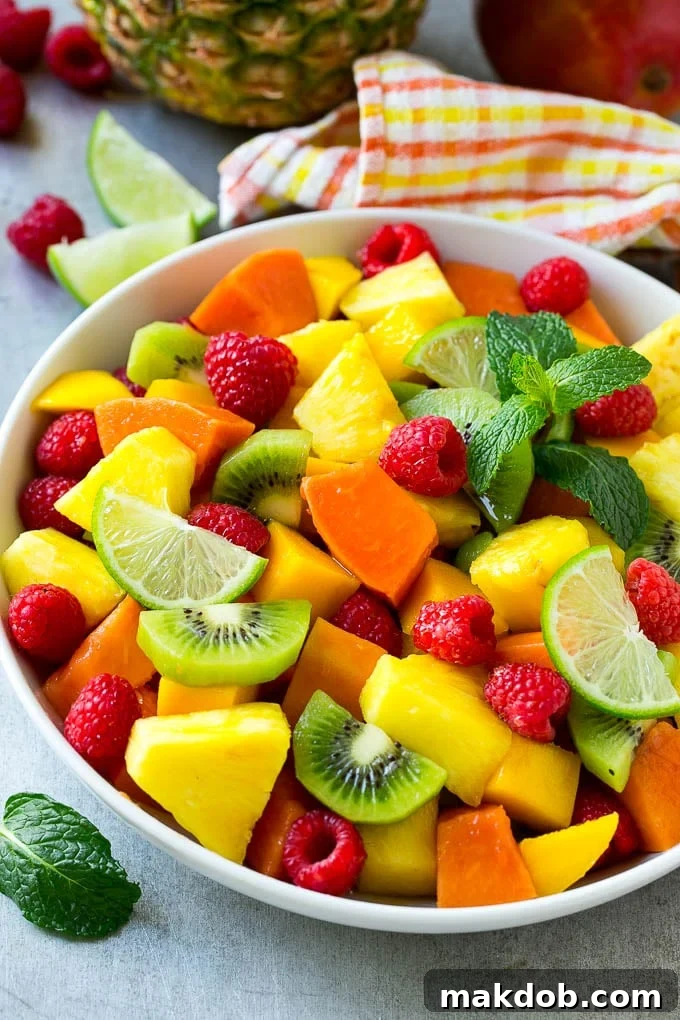
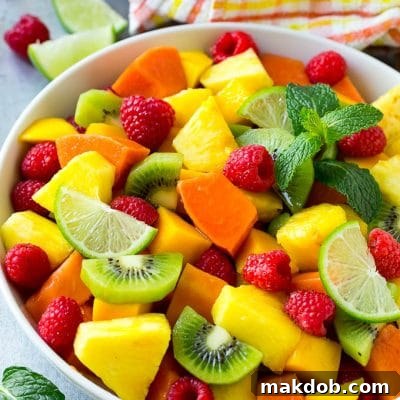
Welcome to the ultimate guide for creating a vibrant, refreshing, and absolutely irresistible Tropical Fruit Salad! Imagine a medley of sun-kissed fruits — succulent mango, tangy kiwi, buttery papaya, and juicy pineapple — all brought together with a sweet and zesty honey-lime dressing. This isn’t just a salad; it’s a celebration of tropical flavors, a burst of color, and the perfect emblem of warm weather. Whether you’re planning a backyard barbecue, a festive brunch, a casual potluck, or simply seeking a healthy, refreshing treat for an everyday meal, this tropical fruit salad is guaranteed to be a crowd-plepleaser and a delightful addition to any table.
There’s an undeniable magic in tropical fruits. Just the thought of them transports you to white sandy beaches and gentle ocean breezes. While a Hawaiian vacation might not always be within reach, bringing the essence of the islands into your kitchen is surprisingly simple. This recipe captures that spirit, blending the exotic sweetness and vibrant hues of the tropics into a harmonious dish. It’s a make-ahead marvel that saves you time when entertaining, and its light, refreshing profile perfectly complements richer main courses or stands alone as a delightful dessert.
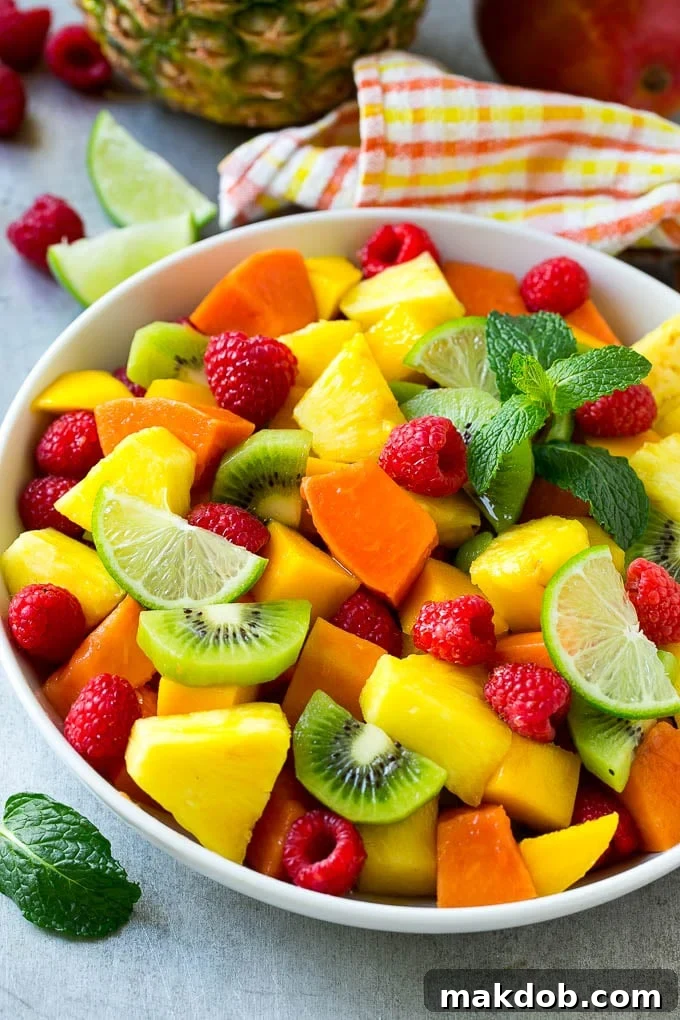
The Art of Crafting Your Tropical Fruit Salad
Creating this tropical fruit salad is as straightforward as it is delicious. The secret lies in selecting ripe, high-quality ingredients and pairing them with a simple yet impactful dressing. For this recipe, we focus on a core selection of tropical gems: pineapple, papaya, kiwi, and mango. To add an extra dimension of color and a delightful tart counterpoint, we incorporate fresh raspberries. While technically not a tropical fruit, their bright red hue and unique flavor beautifully complement the other ingredients, elevating the visual appeal and taste profile of the salad.
The preparation involves gently dicing your chosen fruits into evenly sized pieces. This ensures every bite offers a balanced mix of flavors and textures. Once prepared, the fruit is lightly tossed in a homemade honey-lime dressing. This dressing is incredibly easy to make, requiring just two key ingredients: natural honey for sweetness and fresh lime juice for that essential zing. The lime cuts through the sweetness, adding a vibrant tang that brightens the entire salad and awakens your palate. The dressing binds the fruits together, adding a subtle glaze and enhancing their natural juiciness without making them soggy.
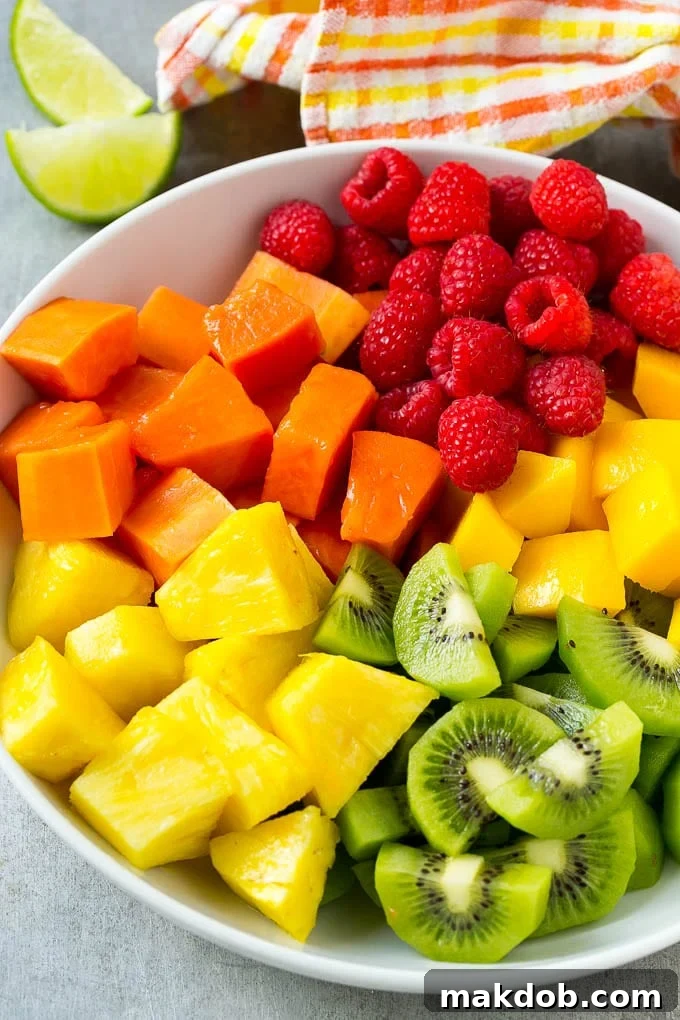
Selecting the Freshest Tropical Fruits for Optimal Flavor
The success of any fruit salad begins with the quality of its components. Here’s a closer look at how to select the best fruits for your tropical medley:
- Pineapple: Look for a pineapple that smells sweet and tropical at its base. The leaves should be green and fresh, and the fruit should have a slight give when squeezed. Avoid pineapples with soft spots or a fermented odor.
- Mango: The “king of fruits” should feel heavy for its size and have a slightly soft texture when gently pressed, similar to a ripe avocado. Don’t rely solely on color, as ripe mangoes can be green, yellow, or red depending on the variety. Smell the stem end; a sweet, fruity aroma indicates ripeness.
- Papaya: There are two common types: the larger Mexican papaya and the smaller, pear-shaped Hawaiian papaya. We often recommend Mexican papaya for its beautiful orange color and slightly milder flavor, often at a more accessible price point. Choose papayas that have begun to turn yellow or orange, indicating ripeness. They should be slightly soft to the touch.
- Kiwi: Select kiwis that are firm but yield to gentle pressure. Avoid any that are overly soft or wrinkled. Their vibrant green flesh and tiny black seeds add a delightful visual and textural contrast.
- Raspberries: These delicate berries should be plump, firm, and uniformly colored. Inspect the container carefully to ensure there’s no mold or crushed berries, as they are quite fragile.
When assembling a fruit salad, it’s crucial to consider the interplay of colors, flavors, and textures. We intentionally choose hardier fruits that maintain their integrity in the dressing and won’t brown or turn mushy quickly. For this reason, fruits like apples and bananas are generally avoided in this particular recipe, as they tend to oxidize and soften too rapidly once cut and dressed.
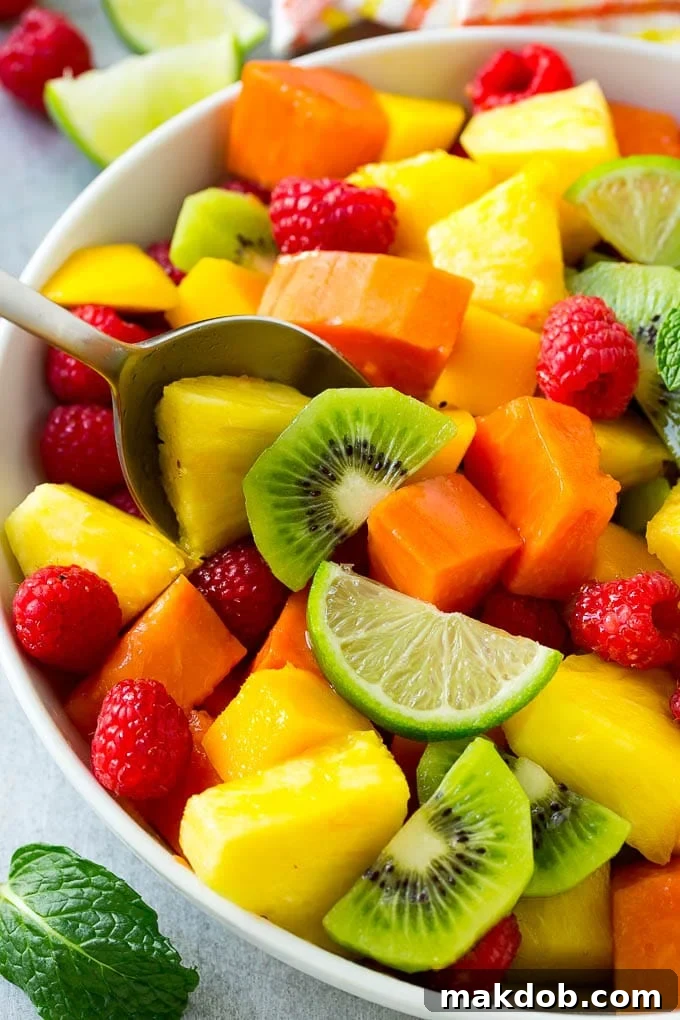
Enhancing Your Tropical Fruit Salad: Beyond the Basics
While the core recipe is fantastic on its own, feel free to get creative and customize your tropical fruit salad to your liking. The fruits listed in the recipe are merely suggestions, offering a perfect foundation for experimentation. Here are some fantastic additions and substitutions you might consider to create your unique salad masterpiece:
- Oranges or Mandarins: Segments of fresh oranges or mandarins can add another layer of citrusy brightness and juicy texture.
- Strawberries: Like raspberries, strawberries contribute a lovely red color and a familiar sweetness that pairs well with tropical notes.
- Shredded Coconut: A sprinkle of unsweetened shredded coconut can add a delightful chewiness and a subtle tropical aroma, further enhancing the island vibe.
- Grapes: Halved red or green grapes can introduce a crisp, sweet element.
- Star Fruit (Carambola): For an exotic touch and beautiful star-shaped slices, star fruit is a visually stunning and mildly tart addition.
- Melons: Honeydew or cantaloupe can be cubed and added, offering a refreshing and hydrating component, just be mindful of their water content.
- Mint Sprigs: Beyond a garnish, finely chopped fresh mint leaves can be mixed into the salad for an invigorating, cooling burst of flavor.
The Perfect Honey-Lime Dressing: Simple Yet Essential
The honey-lime dressing is more than just a coating; it’s the element that harmonizes all the distinct flavors of the fruits. Its simplicity belies its power. Freshly squeezed lime juice is paramount here; bottled juice simply won’t deliver the same vibrant tang. The honey provides a natural sweetness that complements the fruits without being cloying, and it helps to prevent browning. To make it, simply whisk together the honey and lime juice until thoroughly combined. You can adjust the ratio to your preference, adding a little more honey for sweetness or extra lime for a more pronounced zest.
Serving and Storage Recommendations
This tropical fruit salad is at its absolute best when served fresh. We highly recommend preparing and dressing the salad no more than one hour before you plan to serve it. The delicate nature of raspberries and papaya, especially when exposed to the citrus-based dressing, means they can start to break down and become overly soft if left to sit for too long. For optimal freshness, prepare your fruits ahead of time by chopping them and storing them separately in airtight containers in the refrigerator. Then, simply combine them and toss with the dressing just before serving.
For an extra touch of elegance, garnish your finished salad with fresh mint sprigs and thin lime slices. These not only add visual appeal but also a lovely aromatic quality that hints at the refreshing flavors within. Serve it chilled as a light appetizer, a vibrant side dish, or a naturally sweet dessert. It’s also phenomenal alongside grilled chicken, fish, or pork, cutting through richness with its bright, clean taste.
The Health Benefits of a Tropical Treat
Beyond its delicious taste, this tropical fruit salad is packed with nutritional goodness. Each fruit contributes a unique array of vitamins, minerals, and antioxidants:
- Pineapple: Rich in Vitamin C and Manganese, also contains bromelain, an enzyme known for its anti-inflammatory properties.
- Mango: An excellent source of Vitamins A and C, crucial for immune function and skin health.
- Papaya: High in Vitamin C, Vitamin A, and folate, plus papain which aids digestion.
- Kiwi: Boasts an impressive amount of Vitamin C, Vitamin K, and fiber.
- Raspberries: Bursting with antioxidants, fiber, and Vitamin C, contributing to heart health and digestion.
This salad offers a wonderful way to boost your daily intake of essential nutrients and stay hydrated, especially during warmer months. It’s a naturally sweet option that can satisfy cravings without relying on processed sugars, making it a truly wholesome and delightful choice for any occasion.
Tropical Fruit Salad Recipe
Author: Sara Welch
This recipe for tropical fruit salad is a colorful mixture of mango, pineapple, papaya, kiwi and raspberries tossed in a honey lime dressing.
Prep Time: 10 minutes
Cook Time: 1 minute
Total Time: 10 minutes
Course: Salad
Cuisine: American
Serves: 8 servings
Ingredients
- 2 cups pineapple chunks
- 1 cup papaya chunks
- 2 cups mango chunks
- 1 cup kiwi slices
- 1 cup raspberries
- 1/4 cup honey
- 2 tablespoon lime juice
- Optional garnishes: Mint sprigs and lime slices
Instructions
- Place the pineapple, papaya, mango, kiwi and raspberries in a large bowl.
- In a small bowl, whisk together the honey and lime juice until smooth.
- Drizzle the dressing over the fruit and toss gently to coat. Serve, garnished with mint sprigs and lime slices if desired.
Nutrition
Carbohydrates: 44g |
Protein: 1g |
Sodium: 4mg |
Potassium: 374mg |
Fiber: 4g |
Sugar: 38g |
Vitamin A: 710IU |
Vitamin C: 64.9mg |
Calcium: 42mg |
Iron: 0.7mg
More Refreshing Fruit Ideas
- Winter Fruit Salad
- Chocolate Fruit Dip
- Cream Cheese Fruit Dip
- Fruit Kabobs
- Mexican Fruit Salad
This post has been sponsored by Blue Diamond Almonds. Thank you for supporting the brands that make Dinner at the Zoo possible! This post was originally published on May 10, 2016 and was updated on May 9, 2018 with new content and photos.