
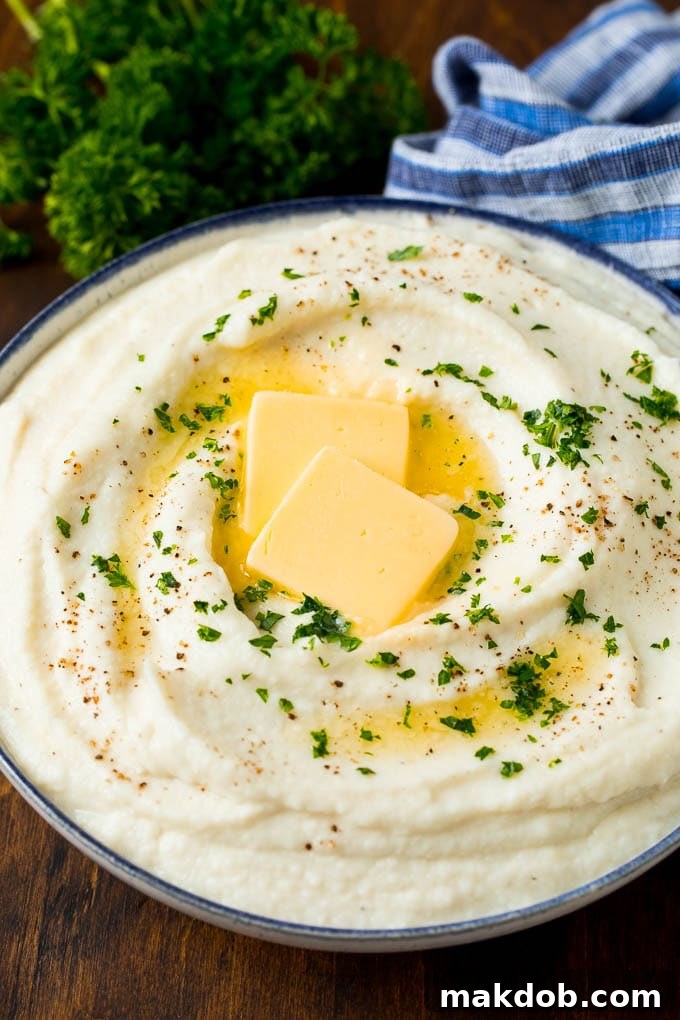
Transform your dinner table with these incredibly delicious Cauliflower Mashed Potatoes, a perfectly smooth and creamy low-carbohydrate side dish. Blended with rich butter, decadent cream, and a medley of savory seasonings, this mashed cauliflower offers all the comforting texture and flavor of traditional mashed potatoes without the high carb count. It’s so satisfying, you’ll truly forget you’re eating vegetables!
For those seeking healthy, effortless side dish recipes, this versatile cauliflower mash is an absolute game-changer. It joins a roster of classic easy sides like roasted green beans and sautéed Brussels sprouts, but stands out as a particularly excellent option for low-carb or ketogenic diets. Imagine pairing this velvety cauliflower with a perfectly cooked baked chicken breast, tender slow cooker short ribs, or an elegant surf and turf meal. It elevates any main course, making healthy eating a truly enjoyable experience.
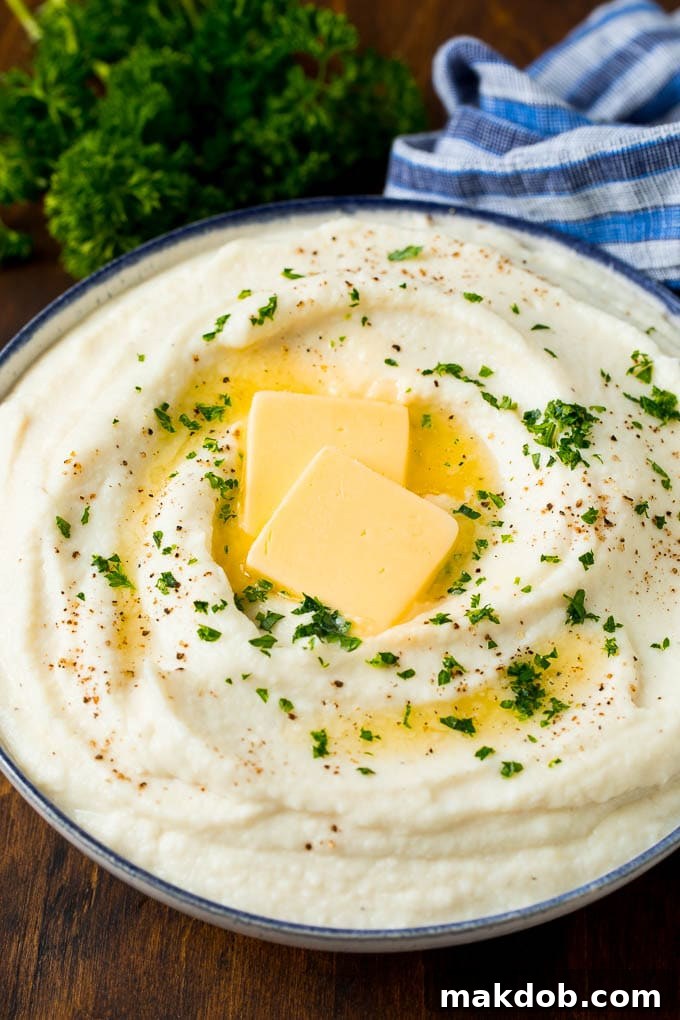
While the hearty appeal of mashed potatoes is undeniable, the considerable carbohydrate content often discourages those monitoring their intake. This is where mashed cauliflower truly shines. Our recipe achieves that coveted smooth, cloud-like texture and rich, comforting flavor without the dietary compromise. You get all the satisfaction of a traditional mash, but with significantly fewer calories and carbs, making it a smart and delicious choice for any occasion.
Table of Contents
- Why Choose Cauliflower Mashed Potatoes?
- Key Ingredients for Creamy Cauliflower Mash
- Step-by-Step Guide: Making Perfect Mashed Cauliflower
- Mastering Cauliflower Cooking: Boil or Steam?
- Expert Tips for the Smoothest Cauliflower Puree
- Kitchen Tool Guide: Food Processor vs. Potato Masher
- Frequently Asked Questions About Mashed Cauliflower
- Exciting Flavor Variations for Your Mashed Cauliflower
- More Irresistible Side Dishes to Explore
- Cauliflower Mashed Potatoes Recipe Card
Why Choose Cauliflower Mashed Potatoes?
The rise in popularity of low-carb and keto diets has brought many culinary innovations, and cauliflower mashed potatoes are at the forefront. Beyond being a fantastic potato substitute, cauliflower itself is a nutritional powerhouse. It’s packed with vitamins C and K, folate, fiber, and potent antioxidants, offering significant health benefits. Opting for mashed cauliflower means you’re not just reducing carbs; you’re actively boosting your intake of essential nutrients and adding a wonderful, creamy vegetable to your diet. The mild flavor of cauliflower makes it an ideal canvas for rich ingredients like butter and cream, creating a dish that’s both healthy and incredibly indulgent.
Key Ingredients for Creamy Cauliflower Mash
Crafting this simple yet exquisite side dish requires just a few staple ingredients, each playing a crucial role in achieving the perfect texture and flavor profile. To embark on your culinary journey, you will need:
- Fresh Cauliflower: The star of the show. We recommend using two medium heads, yielding approximately 4 cups of florets. Look for firm, white heads with vibrant green leaves.
- Heavy Cream: This is essential for achieving that luxurious, velvety consistency and adding a richness that makes the dish truly comforting.
- Unsalted Butter: For a buttery, melt-in-your-mouth flavor. You’ll need some for mixing into the mash and a little extra for drizzling on top for garnish.
- Kosher Salt: To enhance all the flavors. Adjust to your taste, and consider a sprinkle for garnish.
- Freshly Ground Black Pepper: Adds a subtle warmth and aromatic kick. A touch more for garnish is always welcome.
- Garlic Powder: Infuses the mash with a savory depth without the intensity of raw garlic, creating a universally appealing flavor.
- Fresh Parsley: Chopped finely, this adds a pop of color and a fresh, herbaceous note, perfect for finishing the dish.
Each ingredient is carefully selected to contribute to a harmonious blend of taste and texture, ensuring that every spoonful of your cauliflower mash is a delight.
Step-by-Step Guide: Making Perfect Mashed Cauliflower
Creating this delectable side is surprisingly straightforward. Follow these simple steps to achieve a perfectly smooth and flavorful cauliflower mash:
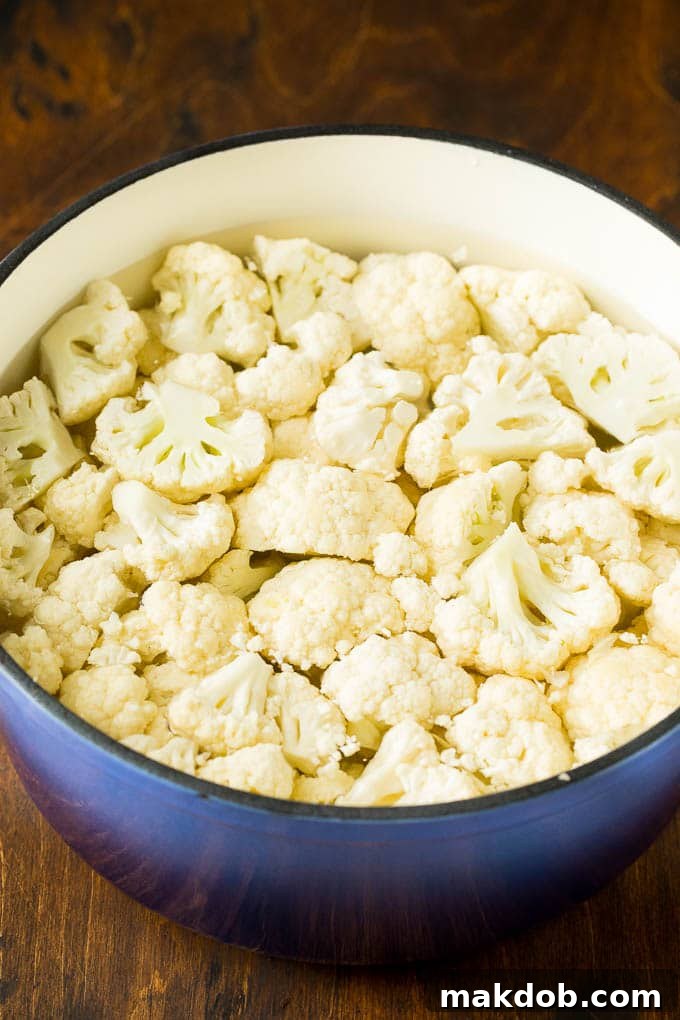
- Prepare the Cauliflower: Begin by washing your cauliflower heads thoroughly. Remove the outer leaves and core, then cut the florets into roughly 1.5-inch pieces. Ensuring uniform size is key for even cooking.
- Cook Until Fork Tender: The next crucial step is to cook the cauliflower until it’s very soft, easily pierced with a fork. You can achieve this by either boiling or steaming the florets (detailed instructions for both methods are provided below). Proper cooking ensures a lump-free, creamy mash.
- Drain Thoroughly: Once cooked, it is absolutely essential to drain the cauliflower as thoroughly as possible. Excess water will result in a watery mash. You can even pat it dry with paper towels or let it sit in a colander for a few minutes.
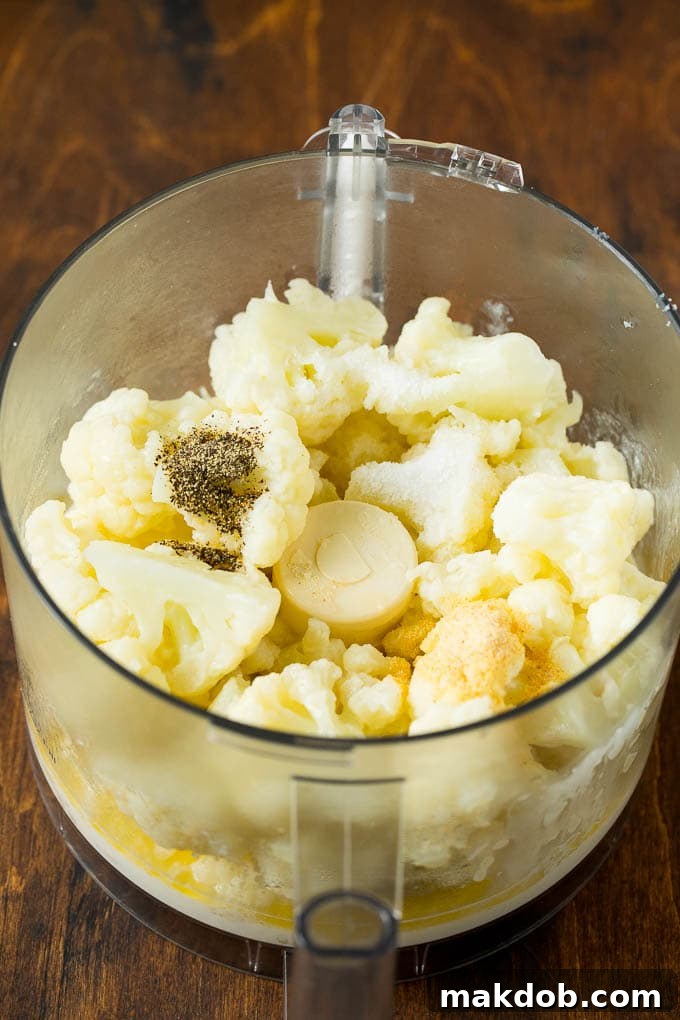
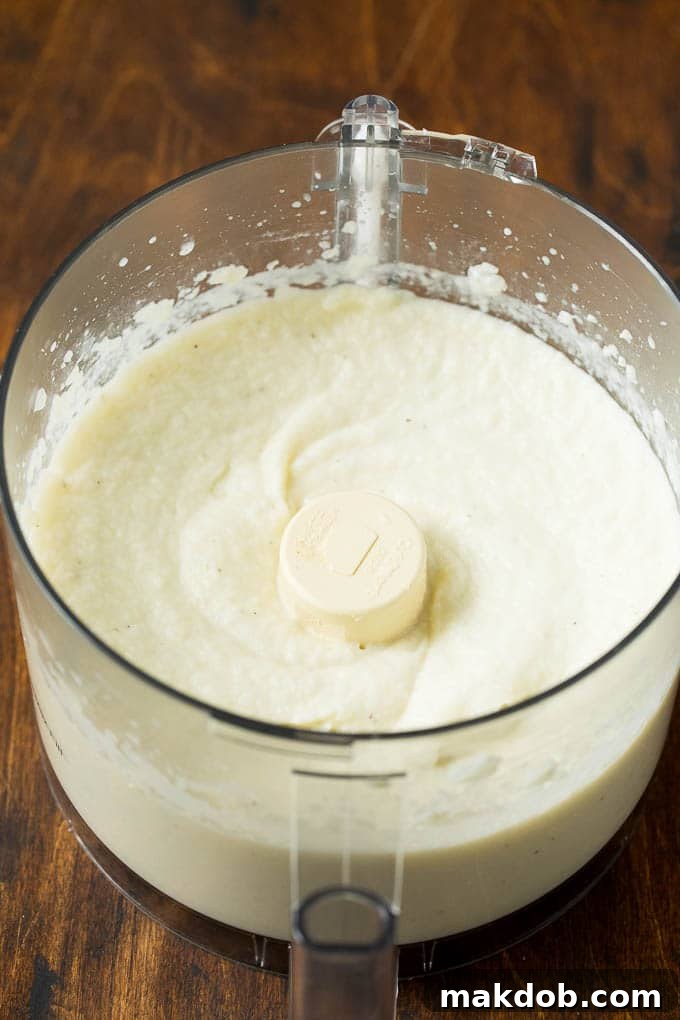
- Process with Flavorings: Transfer the well-drained, cooked cauliflower to the bowl of a food processor. Add the heavy cream, melted butter, kosher salt, black pepper, and garlic powder.
- Puree to Perfection: Secure the lid and puree the mixture until it reaches your desired consistency – typically smooth and creamy, much like traditional mashed potatoes. For an extra velvety texture, process for an additional minute or two, scraping down the sides as needed.
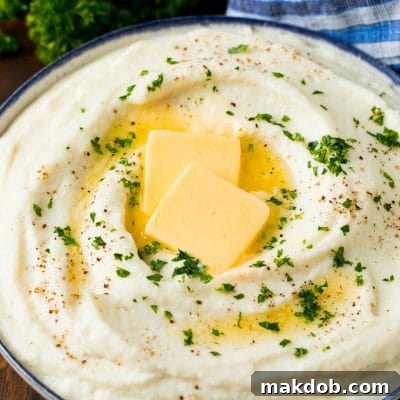
- Serve and Garnish: Spoon the freshly made cauliflower mash into a serving bowl. For an extra touch of indulgence and presentation, drizzle with a bit more melted butter, then sprinkle generously with fresh chopped parsley, and a final dash of salt and pepper if desired. Serve immediately and enjoy!
This method ensures a consistent and flavorful result every time, making your healthy side dish a guaranteed hit.
Mastering Cauliflower Cooking: Boil or Steam?
Achieving the right tenderness in your cauliflower is paramount for a smooth mash. There are two primary methods for cooking cauliflower florets for this recipe, and both yield excellent results when done correctly. My personal preference is boiling for its simplicity, but choose the method that best suits your kitchen and comfort level.
-
Boiling Method:
This is perhaps the most common and straightforward approach. To boil, bring a large pot of generously salted water to a rolling boil. Adding salt to the water helps season the cauliflower from the inside out and enhances its natural flavor. Carefully add your cauliflower florets to the boiling water. Cook for approximately 5-7 minutes. The cooking time can vary slightly depending on the size of your florets, so keep an eye on them. They are ready when they are undeniably fork-tender – meaning a fork glides through them with very little resistance. Immediately drain the cooked cauliflower through a colander. For best results, allow them to sit in the colander for a few minutes to release any residual steam and excess water, or even gently pat dry with a paper towel.
-
Steaming Method:
Steaming is another excellent option that can help retain more of cauliflower’s nutrients, as it doesn’t immerse the vegetable directly in water. To steam, pour about 1 inch of water into a shallow pan or pot. Bring the water to a boil, then reduce the heat to a simmer. Place your cauliflower florets in a steamer basket, ensuring they are arranged in a single layer to allow for even cooking. Place the steamer basket over the simmering water, cover the pan tightly, and cook for 7-8 minutes. Similar to boiling, the cauliflower should be very tender when done. Remove the steamer basket from the pan immediately once cooked to prevent overcooking and transfer the florets to a bowl to cool slightly before processing.
Regardless of the method you choose, the key is to ensure the cauliflower is cooked thoroughly until very soft, but not mushy or waterlogged, as this will impact the final texture of your mash.
Expert Tips for the Smoothest Cauliflower Puree
To elevate your cauliflower mash from good to truly exceptional, consider these crucial tips:
- Uniform Floret Size: When cutting your cauliflower, strive for pieces of similar size. This seemingly small detail ensures that all florets cook evenly at the same rate. If you have some large pieces and some small, the smaller ones will be overcooked and watery by the time the larger ones are tender, compromising the overall texture of your puree.
- Fresh vs. Frozen Cauliflower: This recipe is incredibly versatile and works beautifully with both fresh and frozen cauliflower. If using fresh, follow the boiling or steaming instructions provided. For frozen cauliflower, which is typically pre-cooked, you’ll just need to thaw it thoroughly and warm it through before proceeding with the recipe. Ensure any excess water from thawing is completely drained.
- Drain, Drain, Drain! This cannot be stressed enough. After cooking, it’s vital to drain your cauliflower thoroughly to prevent a watery mash. You can let it sit in a colander for several minutes, or even press it gently with a paper towel or a clean kitchen towel to squeeze out any remaining moisture. Some even go so far as to put it back in the empty pot over low heat for a few minutes to evaporate any surface water.
- Storage and Reheating: Leftover cauliflower mashed potatoes are a fantastic make-ahead option. They stay fresh and delicious in an airtight container in the refrigerator for up to 4 days. For longer storage, you can freeze them for up to 2 months. To reheat, gently warm on the stove top over low heat, stirring occasionally, or use the microwave until heated through. If it seems a little dry, add a splash of cream or broth during reheating.
- Versatile Usage: Don’t limit this delicious puree to just a side dish! Use it as a healthy substitute in any recipe that calls for mashed potatoes, such as a loaded mashed potato casserole, or traditional Irish colcannon. It’s an excellent way to sneak in extra vegetables and reduce carbs in your favorite comfort foods.
Quick Tip for Texture
For the silkiest, creamiest result, I highly recommend using a food processor to puree your cooked cauliflower. Its powerful blades will break down the florets into an incredibly smooth, lump-free consistency. However, if you prefer a rustic, slightly chunky texture, a traditional potato masher will work perfectly, giving you more control over the desired consistency.
Frequently Asked Questions About Mashed Cauliflower
Mashed cauliflower offers a compelling alternative to mashed potatoes, maintaining a smooth and creamy texture while providing distinct health advantages. It contains significantly fewer calories and carbohydrates, making it an excellent choice for those managing blood sugar, following a ketogenic diet, or simply aiming for a lighter meal. Beyond the lower carb count, cauliflower is richer in nutrients such as dietary fiber, Vitamin B (particularly B6 and folate), and powerful antioxidants, which potatoes lack in comparison. This gives cauliflower mash a superior dietary profile without sacrificing the comforting flavor and consistency you love.
Absolutely! Mashed cauliflower is a highly recommended and popular dish within the ketogenic diet community. Cauliflower is naturally very low in carbohydrates, making it an ideal ingredient for maintaining ketosis. When prepared with high-fat ingredients like heavy cream and butter, as in this recipe, it fits perfectly into the macros required for a keto-friendly meal, offering a satisfying and nutrient-dense side dish without spiking blood sugar.
If you find your mashed cauliflower is too thin or watery, there are several effective ways to thicken it. One simple method is to return the mash to a saucepan and cook it over medium-low heat, stirring frequently. This allows excess moisture to evaporate, gradually thickening the mixture. Another excellent approach is to incorporate thickening agents during or after pureeing. Shredded cheese, such as cheddar, Parmesan, or mozzarella, will melt into the mash, adding flavor and body. Cream cheese or Boursin-style cheese can also be stirred in; they provide both richness and a binding effect. For a non-dairy option, a small amount of arrowroot powder or xantham gum can be whisked in, but be cautious with quantities as a little goes a long way. Always add thickeners gradually until you reach your desired consistency.
Yes, mashed cauliflower is a fantastic make-ahead dish! You can prepare it up to 2-3 days in advance and store it in an airtight container in the refrigerator. When ready to serve, gently reheat it on the stovetop over low heat, stirring occasionally, or warm it in the microwave. If the mash seems a bit thick after refrigeration, stir in a tablespoon or two of milk, cream, or chicken broth until it reaches your desired consistency.
FOLLOW ME
Exciting Flavor Variations for Your Mashed Cauliflower
While this base recipe for cauliflower mashed potatoes is incredibly delicious on its own, it also serves as a fantastic foundation for creative culinary experimentation. Don’t hesitate to customize the flavors to match your personal preferences or the meal you’re serving. Here are some inspiring ideas:
- Fresh Herbs: Elevate the freshness by stirring in a generous handful of finely chopped herbs just before serving. Classic choices like fresh chives, dill, or additional parsley work wonderfully. For a more adventurous twist, try a spoonful of basil pesto or finely minced rosemary or thyme.
- Cheesy Indulgence: You can never go wrong with cheese! For an extra layer of savory goodness, fold in up to 3/4 cup of shredded cheddar, Gruyère, or Parmesan cheese while the mash is still warm. Alternatively, for a creamy, tangy boost, mix in 1/4 cup of softened cream cheese or a Boursin-style cheese. These additions melt beautifully, adding both flavor and a luscious texture.
- Delightful Toppings: Transform your mashed cauliflower into a gourmet experience with irresistible toppings. A sprinkle of crispy bacon bits, thinly sliced green onions, diced pickled jalapeños for a kick, or even some black olives can add texture and bursts of flavor. Crispy fried onions or toasted breadcrumbs also provide a satisfying crunch.
- Vegetable Blends: Experiment with mixing other root vegetables or hearty greens into your cauliflower mash. For a unique flavor profile and added nutrients, try using half cauliflower and half celeriac (celery root) or rutabaga. These root vegetables are still lower in carbs than potatoes but offer a different earthy sweetness. For a subtle green hue and added vitamins, steam and puree a handful of spinach or kale with your cauliflower.
These variations allow you to tailor your cauliflower mashed potatoes to any meal or mood, ensuring this versatile side dish always feels fresh and exciting.
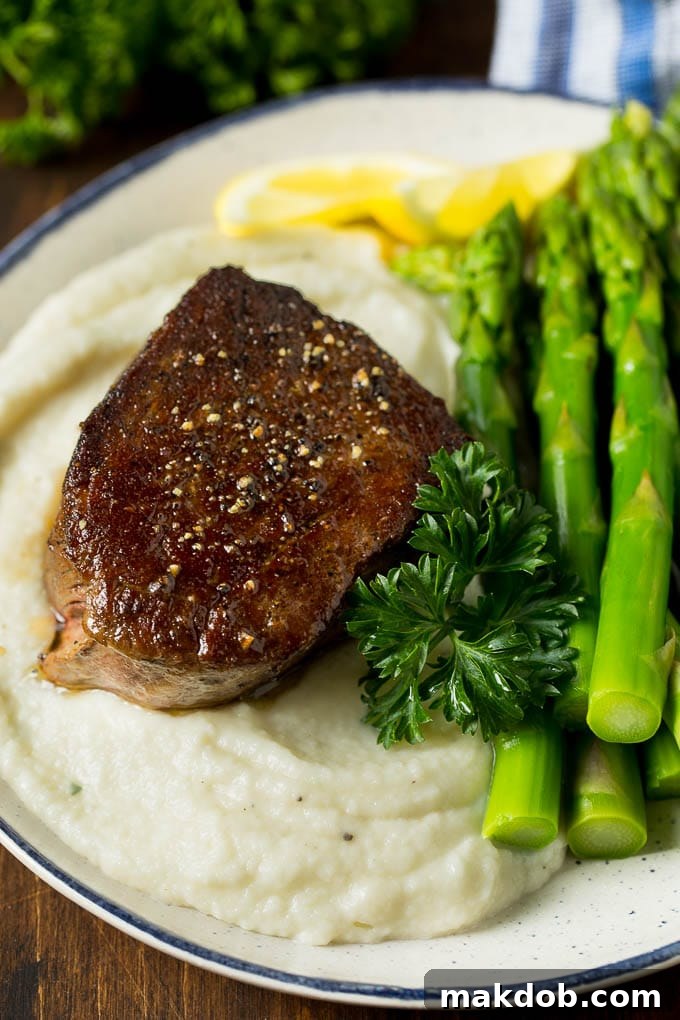
Once you experience the rich, creamy texture and savory flavor of this homemade mashed cauliflower recipe, you might find yourself saying goodbye to traditional potato versions for good! It’s not just a healthy substitute; it’s a truly delicious and satisfying dish in its own right. This recipe is also a brilliant way to encourage everyone in the family, even the picky eaters, to enjoy their vegetables without even realizing it. Prepare to be amazed by how easily this low-carb wonder becomes a staple in your culinary repertoire.
More Irresistible Side Dishes to Explore
Green Bean Salad
18 mins
Roasted Acorn Squash
35 mins
Green Beans with Bacon
25 mins
Tomato Salad Recipe
11 mins
Grilled Zucchini with Garlic and Herbs
20 mins
Love This Recipe?
We’d love to hear from you! Please consider leaving a 5-star rating in the recipe card below and sharing your thoughts in the comments section further down the page. Your feedback helps other home cooks discover and enjoy this delicious recipe!
Average Rating: 5 stars from 19 votes
Cauliflower Mashed Potatoes
Pin Recipe
Sara Welch
These cauliflower mashed potatoes are mixed with butter, cream, and seasonings to make a super delicious side dish that’s low in carbohydrates. This mashed cauliflower is so good that you won’t even miss the potatoes!
15 minutes
15 minutes
30 minutes
Side Dish
American
4
Ingredients
- 2 heads cauliflower (approximately 4 cups), cut into 1 1/2 inch pieces
- 1/3 cup heavy cream
- 3 tablespoons butter, melted (plus more for garnish)
- 1 teaspoon kosher salt (plus more for garnish)
- 1/4 teaspoon black pepper (plus more for garnish)
- 1/4 teaspoon garlic powder
- 2 tablespoons fresh parsley, chopped
Instructions
- First, boil or steam the cauliflower florets until they are completely tender. Ensure they are very soft, as detailed in the “How To Cook Cauliflower” section of this post.
- Once cooked, drain the cauliflower thoroughly. Transfer the well-drained florets into the bowl of a food processor along with the heavy cream, 3 tablespoons of melted butter, 1 teaspoon of kosher salt, 1/4 teaspoon of black pepper, and 1/4 teaspoon of garlic powder.
- Puree the mixture on high speed until the cauliflower mash is completely smooth and creamy. Scrape down the sides of the food processor bowl as needed to ensure all ingredients are incorporated and no lumps remain.
- Spoon the finished cauliflower mash into a serving bowl. If desired, drizzle with a little extra melted butter for added richness. Finish with a light sprinkle of additional salt, pepper, and fresh chopped parsley for a beautiful presentation and enhanced flavor. Serve hot and enjoy!
Notes
- For consistent cooking and a smooth mash, always cut your cauliflower into pieces of similar size.
- While a food processor yields the creamiest results, a potato masher can be used if you prefer a chunkier texture.
- This recipe works with both fresh and frozen cauliflower. If using frozen, thaw completely and drain any excess water before warming through and adding to the food processor.
- To prevent a watery mash, it is crucial to drain the cooked cauliflower very well. You can even return it to the empty pot over low heat for a few minutes to evaporate residual moisture.
Nutrition
Calories: 217 kcal | Carbohydrates: 15g | Protein: 6g | Fat: 17g | Saturated Fat: 10g | Cholesterol: 50mg | Sodium: 751mg | Potassium: 886mg | Fiber: 6g | Sugar: 6g | Vitamin A: 722IU | Vitamin C: 141mg | Calcium: 81mg | Iron: 1mg
Did you make this recipe?
Tag @dinneratthezoo on Instagram and hashtag it #dinneratthezoo