
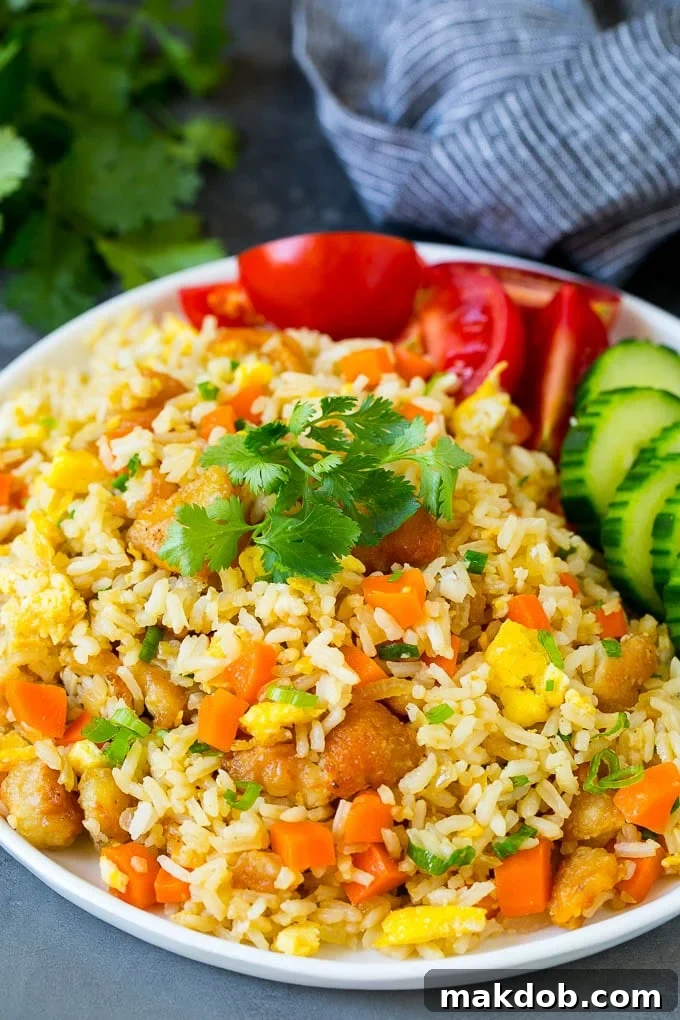
This Thai fried rice is loaded with chicken, egg and vegetables, all stir-fried together in a savory sauce. A perfect copy of your favorite takeout dish that you can easily recreate at home in less than 30 minutes!
There’s nothing quite like the vibrant flavors of authentic Thai cuisine, and among its many treasures, Thai Fried Rice stands out as a universally loved classic. Imagine tender pieces of chicken, fluffy scrambled eggs, and crisp vegetables, all coated in a rich, aromatic sauce, wok-tossed with perfectly cooked rice until every grain is infused with irresistible flavor. It’s a symphony of textures and tastes that satisfies your cravings for something both comforting and exotic.
While many believe restaurant-quality Thai food is challenging to make at home, this recipe proves otherwise. Just like I enjoy crafting refreshing Thai cucumber salad and creamy peanut noodles in my kitchen, this simple yet profoundly satisfying chicken fried rice is a testament to how accessible delicious Thai cooking can be. You don’t need extensive culinary experience or obscure ingredients; with a few fresh components and a hot pan, you can bring the essence of Thailand directly to your dining table.
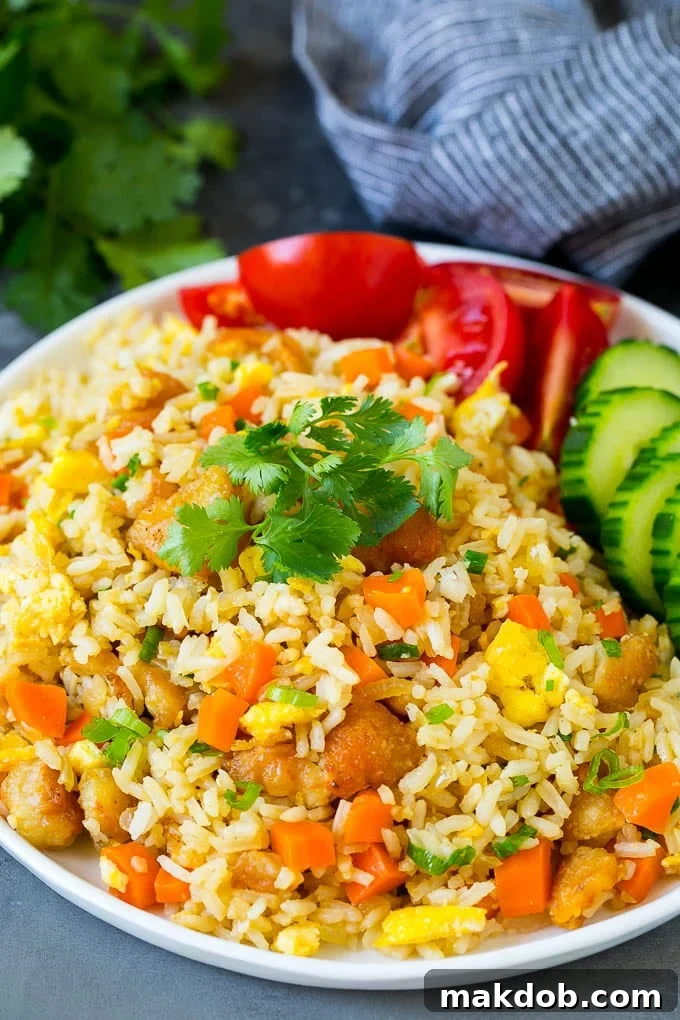
I genuinely adore Thai food, and Thai fried rice holds a special place in my heart. Its distinctive flavor profile, a masterful balance of sweet, salty, sour, and umami, is unlike any other. The beauty of this dish lies in its versatility; it can incorporate a wide array of ingredients, from succulent shrimp to juicy pineapple, allowing for endless customization. My rendition focuses on crispy, perfectly seasoned chicken bites, vibrant carrots, soft scrambled eggs, and aromatic fresh herbs, making it a complete meal that’s both hearty and incredibly flavorful. Whether served as a satisfying main course or a delightful side dish, it promises to be on your table, ready to enjoy, in just half an hour.
Mastering Thai Fried Rice: A Step-by-Step Guide
Creating delicious Thai fried rice might seem daunting, but it’s surprisingly straightforward. The key lies in methodical preparation and high-heat cooking. Here’s a detailed breakdown of how to achieve that perfect takeout flavor right in your own kitchen:
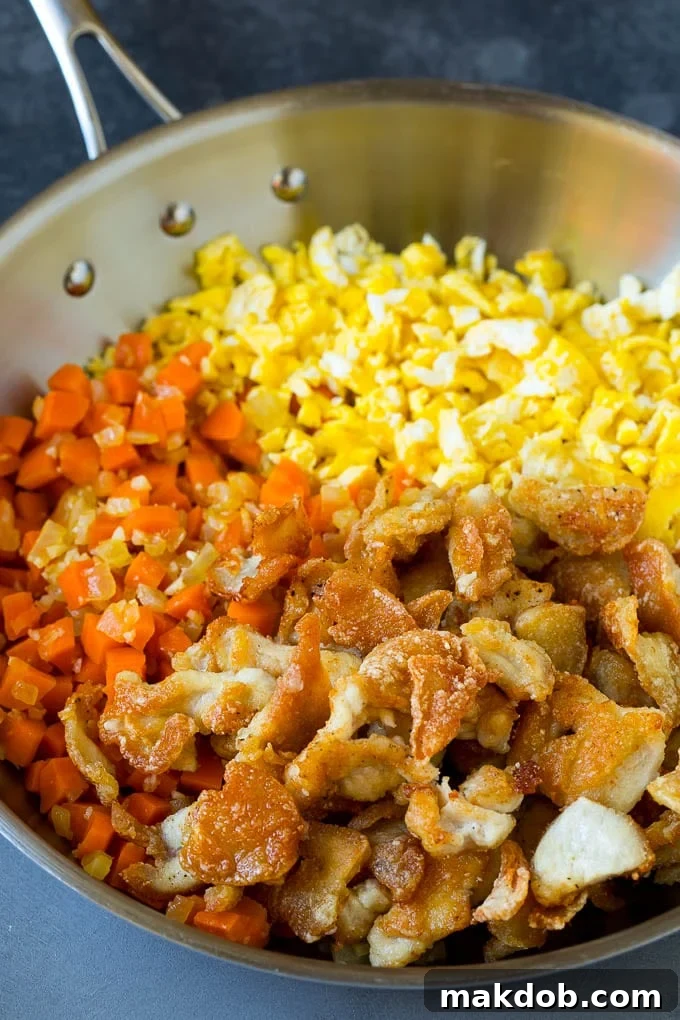
- **Prepare the Chicken:** Begin by thinly slicing chicken breast. For easier and more uniform slicing, partially freeze the chicken for about 30 minutes before cutting. Toss the slices in cornstarch, salt, and pepper. The cornstarch helps create a beautiful, crispy exterior and locks in moisture, preventing the chicken from drying out.
- **Cook the Chicken:** Heat a large pan or wok over medium-high heat with a portion of your vegetable oil. Add the seasoned chicken in a single layer, ensuring not to overcrowd the pan. Cook until golden brown and thoroughly cooked through. Remove the chicken and set it aside, keeping it warm under foil. This two-step cooking process ensures the chicken is perfectly cooked without overcooking the other ingredients.
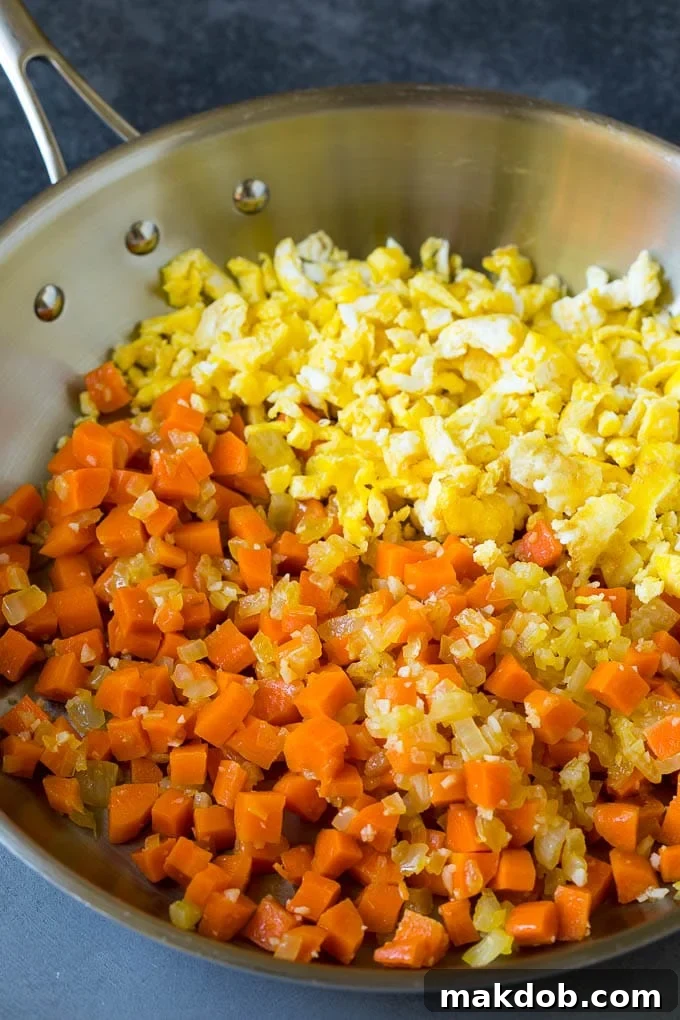
- **Sauté the Vegetables:** In the same pan, add a bit more oil and introduce your finely chopped onions and sliced carrots. Stir-fry them until they begin to soften, developing a sweet and aromatic base for your rice. This usually takes about 4-5 minutes.
- **Infuse with Garlic:** Once the vegetables are tender, add minced garlic to the pan. Sauté for just about 30 seconds until fragrant. Be careful not to burn the garlic, as this can turn bitter. Remove the cooked vegetables and garlic, keeping them warm with the chicken.
- **Scramble the Eggs:** Pour the remaining oil into the pan. Add your lightly beaten eggs and scramble them, breaking them into smaller pieces with a spatula as they cook. Season lightly with salt and pepper. For a creamier fried rice, you can partially cook the eggs, allowing them to remain slightly runny when you combine them with the other ingredients, which will then finish cooking and bind with the rice.
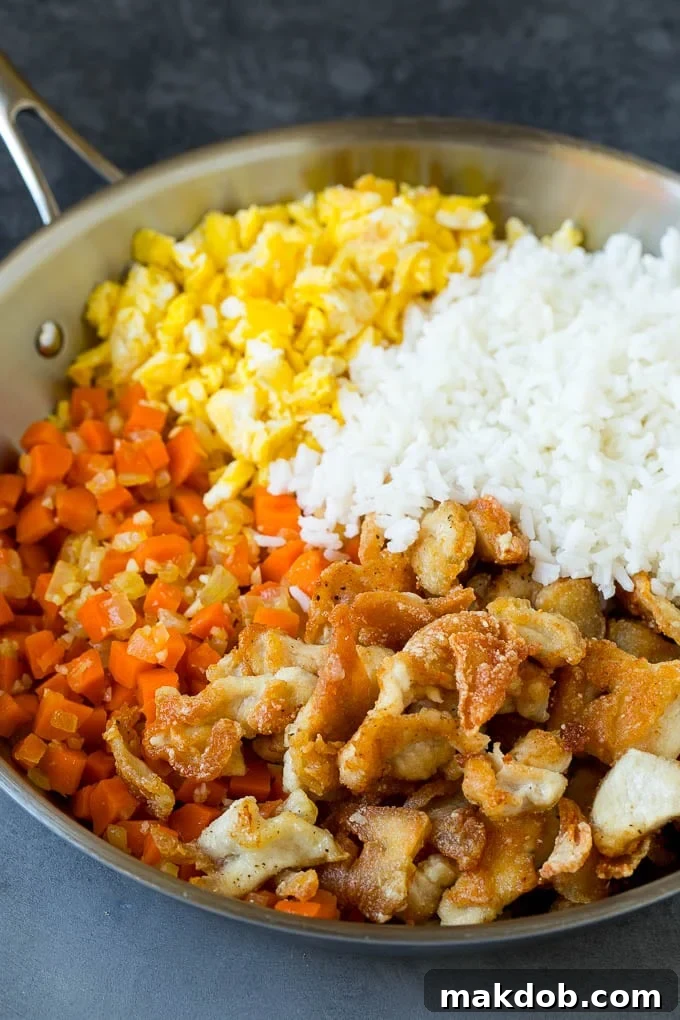
- **Combine and Stir-Fry:** Add the cold cooked rice, the reserved chicken, and vegetables back into the pan with the scrambled eggs. Pour in the flavor-packed sauce mixture: fish sauce, soy sauce, and a touch of sugar.
- **Final Toss:** Stir everything together gently but thoroughly, ensuring every grain of rice, every piece of chicken, and every vegetable is coated in the savory sauce. Continue to stir-fry for 3-4 minutes until everything is piping hot and well combined.
- **Garnish and Serve:** Transfer the fried rice to serving plates. Sprinkle generously with freshly sliced green onions for a fresh, pungent finish. For an authentic touch and a burst of color, garnish with fresh cilantro leaves, crisp cucumber slices, and juicy tomato wedges. Serve immediately and enjoy!
Essential Tips for Crafting the Perfect Fried Rice
While the steps are simple, a few expert tips can elevate your homemade Thai fried rice from good to absolutely phenomenal:
- **Perfectly Slicing Chicken:** Achieving uniform, thin slices of chicken breast is crucial for even cooking and tender results. The easiest trick is to partially freeze the chicken breasts for about 30 minutes before slicing. The firm, chilled meat is much easier to cut into small, consistent pieces. This prevents shredding and ensures each bite of chicken cooks quickly and perfectly in the stir-fry.
- **The Magic of Cold Rice:** This is arguably the most important tip for any fried rice recipe. Fried rice genuinely works best with **cold, day-old rice**. When rice is freshly cooked, it’s typically soft and moist, and the grains tend to clump together. Using cold rice allows the grains to firm up and separate, preventing a mushy texture. The distinct grains become slightly crisp when stir-fried, giving you that ideal fried rice texture with crispy bits and a satisfying chew. If you only have freshly cooked rice, spread it out on a baking sheet and refrigerate it for at least an hour, or even flash-freeze it for 15-20 minutes, to help dry it out.
- **For a Creamier Texture:** If you prefer your fried rice with a richer, creamier consistency, try partially cooking your eggs. Scramble them until they are just set but still a little runny when you add the rice, chicken, and vegetables to the pan. The residual heat from the dish will continue to cook the eggs, allowing them to bind beautifully with the rice and other ingredients, creating a wonderfully cohesive and creamy texture.
- **Time-Saving with Frozen Vegetables:** Life gets busy, and sometimes you need a shortcut. Don’t hesitate to use a bag of frozen mixed vegetables to significantly cut down on prep time. Popular choices for fried rice include a classic mix of peas and carrots, or a medley featuring corn, green beans, and peas. Simply add them directly to the pan (no need to thaw) after the onions and carrots, and stir-fry until tender-crisp.
- **High Heat is Your Friend:** Fried rice is a stir-fry, and stir-frying demands high heat. Ensure your pan or wok is adequately hot before adding ingredients. This ensures quick cooking, a good sear on proteins, and prevents the ingredients from steaming instead of frying, which leads to soggy results.
- **Don’t Overcrowd the Pan:** Cook in batches if necessary, especially when browning the chicken. Overcrowding the pan lowers the temperature, causing ingredients to steam rather than fry. This leads to a less flavorful and less textured dish.
Delicious Fried Rice Variations to Explore
One of the best aspects of fried rice is its incredible adaptability. Once you master the basic technique, you can easily experiment with different proteins, vegetables, and sauces to create new and exciting variations:
- **Thai Basil Fried Rice (Pad Krapow Kao Pad):** This popular and intensely fragrant variation is a must-try. To transform this recipe, simply add 2 tablespoons of oyster sauce along with your fish and soy sauce. The magic happens at the very end: once the rice is fully cooked and hot, remove it from the heat and quickly stir in a generous 2 cups of fresh sweet Thai basil leaves. The residual heat will gently wilt the basil, releasing its distinctive, peppery aroma and flavor throughout the dish.
- **Pineapple Fried Rice (Khao Pad Sapparot):** For a delightful sweet and savory experience, try my wonderful recipe for Pineapple Fried Rice. The natural sweetness and subtle tang of fresh pineapple chunks beautifully complement the savory elements of the fried rice, adding a juicy and refreshing dimension. Often served in a hollowed-out pineapple, it’s a dish that’s as impressive to look at as it is delicious to eat.
- **Alternate Proteins:** Don’t limit yourself to chicken!
- **Shrimp:** Cooked shrimp adds a fantastic seafood twist. Add it towards the end of the cooking process, as shrimp cooks very quickly.
- **Tofu:** Cubed and pan-fried tofu makes for a delicious vegetarian option. Ensure the tofu is pressed to remove excess water before cooking for the best texture.
- **Flank Steak:** Thinly sliced flank steak can be marinated and stir-fried to create a richer, heartier fried rice.
- **Pork:** Lean pork tenderloin, thinly sliced, also works wonderfully in this recipe.
- **Boost Your Veggies:** This recipe is a fantastic way to incorporate more vegetables into your diet. Feel free to add a colorful assortment of your favorites:
- **Broccoli florets:** For a tender-crisp texture and earthy flavor.
- **Green beans:** Add a fresh snap.
- **Corn kernels:** For sweetness and a pleasant chew.
- **Bell peppers:** Red, yellow, or orange bell peppers add vibrant color and a sweet, mild crunch.
- **Mushrooms:** Sliced mushrooms bring an umami depth.
- **Cabbage:** Shredded cabbage adds bulk and a subtle sweetness.
Thai Fried Rice vs. Chinese Fried Rice: What’s the Difference?
While both Thai fried rice (Khao Pad) and Chinese fried rice are beloved comfort foods featuring rice, protein, egg, and vegetables, they possess distinct characteristics that reflect their culinary origins and flavor philosophies. Understanding these differences can help you appreciate the nuances of each dish and guide your cooking:
- **Flavoring Agents:** This is perhaps the most significant distinction.
- **Thai Fried Rice:** The primary flavoring agent in Thai fried rice is **fish sauce**. This gives it a unique, savory, and umami-rich depth with a subtle funk that is characteristic of many Thai dishes. Often, a touch of sugar is added to balance the saltiness and create that quintessential sweet-savory Thai profile.
- **Chinese Fried Rice:** Chinese fried rice, on the other hand, heavily relies on **soy sauce** for its salty and savory notes. Other common additions include oyster sauce, sesame oil, and white pepper, which contribute to its distinct aroma and taste.
- **Herbs and Spices:**
- **Thai Fried Rice:** Fresh herbs like **cilantro** and **Thai basil** are frequently used, especially in variations like Thai Basil Fried Rice, providing bright, aromatic, and sometimes peppery notes. Lime wedges are also a common accompaniment, offering a burst of refreshing acidity.
- **Chinese Fried Rice:** While ginger and garlic are staples, fresh herbs are less commonly mixed into the stir-fry itself, though green onions are almost always used for garnish.
- **Vegetable Content:**
- **Thai Fried Rice:** Typically features a more restrained selection of vegetables, often just onion and carrots, sometimes peas. The focus is often on the rice and protein.
- **Chinese Fried Rice:** Often boasts a wider array and larger quantity of vegetables, such as peas, carrots, corn, green beans, and sometimes mushrooms or water chestnuts, making it a more vegetable-dense dish.
- **Garnishes:**
- **Thai Fried Rice:** Almost always served with fresh accompaniments like sliced cucumbers, tomato wedges, and lime wedges, which provide a cooling contrast and a fresh zing.
- **Chinese Fried Rice:** Typically garnished simply with green onions.
Despite their differences, both dishes offer comforting, satisfying experiences and showcase the incredible versatility of fried rice as a global culinary staple.
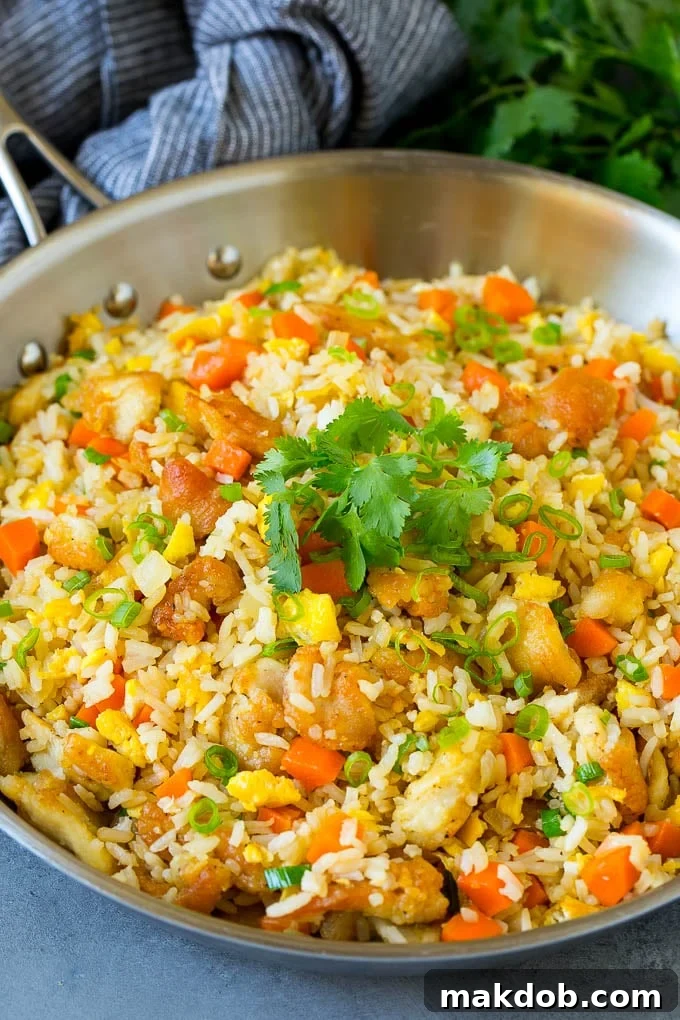
The next time you find yourself contemplating ordering takeout, consider whipping up a batch of this incredibly flavorful and easy Thai Fried Rice instead. Not only will you save time and money, but you’ll also enjoy the immense satisfaction of creating a restaurant-quality meal from scratch in your own kitchen. It’s a dish that promises to deliver on taste, texture, and pure culinary joy. You absolutely won’t regret it!
More Delicious Asian-Inspired Recipes You’ll Love
- Savory Chicken Lettuce Wraps
- Quick Teriyaki Pork Stir Fry
- Effortless Slow Cooker Mongolian Beef
- Classic Pepper Steak Stir Fry
- Spicy Firecracker Chicken
- Garlic Sesame Shrimp
5 out of 5 stars from 14 votes
Thai Fried Rice
Author: Sara Welch
This Thai fried rice is loaded with chicken, egg and vegetables, all stir fried together in a savory sauce. A copy of the take out favorite that can be made at home in less than 30 minutes!
Prep Time: 10 minutes
Cook Time: 20 minutes
Total Time: 30 minutes
Course: Main
Cuisine: Asian
Serves: 4
Ingredients
- 2 tablespoons + 2 teaspoons vegetable oil, divided use
- ¾ pound boneless skinless chicken breasts, thinly sliced
- 2 tablespoons corn starch
- ½ cup onion, finely chopped
- ½ cup carrots, peeled, quartered and sliced
- 2 teaspoons minced garlic
- 2 eggs, lightly beaten
- 3 cups cooked white rice (long grain works best)
- 3 tablespoons fish sauce
- 2 tablespoons soy sauce
- 1 teaspoon sugar
- Salt and pepper to taste
- ¼ cup green onions, sliced
- Sliced cucumbers, cilantro leaves and tomato wedges for garnish
Instructions
- Heat 2 tablespoons of oil in a large pan or wok over medium-high heat. Place the chicken in a bowl with the corn starch and toss to coat evenly. Season the chicken pieces with salt and pepper to taste.
- Place the chicken in a single layer in the hot pan. Cook for 3-4 minutes per side or until the chicken is browned and cooked through. You may need to work in batches to avoid overcrowding the pan.
- Remove the cooked chicken from the pan and cover it loosely with foil to keep warm while you prepare the other ingredients.
- Add 1 teaspoon of oil to the same pan, along with the finely chopped onion and sliced carrots. Cook for 4-5 minutes, stirring occasionally, until the vegetables begin to soften.
- Add the minced garlic to the pan with the softened vegetables and cook for an additional 30 seconds, until fragrant.
- Remove the cooked vegetables and garlic from the pan and also cover them with foil to keep warm.
- Pour the remaining teaspoon of oil into the pan. Add the lightly beaten eggs and cook, stirring occasionally and breaking them up with a spatula, until the eggs are fully scrambled and cooked through. Season the scrambled eggs with a pinch of salt and pepper.
- Add the cold cooked rice, the reserved cooked chicken, and the stir-fried vegetables back into the pan with the scrambled eggs. Stir in the fish sauce, soy sauce, and sugar, mixing gently until everything is thoroughly combined and warmed through, about 3-4 minutes. Ensure the sauce coats all the ingredients evenly.
- Sprinkle the sliced green onions over the top of the fried rice mixture, then serve immediately. For an enhanced presentation and flavor, garnish each serving with fresh cilantro leaves, sliced cucumber, and tomato wedges.
Nutrition
Calories: 330kcal | Carbohydrates: 38g | Protein: 25g | Fat: 8g | Saturated Fat: 4g | Cholesterol: 296mg | Sodium: 1460mg | Potassium: 266mg | Fiber: 2g | Sugar: 2g | Vitamin A: 2855IU | Vitamin C: 7.1mg | Calcium: 165mg | Iron: 2.9mg
Did you make this recipe?
Tag @dinneratthezoo on Instagram and hashtag it #dinneratthezoo
Share it with the world