
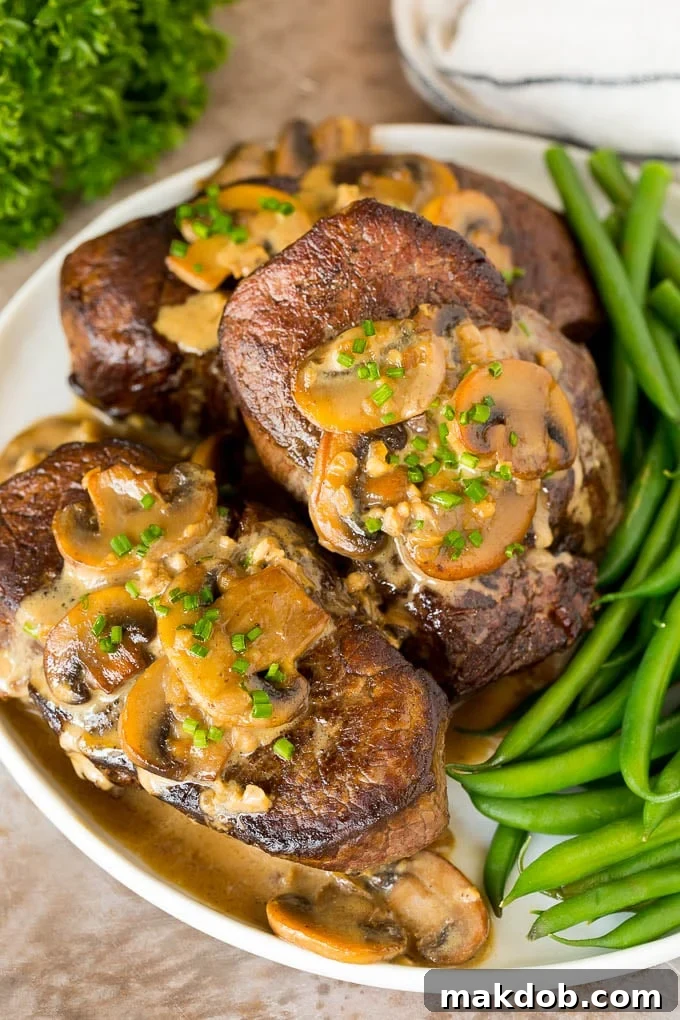
Welcome to the world of Steak Diane – a dish that masterfully blends the rich flavors of seared beef tenderloin with an exquisitely savory mushroom sauce. This culinary classic is celebrated for its remarkable ability to transform an ordinary meal into an extraordinary dining experience, all while being surprisingly quick and straightforward to prepare. Whether you’re aiming to impress guests with a sophisticated dinner or simply craving a gourmet treat on a busy weeknight, Steak Diane stands as a testament to timeless elegance and approachable deliciousness.
For those moments when you desire a recipe guaranteed to captivate and delight family and friends, Steak Diane is an undisputed champion. It proudly stands alongside other revered culinary delights such as succulent grilled Churrasco with Chimichurri, the vibrant flavors of Peruvian Lomo Saltado, the comforting tenderness of Cuban Ropa Vieja, the luxurious appeal of Broiled Lobster Tail, and the deep, satisfying taste of Slow Roasted Prime Rib. Steak Diane isn’t just a meal; it’s an experience, promising both ease and an unforgettable taste sensation.
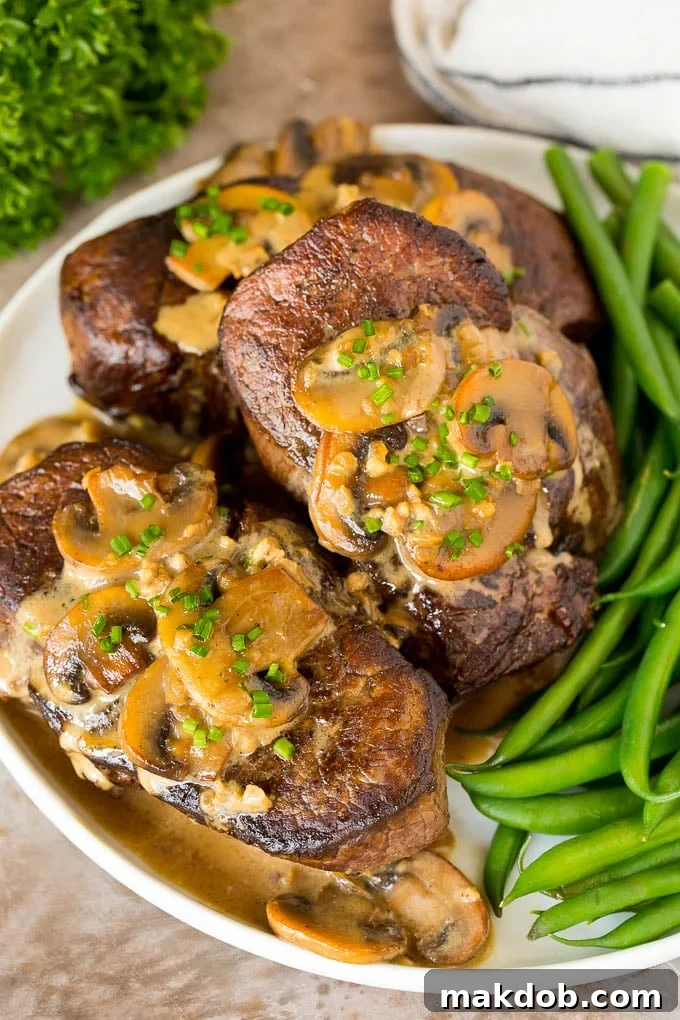
There’s something inherently special about spotting Steak Diane on a fine dining menu. Its allure is undeniable, drawing you in with the promise of perfectly cooked, ultra-tender steak enveloped in a rich, deeply flavored sauce. The synergy between the quality cut of beef and the complex, savory mushroom and cognac reduction creates a symphony of tastes that few other dishes can rival. My own love affair with this dish began at The Cheesecake Factory, and it quickly earned its place among my top choices, a true gem in my collection of 25 Cheesecake Factory Recipes. This recipe allows you to recreate that restaurant-quality magic right in your own kitchen.
Table of Contents
- What is Steak Diane?
- Steak Diane Ingredients
- How to Prepare Steak Diane
- Tips For The Perfect Meal
- Quick Ingredient Insights
- Recipe FAQs
- Mastering Steak Temperatures
- More Steak Recipes You’ll Enjoy
- Steak Diane Video
- Love This Recipe?
- Steak Diane Recipe
What is Steak Diane? The Story Behind the Classic
Steak Diane is an iconic pan-seared beef steak dish, often prepared with a flambéed sauce. The sauce typically features pan juices, mustard, shallots, cream, and a splash of cognac or brandy, creating a rich and aromatic coating for the tender beef. Despite its sophisticated restaurant presence, Steak Diane is remarkably simple to make at home, requiring minimal ingredients and cooking time. Its allure lies in the combination of a high-quality cut of meat, usually beef tenderloin, with a deeply flavorful and elegant sauce that comes together in minutes. This dish is perfect for those who appreciate gourmet flavors without spending hours in the kitchen, making it an ideal choice for both special occasions and elevated everyday meals.
Steak Diane Ingredients
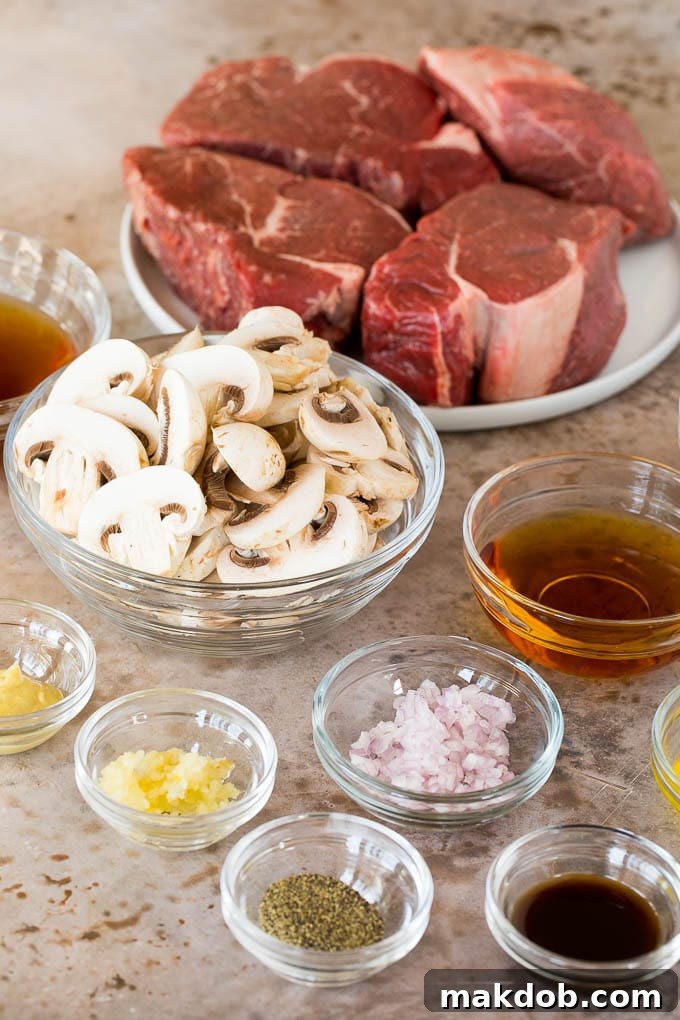
Crafting the perfect Steak Diane relies on a harmonious blend of carefully selected ingredients. To bring this exquisite dish to life, you will need premium beef tenderloin, or filet mignon, ensuring each medallion is supremely tender. Seasoning is essential, so have kosher salt and freshly ground black pepper on hand. For searing, a good quality olive oil is necessary, alongside rich butter to build the foundation of our sauce. The heart of the sauce features earthy mushrooms, finely minced shallots for a delicate onion flavor, and pungent garlic. A critical component for depth is cognac, which adds a distinct warmth and complexity, complemented by robust beef broth. Tangy Dijon mustard and savory Worcestershire sauce introduce layers of umami, while luxurious heavy cream brings richness and body. Finally, a sprinkle of fresh chives provides a vibrant finishing touch and a hint of fresh herbaceousness.
How to Prepare Steak Diane: A Step-by-Step Overview
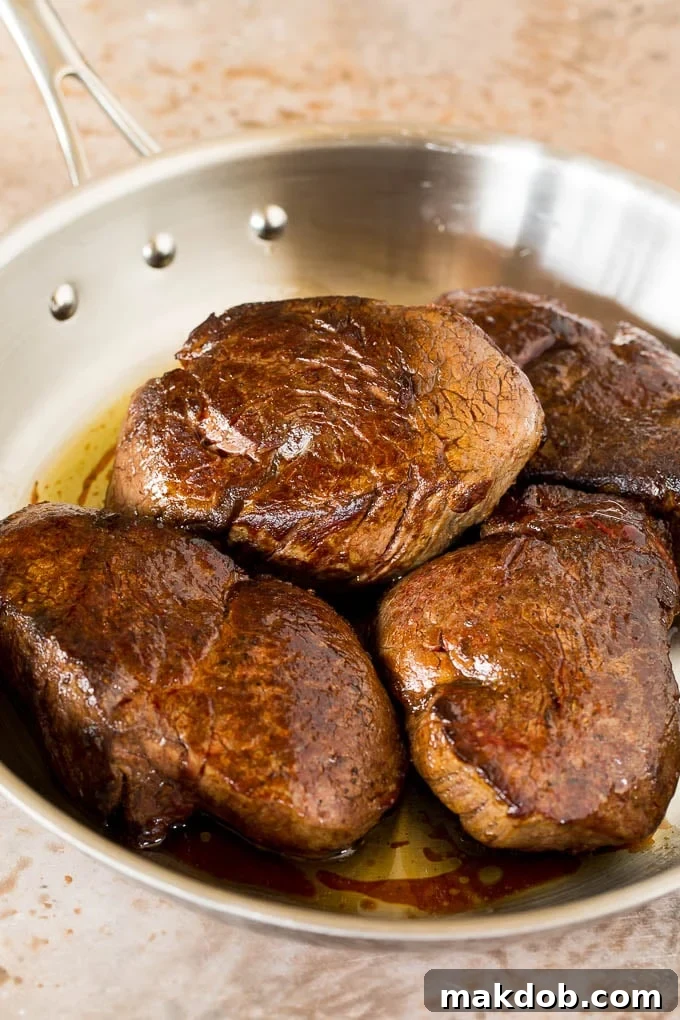
Preparing Steak Diane is a seamless culinary journey, culminating in a dish that looks and tastes incredibly sophisticated. You’ll begin by preparing your beef tenderloin, cutting it into uniform medallions approximately 3/4 inch thick. This can be achieved by slicing a whole tenderloin or simply halving thicker filet mignon steaks crosswise. Once your beef is prepped and seasoned, it’s time for a rapid sear in a hot skillet until each side achieves a beautiful golden-brown crust. Remove the perfectly seared meat from the pan and keep it warm, allowing it to rest while you create the magical sauce.
The sauce is where the true character of Steak Diane emerges. In the same pan, you’ll sauté sliced mushrooms, finely minced shallots, and fragrant garlic until they become wonderfully tender and aromatic. The next crucial step involves a splash of cognac, which is then reduced by half, concentrating its deep flavors and contributing to the sauce’s signature profile. Finally, rich beef broth, a touch of spicy Dijon mustard, and luxurious heavy cream are stirred in, bringing the mixture to a gentle simmer. As the sauce lightly thickens, it’s ready to be poured generously over your resting steak medallions. Garnish with fresh chives for a pop of color and flavor, and serve immediately for an unforgettable meal.
Tips For The Perfect Steak Diane Experience
- Choosing Your Cut of Beef: While Steak Diane traditionally calls for the exquisite tenderness of beef tenderloin steaks, which is undeniably a premium and more expensive cut, don’t feel limited. If you’re looking for a more budget-friendly yet still delicious option, alternatives like top sirloin or New York strip can also yield fantastic results. These cuts offer a robust flavor and good texture, especially when prepared quickly and served with the rich Diane sauce. Just remember that cooking times might vary slightly depending on the thickness and marbling of your chosen steak.
- Serving Immediately: For the absolute best flavor and texture, I highly recommend serving Steak Diane immediately after preparation. The sauce is at its peak consistency and temperature right off the stove, and the steak will be perfectly warm and tender. While leftovers are still enjoyable and can be stored in an airtight container in the refrigerator for up to 3 days, nothing quite compares to the fresh, hot experience.
- Accompaniments: To complete this elegant meal, consider classic pairings that complement the rich flavors of the steak and sauce. My personal favorites include creamy garlic mashed potatoes, which beautifully soak up the sauce, and a vibrant green vegetable to balance the richness. Excellent choices are crisp grilled asparagus or tender roasted green beans. Other delightful options include rice pilaf, a simple side salad, or even some crusty bread to sop up every last drop of that incredible sauce.
- Cognac Alternatives: The original recipe features Cognac, a specific type of brandy known for its nuanced flavor. If you don’t have Cognac on hand, or prefer not to purchase it, you have several excellent substitutes. An equal amount of a different type of brandy will work well, offering a similar depth of flavor. For a slightly different profile, white wine (like a dry sherry or a crisp Chardonnay) can also be used. If you prefer to avoid alcohol entirely, an equal amount of good quality beef broth is a perfect non-alcoholic substitute, though the final sauce will have a slightly less complex flavor.
- Herb Variations: Fresh chives add a delicate oniony touch and a beautiful visual appeal to Steak Diane. However, if you have no chives on hand, don’t let that deter you. Many other fresh herbs can elevate the dish. Finely chopped parsley, with its bright, clean flavor, is a fantastic alternative. Thyme offers a more earthy, aromatic note, while thinly sliced green onions (scallions) provide a slightly stronger onion kick. Choose the herb that best suits your palate or what you have available.
Quick Ingredient Insights
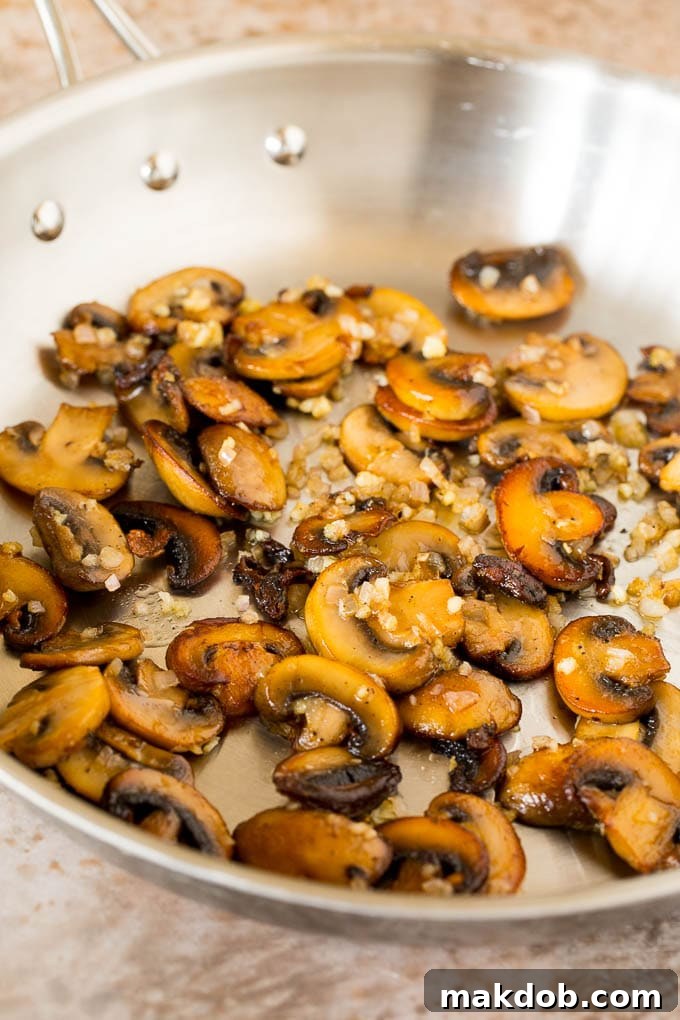
For the mushroom sauce, I typically use readily available white button mushrooms due to their mild flavor and ease of preparation. However, feel free to experiment with different varieties to add unique dimensions to your sauce. Cremini mushrooms, also known as baby bellas, offer a slightly deeper, earthier flavor. For a truly gourmet experience, consider using more exotic options like delicate oyster mushrooms or highly prized chanterelle mushrooms, which will impart their distinct characteristics to the rich sauce.
Recipe FAQs: Your Steak Diane Questions Answered
The name “Steak Diane” is shrouded in a bit of culinary mystery, but the prevailing theory links it to Diana, the Roman goddess of the hunt and wild animals. In the 19th century, a “Diane sauce” emerged, reputedly named after the goddess, characterized by its inclusion of cream, truffle mushrooms, and black pepper, often served with game meats. While the sauce has ancient roots, the steak dish as we know it today, paired with a similar sauce, is widely believed to have originated in America, specifically in high-end restaurants in New York City during the mid-20th century. Chefs sought to create an elegant tableside flambé presentation, giving rise to the modern Steak Diane, where the theatrical preparation is as much a part of its charm as its delectable taste.
The traditional Steak Diane recipe often calls for Cognac, which is a specific type of distilled brandy from France’s Cognac region. Cognac contributes a unique depth, warmth, and subtle sweetness to the sauce. If Cognac isn’t available or preferred, several excellent substitutes can be used to achieve a similar flavor profile. Any other good quality brandy can be used in an equal amount. For an alternative alcoholic option, a dry white wine will also work well, offering a slightly lighter, fruitier note. If you wish to make the dish alcohol-free, an equal amount of beef broth is the best substitute. While the distinct flavor of brandy will be absent, the sauce will still be incredibly rich and savory thanks to the other ingredients.
The signature sauce for Steak Diane is a rich and flavorful concoction built upon the delicious pan drippings from searing the steak. Its primary components include butter, which forms the base for sautéing, and a medley of aromatic vegetables such as sliced mushrooms, finely minced shallots, and pungent garlic. The liquids that give the sauce its body and depth are cognac (or a suitable substitute), robust beef broth, and luxurious heavy cream. To add layers of tangy and savory notes, Dijon mustard and Worcestershire sauce are incorporated, creating a complex and incredibly addictive sauce that perfectly complements the tender beef.
FOLLOW ME
Mastering Steak Temperatures for Perfect Doneness
Achieving the ideal doneness for your steak is paramount to a truly exceptional Steak Diane. Overcooking can quickly diminish the tenderloin’s inherent succulence, leading to a tough and dry texture. To ensure perfection, I strongly recommend using a reliable digital meat thermometer. Insert the thermometer into the thickest part of the beef medallion, avoiding any bone if applicable, and monitor the internal temperature as the meat cooks. This allows you to precisely gauge when your steak has reached your desired level of doneness, ensuring you remove it from the heat at just the right moment. Remember that steak continues to cook slightly after it’s removed from the pan (this is called carryover cooking), so it’s often wise to pull it off a few degrees before the target temperature.
While personal preference dictates the ultimate doneness, here’s a general guide to steak temperatures. I personally favor a medium doneness, as it offers a beautiful pink center and maintains incredible juiciness without being too rare or too well-done. It’s crucial to avoid cooking your beef tenderloin beyond 150 degrees F, as this particular cut is lean and can become remarkably tough and dry when pushed past medium-well.
- Rare: 130 degrees F (54°C) – A cool, red center.
- Medium Rare: 135 degrees F (57°C) – A warm, red center.
- Medium: 145 degrees F (63°C) – A warm, pink center. This is often considered the optimal doneness for tenderloin, balancing juiciness and texture.
- Medium Well: 150 degrees F (66°C) – A slightly pink center.
- Well Done: 160 degrees F (71°C) – Cooked through with little to no pink. While achievable, this is generally not recommended for tender cuts like beef tenderloin, as it can result in a drier steak.
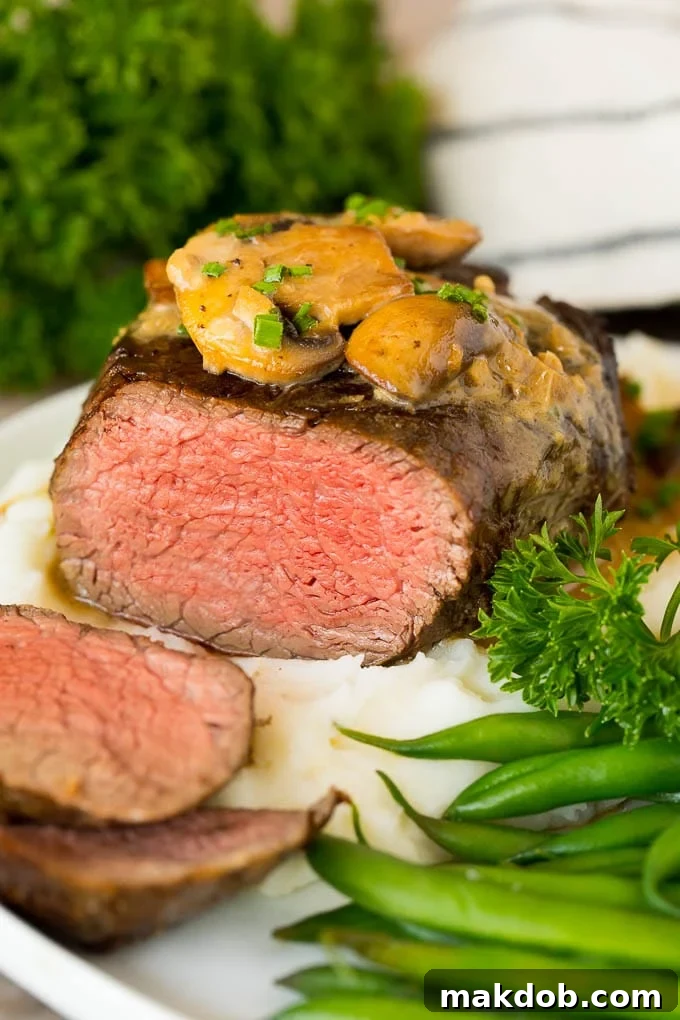
Every time I serve this Steak Diane in my home, it garners enthusiastic rave reviews. The combination of perfectly seared, tender beef and the rich, complex mushroom-cognac sauce is simply irresistible. I wholeheartedly hope your family enjoys this elegant yet easy-to-make dish as much as mine does! It’s a truly rewarding experience to bring such a classic restaurant-quality meal to your own table. For all fellow steak lovers out there, don’t miss exploring my air fryer steak recipe, a fantastic option for quick and delicious steak any night of the week.
More Steak Recipes You’ll Enjoy
If you’ve fallen in love with Steak Diane, you’ll be thrilled to discover a world of other delicious steak recipes waiting to be explored. From quick weeknight meals to impressive weekend feasts, there’s a steak preparation for every occasion. Enhance your culinary repertoire with these fantastic options that promise flavor and satisfaction.
New York Strip Steak with Garlic Butter
25 mins
Steak Tacos Recipe
30 mins
Rib Eye Steak with Garlic Butter
25 mins
Grilled Flank Steak
1 hr 20 mins
The BEST Steak Marinade
6 mins
Steak Diane Video
A video demonstrating the preparation of this exquisite Steak Diane recipe would typically be embedded here, offering visual guidance for each step of the cooking process. Such a visual aid could prove invaluable for home cooks looking to master the techniques involved in searing the beef tenderloin and creating the rich, flavorful mushroom sauce. While the direct video embed is not provided in this HTML, imagine a step-by-step guide bringing this classic dish to life on your screen, showcasing the perfect sear, the sautéing of aromatics, the deglazing with cognac, and the final whisking of the luxurious cream sauce. Watching the process unfold would undoubtedly inspire confidence and provide clarity, ensuring your Steak Diane turns out perfectly every time.
Love This Recipe?
Please leave a 5-star 🌟🌟🌟🌟🌟 rating in the recipe card below & a review in the comments section further down the page. Your feedback is invaluable and helps others discover and enjoy this wonderful recipe!
Steak Diane
Pin
Time
Ingredients
- 1 1/2 pounds beef tenderloin or filet mignon cut crosswise into 3/4 inch thick medallions
- salt and pepper to taste
- 1 tablespoon olive oil
- 2 tablespoons butter
- 8 ounces mushrooms sliced
- 2 tablespoons shallots minced
- 2 teaspoons garlic minced
- 1/4 cup cognac
- 1/2 cup beef broth
- 2 teaspoons Dijon mustard
- 2 teaspoons Worcestershire sauce
- 1/4 cup heavy cream
- 1 tablespoon chives thinly sliced
Instructions
-
Begin by thoroughly patting the beef tenderloin medallions dry with paper towels. This crucial step helps ensure a beautiful, even sear. Once dry, generously season both sides of the steak with kosher salt and freshly ground black pepper to taste.
-
Heat the olive oil in a large, heavy-bottomed skillet over high heat until it just begins to shimmer. Carefully arrange the seasoned steaks in a single layer in the hot pan. To avoid overcrowding and ensure proper searing, you may need to work in batches if your pan isn’t large enough to accommodate all the medallions at once.
-
Sear the steak for 3-4 minutes per side, or until your desired level of doneness is achieved. For accurate results and to prevent overcooking, consider using a digital meat thermometer to gauge the internal temperature, referring to the temperature guide provided earlier in this article.
-
Once cooked, remove the seared steak from the pan and place it on a clean plate. Cover loosely with foil to keep it warm and allow the juices to redistribute, ensuring a tender and moist result. This resting period is essential for quality.
-
Reduce the heat to medium. Add the butter to the same pan, allowing it to melt and combine with any remaining pan drippings. Introduce the sliced mushrooms and cook for 4-5 minutes, stirring occasionally, until they are beautifully browned and tender.
-
Stir in the minced shallots and garlic into the pan with the mushrooms. Continue to cook for just one more minute, allowing their aromas to release without burning. Season the sautéed vegetables with a pinch of salt and pepper to enhance their flavor.
-
Carefully pour the cognac into the pan. Bring the mixture to a vigorous boil, scraping up any browned bits from the bottom of the pan – this is called deglazing and adds immense flavor. Cook for 1-2 minutes, or until the liquid has reduced by approximately half, concentrating its rich essence.
-
Add the beef broth, Dijon mustard, Worcestershire sauce, and heavy cream to the pan. Whisk all the ingredients together until they are thoroughly combined, creating a smooth and creamy base for your sauce.
-
Bring the sauce to a gentle simmer. Continue to cook for 3-4 minutes, stirring occasionally, until the sauce has just thickened to a luscious consistency that coats the back of a spoon. Be careful not to let it boil vigorously, as this can curdle the cream.
-
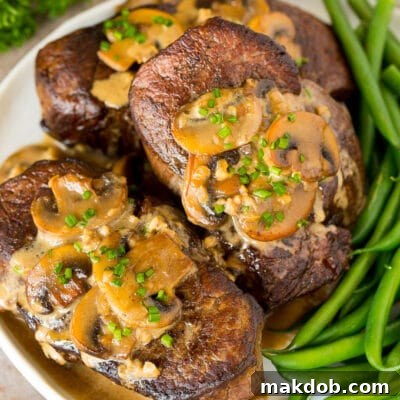
Return the rested steaks to the pan, nestling them into the rich sauce. Spoon the warm sauce generously over the meat, ensuring each medallion is beautifully coated. Sprinkle with freshly thinly sliced chives for a final flourish of flavor and color, then serve immediately.
Notes
- If you prefer not to use cognac, or don’t have it available, an equal amount of additional beef broth can be substituted in its place. While the flavor profile will be slightly different, the sauce will still be delicious and rich.
- To achieve the perfect medium doneness, I highly recommend using a meat thermometer to ensure the internal temperature of your steak reaches 145 degrees F (63°C). This results in a tender, juicy steak with a warm pink center.