
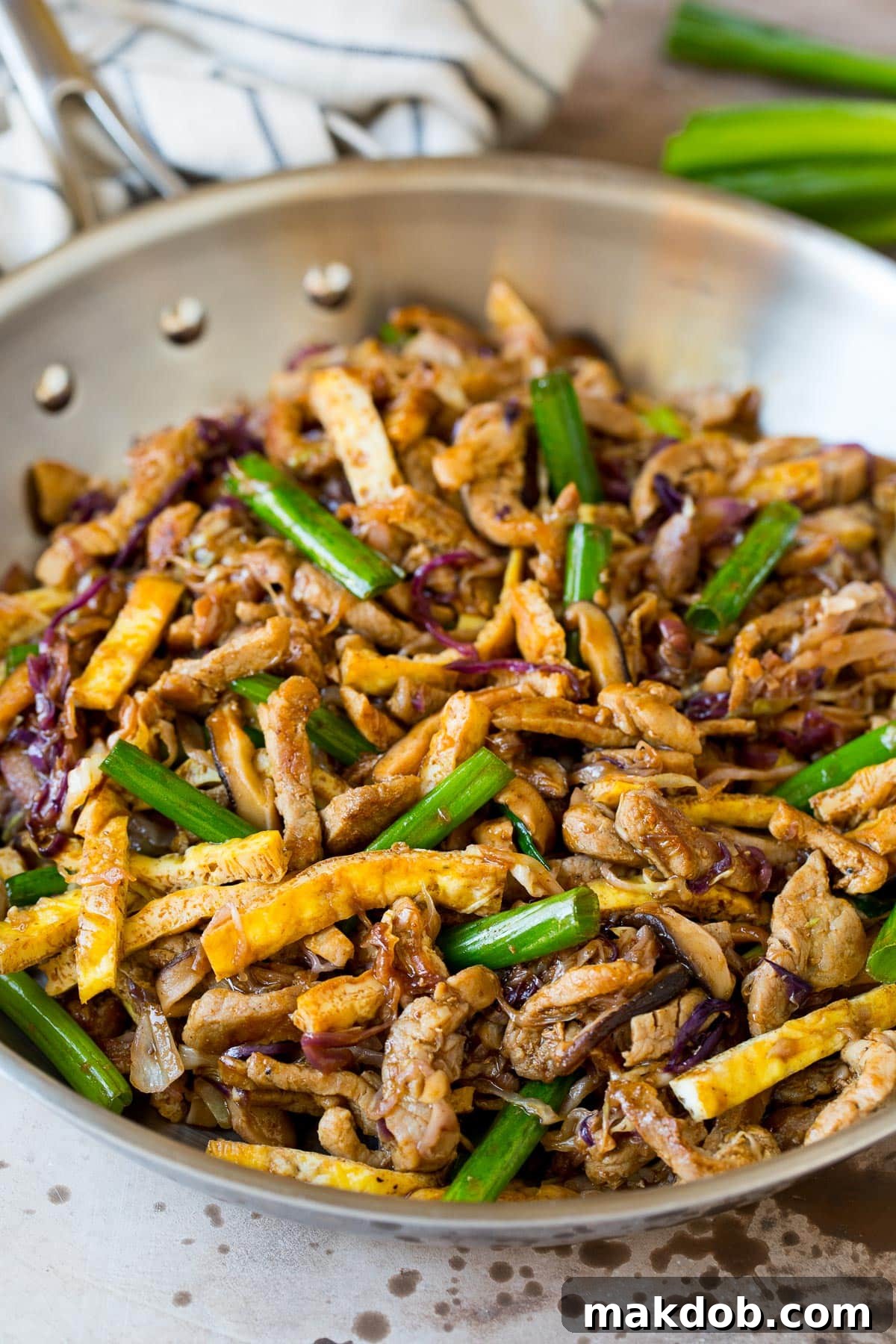
Welcome to the ultimate guide for crafting authentic and incredibly delicious Moo Shu Pork right in your own kitchen! This beloved Chinese American takeout classic features tender, thinly sliced pork tenderloin, crisp vegetables, and scrambled eggs, all bathed in a rich, savory sauce. It’s then traditionally served wrapped in warm, delicate Mandarin pancakes. While many enjoy ordering Moo Shu Pork, few realize how simple and rewarding it is to prepare at home. Our homemade version promises an explosion of flavors and textures that not only rivals but often surpasses what you’d find at your favorite restaurant.
There’s a special joy in recreating cherished Asian dishes at home. Beyond the satisfaction of a delicious meal, it offers control over ingredients and the opportunity to tailor flavors to your exact preference. Just like my family adores when I whip up homemade fried wontons or a batch of zesty honey chicken, this simple yet profoundly satisfying Moo Shu Pork recipe has become a staple. It’s proof that you don’t need exotic ingredients or advanced culinary skills to achieve truly impressive results.
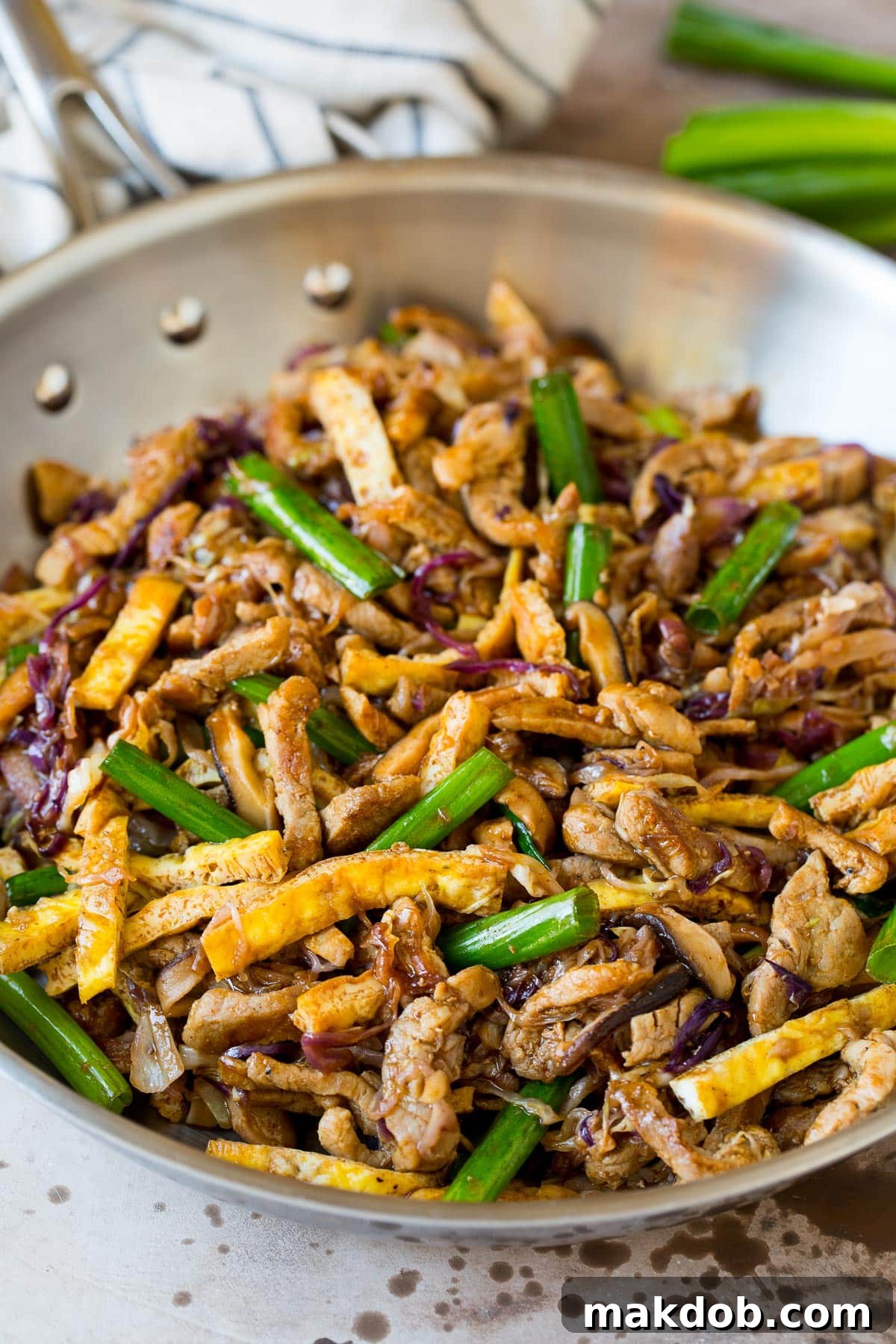
For many, the mention of Moo Shu Pork evokes memories of bustling Chinese restaurants and the anticipation of a warm, flavorful carton delivered to your door. I’ve always been captivated by the harmonious blend of savory pork, fresh vegetables, and fluffy egg, all bundled up in a soft pancake. It’s a dish that engages all your senses – the aroma, the vibrant colors, and the delightful interplay of textures with every bite. The beauty of this recipe lies in its ability to bring that authentic, crave-worthy restaurant experience into your home, using common ingredients that are readily available at any grocery store. No special trips to an Asian market required, just pure, unadulterated flavor that truly tastes even better than takeout!
Essential Ingredients for Perfect Moo Shu Pork
The secret to an exceptional Moo Shu Pork lies in its fresh, vibrant ingredients and a perfectly balanced sauce. Each component plays a vital role in creating the signature taste and texture of this classic dish. You’ll be surprised at how simple the list is for such a complex flavor profile, making it a fantastic weeknight dinner option.
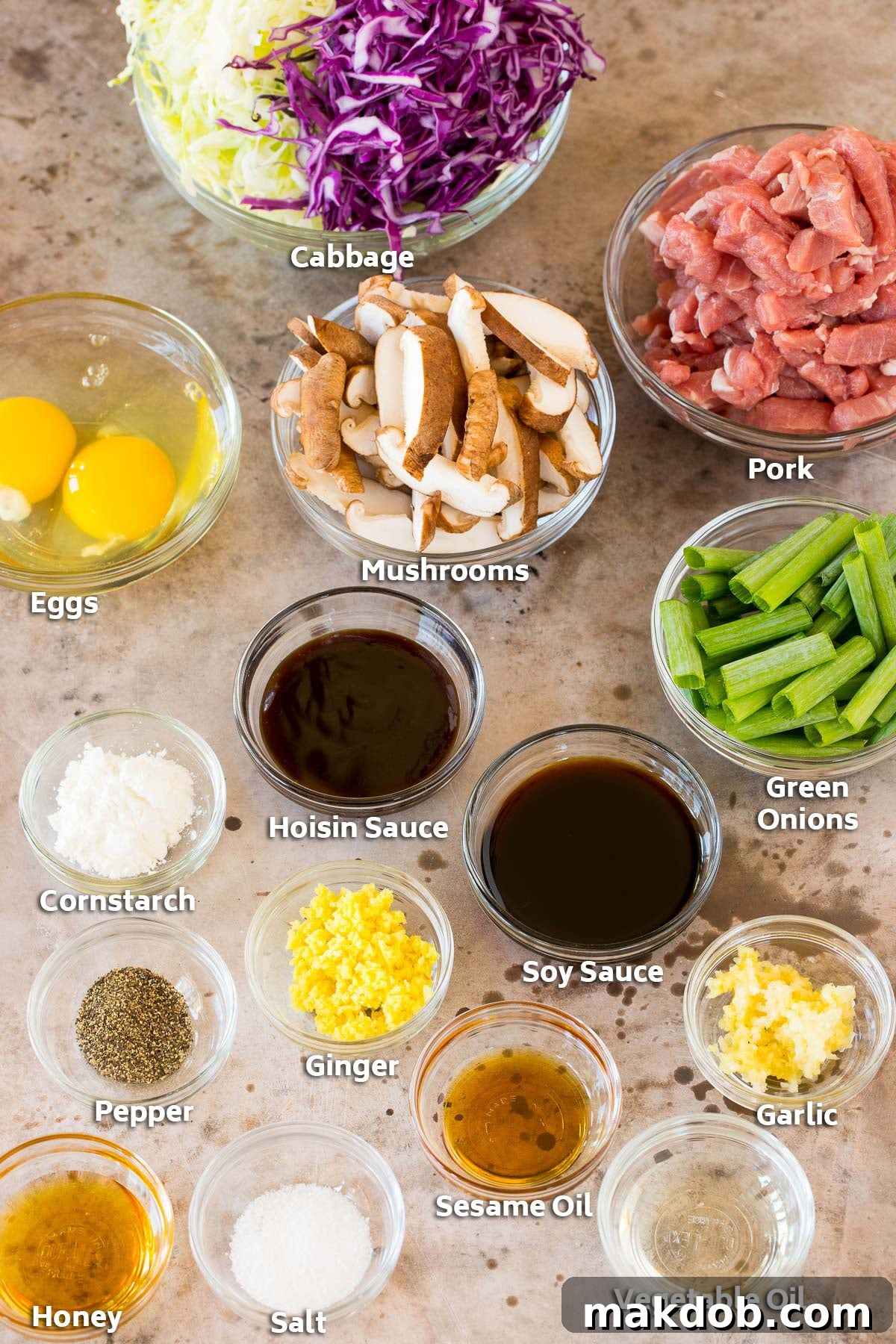
Our star protein is thinly sliced pork tenderloin, chosen for its lean texture and quick cooking time. For the stir-fry base, we use a touch of vegetable oil. The signature fluffiness comes from eggs, lightly beaten and cooked into delicate strips. A medley of shiitake mushrooms (or your favorite alternative) and crisp shredded cabbage provides essential texture and earthy flavors. Aromatic elements like fresh ginger and garlic are crucial for building depth. The backbone of the savory sauce is a harmonious blend of soy sauce, rich hoisin sauce, fragrant sesame oil, a hint of sweetness from honey, and cornstarch to create that perfect glossy, thickened consistency. A pinch of salt and pepper seasons the ingredients to perfection, while green onions add a final burst of freshness and color. For serving, don’t forget your warm flour tortillas or Mandarin pancakes and extra hoisin sauce!
Crafting Your Homemade Moo Shu Pork: A Step-by-Step Guide
Making Moo Shu Pork at home is surprisingly straightforward, especially when you break it down into a few key stages. The stir-fry method ensures quick cooking and maximum flavor development. Follow these steps for a perfectly balanced and delicious dish:
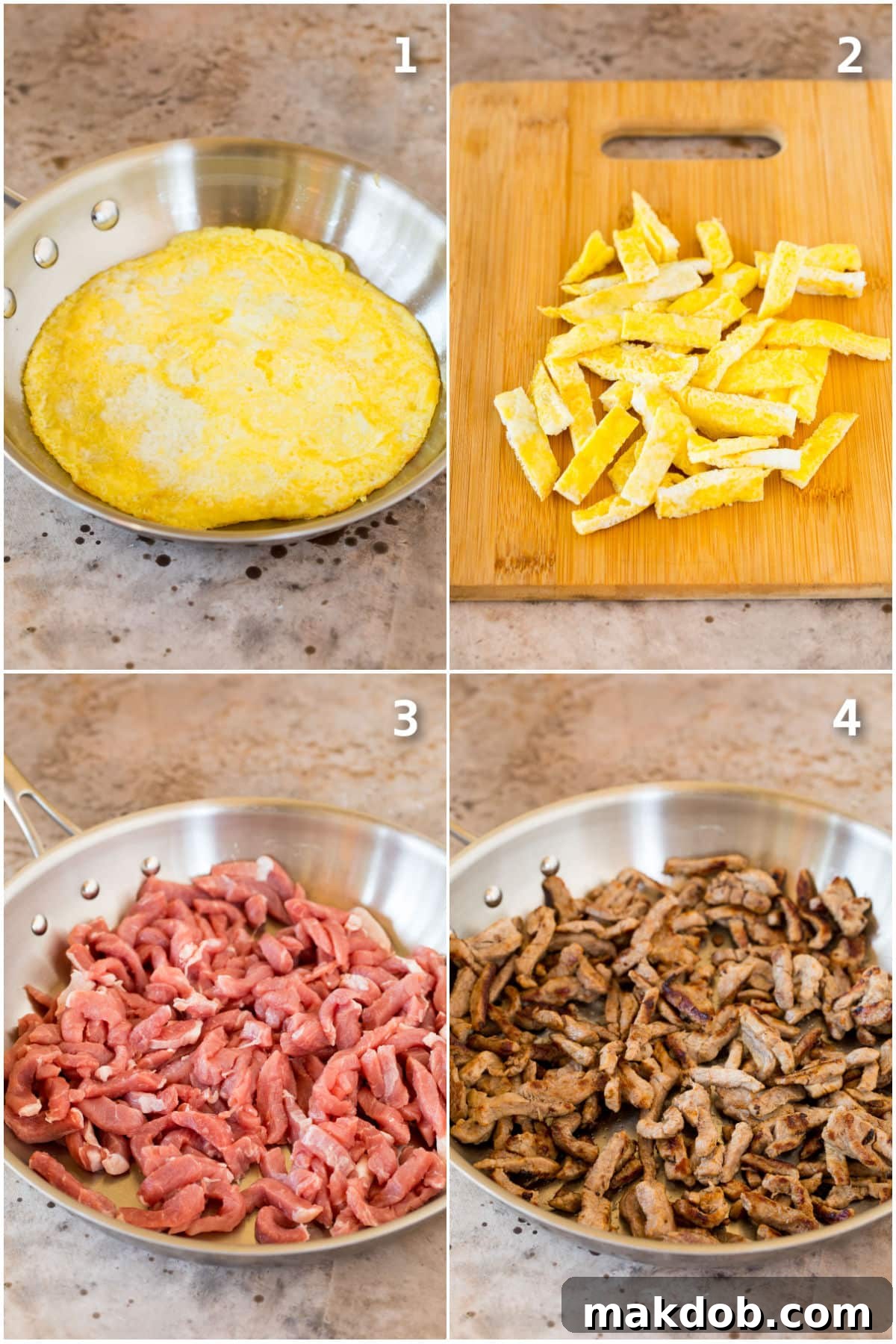
Begin by preparing your eggs. Heat a small amount of vegetable oil in a large skillet over medium heat. Pour in the lightly beaten eggs, seasoning them with a pinch of salt and pepper. Cook undisturbed for about 3-4 minutes until a flat, thin omelette forms. This allows it to set beautifully. Carefully flip the omelette and cook for another 1-2 minutes until just done. Remove from the pan, slice into thin strips, and set aside, covering to keep warm. Wipe out your skillet with a paper towel to remove any residual egg bits, ensuring a clean cooking surface for the pork.
Next, it’s time for the pork. Heat the remaining vegetable oil in the same skillet over medium-high heat. Add your thinly sliced pork tenderloin and stir-fry, ensuring the pieces get a beautiful golden-brown sear. Cook for 4-5 minutes, stirring occasionally, until the pork is cooked through and tender. Season the cooked pork with salt and pepper to taste. Transfer the pork to a plate with the eggs and cover to keep it warm, preventing it from overcooking.
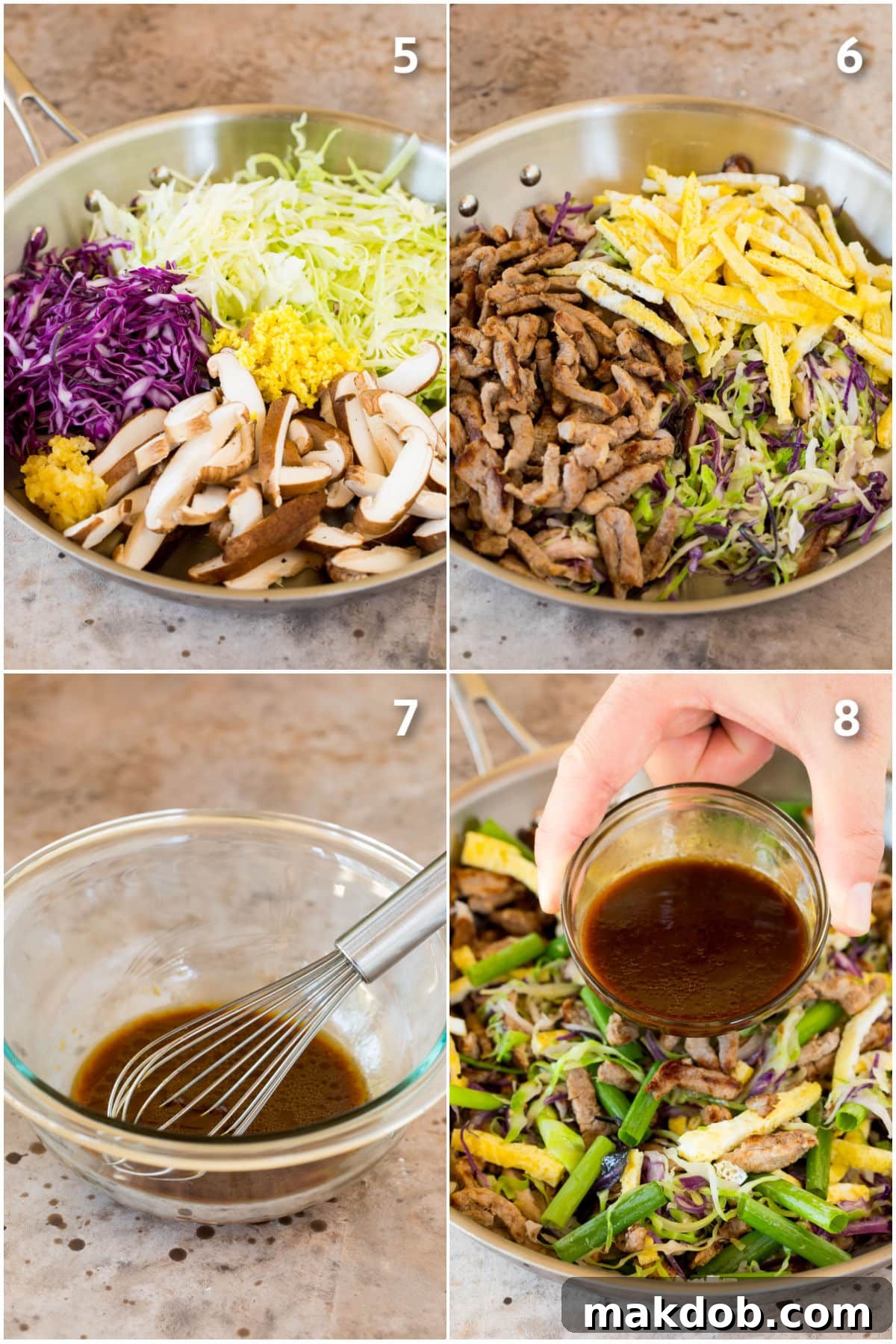
Now, build the aromatic base. Add the shredded cabbage, minced fresh ginger, minced garlic, and sliced mushrooms to the pan. Stir-fry for 2-3 minutes, or until the mushrooms are tender and the cabbage has wilted slightly but still retains a pleasant crunch. This quick cooking ensures the vegetables remain vibrant and flavorful.
Finally, bring it all together. Return the seared pork and sliced eggs to the pan with the vegetables. Stir in the chopped green onions. In a small bowl, whisk together the soy sauce, hoisin sauce, sesame oil, honey, and 1 tablespoon of water. This creates the savory, slightly sweet, and aromatic sauce. Whisk in the cornstarch until completely smooth – this is key for a thick, glossy sauce. Pour this prepared sauce over all the ingredients in the pan. Turn the heat to high and bring the mixture to a boil, stirring constantly. Let it boil for about 30 seconds, or just until the sauce thickens to your desired consistency. The cornstarch will work its magic quickly.
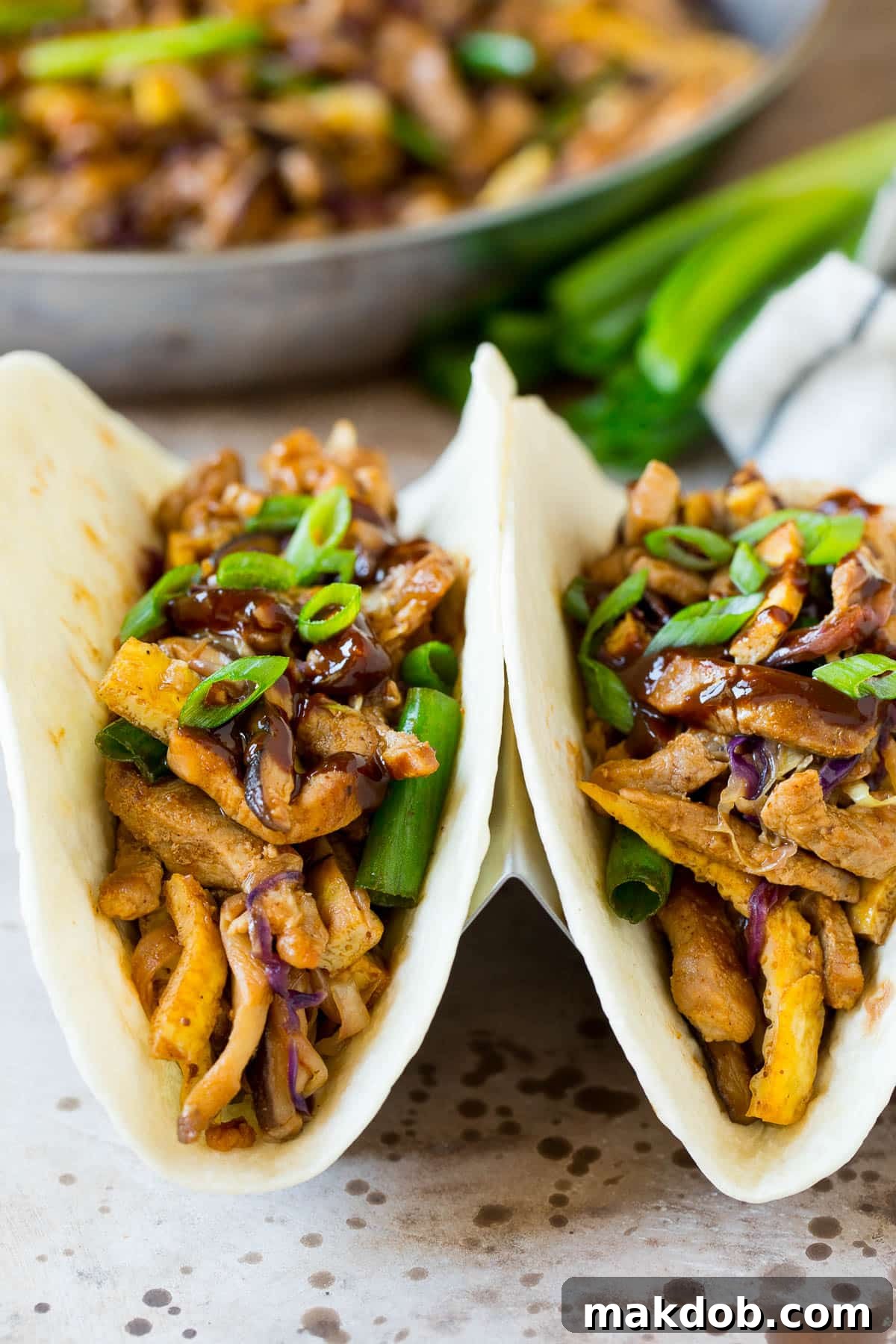
Serve your magnificent Moo Shu Pork immediately. Spoon generous portions into warm flour tortillas or traditional Mandarin pancakes, offering extra hoisin sauce and additional sliced green onions on the side for guests to customize their wraps. Enjoy the burst of flavors and textures in every bite!
Expert Tips for the Perfect Stir-Fry Experience
Achieving a restaurant-quality stir-fry at home is all about technique and a few clever shortcuts. Here are some invaluable tips to elevate your Moo Shu Pork and ensure every batch is a success:
- Pork Preparation is Key: While I prefer pork tenderloin for its lean nature and tender results, boneless pork chops, thinly sliced pork shoulder, or even pork loin make excellent substitutes. The most crucial aspect is achieving thin, uniform slices, often referred to as matchsticks. To make slicing easier and safer, place your chosen cut of meat in the freezer for 20-30 minutes. This firms up the meat, allowing for cleaner, precise cuts against the grain. Thin slices cook quickly and absorb the sauce beautifully.
- Cabbage Convenience: Save valuable prep time by opting for a bag of pre-shredded cabbage from the produce section of your grocery store. Most varieties, whether green, purple, or a mix, work wonderfully here, adding crunch and freshness without the effort of shredding your own. If shredding from scratch, ensure it’s finely shredded for optimal texture.
- Mushroom Choices: Shiitake mushrooms, with their distinctive earthy and woody flavor, are traditional and highly recommended for this dish. You can typically find them in the produce area of most larger grocery stores or Asian markets. However, if shiitake aren’t available, don’t hesitate to substitute with readily accessible button mushrooms or delicate oyster mushrooms. Both will add a lovely umami depth to your stir-fry.
- Pancake Perfection (or Shortcut): Traditionally, Moo Shu Pork is served with homemade Mandarin pancakes, which are soft, thin, and slightly chewy. While delightful, they can be time-consuming to prepare. For a fantastic and incredibly time-saving shortcut, use regular flour tortillas! Simply warm them gently in a dry skillet, microwave, or steamer basket until pliable. While not strictly authentic, they serve as an excellent, convenient wrapper that captures all the delicious fillings and sauces, allowing you to enjoy this dish without the extra effort.
Moo Shu Pork: Your Questions Answered
Curious about the origins of Moo Shu Pork or the best ways to enjoy and store it? Here are some frequently asked questions to help you become a Moo Shu master:
Moo Shu (sometimes spelled Mu Shu or Mu Xu) is a beloved dish believed to have originated in the northern regions of China. It gained significant popularity in America during the 1960s, quickly becoming a staple on Chinese restaurant menus. At its heart, Moo Shu consists of finely sliced meat (or sometimes seafood) stir-fried with an assortment of vegetables, particularly cabbage and eggs, all coated in a light yet richly flavored savory sauce. The defining characteristic is its unique presentation: served with warm, thin Mandarin pancakes and often a side of hoisin sauce, allowing diners to roll their own savory wraps.
Reheating Moo Shu Pork effectively is key to preserving its flavors and textures. The best method is to gently warm it in a skillet on the stove over medium heat. Add a tiny splash of water or broth to prevent it from drying out, stirring occasionally until warmed through. This helps to re-invigorate the ingredients and sauce. Alternatively, you can microwave leftovers in 30-second increments, stirring between each, until it’s heated to your satisfaction. Be careful not to overcook, as this can make the pork tough and the vegetables soggy.
Moo Shu Pork is designed for an interactive and enjoyable dining experience. It’s typically served with a stack of warm, steamed Mandarin-style pancakes, alongside additional condiments such as thinly sliced green onions and a rich hoisin or plum sauce. To eat, simply take a warm pancake, spread a thin layer of hoisin sauce onto it, add a spoonful or two of the flavorful Moo Shu mixture, and sprinkle with green onions. Then, roll it up tightly, much like a small burrito or taco. Many authentic Chinese restaurants even offer tableside service, where skilled waitstaff will expertly roll the pancakes for you right at your table, adding to the culinary theater.
Endless Flavor Variations to Explore
While our classic Moo Shu Pork recipe is undeniably delicious and satisfying as-is, one of its greatest strengths is its versatility. It serves as an excellent base for customization, allowing you to easily experiment with different proteins, vegetables, and seasonings to match your personal taste preferences or whatever ingredients you have on hand. Don’t be afraid to get creative and make this dish uniquely yours!
- Protein Power-Up: If pork isn’t your preferred protein, or if you’re simply looking to mix things up, the possibilities are vast. Instead of pork, try thinly sliced chicken breast or chicken thighs for a poultry-based version. Flank steak, cut against the grain into thin strips, creates a hearty and robust beef Moo Shu. For a lighter, seafood option, shrimp can be quickly stir-fried until pink and tender, adding a delicate sweetness to the dish. Just adjust cooking times accordingly to ensure your chosen protein is cooked through but not overdone.
- Vibrant Veggie Boost: The more vegetables, the merrier! Moo Shu Pork is an ideal canvas for incorporating extra nutrients and textures. Consider adding finely shredded carrots for a touch of sweetness and color, crunchy bamboo shoots for an authentic Asian flair, or thinly sliced white onions and green bell peppers for additional savory notes and a subtle bite. Water chestnuts can also be a fantastic addition, providing a delightful crispness. Feel free to use a pre-made stir-fry vegetable mix to make prep even faster.
- Seasoning Sophistication: For those who love a bit of heat, infusing some spicy elements can transform the dish. A drizzle of sriracha sauce stirred into the final mixture, or a pinch of red chili flakes added during the stir-frying process, will provide a welcome kick. For a deeper, more complex flavor, a touch of five-spice powder can be incorporated with the pork, or a dash of rice vinegar can brighten the sauce with a tangy counterpoint. A little extra fresh black pepper can also enhance the overall savory profile.
Say goodbye to costly and sometimes questionable takeout, and say hello to the incredible satisfaction of making this flavorful Moo Shu Pork at home. You’ll not only enjoy a healthier, fresher meal but also the pride of creating a delicious Asian classic from scratch. Trust us, your taste buds (and your wallet!) will thank you!
More Asian Recipes You’ll Love
- Ginger Chicken
- Beef and Broccoli Stir-Fry
- Homemade Potstickers
- Beef Chow Mein
- Classic Chicken Fried Rice
Moo Shu Pork Video
Watch how easily this amazing Moo Shu Pork comes together in our helpful video tutorial!
A video tutorial demonstrating the preparation of Moo Shu Pork would be displayed here.
Moo Shu Pork
Pin Recipe
Save RecipeSaved Recipe
Ingredients
- 1 pound pork tenderloin cut into thin matchsticks
- 1 tablespoon vegetable oil divided use
- 2 eggs lightly beaten
- 1 cup shiitake mushrooms stems removed, thinly sliced
- 3 cups shredded cabbage can be green, purple or both
- 2 teaspoons minced ginger
- 1 teaspoon minced garlic
- 2 tablespoons soy sauce
- 2 tablespoons hoisin sauce
- 1 teaspoon sesame oil
- 1 teaspoon honey
- 2 teaspoons cornstarch
- salt and pepper to taste
- 1/4 cup green onions cut into 1 inch pieces
- For serving: flour tortillas or mandarin pancakes, sliced green onions, hoisin sauce
Instructions
-
Heat 1 teaspoon of oil in a large skillet over medium heat. Add the eggs and season to taste with salt and pepper. Cook, undisturbed, until a flat omelet forms, about 3-4 minutes. Carefully flip the eggs and cook on the other side until done, 1-2 minutes more.
-
Remove the eggs from the pan and cut into strips. Cover to keep warm.
-
Wipe out the pan with a paper towel.
-
Heat the remaining 2 teaspoons of oil in the pan.
-
Add the pork and cook, stirring occasionally, until meat is browned and cooked through, 4-5 minutes. Season the meat with salt and pepper. Remove the pork from the pan and place on a plate; cover to keep warm.
-
Add the cabbage, ginger, garlic and mushrooms to the pan and cook for 2-3 minutes or until mushrooms are tender and cabbage is wilted.
-
Return the pork and eggs to the pan. Stir in the green onions.
-
In a small bowl whisk together the soy sauce, hoisin sauce, sesame oil, honey and 1 tablespoon of water. Whisk in the cornstarch until smooth.
-
Add the sauce to the pan and turn the heat to high; bring to a boil. Boil for 30 seconds or just until sauce starts to thicken.
-
Serve immediately with tortillas or pancakes, extra hoisin sauce and sliced green onions.
Notes
- I like to use pork tenderloin for this dish, but boneless pork chops, thinly sliced pork shoulder or pork loin will also work. I recommend placing your meat in the freezer for 20-30 minutes so it can firm up, this helps to make the meat easier to slice into thin pieces.
- You can use a bag of pre-shredded cabbage to save on prep time.
- I typically use flour tortillas as a shortcut instead of making my own pancakes. It’s not as authentic, but saves a ton of time!