
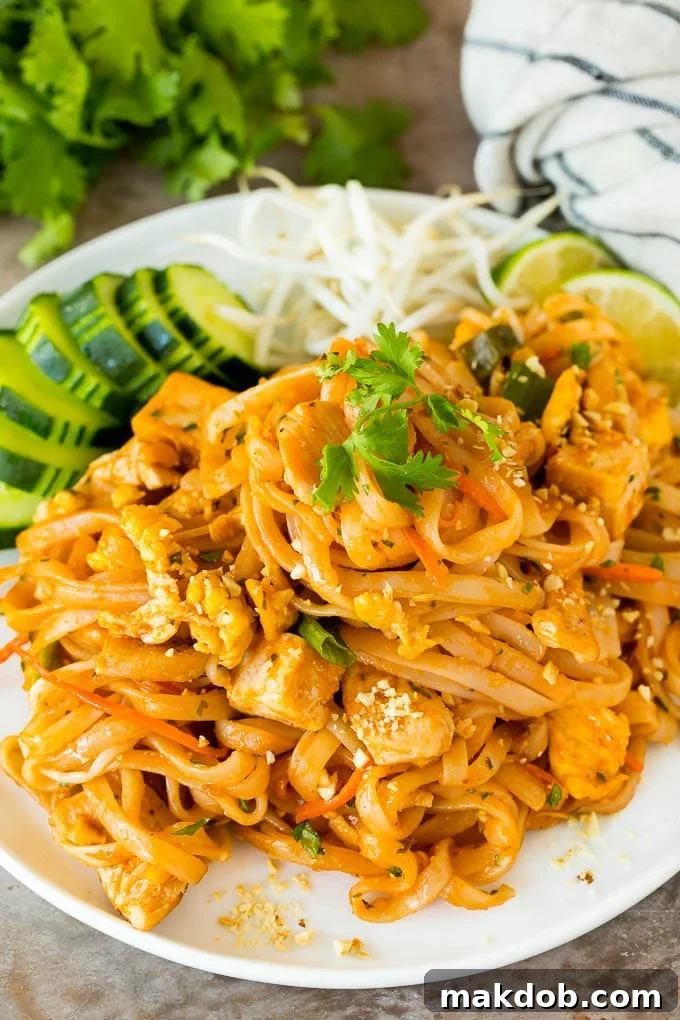
Welcome to the ultimate guide for creating an irresistible Chicken Pad Thai right in your own kitchen! This isn’t just any Pad Thai; it’s a homemade rendition that rivals, and often surpasses, the flavors of your favorite Thai restaurant takeout. Imagine tender rice noodles perfectly coated in a rich, savory sauce, intermingled with succulent slices of chicken, delicate tofu, fresh vibrant vegetables, and scrambled egg. It’s a symphony of textures and tastes, promising to become a staple in your culinary repertoire.
For many, Pad Thai holds a special place, evoking memories of bustling street food stalls in Thailand or cozy evenings enjoying takeout. While I adore indulging in local Thai cuisine, there’s an unmatched satisfaction in recreating these beloved dishes at home. Beyond the incredible taste, crafting your own Thai chicken curry, refreshing cucumber salad, savory Thai fried rice, or this simple yet profoundly satisfying Chicken Pad Thai allows for complete control over ingredients and ensures peak freshness. Get ready to embark on a flavorful journey that will have your family asking for seconds!
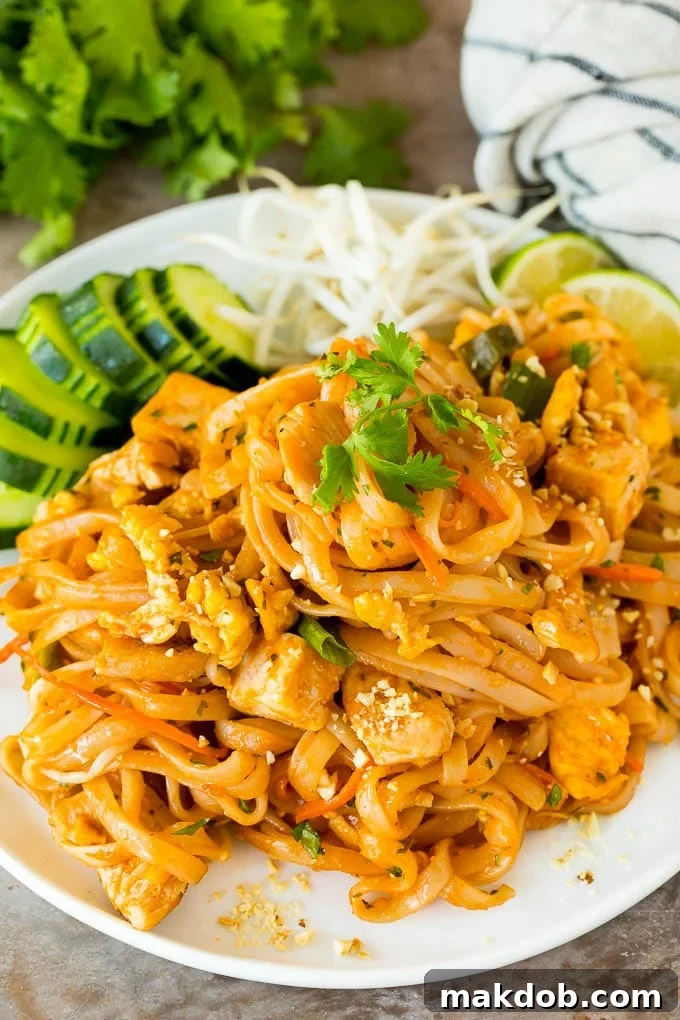
The Irresistible Charm of Homemade Chicken Pad Thai
There’s a unique joy that comes with perfecting a dish you typically order out. Chicken Pad Thai, with its complex sweet, sour, salty, and umami profile, might seem intimidating, but it’s surprisingly achievable at home. This recipe is designed to demystify the process, bringing authentic Thai flavors directly to your dinner table. Forget the long waits and delivery fees; with a few simple steps and fresh ingredients, you can enjoy a superior Pad Thai experience whenever the craving strikes.
Making Pad Thai from scratch means you can tailor it exactly to your preference. Want more spice? Add it. Prefer extra vegetables? Load them in! This flexibility is one of the greatest advantages of home cooking, transforming a restaurant classic into a personalized culinary masterpiece that consistently yields perfect results.
What Exactly is Pad Thai? Unpacking a Thai Culinary Icon
Pad Thai, or “fried Thai style,” is more than just a noodle dish; it’s a national dish of Thailand, celebrated for its exquisite balance of flavors and textures. Its origins trace back to the 1930s and 40s, when the Thai government promoted it as a way to boost national identity and rice consumption. It quickly became a popular street food, accessible and beloved by all.
At its core, Pad Thai is a stir-fried rice noodle dish featuring a harmonious blend of ingredients. Typically, it includes a protein such as chicken, beef, or shrimp, often combined with firm tofu and scrambled eggs. The magic truly happens when these components are tossed in a signature sauce made from a thoughtful combination of brown sugar, tangy lime juice, savory soy sauce, and aromatic fish sauce. This delightful medley is usually garnished with fresh bean sprouts, crunchy peanuts, and a squeeze of lime, creating a vibrant, satisfying meal that has captivated palates worldwide, especially becoming a favorite in American and European restaurants.
Crafting the Perfect Pad Thai Sauce: A Symphony of Flavors
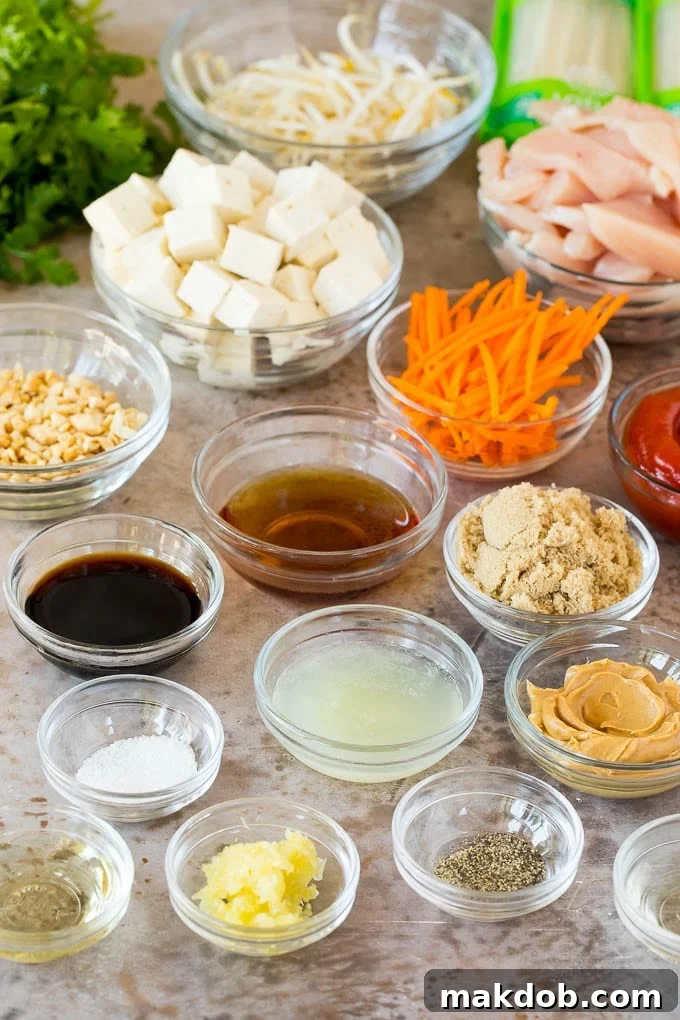
The soul of any great Pad Thai lies in its sauce. This recipe’s homemade sauce is a masterclass in balance, hitting all the essential taste notes – sweet, sour, salty, and a unique umami depth. Here’s a closer look at what each ingredient contributes to this vibrant concoction:
- Fish Sauce: A cornerstone of Thai cuisine, fish sauce provides that unmistakable savory, umami punch. Don’t be deterred by its aroma; it transforms into a rich, complex flavor once cooked.
- Brown Sugar: Adds a delightful sweetness that perfectly counters the sour and salty elements, contributing to the sauce’s signature caramel-like undertone.
- Soy Sauce: Brings an additional layer of saltiness and umami, enhancing the overall savory profile.
- Lime Juice: Essential for that bright, tangy acidity that cuts through the richness and lifts all the other flavors. Freshly squeezed lime juice is always recommended for the best results.
- Rice Vinegar: Contributes another layer of subtle tartness, complementing the lime juice without overpowering it.
- Peanut Butter: While not always found in traditional Thai street food Pad Thai, peanut butter is a popular addition in Western versions, providing a creamy texture and nutty richness that many adore. It helps bind the sauce and adds a satisfying depth.
- Ketchup: This might seem surprising, but ketchup offers a unique tang and sweetness, contributing to the distinct flavor profile of many beloved Americanized Pad Thai recipes. It adds a subtle fruity note and helps achieve that reddish hue.
- Water: Used to thin the sauce to the perfect consistency, ensuring it coats the noodles evenly without being too thick.
Whisking these ingredients together creates a complex and deeply flavorful sauce that is the absolute heart of this exceptional Chicken Pad Thai.
Essential Ingredients for an Authentic Taste
Beyond the sauce, the quality and preparation of your main ingredients are crucial for an outstanding Pad Thai. Each component plays a vital role in creating the characteristic texture and flavor of the dish.
The Right Noodles: Rice Noodles
For an authentic Pad Thai, dried flat rice noodles are non-negotiable. They absorb the sauce beautifully and achieve that perfect chewy-tender texture. Look for them in the Asian foods aisle of your local grocery store. The key is to prepare them correctly: typically, they are soaked in hot water until pliable but still slightly firm, not fully cooked, as they will finish cooking in the stir-fry. Overcooked noodles will become mushy, so be mindful of the package instructions and test for al dente.
Protein Powerhouses: Chicken and Tofu
- Chicken Breast: Boneless, skinless chicken breast is ideal for its lean texture and ability to absorb flavors. Slicing it thinly ensures it cooks quickly and evenly. For easier, ultra-thin slices, a pro tip is to partially freeze the chicken for about 20-30 minutes before slicing. This firms up the meat, allowing for cleaner, more precise cuts against the grain.
- Extra Firm Tofu: Tofu adds another fantastic texture and readily soaks up the savory sauce. Using extra-firm tofu is crucial as it holds its shape during stir-frying. If you only have softer varieties, you can press out excess water to firm it up. This involves placing thick slices of tofu between layers of paper towels, then weighing it down with a heavy object (like a skillet or books) for at least 20 minutes. This pressing step removes moisture, allowing the tofu to brown better and prevents it from crumbling. Once pressed, cut it into desired cubes.
Fresh Vegetables & Garnishes
The fresh components add crunch, color, and vital nutrients to your Pad Thai.
- Shredded Carrots: These provide a touch of sweetness and vibrant color, along with a slight crunch.
- Bean Sprouts: A signature ingredient, bean sprouts add a refreshing crispness that contrasts wonderfully with the soft noodles. They are typically added at the very end to retain their crunch.
- Green Onions (Scallions): Offer a mild oniony bite and fresh herbaceous notes. Cutting them into 1-inch pieces makes them easy to incorporate and visually appealing.
- Cilantro Leaves: Coarsely chopped cilantro adds a burst of fresh, bright, and slightly citrusy flavor.
- Roasted Peanuts: Crushed or chopped roasted peanuts are a classic garnish, providing a delightful nutty flavor and textural contrast.
- Lime Wedges: A final squeeze of fresh lime juice just before serving brightens the entire dish, highlighting its tangy elements and adding a zesty finish.
Step-by-Step Guide to Your Best Chicken Pad Thai
Creating this flavorful dish is a methodical process that, when followed, guarantees a restaurant-quality meal. Ensure all your ingredients are prepped and ready (mise en place) before you begin cooking, as stir-frying moves quickly.
- Prepare the Sauce: In a medium bowl, combine all the sauce ingredients: fish sauce, brown sugar, soy sauce, rice vinegar, lime juice, peanut butter, ketchup, and water. Whisk everything together until the mixture is smooth and well combined. Set aside.
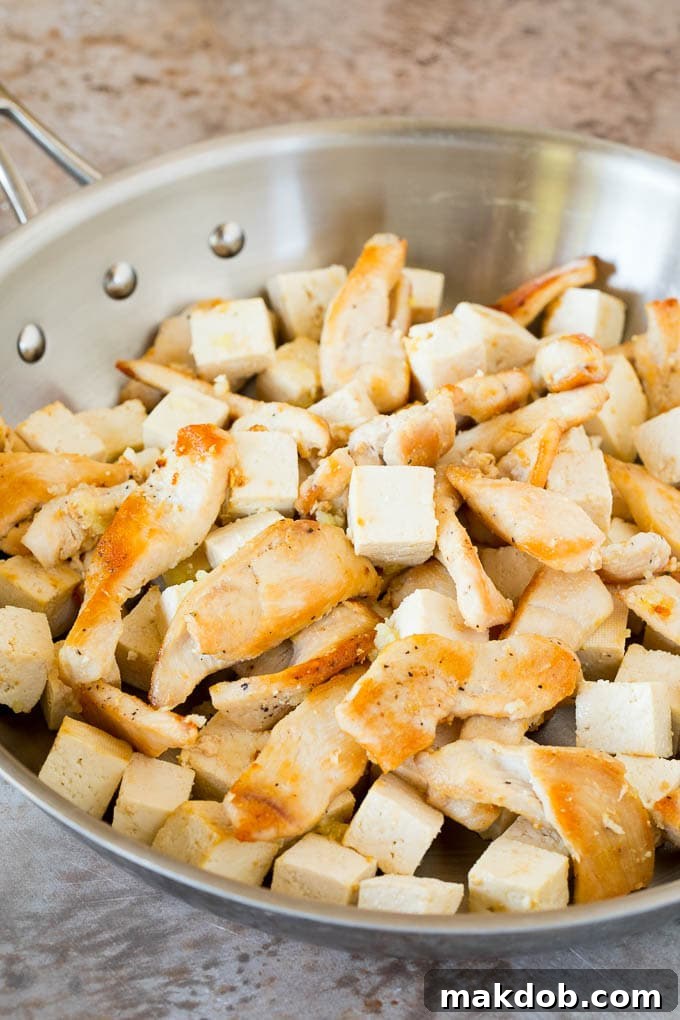
- Cook Chicken and Tofu: Heat the vegetable oil in a large skillet or wok over medium-high heat. Once shimmering, add the thinly sliced chicken in a single layer. Season generously with salt and pepper. Cook the chicken for about 4-5 minutes, stirring occasionally, until it’s beautifully golden brown and fully cooked through.
- Add Tofu and Garlic: Introduce the cubed extra-firm tofu to the pan with the chicken. Continue to cook for another 3-4 minutes, allowing the tofu to achieve a golden crust. Next, add the minced garlic and stir-fry for just about 30 seconds until fragrant. Be careful not to burn the garlic.
- Keep Warm: Remove the cooked chicken, tofu, and garlic mixture from the pan and transfer it to a plate. Cover it loosely with foil to keep it warm while you prepare the other components.
- Prepare Rice Noodles: While the chicken and tofu are cooking, prepare your rice noodles according to the package directions. Typically, this involves soaking them in hot water until they are tender but still have a slight bite (al dente). Drain them well and set aside.
- Scramble the Eggs: In the same pan, add the beaten eggs. Cook for 3-4 minutes, stirring occasionally, until the eggs are scrambled and fully cooked. Break them into smaller pieces.
- Combine and Cook Vegetables: Return the warm chicken and tofu mixture to the pan with the scrambled eggs. Add the shredded carrots and stir-fry everything together for an additional 2-3 minutes, allowing the flavors to meld and the carrots to slightly soften.
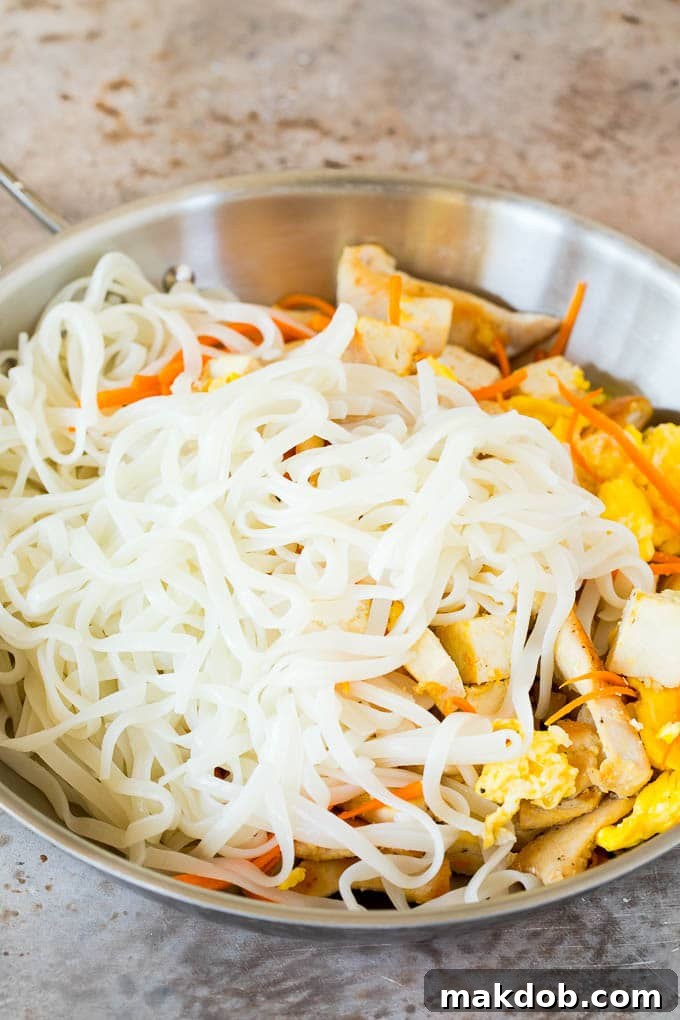
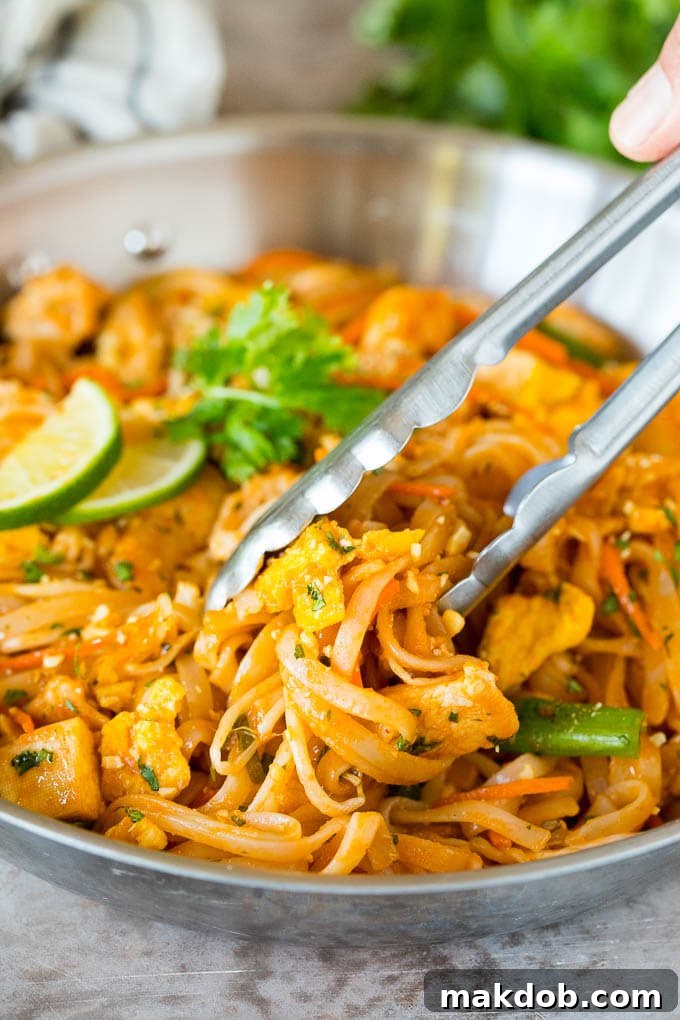
- Add Noodles and Sauce: Incorporate the prepared rice noodles into the pan. Pour the entire homemade Pad Thai sauce over the noodles and other ingredients. Using tongs, toss everything thoroughly until the noodles and all components are evenly coated with the rich sauce.
- Finish with Freshness: Stir in the fresh bean sprouts, green onions, and chopped cilantro. Simmer the dish for just 1-2 minutes more, ensuring the bean sprouts retain their crispness.
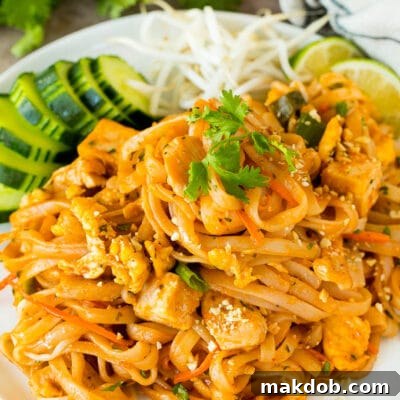
- Serve and Garnish: Transfer the Chicken Pad Thai to serving plates. Sprinkle generously with chopped roasted peanuts. For an extra flourish, garnish with fresh herbs (like more cilantro or Thai basil, if using) and additional lime wedges for a final squeeze of citrus. Serve immediately and enjoy!
Expert Tips for Pad Thai Perfection
Achieving restaurant-quality Pad Thai at home is easier with these insightful tips:
- Slice Chicken with Ease: Partially freezing your chicken breast for 20-30 minutes before slicing can make a world of difference. It firms up the meat, allowing you to achieve uniformly thin slices much faster and safer, which cook more evenly.
- Press Your Tofu: For the best texture and browning, especially if you’re not using super extra-firm tofu, press out excess water. Place the tofu block in thick slices between paper towels, cover with another layer, and weigh it down with a heavy pan or books for at least 20 minutes. This prevents soggy tofu and helps it crisp up beautifully.
- Source Key Ingredients: Fish sauce is a critical savory condiment in Thai cuisine. It can be found in the Asian foods aisle of most major grocery stores. Similarly, dried flat rice noodles, essential for authentic flavor and texture, are also typically located in the same section.
- Mise en Place is Your Friend: Pad Thai comes together very quickly once you start cooking. Prepare all your ingredients (chop vegetables, slice chicken, make the sauce, soak noodles) *before* you heat the pan. This ensures a smooth cooking process without frantic scrambling.
- Don’t Overcrowd the Pan: For proper stir-frying and browning, cook ingredients like chicken and tofu in batches if your pan isn’t large enough. Overcrowding lowers the pan’s temperature, leading to steaming instead of searing, which means less flavor and an undesirable texture.
- Perfect Noodle Texture: Soak your rice noodles until they are pliable but still slightly firm. They will finish cooking in the hot wok with the sauce. Over-soaking or overcooking them initially will result in a mushy Pad Thai.
Spice It Up or Keep It Mild: Customizing Your Pad Thai Heat
Traditionally, Pad Thai is not a spicy dish, allowing the intricate balance of sweet, sour, and savory flavors to shine. However, if you enjoy a kick, customizing the heat level is simple:
- Subtle Warmth: Sprinkle a pinch or two of crushed red pepper flakes into the stir-fry or directly into the sauce mixture. This adds a gentle heat that slowly builds.
- Bold Heat: For a more pronounced spiciness, drizzle Sriracha sauce over your finished plate to taste. You can also add finely chopped fresh bird’s eye chilies to the pan with the garlic for a fiery infusion.
Flavorful Variations to Explore
While this recipe is incredibly delicious as-is, Pad Thai is wonderfully versatile. Don’t hesitate to get creative and tailor it to your personal preferences or what you have on hand:
- Protein Power-Ups: Swap out the chicken entirely or combine it with other proteins. Sliced flank steak, tender pork, or plump shrimp are excellent choices. For a vegetarian option, simply increase the amount of tofu.
- Veggie Boost: Enhance the nutritional value and texture by adding more vegetables. Sliced red bell peppers, earthy mushrooms, miniature baby corn, crisp snow peas, or even zucchini noodles (added at the very end to prevent sogginess) can be fantastic additions.
- Herbaceous Twists: Experiment with different fresh herbs. While cilantro and green onions are classic, fresh Thai basil adds a distinct anise-like flavor that pairs beautifully with the other ingredients.
- Nut-Free Alternative: If allergies are a concern, omit the peanut butter from the sauce and the peanuts for garnish. You can use sunflower seed butter as a substitute in the sauce for creaminess, or simply leave it out for a lighter sauce. Garnish with toasted sesame seeds for crunch instead of peanuts.
Storage and Reheating
Leftover Chicken Pad Thai makes for a delicious meal the next day. Store any remaining portions in an airtight container in the refrigerator for up to 3 days. When reheating, it’s best to use a skillet or wok over medium heat, adding a splash of water or broth to help rehydrate the noodles and sauce. Stir-fry gently until heated through, avoiding the microwave if possible, as it can make the noodles mushy.
This Chicken Pad Thai truly is the perfect solution for those nights when you’re craving the vibrant, complex flavors of your favorite takeout but desire the freshness and quality that only a homemade meal can provide. It’s a dish that brings comfort, excitement, and a touch of exotic flair to any table.
More Asian Recipes You’ll Love
- Beef Chow Mein
- Ginger Chicken
- Fried Wontons
- Stir Fry Noodles
- Tofu Stir Fry
Chicken Pad Thai
This chicken Pad Thai is rice noodles tossed with tofu, sliced chicken, veggies and egg, all in a savory sauce. A remake of the take out classic that tastes even better than what you’d get at a restaurant!
Author: Sara Welch
Prep Time: 20 minutes
Cook Time: 20 minutes
Total Time: 40 minutes
Course: Main
Cuisine: Asian
Serves: 4
Ingredients
For the stir fry
- 1 tablespoon vegetable oil
- 3/4 pound boneless skinless chicken breast, thinly sliced
- 7 ounces extra firm tofu, cubed
- 2 teaspoons garlic, minced
- 2 eggs, beaten
- salt and pepper to taste
- 1/2 cup shredded carrots
- 8 ounces rice noodles
- 1 cup bean sprouts
- 1/3 cup green onions, cut into 1 inch pieces
- 1/4 cup cilantro leaves, coarsely chopped
- 1/3 cup roasted peanuts, chopped
- lime wedges and fresh herbs for garnish (optional)
For the sauce
- 2 tablespoons fish sauce
- 2 tablespoons brown sugar
- 1 tablespoon soy sauce
- 1 teaspoon rice vinegar
- 1 tablespoon lime juice
- 2 teaspoons peanut butter
- 1/4 cup ketchup
- 2 tablespoons water
Instructions
For the sauce
- Place all the sauce ingredients in a medium bowl. Whisk until smooth.
For the stir fry
- Heat the oil in a large pan over medium high heat. Add the chicken in a single layer and season with salt and pepper to taste.
- Cook the chicken for 4-5 minutes, stirring occasionally, until golden brown and cooked through.
- Add the tofu and cook for an additional 3-4 minutes. Add the garlic and cook for 30 seconds.
- Remove the chicken and tofu mixture from the pan and cover to keep warm.
- Cook the rice noodles according to package directions.
- Pour the eggs into the pan. Cook for 3-4 minutes, stirring occasionally, until eggs are scrambled and cooked through.
- Return the chicken mixture to the pan, along with the carrots. Cook for another 2-3 minutes.
- Add the rice noodles to the pan. Pour in the sauce and toss to coat evenly. Stir in the bean sprouts, green onions and cilantro. Simmer for 1-2 minutes.
- Sprinkle with chopped peanuts and serve, garnished with herbs and lime wedges if desired.
Nutrition
Calories: 552kcal | Carbohydrates: 66g | Protein: 33g | Fat: 17g | Saturated Fat: 6g | Cholesterol: 136mg | Sodium: 746mg | Potassium: 754mg | Fiber: 3g | Sugar: 13g | Vitamin A: 3045IU | Vitamin C: 9mg | Calcium: 81mg | Iron: 3mg
Did you make this recipe? Tag @dinneratthezoo on Instagram and hashtag it #dinneratthezoo
Tweet
Pin