
The Ultimate Classic Turkey Stuffing Recipe for Your Thanksgiving Feast
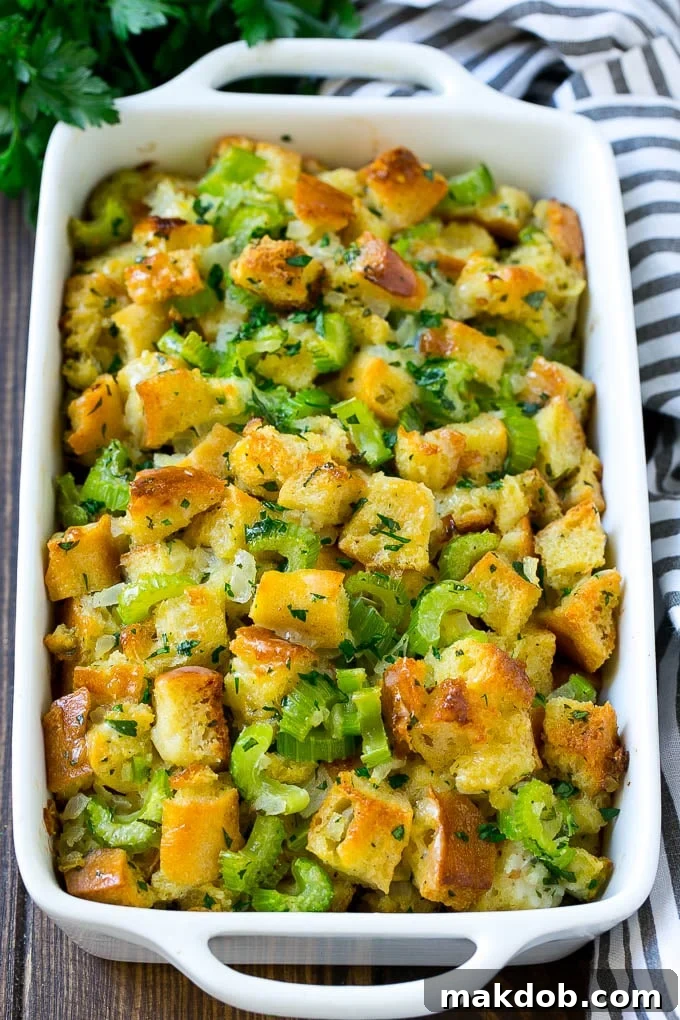
There’s something truly special about the aroma of homemade turkey stuffing wafting through the house during the holidays. This quintessential side dish, crafted with hearty bread, perfectly sautéed vegetables, rich butter, and a medley of fresh herbs, is baked to a glorious golden-brown perfection. More than just a side, it’s a nostalgic cornerstone of any festive meal, especially Thanksgiving. Best of all, this recipe is designed for convenience, allowing you to assemble it a day in advance, freeing up valuable time on the busiest cooking day of the year.
While the holiday table often showcases a magnificent turkey, many agree that the side dishes are what truly steal the show. And among them, a classic turkey stuffing stands out. Forget the bland, pre-packaged versions from the grocery store; this homemade recipe is surprisingly easy to prepare and delivers an unparalleled depth of flavor and texture that will have everyone reaching for seconds. If you’re also perfecting your main event, be sure to explore our comprehensive guide on how to cook a turkey for a complete holiday meal strategy.
Why Homemade Turkey Stuffing is a Must-Have for Your Holiday Table
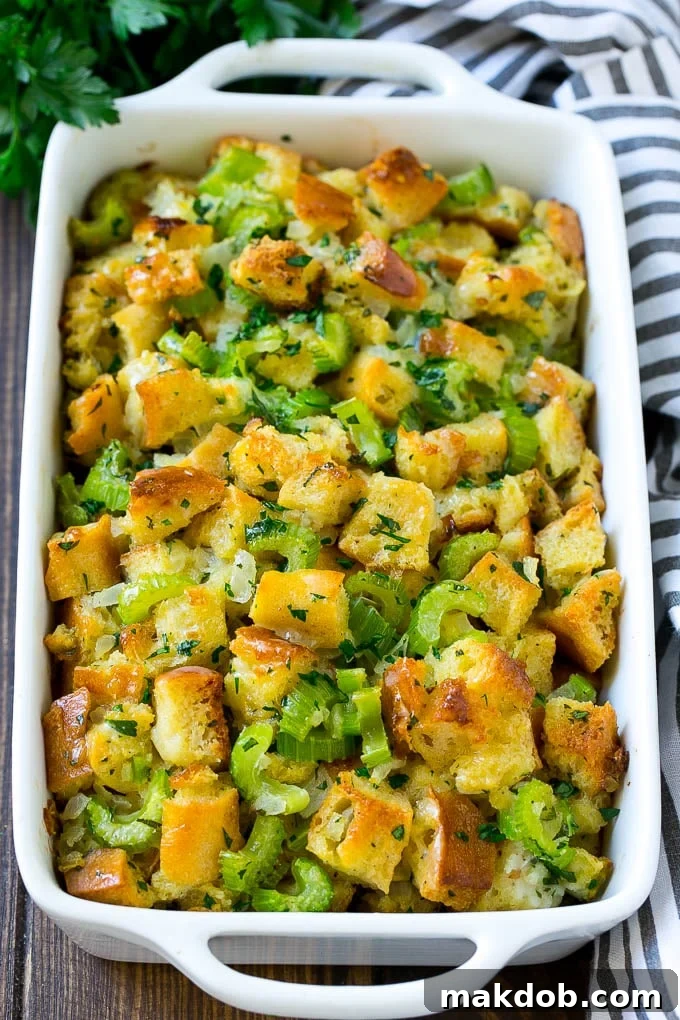
The tradition of serving stuffing during Thanksgiving and other festive occasions is deeply rooted in culinary history. It’s a dish that embodies comfort, warmth, and the spirit of gathering. What sets this classic turkey stuffing apart is its simplicity coupled with its incredible potential for flavor. Using fresh, high-quality ingredients transforms humble bread into a moist, savory, and aromatic accompaniment that perfectly complements roast turkey, ham, or any holiday centerpiece. It’s not merely a filler; it’s an integral part of the meal, offering a delightful textural contrast and a burst of herbaceous goodness.
Many home cooks shy away from making stuffing from scratch, assuming it’s a complicated endeavor. However, this recipe proves otherwise. With straightforward steps and readily available ingredients, you can create a show-stopping dish that far surpasses anything you’d find in a box or bag. The effort invested, though minimal, yields maximum reward in terms of taste and the satisfaction of serving a truly homemade holiday classic. This recipe is a staple in our kitchen, often alternating with other beloved variations like Southern cornbread dressing, hearty sausage stuffing, or even convenient crock pot stuffing. But for an authentic, classic experience, this turkey stuffing is always a favorite.
Table of Contents
- The Heart of the Holiday Table: Why Classic Turkey Stuffing Reigns Supreme
- Essential Turkey Stuffing Ingredients
- Choosing Your Bread: The Foundation of Perfect Stuffing
- Aromatic Vegetables: Building Layers of Flavor
- Step-by-Step Guide: How to Make Delicious Turkey Stuffing
- Expert Tips for the Best Turkey Stuffing
- Make-Ahead Magic: Saving Time on Thanksgiving Day
- Stuffing Inside or Outside the Turkey?
- Exciting Flavor Variations to Try
- Serving Suggestions and Storage Tips
- Recipe FAQs
- More Great Side Dish Recipes for Your Holiday Table
- Turkey Stuffing Video Guide
- Get the Full Classic Turkey Stuffing Recipe
Essential Turkey Stuffing Ingredients
Crafting this homemade stuffing requires a blend of simple, wholesome ingredients that come together to create a symphony of flavors and textures. Here’s what you’ll need for this classic rendition:
- Bread: The backbone of your stuffing. Rustic baguettes are ideal for their sturdy texture, but other robust breads work wonderfully. You’ll need about 8-10 cups of 1/2-inch bread cubes.
- Butter: Essential for sautéing the aromatics and adding rich, irresistible flavor throughout the stuffing. You’ll use 10 tablespoons, divided.
- Onion and Celery: These classic mirepoix vegetables form the aromatic base, providing a sweet and savory foundation. One cup of each, finely diced.
- Garlic: A crucial flavor enhancer, adding depth and a pungent warmth. Two teaspoons, minced.
- Fresh Sage: This herb is non-negotiable for traditional turkey stuffing, offering a distinct, earthy, and slightly peppery flavor that screams “holiday.” You’ll need 1/4 cup of finely chopped leaves.
- Fresh Parsley: Adds a vibrant, fresh counterpoint to the richness of the other ingredients, both in the mix and as a garnish. Use 1/4 cup, chopped, divided for mixing and garnish.
- Eggs: Act as a binder, helping the stuffing hold its shape and contributing to its moist texture. Two large eggs are sufficient.
- Chicken Broth or Turkey Broth: Provides moisture and infuses the bread with savory, umami notes. Two cups of broth, low-sodium preferred to control salt levels.
- Kosher Salt and Black Pepper: Fundamental seasonings to enhance all the other flavors. One teaspoon kosher salt and 1/2 teaspoon black pepper.
- Cooking Spray: For generously greasing your baking dish to prevent sticking.
The beauty of this ingredient list lies in its accessibility and the way each component plays a vital role in achieving the perfect stuffing. Quality fresh herbs, especially sage, make a remarkable difference, so try not to skip them.
Choosing Your Bread: The Foundation of Perfect Stuffing
The type and condition of your bread are paramount to achieving the ideal stuffing texture. You want a bread that is sturdy enough to absorb moisture without becoming mushy, offering a delightful chewiness while still being tender. While this recipe specifically calls for rustic baguettes, their firm crumb and relatively neutral flavor make them an excellent choice.
- Rustic Baguettes: Their slightly crusty exterior and dense interior hold up exceptionally well during baking, preventing sogginess and ensuring a satisfying bite.
- Focaccia: Offers a rich, oily texture and often has built-in herbaceous notes that can complement the sage beautifully. Its open crumb structure is also great for absorbing liquid.
- Ciabatta: Similar to baguette, ciabatta provides a sturdy structure and a pleasant chew, with its characteristic airy pockets.
- Multigrain Loaf: For those who prefer a nuttier flavor and a slightly more rustic feel, a good quality multigrain bread can add wonderful character and a subtle chewiness.
- Sourdough Bread: The natural tanginess of sourdough introduces a sophisticated flavor profile that can elevate your stuffing to new heights, adding complexity to the traditional savory notes.
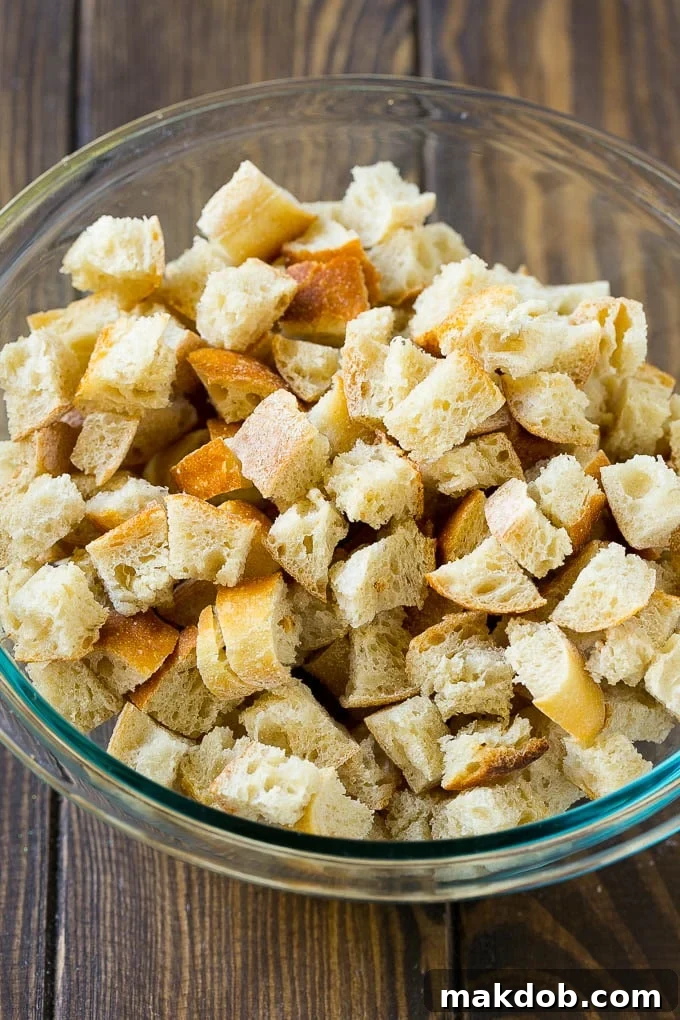
Regardless of your choice, the key is to ensure your bread is stale or toasted. Stale bread absorbs the flavorful broth and butter much better than fresh bread, preventing a soggy outcome and contributing to a stuffing that is moist inside and deliciously crispy on top. To achieve this, simply cut your bread into 1/2-inch cubes and:
- Leave it out overnight: Spread the cubes on a large baking sheet and let them air dry at room temperature. This slow, natural drying process is ideal for developing the perfect texture.
- Toast in the oven: If you’re short on time, spread the bread cubes in a single layer on a baking sheet and bake them in a preheated oven at 225°F (107°C). Stir the cubes occasionally to ensure even drying until they are crisp and dry. This usually takes approximately one hour.
Aromatic Vegetables: Building Layers of Flavor
The foundation of any great stuffing lies in its aromatic base. The classic combination of onion, celery, and garlic, gently sautéed in butter, creates a sweet, savory, and fragrant backdrop for the bread and herbs. This step is critical for developing a deep, complex flavor profile that permeates every bite of your stuffing, ensuring it’s anything but bland.
- Onion and Celery: Finely dicing these vegetables ensures they soften evenly and integrate smoothly into the stuffing mixture, rather than standing out as large chunks. Sautéing them until tender and translucent, but not browned, allows their natural sweetness to emerge without overpowering the other ingredients. This process typically takes about 6-8 minutes over medium heat, allowing them to release their moisture and concentrate their flavors.
- Garlic: Minced garlic is added towards the end of the sautéing process. Its pungent kick and incredible depth of flavor are essential for a robust stuffing. Cooking it for just one minute after the onion and celery prevents it from burning and turning bitter, ensuring its best flavor shines through without any harshness.
- Fresh Herbs (Sage and Parsley): These are the soul of classic turkey stuffing and truly elevate its taste and aroma.
- Fresh Sage: Absolutely essential for that signature holiday flavor. Its robust, earthy, and slightly peppery notes are synonymous with festive meals. It is crucial to use fresh sage here, as the flavor profile of dried sage is drastically different and will not provide the same vibrant, aromatic experience. Finely chop the sage leaves to distribute their potent flavor evenly throughout the mixture.
- Fresh Parsley: Provides a bright, herbaceous lift, cutting through the richness of the butter and broth. It adds a fresh, slightly peppery element that brightens the overall flavor. We use chopped parsley both within the stuffing mixture and as a final garnish, offering a beautiful pop of color and an additional layer of freshness just before serving.
The act of gently sautéing these ingredients not only softens them but also caramelizes their natural sugars, intensifying their flavors and making them more receptive to absorbing the butter and broth, which is key to a truly savory stuffing.
Step-by-Step Guide: How to Make Delicious Turkey Stuffing
Creating this delicious homemade turkey stuffing is a rewarding process, yielding a dish far superior to any store-bought alternative. Follow these simple steps for perfect results, ensuring a moist, flavorful interior and a wonderfully crispy, golden-brown top:
-
Prepare Bread Cubes: The first crucial step is to ensure your bread cubes are adequately stale or thoroughly toasted. Spread your 1/2-inch bread cubes on large baking sheets overnight to air dry. If time is short, you can bake them at 225°F (107°C) for approximately 1 hour, stirring every 15 minutes, until they are crisp and dry to the touch. This dryness is vital for optimal broth absorption without becoming soggy.
-
Preheat Oven & Prep Dish: Preheat your oven to 375°F (190°C). Generously coat a 3-quart baking dish with cooking spray to prevent any sticking.
-
Sauté Vegetables: In a large, heavy-bottomed pan or skillet, melt 6 tablespoons of butter over medium heat. Add the finely diced onion and sliced celery. Cook these aromatics for 6-8 minutes, stirring occasionally, until they are tender and translucent. Avoid browning them too much.
-
Add Garlic: Stir in the minced garlic and continue to cook for just 1 more minute, until it becomes wonderfully fragrant. Be careful not to burn the garlic.
-
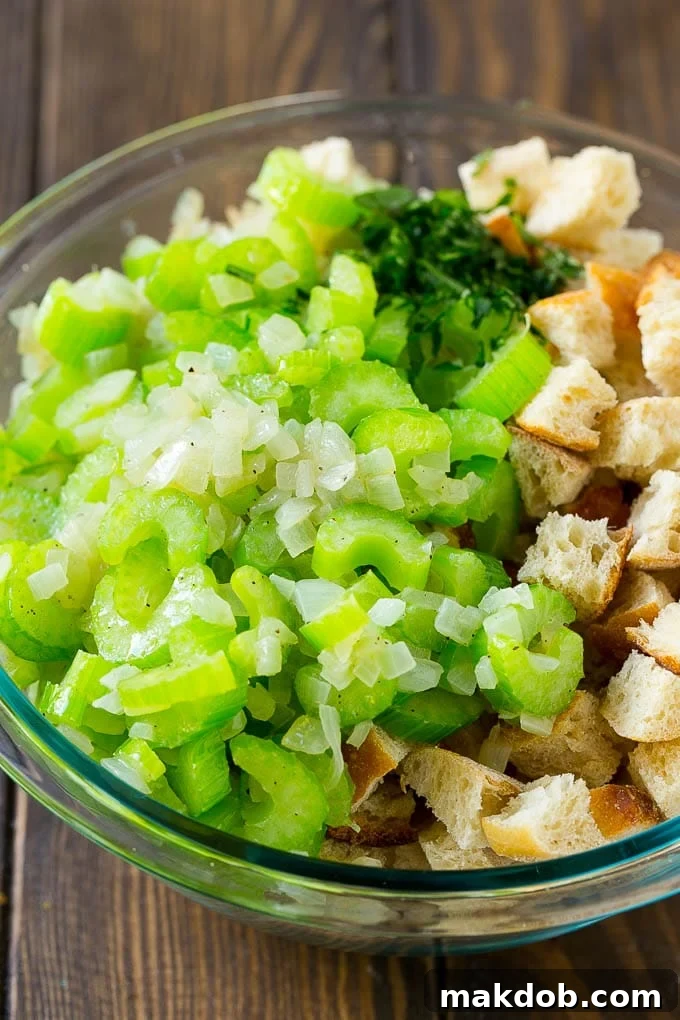
Combine Dry & Sautéed Ingredients: Transfer the stale bread cubes to a very large mixing bowl. Add the cooked onion and celery mixture from the skillet over the bread.
-
Incorporate Herbs: Stir in the finely chopped fresh sage and 2 tablespoons of chopped fresh parsley into the bowl, distributing them evenly among the bread and vegetables.
-
Mix Wet Ingredients: In the same bowl, add the two beaten eggs, 2 cups of chicken or turkey broth, 1 teaspoon of kosher salt, and 1/2 teaspoon of black pepper. Gently but thoroughly stir everything together until all the bread cubes are well coated and have begun to absorb the liquid. The mixture should be moist but not overly wet.
-
Transfer & Butter: Spoon the entire stuffing mixture into your prepared baking dish, spreading it evenly across the bottom. Melt the remaining 4 tablespoons of butter and drizzle it generously over the top of the stuffing. This butter layer will create a beautiful, rich, golden crust.
-
Initial Bake (Covered): Cover the baking dish tightly with aluminum foil. This helps to steam the stuffing, ensuring the interior remains moist. Bake for 25 minutes.
-
Final Bake (Uncovered for Crispness): Remove the foil and continue baking for an additional 15 minutes, or until the top of the stuffing is beautifully golden brown and crispy. Keep an eye on it to prevent over-browning; if it browns too quickly, you can loosely cover it again with foil.
-
Cool & Serve: Allow the stuffing to cool for 5-10 minutes before serving. This resting period helps the stuffing set and makes it easier to serve. Just before bringing it to the table, sprinkle with the remaining 2 tablespoons of fresh parsley for a final burst of color and fresh flavor. Enjoy your perfectly homemade classic turkey stuffing!
Expert Tips for the Best Turkey Stuffing
Achieving truly exceptional turkey stuffing involves a few key considerations and techniques. These expert tips will help ensure your stuffing is flavorful, perfectly textured, and a memorable part of your holiday meal.
- Bread Choice Matters Immensely: As discussed, using a sturdy bread is non-negotiable for superior stuffing. While baguettes are excellent, don’t hesitate to experiment with focaccia, ciabatta, a quality multigrain loaf, or even sourdough for unique and robust flavor profiles. Avoid soft, fluffy sandwich breads at all costs, as they tend to absorb too much liquid and turn into a mushy consistency when baked.
- Fresh Sage is Imperative: This is a crucial flavor element that truly defines classic holiday stuffing. The vibrant, earthy, and slightly peppery taste of fresh sage cannot be adequately replicated by its dried counterpart. Fresh herbs deliver a much more aromatic and potent flavor that is essential for this recipe. Invest in fresh sage leaves for the best possible results.
- Achieving the Perfect Golden Crust: For that irresistible, beautifully golden and slightly crispy top, remember to remove the foil during the last 15 minutes of baking. This allows the heat to directly crisp up the surface. If you notice the top browning too rapidly or starting to burn before the total baking time is complete, simply drape the foil back over it loosely to protect it.
- The Role of Broth and Moisture: The amount of broth can be slightly adjusted based on the initial dryness of your bread and your desired final moisture level. Start with the recommended amount, but if your bread seems exceptionally dry, you might add a splash more. Conversely, if your bread is less stale, you might use slightly less. The eggs also play a vital role in binding the ingredients and contributing to the overall moist texture.
- Make It Your Own: This classic recipe is a fantastic base, but don’t be afraid to add your favorite mix-ins. Consider incorporating cooked sausage, sautéed mushrooms, dried cranberries, toasted nuts, or even roasted chestnuts for added texture and flavor. More specific ideas are covered in our “Flavor Variations” section.
- Ideal Serving Temperature: While hot is good, allowing the stuffing to rest for 5-10 minutes after baking before serving is ideal. This brief cooling period helps the stuffing set, making it easier to scoop and ensuring it holds its shape on the plate.
Quick Tip for Busy Cooks
Short on prep time during the busy holiday season? Don’t fret! You can significantly speed things up by using a bag of pre-cut stuffing cubes from the store (ensure they are unseasoned for best results). Additionally, many grocery stores offer pre-chopped celery and onions, eliminating tedious chopping and making this classic dish even easier to achieve!
Make-Ahead Magic: Saving Time on Thanksgiving Day
One of the greatest advantages of this classic turkey stuffing recipe is its flexibility for make-ahead preparation. Holiday cooking can be hectic, with multiple dishes vying for oven space and your attention. Having a delicious side dish ready to bake can significantly alleviate stress and allow you to enjoy the festive atmosphere more fully, rather than being confined to the kitchen.
You can assemble this entire recipe, right up to the point of baking, the day before your meal. Simply combine all the ingredients in your baking dish, cover it tightly with aluminum foil or plastic wrap, and refrigerate for up to 24 hours. When you’re ready to bake on Thanksgiving Day, remove the dish from the fridge about 30 minutes before baking to allow it to come closer to room temperature. You might need to add an extra 10-15 minutes to the initial covered baking time (Step 9) to ensure it heats through evenly, especially if it’s still quite cold from the refrigerator. Always check for internal temperature if unsure.
This make-ahead strategy applies not only to the main assembly but also to individual components. You can chop your vegetables (onion, celery, garlic) a day or two in advance and store them in separate airtight containers in the refrigerator. You can also toast your bread cubes ahead of time and keep them in a large bag or container at room temperature for several days. Pre-chopping herbs is another fantastic time-saver. By breaking down the preparation into smaller, manageable tasks, you can ensure a smoother, more efficient, and ultimately more enjoyable cooking experience on Thanksgiving Day.
Stuffing Inside or Outside the Turkey?
A common debate arises every Thanksgiving: should stuffing be baked inside the turkey or in a separate dish? While the name “stuffing” implies it goes into the bird, many culinary experts and home cooks, including us, prefer baking it separately, and for several compelling reasons.
- Food Safety Concerns: When stuffing is cooked inside the turkey, it absorbs juices from the bird. To be safe for consumption, the stuffing itself must reach an internal temperature of 165°F (74°C). This often means the turkey can become overcooked and dry by the time the stuffing reaches a safe temperature, or conversely, the stuffing may not be fully cooked when the turkey is deemed ready. Baking it separately in its own dish eliminates this food safety concern entirely, allowing both the turkey and the stuffing to cook to their optimal temperatures independently.
- Superior Texture: Baking stuffing in its own dish allows for the development of a wonderfully crispy, golden-brown crust on top, while the interior remains moist, tender, and flavorful. This textural contrast is a hallmark of truly great stuffing. Stuffing baked inside the turkey, on the other hand, tends to be uniformly moist but often lacks that desirable crispy surface, resulting in a softer texture throughout.
- Greater Convenience and Control: Baking stuffing separately gives you far more control over its doneness and allows for easier serving. You’re not limited by the turkey’s cavity size, meaning you can easily double or triple the recipe if you have a large gathering. It also frees up the turkey’s cavity, which can help the turkey cook more evenly and potentially reduce overall roasting time.
While you can spoon this classic stuffing into your turkey’s cavity, be mindful of the increased cooking time for the turkey and use a meat thermometer to ensure the stuffing itself reaches 165°F (74°C) for safety. For the best texture, flavor, and peace of mind regarding food safety, we strongly recommend baking this recipe in a separate casserole dish.
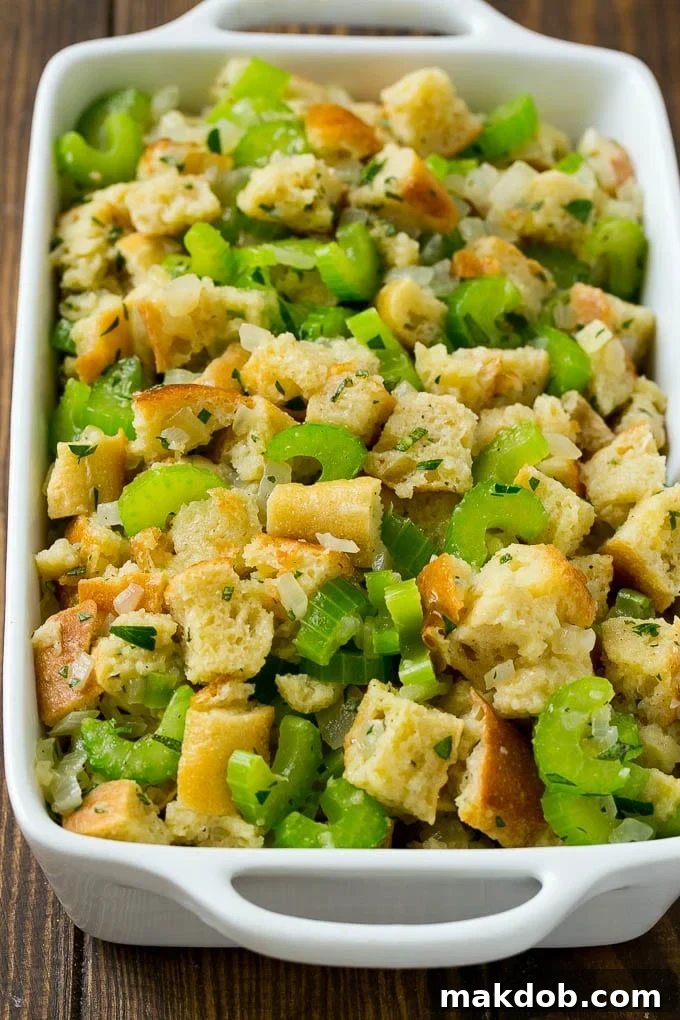
Exciting Flavor Variations to Try
While this classic turkey stuffing recipe is perfect as is, it also serves as an excellent canvas for culinary creativity. You can easily customize it with additional ingredients to suit your family’s preferences or to introduce new and exciting flavors to your holiday table. These variations are perfect for making this dish uniquely yours, or for offering different stuffing options to your guests. Remember to cook any meat or hard vegetables before adding them to the main mixture.
- Cranberry Apple Stuffing: For a delightful balance of sweetness and tartness, add 1/2 cup of dried cranberries and 2 diced, sautéed apples (such as Granny Smith or Honeycrisp) to the stuffing mixture. The fruit adds a pleasant chewiness and brightens the savory notes beautifully.
- Sausage and Fennel Stuffing: Elevate the savory profile by incorporating 1 pound of cooked, crumbled sausage (mild Italian, spicy pork, or even chicken sausage works well) and 1 cup of diced, cooked fennel bulb. The fennel’s subtle anise flavor pairs wonderfully with the richness of sausage and sage, creating a sophisticated twist.
- Mushroom Lovers’ Stuffing: Earthy and robust, this variation is perfect for mushroom enthusiasts. Add 1 pound of mixed sautéed mushrooms (cremini, shiitake, or your favorite wild mushrooms for an extra gourmet touch) along with 1 teaspoon of fresh rosemary for an even deeper, aromatic experience.
- Bacon Apple Stuffing: Everything is better with bacon! Introduce a smoky, salty crunch with 1/2 pound of cooked, crumbled bacon. Pair this with 1 cup of diced, sautéed apples and 1 teaspoon of fresh thyme for a classic, comforting combination that’s incredibly satisfying and familiar.
- Nutty Stuffing: For added texture, crunch, and a rich, earthy flavor, stir in 1/2 cup of toasted pecans or walnuts. These nuts complement the herbs and bread beautifully and add a gourmet touch.
- Herb Garden Freshness: Beyond sage and parsley, consider adding other fresh herbs like thyme, rosemary, or marjoram. A tablespoon of each, finely chopped, can introduce new aromatic layers.
- Chestnut Stuffing: For a traditional touch, especially popular in European holiday cooking, add 1 cup of peeled, roasted chestnuts (canned or vacuum-packed work fine for convenience) to the mixture.
Experiment with these variations or create your own signature blend. The key is to ensure any added ingredients, especially meats and firmer vegetables, are cooked appropriately and seasoned well before being mixed into the bread to maintain proper texture and flavor balance.
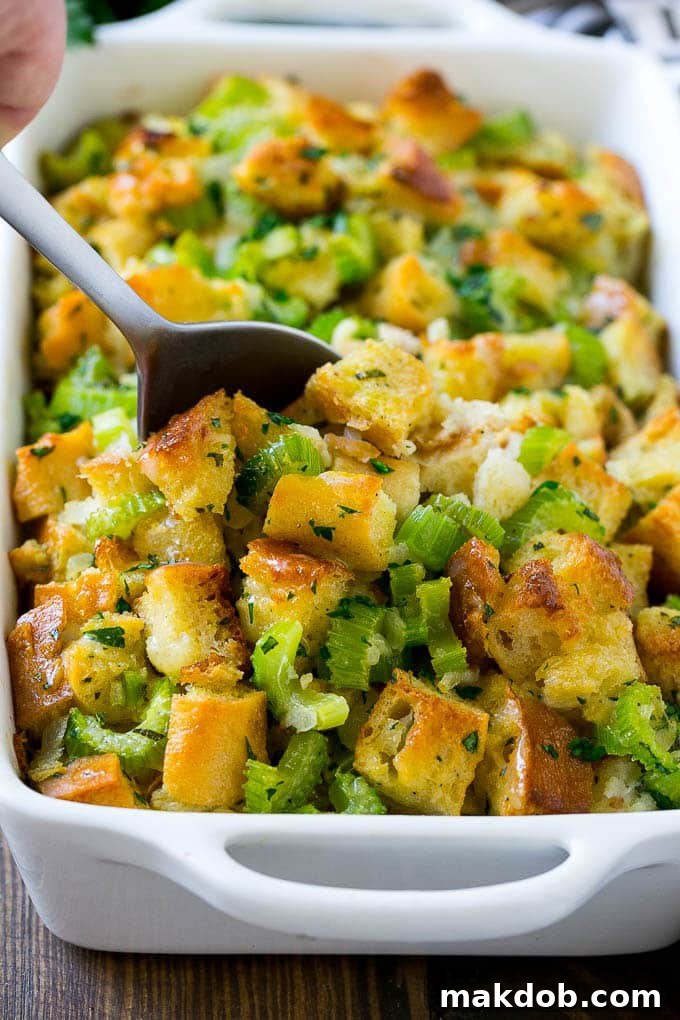
Serving Suggestions and Storage Tips
Once your classic turkey stuffing emerges from the oven, golden, fragrant, and bubbling, it’s ready to take its place of honor on your holiday table. This versatile side dish pairs beautifully with a wide array of other festive offerings, creating a truly memorable feast that will delight all your guests.
- Perfect Pairings for a Grand Feast: Serve your stuffing alongside the star of the show, whether it’s a traditional roasted turkey, a succulent baked ham, or even a flavorful prime rib. To complete your holiday spread, complement it with other beloved side dishes such as creamy corn soufflé, rich garlic mashed red potatoes, sweet and delicate carrot soufflé, a vibrant and refreshing Christmas salad, and glistening honey glazed carrots. And of course, don’t forget a generous amount of homemade gravy to spoon over your stuffing for an extra layer of savory goodness!
- Storing Leftovers: If you’re fortunate enough to have any leftover turkey stuffing (it’s often the first to disappear!), it stores remarkably well. Allow the stuffing to cool completely to room temperature before transferring it to an airtight container. Refrigerate promptly, and it will stay fresh for up to 4 days.
- Reheating Instructions: To reheat, simply place the leftover stuffing in an oven-safe dish. If you’re reheating a large amount, cover it with foil to prevent it from drying out, and bake at 300°F (150°C) until heated through, typically about 20-30 minutes. For a crisper top, remove the foil for the last 5-10 minutes of reheating. Individual portions can also be warmed in the microwave, though this method may result in a softer texture rather than a crispy one.
This homemade turkey stuffing is truly a classic recipe that everyone at your table is sure to adore. Once you experience the rich, savory flavors and the perfect combination of moist interior and crispy top that this version offers, you’ll undoubtedly agree that stuffing from a box simply can’t compare. It’s a dish that embodies the very essence of holiday comfort and joy!
Recipe FAQs: Your Top Stuffing Questions Answered
Traditional turkey stuffing primarily consists of stale bread cubes as its base, enriched with savory ingredients. Key components include butter, aromatic sautéed vegetables like finely diced onion and sliced celery, binding agents such as eggs, and moistening liquids like chicken or turkey broth. The distinctive flavor comes from a generous amount of fresh herbs, especially sage and parsley. These core ingredients combine to create the beloved savory, moist, and aromatic character of classic holiday stuffing.
Absolutely! This recipe is incredibly convenient for make-ahead preparation, a huge advantage during busy holiday cooking. You can assemble the entire stuffing mixture in your baking dish, cover it tightly with aluminum foil or plastic wrap, and refrigerate it for up to 24 hours. When it’s time to bake, remove it from the fridge about 30 minutes prior to baking. Keep in mind that starting with a cold dish may require adding an extra 10-15 minutes to the initial covered baking time (Step 9) to ensure it heats through evenly before uncovering for the final crisping stage.
While the name suggests it, stuffing a turkey requires careful consideration from a food safety and texture perspective. You can spoon this stuffing into the cavity of your turkey before roasting. However, if you choose to do so, it’s absolutely crucial to ensure that the stuffing itself reaches an internal temperature of 165°F (74°C) as measured with a food thermometer for it to be safe for consumption. This often means the turkey itself can become overcooked and dry by the time the stuffing reaches a safe temperature. Many cooks prefer to bake stuffing in a separate dish, as it cooks more evenly, achieves a desirable crispy topping (which you don’t get inside the bird), and avoids any food safety concerns related to undercooked stuffing. For the best texture, flavor, and peace of mind, baking your stuffing in a separate casserole dish is generally recommended.
FOLLOW US
More Great Side Dish Recipes for Your Holiday Table
Corn Pudding
50 mins
Mashed Sweet Potatoes
1 hr 20 mins
Stovetop Mac and Cheese
25 mins
Glazed Carrots
20 mins
Zucchini Gratin
40 mins
Turkey Stuffing Video Guide
For a visual walkthrough of how to prepare this delicious turkey stuffing, watch our detailed video guide below. It covers each step, from preparing your ingredients to achieving that perfect golden-brown finish, ensuring you can follow along with confidence.
Video Description: This turkey stuffing is a classic recipe with bread, sauteed vegetables, butter and fresh herbs, all baked together to golden brown perfection. The perfect side dish for Thanksgiving that can be assembled the day before the big meal.
Love This Recipe?
If you enjoyed this recipe and found it helpful, please consider leaving a 5-star rating (★★★★★) in the recipe card below and sharing a review in the comments section further down the page. Your feedback is invaluable and helps us share more delicious recipes with our community!
Get the Full Classic Turkey Stuffing Recipe
★
★
★
★
Classic Turkey Stuffing
Pin Recipe
Sara Welch
15 minutes
45 minutes
1 hour
Side Dish
American
8
Ingredients
-
2
rustic baguettes
cut into 1/2 inch pieces (you want 8-10 cups total, preferably stale) -
10
tablespoons
unsalted butter
divided use -
1
cup
yellow onion
finely diced -
1
cup
celery
sliced -
2
teaspoons
garlic
minced -
1/4
cup
fresh sage leaves
finely chopped -
1/4
cup
fresh parsley leaves
chopped, divided use -
2
large eggs -
2
cups
chicken or turkey broth
low sodium preferred -
1
teaspoon
kosher salt -
1/2
teaspoon
black pepper - cooking spray
Instructions
-
Leave the bread out overnight spread out on baking sheets to get stale. Alternatively, you can bake your bread cubes at 225 degrees F (107°C), stirring occasionally, until they get crisp – approximately 1 hour of bake time.
-
Coat a 3 quart baking dish with cooking spray. Preheat the oven to 375 degrees F (190°C).
-
Melt 6 tablespoons of butter in a large pan or large skillet over medium heat. Add the onion and celery and cook for 6-8 minutes or until tender.
-
Add the garlic and cook for 1 more minute until fragrant.
-
Place the bread cubes in a very large bowl and add the onion and celery mixture.
-
Add the sage and 2 tablespoons of chopped parsley to the bowl.
-
Add the eggs, chicken broth, salt and pepper to the bowl. Stir until bread is thoroughly coated and everything is combined.
-
Pour the stuffing into the prepared dish. Melt the remaining 4 tablespoons of butter and drizzle it over the top.
-
Cover the dish with foil and bake for 25 minutes. Uncover the dish, then bake for an additional 15 minutes or until top is golden brown.
-
Cool for 5-10 minutes then sprinkle with remaining 2 tablespoons of parsley and serve.
Notes
- You can really use any sturdy bread you like in this recipe. While baguettes are used here, some other great choices are focaccia, ciabatta, a multigrain loaf, or even sourdough bread. The key is to use a sturdy bread that will not become mushy when baked.
- If the top of your stuffing starts to look overly browned before the baking time is up, you can cover it loosely with foil to prevent burning.
- For make-ahead preparation, assemble the stuffing in the baking dish, cover tightly, and refrigerate for up to 24 hours. When baking from cold, add an extra 10-15 minutes to the initial covered baking time.
Nutrition Information (per serving, estimated)
Did you make this recipe?
Tag @dinneratthezoo on Instagram and hashtag it #dinneratthezoo