
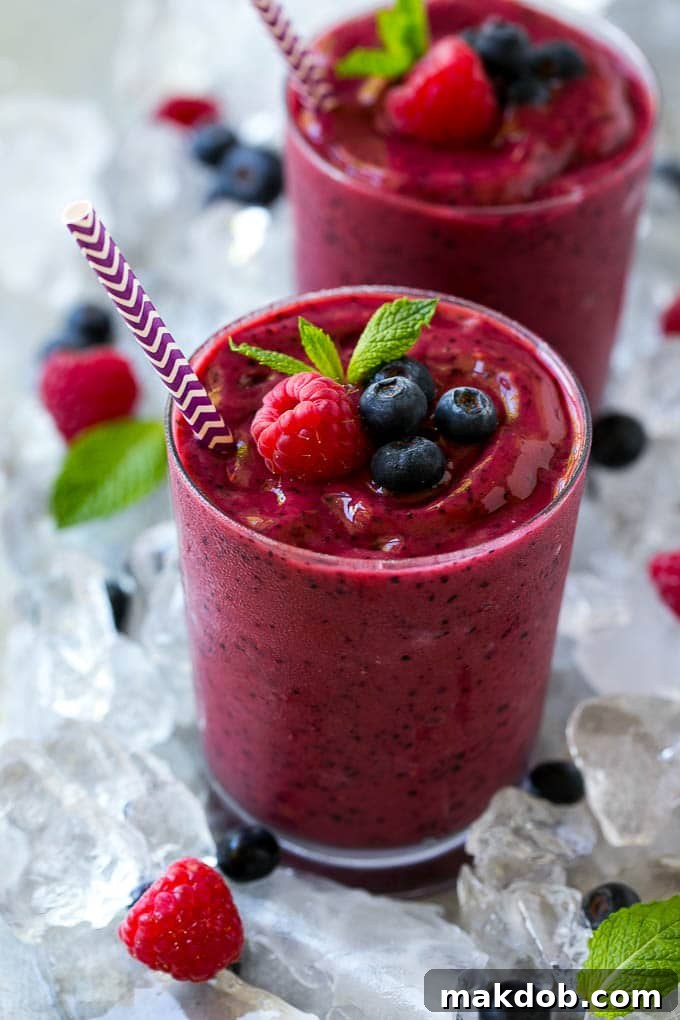
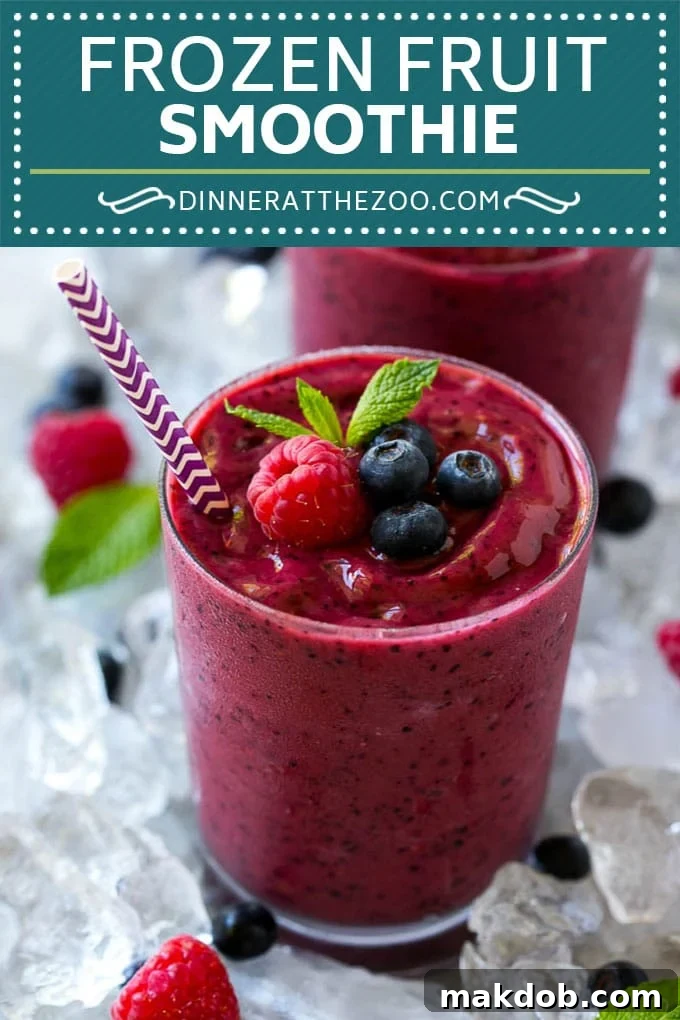
Welcome to the ultimate guide for creating the most refreshing and nutritious frozen fruit smoothie! On a sweltering day, there’s nothing quite like a frosty, delicious drink to cool you down and re-energize. This particular recipe combines the crisp sweetness of apple juice with a vibrant medley of frozen blueberries, cherries, raspberries, and mango, resulting in an easy-to-make, nutrient-packed beverage perfect for any time of day, especially when the sun is beaming down.
Making frozen fruit smoothies has become a weekly ritual in my household. They are incredibly versatile, allowing you to use up those odds and ends of fruit lingering in your freezer, preventing food waste while simultaneously crafting a healthy and satisfying treat. Whether you’re looking for a quick breakfast, a post-workout refuel, or a wholesome snack for the kids, a homemade fruit smoothie is a brilliant choice that delivers on both flavor and health benefits.

Why Choose a Frozen Fruit Smoothie?
Beyond being incredibly delicious, a frozen fruit smoothie offers a plethora of benefits that make it a standout choice for healthy living. First and foremost, it’s a fantastic way to increase your daily fruit intake, delivering essential vitamins, minerals, and antioxidants in a convenient and enjoyable format. The natural sweetness from the fruit means you often don’t need added sugars, making it a healthier alternative to many processed snacks and sugary drinks.
For those bustling mornings, a smoothie is a true lifesaver. It takes mere minutes to prepare, allowing you to enjoy a wholesome breakfast even when you’re pressed for time. Plus, the cold, icy consistency is incredibly invigorating, providing an instant cool-down, especially valuable during those scorching summer months. Furthermore, by utilizing frozen fruit, you’re embracing a sustainable approach to cooking by minimizing food waste. Instead of discarding overripe fruit, simply freeze it and transform it into a vibrant smoothie later!
Crafting Your Perfect Frozen Fruit Smoothie: The Core Ingredients
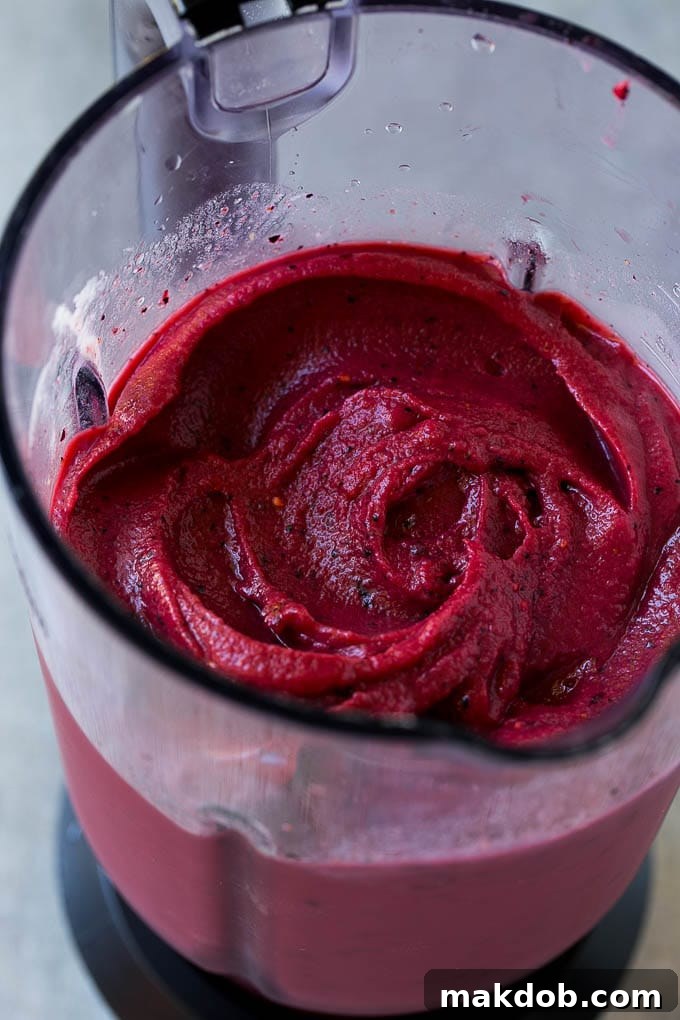
Making a frozen fruit smoothie is surprisingly simple, requiring just a few key components and a blender. While any blending machine will do the trick, investing in a good quality blender can make the process even smoother and more efficient, yielding a perfectly creamy texture every time. The magic happens when you combine your chosen frozen fruit, a liquid base, and a creamy element like Greek yogurt.
The Essential Frozen Fruit
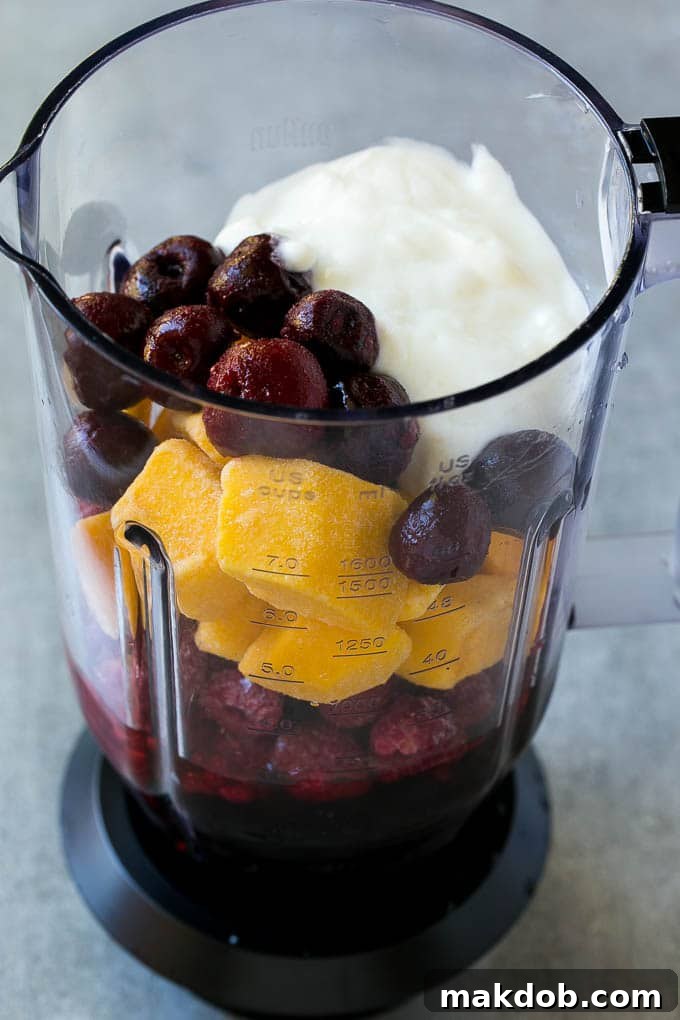
The star of any frozen fruit smoothie is, of course, the frozen fruit itself. Freezing the fruit achieves that wonderfully thick, frosty texture without needing excessive amounts of ice, which can dilute the flavor. For this particular recipe, we’ve opted for a delightful blend of blueberries, cherries, raspberries, and mango. This combination offers a complex flavor profile: the blueberries and raspberries bring a tart tang, balanced by the sweet juiciness of mango, and the unique, slightly almond-like notes of cherries. It’s a vibrant mix that’s both refreshing and satisfying.
However, the beauty of smoothies lies in their adaptability. You can easily experiment with a wide array of other frozen fruits based on your preferences or what you have on hand. Some fantastic alternatives include:
- Banana: Adds incredible creaminess and natural sweetness. A must-try for a thicker smoothie.
- Pineapple: Infuses a tropical, tangy zing that pairs wonderfully with many other fruits.
- Peaches: Offers a sweet, mellow flavor and a velvety texture when blended.
- Strawberries: A classic choice, providing a sweet-tart taste and beautiful pink color.
- Mixed Berries: A convenient blend often found pre-packaged, offering a mix of antioxidants and flavors.
If you have fresh fruit that’s about to go bad, don’t let it! Simply wash, chop, and spread it in a single layer on a baking sheet lined with parchment paper. Freeze until solid, then transfer the frozen pieces to an airtight container or freezer bag. This way, you’ll always have smoothie-ready fruit at your fingertips, making spontaneous smoothie creation a breeze.
Choosing Your Liquid Base
The liquid base is crucial for achieving the desired consistency and can significantly influence the overall flavor of your smoothie. While I often reach for apple juice due to its widespread availability and neutral sweetness, which acts as an excellent backdrop for the fruit flavors, there are numerous other fantastic options to explore:
- White Grape Juice: Offers a slightly sweeter profile than apple juice, adding a rich depth.
- Orange Juice: Imparts a bright, citrusy tang and a boost of Vitamin C, perfect for a refreshing wake-up call.
- Pineapple Juice: Enhances tropical fruit combinations with its distinct sweet and tart notes.
- Cranberry Juice: Delivers a sharp tartness and is packed with antioxidants, ideal for those who prefer less sweetness.
- Milk (Dairy or Non-Dairy): For a creamier, richer smoothie, consider using cow’s milk, almond milk, oat milk, or coconut milk. These bases add a different dimension to the texture and can introduce subtle nutty or tropical undertones. Almond milk is a popular choice for a lighter, dairy-free option, while coconut milk provides a luxurious creaminess and tropical hint.
- Coconut Water: A fantastic option for added hydration and electrolytes, with a subtle sweetness that won’t overpower the fruit.
The key is to select a liquid that complements your chosen fruits and suits your taste preferences. Don’t be afraid to mix and match!
The Creamy Boost: Greek Yogurt
Greek yogurt is an excellent addition to any smoothie, contributing several key benefits. It provides a luscious, creamy texture that makes the smoothie feel more substantial and indulgent. More importantly, Greek yogurt is a powerhouse of protein, which helps keep you feeling full and satisfied for longer, preventing those mid-morning or afternoon hunger pangs. It also introduces beneficial probiotics, supporting gut health.
Vanilla Greek yogurt is often a favorite due to its inherent sweetness and complementary flavor. However, plain Greek yogurt is an excellent choice if you prefer to control the sweetness yourself or want the fruit flavors to shine without any added vanilla notes. For those seeking dairy-free alternatives, coconut yogurt or almond-based yogurts work wonderfully, offering similar creamy textures and often their own unique flavors. Even a scoop of silken tofu can be used to add creaminess and protein without altering the taste significantly.
Elevate Your Smoothie: Optional Add-ins & Superfoods
Once you’ve mastered the basic frozen fruit smoothie, you can start experimenting with various optional add-ins to boost nutrition, enhance flavor, or adjust texture. This is where you can truly make the smoothie your own and turn it into a powerhouse of goodness:
- Greens: A handful of fresh spinach or kale is an excellent way to sneak in extra vegetables without noticeably altering the taste, especially with strong fruit flavors like berries and mango. You’ll be surprised at how well they blend in!
- Seeds: Chia seeds and flax seeds are fantastic for adding fiber and omega-3 fatty acids. They also absorb liquid, helping to thicken the smoothie to a wonderfully rich consistency.
- Nut Butters: A spoonful of almond butter, peanut butter, or cashew butter can add healthy fats, protein, and a creamy, nutty flavor.
- Protein Powder: For those looking to increase their protein intake, especially after a workout, a scoop of your favorite protein powder (whey, plant-based, etc.) blends in seamlessly.
- Natural Sweeteners: If your fruits aren’t quite sweet enough, or you prefer a sweeter profile, a drizzle of honey, maple syrup, or a couple of dates can do the trick.
- Spices: A pinch of cinnamon or ginger can add a warm, comforting note to your smoothie, particularly good with apple or peach-based recipes.
- Extracts: A tiny splash of vanilla extract or almond extract can amplify the natural flavors of the fruit.
The Art of Blending: Tips for a Smooth Perfection
Achieving that perfectly smooth, lump-free smoothie texture is an art. While the recipe itself is straightforward, a few blending tips can make all the difference:
- Layering Matters: Always start by adding your liquid base to the blender first. This helps the blades move freely. Next, add softer ingredients like fresh fruit or yogurt, followed by the harder, frozen fruits. This arrangement ensures that the blades can easily catch and pulverize everything.
- Start Low, Go High: Begin blending on a low setting to break down the larger frozen chunks, then gradually increase the speed to high for a super smooth consistency.
- Use a Tamper: If your blender comes with a tamper (common with high-speed blenders), use it to push ingredients down towards the blades, especially when making thicker smoothies. This minimizes the need to add more liquid and preserves the frosty texture.
- Don’t Overfill: Be mindful of your blender’s capacity. Overfilling can lead to uneven blending and potential spills.
- Pulse First: For very thick mixtures, using the pulse function a few times before continuous blending can help get things going.
Health Benefits Beyond Deliciousness
While smoothies are undoubtedly a treat for the taste buds, their health benefits are equally impressive. They are far more than just sweet indulgence; they are concentrated sources of vital nutrients your body needs to thrive:
- Rich in Vitamins and Minerals: Our featured fruit blend provides large amounts of Folate, Vitamin C, and Potassium. Vitamin C is a powerful antioxidant essential for immune function and skin health. Potassium is crucial for maintaining proper fluid balance, nerve signals, and muscle contractions. Folate is vital for cell growth and DNA formation.
- Antioxidant Powerhouse: Berries like blueberries, cherries, and raspberries are renowned for their high antioxidant content, which helps protect your cells from damage caused by free radicals, potentially reducing the risk of chronic diseases.
- Fiber for Digestion: Whole fruits provide dietary fiber, essential for a healthy digestive system, aiding in regularity and contributing to a feeling of fullness.
- Protein for Satiety: The Greek yogurt in this recipe adds a significant dose of protein, which is key for muscle repair, growth, and prolonged satiety. This helps you avoid unhealthy snacking later.
- Hydration: With a substantial liquid base, smoothies contribute to your daily hydration goals, which is crucial for overall bodily functions.
One fruit smoothie can easily contain 2-3 servings of fruit, making it an efficient way to meet your daily recommended intake, far surpassing the nutritional value of many commercially prepared snacks or ice creams.
Frozen Fruit vs. Ice: Why it Matters for Your Smoothie
A common question when making smoothies is whether to use frozen fruit or ice. While ice can certainly make your smoothie cold, using frozen fruit is highly recommended for several reasons. Frozen fruit is the secret to achieving that perfectly thick, frosty, and creamy texture that smoothie enthusiasts crave. It chills the smoothie without diluting its flavor.
If you don’t have frozen fruit on hand and still want a cold smoothie, you can substitute some of the liquid with ice cubes. However, be mindful that too much ice can water down the taste of your fruits, resulting in a less vibrant flavor. Moreover, large chunks of ice can be unpleasant to bite into and may not blend as smoothly as frozen fruit, leaving you with a gritty or icy consistency. For the best possible texture and flavor, always prioritize using frozen fruit.
Your Go-To Recipe for a Refreshing Treat
This frozen fruit smoothie recipe is so incredibly simple and satisfying that you’ll find yourself making it time and again, especially during warm weather. It’s a wonderful way to enjoy a sweet, refreshing treat that’s significantly healthier than alternatives like ice cream. Embrace the ease and the delicious results, knowing you’re nourishing your body with every sip!
Rated 5 out of 5 stars by 22 users
Frozen Fruit Smoothie
Pin Recipe
Sara Welch
Ingredients
- 1 1/2 cups apple juice
- 2 cups assorted frozen fruit (I used cherries, raspberries, blueberries and mango)
- 3/4 cup vanilla Greek yogurt
- Additional fruit and/or mint sprigs for garnish (optional)
Instructions
- Place the juice, fruit and yogurt in a blender.
- Blend until completely smooth.
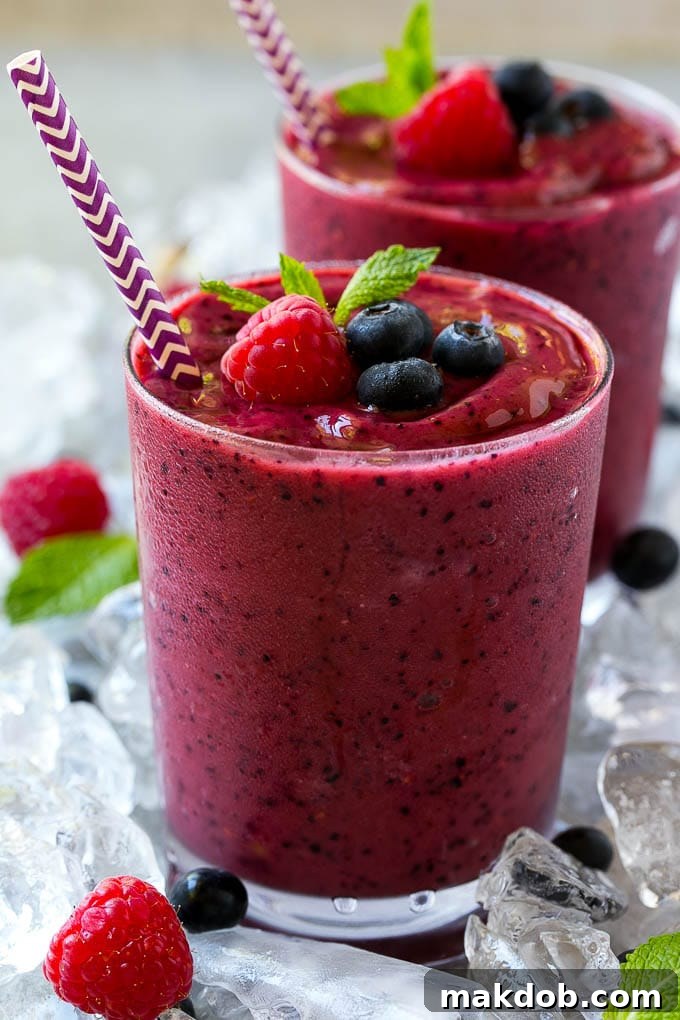
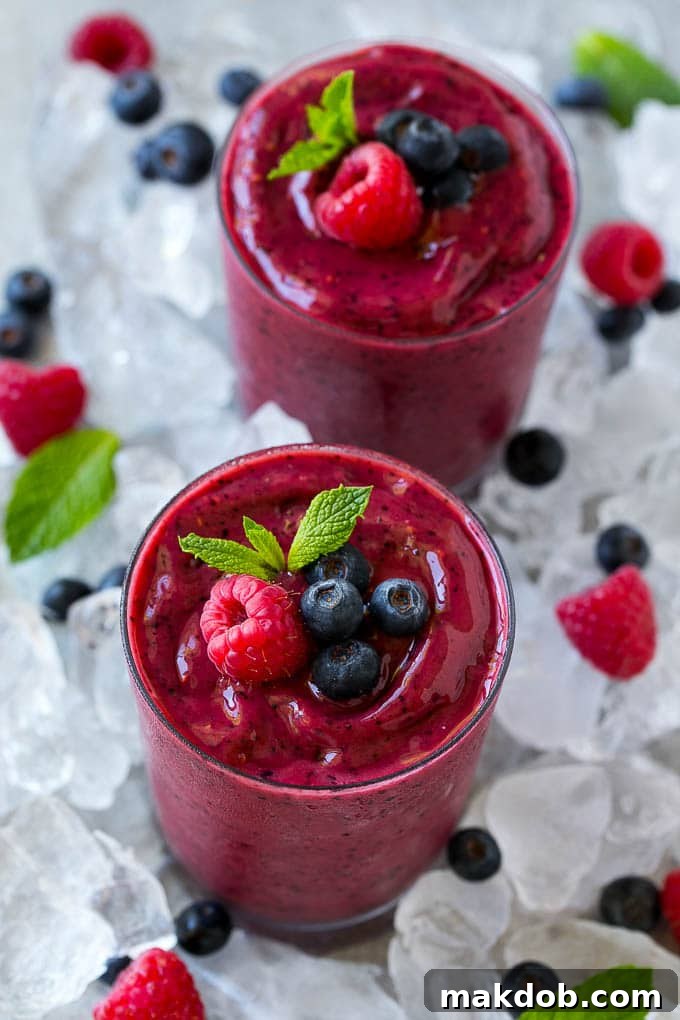
- Pour into 2 glasses. Garnish with additional fruit and mint sprigs if desired.
Nutrition
Calories: 201kcal | Carbohydrates: 43g | Protein: 8g | Cholesterol: 2mg | Sodium: 34mg | Potassium: 378mg | Fiber: 3g | Sugar: 32g | Vitamin A: 80IU | Vitamin C: 16mg | Calcium: 24mg | Iron: 0.6mg
Tag @dinneratthezoo on Instagram and hashtag it #dinneratthezoo
More Refreshing Fruit Recipes You’ll Love
- Raspberry Smoothie
- Mixed Berry Smoothie
- Tropical Smoothie
- Pineapple Coconut Smoothie
- Sparkling Raspberry Pineapple Freeze