

Homemade Greek Salad Dressing: Your Ultimate Guide to Flavorful & Healthy Meals
Discover the magic of homemade Greek salad dressing – a vibrant blend of robust olive oil, zesty fresh lemon juice, tangy red wine vinegar, and a medley of authentic herbs and spices. This effortlessly quick and easy dressing isn’t just a flavor enhancer for your salads; it’s a versatile culinary staple that can elevate roasted vegetables, act as a sensational marinade for meats, or even add a burst of Mediterranean flair to your sandwiches and grain bowls.
Greek cuisine holds a special place in my heart, from the crispy layers of spanakopita to the succulent skewers of chicken souvlaki. Yet, one of the simplest pleasures comes from this five-minute Greek salad dressing, transforming ordinary vegetables into an extraordinary taste experience. Once you try this homemade version, you’ll wonder why you ever reached for a bottle from the store.

In a world overflowing with convenience, homemade salad dressings stand out for their unparalleled taste and health benefits. Unlike their store-bought counterparts, which often contain an array of preservatives, artificial flavors, and excessive sugars, crafting your own dressing allows you complete control over every ingredient. This particular Greek salad dressing is a testament to that philosophy. It’s incredibly simple to prepare, often using ingredients you likely already have in your pantry, making it a sustainable and healthy choice for any home cook. Beyond its primary use, this dressing is a foundational recipe that pairs wonderfully with a wide variety of salad recipes. If you appreciate the fresh, tangy notes of this dressing, you’ll also adore my equally simple Italian dressing and balsamic vinaigrette recipes, perfect for expanding your repertoire of healthful condiments.
The Essentials: Greek Salad Dressing Ingredients
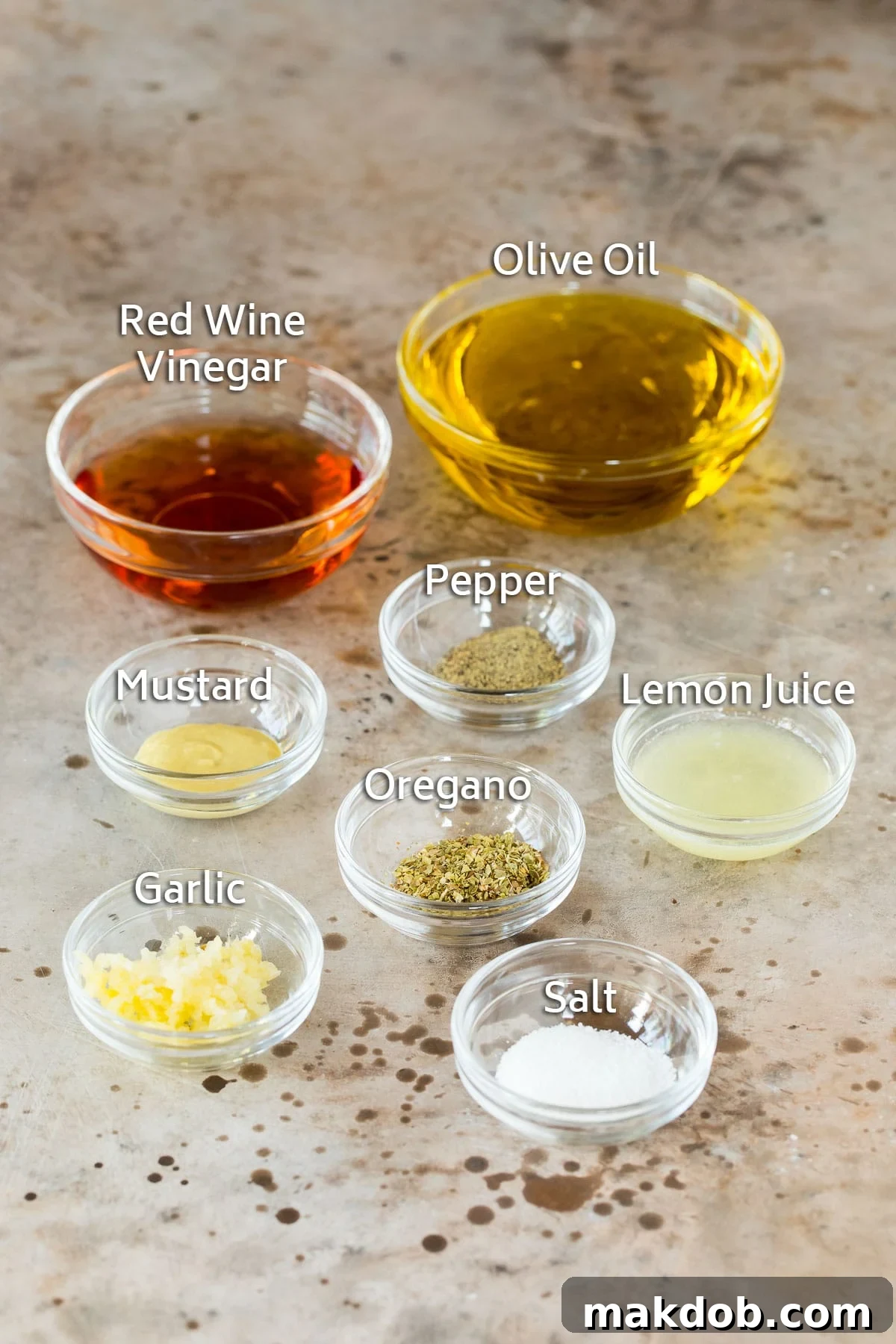
The beauty of this Greek dressing lies in its minimalist ingredient list. With fewer components, the quality of each ingredient truly shines, making a significant impact on the final flavor profile. Opting for the highest quality available will yield the most authentic and delicious results, transforming your simple salad into a Mediterranean masterpiece.
- Extra Virgin Olive Oil: The cornerstone of Greek cooking, extra virgin olive oil provides a rich, fruity base. For an even more authentic experience, consider sourcing an olive oil directly from Greece. Its robust flavor and healthy monounsaturated fats are irreplaceable.
- Red Wine Vinegar: This ingredient is crucial for balance. Its sharp, acidic notes cut through the richness of the olive oil, creating a harmonious and invigorating tang that is characteristic of traditional Greek dressings.
- Fresh Lemon Juice: Always choose freshly squeezed lemon juice over bottled alternatives. The bright, vibrant acidity and natural aroma of fresh lemon juice provide a superior zest that cannot be replicated, making a significant difference in the dressing’s overall freshness.
- Garlic: Freshly minced garlic delivers a pungent, aromatic kick. The longer it infuses in the dressing, the more its sharp edge mellows, blending seamlessly with the other flavors. If raw garlic is too intense for your palate, a small amount of garlic powder can be used as a milder substitute.
- Dijon Mustard: Beyond adding a subtle, sophisticated flavor, Dijon mustard plays a vital role as an emulsifier. It helps to bind the oil and vinegar together, preventing separation and resulting in a smooth, creamy texture for your dressing.
- Dried Oregano: This herb is the heart of Greek flavor. When purchasing, look for Mediterranean oregano, which offers a more authentic and pungent aroma compared to its Mexican variety. Its earthy, slightly bitter notes are essential for that classic Greek taste.
- Salt: Kosher salt is my go-to for its clean taste and coarser texture, which allows for better control over seasoning. Salt enhances all the other flavors, bringing them to the forefront.
- Freshly Ground Black Pepper: A dash of freshly ground black pepper adds a subtle warmth and aromatic complexity, complementing the other spices and rounding out the flavor profile beautifully.
Crafting Your Perfect Greek Dressing: A Simple Guide
Making this Greek dressing is incredibly straightforward, requiring minimal effort for maximum flavor. Whether you prefer the simplicity of a jar or the traditional method of whisking in a bowl, the process is quick and rewarding.
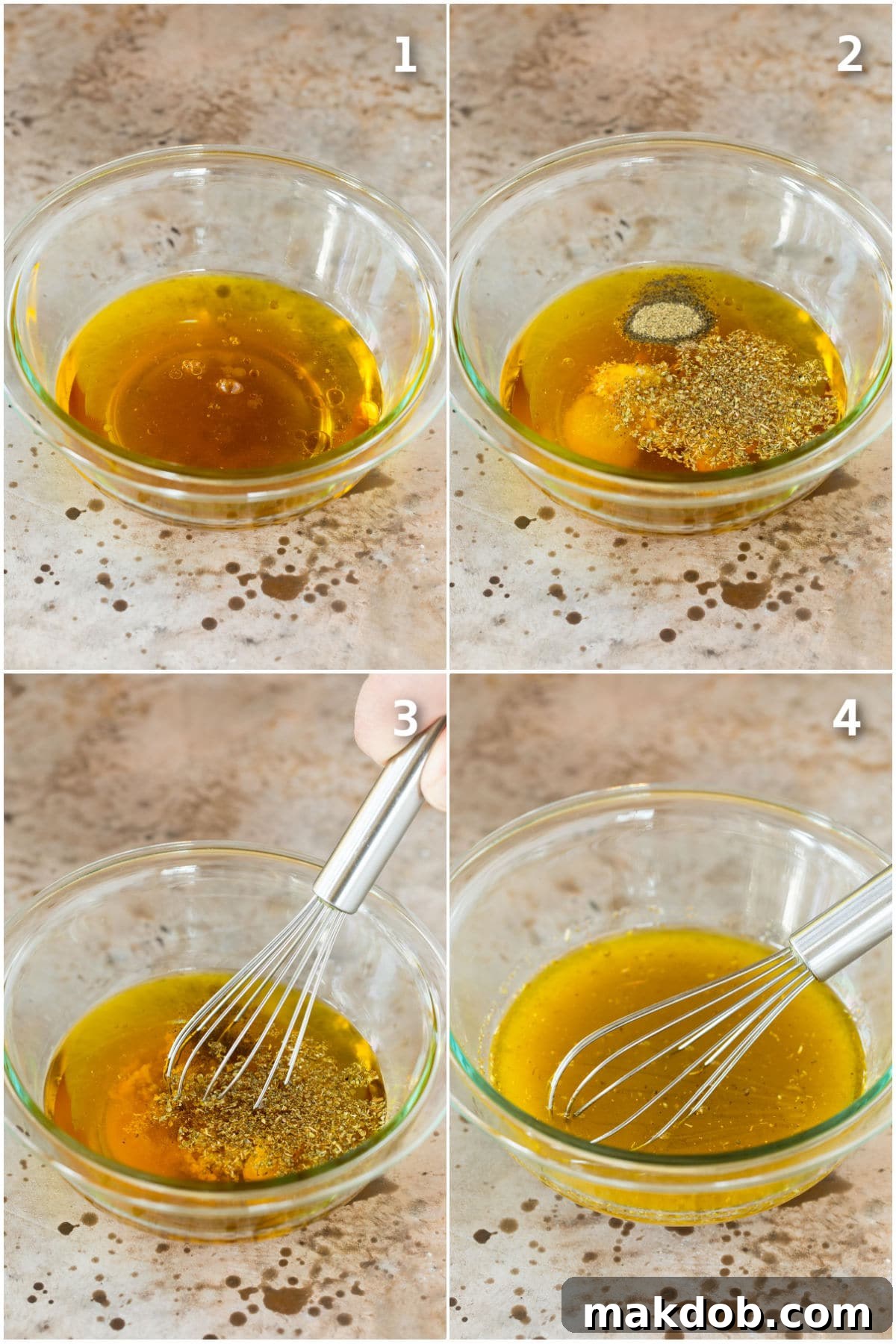
- Combine All Ingredients: Gather all the specified dressing ingredients and place them into a medium-sized bowl or a clean, sealable jar.
- Emulsify (Bowl Method): If using a bowl, take a whisk and vigorously combine all the ingredients. Continue whisking until the mixture is thoroughly emulsified – meaning the oil and vinegar are completely blended and no longer separated, creating a smooth, cohesive dressing.
- Shake (Jar Method): For a quicker and often more convenient method, if you’re using a jar, simply secure the lid tightly. Then, shake the jar vigorously for about 30-60 seconds, or until all the ingredients are fully incorporated and the dressing appears homogenous.
- Serve or Store: Your homemade Greek dressing is now ready to use! Drizzle it immediately over your favorite salad or dish, or store it in the refrigerator for future use.
Expert Tips for the Perfect Homemade Greek Dressing
Achieving the perfect Greek dressing is simple with these helpful tips, ensuring optimal flavor and longevity for your homemade creation:
- Storage and Re-emulsification: This dressing keeps wonderfully in the refrigerator for up to 5 days. It’s common for the olive oil to solidify or separate when chilled. Don’t worry! Simply allow the dressing to sit at room temperature for about 15-20 minutes before use, and the oil will liquefy again. Give it a good shake or whisk, and it will be perfectly blended and ready to impart its fresh flavors.
- Flavor Variations and Enhancements: Feel free to customize your dressing to suit your taste. Experiment with additional ingredients such as finely minced shallots for a milder onion flavor, a touch of honey or maple syrup for a hint of sweetness, a sprinkle of lemon zest for intensified citrus notes, or fresh herbs like parsley, dill, or thyme for added aromatic complexity.
- Scaling the Recipe: This recipe yields enough dressing for several servings of salad or multiple uses throughout the week. If you’re hosting a larger gathering or simply want to have more on hand, it can easily be doubled or even tripled without compromising on flavor or quality. Just ensure you have a large enough container for mixing and storage.
Frequently Asked Questions About Greek Salad Dressing
While both Greek and Italian dressings share common foundational ingredients like olive oil, lemon juice, vinegar, garlic, and various herbs, their distinct flavor profiles emerge from key differences. Greek dressing typically emphasizes strong, earthy oregano and often relies on red wine vinegar for its characteristic tang. Italian dressing, on the other hand, can be more varied, sometimes incorporating sugar for sweetness, Parmesan cheese for umami, bell peppers for a subtle crunch, or even mayonnaise to achieve a creamy texture. The herb blend also differs, with Italian dressing often featuring basil, thyme, and rosemary alongside oregano.
A classic Greek salad dressing is crafted from a simple yet powerful combination of ingredients: high-quality extra virgin olive oil, tangy red wine vinegar, bright fresh lemon juice, pungent minced garlic, a hint of Dijon mustard for emulsification and depth, aromatic dried Mediterranean oregano, and seasonings like salt and freshly ground black pepper.
Absolutely! Greek salad dressing is excellent for meal prep. You can prepare it up to 5 days in advance and store it in an airtight container in the refrigerator. Just remember that the olive oil may solidify when chilled. Simply allow it to come to room temperature for about 15-20 minutes and give it a good shake or whisk before serving to re-emulsify the ingredients.
Yes, homemade Greek salad dressing can be very healthy, especially when made with quality ingredients. Extra virgin olive oil provides healthy monounsaturated fats, which are beneficial for heart health. Lemon juice and red wine vinegar offer antioxidants and can aid digestion. By making it at home, you avoid unhealthy additives, excessive sugar, and artificial ingredients often found in commercial dressings, giving you complete control over its nutritional content.
Beyond the Salad Bowl: Creative Ways to Use Greek Salad Dressing
This versatile Greek dressing is far more than just a salad topping. Its bold, fresh flavors make it an indispensable ingredient for countless dishes, adding a touch of the Mediterranean to your culinary creations in exciting ways!
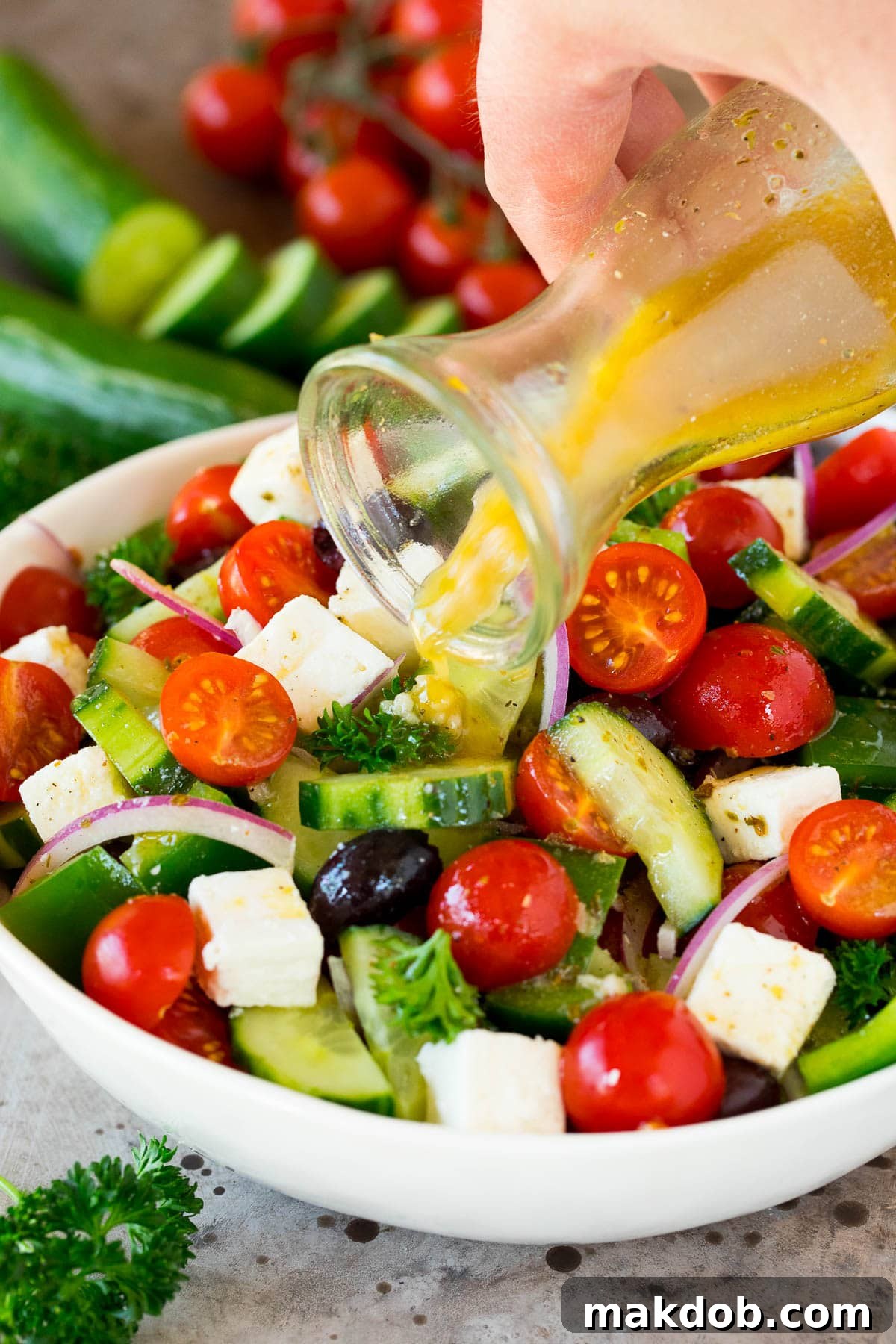
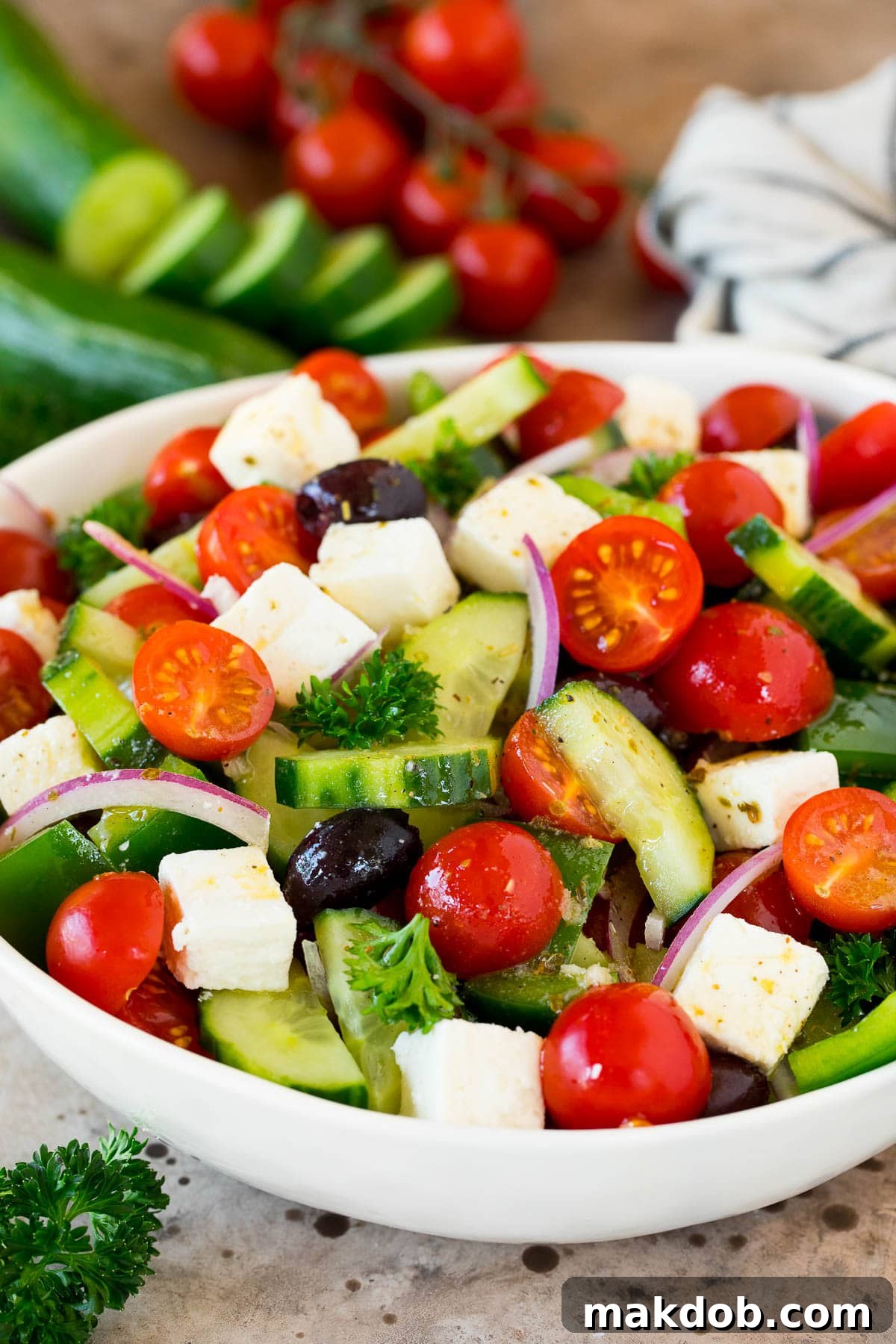
- Classic Greek Salad: The quintessential use! Combine crisp romaine lettuce or mixed greens with ripe tomatoes, crunchy cucumbers, briny Kalamata olives, thinly sliced red onions, and crumbled feta cheese. Drizzle generously with the dressing and toss gently to coat for a refreshing and satisfying meal.
- Roasted Greek Potatoes: Transform humble potatoes into a savory side dish. Toss halved baby potatoes or quartered Yukon Golds with a good glug of olive oil, dried oregano, salt, and pepper. Roast them until they are tender on the inside and beautifully golden brown and crispy on the outside. After roasting, drizzle with a bit more Greek dressing and sprinkle with feta cheese for an unforgettable flavor.
- Grilled Vegetable Medley: Elevate your favorite grilled vegetables. Asparagus spears, vibrant red bell peppers, zucchini slices, and hearty mushrooms are fantastic choices. After grilling to perfection, arrange them on a platter and lightly drizzle with Greek salad dressing, enhancing their natural sweetness and char.
- Effortless Marinade for Proteins: This dressing makes an exceptional marinade. Place 1 to 1½ pounds of raw chicken (breasts, thighs, or skewers), pork, or firm fish in a resealable bag with the Greek dressing. Marinate for at least one hour, or ideally up to 12 hours for deeper flavor infusion. Grill, bake, or pan-fry for tender, aromatic results.
- Zesty Sandwich Spread: Ditch the mayonnaise and add a vibrant kick to your sandwiches and wraps. A spoonful of Greek dressing can instantly brighten up turkey, chicken, or veggie sandwiches, offering a tangy alternative that complements a wide array of fillings.
- Flavorful Grain Bowls: Drizzle over warm quinoa, couscous, or farro bowls packed with roasted vegetables, chickpeas, and fresh herbs for a nutritious and delicious lunch or dinner.
- Delectable Dips: Blend a tablespoon or two of Greek dressing into hummus or a plain Greek yogurt dip for an instant flavor upgrade. Serve with pita bread, fresh vegetables, or crackers.
- Seasoning for Roasted Fish: Before roasting or baking, brush a fillet of salmon, cod, or snapper with a generous amount of this dressing. It infuses the fish with incredible Mediterranean flavors, keeping it moist and tender.
Having a jar of this incredible homemade Greek dressing perpetually stocked in my fridge is a game-changer. It’s truly a secret weapon in the kitchen, offering an effortless way to infuse tons of fresh, vibrant flavor into almost any meal with minimal effort!
More Fabulous Salad Sensations to Explore
- Grilled Chicken Salad: A protein-packed, fresh salad perfect for lunch or a light dinner.
- Broccoli Slaw: A crunchy, refreshing side dish that’s both healthy and satisfying.
- Curry Chicken Salad: An exotic and flavorful twist on a classic chicken salad.
- Fattoush Salad: A vibrant Middle Eastern bread salad with crisp vegetables and herbs.
- Caprese Salad: A delightful Italian classic, reimagined with a smoky bacon addition.

Classic Homemade Greek Salad Dressing
Pin Recipe
Sara Welch
This homemade Greek salad dressing is a perfect blend of olive oil, fresh lemon juice, red wine vinegar, and aromatic herbs. It’s quick, easy, and adds incredible flavor to any salad, while also serving as a versatile marinade or seasoning for roasted vegetables.
10 minutes
0 minutes
10 minutes
Salad, Dressing, Condiment
Greek, Mediterranean
8
Ingredients
- 2/3 cup extra virgin olive oil
- 1/4 cup red wine vinegar
- 1 tablespoon fresh lemon juice
- 3/4 teaspoon garlic minced (about 2 cloves)
- 1 teaspoon Dijon mustard
- 3/4 teaspoon dried Mediterranean oregano
- 1 teaspoon kosher salt
- 1/2 teaspoon freshly ground black pepper
Instructions
-
Place all of the ingredients (olive oil, red wine vinegar, lemon juice, minced garlic, Dijon mustard, dried oregano, salt, and black pepper) into a medium-sized bowl or a clean, sealable jar.
-
If using a bowl, whisk all ingredients together vigorously until they are well combined and the mixture is emulsified (smooth and uniform).
-
If using a jar, secure the lid tightly and shake the jar vigorously for about 30-60 seconds until all the ingredients are fully blended and the dressing is homogenous.
-
Your homemade Greek dressing is now ready to be used immediately. Alternatively, store it in the refrigerator for later use. Remember to shake or whisk again before each use.
Notes
- The dressing will remain fresh in the refrigerator for up to 5 days. Should the olive oil solidify when chilled, simply let the dressing sit at room temperature for about 15-20 minutes until the oil liquefies. Always whisk or shake well before serving to re-emulsify the ingredients.
- For the most authentic Greek flavor, prioritize using Mediterranean oregano.
- For the brightest and most vibrant taste, always use freshly squeezed lemon juice rather than bottled versions.
- Consider adding a small amount of finely chopped fresh herbs like parsley or dill for an extra layer of freshness.
Nutrition Information (per serving, estimated)
Tag @dinneratthezoo on Instagram and hashtag it #dinneratthezoo