
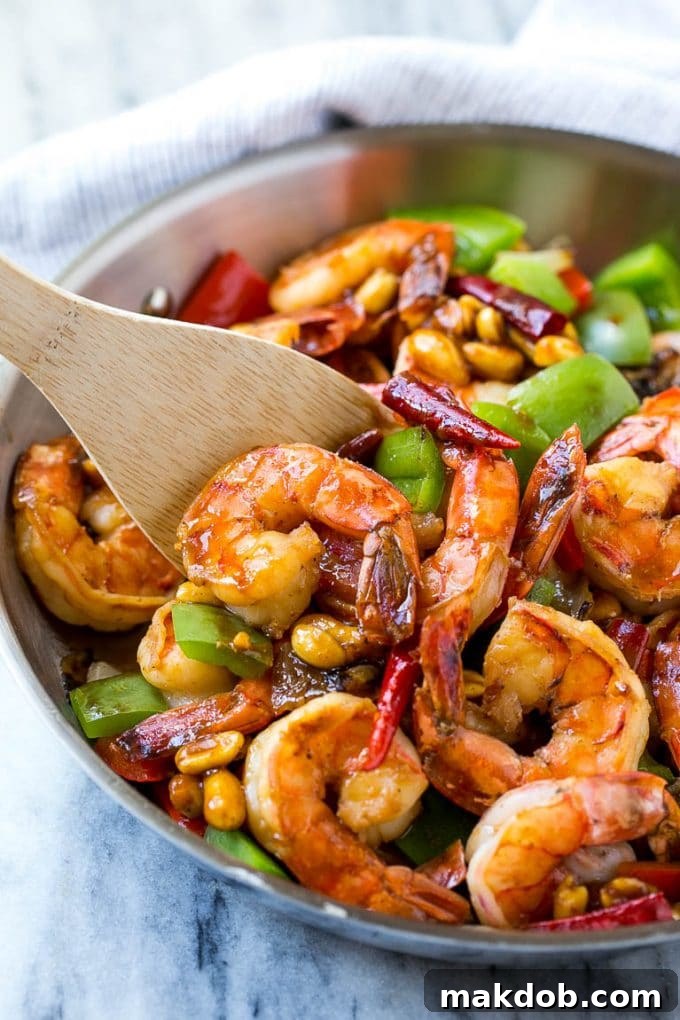
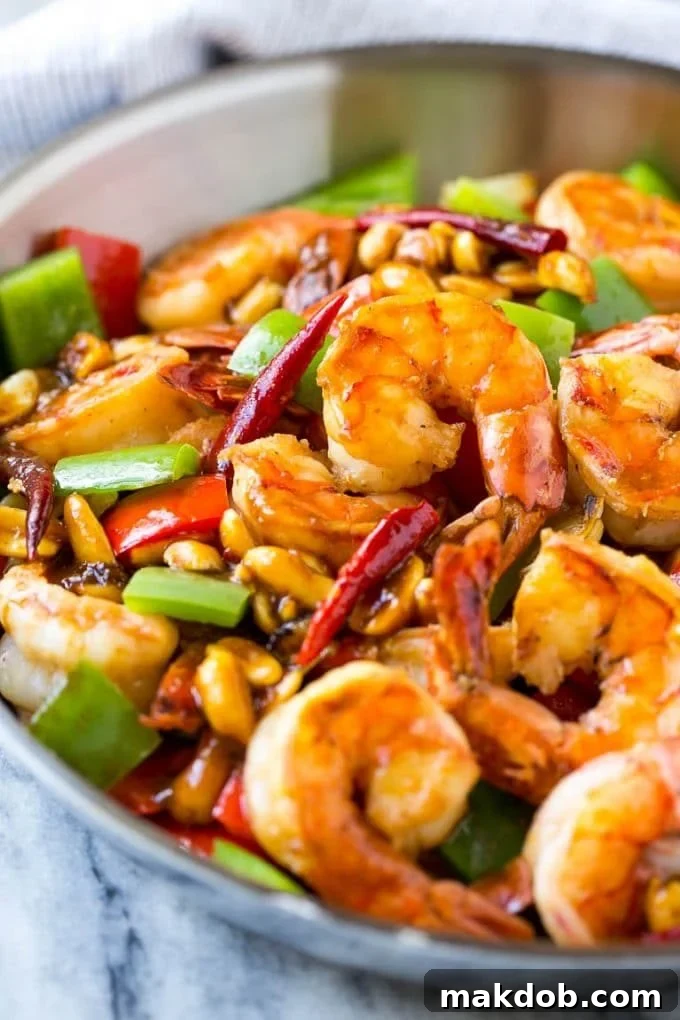
Transform your dinner table into an authentic Asian culinary experience with this incredible recipe for Kung Pao Shrimp! Bursting with colorful, crisp vegetables, crunchy peanuts, and succulent shrimp, all harmoniously coated in a savory, sweet, and perfectly spicy sauce, this dish is a true triumph of flavor and texture. The best part? You can whip up this restaurant-quality Chinese takeout favorite in just 20 minutes right in your own kitchen!
Forget the long waits and unknown ingredients of your local takeout spot. My homemade rendition of this classic Chinese stir-fry is designed to be superior in every way – fresher, more flavorful, and customizable to your exact spice preference. It’s a seafood stir-fry dream, standing proudly alongside other quick and delightful Asian-inspired dishes like tender Moo Goo Gai Pan and zesty Szechuan Beef. Prepare to impress your family and friends with a vibrant, healthy, and incredibly quick meal.
Why Make Your Own Kung Pao Shrimp?
There’s nothing quite like the satisfaction of creating your favorite Chinese takeout dishes at home. Beyond the sheer joy of cooking, making your own Kung Pao Shrimp offers numerous benefits that elevate your dining experience. For starters, you have complete control over the quality and freshness of every ingredient. This means you can opt for organic vegetables, responsibly sourced shrimp, and adjust sodium or sugar levels to suit your dietary needs. Plus, it’s often more budget-friendly than ordering out, providing a delicious and economical solution for busy weeknights.
This particular recipe is designed for maximum impact with minimal effort. I’ve packed it with an abundance of crisp, colorful vegetables, not just for visual appeal but for added texture and nutrition. The sauce strikes a perfect balance – it’s zesty and spicy enough to deliver that characteristic “kick” without overwhelming your palate or sending you scrambling for a glass of water. The shrimp, the star of the show, cooks up beautifully tender and absorbs all the complex flavors of the Kung Pao sauce. Seriously, once you try this homemade version, you might never go back to takeout!
The Irresistible Allure of Kung Pao Shrimp
Kung Pao Shrimp is more than just a stir-fry; it’s a symphony of contrasting flavors and textures that tantalize the taste buds. Originating from the Sichuan province of China, the traditional Kung Pao flavor profile is known for its “mala” sensation – a unique blend of numbing and spicy. While this recipe offers a more universally appealing, moderated spice level, it retains the fundamental deliciousness that makes Kung Pao a global favorite.
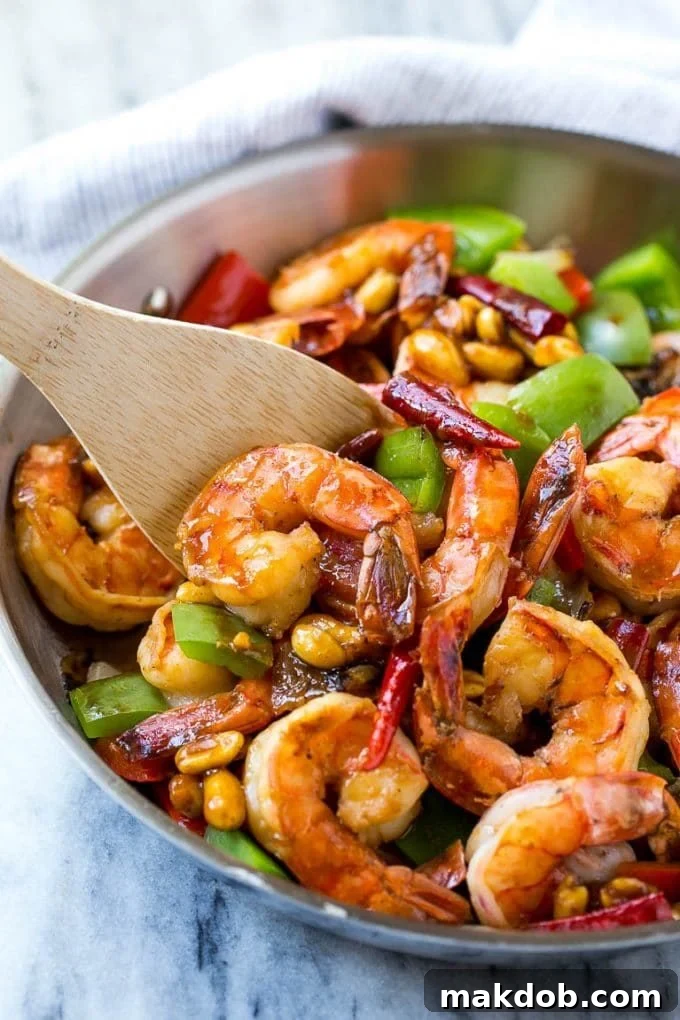
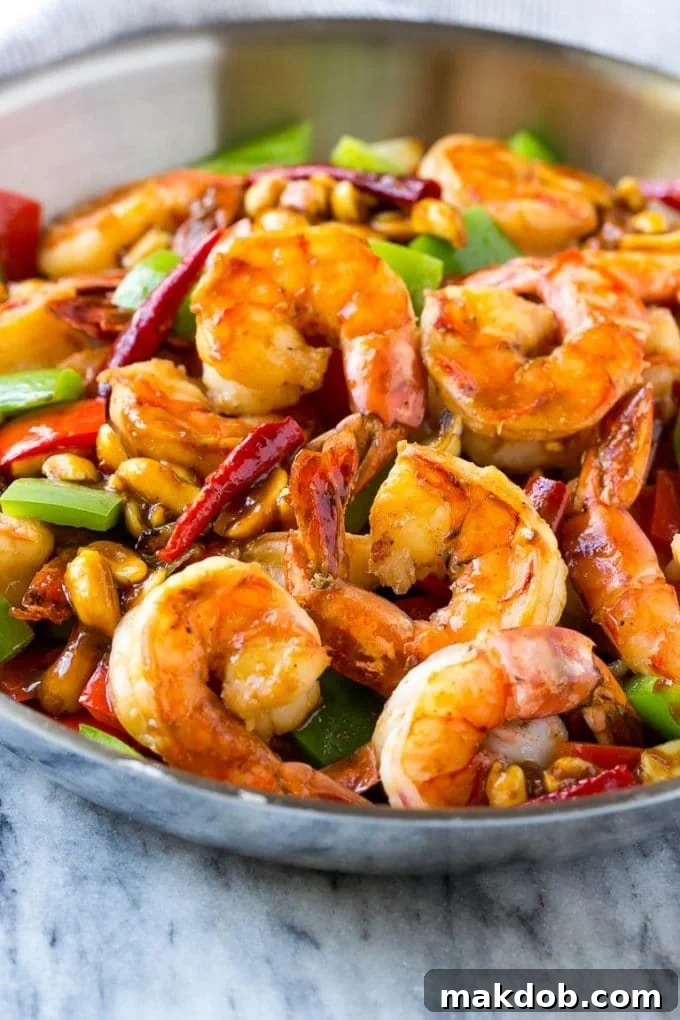
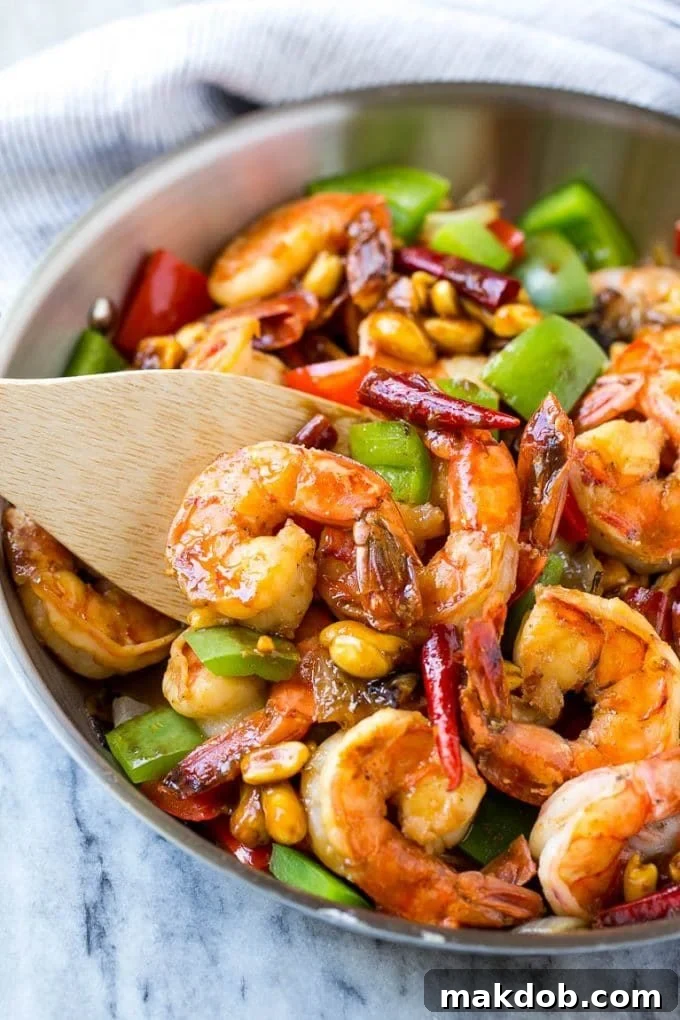
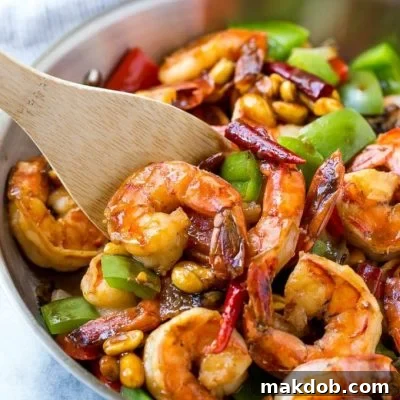
Imagine succulent, perfectly cooked shrimp, nestled among vibrant red and green bell peppers, sweet onions, and fragrant garlic. Each bite is punctuated by the satisfying crunch of roasted peanuts and a subtle warmth from dried red chilies. The glossy sauce, a masterful concoction of soy, hoisin, and sesame oil, clings to every ingredient, delivering a harmonious blend of salty, sweet, and umami notes. It’s a dish that promises excitement with every forkful, making it an ideal choice for a quick family dinner or a vibrant meal with friends.
To round out your homemade Chinese feast, consider pairing your Kung Pao Shrimp with delectable appetizers. A soothing bowl of Hot and Sour Soup or some irresistibly crunchy Cream Cheese Wontons would make fantastic starters. For a heartier side, don’t miss out on flavorful Pan Fried Noodles – they perfectly complement the bold flavors of the shrimp stir-fry.
Table of Contents
- Kung Pao Shrimp Ingredients: A Closer Look
- How Do You Make Kung Pao Shrimp? Step-by-Step
- Tips For The Perfect Kung Pao Shrimp
- Quick Tip: Taming the Heat
- Recipe FAQs
- Kung Pao Shrimp Variations
- Serving Suggestions for Kung Pao Shrimp
- More Great Shrimp Recipes
- Love This Recipe?
- Kung Pao Shrimp Recipe Card
Kung Pao Shrimp Ingredients: A Closer Look
Crafting exceptional Kung Pao Shrimp begins with selecting the right ingredients. Here’s a detailed breakdown of what you’ll need and why each component is essential for that perfect balance of flavor and texture:
For the Stir-Fry:
- Vegetable Oil: A neutral oil with a high smoke point is crucial for stir-frying. It ensures the ingredients cook evenly and develop a beautiful char without burning.
- Deveined Shrimp: The star of the dish! Opt for large or extra-large shrimp for the best texture. Ensure they are peeled and deveined for convenience and a cleaner eating experience. You can use fresh or frozen shrimp (thawed thoroughly).
- Red Bell Pepper & Green Bell Pepper: These add vibrant color, a fresh crunch, and a subtle sweetness that balances the savory and spicy notes of the sauce. Cut them into similar-sized pieces for even cooking.
- Yellow Onion: Provides a foundational aromatic sweetness and depth to the stir-fry.
- Minced Garlic: An indispensable aromatic in Chinese cuisine, fresh garlic delivers a pungent, savory base flavor.
- Dried Red Chilies: These are key for the authentic spicy kick and visual appeal of Kung Pao. The amount can be adjusted to your heat preference.
- Roasted Unsalted Peanuts: Essential for that signature nutty crunch and a rich, earthy flavor that contrasts beautifully with the other ingredients. Ensure they are unsalted as the sauce will provide plenty of seasoning.
- Salt and Pepper: Basic seasonings to enhance the natural flavors of the vegetables and shrimp.
For the Kung Pao Sauce:
- Soy Sauce: The cornerstone of most Asian sauces, providing umami, saltiness, and depth.
- Hoisin Sauce: A thick, fragrant, and slightly sweet sauce that adds richness, complexity, and a lovely glossy finish.
- Sesame Oil: Aromatic sesame oil contributes a distinctive nutty flavor that is characteristic of many East Asian dishes.
- Sugar: Balances the savory and spicy elements, adding a touch of sweetness to the sauce.
- Cornstarch: This acts as a thickening agent, giving the sauce that desirable silky, clingy texture.
- Water: Used to thin the sauce to the right consistency and help dissolve the cornstarch.
Having all your ingredients prepped and ready before you start cooking is vital for stir-frying. This technique, known as “mise en place,” ensures a smooth and successful cooking process.
How Do You Make Kung Pao Shrimp? Step-by-Step
Creating this delicious Kung Pao Shrimp is remarkably straightforward, especially when you follow these clear, step-by-step instructions. The key to a great stir-fry is high heat and quick cooking, so have everything prepared before you begin!
- Prepare Your Wok or Pan: Begin by heating a large wok, skillet, or deep pan over high heat. Add the vegetable oil and let it get shimmering hot. High heat is essential for achieving that perfect stir-fry texture.
- Sauté the Aromatics and Vegetables: Add the chopped yellow onion to the hot pan and stir-fry for 2-3 minutes until it just begins to soften and become translucent. Next, add the red and green bell peppers. Continue to cook for another 3-4 minutes, stirring constantly, until the bell peppers are tender-crisp. You want them cooked but still retaining a slight bite. Season the vegetables lightly with salt and pepper to taste. Finally, add the minced garlic and cook for just 30 seconds until fragrant, being careful not to burn it.
- Cook the Shrimp: Push the vegetables to one side of the pan to create space, or remove them temporarily if your pan is crowded. Add the peeled and deveined shrimp to the hot pan. Cook the shrimp for approximately 3-4 minutes, flipping them once, until they turn opaque and pink. Be careful not to overcook the shrimp, as they can become tough.
- Incorporate Chilies and Peanuts: Once the shrimp are cooked, add the dried red chilies and roasted peanuts to the pan, stirring them in with the shrimp and vegetables. Sauté for another minute to allow the flavors to meld and the peanuts to warm through.
- Whisk the Sauce: While your stir-fry ingredients are cooking, prepare the vibrant Kung Pao sauce. In a small bowl, whisk together the soy sauce, hoisin sauce, sesame oil, sugar, cornstarch, and water until completely smooth and the cornstarch is dissolved. This mixture will thicken beautifully once it hits the hot pan.
- Thicken and Serve: Pour the prepared sauce over the shrimp and vegetable mixture in the pan. Bring the sauce to a boil, stirring continuously. As it boils, the cornstarch will activate, and the sauce will thicken rapidly, usually within 30 seconds to 1 minute, transforming into a glossy, flavorful coating. Remove from heat immediately.
Your homemade Kung Pao Shrimp is now ready to be enjoyed! Serve it hot, ideally over steamed rice, for a complete and satisfying meal.
Tips For The Perfect Kung Pao Shrimp
To ensure your Kung Pao Shrimp turns out perfectly every time, keep these valuable tips in mind:
- Choose Extra Large Shrimp: For this recipe, I highly recommend using extra-large shrimp. They are truly the star of the dish, offering a more substantial bite and a better texture. Larger shrimp are also less prone to overcooking, which is crucial for keeping them tender and juicy. Sometimes, I even cook a double batch of shrimp, saving the extra for another quick meal like a Teriyaki Shrimp Stir Fry on a different day.
- Locating Hoisin Sauce: Hoisin sauce is a staple in Asian cooking and is readily available. You can typically find it in the international aisle of almost all major grocery stores, often alongside soy sauce and other Asian condiments. Its unique sweet and savory profile is indispensable for the authentic flavor of Kung Pao.
- Selecting Dried Chilies: The heat in Kung Pao Shrimp comes from small dried chilies. These can often be found in the international aisle of your grocery store. If you can’t find them there, look for dried chile de arbol peppers, which are common in the Mexican section of many supermarkets and work wonderfully for this dish.
- Adjusting Spice Level: I typically use 4-6 dried chilies to achieve a moderate spice level that’s enjoyable for most palates. However, taste is personal! Feel free to increase the number of chili peppers if you crave more of a fiery kick, or reduce them if you prefer a milder dish.
- Chili Alternatives: If dried chilies are hard to come by or you simply don’t want to purchase a specialty ingredient, you can substitute them with red pepper flakes. Use the same kind you would sprinkle on pizza, adjusting the amount to your desired heat. Approximately 1/2 to 1 teaspoon of red pepper flakes can substitute for 4-6 dried chilies, but taste and adjust.
- Prep Everything Ahead (Mise en Place): Stir-frying is a very fast cooking method. To avoid overcooking ingredients and ensure a smooth process, have all your vegetables chopped, shrimp cleaned, and sauce whisked and ready to go before you even turn on the stove. This preparation will make the actual cooking a breeze.
- Don’t Overcrowd the Pan: For best results, avoid overcrowding your wok or skillet. If you’re cooking a large batch, it’s better to cook the shrimp and vegetables in two smaller batches to ensure everything gets properly seared and stir-fried, rather than steaming.
Quick Tip: Taming the Heat
To enjoy the flavorful essence of the dried chilies without too much heat, simply break them open and shake out the seeds before adding them to the pan. Most of the capsaicin (the compound responsible for spiciness) resides in the seeds and membranes, so removing them significantly reduces the dish’s heat while retaining the aromatic chili flavor.
Recipe FAQs
Kung Pao Shrimp is a vibrant stir-fry dish featuring tender shrimp cooked with fresh ingredients like onion, bell peppers, dried red chilies, and crunchy peanuts. These components are all tossed in a glossy, savory, slightly sweet, and mildly spicy sauce crafted from soy sauce, hoisin sauce, and sesame oil.
The delightful Kung Pao sauce for this recipe is made from a simple blend of soy sauce, hoisin sauce, sesame oil, a touch of sugar for balance, cornstarch to achieve that perfect thickened consistency, and water to bring it all together.
Kung Pao delivers a complex flavor profile that is primarily savory and slightly sweet, with a satisfying warmth from the dried red chilies. It beautifully balances the freshness of cooked vegetables and the rich, nutty notes of peanuts, all coated in a harmonious sauce.
While the dried red chilies are essential for infusing Kung Pao with its signature flavor and heat, they are generally not meant to be eaten whole. They serve as an aromatic and spice component, releasing their essence into the oil and sauce during cooking.
Leftover Kung Pao Shrimp can be stored in an airtight container in the refrigerator for up to three days. It reheats well on the stovetop or in the microwave.
Kung Pao Shrimp is wonderfully versatile. It pairs perfectly with fluffy white rice, brown rice, or jasmine rice. For a noodle option, consider a side of Pan Fried Noodles or simple lo mein. Steamed broccoli or a light green salad can also complement the dish.
While the dish is best enjoyed fresh, you can definitely do most of the prep work ahead of time. Chop all your vegetables, peel and devein the shrimp, and whisk together the sauce ingredients. Store them separately in airtight containers in the refrigerator, then combine and cook just before serving.
When made at home, Kung Pao Shrimp can be a very healthy meal. It’s rich in lean protein from the shrimp and packed with vitamins and fiber from the bell peppers and onions. By controlling the amount of oil and sugar in the homemade sauce, you can make it even healthier than restaurant versions.
Follow Me
Kung Pao Shrimp Variations
While this Kung Pao Shrimp recipe is incredibly delicious as written, it’s also highly adaptable. Feel free to customize it to your personal taste preferences or what you have available in your pantry:
- Adjusting the Spice Level: Beyond simply increasing or decreasing the number of dried chilies, you can also experiment with different types of chilies. For a milder heat, you could use fewer chilies or even a dash of sriracha in the sauce. If you crave a more intense, authentic Sichuan experience, try adding a teaspoon of Sichuan peppercorns (whole or ground) to the hot oil at the beginning of cooking. They provide a unique citrusy, numbing sensation that is characteristic of traditional Kung Pao.
- Enhancing Flavorings: To add an extra layer of depth and aroma, grate a teaspoon of fresh ginger and add it to the dish along with the garlic. For a slightly tangy finish that brightens the overall flavor, a tablespoon of rice wine vinegar can be whisked into the sauce. A squeeze of fresh lime juice just before serving can also introduce a wonderful zing.
- Creative Toppings: Elevate the presentation and add fresh flavor with simple toppings. Slices of vibrant green onion or a sprinkle of toasted sesame seeds are classic choices that add both visual appeal and a fresh, nutty counterpoint. Fresh cilantro can also offer a burst of herbal freshness.
- Exploring Different Nuts: While peanuts are the customary choice for Kung Pao, feel free to substitute them for a different flavor and texture. Roasted cashews are an excellent alternative, offering a creamier, buttery crunch. Blanched almonds or even walnuts can also provide a unique twist.
- Protein Alternatives: If you’re not a fan of shrimp or simply want to try something different, this recipe works beautifully with other proteins. Diced chicken breast or thigh, thinly sliced beef, or even firm tofu can be used. Adjust cooking times accordingly to ensure the protein is cooked through but not overdone.
- Boosting the Veggies: Don’t limit yourself to just bell peppers and onions! This stir-fry is a great way to incorporate more vegetables into your diet. Consider adding snap peas, sliced carrots, water chestnuts, baby corn, broccoli florets, or bamboo shoots for extra color, texture, and nutrition. Add harder vegetables like carrots earlier in the cooking process.
Serving Suggestions for Kung Pao Shrimp
Kung Pao Shrimp is a complete meal in itself, packed with protein and vegetables, but pairing it with the right side dishes can elevate your dining experience to a full feast. Here are some popular and delicious serving suggestions:
- Steamed Rice: The most classic accompaniment. Fluffy white rice (Jasmine or Basmati), nutty brown rice, or even a fragrant coconut rice provides a perfect canvas for soaking up the rich Kung Pao sauce.
- Noodles: For a heartier meal, serve your Kung Pao Shrimp over or alongside stir-fried noodles like Lo Mein or Chow Mein. The noodles add an extra layer of texture and absorb the delicious sauce beautifully.
- Cauliflower Rice: For a low-carb option, serve with steamed or sautéed cauliflower rice. It’s a fantastic way to enjoy all the flavors without the added carbohydrates.
- Extra Steamed Vegetables: If you want to boost your vegetable intake, a simple side of steamed broccoli, asparagus, or green beans can be a fresh and healthy addition.
- Appetizers: Before the main course, consider serving light appetizers such as spring rolls, egg rolls, potstickers, or a refreshing cucumber salad to round out your Asian-inspired meal.
- Soup: A classic hot and sour soup or a simple egg drop soup can be a wonderful prelude to the flavorful Kung Pao Shrimp.
No matter how you choose to serve it, this delicious Kung Pao Shrimp is sure to be a hit. With plenty of fresh veggies already in the mix, a simple side of steamed rice is often all you need for a complete and satisfying dinner!
More Great Shrimp Recipes
Honey Garlic Shrimp Stir Fry
20 mins
Buffalo Shrimp
25 mins
Sesame Shrimp
25 mins
Sweet and Sour Shrimp
35 mins
Shrimp Ceviche
35 mins
Love This Recipe?
We poured our hearts into crafting this delightful Kung Pao Shrimp recipe, and we truly hope you love it as much as we do! Your feedback helps us continue sharing delicious and easy meals. Please take a moment to leave a 5-star 🌟🌟🌟🌟🌟 rating in the recipe card below and share your thoughts in the comments section further down the page. Happy cooking!
Kung Pao Shrimp
Pin
SaveSaved
Time
Ingredients
- For the stir fry:
- 1 tablespoon vegetable oil
- 1 pound large shrimp peeled and deveined
- 1 red bell pepper cut into 1 inch pieces
- 1 green bell pepper cut into 1 inch pieces
- 1/2 cup yellow onion cut into 1/2 inch pieces
- 1 teaspoon minced garlic
- 4-6 dried red chilies seeded and cut in half (you can use more or less chilies to adjust the heat level to your preference)
- 1/2 cup roasted unsalted peanuts
- salt and pepper to taste
- For the sauce:
- 2 tablespoons soy sauce
- 1 tablespoon hoisin sauce
- 2 teaspoons sesame oil
- 2 teaspoons sugar
- 2 teaspoons cornstarch
- 2 tablespoons water
Instructions
-
Heat the oil in a large pan over high heat. Add the onion and cook for 2-3 minutes or until just softened. Add the red and green bell pepper and cook for 3-4 minutes or until tender. Season with salt and pepper to taste. Add the garlic and cook for 30 seconds.
-
Add the shrimp to the pan and cook for 3-4 minutes, or until shrimp are pink and opaque. Add the chilies and peanuts to the pan.
-
While the shrimp and vegetables are cooking, make the sauce. Whisk together all of the sauce ingredients in a small bowl.
-
Add the sauce to the shrimp mixture and bring to a boil; cook for 30 seconds to 1 minute, or until sauce is just thickened. Serve immediately.
Notes
- I like to use extra large shrimp for this recipe, just because the shrimp are really the star of the show here. This also helps prevent them from overcooking and becoming rubbery.
- You can use most small dried chilies for this dish to add heat and flavor. Look for them in the international aisle of your grocery store. Dried chile de arbol peppers are a great option and can often be found with Mexican ingredients in your local store.
- I typically use 4-6 chilies for a moderate spice level that appeals to most. However, feel free to increase the number of chili peppers if you prefer a more intense, fiery kick in your food!
- For those who enjoy the chili flavor but prefer less heat, a quick tip is to break the dried chilies open and shake out the seeds before adding them to the pan. Most of the heat resides in the seeds and membranes.