
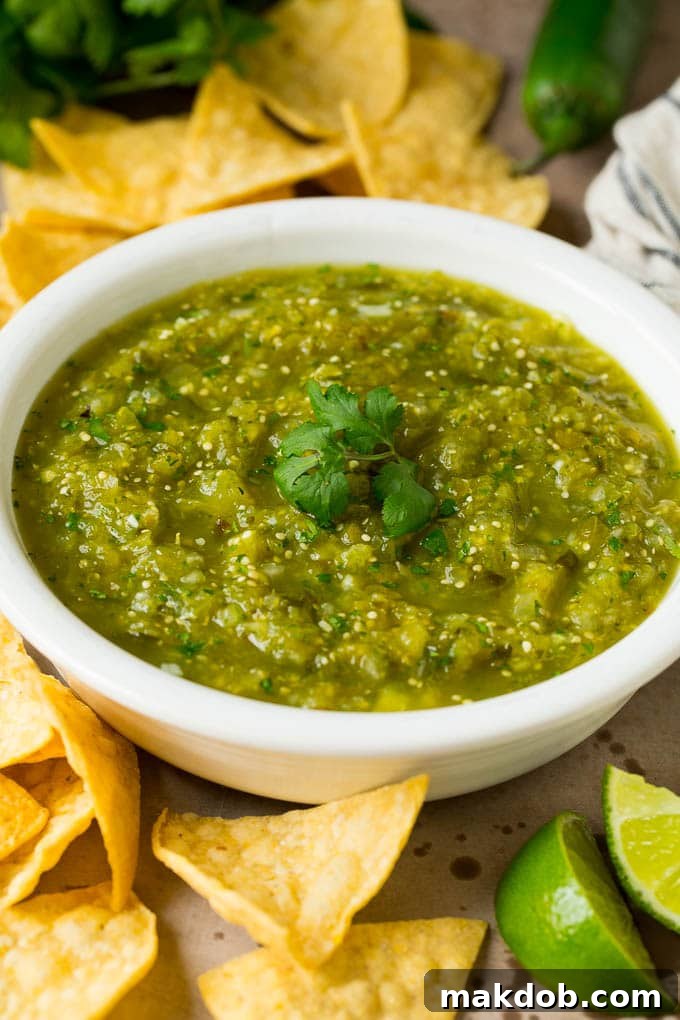
Unlock the vibrant flavors of Mexico right in your own kitchen with this incredible homemade salsa verde recipe. Far surpassing any store-bought alternative, this light and refreshing dip is a harmonious blend of perfectly roasted tomatillos, fiery chilies, pungent garlic, fresh cilantro, and a bright squeeze of lime juice. It’s an essential addition to any gathering, an effortless snack, and a versatile companion to countless Mexican dishes.
Whether you’re hosting a lively party or simply looking for an easy, delicious snack, a bowl of authentic salsa verde served with a generous pile of crispy tortilla chips is always a crowd-pleaser. Imagine serving this alongside other crowd-favorite appetizer recipes such as sweet and tangy baked barbecue chicken wings, hearty chili cheese fries, savory bacon-wrapped smokies, delightful mini pizzas, or an elegant mezze platter. The fresh, zesty kick of homemade salsa verde instantly elevates any spread.
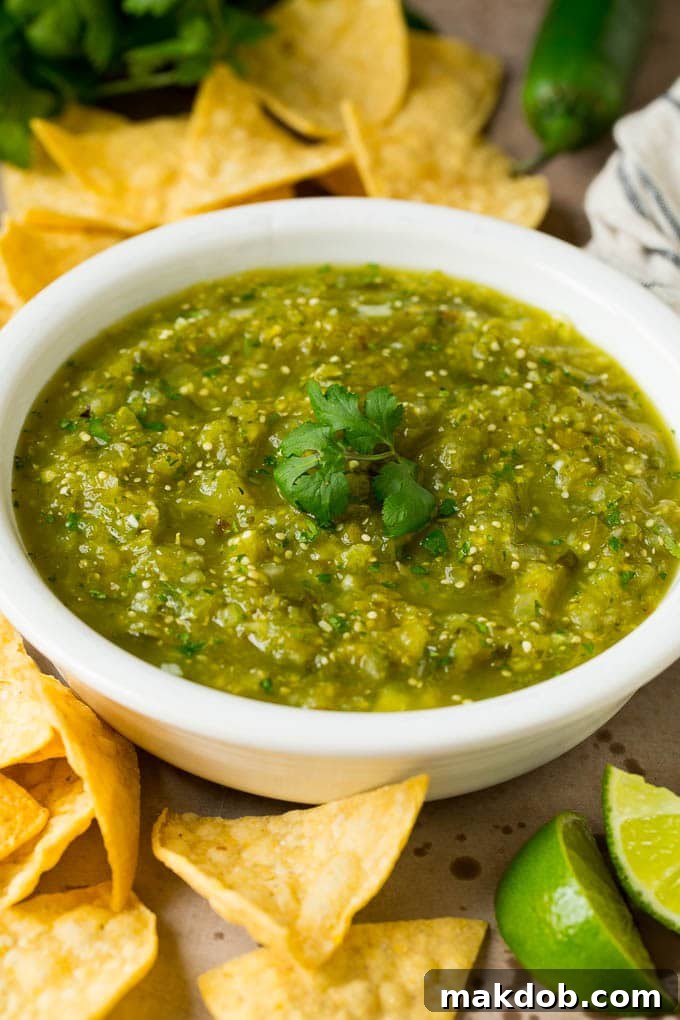
The beauty of this green salsa lies not only in its unparalleled taste but also in its simplicity. With just a few fresh ingredients and a straightforward roasting and blending process, you can create a culinary masterpiece that will impress family and friends alike. Once you try this vibrant, zesty homemade version, you’ll never reach for the jarred stuff again.
Table of Contents
- What is Salsa Verde?
- Why Homemade Salsa Verde is Best
- Salsa Verde Recipe Ingredients
- How to Make Salsa Verde: Step by Step
- Pro Tips for the Perfect Salsa Verde
- Serving Suggestions for Salsa Verde
- Flavor Variations to Explore
- Storing Your Homemade Salsa Verde
- Recipe FAQs
- More Mexican Food Favorites
- Salsa Verde Video Tutorial
- Salsa Verde Recipe Card
What is Salsa Verde? The Vibrant Heart of Mexican Cuisine
Salsa verde, literally meaning “green sauce,” is a staple in Mexican cuisine, distinguished from its red counterpart by its star ingredient: tomatillos. Tomatillos are small, round, green fruits encased in a papery husk, resembling unripe tomatoes. However, they are botanically distinct, offering a unique tart, citrusy, and slightly herbaceous flavor profile that forms the backbone of this vibrant green salsa.
When roasted, tomatillos develop a deeper, sweeter, and less acidic taste, which is crucial for the salsa’s complexity. Along with tomatillos, traditional salsa verde often incorporates a mix of green chilies (like jalapeños or serranos), garlic, onion, and cilantro, all brightened with a touch of lime juice. This combination creates a fresh, tangy, and subtly spicy sauce that perfectly complements a wide range of dishes, from simple chips to elaborate main courses.
Why Homemade Salsa Verde is Best: Freshness You Can Taste
The difference between homemade salsa verde and store-bought versions is truly remarkable. When you prepare salsa verde from scratch, you control every ingredient, ensuring peak freshness and flavor. Store-bought salsas often contain preservatives, excessive sodium, and artificial flavors that dull the natural zest of the ingredients. Homemade salsa, on the other hand, offers a bright, pure taste that’s simply unmatched.
Beyond flavor, making your own salsa allows for complete customization. You can adjust the spice level to your preference, incorporate different types of chilies, or even add unique ingredients to create your signature blend. Plus, the process of roasting the vegetables infuses the salsa with a delightful smoky depth that you simply cannot achieve from a jar. It’s a wholesome, flavorful, and incredibly satisfying experience that truly elevates your culinary creations.
Salsa Verde Recipe Ingredients
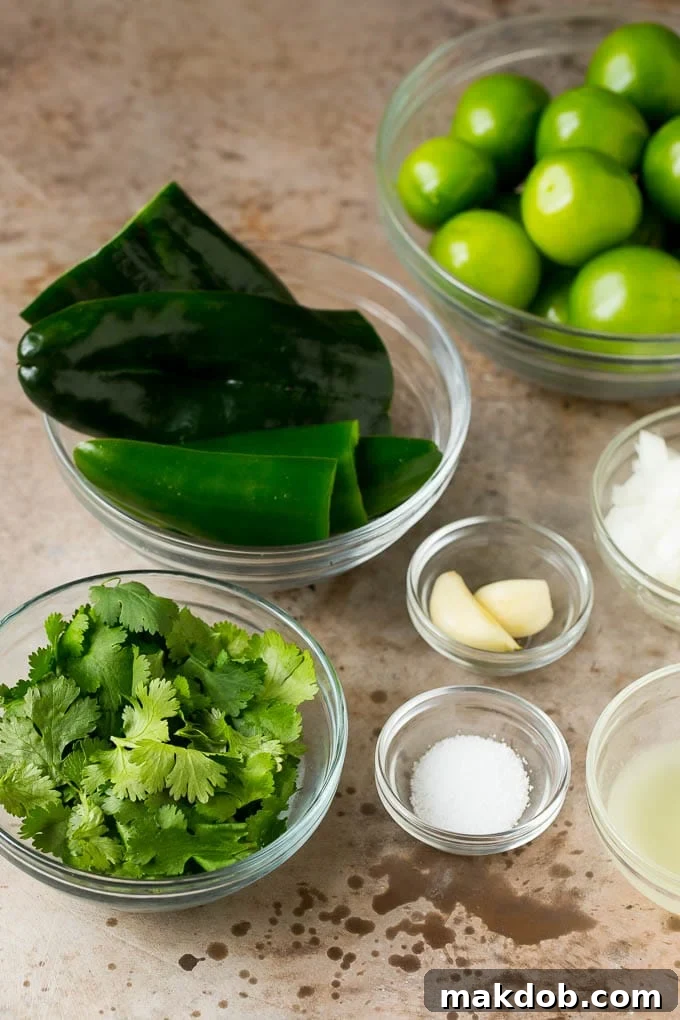
Crafting this delicious salsa verde requires a selection of fresh, high-quality ingredients. Here’s what you’ll need:
- Tomatillos: The essential base! Look for firm, bright green tomatillos with tight-fitting husks.
- Poblano Peppers: While not strictly traditional, poblano peppers add a fantastic depth of flavor and a mild, earthy undertone.
- Jalapeño Peppers: These provide the classic heat. You can adjust the quantity and seed removal based on your spice preference.
- Garlic Cloves: Roasting the garlic mellows its sharpness and infuses a sweet, aromatic flavor.
- White Onion: Adds a crisp, pungent kick. Rinsing it under cold water can temper its raw intensity.
- Fresh Cilantro: Essential for that vibrant, herbaceous character.
- Salt: To enhance and balance all the flavors.
- Fresh Lime Juice: A splash of lime brightens the salsa and provides a crucial tangy finish.
- Cooking Spray: For roasting the vegetables without excess oil.
How to Make Salsa Verde: Step by Step
Making this roasted salsa verde is a straightforward process, divided into a few simple stages:
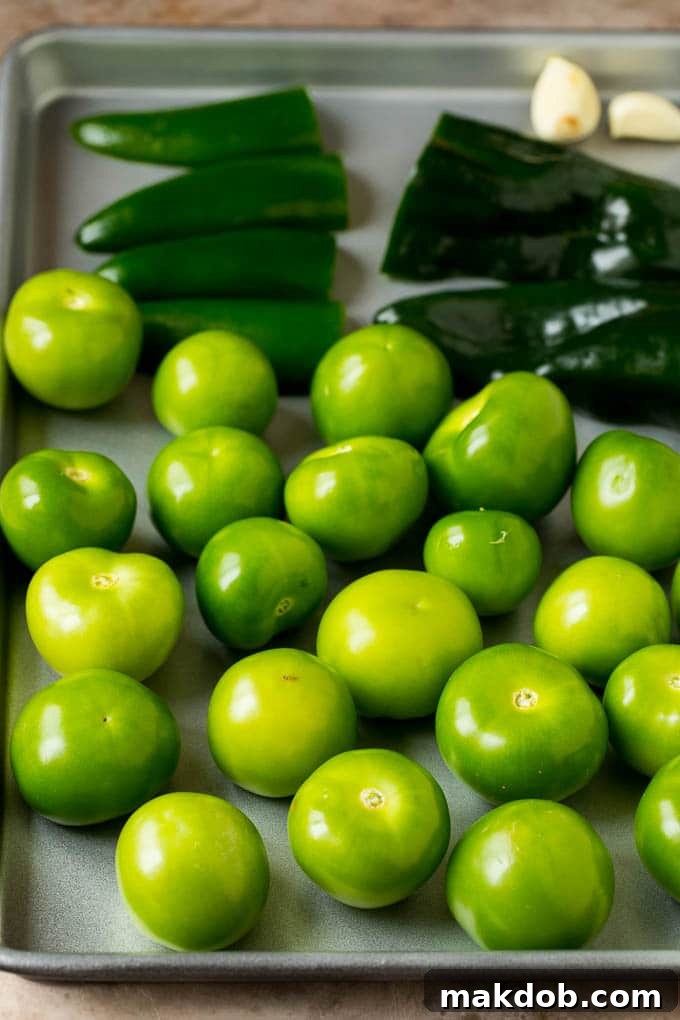
- Prepare for Roasting: Begin by preheating your broiler to ensure a good char on your vegetables. Line a baking sheet with foil for easy cleanup and lightly coat it with cooking spray. Remove the papery husks from your tomatillos and give them a good rinse. Core and halve your poblano and jalapeño peppers lengthwise, removing the seeds and ribs if you prefer a milder salsa. Place the husked tomatillos, halved peppers, and peeled garlic cloves on the prepared baking sheet.
- Roast to Perfection: Place the baking sheet under the broiler. Cook for about 7-8 minutes, or until the vegetables are tender, slightly softened, and have developed a beautiful char. The charring is key to achieving that rich, smoky flavor profile. Keep a close eye on them to prevent burning.
- Steam the Peppers: Once roasted, immediately transfer the peppers (poblano and jalapeño) into a plastic bag and seal it tightly. Let them steam in the bag for about 5 minutes. This step is crucial as the steam helps loosen the skins, making them much easier to peel.
- Peel the Peppers: Carefully remove the peppers from the bag. The skins should now peel off quite easily. Discard the skins.
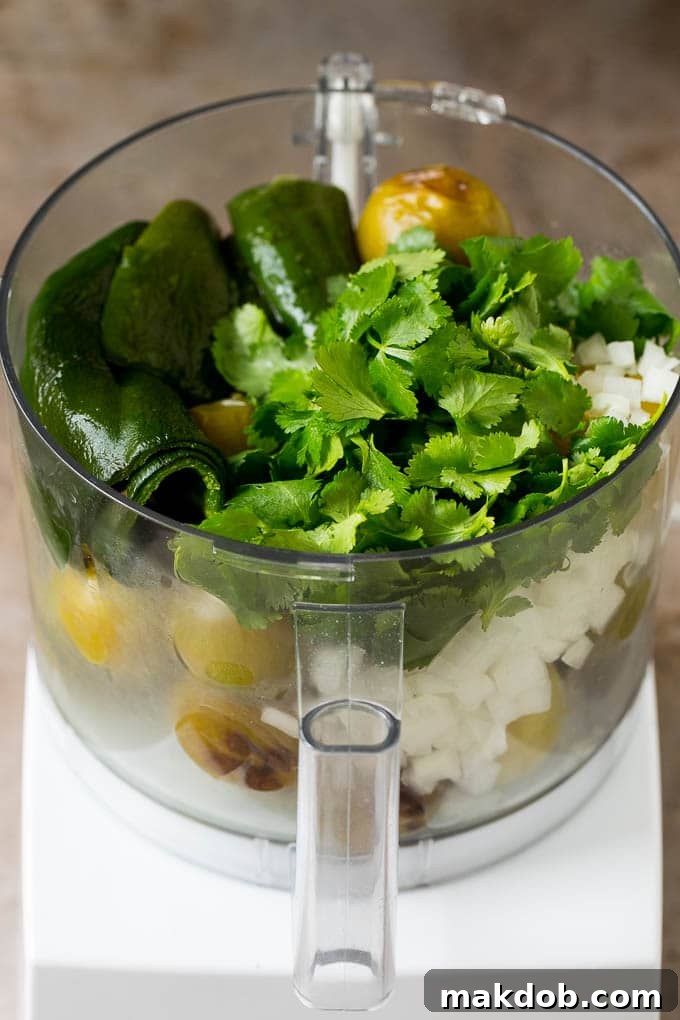
- Blend the Salsa: Transfer all the roasted ingredients – the tomatillos, peeled peppers, and garlic – into a food processor. Add the diced white onion (make sure it’s rinsed under cold water to temper its sharpness), fresh cilantro leaves, salt, and fresh lime juice.
- Pulse to Coarse Perfection: Pulse the mixture in the food processor until a coarse, chunky salsa forms. Avoid over-blending; you want a rustic texture, not a completely smooth puree. The slight chunks add to the authentic homemade feel.
- Season and Serve: Taste the salsa and adjust the salt level if needed. For an extra kick, a pinch more lime juice can brighten the flavors. Serve your vibrant green salsa immediately with your favorite chips or refrigerate it in an airtight container for later enjoyment.
Pro Tips for the Perfect Salsa Verde
Freshly squeezed lime juice is non-negotiable for a vibrant flavor profile; bottled juice simply won’t compare!
- Pepper Power: I love incorporating both poblano peppers and jalapeño peppers. While poblano peppers aren’t traditionally found in all salsa verde recipes, they contribute a wonderful mild flavor and a satisfying texture that truly enhances the dip. They add a subtle earthiness without overpowering the tang of the tomatillos.
- Blending Tools: No food processor? No problem! A regular blender will work just as effectively to achieve the desired coarse consistency. Just be mindful not to over-blend.
- Taming the Onion: To soften the sharp bite of raw onion, make sure to rinse your diced white onions with cold water before adding them to the food processor. This simple step helps to temper their strong flavor, allowing them to complement rather than dominate the salsa.
- Heat Level Adjustment: This recipe yields a mild salsa verde, perfect for a wide range of palates. If you crave more spice, don’t remove all the seeds and ribs from the jalapeño peppers. For an even more intense heat, consider substituting one or both jalapeños with spicier serrano peppers.
- Balancing Acidity: If you find your finished salsa verde tastes a bit too tart or acidic for your liking, a small amount of sugar can work wonders. Add up to 1/2 teaspoon of granulated sugar, a little at a time, to even out the flavors and achieve a perfect balance.
- Broiler vs. Grill: While the recipe calls for broiling, if you have access to a grill, consider grilling your tomatillos and peppers. This can impart an even deeper smoky flavor to your salsa, adding another layer of complexity.
Serving Suggestions for Salsa Verde
Salsa verde is incredibly versatile and can be enjoyed in numerous ways:
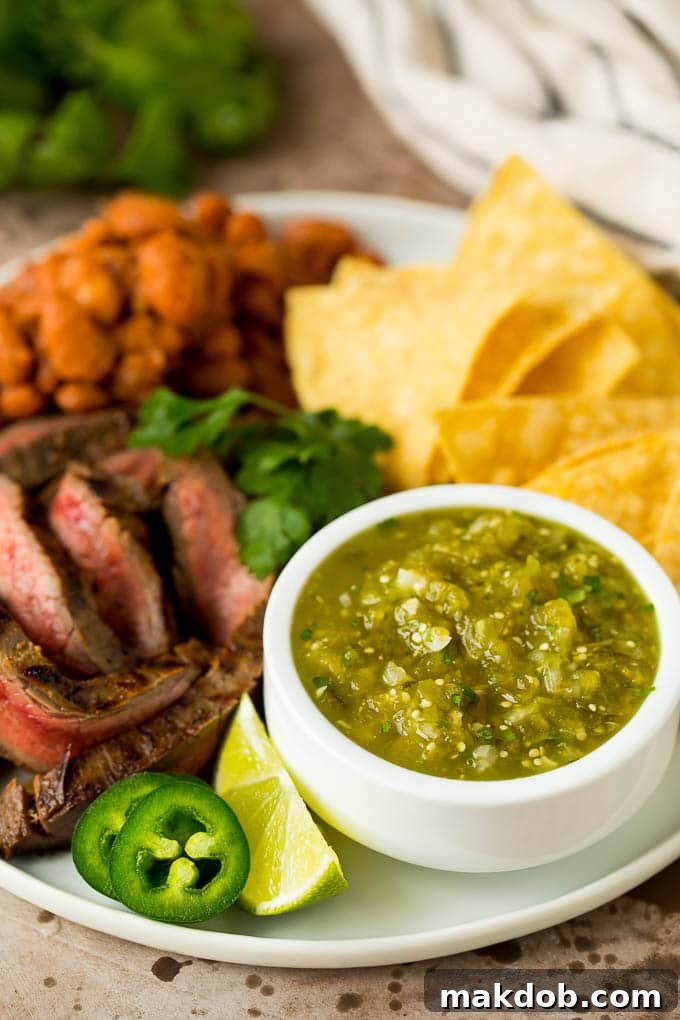
- Classic Dip: Serve it simply with a mountain of crispy tortilla chips for an irresistible snack or appetizer.
- Elevate Dips: Stir a spoonful or two into creamy white queso dip for an extra layer of tangy flavor.
- Nachos & Fries: Drizzle generously over waffle fry nachos, traditional tortilla chip nachos, or even chili cheese fries for a refreshing counterpoint to rich toppings.
- Enchilada Sauce: It makes an exceptional green sauce base for dishes like green chile chicken enchiladas.
- Stew Base: Combine it with chicken broth and shredded pork to create a robust and flavorful chile verde stew.
- Taco & Burrito Topping: A spoonful brightens up any taco, burrito, or fajita.
- Egg Dishes: Serve with scrambled eggs, huevos rancheros, or breakfast burritos for a zesty morning meal.
- Grilled Meats: Excellent as a condiment for grilled chicken, fish, or steak.
Flavor Variations to Explore
While this salsa is fantastic as-is, feel free to experiment with ingredients to tailor the flavors to your palate:
- Onion Alternatives: Instead of raw white onion, try roasting your onion along with the tomatillos and chilies for a sweeter, mellower flavor profile. Red onion can also be used for a slightly different pungency and a hint of color.
- Creamy Avocado Salsa: For a lusciously creamy variation, add 2 ripe avocados to the blender when you puree your salsa. The avocado adds richness and a smooth texture, making it an even more indulgent dip. Keep in mind that avocado salsa verde is best enjoyed within 8 hours of preparation, as the avocado can oxidize and brown.
- Amp Up the Heat: If you’re a heat seeker, easily transform this into a spicier salsa. Swap out jalapeños for more potent serrano chilies, or simply leave some of the seeds and ribs in your chosen peppers. For extreme heat, a small piece of habanero could be added, but proceed with caution!
- Herbaceous Twists: Beyond cilantro, consider adding a few sprigs of fresh mint or a pinch of dried Mexican oregano for a unique aromatic dimension.
- Smoky Undertones: A pinch of smoked paprika or a chipotle pepper (rehydrated and deseeded) can introduce a wonderful smoky depth to your salsa.
Storing Your Homemade Salsa Verde
Proper storage is key to enjoying your fresh salsa verde for as long as possible. Once prepared, transfer your salsa to an airtight container. It will keep beautifully in the refrigerator for up to 4 days. While it’s tempting to make a large batch and freeze it, I generally do not recommend freezing this dip. The high water content in the tomatillos can cause the salsa to become watery and thin when thawed, diminishing its texture and vibrant fresh taste. For the best experience, enjoy it fresh!
Enjoy a taste of Mexico in the comfort of your own home with this simple, yet totally satisfying salsa verde recipe! It’s an easy win for any meal or snack.
More Mexican Food Favorites
Bean Dip Recipe
30 mins
Mexican Salad Recipe
21 mins
Easy Chicken Tacos
40 mins
Beef Enchiladas
55 mins
Best Chicken Fajitas Recipe
1 hr 30 mins
Salsa Verde Video Tutorial
Watch this quick video to see how easily this incredible homemade salsa verde comes together, from roasting to blending!
Love This Recipe?
Please leave a 5-star rating in the recipe card below & a review in the comments section further down the page.
Salsa Verde
This homemade salsa verde is a combination of roasted chilies, tomatillos, garlic, cilantro and lime juice, all blended together to make a light and refreshing dip. An easy appetizer option that tastes SO much better than the store-bought version!
Time:
- Prep Time: 15 minutes
- Cook Time: 10 minutes
- Total Time: 25 minutes
Course: Appetizer
Cuisine: Mexican
Serves: 8
Ingredients
- 1 1/2 pounds tomatillos, husks removed
- 1 poblano pepper, cored and halved lengthwise, seeds and ribs removed (for mild)
- 2 jalapeño peppers, cored and halved lengthwise, seeds and ribs removed (for mild)
- 2 cloves garlic
- 1/2 cup white onion, diced and rinsed under cold water
- 2/3 cup cilantro leaves
- 1 1/4 teaspoons salt, or more to taste
- 2 tablespoons lime juice
- Cooking spray
Instructions
- Preheat the broiler. Lightly coat a sheet pan with cooking spray.
- Place the tomatillos, poblano peppers, jalapeño peppers, and garlic cloves on the sheet pan.
- Broil for 7-8 minutes or until the vegetables are tender and slightly charred.
- Place the roasted peppers in a plastic bag and seal it. Let the peppers sit in the bag for 5 minutes; this helps loosen their skins.
- Remove the peppers from the bag and peel off the skins. Discard the skins.
- Place the roasted tomatillos, peeled peppers, garlic, rinsed onion, cilantro, salt, and lime juice in a food processor. Pulse until the mixture is mostly smooth but still has a coarse, rustic texture. Do not over-blend.
- Taste the salsa and add more salt if needed to achieve your desired flavor balance.
- Serve immediately with tortilla chips or refrigerate in an airtight container for up to 4 days.
Notes
- For a spicier salsa, leave some of the ribs and seeds in the jalapeño peppers. You can also substitute jalapeños with serrano peppers for increased heat.
- The addition of poblano peppers, while not always traditional, adds a fantastic extra layer of flavor and a pleasing texture to this dish.
- If you don’t have a food processor, a blender works equally well for achieving the desired coarse puree.
- Rinsing the diced raw onion under cold water helps to temper its sharp flavor, making it blend more harmoniously with the other ingredients.
Nutrition
(Nutritional information is approximate and may vary based on ingredients and preparation.)
- Calories: 38 kcal
- Carbohydrates: 7g
- Protein: 1g
- Fat: 1g
- Saturated Fat: 1g
- Sodium: 293mg
- Potassium: 284mg
- Fiber: 2g
- Sugar: 4g
- Vitamin A: 280 IU
- Vitamin C: 29mg
- Calcium: 11mg
- Iron: 1mg
Did you make this recipe?
Tag @dinneratthezoo on Instagram and hashtag it #dinneratthezoo