
The Ultimate Vegan Buddha Bowl Recipe: Healthy, Delicious, and Easy
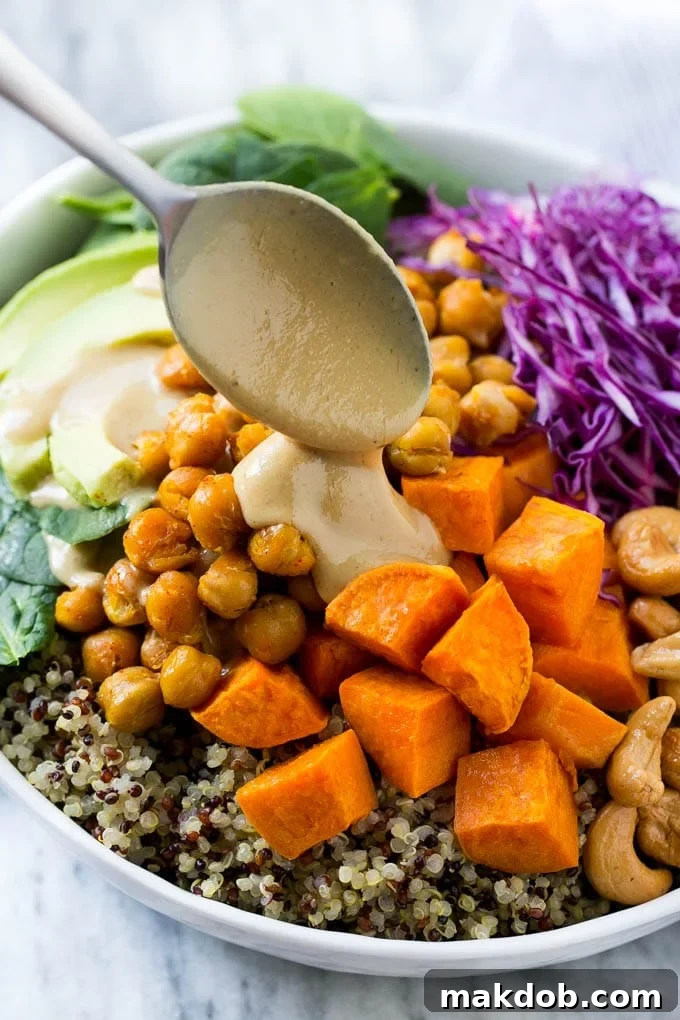
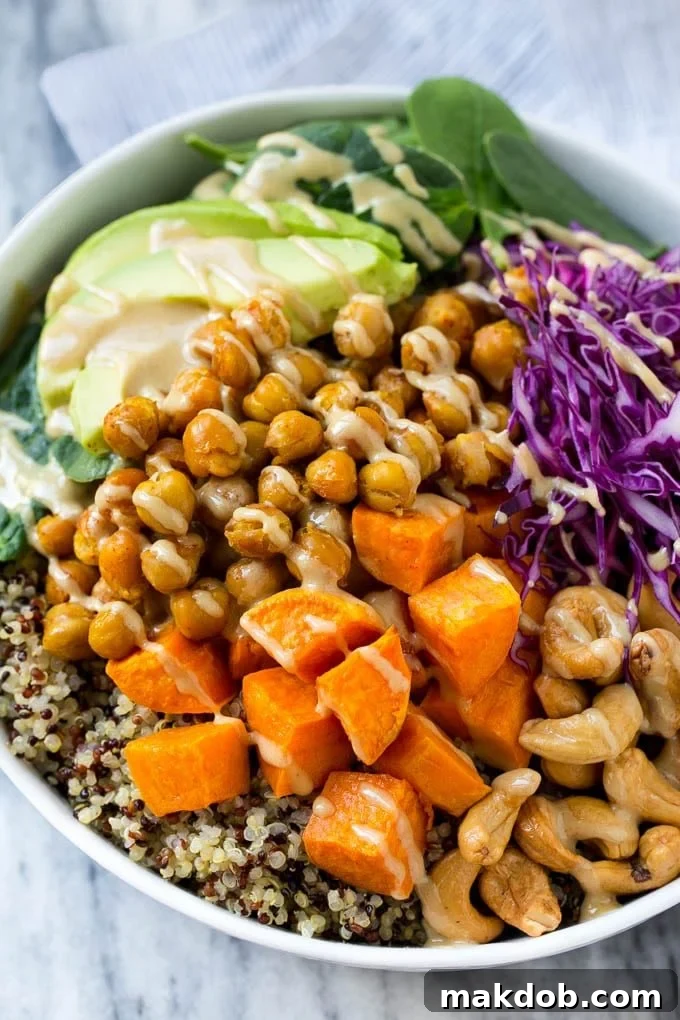
In the quest for a meal that’s both nourishing and satisfying, few dishes deliver as beautifully as the Buddha bowl. These vibrant, plant-based powerhouses are a feast for the eyes and the palate, packed with wholesome ingredients that fuel your body and delight your senses. Our protein-packed vegan Buddha bowls feature a medley of colorful roasted vegetables, tender sweet potatoes, perfectly crispy chickpeas, and crunchy cashews, all brought together with a luscious, creamy tahini dressing. This easy-to-follow recipe is a nutritional powerhouse, making healthy eating both simple and incredibly enjoyable.
When seeking a lighter yet hearty meal, many turn to classics like a rainbow quinoa salad or a Mediterranean farro salad. However, nothing quite compares to the customizability and complete nutrition offered by a well-crafted Buddha bowl. It’s a versatile dish that adapts to your preferences, making it an ideal choice for regular rotation in your healthy eating repertoire.
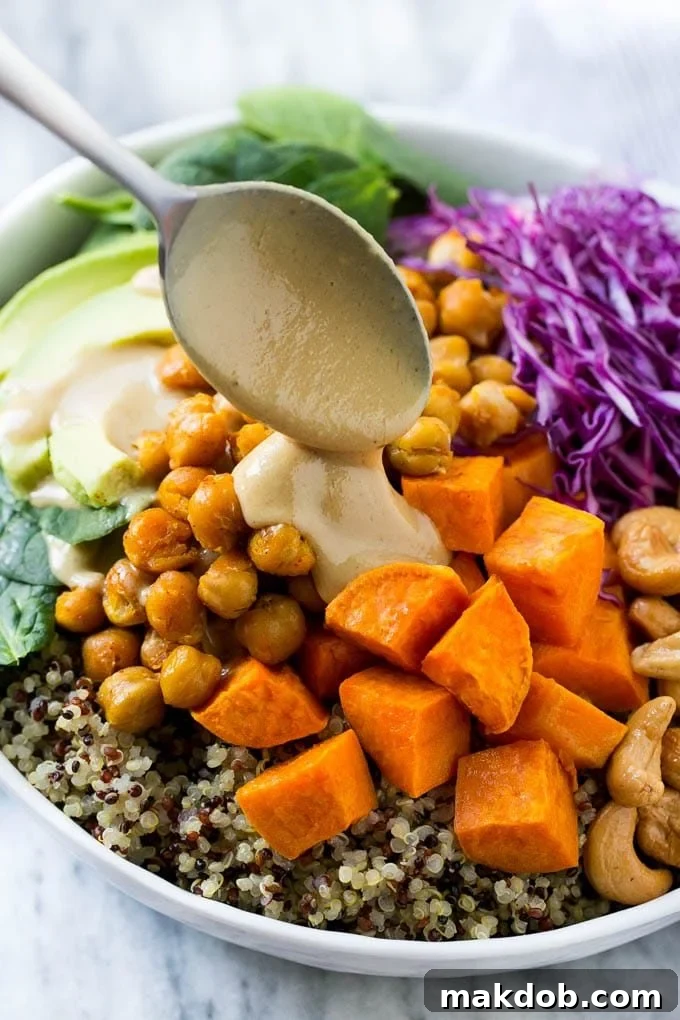
While many of my recipes often feature chicken, sometimes a refreshing change is exactly what’s needed. This Buddha bowl recipe was initially conceived as a personal healthy meal, but to my pleasant surprise, even the kids embraced it! Although they eyed the tahini sauce with a bit of wariness, they happily devoured the sweet potatoes, chickpeas, cashews, and quinoa. I even have photographic evidence of my girls enthusiastically spooning quinoa into their mouths—a truly rare and delightful occurrence!
What is a Buddha Bowl? Understanding This Wholesome Trend
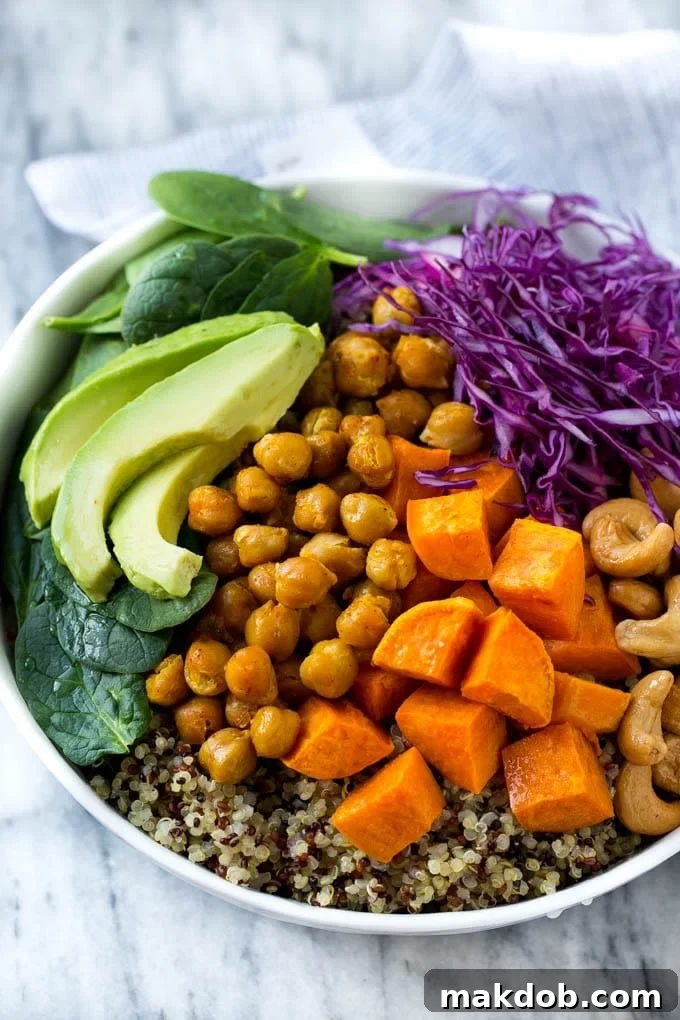
A Buddha bowl, often synonymous with “nourish bowl” or “power bowl,” is essentially a generously filled bowl of vegetarian or vegan goodness, arranged so artfully that its rounded top resembles a Buddha’s belly. More than just a meal, it’s a concept centered around balanced nutrition and vibrant aesthetics, making healthy eating an inviting experience. The beauty of a Buddha bowl lies in its structure: a foundation of whole grains, topped with a diverse array of vegetables, a protein source, a healthy fat, and a flavorful dressing that ties all the components together.
Typically, a Buddha bowl begins with a base of wholesome grains like quinoa, known for its complete protein profile and fluffy texture. However, the versatility of this dish allows for other excellent grain choices such as brown rice, farro, barley, or even couscous. On top of this grain bed, an assortment of fresh or roasted vegetables provides essential vitamins, minerals, and fiber. The key is to include a variety of colors and textures to maximize both nutritional intake and visual appeal. From leafy greens to root vegetables, the options are limitless, encouraging culinary creativity and ensuring every bite is exciting.
Crafting Your Perfect Buddha Bowl: A Guide to Delicious Assemblies
The beauty of a Buddha bowl lies in its infinite possibilities. There are countless ways to combine ingredients, allowing you to tailor each bowl to your taste preferences and what you have on hand. For this particular recipe, I focused on creating a harmonious blend of color, texture, and ample plant-based protein. The stars of our toppings include tender roasted sweet potatoes, savory crispy chickpeas, creamy avocado, crisp shredded cabbage, and delicate baby spinach. For an extra layer of satisfying crunch, roasted cashews are added, elevating the overall sensory experience.
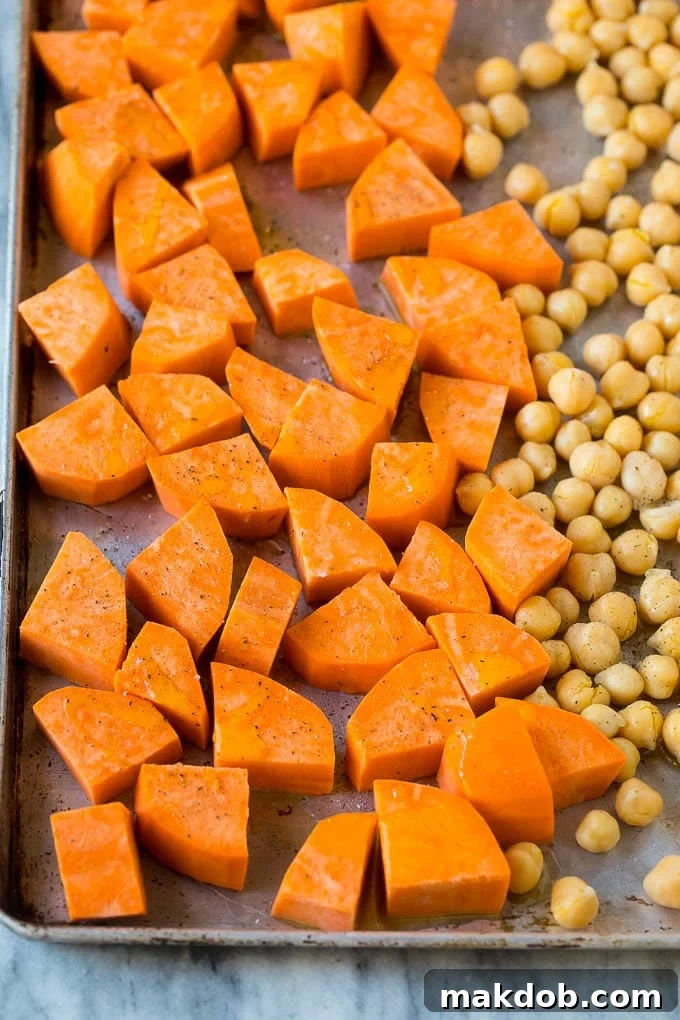
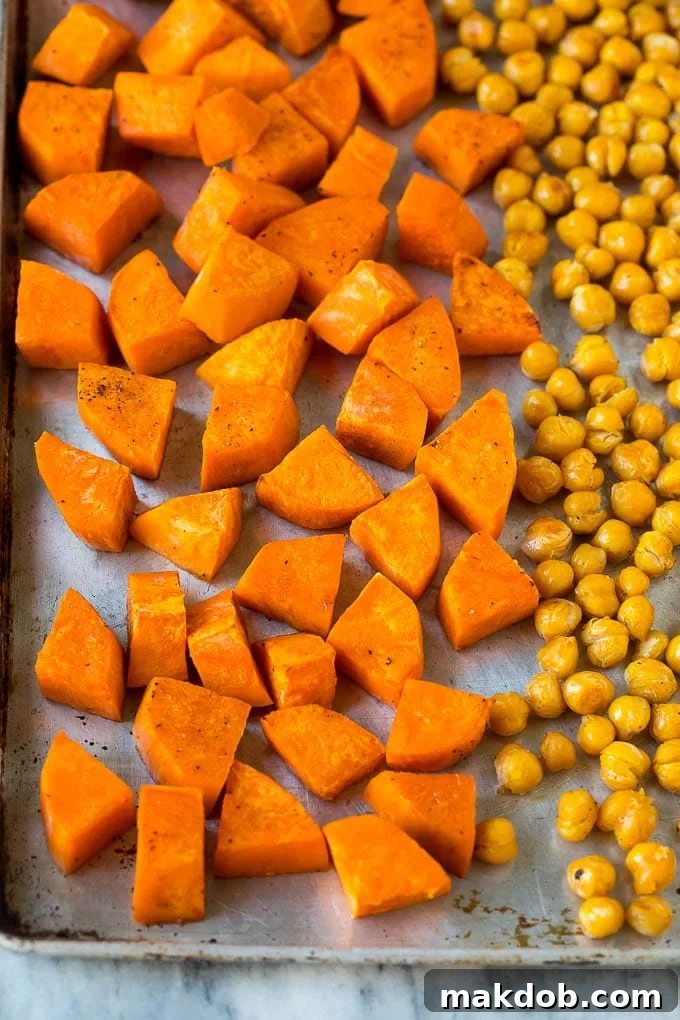
A smart tip for efficiency is to roast the sweet potatoes and chickpeas together on the same sheet pan. To ensure they cook evenly and are ready at the same time, it’s crucial to cut your sweet potatoes into smaller, approximately 1/2-inch pieces. This allows them to become perfectly tender and slightly caramelized in the same timeframe it takes for the chickpeas to transform into golden, crispy morsels. This simple coordination in cooking not only saves time but also streamlines the cleanup process, making healthy meal preparation even more accessible.
Essential Tips for Mastering Your Buddha Bowl
To truly elevate your Buddha bowl experience, consider these valuable tips and tricks:
- The Magic of Tahini Dressing: A staple in many Buddha bowls, tahini sauce is the creamy, nutty glue that binds all the flavors. If you’re new to tahini, think of it as a savory peanut butter made from ground sesame seeds. It’s incredibly versatile and widely available. To create a balanced and flavorful dressing, simply whisk tahini with a squeeze of fresh lemon juice, a touch of maple syrup for subtle sweetness, and a pinch of salt and pepper. This simple concoction transforms your fresh veggies into a gourmet delight. A generous drizzle over your assembled bowl is the secret to veggie perfection!
- Grain Versatility: While quinoa offers a fantastic foundation with its complete protein, don’t hesitate to experiment with other grains for the base. Excellent alternatives include hearty barley, chewy bulgur wheat, rustic farro, or fluffy brown rice. Each grain offers a unique texture and flavor profile, allowing you to diversify your meals and prevent palate fatigue.
- Vegetable Freedom: The beauty of Buddha bowls lies in their flexibility. Feel empowered to use any vegetables you enjoy or have on hand. Beyond the staples, consider incorporating sautéed mushrooms, roasted butternut squash, massaged kale, or fresh cherry tomatoes. Mixing and matching ensures you’re getting a broad spectrum of nutrients and keeps your meals exciting.
- Boost Your Protein: While chickpeas are an excellent plant-based protein, you can easily add more. Consider grilled tofu, tempeh, edamame, or black beans to further increase the protein content, making your bowl even more filling and satisfying.
- Embrace Healthy Fats: Avocado is a wonderful source of healthy monounsaturated fats, adding creaminess and satiety. Other options include a sprinkle of seeds like pumpkin or sunflower seeds, or a drizzle of extra virgin olive oil.
- Meal Prep Power: Buddha bowls are ideal for meal prepping. Cook a large batch of quinoa, roast your sweet potatoes and chickpeas, and prepare your tahini dressing in advance. Store each component separately in airtight containers in the refrigerator. When it’s mealtime, simply assemble your bowl with fresh greens and avocado. This saves valuable time during busy weekdays.
The Health Benefits of Vegan Buddha Bowls
These vegan Buddha bowls are a dream come true for anyone seeking a healthy, inclusive meal. Naturally gluten-free, dairy-free, and entirely plant-based, they are perfect for a wide range of dietary needs and preferences. Beyond their dietary friendliness, they are incredibly nutritious. Each bowl is a dense source of vitamins, minerals, fiber, and plant-based protein, contributing to a feeling of wellness and sustained energy. You don’t just eat one; you feel good when you eat one, knowing you’re nourishing your body with a medley of beneficial ingredients.
Buddha Bowls: Your Path to Effortless Healthy Eating
In a world where convenience often overshadows nutrition, the vegan Buddha bowl stands out as a beacon of mindful eating. It’s a testament to how simple, wholesome ingredients can come together to create a meal that is not only incredibly healthy but also deeply satisfying and visually stunning. Whether you’re a seasoned vegan or simply looking to incorporate more plant-based meals into your diet, this recipe offers a delicious and straightforward path. From the earthy sweetness of roasted sweet potatoes to the vibrant freshness of spinach and avocado, every component plays a crucial role in delivering a well-rounded culinary experience. The creamy tahini dressing acts as the perfect unifying element, binding the diverse flavors and textures into a harmonious whole. Make it your go-to for quick weeknight dinners, efficient meal prep, or a vibrant addition to any potluck. It’s more than just food; it’s a commitment to nourishing your body and savoring the simple pleasures of clean eating.
Still hungry for more healthy and delicious ideas? Follow Dinner at the Zoo on Facebook, Twitter, Instagram and Pinterest for a continuous stream of fantastic recipe inspiration!
More Healthy Recipes to Explore
- Grilled Shrimp Skewers
- Black Bean and Corn Salad
- Cucumber Tomato Salad
- Rainbow Veggie Pinwheels
- Teriyaki Chicken Stir Fry
Rating: 5/5 stars (17 votes)
Buddha Bowls
Sara Welch
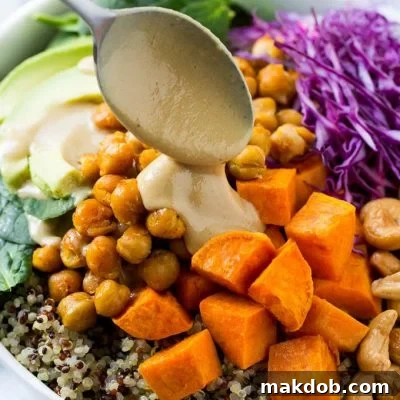
These protein packed vegan Buddha bowls are loaded with colorful veggies, sweet potatoes, roasted chickpeas and cashews, all topped off with a creamy tahini dressing.
Time
Prep Time: 15 minutes
Cook Time: 25 minutes
Total Time: 40 minutes
Course: Main Course
Cuisine: American
Serves: 4
Ingredients
- 4 cups cooked quinoa
- 3 medium to large sweet potatoes, peeled and cut into 1/2 inch pieces
- 1 tablespoon olive oil
- Salt and pepper to taste
- 1 (15-ounce) can chickpeas, rinsed and drained
- 1 cup baby spinach leaves
- 1 cup shredded purple cabbage
- 1/4 cup roasted cashews
- 1 avocado, peeled, pitted and thinly sliced
- 1/4 cup tahini
- 1 tablespoon lemon juice
- 2 teaspoons maple syrup
- Cooking spray
Instructions
- Preheat the oven to 400 degrees Fahrenheit. Line a sheet pan with foil and coat with cooking spray.
- Place the chickpeas on one side of the pan and the sweet potatoes on the other side of the pan in a single layer.
- Drizzle the olive oil over the sweet potatoes and chickpeas and season to taste with salt and pepper.
- Bake for 25 minutes, or until sweet potatoes are tender and chickpeas are browned and crispy.
- Divide the quinoa evenly between 4 bowls.
- Divide the sweet potatoes, chickpeas, cabbage, spinach, cashews, and avocado evenly between the 4 bowls, arranging on top of the quinoa.
- In a small bowl, whisk together the tahini, lemon juice, maple syrup, and salt and pepper to taste.
- Drizzle the tahini dressing over the Buddha bowls and serve immediately.
Nutrition
Calories: 618kcal | Carbohydrates: 82g | Protein: 19g | Fat: 25g | Saturated Fat: 3g | Sodium: 497mg | Fiber: 16g | Sugar: 9g
Did you make this recipe? Tag @dinneratthezoo on Instagram and hashtag it #dinneratthezoo
Share it with the world
Facebook |
Twitter |
Pinterest
This post was originally published on February 20, 2017 and was updated on April 11, 2019 with new content.