
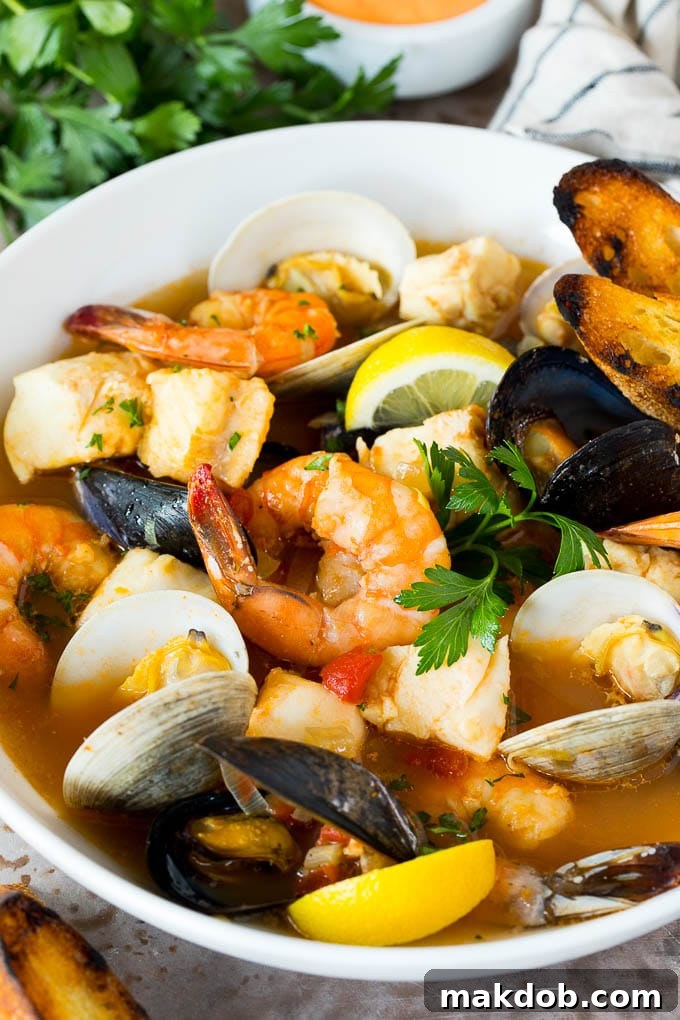
Indulge in the vibrant flavors of the Mediterranean with this exquisite Bouillabaisse, an authentic French seafood stew that promises an unforgettable culinary experience. Hailing from the sun-drenched coastal city of Marseille, this traditional dish features a harmonious blend of fresh fish, succulent shrimp, tender clams, and plump mussels, all gently simmered in a deeply aromatic, saffron-infused broth. It’s a dish that effortlessly combines rustic charm with sophisticated elegance, making it an ideal choice for both special occasions and a memorable family dinner. Prepare to impress your guests and awaken your palate with this surprisingly accessible yet remarkably impressive meal that consistently garners rave reviews.
When the occasion calls for something truly special, my culinary compass often points towards the bounty of the sea. Over the years, I’ve perfected several cherished seafood recipes that always delight. Among my top favorites are perfectly seared scallops, creamy shrimp Alfredo, delicate steamed mussels, rich steamed crab legs, flavorful grilled lobster tail, and of course, this magnificent French bouillabaisse. Each of these dishes offers a unique way to celebrate seafood, but the Bouillabaisse holds a special place, embodying the very soul of French coastal cooking.
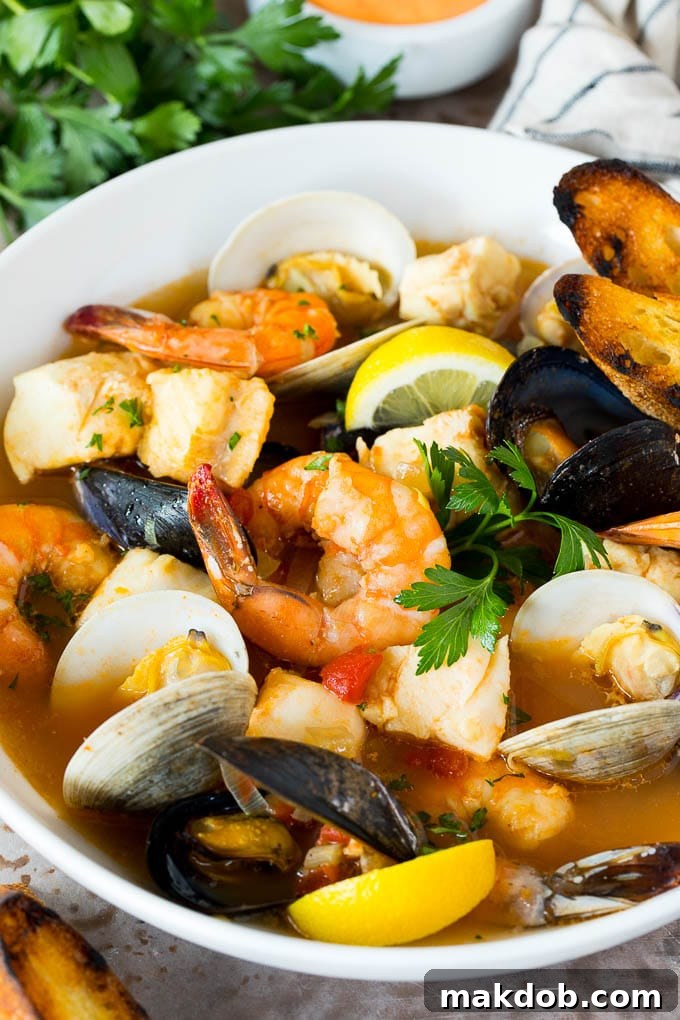
There’s a certain magic to bouillabaisse, a dish that instantly transports you to the bustling harbors and charming bistros of Southern France. Each time I encounter bouillabaisse on a restaurant menu, it’s an irresistible call to savor its complex layers of flavor. The exquisite combination of varied fresh seafood mingling in a rich, flavorful broth is simply divine. After countless enjoyable restaurant experiences, I decided it was time to unravel the secrets of this iconic fish stew and bring its authentic taste into my own kitchen. What I discovered was a delightful surprise: crafting this culinary masterpiece at home is actually far simpler and more rewarding than it initially appears. With the right ingredients and a few key techniques, you can recreate this gourmet delight with confidence.
Table of Contents
- The Essence of Bouillabaisse
- Key Bouillabaisse Ingredients
- Crafting Your Homemade Bouillabaisse
- Expert Tips For Bouillabaisse Perfection
- Quick Culinary Insight
- Bouillabaisse Frequently Asked Questions
- Creative Flavor Variations
- More Exquisite Seafood Recipes To Explore
- Bouillabaisse Recipe Video Guide
- Show Your Love For This Recipe?
- Bouillabaisse Full Recipe
The Essence of Bouillabaisse
Bouillabaisse isn’t just a stew; it’s a celebration of the sea, a culinary tradition steeped in history and flavor. Originating from the port cities along the Mediterranean coast, particularly Marseille, it was born from the ingenuity of fishermen who would use the less desirable fish varieties from their daily catch to create a hearty and flavorful meal for themselves. The name “bouillabaisse” itself comes from the Provençal Occitan words “bolhir” (to boil) and “abaissar” (to reduce heat, simmer), describing the cooking process – first brought to a rapid boil, then simmered gently to meld the flavors. This dish is characterized by its vibrant saffron-hued broth, rich with tomatoes, aromatic vegetables, and a medley of fresh seafood. Traditionally, it’s served with crusty bread and a rich, garlicky mayonnaise called rouille, which adds a creamy, spicy counterpoint to the broth’s depth. Our homemade version captures this authentic spirit, allowing you to experience a true taste of France in your own home.
Key Bouillabaisse Ingredients
The secret to an exceptional bouillabaisse lies in the freshness and quality of its ingredients, particularly the foundational seafood stock and the diverse array of fish and shellfish. Understanding the role of each component is key to achieving that authentic, complex flavor profile.
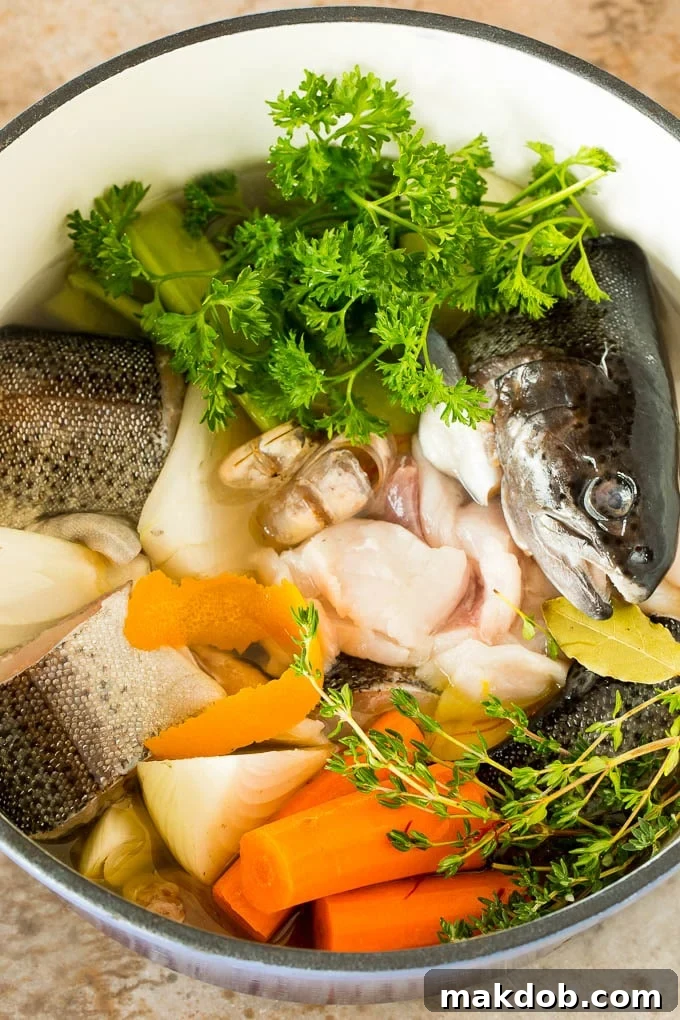
For the Rich Seafood Stock: This is arguably the most crucial element, providing the deep, oceanic base for the stew. You’ll need a collection of shrimp shells and various seafood trimmings, such as fish heads and bones. These seemingly humble ingredients are packed with flavor that is slowly extracted during simmering. Complementing the seafood are aromatic vegetables like half an onion, a peeled carrot, and a stalk of celery, all cut into pieces to maximize flavor release. Salt enhances these natural flavors, while a strip of orange zest introduces a subtle citrusy brightness that is traditional to Provençal cuisine. The liquid base consists of ample water and a bottle of clam juice, which adds another layer of briny depth. Finally, the stock is elevated by the inclusion of exotic saffron threads, providing a distinctive golden color and floral aroma, along with fresh sprigs of thyme and parsley, and a single bay leaf for herbaceous undertones.
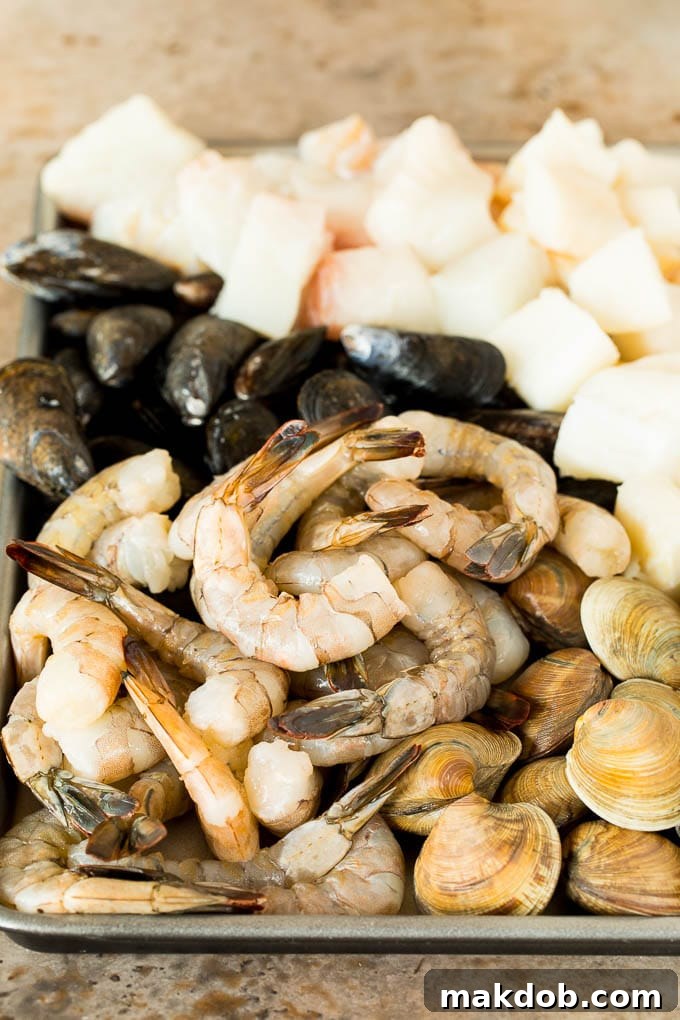
For the Bouillabaisse Itself: Building on the exquisite stock, the main stew incorporates a blend of fresh ingredients. Extra virgin olive oil serves as the initial sautéing medium, bringing out the sweetness of finely diced yellow onion, thinly sliced leeks (using the light green and white parts for tenderness), and diced fennel bulb, which imparts a subtle anise flavor characteristic of the region. Minced garlic adds a pungent kick, while a can of crushed tomatoes (preferably San Marzano for their superior sweetness and lower acidity) forms the luscious, red base of the broth. Seasoning is kept simple with kosher salt and black pepper, allowing the natural flavors to shine. The star of the show is, of course, the seafood: fresh mussels, scrubbed and debearded; briny clams, thoroughly scrubbed; a generous two pounds of white fish (ideally at least two varieties like halibut, cod, snapper, sole, or monkfish for varied textures and flavors); and plump, medium to large shrimp. A final garnish of fresh chopped parsley brightens the finished dish.
For the Essential Rouille: No bouillabaisse is complete without rouille, a spicy, garlicky, and creamy accompaniment. This vibrant sauce is prepared using a tablespoon of the reserved seafood stock, adding a cohesive flavor bridge to the stew. It features minced garlic, a hint of cayenne pepper for a gentle warmth, soft white breadcrumbs for texture, and a quarter cup of roasted red pepper (jarred is perfectly acceptable) for a smoky sweetness and rich color. A touch of kosher salt balances the flavors, and finally, creamy mayonnaise binds it all together into a smooth, luscious spread. Each ingredient plays a vital role in creating the iconic taste and texture that makes bouillabaisse such a beloved and distinguished dish.
Crafting Your Homemade Bouillabaisse
Creating this authentic French seafood stew is a journey of building flavors, starting from a foundational stock and culminating in a vibrant, seafood-rich broth. Here’s a detailed guide to bringing this impressive dish to life in your kitchen:
1. The Heart of the Stew: Homemade Fish Stock
Our culinary adventure begins with the creation of a deeply flavorful homemade fish stock. This liquid gold provides the essential oceanic backbone for your bouillabaisse, setting it apart from any shortcuts. Gather your shrimp shells, fish bones, and any other suitable seafood trimmings you’ve collected or purchased from your fishmonger. Place these treasures into a large, sturdy pot. Add in the aromatic half-onion, carrot, celery, a teaspoon of salt, a strip of orange zest, eight cups of water, and the entire eight-ounce bottle of clam juice. Don’t forget the distinctive notes of half a teaspoon of saffron threads, three sprigs of fresh thyme, three sprigs of fresh parsley, and a bay leaf. Bring this mixture to a gentle simmer, ensuring it never comes to a rolling boil, as this can cloud the stock. Allow it to cook slowly for 30 to 45 minutes, letting the flavors meld and deepen. Once simmered, carefully strain the stock through a fine-mesh sieve into another bowl, discarding all the solids. This clear, amber liquid is your flavorful base, and you’ll need approximately eight cups for the stew, plus a tablespoon reserved for the rouille.
2. Building the Aromatic Broth
Once your stock is ready, wipe out the same pot with a paper towel – no need for extra dishes! Heat three tablespoons of olive oil over medium heat. Into this fragrant oil, add the finely diced yellow onion, thinly sliced leeks, and diced fennel bulb. Sauté these aromatics for 4 to 5 minutes, stirring occasionally, until they have softened and become translucent, releasing their sweet fragrances. Next, stir in one tablespoon of minced garlic and cook for just 30 seconds more, being careful not to let it brown, as burnt garlic can turn bitter. Immediately pour in the 15-ounce can of crushed tomatoes, your reserved eight cups of homemade seafood stock, two teaspoons of kosher salt, and half a teaspoon of black pepper. Stir everything together to combine, then bring the mixture back to a gentle simmer. Allow this base broth to simmer for an additional 5 to 7 minutes, stirring occasionally, to allow the flavors to marry beautifully.
3. The Grand Finale: Adding the Seafood
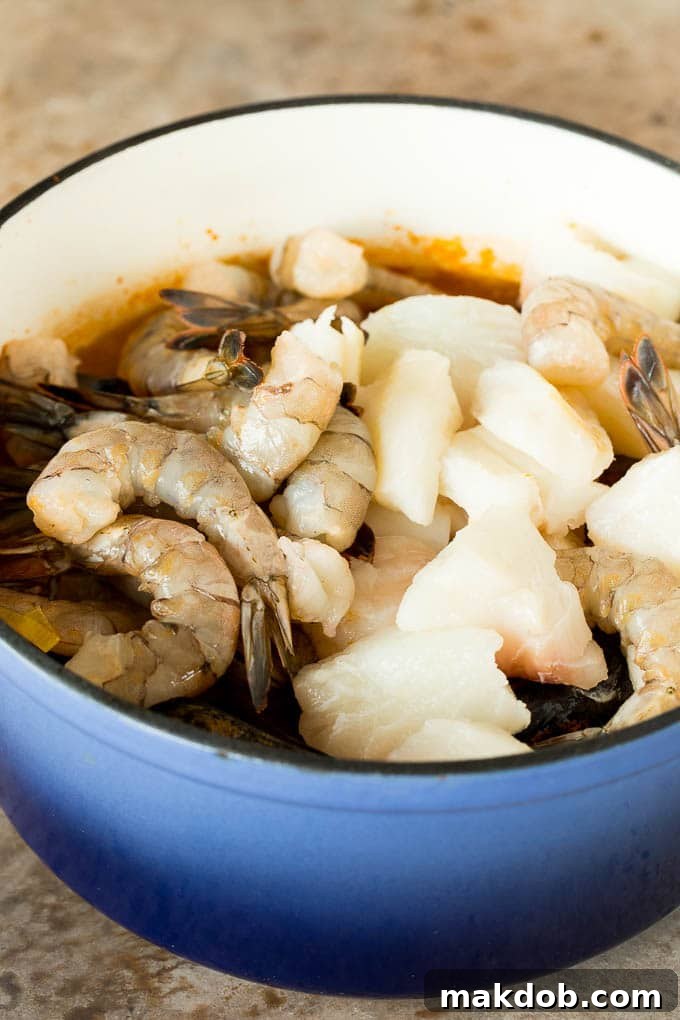
Now comes the exciting part – introducing the stars of the stew! Add the scrubbed and debearded mussels and the scrubbed clams to the simmering broth. Cook them for approximately 4 minutes, allowing them to begin opening and release their briny juices into the stew. Following this, gently add the two pounds of white fish (cut into substantial chunks) and the one pound of shrimp. Continue cooking for another 4 minutes, or until all the seafood is opaque, cooked through, and all the mussels and clams have fully opened. It’s crucial not to overcook the seafood, as it can become tough. As a safety measure, be sure to discard any mussels or clams that stubbornly remain closed after cooking – they are not safe to eat.
4. The Essential Rouille (While the Stew Simmers)
While your bouillabaisse is simmering, you can quickly prepare the indispensable rouille. In a food processor or blender, combine one tablespoon of your reserved seafood stock, one teaspoon of chopped garlic, a quarter teaspoon of cayenne pepper, half a cup of soft white breadcrumbs, a quarter cup of roasted red pepper, half a teaspoon of kosher salt, and half a cup of mayonnaise. Process until a smooth, creamy, and vibrant orange sauce forms. This rich, spicy spread is the perfect accompaniment to your bouillabaisse.
5. Serving Your Bouillabaisse
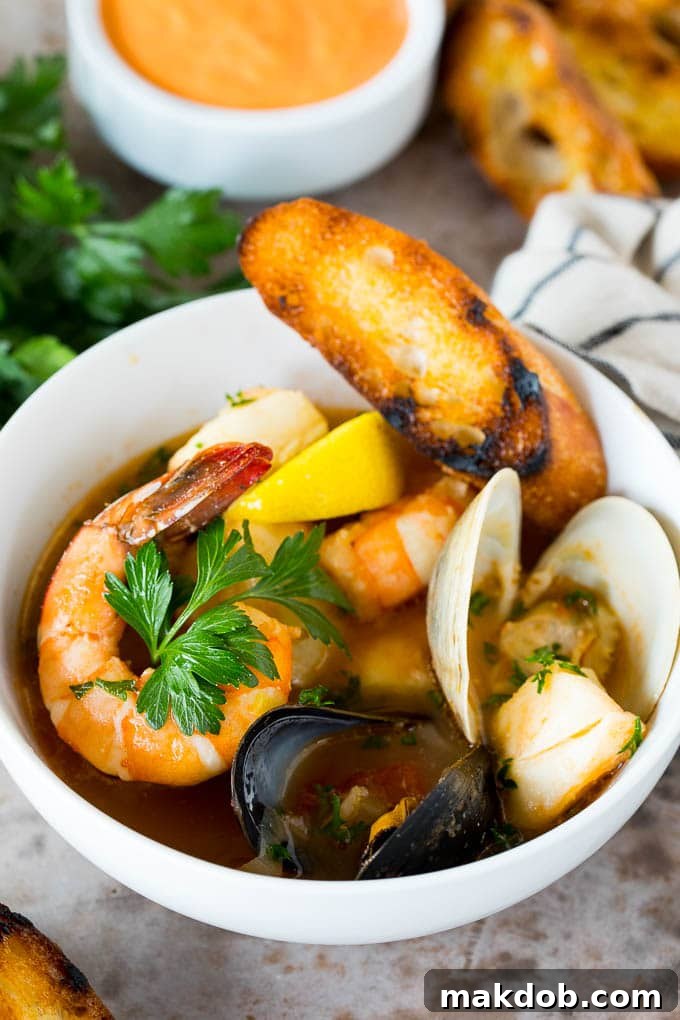
Once the seafood is perfectly cooked, ladle the magnificent bouillabaisse into deep serving bowls. Generously sprinkle with two tablespoons of fresh chopped parsley. Serve immediately with slices of toasted baguette, slathered with your freshly made rouille. For an extra touch of freshness and visual appeal, you can garnish with additional parsley sprigs and lemon wedges. This elegant and flavorful stew is best enjoyed hot, allowing the complex aromas and tastes to shine through in every spoonful. Enjoy this authentic taste of the French coast!
Expert Tips For Bouillabaisse Perfection
Crafting a truly memorable bouillabaisse involves attention to detail and a few insider tricks. Follow these expert tips to ensure your homemade French seafood stew is nothing short of spectacular:
- Sourcing the Best Seafood Trimmings: The foundation of an authentic bouillabaisse is a rich, homemade fish stock. Don’t hesitate to ask your local fishmonger if they can provide you with fish heads, bones, or other trimmings. Many are happy to sell them at a very low cost, or even give them away, ensuring you get the freshest base for your stock. When purchasing shrimp, opt for shell-on varieties, as their shells are invaluable for adding depth to the stock. The richer your stock, the more profound the flavor of your entire stew will be.
- Utilizing Prepared Stock as an Alternative: While homemade stock is highly recommended for unparalleled flavor, we understand that time can be a constraint. If preparing your own fish stock isn’t feasible, you can substitute with 8 cups of high-quality prepared seafood stock. However, even with prepared stock, we strongly advise including the bottle of clam juice specified in the recipe. This extra boost of briny flavor will significantly enhance the depth and authenticity of your bouillabaisse, making up for some of the nuances lost without homemade trimmings.
- Optimal Serving and Storage: Bouillabaisse is truly at its peak when served immediately after cooking. The fresh seafood retains its perfect texture and the broth’s aromas are most vibrant. If you happen to have leftovers, store them in an airtight container in the refrigerator for up to 2 days. To reheat, gently warm the stew over low heat on the stovetop. Avoid microwaving, as it can overcook the delicate seafood and compromise the texture of the broth. Slow reheating helps maintain the integrity of the dish.
- Embrace a Variety of Fish: For the most authentic and texturally interesting bouillabaisse, it’s crucial to incorporate at least 2 different types of firm, white fish. Each variety contributes a slightly different flavor and texture, adding complexity to the stew. Excellent choices include flaky cod, delicate red mullet, firm sea bass, meaty grouper, vibrant red snapper, tender halibut, unique monkfish, or mild sole. Combining a few of these will ensure a delightful eating experience, offering diverse mouthfeels in every spoonful.
- The Art of Cleaning Shellfish: Proper preparation of mussels and clams is essential. Before cooking, thoroughly scrub the shells under cold running water to remove any dirt or grit. For mussels, gently pull off any “beards” (fibrous attachments) that may be present. Discard any shellfish with cracked shells or any that remain open and do not close when tapped – these are likely dead and unsafe to eat.
- Preventing Overcooking: Seafood cooks very quickly. Add the mussels and clams first, as they need slightly more time to open. The fish and shrimp should go in last, cooking for only a few minutes until just opaque. Overcooked seafood becomes rubbery and diminishes the quality of the stew. Keep a close eye on it!
- Taste and Adjust Seasoning: Always taste your broth before adding the seafood. Adjust salt and pepper as needed. The flavors will concentrate slightly as it simmers, and the seafood will release some briny notes, so start with the recommended amounts and fine-tune to your preference.
- The Right Bread: Don’t underestimate the importance of good bread. A crusty baguette, lightly toasted, is perfect for soaking up the rich broth and serving with the rouille. Its neutral flavor allows the bouillabaisse to shine.
Quick Culinary Insight
An essential safety reminder for cooking shellfish: always discard any clams or mussels that do not open after they have been cooked. These shellfish were likely dead before cooking and are not safe for consumption.
Bouillabaisse Frequently Asked Questions
Bouillabaisse is a classic French seafood stew originating from the port towns of Provence, most notably Marseille. It was traditionally conceived as a way for local fishermen to utilize the rockfish and other less commercially valuable seafood from their daily catches. This hearty and flavorful stew typically features a fragrant, saffron-infused broth made with tomatoes, onions, garlic, and herbs, brimming with a variety of white fish and shellfish like mussels and clams. It’s characteristically served with toasted slices of crusty bread and a piquant, garlicky mayonnaise known as rouille, which is often spread on the bread and floated on top of the stew, adding a creamy and spicy dimension to each spoonful. It’s much more than a simple fish soup; it’s a cultural icon of French cuisine.
While both bouillabaisse and cioppino are delectable seafood stews, they hail from different culinary traditions and possess distinct characteristics. Bouillabaisse is a French creation, deeply rooted in Provençal coastal cuisine, typically distinguished by its elegant, lighter broth infused with saffron for its characteristic golden hue and subtle floral notes. It emphasizes a mix of white fish and a rouille sauce accompaniment. Cioppino, on the other hand, is an Italian-American seafood stew that originated in San Francisco, brought to the city by Italian immigrants. Its broth is generally heartier and more tomato-forward, often incorporating more robust ingredients like crab. While both celebrate fresh seafood, bouillabaisse prioritizes the delicate balance of its saffron-kissed broth and rouille, whereas cioppino offers a more rustic, tomato-rich experience, often without saffron or rouille as essential components.
Rouille is a traditional, spicy, and creamy sauce that is an indispensable partner to bouillabaisse, designed to be spread on toasted bread or stirred directly into the broth. Crafting rouille is a straightforward process that can be done while your seafood stew is simmering. You’ll need a food processor or a blender. Combine soft white bread crumbs, minced garlic, a pinch of cayenne pepper (adjust to your preferred level of heat), a quarter cup of roasted red pepper (either freshly roasted or jarred for convenience), a touch of kosher salt, and half a cup of creamy mayonnaise. For an extra layer of flavor and to tie it back to the main dish, add one tablespoon of your rich seafood stock. Blend all these ingredients until a smooth, vibrant orange-red sauce forms. The result is a luxurious, flavorful spread that adds a fantastic kick and creamy texture, beautifully complementing the fresh flavors of the bouillabaisse.
For an authentic French pairing, a dry, crisp white wine from the Provence region is ideal. Look for a Bandol Blanc or a Cassis, which are specifically designed to complement the flavors of the Mediterranean. If those are hard to find, a good alternative would be a dry rosé from Provence, or another crisp white wine like a Sauvignon Blanc or a dry Vermentino. The key is to choose a wine that is refreshing and has good acidity, capable of cutting through the richness of the seafood and the broth without overpowering its delicate flavors. Avoid heavy, oaky whites or full-bodied reds, which would clash with the seafood.
While bouillabaisse is truly best when served fresh, you can prepare certain components in advance to streamline your cooking process. The seafood stock, for example, can be made up to 2 days ahead and stored in the refrigerator, or even frozen for longer periods. The rouille sauce can also be prepared a day in advance and kept chilled in an airtight container. However, it’s highly recommended to cook the actual seafood—fish, shrimp, mussels, and clams—just before serving. This ensures the seafood remains tender and succulent, preventing it from becoming rubbery or overcooked upon reheating. You can have the broth base (after straining the stock and sautéing the aromatics with tomatoes) ready, then simply bring it to a simmer and add the fresh seafood when you’re ready to serve.
The main bouillabaisse stew, as presented in this recipe, can easily be made gluten-free. The broth itself is naturally gluten-free. The only ingredient that typically contains gluten is the breadcrumbs used in the rouille. To make the entire meal gluten-free, simply substitute regular breadcrumbs with certified gluten-free breadcrumbs in the rouille recipe. Additionally, ensure that any bread served alongside the stew (like the toasted baguette) is also gluten-free. Always double-check ingredient labels if you have severe gluten sensitivities.
FOLLOW ME
Creative Flavor Variations
While this fish soup is a masterpiece as written, its adaptable nature allows for wonderful customizations. Feel free to explore these variations to tailor the flavors to your personal preferences or to utilize ingredients you have on hand, making each bouillabaisse experience uniquely yours.
- Expand Your Seafood Selection: Beyond the essential white fish, shrimp, mussels, and clams, bouillabaisse welcomes a wider array of marine delights. Consider adding other types of shellfish such as luxurious lobster chunks, sweet crab meat (like Dungeness or blue crab), or tender seared scallops for an added touch of elegance. For a more adventurous and authentic Mediterranean flair, you could also incorporate calamari rings or even small pieces of octopus, which will add a delightful chewiness and another layer of oceanic flavor to the stew. Just be mindful of cooking times for each type of seafood to ensure perfect texture.
- Boost with More Vegetables: To add more substance, nutrition, and textural contrast to your bouillabaisse, don’t hesitate to bulk up the stew with additional vegetables. Small, waxy potatoes, cut into bite-sized pieces, can be added to the broth to cook until tender, soaking up all the rich flavors. Beyond the classic carrot and celery (which can be added in larger quantities), consider incorporating diced bell peppers (red or yellow for sweetness), zucchini, or even green beans towards the end of the cooking process for a fresher crunch. These vegetables will absorb the aromatic broth beautifully and contribute to a heartier meal.
- Enhance with Additional Flavorings: While our recipe honors traditional flavors, you can certainly introduce other aromatic elements to customize your stew. For a briny, savory kick, pitted Kalamata or green olives would be a wonderful addition, especially when simmered with the tomatoes. Capers, with their distinct tangy flavor, can also provide a delightful counterpoint to the richness of the seafood. For a truly authentic Provençal touch, a splash of dry white wine or a hint of pastis (an anise-flavored liqueur) can be added to the broth; the alcohol will cook off, leaving behind a subtle, aromatic licorice note that is characteristic of the region. Experiment with different fresh herbs beyond parsley and thyme, such as oregano or a bay leaf bouquet garni for extra depth.
Bringing the rich, complex, and utterly delicious taste of France into your home kitchen is both a fun and rewarding endeavor, and this versatile seafood stew never disappoints! Whether you stick to the classic recipe or venture into creative variations, bouillabaisse is a culinary journey worth taking.
More Exquisite Seafood Recipes To Explore
Seafood Paella
1 hr 5 mins
Steamed Clams in Garlic Butter
25 mins
Shrimp Etouffee
1 hr 25 mins
Baked Cod with Garlic and Herbs
55 mins
Seafood Pasta Recipe
40 mins
Bouillabaisse Recipe Video Guide
For those who prefer a visual step-by-step walkthrough, a comprehensive video guide to preparing this Bouillabaisse recipe is available. Follow along to see each stage of the cooking process, from preparing the rich seafood stock to perfectly simmering the delicate fish and shellfish, and finally assembling the essential rouille. This video will provide helpful tips and techniques to ensure your homemade Bouillabaisse turns out perfectly every time.
(Video placeholder: A video demonstrating the Bouillabaisse recipe would appear here.)
Show Your Love This Recipe?
Please leave a 5-star 🌟🌟🌟🌟🌟 rating in the recipe card below & a review in the comments section further down the page. Your feedback is greatly appreciated!
Bouillabaisse Recipe
Pin Recipe
Sara Welch
This bouillabaisse is French seafood stew with fresh fish, shrimp, clams and mussels, all simmered together in a flavorful broth. An easy and elegant meal that’s super impressive and always gets rave reviews.
20 minutes
1 hour
1 hour 20 minutes
Main
French
6
Ingredients
For the seafood stock
- 2 pounds shrimp shells, fish heads, fish bones, seafood trimmings, etc.
- 1/2 onion cut into wedges
- 1 carrot peeled and cut into 1 inch pieces
- 1 stalk celery cut into 1 inch pieces
- 1 teaspoon salt
- 1 strip orange zest 2-3 inches
- 8 cups water
- 8 ounces clam juice
- 1/2 teaspoon saffron threads
- 3 sprigs fresh thyme
- 3 sprigs fresh parsley
- 1 bay leaf
For the bouillabaisse
- 3 tablespoons olive oil
- 3/4 cup yellow onion finely diced
- 3/4 cup leeks light green and white parts, sliced
- 1/2 cup fennel bulb diced
- 1 tablespoon garlic minced
- 15 ounce can crushed tomatoes preferably San Marzano brand
- 2 teaspoons kosher salt
- 1/2 teaspoon black pepper
- 1 pound mussels scrubbed and debearded
- 1 pound clams scrubbed
- 2 pounds white fish at least two varieties such as halibut, cod, snapper, sole or monkfish
- 1 pound shrimp medium to large size
- 2 tablespoons parsley chopped
- parsley sprigs and lemon wedges for serving optional
- bread for serving toasted if desired
For the rouille
- 1 tablespoon seafood stock (recipe above)
- 1 teaspoon garlic chopped
- 1/4 teaspoon cayenne pepper
- 1/2 cup soft white breadcrumbs
- 1/4 cup roasted red pepper jarred is fine
- 1/2 teaspoon kosher salt
- 1/2 cup mayonnaise
Instructions
For the seafood stock
- Place all of the stock ingredients in a large pot. Bring to a simmer. Cook for 30-45 minutes. Strain and reserve for later use. You will need 8 cups of the stew and 1 tablespoon for the rouille.
For the bouillabaisse
- Wipe out the pot with a paper towel. Heat the olive oil in the pot over medium heat.
- Add the onion, leeks and fennel and cook for 4-5 minutes or until softened.
- Add the garlic and cook for 30 seconds, stirring constantly.
- Add the crushed tomatoes, reserved 8 cups of seafood stock, salt and pepper to the pot, then bring to a simmer.
- Cook for 5-7 minutes, stirring occasionally.
- Add the mussels and clams to the pot and cook for 4 minutes.
- Add the fish and shrimp, then cook for another 4 minutes or until seafood is opaque and cooked through, and mussels and clams have opened.
- Discard any mussels and clams that do not open during the cooking process.
- Sprinkle with parsley, then serve with toasted bread and rouille. Garnish with parsley and lemon if desired.
For the rouille
- Place all the ingredients in a food processor or blender. Blend until a smooth sauce forms.
Notes
- Ask your fish counter if they can sell you fish trimmings to make the stock, and choose shell on shrimp.
- If you can’t find the fish trimmings to make your own stock, you can use 8 cups of prepared seafood stock, as well as the bottle of clam juice.
- Be sure to discard any clams or mussels that do not open after they’ve been cooked, as they are not good to eat.
Nutrition
Calories: 558kcal | Carbohydrates: 18g | Protein: 54g | Fat: 30g | Saturated Fat: 5g | Trans Fat: 1g | Cholesterol: 280mg | Sodium: 856mg | Potassium: 1066mg | Fiber: 3g | Sugar: 7g | Vitamin A: 2475IU | Vitamin C: 27mg | Calcium: 212mg | Iron: 6mg
Did you make this recipe?
Tag @dinneratthezoo on Instagram and hashtag it #dinneratthezoo