
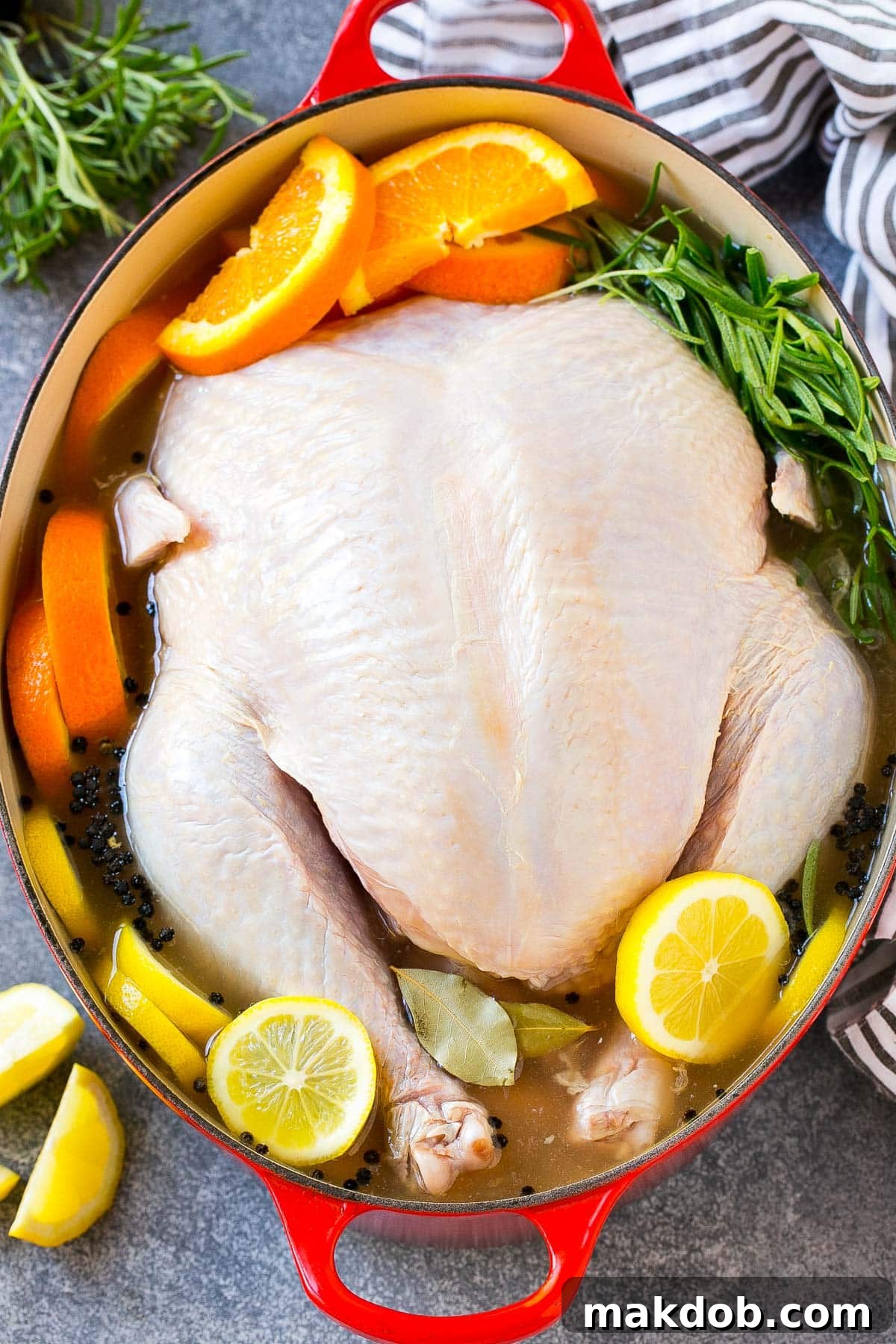
Welcome to the ultimate guide for achieving a Thanksgiving turkey that is not just moist and flavorful, but truly unforgettable! This **turkey brine** recipe, infused with the vibrant notes of apple, citrus, warm brown sugar, fragrant rosemary, and a medley of aromatic spices, is your secret weapon against dry, bland holiday birds. Every culinary enthusiast’s most significant worry when preparing a holiday feast is serving a dry, disappointing turkey. Thankfully, a well-crafted wet brine works wonders, not only enhancing the bird’s natural flavors but also ensuring a succulent, juicy texture that will impress every guest at your table. Get ready to elevate your holiday cooking with the best turkey brine recipe you’ll ever need. Perfectly complement your magnificent turkey with classic side dishes like creamy sweet potato casserole with marshmallows and savory Southern cornbread dressing for an exceptional holiday meal.
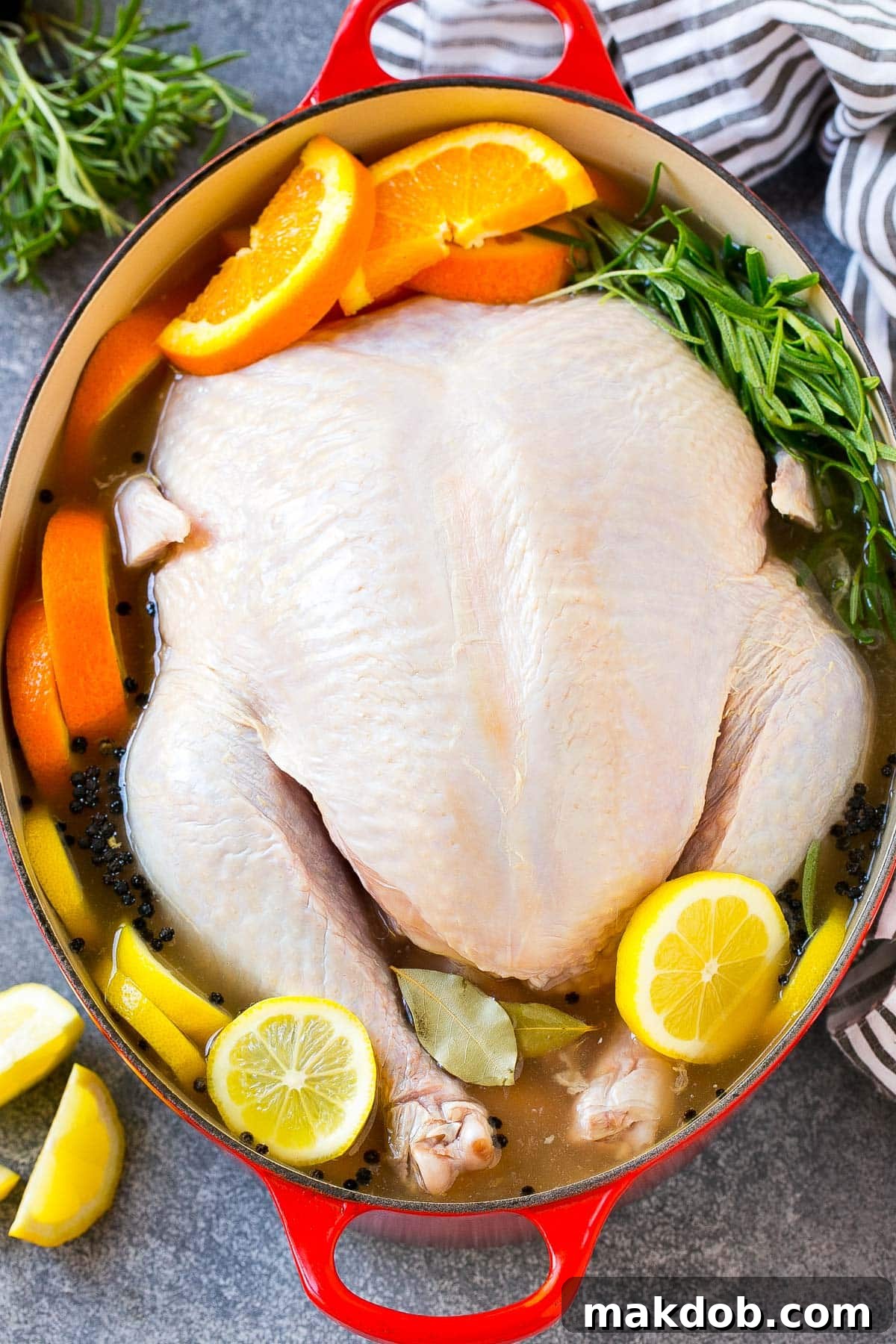
The Ultimate Apple & Citrus Turkey Brine: Your Key to a Perfectly Moist Holiday Turkey
For many years, the thought of cooking a turkey for the holidays filled me with dread. The pressure to deliver a show-stopping centerpiece often led to anxiety about either an overcooked, bone-dry bird or, equally terrifying, one that was still raw in the middle! It felt like a gamble every time. However, ever since I discovered the transformative power of a good wet brine recipe, those fears have vanished. Now, I confidently prepare a consistently juicy, tender, and incredibly delicious turkey, turning holiday cooking from a source of stress into a joyful culinary tradition.
Beyond the star of the show, remember that a truly memorable Thanksgiving spread is built on an array of fantastic side dishes. Consider crowd-pleasers like creamy slow cooker mac and cheese, velvety garlic mashed potatoes, vibrant cranberry salad, and, of course, a rich, savory turkey gravy. Planning your Thanksgiving recipes ensures a balanced and delightful meal. And if, by some miracle, you find yourself with turkey leftovers (a rare but welcome occurrence with a perfectly brined bird!), be sure to explore my favorite leftover turkey recipes for creative ways to enjoy them.
Table of Contents
- The Science Behind Brining a Turkey
- Turkey Brine Ingredients
- How Do You Make Turkey Brine?
- Essential Tips For Turkey Brine Success
- Choosing The Perfect Salt For Your Brine
- Turkey Brine FAQs
- Flavor Variations For Your Turkey Brine
- Recommended Turkey Recipes
- More Recipes For Your Thanksgiving
- Turkey Brine Video
- Love This Recipe?
- Turkey Brine Recipe
The Science Behind Brining a Turkey
Brining might seem like an extra step, but understanding the science behind it reveals why it’s so crucial for a perfectly cooked turkey. A brine is essentially a salt and sugar solution, often infused with aromatics, that works its magic on the turkey meat through two primary processes: osmosis and denaturing proteins.
First, **osmosis** draws the salty liquid into the turkey’s cells. Turkey, being a lean meat, is prone to drying out during cooking as its natural moisture evaporates. By filling the muscle fibers with flavorful brine, you create a buffer against this moisture loss. This means that even if the turkey cooks slightly past its ideal internal temperature, it will still retain significantly more moisture than an unbrined bird, resulting in a forgiving and juicy outcome.
Second, the salt in the brine **denatures the proteins** in the turkey. This process causes the muscle fibers to unwind and loosen, making them more tender. These altered proteins also become better at trapping and holding onto moisture during the roasting process. The sugar in the brine contributes to the Maillard reaction during cooking, leading to a beautifully browned and crispy skin, while also balancing the saltiness and adding subtle sweetness. The added aromatics like apple, citrus, rosemary, and spices infuse the meat with deep, complex flavors that permeate throughout the bird, ensuring every bite is seasoned from the inside out. This dual action of adding moisture and tenderizing the meat is what makes brining an indispensable technique for a show-stopping holiday turkey.
Turkey Brine Ingredients
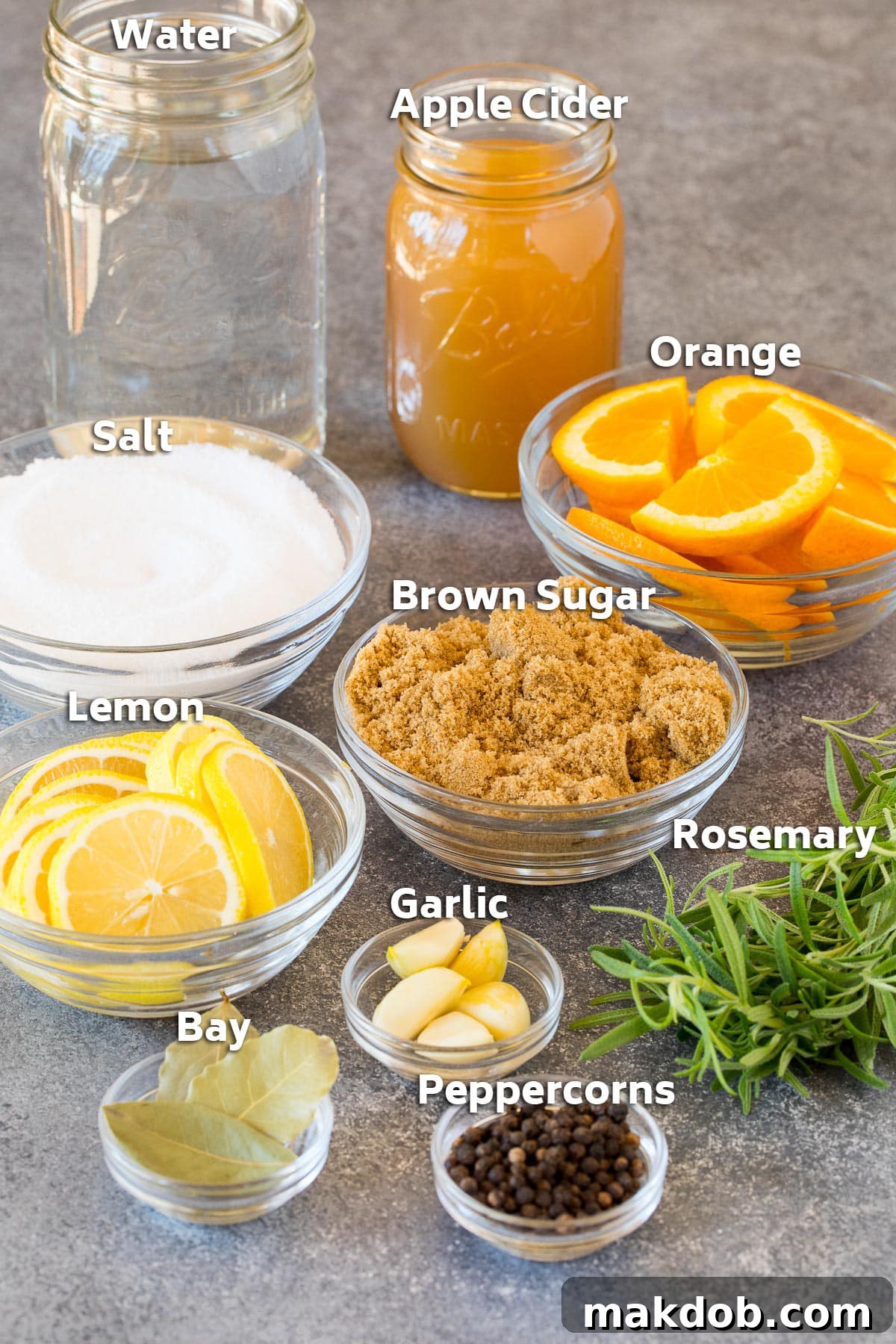
Crafting this exceptional turkey brine recipe requires a carefully selected blend of ingredients, each playing a vital role in delivering moisture, tenderness, and an unparalleled flavor profile. Here’s what you’ll need:
- **Kosher Salt:** The cornerstone of any effective brine. Its larger crystal size dissolves well and provides the necessary osmotic pressure to tenderize and moisten the meat.
- **Brown Sugar:** Adds a subtle sweetness that balances the saltiness and contributes to a gorgeous, caramelized skin.
- **Water & Apple Cider:** The liquid base. It is absolutely crucial to use apple cider (the drink), not apple cider vinegar, which is too acidic and would cook the turkey. The apple cider lends a delightful fruity note.
- **Garlic:** Smashed cloves release their pungent, aromatic oils, infusing the brine with a deep savory foundation.
- **Whole Peppercorns:** Provide a mild, spicy warmth and complex aroma without overwhelming the other flavors.
- **Lemon Slices & Orange Slices:** Fresh citrus peels and juices add bright, zesty notes that cut through the richness of the turkey and elevate the overall flavor.
- **Fresh Rosemary:** Earthy, piney, and incredibly aromatic, rosemary is a classic herb that pairs perfectly with poultry, imparting a sophisticated, fresh taste.
- **Bay Leaves:** These humble leaves contribute a subtle, almost minty or herbal depth that rounds out the brine’s aromatic profile.
Ensuring you have all these components ready is the first step to a truly spectacular turkey!
How Do You Make Turkey Brine?
Creating this flavorful turkey brine is a straightforward process that lays the foundation for an exceptionally moist and tender bird. Follow these simple steps for success:
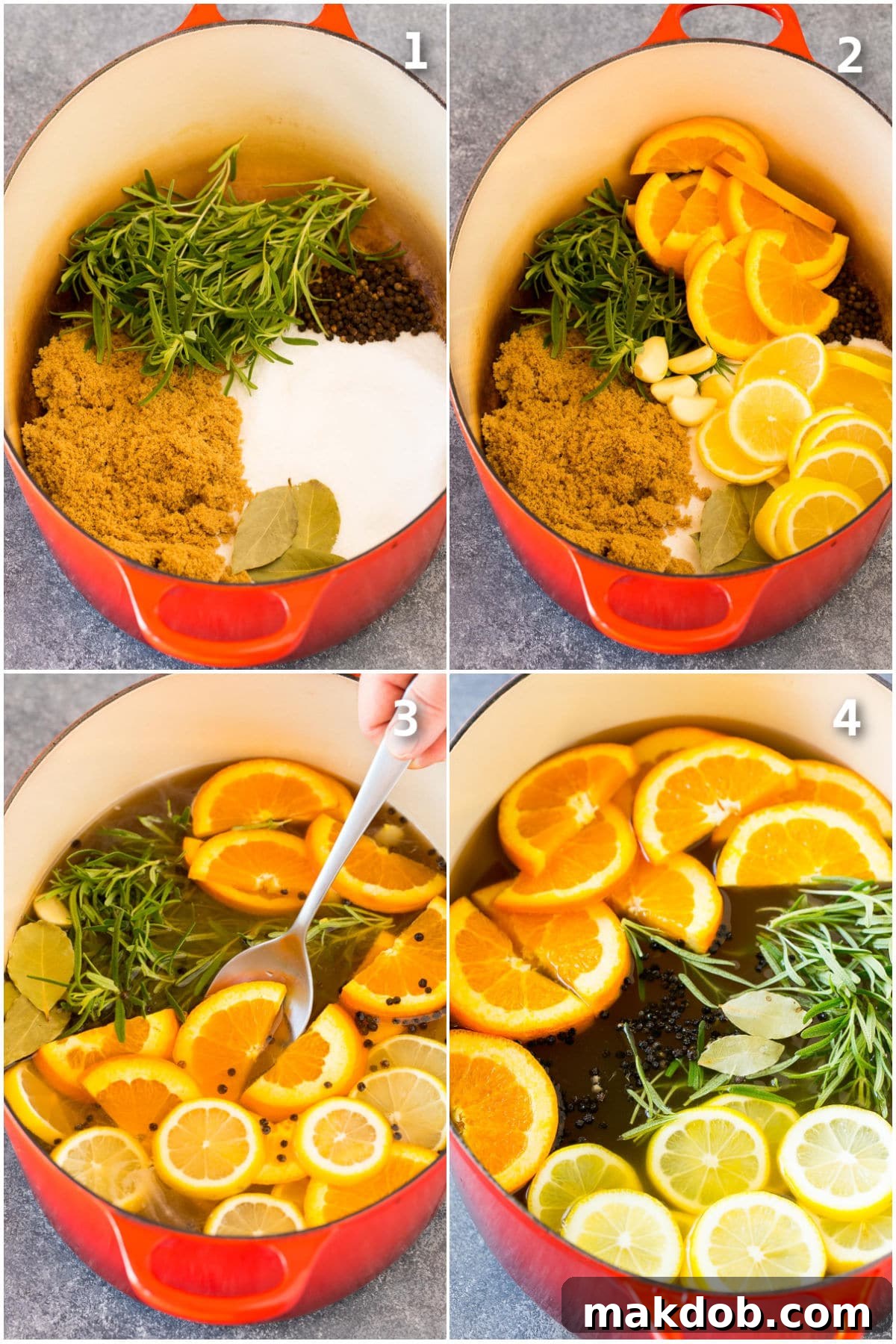
- **Combine Ingredients:** Begin by gathering all your brine ingredients: kosher salt, brown sugar, a portion of the water (enough to dissolve the solids), apple cider, smashed garlic cloves, whole peppercorns, lemon slices, orange slices, fresh rosemary sprigs, and bay leaves. Place these ingredients into a very large stockpot.
- **Simmer to Dissolve:** Bring the mixture to a gentle simmer over medium heat. Stir continuously for 2-3 minutes, or until both the salt and brown sugar have completely dissolved into the liquid. This ensures even distribution of flavors and proper brining action.
- **Cool Completely:** Remove the pot from the heat and allow the brine to cool down entirely. This step is critical! Never introduce a turkey to a hot or even warm brine, as this can partially cook the meat and create an unsafe environment. You can speed up the cooling process by adding a few ice cubes, just be sure to account for the added water volume if doing so.
- **Submerge the Turkey:** Once the brine is thoroughly cooled, carefully place your thawed turkey into the liquid. If your stockpot isn’t large enough to fully submerge the turkey, consider using a dedicated brining bag – these extra-large, resealable bags are ideal for ensuring the entire bird is covered and fit more easily into a standard refrigerator. Add additional cool water as needed until the turkey is fully immersed.
- **Refrigerate and Brine:** Cover the pot or seal the brining bag and transfer it to the refrigerator. Allow the turkey to brine for 18-24 hours. This duration is crucial for the brine to work its magic, but be careful not to exceed 24 hours, as this can result in an overly salty turkey.
- **Rinse and Pat Dry:** When the brining time is complete, remove the turkey from the brine solution. Rinse the entire bird thoroughly under cool running water to remove any excess salt from the surface. Then, using paper towels, pat the turkey completely dry. A dry skin is key to achieving that coveted crispy exterior during roasting.
- **Cook as Desired:** Your turkey is now perfectly prepared for roasting! Proceed with your preferred cooking method, whether it’s a classic roast, smoking, or grilling. The brine has ensured a moist, flavorful foundation, so you can confidently expect a delicious result.
Essential Tips For Turkey Brine Success
Brining a turkey is a relatively simple process, but a few key tips can make all the difference between a good turkey and a truly spectacular one:
- **Choose the Right Salt:** Always use **kosher salt** for this recipe. It has a larger crystal structure than table salt, which means a cup of kosher salt weighs less and is less dense. This recipe is specifically formulated for kosher salt. If you must use table salt, reduce the amount to 1 1/4 cups and ensure it fully dissolves. Using too much fine-grained table salt can make your turkey excessively salty.
- **Ensure Proper Equipment:** Make sure your stockpot is adequately large to comfortably hold your turkey and enough brine to fully submerge it. If your pot is too small, don’t fret! Invest in specialized brining bags. These extra-large, heavy-duty resealable bags are designed for turkey brining and are much easier to fit into a standard-sized refrigerator.
- **Thorough Dissolution:** While simmering, **stir your brine** vigorously to ensure all the salt and sugar crystals completely dissolve. Undissolved salt won’t be evenly distributed, leading to an inconsistent brine.
- **Temperature is Key:** It cannot be stressed enough: always put your turkey into a **cool brine**; never in a hot or warm solution. Hot brine can start to cook the exterior of the turkey, creating a food safety hazard and affecting the texture.
- **Quick Cooling Trick:** To accelerate the cooling of your brine, you can add a significant amount of cold water or a few ice cubes after removing it from the heat. Just ensure the final volume is still enough to cover your turkey without diluting the brine too much.
- **Adjust for Turkey Size:** If you’re preparing a smaller turkey or just a **turkey breast**, you can halve this recipe for the brine and reduce the brining time to 12-18 hours.
- **Achieve Crispy Skin:** For that desirable, golden-brown, and crispy skin, it’s paramount to pat your turkey dry very thoroughly with paper towels before you roast it. Excess moisture on the skin will steam rather than crisp.
- **Check for Pre-Brined Birds:** Always check the label of your turkey. Many commercially sold turkeys (especially frozen ones) are often “pre-brined,” “self-basting,” or “enhanced with a saline solution.” If your turkey has already been treated with salt, do not brine it further, as it will become excessively salty and unpleasant.
- **Allow for Air Circulation:** If brining in a bag, try to place it in a large roasting pan in the fridge to catch any potential leaks. If brining in a pot, ensure it’s tightly covered to prevent any cross-contamination with other foods.
Quick Tip
Be sure to use apple cider the drink, do NOT use apple cider vinegar! The vinegar’s acidity is too strong for brining. If you can’t find apple cider, clear apple juice will work as a suitable substitute.
Choosing The Perfect Salt For Your Brine
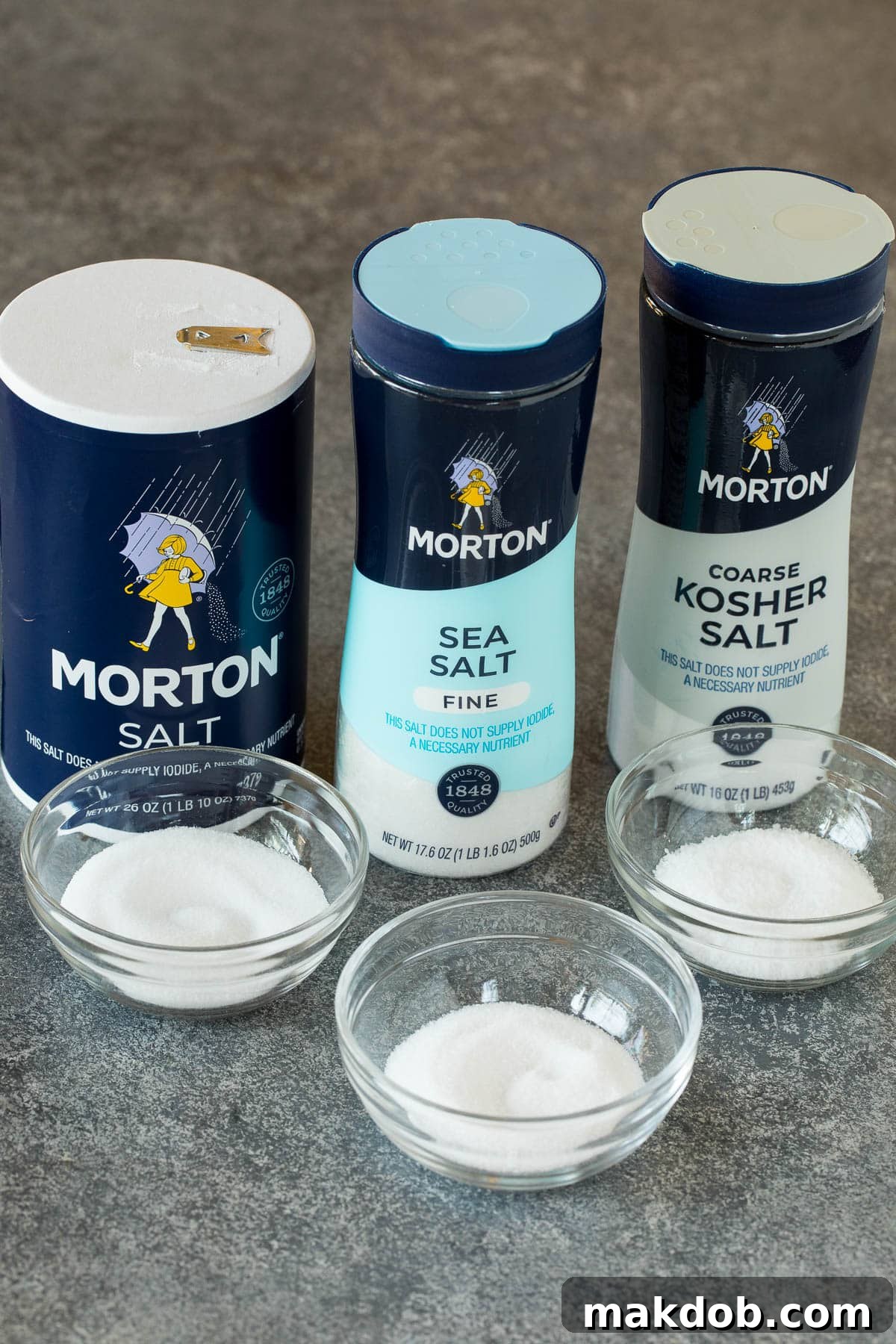
The type of salt you use is perhaps the most critical component of your turkey brine, directly impacting the final taste and texture of your bird. When preparing a brine, the three main options you’ll encounter are kosher salt, sea salt, and table salt. For this particular recipe, I’ve specifically formulated it to use and highly recommend **kosher salt** due to its unique properties and consistent results.
- **Kosher Salt:** My top recommendation for this turkey brine. Kosher salt typically features larger, irregular salt grains. This larger grain size means that per measuring cup, you actually get less salt by weight compared to finer salts. It dissolves exceptionally well in water, which is ideal for creating a homogenous brine solution. Furthermore, its clean flavor profile, devoid of additives like iodine, makes it perfect for seasoning food without imparting any metallic or off-flavors. The larger crystals also make it easy to taste and adjust seasoning if needed.
- **Sea Salt:** Derived from evaporating ocean water, sea salt comes in a vast array of grain sizes, textures, and mineral compositions depending on its origin and processing. While often lauded for its complex flavors in finishing dishes, its inconsistency in grain size makes it less predictable for brining. The wide variety of sea salts means that measuring “a cup” of sea salt can yield vastly different salt concentrations depending on the specific type. To ensure consistently great results and avoid over- or under-salting, I generally don’t recommend sea salt for brining unless you are very familiar with its specific properties and are measuring by weight rather than volume.
- **Table Salt:** This is the most common household salt, characterized by its very fine, dense grains. Table salt often contains iodine and anti-caking agents, which can sometimes impart a slightly metallic taste and make the brine appear cloudy. Because its grains are much smaller and denser than kosher salt, using a 1:1 volume substitution for kosher salt will result in a significantly saltier brine, potentially ruining your turkey. If you find yourself needing to use table salt, it is absolutely essential to reduce the amount. Use approximately 1 1/4 cups of table salt for every 1 1/2 cups of kosher salt specified in the recipe. Also, be prepared to stir your brine thoroughly to ensure that the denser table salt fully dissolves.
In summary, sticking to kosher salt for this recipe will provide the most reliable and delicious outcome, ensuring your turkey is perfectly seasoned and wonderfully moist.
Turkey Brine FAQs
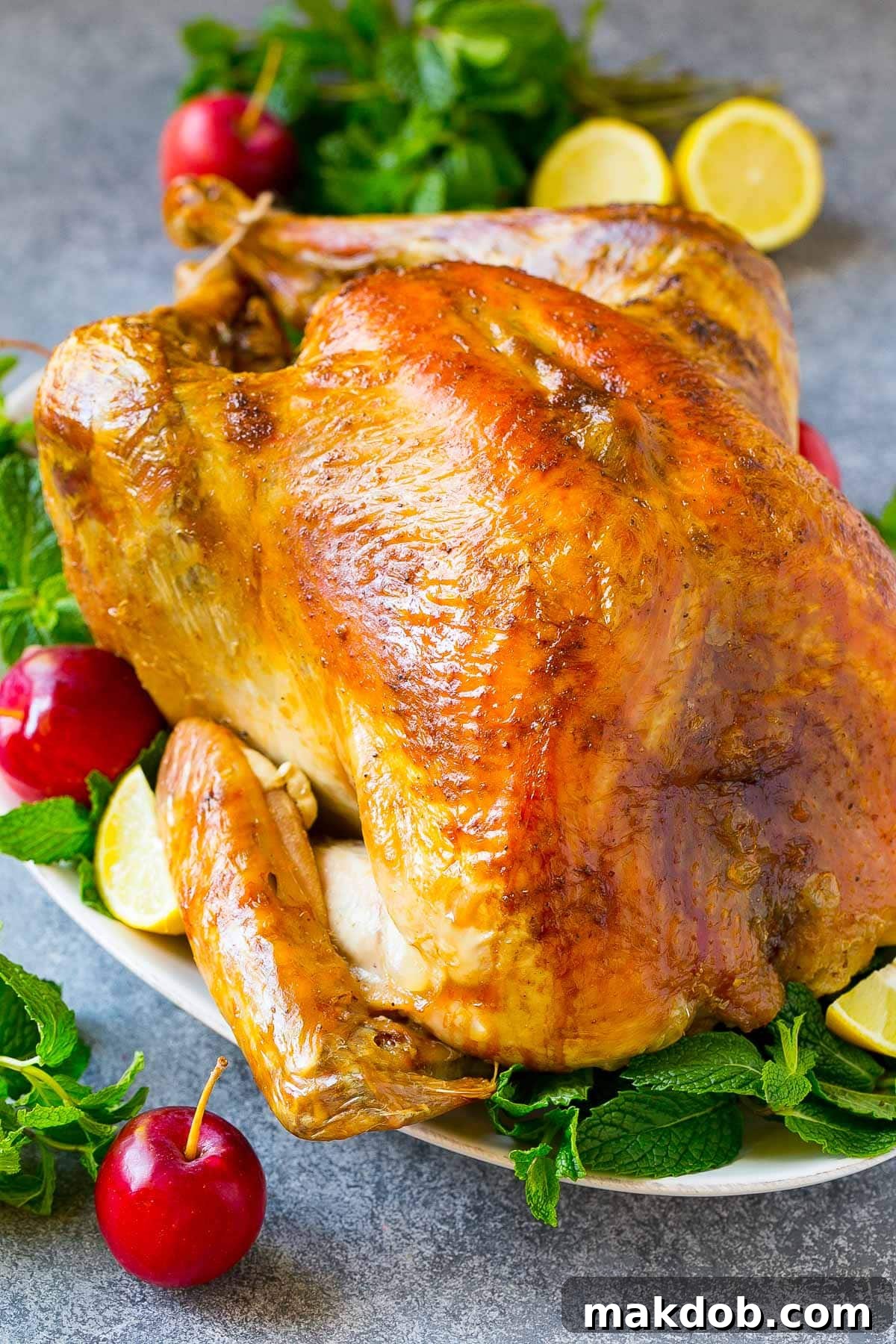
Brining is a game-changer for turkey because it’s naturally a very lean meat, making it highly susceptible to drying out during cooking. When you immerse a turkey in a brine solution, the meat absorbs some of that liquid, not only infusing it with flavor but crucially, helping it retain moisture. This means your turkey will come out incredibly tender and juicy, even if it’s cooked slightly longer than intended. Think of it as an insurance policy for a perfect bird every time. I apply this same principle when cooking whole chickens, always opting for a brine to ensure maximum succulence.
For optimal results, a turkey should brine for a minimum of 18 hours. However, for larger birds, you can extend the brining period up to 24 hours to ensure the flavors and moisture penetrate deeply. It’s crucial not to exceed 24 hours, as brining for too long can result in an overly salty turkey with a change in texture. Also, always double-check the label of your store-bought turkey to ensure it hasn’t been pre-brined or treated with a salt solution; if it has, skip the brining process altogether to prevent excessive saltiness.
While gravy is traditionally made using turkey drippings, when you’re working with a brined turkey, the drippings can sometimes be quite salty. It’s highly recommended to taste the pan drippings before you proceed with making your gravy. If you find the drippings to be on the saltier side, you have a couple of options: you can either dilute them with unsalted chicken or turkey broth, or use only unsalted broth as the base for your gravy, adding a small amount of drippings for flavor, or none at all. This allows you to control the seasoning of your gravy precisely and ensure it complements your perfectly brined turkey.
The cooking time for a turkey primarily depends on its size. A general rule of thumb is to roast your turkey for approximately 15 minutes per pound at 325°F (165°C). However, this can vary slightly based on your oven and whether the turkey is stuffed or not. The most reliable way to determine if your turkey is done is to use a meat thermometer. The turkey is safely cooked when a thermometer inserted into the thickest part of the thigh (without touching bone) registers 165°F (74°C). Always allow the turkey to rest for at least 20-30 minutes after cooking before carving; this allows the juices to redistribute, ensuring a more tender and flavorful result.
To brine a turkey effectively, you’ll need a very large container that can fully submerge your turkey. A large stockpot (20-24 quarts) is ideal. If you don’t have one, a heavy-duty brining bag placed inside a cooler or roasting pan works perfectly. You’ll also need a large spoon for stirring, measuring cups and spoons for ingredients, and a meat thermometer to ensure your turkey is thawed and later cooked to perfection.
Follow Me
Flavor Variations For Your Turkey Brine
While this turkey brine recipe, as written, will undoubtedly yield a juicy and incredibly delicious turkey, don’t hesitate to customize the flavors to perfectly suit your personal taste or specific holiday theme. Here are some exciting variations to inspire your culinary creativity:
- **Hearty Veggies:** For an even deeper, more savory base, consider adding aromatic chopped vegetables to your wet brine. Carrots, celery, and onion will slowly release their sweet and earthy notes into the liquid, complementing the turkey beautifully. You can lightly sauté them before adding to the brine mixture to deepen their flavor.
- **Boost the Citrus:** If you adore bright, zesty flavors, amplify the citrus by incorporating extra orange peel or lemon peel into the brine. The essential oils in the peels will impart a more intense aromatic punch. You could also add grapefruit or lime slices for a unique twist.
- **Herbal Infusion:** Rosemary is wonderful, but a blend of fresh herbs can be even more captivating. Experiment with adding fresh sage leaves, sprigs of thyme, or a combination of all three for a classic poultry flavor. For a warm, spiced nuance, a few allspice berries, star anise, or cinnamon sticks can create a truly festive aroma.
- **Sweet & Spicy:** For a touch of heat, try adding a few dried chili peppers (like ancho or guajillo) or a teaspoon of red pepper flakes to the brine. The spice will be subtle but add an intriguing layer of flavor without making the turkey overtly hot.
- **Beer or Wine Brine:** Replace some of the water or apple cider with a light beer (like a lager or pilsner) or a dry white wine (like Chardonnay or Sauvignon Blanc). These liquids can add complex, malty, or fruity notes to the turkey.
- **Maple or Honey:** Substitute a portion of the brown sugar with pure maple syrup or honey for a richer, more nuanced sweetness that caramelizes beautifully on the skin.
Experimentation is part of the fun! Remember to taste your cooled brine (before adding the turkey) to get a sense of its flavor profile and adjust as desired.
Recommended Turkey Recipes
Once your turkey has been perfectly brined using this incredible recipe, you’re ready to cook it to perfection! These recommended recipes are designed to pair flawlessly with your brined bird, offering various methods to achieve a spectacular main course. Whether you prefer a traditional roasted turkey, a smoky flavor, or a simpler turkey breast, you’ll find an option that suits your holiday cooking style. If you’re leaning towards a smoked turkey, I highly recommend checking out my specialized smoked turkey brine recipe for optimal results.
- Classic Roast Thanksgiving Turkey
- Delicious Smoked Turkey
- Fragrant Herb Roasted Turkey
- Garlic and Herb Roasted Turkey Breast
Utilizing this brine is the ultimate way to lock in moisture and flavor, guaranteeing a truly juicy and delicious bird. If you have a bit more time and prefer to explore alternatives to a wet brine, you might also consider my fantastic dry brined turkey method. Regardless of which cooking method or brining technique you ultimately choose, your guests are sure to thank you for serving a succulent and memorable turkey this holiday season.
More Recipes For Your Thanksgiving
Cranberry Jello Salad
6 hrs 10 mins
Loaded Mashed Potato Casserole
1 hr
Corn Pudding
50 mins
Bacon Roasted Brussels Sprouts
30 mins
Ruth’s Chris Sweet Potato Casserole
50 mins
Turkey Brine Video
Love This Recipe?
Please leave a 5-star 🌟🌟🌟🌟🌟 rating in the recipe card below & a review in the comments section further down the page.
Turkey Brine Recipe
Pin
SaveSaved
Time
Ingredients
- 2 cups apple cider DO NOT use apple cider vinegar
- 2 gallons cold water
- 1 1/2 cups kosher salt
- 1 cup brown sugar
- 5 cloves garlic smashed
- 2 tablespoons peppercorns
- 2 oranges thinly sliced
- 2 lemons thinly sliced
- 5 rosemary sprigs
- 3 bay leaves
Instructions
-
Place all the ingredients (apple cider, cold water, kosher salt, brown sugar, smashed garlic, peppercorns, orange slices, lemon slices, rosemary sprigs, and bay leaves) into a large stockpot over medium heat. Bring the mixture to a gentle simmer.
-
Continue to cook and stir for 2-3 minutes, or until all of the salt and sugar have fully dissolved into the liquid. This ensures a consistent brine.
-
Turn off the heat. It is absolutely essential to let the brine mixture cool completely to room temperature before adding the turkey. You can speed this up by adding a few ice cubes, if desired.
-
Once the brine is fully cooled, place your thawed whole turkey into the brine solution, ensuring it is completely submerged. If your turkey does not fit into your pot, transfer the turkey and the cooled brine into a large, heavy-duty brining bag and seal it tightly. Refrigerate for 18-24 hours.
-
When you’re ready to cook your turkey, carefully remove it from the brine. Rinse the bird thoroughly with cool water to wash off any excess salt from the surface. Then, pat the entire turkey very dry with paper towels to ensure crispy skin when roasted.
-
Proceed with your normal turkey roasting method. For specific cooking instructions and complementary recipes, refer to my favorite turkey recipes listed below in the notes section.
Notes
- Thanksgiving Roast Turkey
- Roasted Turkey Breast
- Smoked Turkey
- Herb Roasted Turkey
- **Salt Type is Crucial:** Always use kosher salt. Table salt is much denser than kosher salt and will measure differently by volume, leading to an overly salty turkey. If you must use table salt, reduce the amount to 1 1/4 cups.
- **Temperature Matters:** It is paramount to put your turkey into a cool brine; never place a turkey in a hot or warm brine, as this can partially cook the meat and create a food safety risk.
- **Apple Cider vs. Vinegar:** Be sure to use apple cider (the sweet drink), do NOT use apple cider vinegar! The acidity of vinegar is too strong for this brining method. If apple cider is unavailable, plain apple juice can be used as a substitute.