
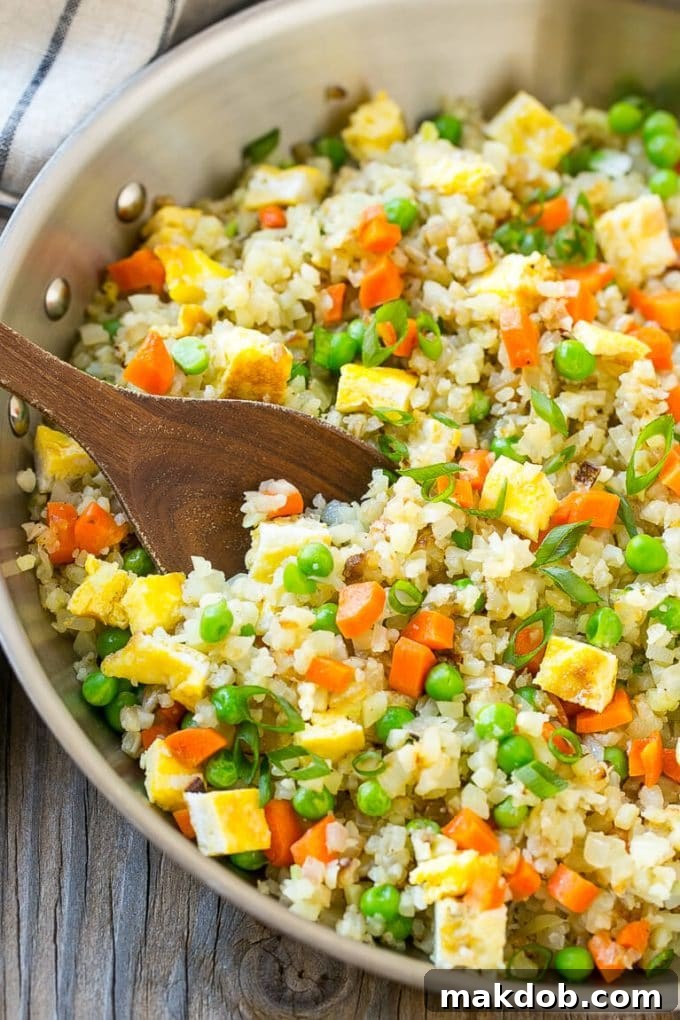
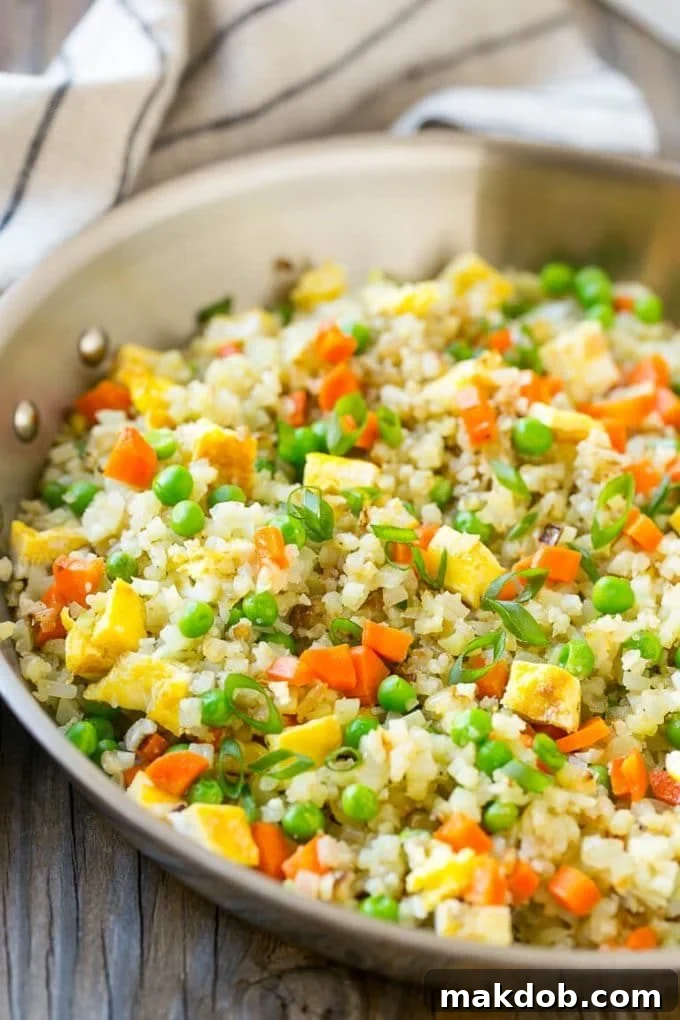
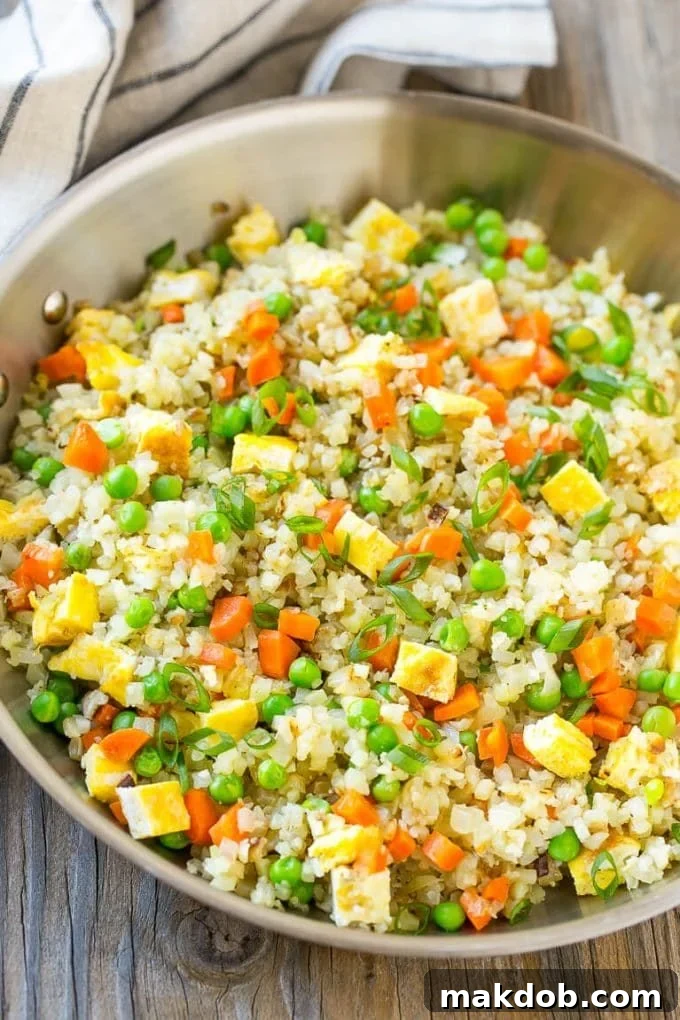
Looking for a healthier twist on your favorite takeout? This Cauliflower Fried Rice recipe delivers all the classic flavors you love, but with significantly fewer carbs and calories than traditional fried rice. It’s the perfect guilt-free side dish or light meal, packed with fresh vegetables, fluffy eggs, and savory seasonings. Whether you’re following a low-carb, keto, or simply health-conscious diet, this dish is a game-changer, proving that eating well doesn’t mean sacrificing taste.
There’s a universal craving for the comforting taste of fried rice, but sometimes, the carb count can be a deterrent, especially after indulgent holidays or when aiming for a lighter eating plan. That’s where cauliflower fried rice shines! It offers a brilliant solution, allowing you to savor those beloved Asian-inspired flavors without the heavy glycemic load. I often whip up this delicious alternative when I’m striving for healthier eating, yet still yearn for the satisfaction of a restaurant-quality dish.
Pairing this vibrant cauliflower rice with other low-carb favorites, such as Chicken Lettuce Wraps, creates a complete and satisfying meal that rivals any takeout experience. It’s not just a side dish; it’s a versatile foundation for a wholesome and flavorful culinary adventure. Dive into this recipe and discover how easy it is to recreate your favorite flavors in a more nutritious way!
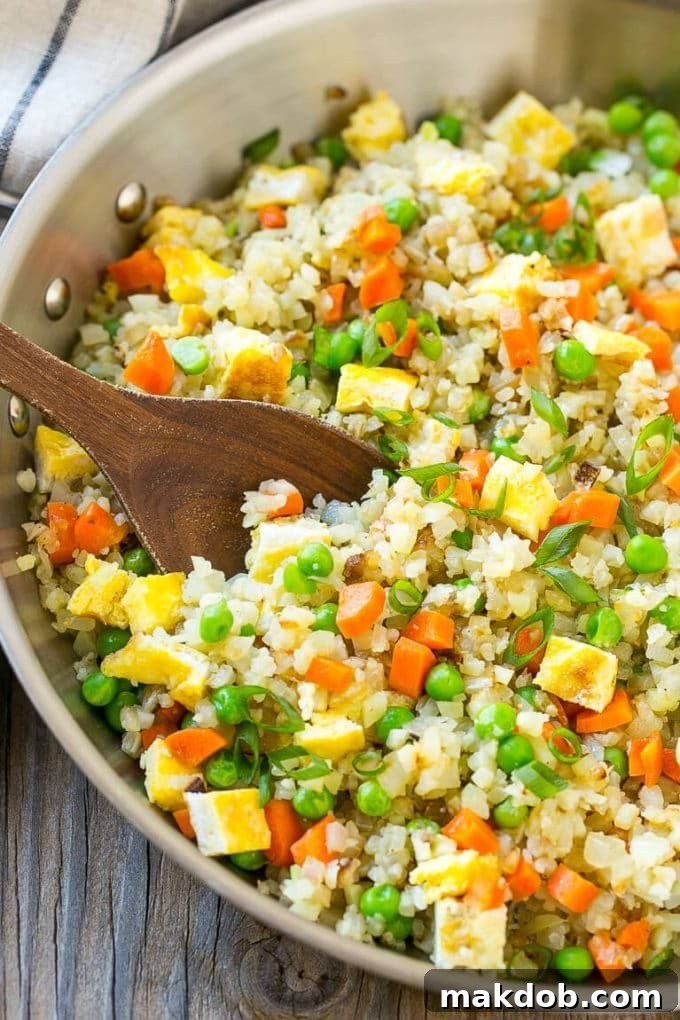
Why Choose Cauliflower Fried Rice? The Healthier Alternative
For many, the appeal of fried rice lies in its savory umami notes and satisfying texture. However, traditional fried rice is typically made with white rice, a grain high in carbohydrates. While delicious, this can be a concern for individuals managing blood sugar, following a ketogenic diet, or simply trying to reduce their carb intake. Cauliflower fried rice steps in as an ingenious and incredibly tasty alternative, allowing you to enjoy all the flavor without the carb-heavy base.
Benefits of Cauliflower Rice:
- Low Carb & Keto-Friendly: Cauliflower is naturally very low in carbohydrates, making it an excellent choice for keto and low-carb diets. This makes it a perfect staple for those looking to maintain ketosis or reduce their overall daily carb intake without feeling deprived of their favorite comfort foods.
- Rich in Nutrients: It’s packed with essential vitamins such as C and K, as well as folate, and a good amount of dietary fiber. These nutrients contribute to overall health, support the immune system, bone health, and aid in healthy digestion, making this dish not just low-carb but also highly nutritious.
- Fewer Calories: Swapping out a cup of traditional white rice (approximately 200 calories) for a cup of riced cauliflower (around 25 calories) significantly reduces the calorie count of your meal. This can be a huge advantage for those focused on weight management or calorie-controlled diets, allowing for larger, more satisfying portions.
- Versatile Flavor Absorption: The mild, neutral flavor of cauliflower rice makes it an incredibly versatile ingredient. It acts like a sponge, readily absorbing the vibrant seasonings and aromatic sauces characteristic of Asian cuisine, ensuring that every bite is bursting with authentic fried rice taste.
- Naturally Gluten-Free: For individuals with celiac disease, gluten sensitivity, or those simply choosing a gluten-free lifestyle, cauliflower fried rice is an excellent, naturally gluten-free option. It eliminates the need for specialized gluten-free grains, simplifying meal preparation.
What Exactly is Cauliflower Rice?
Cauliflower rice isn’t a special grain or a processed food; it’s simply fresh cauliflower that has been transformed into tiny, rice-like granules. This ingenious preparation method involves chopping or grating a head of cauliflower into small pieces that mimic the size and texture of cooked rice grains. The beauty of cauliflower rice lies in its neutral flavor profile, which allows it to readily absorb the vibrant seasonings and aromas of any dish it’s incorporated into, making it an ideal substitute in recipes like fried rice, risottos, or even sushi bowls.
You can find cauliflower rice in various forms to suit your convenience. Many grocery stores offer pre-riced cauliflower in the produce section, typically in bags, ready for cooking. These pre-packaged options are a fantastic time-saver, perfect for busy weeknights. For an even quicker option, check the freezer aisle, where frozen cauliflower rice is widely available. Frozen varieties can be stored for extended periods and often cook up beautifully, sometimes even having a slightly drier texture than fresh. Alternatively, making it yourself is incredibly straightforward and often the most economical choice, giving you full control over the texture and freshness.
How to Make Your Own Cauliflower Rice at Home
Creating fresh cauliflower rice is a simple process that requires minimal equipment. Here’s how you can do it, ensuring a perfect texture every time:
Using a Food Processor:
- Prepare the Cauliflower: Start with a whole, fresh head of cauliflower. Remove the tough outer green leaves and cut out the thick, woody core at the base.
- Break into Florets: Break the cauliflower into manageable florets, roughly 2-3 inches in size. This ensures they fit well into the food processor and process evenly.
- Process in Batches: Place the florets into the bowl of a food processor fitted with the S-blade. It’s crucial not to overcrowd the processor; if you have a large head of cauliflower, work in batches to achieve a uniform texture.
- Pulse to Perfection: Pulse the cauliflower for 2-3 minutes using short, quick bursts. Continue until the pieces are about the same size as grains of rice. Keep an eye on it to avoid over-processing, which can result in a mushy, watery paste rather than distinct “grains.” You’re aiming for a fine, grainy, and slightly textured consistency.
Using a Box Grater:
If you don’t have access to a food processor, a standard box grater is an excellent alternative. Use the medium-sized holes to grate the cauliflower florets directly into a bowl. This method requires a bit more elbow grease but yields beautifully textured cauliflower rice.
Using a Chef’s Knife:
For those without specialized tools, finely chopping the cauliflower with a sharp chef’s knife is also a viable option. Cut the florets into very small, uniform pieces. This method takes more time but allows for precise control over the “grain” size.
Tips for Perfect Cauliflower Rice:
- Wash Before Ricing: Always wash the entire head of cauliflower thoroughly *before* cutting it into florets or ricing it. This prevents the cauliflower from absorbing excess water, which can lead to a soggy end product.
- Preventing Soggy Rice: Cauliflower naturally contains a high water content. After ricing, for the best fried rice texture, spread the cauliflower rice in a single layer on a clean kitchen towel or several layers of paper towels. Gently press down to absorb any excess moisture. This crucial step helps achieve a drier, firmer texture, preventing your fried rice from becoming watery.
- Storage Solutions: Homemade cauliflower rice can be stored in an airtight container in the refrigerator for up to 3 days, making it excellent for meal prepping. For longer storage, spread the riced cauliflower in a single layer on a baking sheet and freeze until completely solid. Once frozen, transfer it to a freezer-safe bag or container, where it can be kept for up to 3 months. When cooking from frozen, there’s no need to thaw it; simply add it directly to the hot pan, adjusting cooking time slightly if needed.
Crafting the Perfect Low-Carb Cauliflower Fried Rice
Making this healthier fried rice alternative is incredibly straightforward and quick, perfect for a weeknight meal that tastes like it took hours. The key to its success lies in building layers of savory flavor, much like you would with traditional fried rice, ensuring every bite is rich and satisfying.
Step-by-Step Cooking Guide:
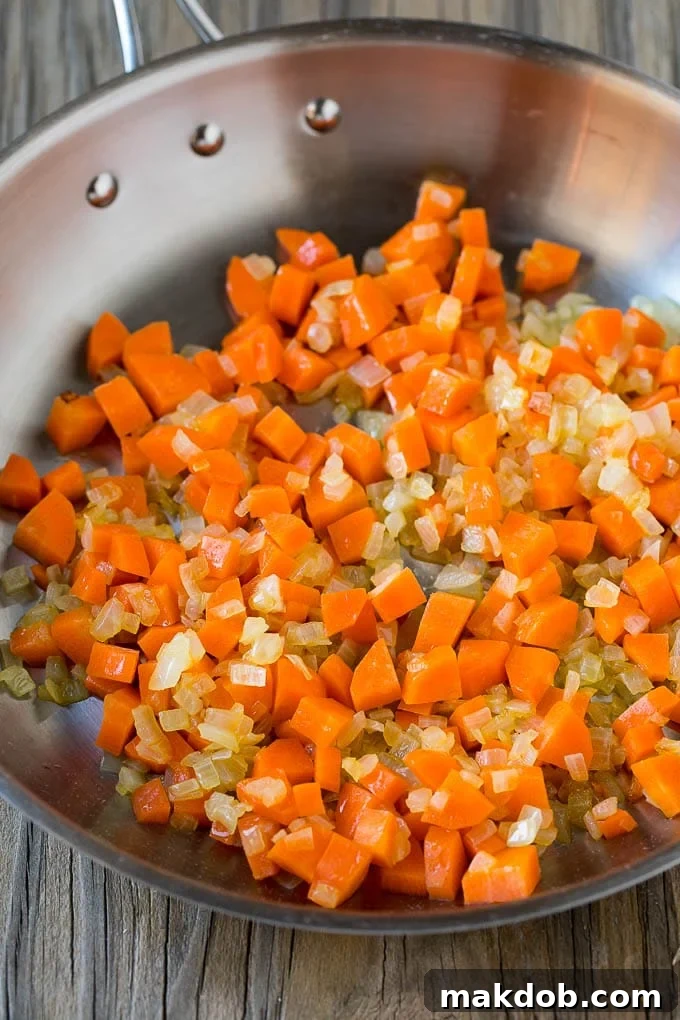
- Sauté the Aromatics: Begin by heating 2 teaspoons of the vegetable oil in a large skillet or wok over medium-high heat. A wok is ideal for stir-frying due to its high heat retention and wide cooking surface, but a spacious skillet works perfectly too. Add the finely chopped onion and carrots to the hot oil. These foundational vegetables will soften and release their natural sweetness, creating a robust aromatic base for your fried rice. Cook them for about 3-5 minutes, stirring frequently, until they are tender-crisp – you want them slightly softened but still with a pleasant bite. Then, stir in the minced garlic for just about 30 seconds, until it becomes wonderfully fragrant. Be vigilant here to avoid burning the garlic, as burnt garlic can turn bitter. Season this vegetable mixture lightly with salt and freshly ground black pepper to taste. Once cooked, transfer the vegetables from the pan to a separate plate and cover them to keep them warm.
- Scramble the Eggs: In the same pan, which should still retain some heat and flavor, add the remaining teaspoon of vegetable oil. Pour in the lightly beaten eggs. Cook the eggs, stirring them with a spatula and breaking them up into small, fluffy pieces, until they are fully scrambled and cooked through. This usually takes only 1-2 minutes. Season the scrambled eggs with a pinch of salt and pepper. The eggs add essential protein, a lovely golden color, and that characteristic fluffy texture found in classic fried rice.
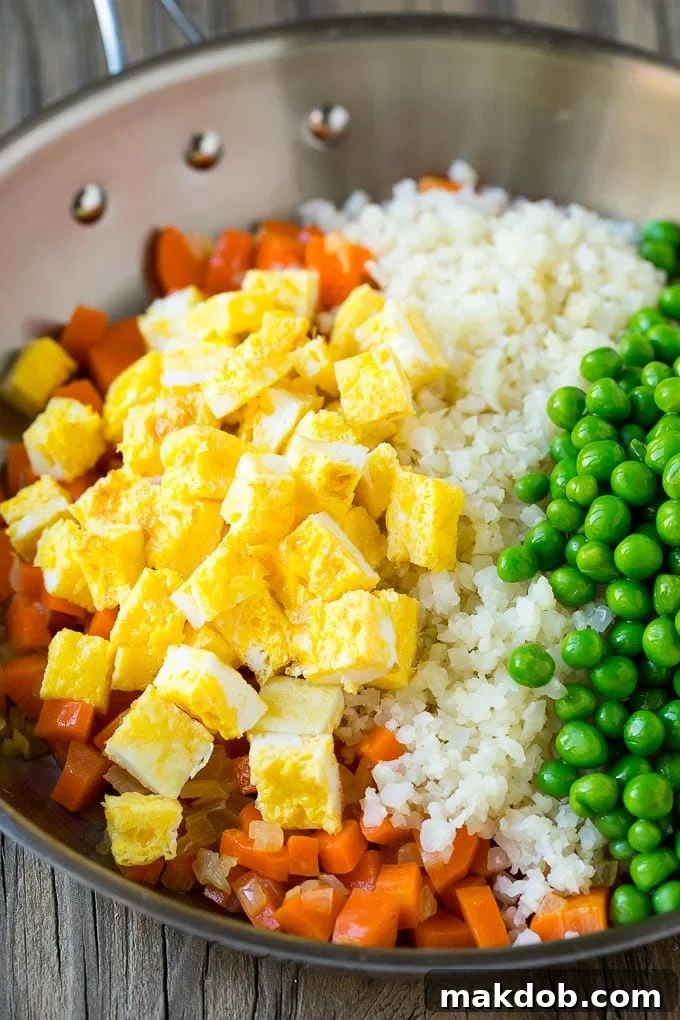
- Combine and Stir-Fry: Now it’s time to bring all the elements together. Return the cooked vegetables to the pan with the scrambled eggs. Add the pre-prepared riced cauliflower (whether fresh or frozen) and the frozen peas. The peas will thaw and cook quickly in the hot pan. Pour in the soy sauce and the toasted sesame oil. The soy sauce is crucial for providing that unmistakable savory, umami depth, while the toasted sesame oil adds a nutty, aromatic finish that is a hallmark of authentic Asian fried rice. Stir all the ingredients together thoroughly, ensuring everything is evenly coated with the seasonings and oil.
- Cook the Cauliflower Rice: Continue to cook the entire mixture for about 4-5 minutes, stirring frequently. This step allows the cauliflower to just soften and absorb all the delicious flavors. It’s important not to overcook the cauliflower, as it can become mushy and release too much water. You want it to retain a slight bite, similar to al dente rice. Stirring frequently also helps prevent any sticking to the bottom of the pan and ensures even cooking throughout the dish.
- Serve and Garnish: Once the cauliflower fried rice is perfectly cooked and fragrant, remove it from the heat. Serve immediately, garnished generously with fresh sliced green onions. The vibrant green onions not only add a final burst of fresh, pungent flavor but also provide a beautiful visual contrast to the dish, making it even more appetizing. Enjoy this healthy and flavorful meal!
Unleashing Your Culinary Creativity: Cauliflower Fried Rice Variations
While this recipe provides a fantastic, flavorful base for delicious cauliflower fried rice, it’s incredibly adaptable and encourages experimentation. Don’t hesitate to customize it with different ingredients to make it uniquely your own and suit your preferences or what you have on hand!
- Boost with Protein: Easily transform this side dish into a hearty, complete main course by incorporating your favorite cooked protein. Stir in 1 1/2 cups of cooked and chopped chicken, tender shrimp, or cubed firm tofu during the last few minutes of cooking to heat through. Leftover steak, ground pork, or even thinly sliced beef can also be excellent additions, making it a substantial meal.
- Crispy Bacon Goodness: For an irresistible smoky flavor and a delightful textural contrast, prepare about 1/3 cup of cooked, crumbled bacon. Sprinkle it generously over the cauliflower rice just before serving. The salty crunch pairs wonderfully with the savory base.
- Amplify Your Greens: Enhance the nutritional value, vibrant color, and fresh taste by stirring in a handful of fresh leafy greens towards the very end of the cooking time. Fresh kale or spinach leaves will wilt beautifully from the residual heat. Other excellent options include finely chopped bok choy, Napa cabbage, or even thinly sliced collard greens.
- Dial Up the Spice: If you love a little kick, there are several ways to add heat. Incorporate a pinch of crushed red pepper flakes into the pan along with the garlic for an infused spice. Alternatively, drizzle a few teaspoons of sriracha sauce or a dash of chili oil into the pan with the soy sauce and sesame oil. A sprinkle of fresh chopped chilies or a dab of sambal oelek at the table also works wonders.
- Expand Your Veggie Horizon: This dish is a perfect canvas for incorporating a wider array of vegetables. Consider adding diced bell peppers (any color), sliced mushrooms, crunchy water chestnuts, tender bamboo shoots, or even small, finely chopped broccoli florets for extra texture and a nutrient boost. Add harder vegetables like bell peppers with the carrots and onions, and softer ones like mushrooms or spinach later in the cooking process.
- Add a Nutty Crunch: For an additional layer of texture and flavor, toss in a handful of chopped cashews or peanuts during the final minute of cooking. They provide a delightful crunch and a subtle nutty richness.
- Experiment with Sauces: While soy sauce and sesame oil form the classic base, you can further enhance the flavor. A splash of oyster sauce (if you’re not strictly vegetarian or vegan) can add a richer, slightly sweeter umami depth. A tiny bit of fish sauce can also elevate the savory notes, providing an authentic Southeast Asian twist.
Tips for Achieving the Best Cauliflower Fried Rice
- High Heat is Crucial: Just like traditional fried rice, cooking cauliflower fried rice over medium-high to high heat is essential. This high heat helps achieve a slightly caramelized, “fried” texture on the cauliflower and vegetables, preventing them from becoming soggy or watery.
- Avoid Overcrowding the Pan: For optimal results, ensure your skillet or wok isn’t too full. If you’re making a larger batch, consider cooking in two smaller batches. Overcrowding can lower the pan’s temperature, leading to steaming rather than frying, which results in a less desirable, watery texture.
- Mise en Place is Your Friend: “Mise en place” (having all your ingredients prepped and ready before you start cooking) is particularly important for stir-fries. Fried rice comes together very quickly once you start, so you’ll want all your chopped vegetables, beaten eggs, sauces, and cauliflower rice measured and within easy reach.
- Taste and Adjust Seasoning: Don’t be afraid to taste your fried rice as you cook and adjust the seasonings. Different brands of soy sauce can vary in saltiness, and your personal preference for salt and umami might differ. A little extra soy sauce, a dash more sesame oil, or a pinch of salt can make all the difference.
- Manage Moisture Carefully: As mentioned in the “How to Make Your Own Cauliflower Rice” section, draining excess moisture from homemade cauliflower rice is important. If you’re using frozen cauliflower rice, avoid thawing it completely before adding it to the pan; instead, add it directly to the hot pan. This helps reduce the amount of water released during cooking, contributing to a drier, more authentic fried rice texture.
Serving Suggestions for Your Cauliflower Fried Rice
This versatile dish can be enjoyed in numerous ways, making it a fantastic addition to your meal rotation:
- As a Stellar Side Dish: It makes an excellent, healthy, and flavorful side for almost any Asian-inspired main course. Think alongside Chicken Lettuce Wraps, perfectly grilled salmon, sweet and savory baked sesame chicken, or a classic beef and broccoli stir-fry. Its light nature beautifully complements richer main dishes.
- As a Satisfying Light Main Course: With the simple addition of protein like chicken, shrimp, tofu, or even some edamame, this cauliflower fried rice transforms into a satisfying and complete meal on its own. It’s perfect for a lighter lunch or dinner that’s still packed with flavor and nutrients.
- Ideal for Meal Prep: Prepare a large batch at the beginning of the week, and you’ll have quick, healthy, and delicious lunches or dinners ready to go. Cauliflower fried rice reheats beautifully in a skillet or microwave, retaining its flavors and texture.
While cauliflower won’t replicate the exact chewiness of traditional rice, its texture in this fried rice is delightfully tender with a slight bite, and the flavors are absolutely spot on. It’s a fantastic way to enjoy that beloved take-out taste with a significantly lower calorie and carb count, making it a staple for anyone looking to eat healthier without sacrificing an ounce of flavor.
Still hungry for more delicious, healthy recipes? Follow Dinner at the Zoo on Facebook, Twitter, Instagram and Pinterest for more great recipe ideas and culinary inspiration!
More Low Carb Recipes to Explore:
- Pizza Stuffed Chicken
- Bacon Wrapped Jalapeno Poppers
- Garlic Steak Bites
- Bacon Wrapped Asparagus
- Stuffed Zucchini Boats
Cauliflower Fried Rice Recipe
Here’s a printable version of this amazing low-carb cauliflower fried rice recipe, perfect for a healthy and satisfying meal!
Cauliflower Fried Rice
Pin Recipe
Author: Sara Welch
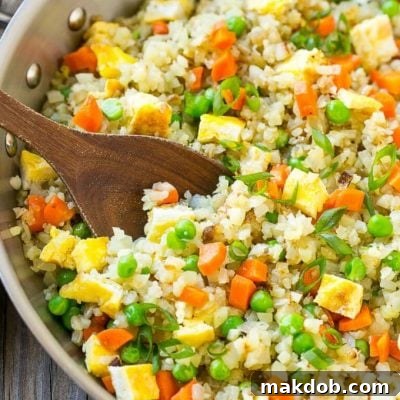
This cauliflower fried rice recipe has all the flavors of your favorite take out dish, but without the carbs; the perfect healthier side dish!
Prep Time: 10 minutes
Cook Time: 15 minutes
Total Time: 25 minutes
Course: Main Course, Side Dish
Cuisine: Asian
Servings: 4
Ingredients
- 3 1/2 cups of riced cauliflower
- 1 tablespoon vegetable oil, divided use
- ½ cup finely chopped onion
- ½ cup chopped carrots
- ½ cup frozen peas
- 1 teaspoon minced garlic
- 2 eggs, lightly beaten
- 2 tablespoons soy sauce
- 1 tablespoon toasted sesame oil
- Salt and pepper to taste
- 2 tablespoons sliced green onions
Instructions
- In a large skillet, heat 2 teaspoons of the vegetable oil over medium-high heat.
- Add the onion and carrot to the pan, cook for 3-5 minutes or until softened. Add the garlic and cook for 30 seconds until fragrant.
- Season the cooked vegetables to taste with salt and pepper. Remove the vegetables from the pan, place them on a plate, and cover to keep warm.
- Pour the remaining teaspoon of oil into the pan. Add the lightly beaten eggs and cook, stirring occasionally and breaking up with a spatula until the eggs are scrambled and cooked through. Season with salt and pepper.
- Return the reserved cooked veggies and add the riced cauliflower and frozen peas to the pan. Stir in the soy sauce and toasted sesame oil. Cook until the cauliflower has just softened, about 4-5 minutes, stirring frequently.
- Serve immediately, sprinkled generously with sliced green onions for garnish.
Nutrition
Calories: 158kcal | Carbohydrates: 12g | Protein: 7g | Fat: 10g | Saturated Fat: 2g | Sodium: 572mg | Fiber: 4g | Sugar: 5g
Did you make this recipe?
Tag @dinneratthezoo on Instagram and hashtag it #dinneratthezoo
Share it with the world
Facebook
Twitter
Pinterest
This post was originally published on January 2, 2017 and was updated on March 12, 2019 with new content.