
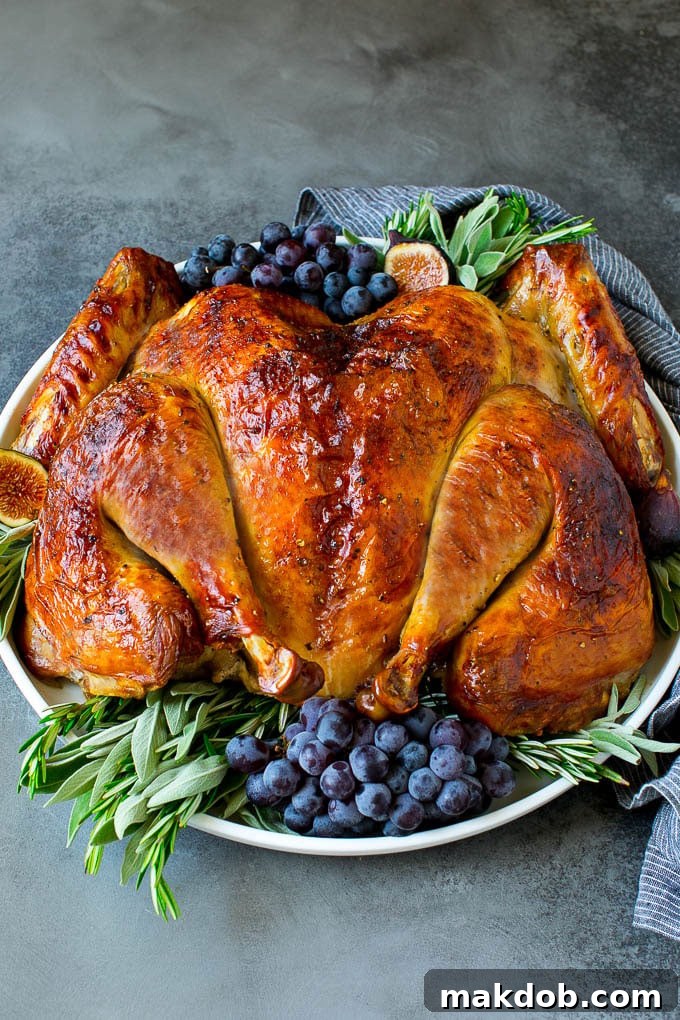
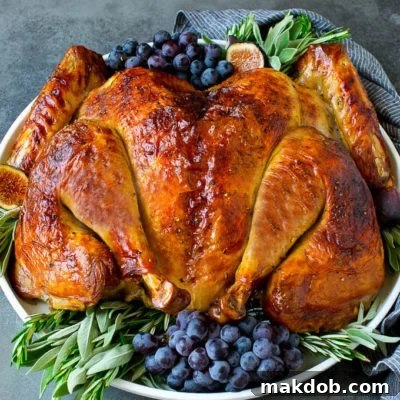
Unlock the secret to the most delicious, tender, and incredibly juicy turkey you’ve ever tasted with this comprehensive guide to a **spatchcock turkey recipe**. Forget the dry, unevenly cooked birds of holidays past; spatchcocking, also known as butterflying, is a game-changing technique that promises a perfectly roasted, golden-brown turkey every single time, in significantly less time than traditional methods. Whether you’re a seasoned chef or a first-time turkey roaster, this approach simplifies the process, ensuring a stress-free and spectacular centerpiece for your holiday table.
Cooking a whole turkey can often feel like a monumental task, consuming hours in the kitchen and sometimes yielding less-than-perfect results. This spatchcock turkey recipe offers an elegant and efficient solution. By flattening the turkey, we expose more surface area to the heat, promoting even cooking, crispier skin, and succulent meat throughout. It’s a method that not only speeds up cook time but also guarantees rave reviews from your family and guests.
While this recipe focuses on oven roasting for maximum flavor and efficiency, we understand that sometimes you might want to explore other cooking avenues. If you’re looking for alternative ways to prepare your holiday bird, consider trying a smoked turkey for a rich, smoky flavor, a deep-fried turkey for unparalleled crispiness and speed, or a grilled turkey breast for a lighter, outdoor cooking option. Each offers a unique culinary experience, but for sheer convenience, impressive results, and a truly unforgettable holiday meal, the spatchcock method reigns supreme.
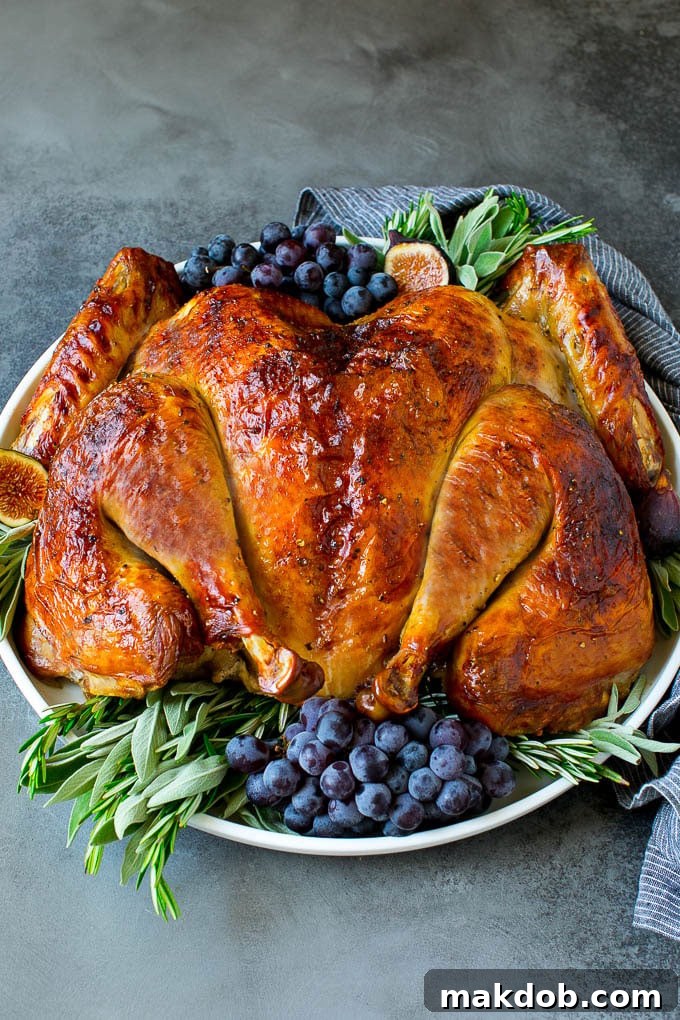
If you’ve never experienced the magic of a spatchcocked turkey, this is undoubtedly the year to embrace this transformative cooking technique. Imagine reclaiming half a day typically spent tethered to the kitchen, anxiously monitoring your turkey. With this flattened approach, a perfectly cooked bird can be ready in about an hour and a half, depending on its size. This efficiency not only frees up your valuable time but also alleviates much of the pressure associated with holiday meal preparation.
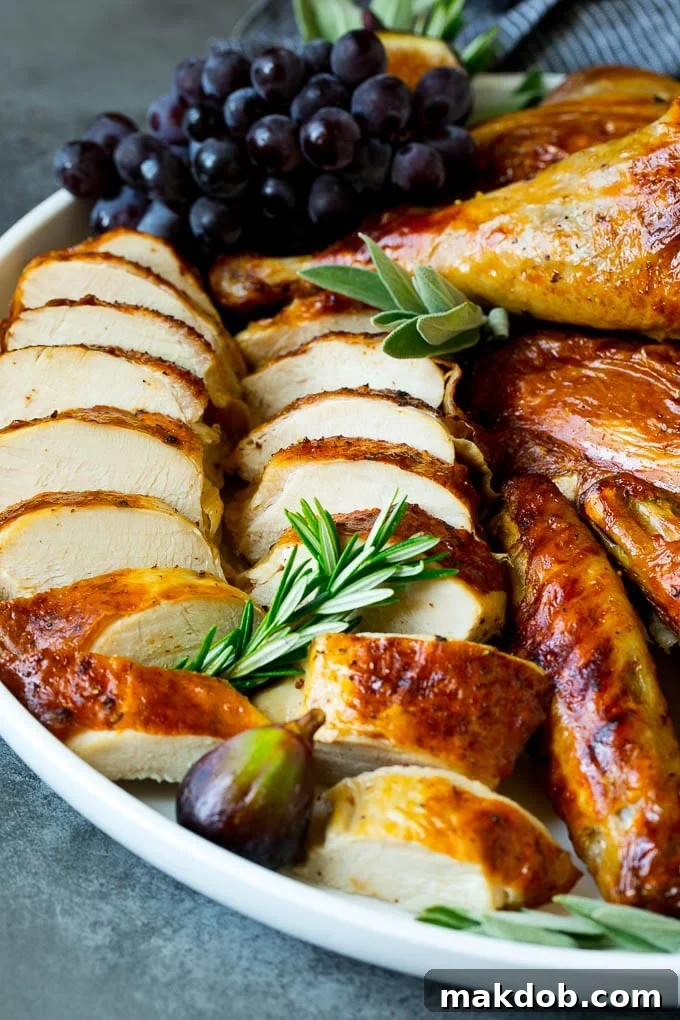
Once your beautifully roasted spatchcock turkey is ready, it becomes the star of a memorable holiday feast. Elevate your meal by serving it alongside classic, flavorful accompaniments. Consider pairing it with a vibrant homemade cranberry sauce, a comforting sweet potato casserole with marshmallows, a savory sausage stuffing, or a traditional Thanksgiving stuffing. Don’t forget a variety of other delicious side dishes to complete your festive spread. This combination ensures a meal that is not only delicious but also visually stunning and deeply satisfying.
Table of Contents
- Essential Spatchcock Turkey Ingredients
- Why Spatchcock Your Turkey? The Benefits
- Step-by-Step: How to Make a Spatchcock Turkey
- Mastering the Spatchcock Technique
- Expert Tips for the Perfect Spatchcock Turkey
- Quick Spatchcocking Tip
- Spatchcock Turkey Recipe FAQs
- Exciting Flavor Variations for Your Turkey
- More Holiday Dishes You’ll Love
- Ultimate Spatchcock Turkey Recipe
Essential Spatchcock Turkey Ingredients
Crafting a magnificent spatchcock turkey requires a handful of simple yet crucial ingredients. The beauty of this recipe lies in its ability to transform these basic components into a rich, flavorful, and incredibly tender main course. To begin your culinary journey, you will need a high-quality whole turkey, which should be thawed if frozen. The star players for flavor and moisture include a carefully prepared turkey brine (you can find an excellent recipe for this, or use your preferred mix), softened unsalted butter, and the foundational seasonings of salt and freshly ground black pepper. Each ingredient plays a vital role in achieving that sought-after crispy skin and succulent meat.
Why Spatchcock Your Turkey? The Benefits
Beyond simply speeding up the cooking process, spatchcocking offers a multitude of benefits that elevate your holiday turkey to new heights:
- Faster Cooking: This is arguably the most appealing benefit. By flattening the turkey, the hot air circulates more evenly around the bird, significantly reducing roasting time. A typical 12-14 pound turkey can be fully cooked in about 1.5 hours, compared to 3-4 hours for a traditional whole roast.
- Even Cooking: Traditional turkeys often suffer from overcooked breast meat and undercooked dark meat (thighs and drumsticks) due to their different cooking requirements. Spatchcocking ensures that all parts of the turkey cook at a more uniform rate, resulting in perfectly tender and juicy meat throughout.
- Crispier Skin: With the turkey flattened, more skin is exposed to direct heat, leading to an incredibly crispy, golden-brown exterior. No more soggy or rubbery skin!
- Juicier Meat: The even cooking combined with the brining process locks in moisture, preventing the breast meat from drying out while the dark meat reaches its ideal temperature. You’ll be amazed at how succulent every bite is.
- Easier Carving: A flattened turkey is much simpler to carve, making serving a breeze and allowing for more elegant presentation.
Step-by-Step: How to Make a Spatchcock Turkey
Preparing a spatchcock turkey might sound complex, but it’s a straightforward process that yields outstanding results. Follow these steps for a perfectly cooked, flavorful bird:
- Thaw Your Turkey: If your turkey is frozen, ensure it is completely thawed before you begin. This is crucial for even cooking and safety.
- Prepare the Bird: Remove the neck and any giblets from the turkey cavity. These can be saved for gravy or stock if desired.
- Brine the Turkey: This step is highly recommended for ultimate moisture and flavor. Prepare your turkey brine (homemade or store-bought) according to its directions. Submerge the turkey completely in the brine and let it sit for 18-24 hours in the refrigerator. This allows the meat to absorb moisture and seasoning, resulting in a much juicier bird.
- Rinse and Dry: After brining, remove the turkey from the solution. Rinse it thoroughly under cold running water to remove excess salt and pat it completely dry with paper towels. A dry skin is essential for achieving that coveted crispiness.
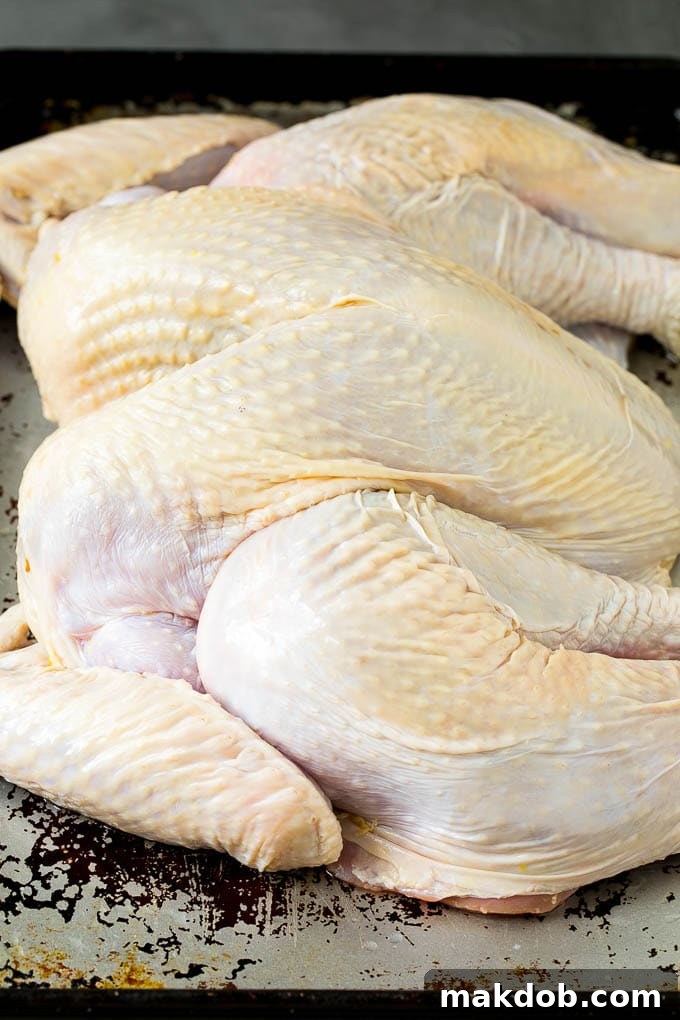
- Spatchcock the Turkey: Perform the spatchcocking technique (detailed in the next section) to flatten the turkey, allowing it to lay flat on a large baking sheet.
- Prepare the Butter Rub: In a small bowl, combine softened unsalted butter with salt and black pepper. You can add other herbs or spices at this stage for additional flavor.
- Season Generously: Rub the butter mixture generously over the entire surface of the turkey, paying special attention to getting some under the skin, particularly over the breast meat. This infuses flavor and helps create that beautiful golden-brown crust.
- Roast to Perfection: Place the buttered turkey in a preheated oven. Roast until the internal temperature of the thickest part of the breast and thigh reaches 165 degrees F (74 degrees C). Baste the turkey occasionally with pan drippings or melted butter to keep it moist and encourage browning.
- Rest and Carve: Once cooked, remove the turkey from the oven and let it rest for at least 15-20 minutes before carving. This allows the juices to redistribute throughout the meat, ensuring maximum tenderness and flavor. Then, carve and serve your masterpiece!
Mastering the Spatchcock Technique
The thought of spatchcocking a turkey can seem daunting, but it’s surprisingly straightforward and absolutely worth the minimal effort for the superior results it delivers. Here’s a detailed breakdown to guide you:
- Position the Bird: Place the turkey breast-side down on a large, clean cutting board or a sturdy sheet pan. Locate the spine (backbone) running down the center of the bird’s back.
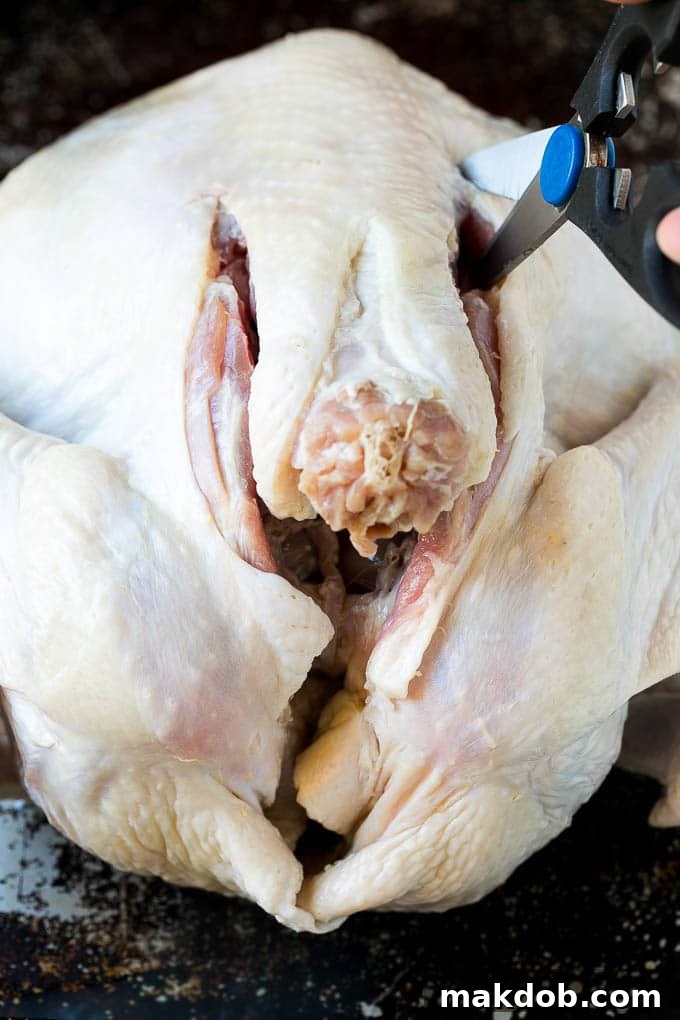
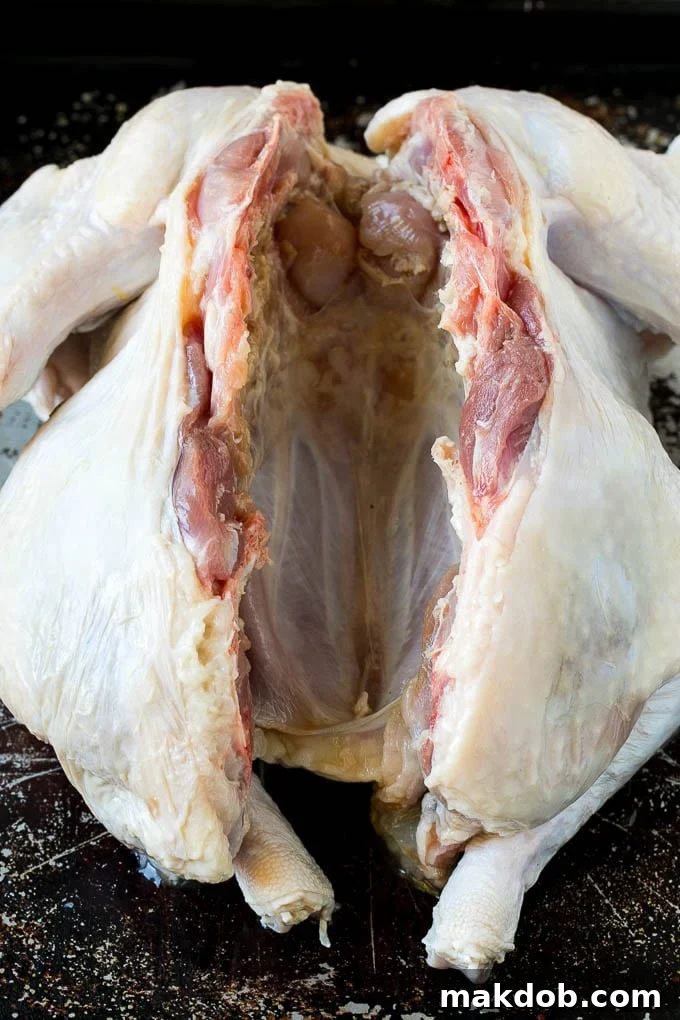
- Remove the Backbone: Using a strong pair of poultry shears or robust kitchen shears, cut along one side of the backbone, from the tail end up to the neck end. You’ll need to snip through ribs and cartilage. Apply firm, steady pressure. Repeat this process on the other side of the backbone. Once both cuts are made, the backbone should be easily removable. You can save the backbone for making flavorful turkey stock or gravy.
- Flip and Flatten: With the backbone removed, flip the turkey over so that it is breast-side up. Gently spread the bird open onto your sheet pan. Now, press down firmly on the breastbone with the heels of both hands, applying significant force until you hear a crack. This breaks the breastbone and flattens the bird, allowing it to lie completely flat. Don’t be afraid to put your weight into it!
- Arrange the Legs and Wings: Adjust the legs so they lie as flat as possible on the pan without tearing the skin or breaking the joints. To prevent the wing tips from burning during roasting, tuck them underneath the main part of the breast or fold them back onto themselves. This also helps create a more compact and even shape.
Congratulations! Your turkey is now expertly spatchcocked and ready for brining, buttering, and roasting. This simple, yet effective preparation method will ensure an evenly cooked, incredibly juicy, and beautifully browned turkey, revolutionizing your holiday cooking experience.
Expert Tips for the Perfect Spatchcock Turkey
Achieving a truly perfect spatchcock turkey involves a few key considerations and expert tricks:
- Cutting the Backbone: If you find resistance while cutting the backbone, don’t hesitate to adjust your angle slightly. Sometimes cutting a little closer to or farther from the spine can make a big difference.
- Utilize Scissor Tips: For smaller, tougher bones or cartilage, you may need to use just the very tip of your poultry shears to snip through them. This offers more precision and leverage.
- Starting Point for Cutting: Many find it easiest to start cutting from the tail end of the bird, working their way up towards the neck. However, if that proves difficult, try starting from the neck end and meeting your cuts in the middle. Find the method that feels most comfortable and efficient for you.
- Temperature Guidance: While the breast meat is perfectly cooked at 165 degrees F (74 degrees C), don’t be alarmed if your thigh and drumstick meat registers a higher temperature, even up to 175-180 degrees F (80-82 degrees C). The higher fat content in the dark meat ensures it remains incredibly moist and juicy, even at these higher temperatures. Always use a reliable meat thermometer.
- Alternative Terminology: Remember, “spatchcocking” a turkey is simply another term for “butterflying” a turkey. Both terms refer to the same flattening technique.
- Versatile Technique: This brilliant technique isn’t limited to turkeys! You can use a similar method to create a wonderfully crispy and evenly cooked spatchcock chicken, perfect for weeknight dinners or smaller gatherings.
- Essential Tools: Ensure you have a large, stable cutting board or sheet pan to work on, as well as a sharp, heavy-duty pair of poultry shears. These tools are indispensable for safe and efficient spatchcocking.
- Embrace Leftovers: A spatchcock turkey often leaves you with delicious leftovers! Don’t let them go to waste. Explore my favorite leftover turkey recipes, such as a comforting turkey tetrazzini, a hearty turkey soup, or a refreshing turkey salad.
Quick Spatchcocking Tip
When attempting to remove the backbone, don’t hesitate to maneuver the bird and the backbone around a bit. This allows you to identify the thinnest and easiest points to cut, making the process much smoother and less strenuous.
Spatchcock Turkey Recipe FAQs
Spatchcocking a turkey is a cooking method where the backbone of a whole turkey is removed, allowing the bird to be flattened. This technique promotes faster and more even cooking, resulting in exceptionally juicy meat and crispy skin. It effectively transforms a bulky, round bird into a uniform, flat piece of poultry, optimizing heat distribution.
Absolutely, spatchcocking a turkey is highly recommended and incredibly worth the effort. The primary benefit is a dramatically reduced roasting time; for example, an 11-pound turkey can be cooked through in about 1 hour and 10 minutes, whereas a traditionally roasted bird of the same size could take twice as long. Beyond speed, it ensures every part of the turkey, from breast to thigh, cooks uniformly, preventing dry spots and delivering consistent tenderness. This makes it an ideal method for busy holiday cooks seeking perfect results.
The safest and most recommended way to thaw a frozen turkey is in the refrigerator. First, ensure the turkey is well-wrapped in plastic, as close to airtight as possible, to prevent cross-contamination and retain moisture. Place the wrapped turkey in a large container or pan to catch any drips. Allow approximately 24 hours of thawing time for every five pounds of turkey. For instance, a 15-pound turkey would require about three days in the refrigerator to thaw completely. Avoid thawing at room temperature, as this can encourage bacterial growth.
Brining is a fantastic way to infuse your turkey with moisture and flavor, leading to a truly succulent roast. To brine a turkey, first remove the neck and giblets. Then, prepare your chosen turkey brine recipe (you can find an amazing turkey brine recipe here). Submerge the entire turkey in the brine solution within a large food-grade container, cooler, or a specialized brining bag. Ensure the bird is fully covered. Refrigerate the brining turkey for approximately 18-24 hours. For more in-depth guidance, check out my comprehensive how to brine a turkey tutorial!
For a spatchcock turkey, accurate temperature checking is vital to ensure food safety and optimal doneness. The breast meat, being leaner, often takes the longest to reach its target temperature of 165 degrees F (74 degrees C). Insert a reliable meat thermometer into the thickest part of the breast, making sure it doesn’t touch any bone. Additionally, check the internal temperature in the thickest part of the thigh, again avoiding bone. Both areas should register 165 degrees F (74 degrees C) for a safe and perfectly cooked turkey.
Follow Me
Exciting Flavor Variations for Your Turkey
While the classic spatchcock turkey offers an unbeatable traditional roast flavor, its flattened surface and even cooking make it an excellent canvas for a myriad of exciting flavor profiles. Don’t hesitate to experiment and customize your bird to suit your palate:
- Garlic Herb Butter: Elevate the foundational butter rub by infusing it with aromatic garlic. Simply add one to two tablespoons of finely minced garlic (or more, to taste) to your softened butter mixture before rubbing it over the turkey. The garlic will beautifully penetrate the meat as it roasts, creating a rich, savory depth of flavor.
- Fresh Herb Medley: Incorporate the vibrant flavors of fresh herbs directly into your butter rub. Finely mince a combination of classic turkey herbs like sage, rosemary, and thyme, then mix them into the softened butter. This botanical blend provides a traditional yet incredibly fragrant and flavorful crust.
- Zesty Citrus Notes: For a bright and tangy twist, add citrus zest to your butter rub. The zest of one lemon or orange, finely grated, can add a refreshing counterpoint to the rich turkey meat. You can also place citrus halves directly into the roasting pan to further perfume the bird.
- Spicy Mexican Fiesta: Take your turkey south of the border with a bold Mexican spice blend. Mix your softened butter with a generous amount of fajita seasoning blend. This typically includes chili powder, smoked paprika, cumin, oregano, garlic powder, and onion powder, delivering a smoky, mildly spicy, and deeply aromatic turkey.
- Bold Cajun Kick: For those who love a bit of heat and robust flavor, a Cajun-inspired turkey is a fantastic choice. Blend a generous amount of spicy and flavorful Cajun seasoning into your softened butter. This will imbue your turkey with a complex blend of heat and savory spices, reminiscent of Louisiana cuisine.
This remarkable spatchcocking technique consistently delivers juicy, delicious turkeys in a fraction of the time required by traditional roasting methods. With such efficiency and adaptability, you’ll find yourself wanting to make roasted turkey a year-round staple, not just a holiday indulgence!
More Holiday Dishes You’ll Love
Squash Casserole
45 mins
Roast Turkey for Thanksgiving
3 hrs 10 mins
Scalloped Corn Casserole
1 hr 10 mins
Smoked Turkey Recipe
6 hrs 10 mins
Brown Sugar Glazed Ham
3 hrs 10 mins
Love This Recipe?
Please leave a 5-star 🌟🌟🌟🌟🌟 rating in the recipe card below & a review in the comments section further down the page.
Spatchcock Turkey
Ingredients
- 12 pound turkey giblets and neck removed
- 1 recipe turkey brine
- 1/2 cup butter softened
- 1 teaspoon salt
- 1 teaspoon pepper
- cooking spray
Instructions
- Remove the neck and giblets from a thawed whole turkey.
- Prepare the turkey brine according to recipe directions. Brine for 18-24 hours.
- Remove the turkey from the brine. Rinse the turkey with cold water and pat it dry.
- Spatchcock the turkey by removing the backbone with poultry shears or kitchen shears. Flip the bird so that it is breast side up, place it on a sheet pan and flatten the bird by pressing hard on each breast until the ribs snap. Tuck the wings under the breast and arrange the drumsticks and thighs to flatten them without tearing the skin or breaking any joints.
- Make a butter rub by mixing softened butter with salt and pepper.
- Generously cover the turkey with the butter mixture. Take care to butter joints where the wings and thighs connect to the breast.
- Roast the turkey at 400 degrees F. for about 1 hour and 10 minutes until the interior part of the breast meat reaches 165 degrees F. The thickest part of the thigh should also read 165 degrees F.
- Baste the turkey every 20-30 minutes with melted butter and pan drippings.
- Remove the turkey from the oven. Let it rest for 10-20 minutes, then carve and serve.
Notes
- If you get stuck cutting the backbone out, try cutting a little closer or farther from the backbone.
- You may need to snip some bones using just the tip of the scissors.
- I like to start cutting from the tail end of the bird. However, if you get stuck, try snipping from the neck end of the bird and have the cuts meet in the middle.