
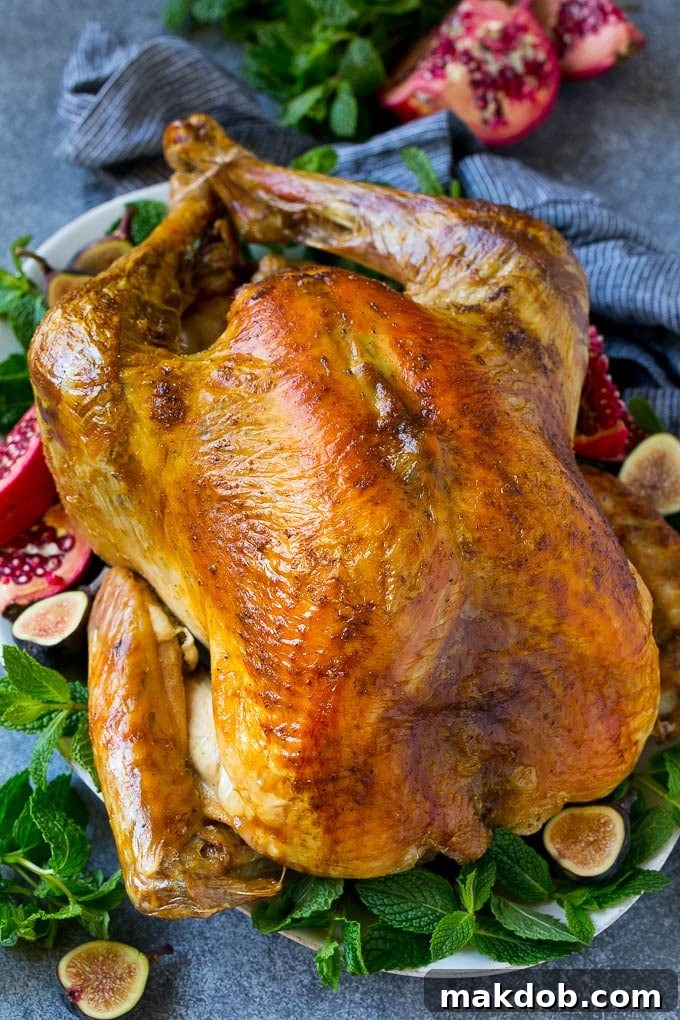
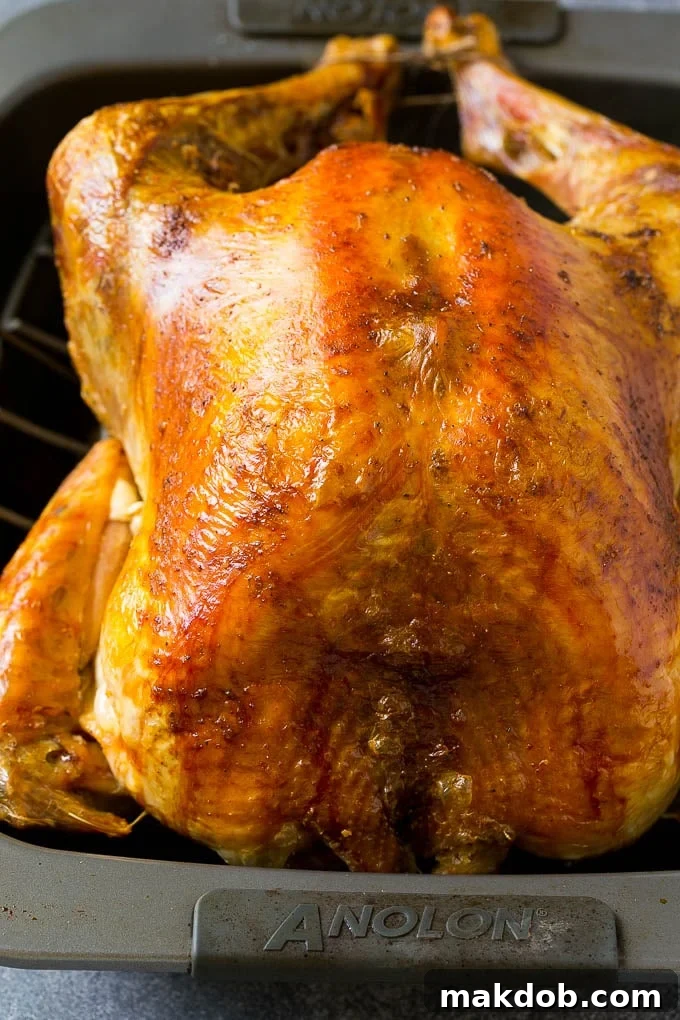
Unlock the secret to a truly unforgettable holiday centerpiece with this remarkably easy roast turkey recipe. Infused with rich, savory flavors from butter, aromatic garlic, fresh herbs, and bright lemon, this dish promises a show-stopping result with minimal fuss. Even if you’re a novice in the kitchen, you can confidently prepare a moist, perfectly cooked Thanksgiving turkey that will impress everyone at your festive table. Say goodbye to dry, bland turkey and welcome a succulent, golden masterpiece into your home this holiday season.
Imagine the delight as you present your family and friends with a gorgeously golden brown, incredibly juicy roast turkey this Thanksgiving. This culinary achievement will not only earn you rave reviews but also become a cherished memory of a perfect holiday meal. Complement your magnificent turkey with an array of delectable side dishes, transforming your dinner into an unparalleled feast. Pair it perfectly with creamy sour cream mashed potatoes, vibrant pomegranate pecan Brussels sprouts, classic homemade cranberry sauce, a comforting sweet potato casserole adorned with marshmallows, and sweet, tender honey roasted carrots. Each component works in harmony to create a complete and utterly satisfying holiday experience.
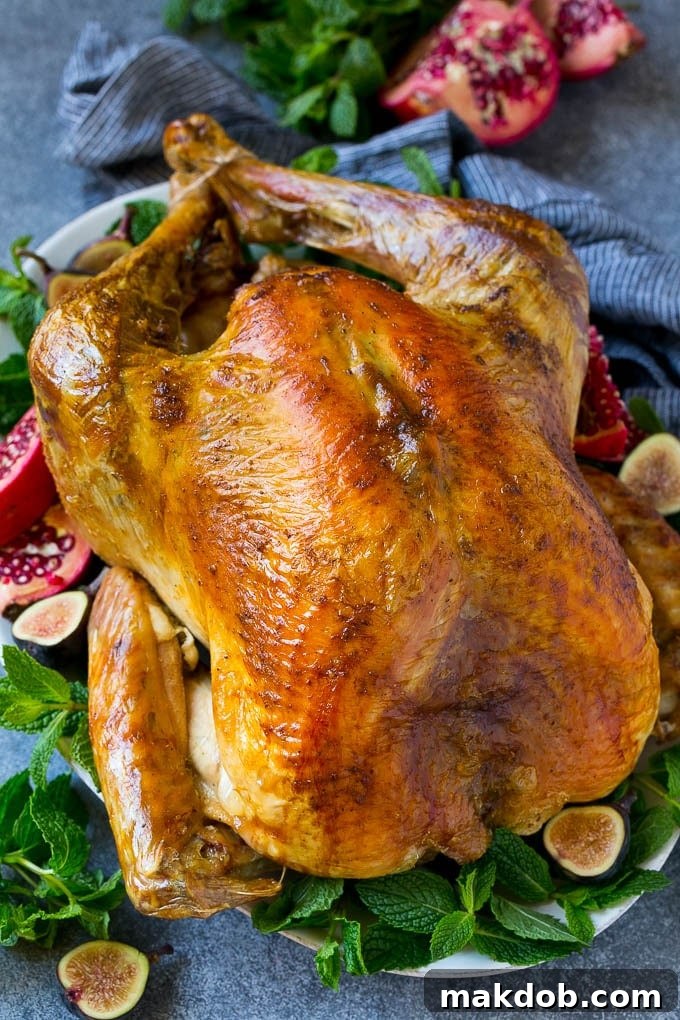
Mastering the Perfect Roast Turkey for Your Holiday Table
As the holiday season draws near, the thought of preparing the Thanksgiving turkey can often bring a mix of excitement and trepidation. For many, including myself, the pressure to deliver a turkey that is not just cooked, but truly perfect – golden brown, incredibly juicy, and seasoned to perfection – can be daunting. Especially when you’re simultaneously orchestrating a symphony of other side dish recipes, decadent desserts, and tempting appetizers. This recipe is designed to alleviate that stress, offering a straightforward yet highly effective method for roasting a Thanksgiving turkey that consistently yields flawless results. It’s time to transform the turkey into the most anticipated dish of your holiday spread, not the most feared.
This ultimate guide not only provides a simple, step-by-step approach to roasting your turkey but also delves into essential tips and frequently asked questions, ensuring your holiday meal is nothing short of spectacular. From selecting the right bird to achieving that coveted crispy skin and succulent interior, we cover every detail to help you become a holiday cooking hero. Prepare to embark on a culinary journey that promises a flavorful, moist, and unforgettable centerpiece for your Thanksgiving feast.
Table of Contents
- Gathering Your Essential Turkey Ingredients
- How to Roast a Turkey: A Simple Step-by-Step Guide
- Expert Tips for a Flawlessly Juicy and Flavorful Turkey
- Frequently Asked Questions About Roasting Turkey
- Creative Ways to Utilize Turkey Leftovers
- Flavor Variations to Personalize Your Roast Turkey
- More Thanksgiving Recipes for a Complete Feast
Gathering Your Essential Turkey Ingredients
Creating an exceptionally flavorful roast turkey begins with a selection of fresh, high-quality ingredients. The beauty of this recipe lies in its simplicity, utilizing components that are readily available and profoundly impactful on the final taste. To embark on this culinary endeavor, you will need a fresh or properly thawed turkey of your chosen size, along with a vibrant lemon, a sturdy onion, fresh sprigs of rosemary, fragrant garlic cloves, rich butter, kosher salt, freshly ground black pepper, and chicken or turkey broth. Each ingredient plays a crucial role in infusing the turkey with layers of savory, aromatic goodness, contributing to its juicy texture and golden-brown perfection.
How to Roast a Turkey: A Simple Step-by-Step Guide
Achieving a perfectly roasted turkey might seem daunting, but with this clear and concise method, it’s surprisingly simple. Follow these steps to prepare a succulent, golden-brown turkey that will be the highlight of your holiday table:
- **Prepare Your Turkey:** Begin by patting your turkey thoroughly dry with paper towels. This crucial step helps achieve that coveted crispy skin. Ensure the neck and giblets are removed from the cavity. For stability and even cooking, fold the wings of the turkey underneath its body.
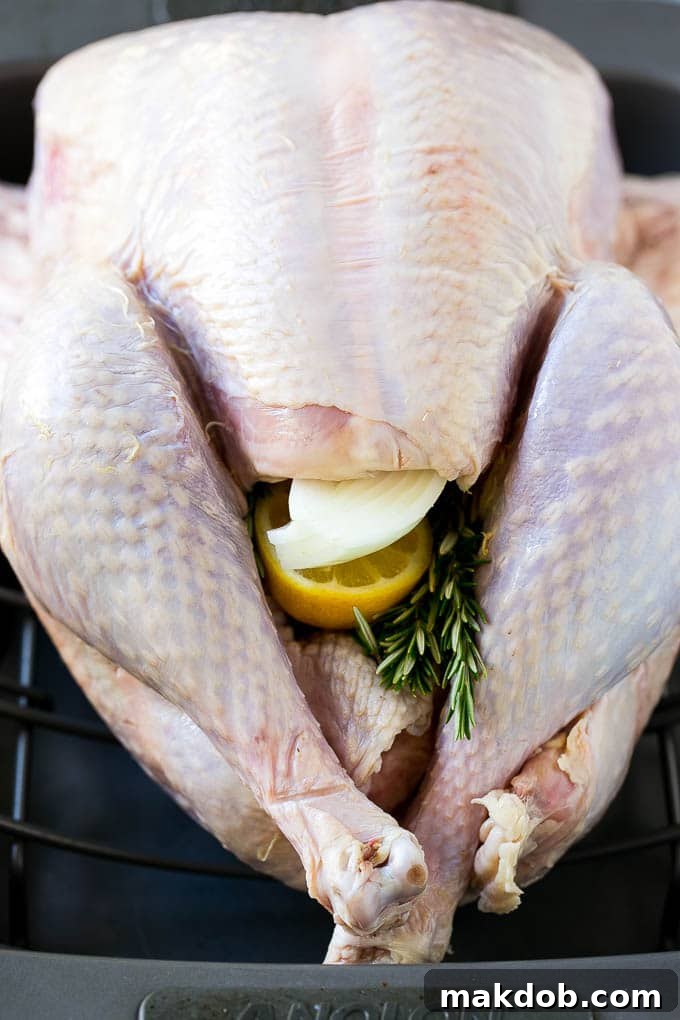
- **Aromatic Stuffing:** Elevate the turkey’s flavor from the inside out. Gently stuff the turkey’s main cavity with quartered lemon, onion, fresh rosemary sprigs, and smashed garlic cloves. These aromatics will infuse the meat with incredible fragrance and moisture as it roasts.
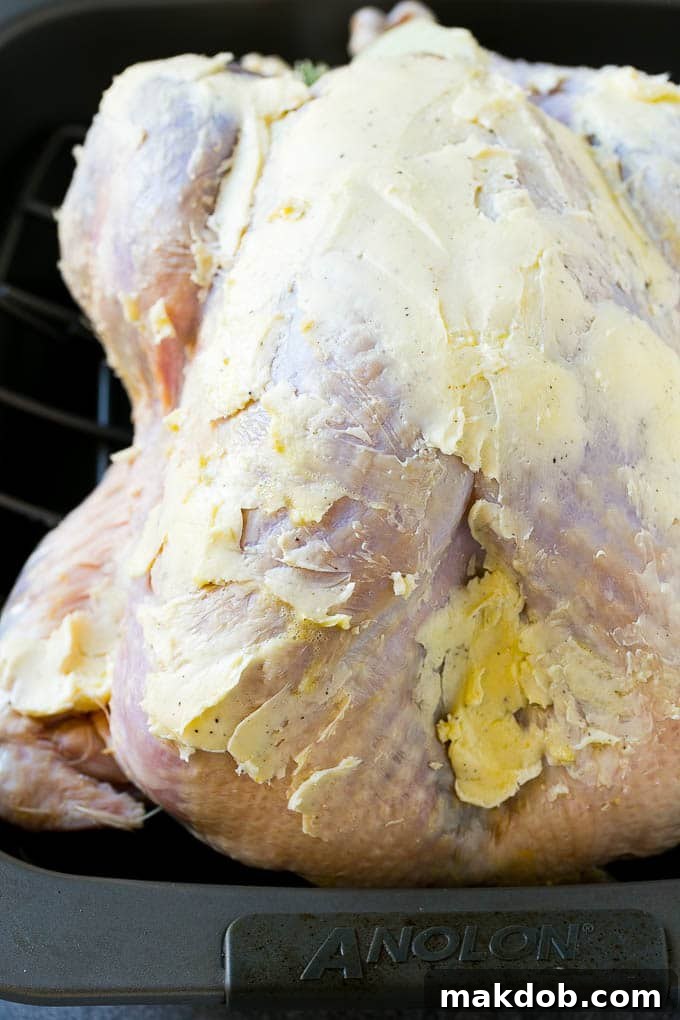
- **Craft the Flavorful Butter Blend:** In a small bowl, combine softened butter with a generous amount of salt and black pepper. Mix these ingredients thoroughly until they form a smooth, well-combined paste. This butter mixture is the key to both crispy skin and tender, seasoned meat.
- **Season Liberally:** Carefully spread the butter mixture all over the exterior of the turkey, paying special attention to working some of it under the skin, particularly over the breast meat. This direct application ensures the meat stays moist and absorbs the butter’s rich flavors. Finish by sprinkling additional salt and pepper over the entire exterior to create a beautifully seasoned crust.
- **Secure and Position:** Using oven-safe kitchen twine, tie the turkey drumsticks together. This helps the turkey cook more evenly and maintain a compact shape. Place the prepared turkey on a roasting rack set inside a sturdy roasting pan. This setup allows for proper air circulation, promoting even browning on all sides.
- **Initial High-Heat Roast:** Preheat your oven to a higher temperature, typically 450°F (232°C). Roast the turkey at this elevated temperature for the first 30-40 minutes. This initial burst of high heat helps the skin crisp up and develop a beautiful golden hue.
- **Lower Temperature & Basting:** Once the turkey has begun to brown, reduce the oven temperature to 350°F (175°C). Pour about 1/2 cup of chicken or turkey broth into the bottom of the roasting pan. Continue to roast, basting the turkey every 30 minutes with the pan juices and additional broth. Basting helps keep the skin from drying out and encourages consistent browning. If the turkey skin appears to be browning too quickly, loosely tent it with aluminum foil.
- **Check for Doneness:** The most critical step is to ensure the turkey is cooked to a safe internal temperature. Insert a meat thermometer into the thickest part of the thigh, making sure it doesn’t touch the bone. The turkey is done when the thermometer registers 165°F (74°C). The total cooking time will vary depending on the turkey’s size; a 12-pound turkey typically takes around 3 hours.
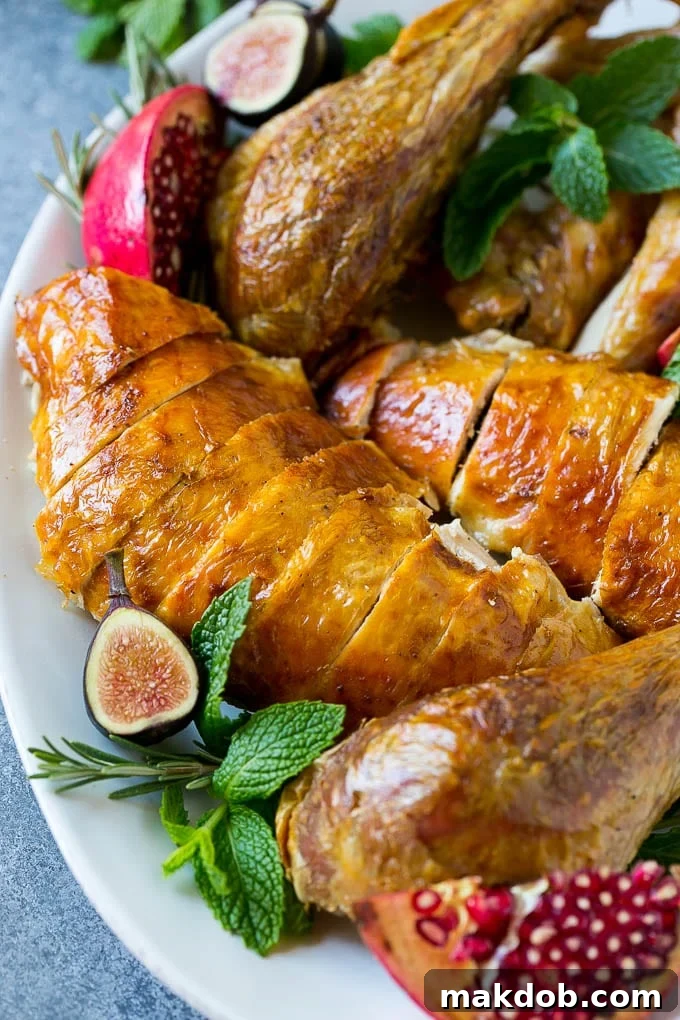
- **Rest, Carve, and Serve:** Once cooked, transfer the turkey from the roasting pan to a large cutting board or serving platter. Cover it loosely with foil and allow it to rest for at least 10-20 minutes. This resting period is essential as it allows the juices to redistribute throughout the meat, ensuring a tender and moist result. Carve the turkey and serve it alongside the delicious pan drippings, or use the drippings to create a rich homemade turkey gravy. Garnish with fresh herbs and fruit for an exquisite presentation.
Expert Tips for a Flawlessly Juicy and Flavorful Turkey
Achieving that picture-perfect, incredibly juicy, and flavorful roast turkey might seem like a culinary challenge, but with a few expert tips, you can elevate your holiday bird to new heights. These insights go beyond the basic instructions, offering guidance that ensures success for both seasoned cooks and first-timers.
-
To Brine or Not to Brine? Understanding the Benefits
While this recipe guarantees a juicy and flavorful bird without brining, it’s worth understanding why many chefs consider it. Brining a turkey involves soaking it in a saltwater solution (wet brine) or coating it with a dry salt rub (dry brine). The process helps the turkey retain moisture, preventing it from drying out during the long roasting process, and infuses it with additional flavor. If you’re looking for an extra layer of moisture and taste, consider using my favorite turkey brine recipe before proceeding with this roast. For a comprehensive understanding of this technique, refer to my complete guide on how to brine a turkey, which addresses common questions and methods.
-
The Indispensable Meat Thermometer: Your Key to Perfection
Forget guesswork and unreliable cooking times! The single most important tool for roasting a turkey is a reliable meat thermometer. This ensures your turkey reaches the safe internal temperature of 165°F (74°C) without being overcooked and dry. Insert the thermometer into the thickest part of the thigh, making sure it doesn’t touch the bone. An accurate reading means perfectly cooked, safe, and juicy meat every time. Investing in a good instant-read thermometer will be your best friend for all future roasts.
-
Achieving Crispy Golden Skin: The Power of Patting Dry
Who doesn’t love crispy, golden-brown turkey skin? The secret is simple: thoroughly pat the turkey dry with paper towels before applying any butter or seasonings. Moisture on the surface of the skin will steam rather than crisp, preventing that desired crunch. A dry surface allows the skin to brown beautifully and develop an irresistible texture through the Maillard reaction, yielding a superior culinary experience.
-
Fresh vs. Frozen Turkey: A Guide to Thawing Safely
Whenever possible, I opt for a fresh turkey for its superior flavor and texture, but I understand that frozen turkeys are often more economical and practical. If you’re using a frozen bird, proper thawing is critical for both safety and quality. The safest and most recommended method is to thaw it in the refrigerator. This requires significant planning, as a general rule of thumb is one day of thawing for every 4 pounds of turkey. For example, a 12-pound turkey, like the one used in this recipe, will typically need a full 3 days (72 hours) to thaw completely in the fridge. Avoid thawing at room temperature, which can promote bacterial growth.
-
Preparing Your Turkey for Roasting: Essential Pre-Bake Steps
Before your turkey even thinks about entering the oven, a few preparatory steps are essential to ensure even cooking and a delightful presentation. To properly prepare a turkey for roasting, you’ll need to:
- Remove the neck from the turkey cavity.
- Locate and remove the bag of giblets, usually found in the main cavity or the neck cavity.
- After stuffing the cavity with your aromatics, tie the legs together with oven-safe kitchen twine. This keeps the bird compact and helps the breast cook more evenly.
- Fold the ends of the turkey wings under the bird’s body. This prevents them from burning and keeps them moist.
These simple steps lay the foundation for a successful and stress-free roasting experience, ensuring your turkey cooks beautifully from start to finish.
Frequently Asked Questions About Roasting Turkey
A commonly cited guideline for cooking turkey is approximately 20 minutes per pound at 350 degrees F (175°C). However, this specific recipe employs a “hot start” method, beginning at a much higher temperature before lowering it. This technique helps achieve a beautifully golden-brown and crispy skin more quickly, which means your turkey may cook slightly faster overall. Always rely on a meat thermometer for accurate doneness, not just the clock.
To ensure that perfect golden-brown, crispy skin, I recommend starting your turkey at a high temperature of 450 degrees F (232°C). This high heat caramelizes the skin quickly. After about 30-40 minutes, once the skin has started to achieve a rich brown color, you should then reduce the oven temperature to a more moderate 350 degrees F (175°C) to allow the turkey to cook through gently without over-browning.
The turkey is safely cooked and ready to be removed from the oven when an instant-read thermometer, inserted into the thickest part of the thigh (without touching the bone), registers an internal temperature of 165 degrees F (74°C). This internal temperature is the most critical indicator of doneness, far more reliable than generalized cooking times based on weight, which can vary due to oven calibration, turkey shape, and initial temperature.
A good rule of thumb is to plan for about one pound of uncooked turkey per guest. This typically provides a generous serving for everyone. If you’re hoping for ample leftovers – a holiday tradition for many, perfect for next-day sandwiches, soups, or casseroles – then consider planning for 1 1/2 pounds of turkey per person to ensure a plentiful supply.
While not strictly mandatory for a juicy turkey, I personally find that basting my roast turkey with chicken or turkey broth significantly contributes to its moisture content and helps maintain a beautiful, even browning of the skin. It acts as an additional layer of protection against drying out, especially for turkeys that haven’t been brined. If you have opted to brine your bird, you can generally skip the basting step, as the brining process already provides ample moisture retention.
FOLLOW ME
Creative Ways to Utilize Turkey Leftovers
One of the true joys of roasting a large turkey is the inevitable bounty of leftovers. Far from being a chore, these remnants can often taste even better the second day, offering a fantastic opportunity for culinary creativity. Don’t let your leftover turkey go to waste; it’s incredibly versatile! From quick sandwiches to hearty stews and innovative casseroles, there are countless delicious ways to repurpose your bird. To inspire your post-holiday cooking, I’ve compiled a dedicated list of Leftover Turkey Recipes that will provide plenty of ideas to transform your holiday feast into exciting new meals.
Flavor Variations to Personalize Your Roast Turkey
While this roast turkey recipe stands on its own as a delicious and satisfying dish, its versatility allows for easy customization to match your personal taste preferences or experiment with new flavor profiles. Don’t hesitate to get creative with your ingredients and techniques:
-
Beyond Basic Stuffing: Aromatic Cavity Fillings
The traditional lemon, onion, rosemary, and garlic provide a wonderful foundation, but the turkey’s cavity can hold a world of other aromatics. Consider stuffing your bird with ingredients like celery stalks, orange slices for a citrusy brightness, delicate shallots, pungent thyme, earthy sage, or fresh parsley for an added layer of complexity and fragrance. Each addition will subtly infuse the meat with its unique essence as the turkey roasts.
-
Seasoning Blends for a Unique Taste
The butter mixture is an excellent canvas for various seasoning blends. Beyond salt and pepper, you can incorporate an array of spices to create different flavor profiles. Try adding a tablespoon of homemade Italian seasoning for a Mediterranean flair, bold Cajun seasoning for a spicy kick, savory Creole seasoning for a taste of the South, or a specialized turkey rub designed to enhance poultry flavors. These blends can transform your roast turkey into an entirely new culinary experience.
-
Adapting the Recipe for Other Proteins
The robust techniques and flavor combinations in this recipe aren’t exclusive to a whole turkey. You can easily adapt this method for other poultry proteins, such as a large turkey breast or a whole chicken. The key difference will be the cooking time. Always remember to adjust the roasting duration accordingly based on the size and weight of your chosen protein. Utilizing a reliable meat thermometer remains paramount to ensure proper doneness and juicy results, effectively eliminating any guesswork.
With these simple variations, you can confidently prepare a beautiful and delicious roast turkey that not only impresses your guests but also perfectly suits your family’s unique taste on Thanksgiving Day or any special occasion!
More Thanksgiving Recipes for a Complete Feast
Crock Pot Ham with Brown Sugar Glaze
Total Time: 3 hrs 5 mins
Loaded Mashed Potato Casserole
Total Time: 1 hr
Roasted Sweet Potatoes with Maple Butter
Total Time: 45 mins
Bacon Roasted Brussels Sprouts
Total Time: 30 mins
Cranberry Jello Salad
Total Time: 6 hrs 10 mins
Love This Recipe?
We hope you adore this classic roast turkey! Please consider leaving a 5-star 🌟🌟🌟🌟🌟 rating in the recipe card below and a review in the comments section to share your experience with other home cooks.
Rated 5 out of 5 stars by 14 users.
Roast Turkey for Thanksgiving
Pin Recipe
Sara Welch
10 minutes
3 hours
3 hours 10 minutes
Main
American
12
Ingredients
- 12 lb turkey, giblets and neck removed
- 1 lemon, quartered
- 1 onion, peeled and quartered
- 4 sprigs rosemary
- 5 cloves garlic, smashed
- 8 tablespoons butter, softened
- 2 teaspoons salt
- 1 teaspoon pepper
- 2 cups chicken or turkey broth
- Fresh herbs and fruit for garnish (optional)
Instructions
-
Preheat the oven to 450 degrees F (232°C). Fold the wings of the turkey under the body.
-
Stuff the cavity of the turkey with the lemon, onion, rosemary, and garlic.
-
Place the softened butter, salt, and pepper in a bowl and stir until well combined.
-
Spread the butter mixture all over the turkey, both on top of and carefully underneath the skin. Season the turkey with more salt and pepper to taste if desired for extra flavor.
-
Tie the turkey drumsticks together securely with kitchen twine. Place the turkey on a roasting rack in a large roasting pan.
-
Cook in the preheated 450°F (232°C) oven for 30-40 minutes, or until the turkey skin has started to turn a rich golden brown.
-
Reduce the oven temperature to 350 degrees F (175°C). Pour 1/2 cup of chicken or turkey broth into the bottom of the roasting pan.
-
Continue to bake for another 2 hours, basting the turkey every 30 minutes with the pan juices and additional chicken or turkey broth, until a meat thermometer inserted into the thickest part of the thigh reads 165 degrees F (74°C). If the turkey is browning too much before it’s cooked through, loosely cover it with aluminum foil.
-
Carefully transfer the cooked turkey to a large serving platter. Garnish with fresh herbs and fruit if desired for an elegant presentation. Allow the turkey to rest for at least 10-20 minutes before carving. This resting period is crucial for juicy meat.
Notes
- You do not have to brine a turkey to get a juicy and flavorful bird with this recipe. That being said, a brine does help prevent a turkey from drying out by adding moisture and also adds a lot of flavor in the process. If you’d like to brine your bird before proceeding with this roast turkey, you can use my favorite turkey brine recipe for excellent results.
- It’s very important to use a meat thermometer to ensure that your turkey is cooked to the proper internal temperature of 165 degrees F (74°C). This also helps to prevent your bird from drying out in the oven, as you won’t accidentally overcook it while guessing.
Nutrition
Did you make this recipe?
Tag @dinneratthezoo on Instagram and hashtag it #dinneratthezoo