
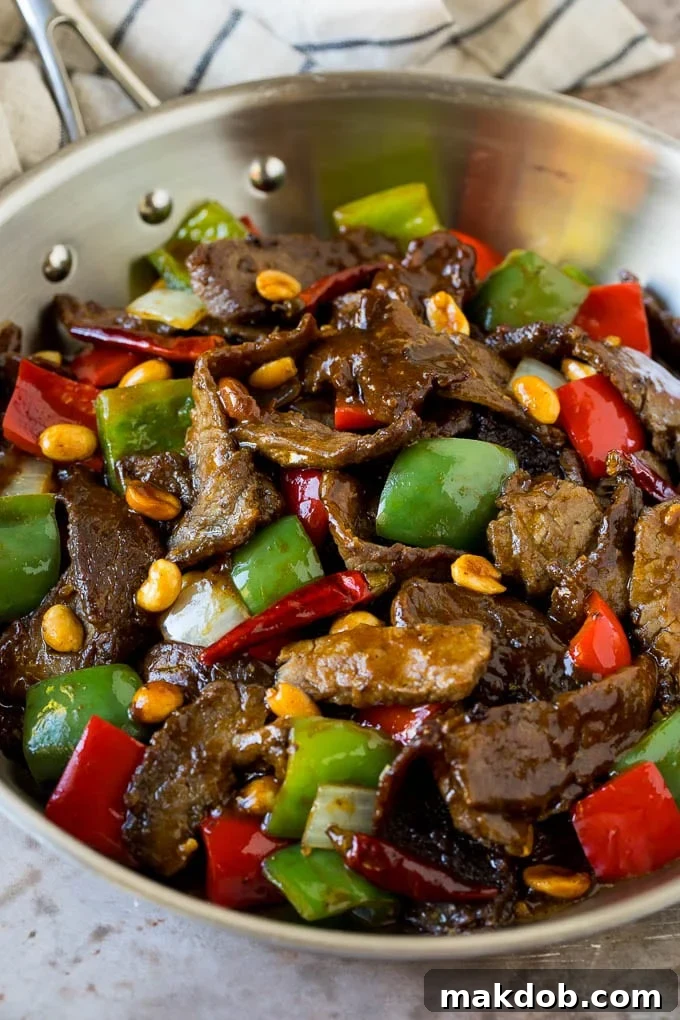
This Kung Pao Beef recipe transforms a beloved takeout classic into an even more satisfying homemade meal. Featuring succulent, thinly sliced steak, vibrant bell peppers, crisp onions, and crunchy roasted peanuts, all harmoniously coated in a rich, savory, and spicy sauce, this dish promises an explosion of flavors and textures that rivals any restaurant experience. Get ready to impress your family and friends with an authentic Chinese stir-fry crafted right in your kitchen.
There’s a special joy in recreating cherished Chinese restaurant favorites at home. Beyond the convenience, it offers the satisfaction of customizing flavors to your family’s preference and ensuring the freshest ingredients. Over the years, I’ve mastered several beloved dishes, from savory Pork Fried Rice and robust Beef and Broccoli to fiery Szechuan Chicken. However, none capture the perfect balance of spice and umami quite like this Kung Pao Beef. This stir-fry is not only surprisingly easy to prepare but also makes for an ideal weeknight dinner, especially when served piping hot over a bed of fluffy steamed rice.
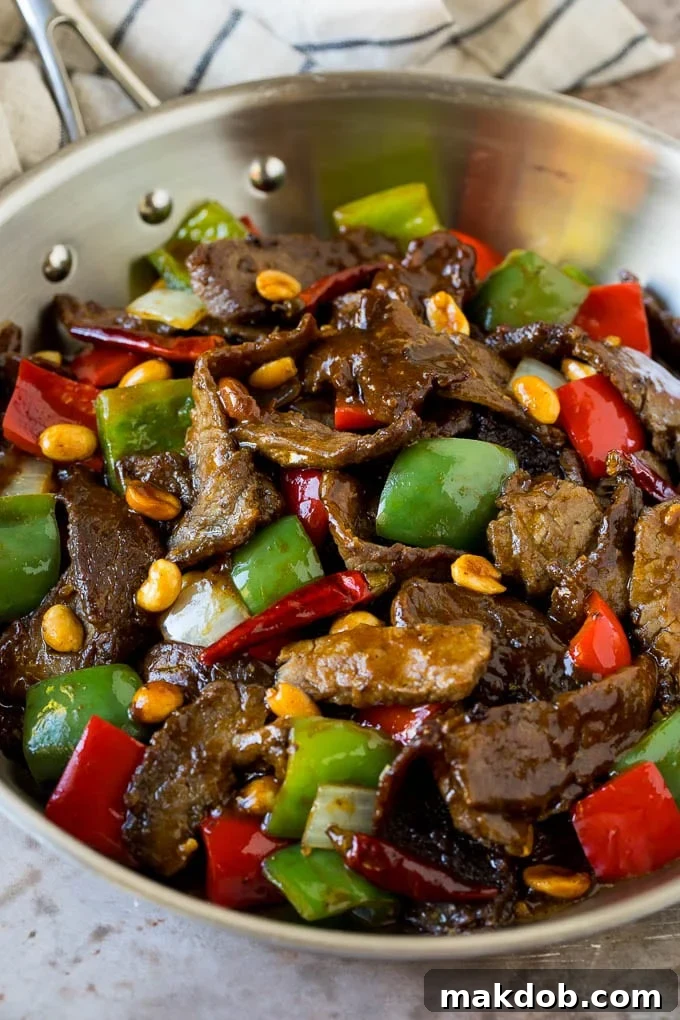
For countless years, Kung Pao Beef has been my go-to order at local Chinese eateries. I’ve always been captivated by the interplay of the richly flavored steak, the delightful crunch of fresh vegetables, and the invigorating kick of the spicy sauce. The mere thought of it used to send me reaching for the phone for takeout. However, once I discovered how straightforward and rewarding it is to prepare this exquisite dish from scratch, my culinary journey took a delicious turn. Now, instead of waiting for delivery, I can have my absolute favorite meal on the table in a fraction of the time, often tasting even better than what I could order out.
What Exactly is Kung Pao Beef? An Exploration of a Chinese Culinary Gem
Kung Pao Beef is a celebrated Chinese stir-fry that proudly stands as a testament to the vibrant and diverse culinary traditions of the Sichuan province. At its heart, this dish is a masterful blend of textures and tastes, characterized by tender pieces of beef, usually flank steak, quickly seared to perfection. It’s then tossed with an assortment of crisp, colorful vegetables like bell peppers and onions, and crucially, an invigorating mix of dried red chili peppers and savory roasted peanuts. The entire ensemble is brought together by a complex sauce that balances sweetness, tang, and a subtle but definite heat.
While commonly enjoyed across the globe today, the origins of Kung Pao trace back to the Sichuan province in China, a region renowned for its bold and often spicy cuisine. Traditional Kung Pao recipes often feature Sichuan peppercorns, which are unique in their ability to impart a distinctive citrusy aroma and a characteristic “mala” sensation – a tingling numbness that precedes and enhances the spice. This combination creates an unforgettable sensory experience. For this particular recipe, we focus on utilizing ingredients that are easily accessible at most major grocery stores, ensuring that you can recreate an authentic-tasting Kung Pao Beef without needing to hunt down specialty items. The result is a dish that captures the essence of this global favorite, delivering rich flavors and satisfying textures that make it a truly remarkable homemade meal.
Crafting Your Own Kung Pao Beef: A Step-by-Step Guide
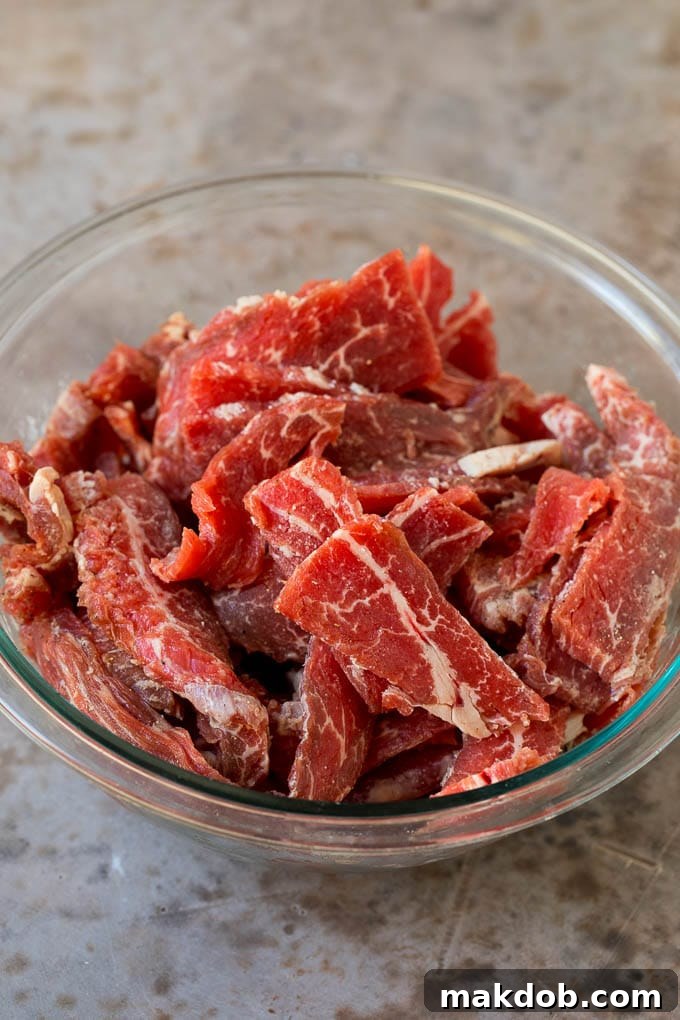
Creating this irresistible Kung Pao Beef is a straightforward process that yields incredibly rewarding results. The key is in the preparation and the swift execution of the stir-fry method. You’ll begin by preparing your beef: thinly slicing flank steak is crucial for both tenderness and quick cooking. These delicate slices are then coated in a light mixture of cornstarch, salt, and pepper, which not only seasons the meat but also helps to create a beautiful sear and a tender texture once cooked.
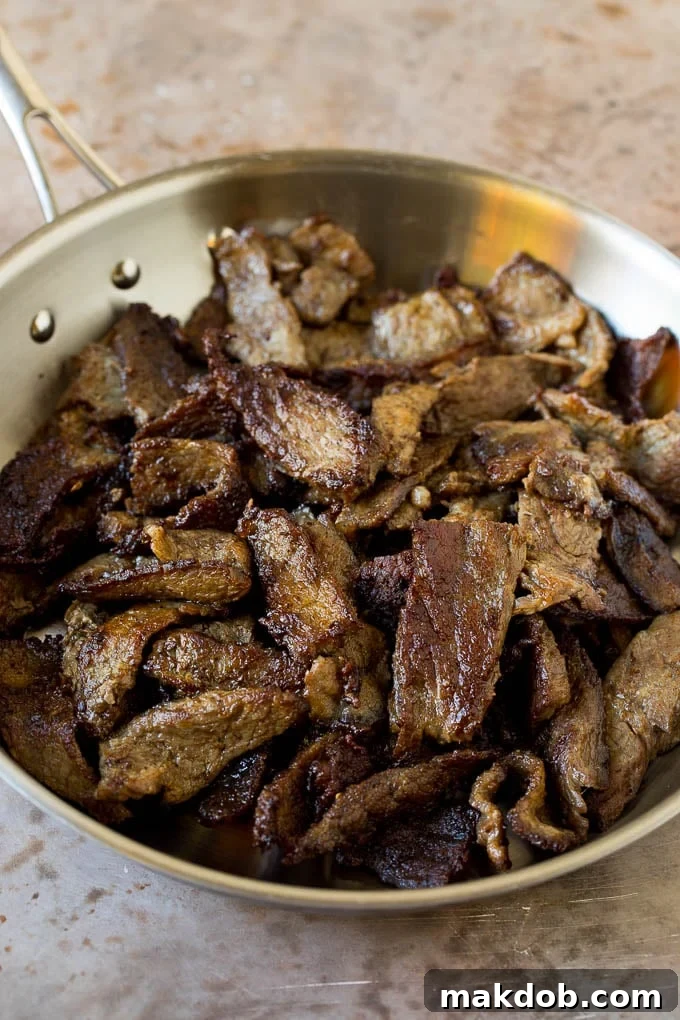
Next, the coated beef is cooked in a hot pan or wok until each piece achieves a glorious golden-brown crust. This searing step is vital for locking in flavor and creating that desirable texture. Once the beef is perfectly cooked, it’s temporarily removed from the pan to make way for the vibrant vegetables. The bell peppers and onions are stir-fried until they are tender-crisp, retaining a pleasant bite while softening enough to release their aromatic flavors. Then, the star of the show, the beef, makes its triumphant return to the pan, joining the colorful veggies. This is when the signature elements of Kung Pao truly come alive: the dried chili peppers, adding their characteristic heat and aroma, and the roasted peanuts, contributing a wonderful crunch and nutty depth. Simultaneously, the magical sauce, a whisked concoction of savory, sweet, and tangy ingredients, is prepared. This luscious mixture is then poured over the meat and vegetables, quickly simmering and thickening to coat every morsel in its glossy, flavorful embrace. As soon as the sauce reaches the desired consistency, your homemade Kung Pao Beef is ready to be served immediately, ideally over a bed of steamed rice, offering a taste of authentic Chinese cuisine right at your dining table.
Expert Tips for a Flawless Kung Pao Beef
- Meat Variations: While flank steak is traditional and highly recommended for its tenderness and flavor absorption, this recipe is incredibly versatile. Feel free to experiment with other proteins such as diced chicken breasts or thighs for Kung Pao Chicken, or even succulent shrimp for a seafood twist. Each offers a unique texture and flavor profile that pairs wonderfully with the rich sauce.
- Achieving Ultra-Thin Slices: The secret to perfectly tender beef in stir-fries lies in thinly slicing the meat. I find that placing my flank steak in the freezer for about 20-30 minutes before slicing works wonders. This brief chill firms up the meat, making it much easier to achieve those desirable, ultra-thin cuts against the grain.
- Beef Cut Alternatives: If flank steak isn’t available or you prefer a different cut, don’t fret! New York strip or sirloin can serve as excellent substitutes. Just ensure they are sliced thinly and against the grain to maximize tenderness.
- Customizing the Heat: Dried red chilies are fundamental to Kung Pao, providing not just heat but also a subtle, nutty aroma. Most grocery stores carry a variety of dried chilies in their international or spice aisles, often in both Mexican and Asian sections. I typically opt for Szechuan chilies or chile de arbol chilies, a Mexican variety that offers a fantastic kick. This recipe aims for a moderate level of heat, making it palatable for most. However, if you crave a spicier experience, simply increase the number of chilies. For an even more intense heat, you can break open a chili or two and stir some of the seeds directly into the stir-fry.
- Meal Prep Gold: This Kung Pao Beef is an excellent candidate for meal prepping! It holds up beautifully in the refrigerator for up to 4 days, making it perfect for delicious and convenient lunches or dinners throughout the week. Store it in an airtight container for optimal freshness.
- Boost Your Veggies: Don’t hesitate to add more vegetables to enhance the nutritional value and texture of your dish. Zucchini, water chestnuts, sliced mushrooms, snow peas, or even bok choy are fantastic additions that complement the flavors of the Kung Pao sauce. Just be mindful not to overcrowd your pan, which can lead to steaming rather than stir-frying.
- The Power of a Wok: While a large pan works well, a wok is designed for stir-frying and can significantly elevate your dish. Its high, sloped sides allow for even heat distribution and easy tossing, making the cooking process more efficient and fun.
- Serve it Right: The perfect accompaniment to Kung Pao Beef is undoubtedly steamed white rice, which soaks up the delicious sauce. For a healthier alternative, consider brown rice, quinoa, or even cauliflower rice.
Is Kung Pao Beef a Healthy Choice?
When prepared thoughtfully, Kung Pao Beef can be one of the healthier options among Chinese stir-fries, especially when compared to heavily breaded or deep-fried dishes. This recipe champions lean meat, such as flank steak, which is packed with protein essential for muscle growth and repair. Furthermore, it incorporates a generous amount of fresh vegetables, including bell peppers and onions, providing vital vitamins, minerals, and dietary fiber. These ingredients contribute to a well-rounded and nutritious meal.
You can make your homemade Kung Pao Beef even healthier by implementing a few simple modifications:
- Reduce Oil: By carefully monitoring your oil usage and perhaps using just one tablespoon for the entire stir-fry, you can significantly cut down on saturated fats and calories without sacrificing flavor. A non-stick pan or well-seasoned wok can help achieve this.
- Increase Vegetables: Don’t be shy about loading up on more veggies! Adding extra zucchini, broccoli florets, snap peas, or mushrooms will boost your fiber intake and nutrient profile, making the meal more filling and satisfying.
- Control Sodium: Opt for low-sodium soy sauce in your sauce mixture. This helps manage your overall sodium intake, which is often a concern with Asian-inspired dishes.
- Leaner Cuts: While flank steak is lean, you could also opt for very lean cuts of chicken breast or even shrimp for alternative protein sources.
By taking these considerations into account, you can transform this delicious Kung Pao Beef into a powerhouse of nutrition that aligns with a healthy lifestyle, proving that flavorful food can indeed be good for you.
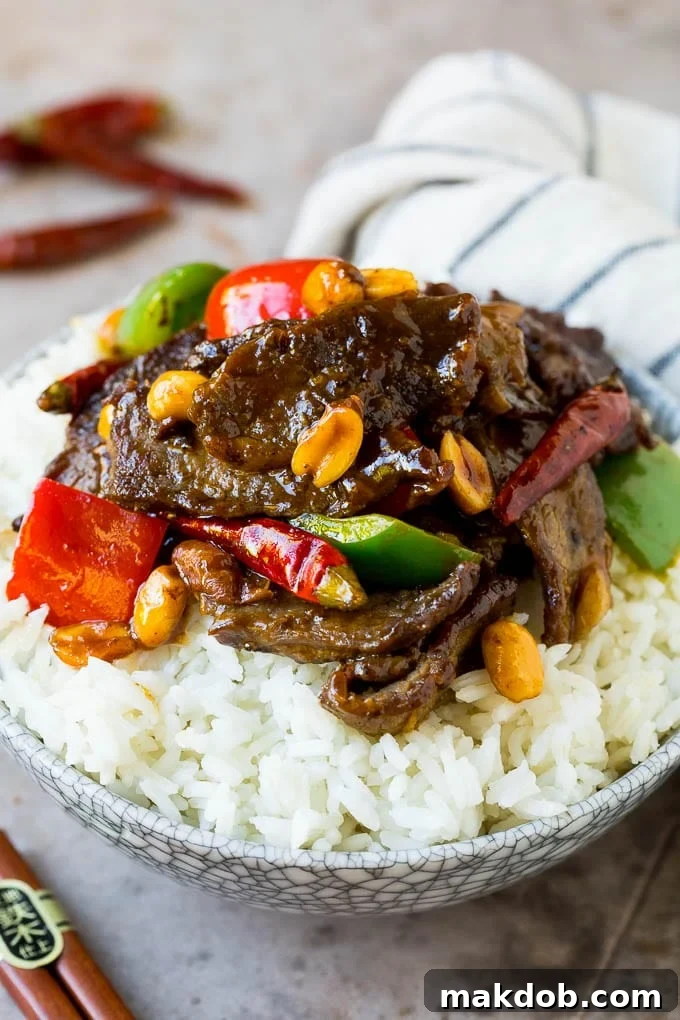
This irresistible Kung Pao Beef is guaranteed to be a sensational hit with all the Chinese food enthusiasts in your life. Its perfect blend of savory, spicy, and nutty flavors, coupled with tender beef and crisp vegetables, creates a truly unforgettable dining experience. Whether it’s for a quick weeknight dinner or a special gathering, this homemade version will quickly become a cherished recipe!
More Asian Recipes to Satisfy Your Cravings:
- Honey Chicken
- Shrimp Fried Rice
- Beef Chow Mein
- Mongolian Chicken
- Ginger Chicken
Kung Pao Beef Recipe
Yields: 4 servings
Prep time: 10 minutes
Cook time: 20 minutes
Total time: 30 minutes
For the Stir-Fry Ingredients:
- 2 tablespoons vegetable oil, divided use
- 1 1/4 pounds flank steak, thinly sliced
- 1 1/2 tablespoons cornstarch
- 1 red bell pepper, cut into 1-inch pieces
- 1 green bell pepper, cut into 1-inch pieces
- 1/2 cup onion, cut into 1/2-inch pieces
- 1 1/2 teaspoons garlic, minced
- 4-6 dried red chilies, seeded and cut in half (adjust quantity for desired heat level)
- 1/2 cup roasted unsalted peanuts
- Salt and pepper to taste
For the Sauce Ingredients:
- 3 tablespoons low sodium soy sauce
- 1 1/2 tablespoons hoisin sauce
- 1 tablespoon toasted sesame oil
- 1 tablespoon granulated sugar
- 1 tablespoon cornstarch
- 1/4 cup water
Instructions:
For the Stir-Fry:
- Heat 1 1/2 tablespoons of the vegetable oil in a large pan or wok over high heat until shimmering.
- In a medium-sized bowl, combine the thinly sliced flank steak with 1 1/2 tablespoons of cornstarch, along with salt and freshly ground black pepper to taste. Toss gently to ensure all pieces are evenly coated.
- Carefully place the seasoned beef in a single layer in the hot pan. Cook for 2-3 minutes per side, allowing the meat to develop a beautiful golden-brown sear. Depending on the size of your pan, you may need to cook the beef in batches to avoid overcrowding, which can lead to steaming instead of searing.
- Once cooked, remove the seared steak from the pan and transfer it to a plate. Cover loosely with aluminum foil to keep it warm while you prepare the vegetables.
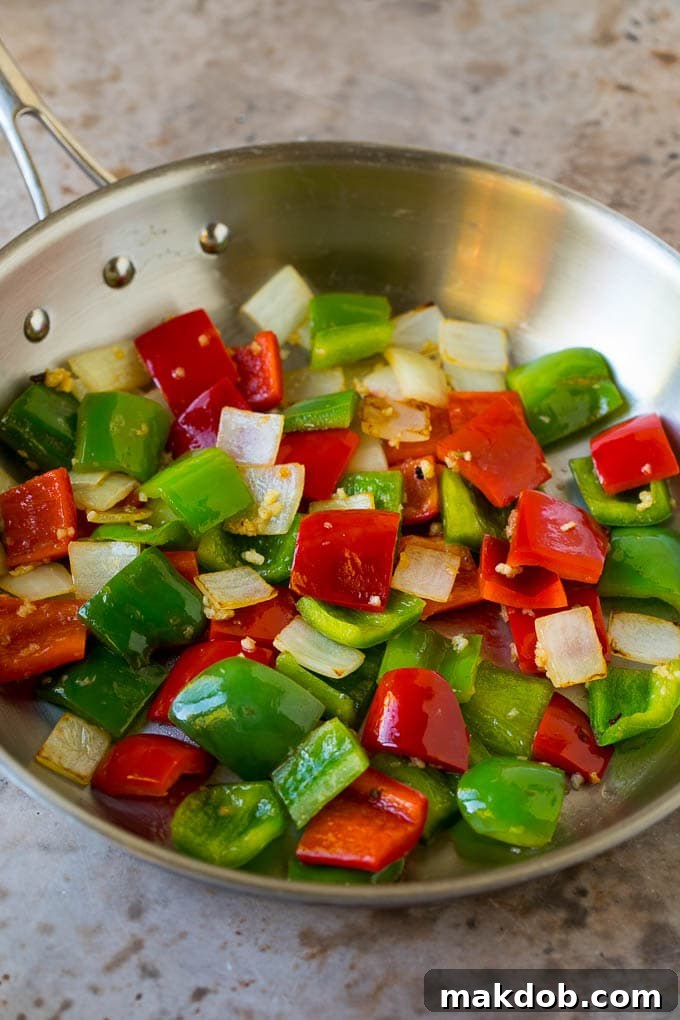
- Pour the remaining 1/2 tablespoon of vegetable oil into the same pan. Add the chopped onion, red bell pepper, and green bell pepper. Stir-fry for 4-5 minutes, or until the vegetables have softened slightly but still retain a pleasant crispness.
- Add the minced garlic to the pan with the vegetables. Cook for an additional 30 seconds, stirring constantly, until the garlic becomes fragrant. Be careful not to burn it.
- Return the cooked beef to the pan with the vegetables. Stir in the dried red chilies and roasted peanuts, tossing everything together to combine the flavors and textures.
For the Sauce:
- While the meat and vegetables are cooking, prepare the sauce. In a small bowl, combine all the sauce ingredients: low sodium soy sauce, hoisin sauce, toasted sesame oil, granulated sugar, 1 tablespoon of cornstarch, and water. Whisk thoroughly until all ingredients are well combined and the cornstarch has fully dissolved, ensuring a smooth sauce.
- Pour the prepared sauce mixture over the steak and vegetable medley in the pan. Bring the mixture to a boil, stirring continuously.
- Allow the sauce to simmer for approximately 1 minute, or until it has visibly thickened to a glossy consistency, coating all the ingredients beautifully.
- Serve your delicious homemade Kung Pao Beef immediately, ideally over a fresh bed of steamed white or brown rice for a complete and satisfying meal. Enjoy!
Nutrition Information (per serving):
Calories: 295kcal | Carbohydrates: 12g | Protein: 35g | Fat: 15g | Saturated Fat: 2g | Cholesterol: 173mg | Sodium: 788mg | Fiber: 3g | Sugar: 5g
Did you make this recipe? Share your culinary creation with us! Tag @dinneratthezoo on Instagram and use the hashtag #dinneratthezoo to show off your delicious Kung Pao Beef!