
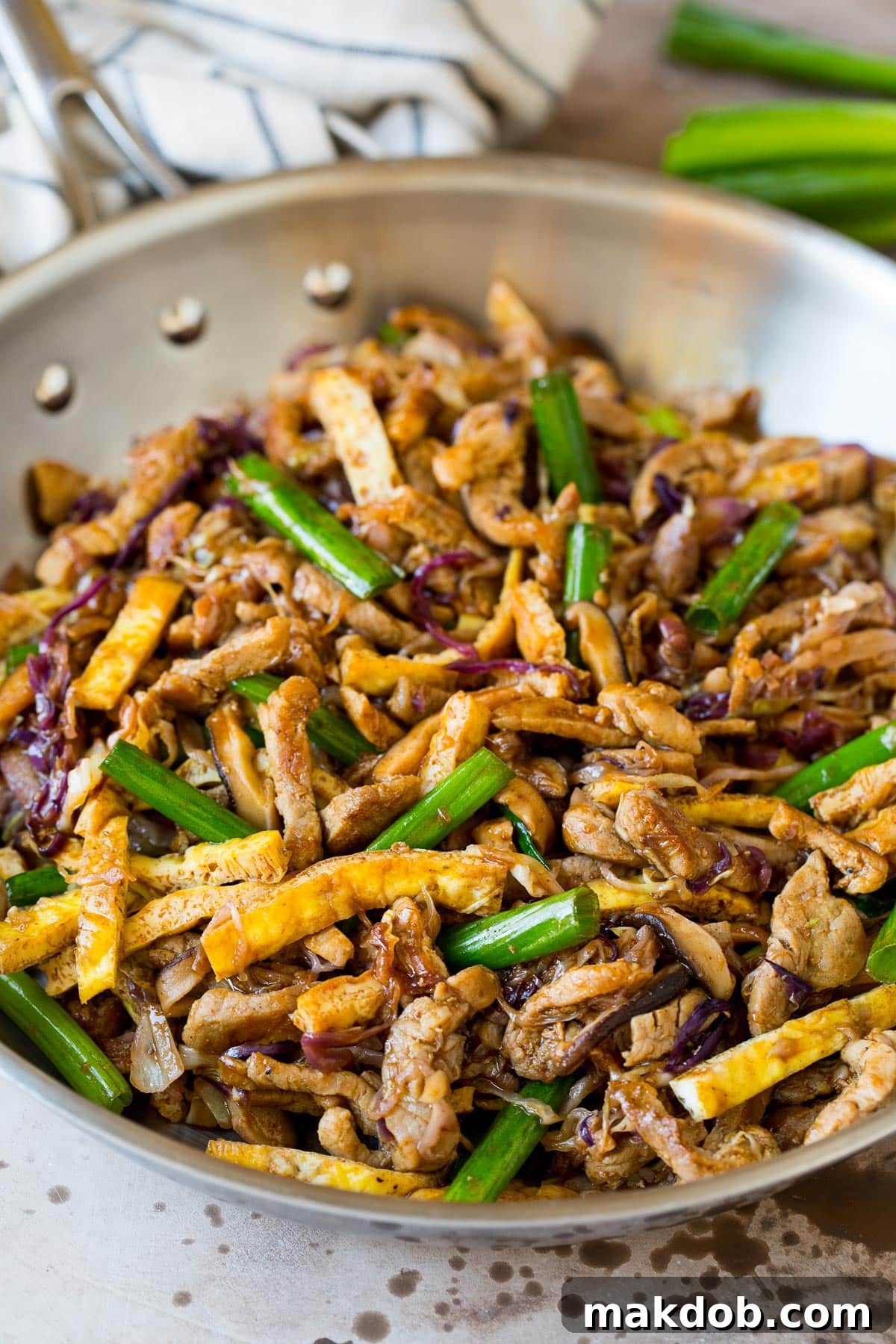
Embark on a culinary adventure from the comfort of your kitchen with this incredible **Moo Shu Pork recipe**. Forget the typical takeout experience; our homemade version elevates this classic Chinese-American dish to new heights. Featuring thinly sliced, succulent pork tenderloin expertly stir-fried with an array of vibrant vegetables and fluffy scrambled eggs, all bathed in a rich, savory sauce, this dish promises a symphony of flavors and textures in every bite. It’s a meal that not only tastes better than what you’d find at most restaurants but also allows you the satisfaction of creating an authentic-tasting Asian masterpiece right in your home.
My family cherishes the moments when I bring their favorite Asian dishes to life in our kitchen. From crispy fried wontons and delightful honey chicken to this incredibly simple yet deeply satisfying moo shu pork, these homemade meals always hit the spot. There’s a special magic in recreating beloved restaurant staples, especially when the result surpasses expectations. This Moo Shu Pork recipe is a testament to that magic, offering a fresh, flavorful, and remarkably easy alternative to calling for delivery.
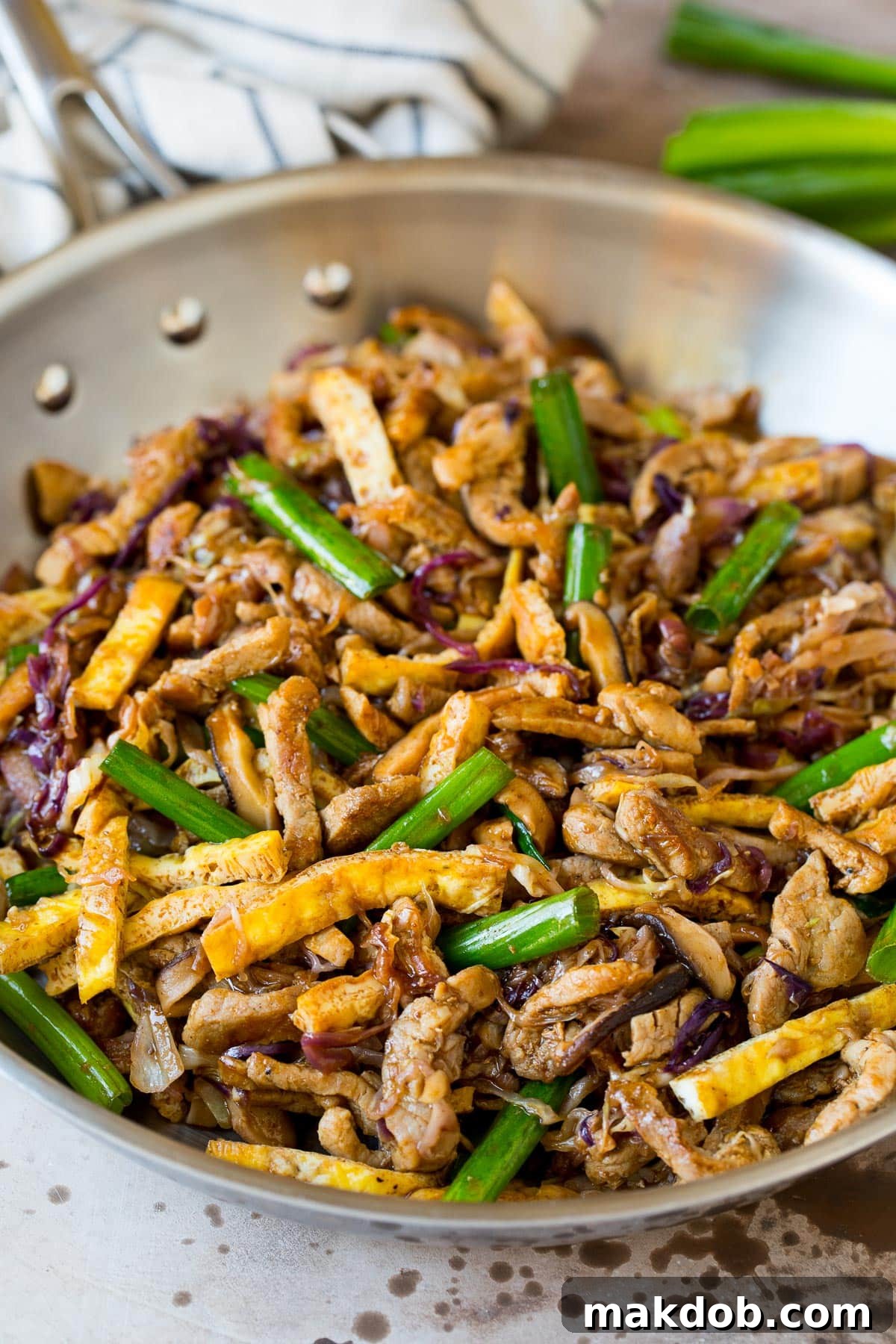
Whenever takeout is on the menu, moo shu pork is an absolute must-have for me. I adore the intricate layers of flavors and contrasting textures, all elegantly wrapped within a warm, soft pancake. What makes my homemade rendition truly stand out is its reliance on readily available ingredients, ensuring that anyone can achieve that coveted restaurant-quality taste without any fuss. This recipe transforms a takeout craving into a culinary triumph, offering a fresher, more customizable, and ultimately more rewarding dining experience.
Essential Ingredients for Perfect Moo Shu Pork
Crafting authentic and delicious Moo Shu Pork begins with a selection of fresh, high-quality ingredients. Each component plays a vital role in building the dish’s distinctive flavor profile and satisfying texture. Here’s a detailed look at what you’ll need and why each element is crucial:
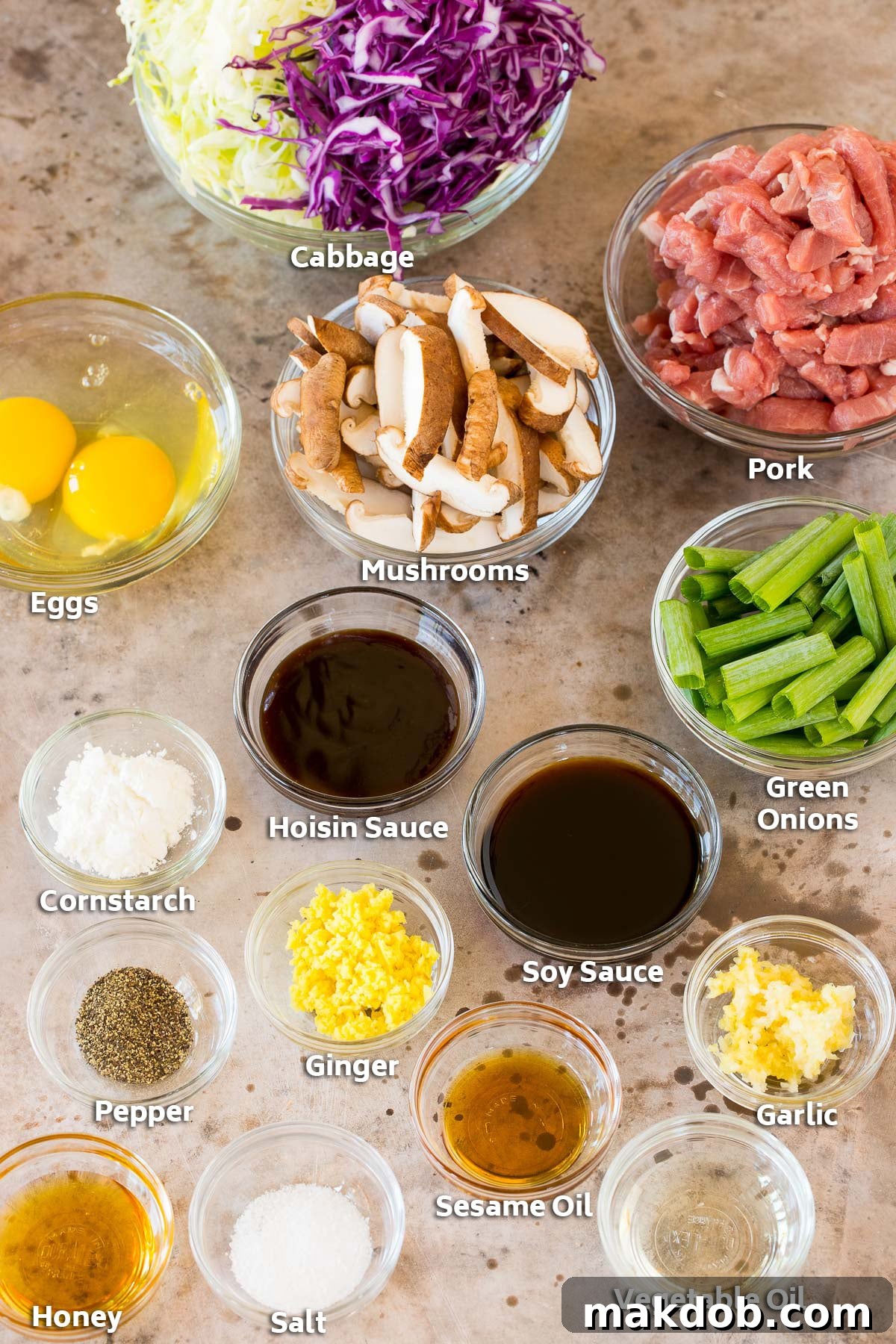
- Thinly Sliced Pork Tenderloin: This lean cut cooks quickly and stays tender. Its mild flavor perfectly absorbs the savory sauce, making it the ideal protein for a light stir-fry.
- Vegetable Oil: Used for stir-frying, its high smoke point ensures proper searing without burning, creating that desirable caramelized crust on the pork and vibrant texture in the vegetables.
- Eggs: Lightly beaten and cooked into a thin omelet, they are then sliced into delicate strips, adding a rich, custardy texture and another layer of protein to the dish.
- Shiitake Mushrooms: These Asian mushrooms contribute a deep, earthy umami flavor and a satisfying chewiness. If shiitakes are hard to find, button or oyster mushrooms are good substitutes.
- Shredded Cabbage: A cornerstone of Moo Shu, cabbage adds a crisp-tender texture and a fresh, slightly sweet counterpoint to the savory elements. You can use green, purple, or a mix of both for added color.
- Fresh Ginger and Garlic: The aromatic backbone of many Asian dishes, fresh minced ginger and garlic infuse the stir-fry with their pungent, warming, and distinctly East Asian notes.
- Soy Sauce: A fundamental seasoning, providing salty, umami depth that anchors the overall flavor profile of the sauce.
- Hoisin Sauce: This thick, sweet, and tangy Chinese barbecue sauce is essential for Moo Shu, offering a complex blend of flavors including fermented soybeans, garlic, chili, and spices. It’s often served on the side as well.
- Sesame Oil: A finishing oil, just a touch of toasted sesame oil adds a nutty, aromatic richness that truly defines Asian cuisine.
- Honey: A natural sweetener that balances the savory and salty notes of the soy and hoisin, contributing to the sauce’s glossy finish.
- Salt and Pepper: Basic seasonings to enhance the natural flavors of the pork and eggs during cooking.
- Cornstarch: This acts as a thickening agent for the sauce, ensuring it coats the ingredients beautifully, creating a silky texture.
- Green Onions: Sliced and added at the end, green onions provide a fresh, pungent bite and a burst of color, enhancing both the aroma and visual appeal.
- For Serving: Don’t forget the flour tortillas or traditional Mandarin pancakes, along with extra sliced green onions and hoisin sauce for the ultimate customizable wrap.
Step-by-Step Guide: How to Make Moo Shu Pork
Creating this restaurant-quality Moo Shu Pork at home is simpler than you might imagine. Follow these clear steps to achieve a dish that’s bursting with flavor and perfectly textured.
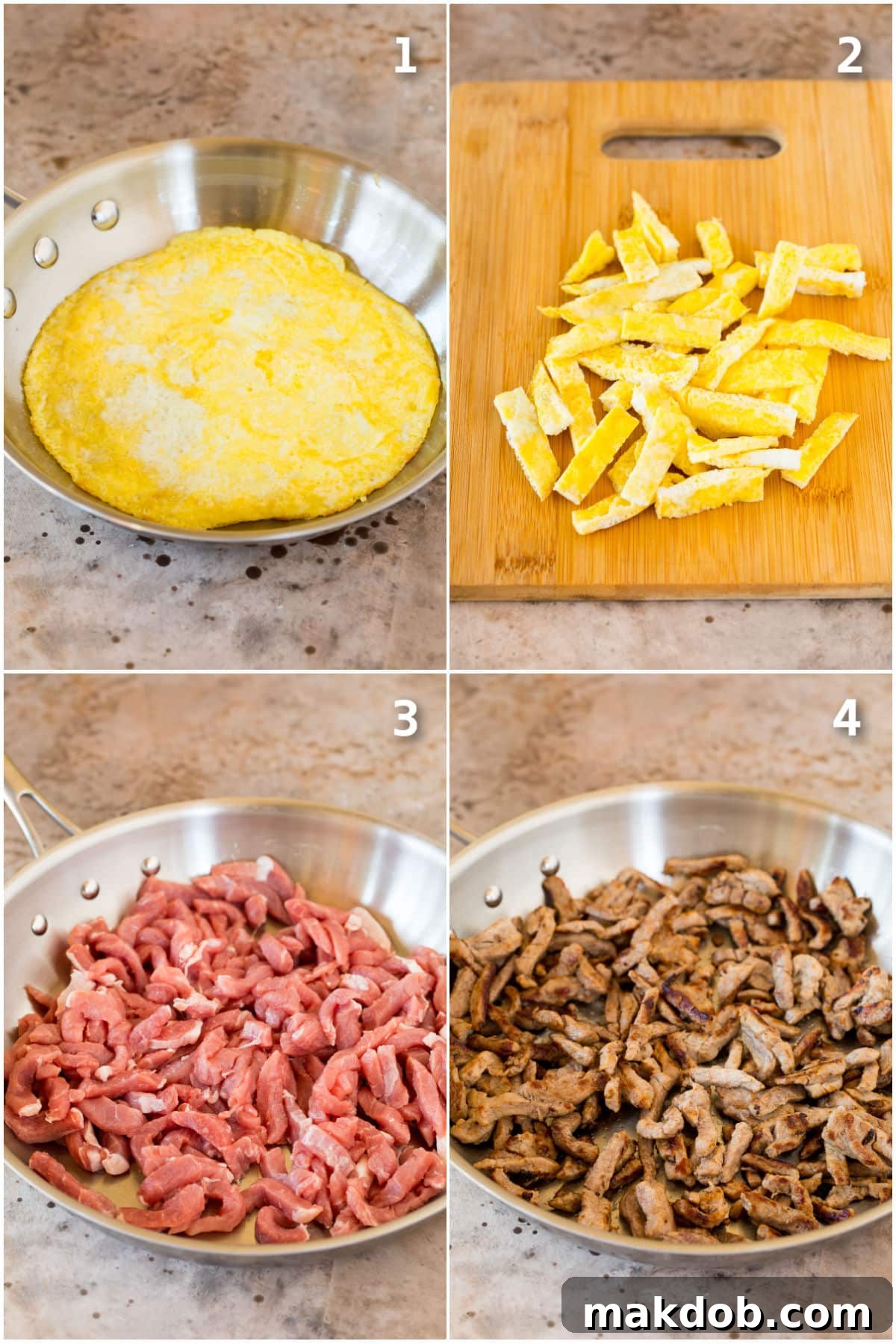
- Prepare the Eggs: Begin by heating a teaspoon of vegetable oil in a large skillet or wok over medium heat. Pour in the lightly beaten eggs, seasoned with a pinch of salt and pepper. Cook undisturbed for about 3-4 minutes until a flat, golden omelet forms. Gently flip and cook for another 1-2 minutes until fully set. Once cooked, remove the omelet from the pan, slice it into thin strips, and set aside, covered, to keep warm.
- Sear the Pork: Wipe the skillet clean with a paper towel. Add the remaining 2 teaspoons of vegetable oil and increase the heat to medium-high. Add the thinly sliced pork tenderloin to the hot pan. Stir-fry, turning occasionally, for 4-5 minutes until the pork is beautifully browned and thoroughly cooked. Season with salt and pepper to taste. Transfer the cooked pork to a plate, cover it, and keep warm with the eggs.
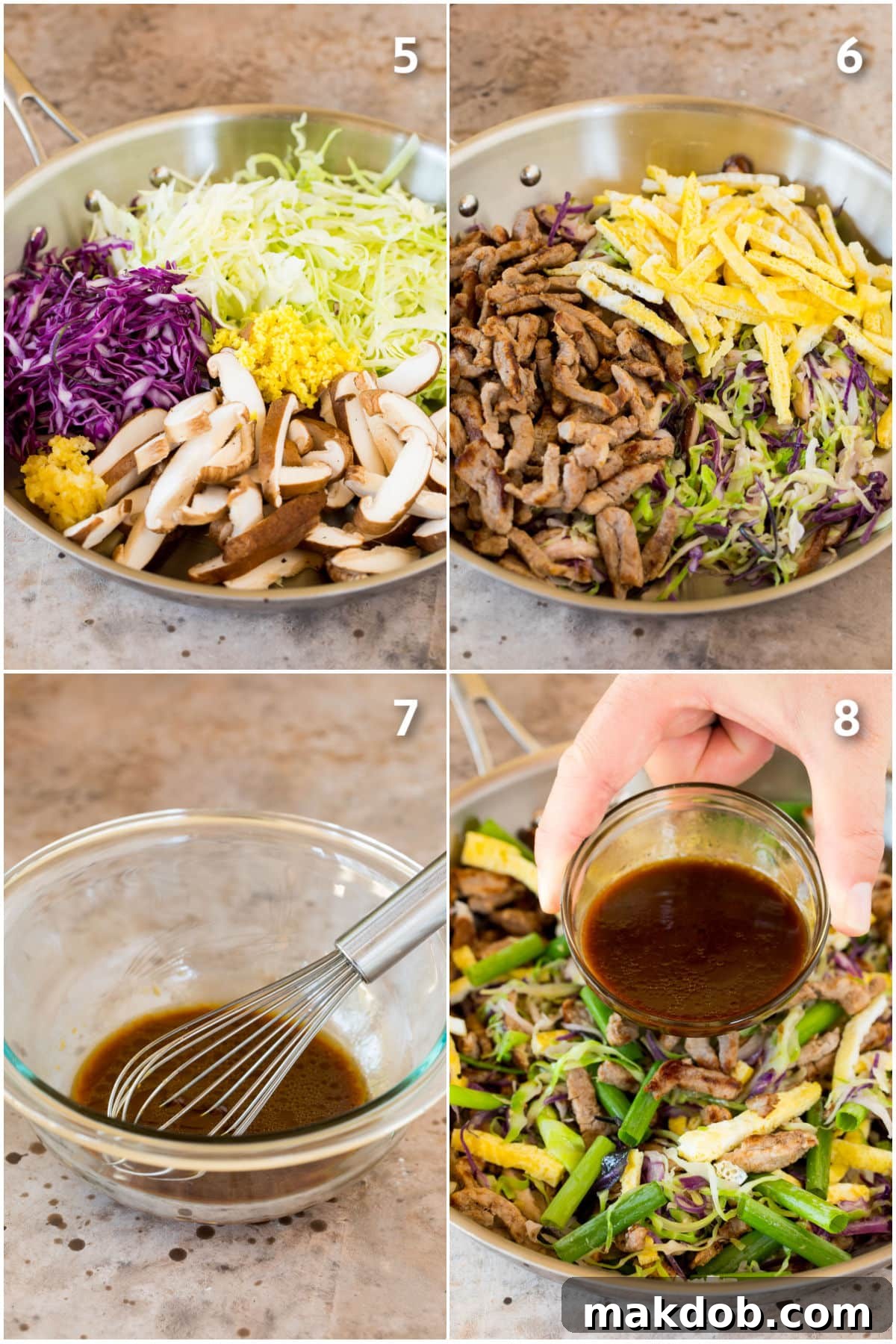
- Stir-Fry the Vegetables: In the same pan, without adding more oil, add the shredded cabbage, minced ginger, minced garlic, and sliced shiitake mushrooms. Stir-fry for 2-3 minutes, or until the mushrooms have softened and the cabbage has wilted to a tender-crisp consistency.
- Combine and Sauce: Return the cooked pork and egg strips to the pan with the vegetables. Stir in the sliced green onions, distributing them evenly throughout the mixture.
- Whisk the Sauce: In a small bowl, combine the soy sauce, hoisin sauce, sesame oil, honey, and 1 tablespoon of water. Whisk vigorously until all ingredients are well combined and smooth. Then, whisk in the cornstarch until there are no lumps.
- Thicken the Sauce: Pour the prepared sauce over the ingredients in the pan. Turn the heat to high and bring the mixture to a boil. Allow it to boil for about 30 seconds, stirring constantly, until the sauce visibly thickens and coats all the ingredients.
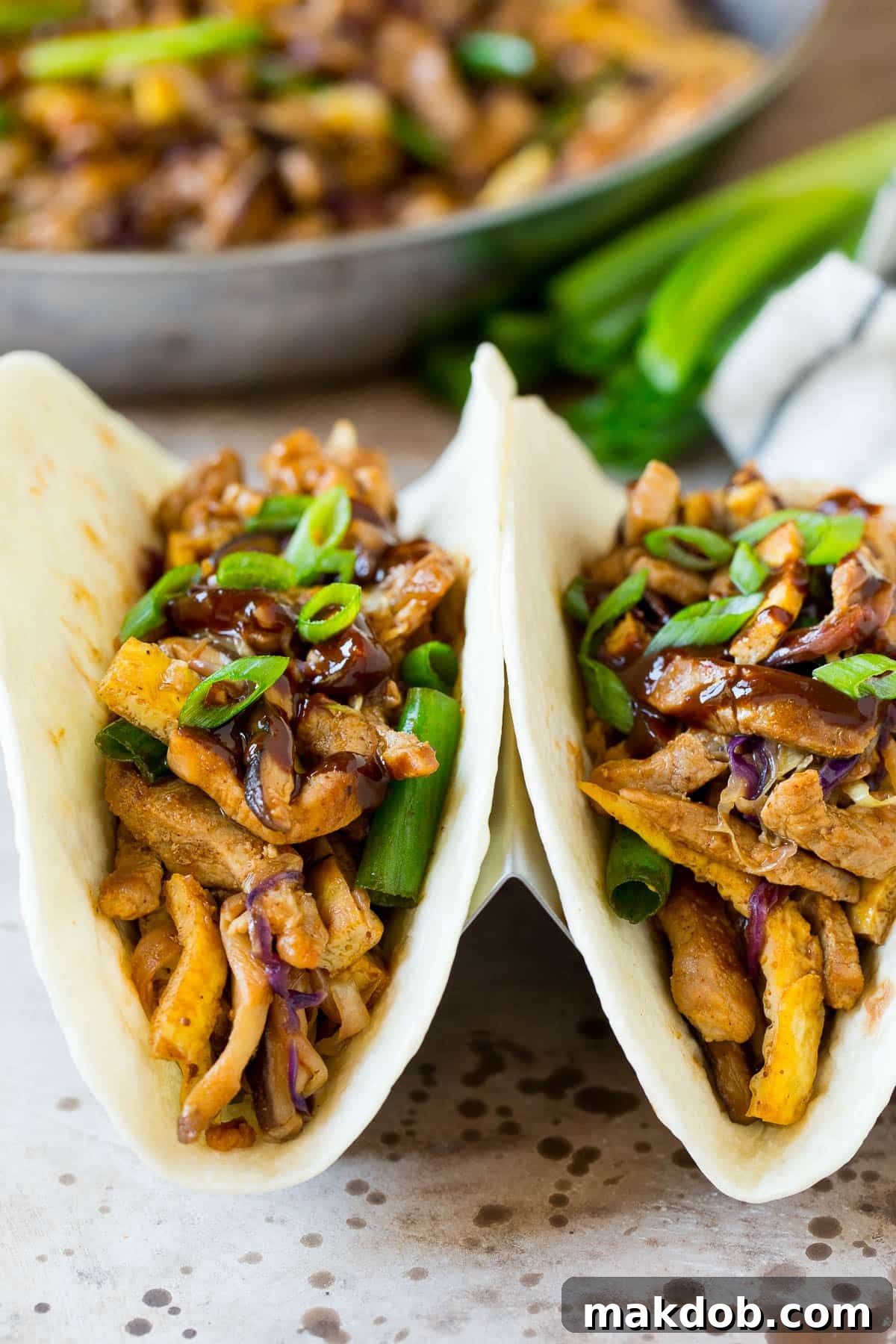
- Serve Immediately: Your homemade Moo Shu Pork is now ready! Spoon generous portions into warm flour tortillas or Mandarin pancakes. Garnish with extra sliced green onions and a drizzle of additional hoisin sauce for an authentic and delicious experience.
Pro Tips for the Best Moo Shu Pork Stir-Fry
Achieving a restaurant-quality stir-fry at home involves a few key techniques and shortcuts. Here are some expert tips to ensure your Moo Shu Pork is always a success:
- Perfectly Slicing Pork: While pork tenderloin is my preferred choice for its lean quality and quick cooking time, boneless pork chops, thinly sliced pork shoulder, or pork loin also work beautifully. For easier and more uniform slicing into thin matchsticks, I highly recommend placing your chosen cut of meat in the freezer for 20-30 minutes. This firms up the meat, making it much simpler to achieve those delicate, even slices crucial for a good stir-fry.
- Save Time with Pre-Shredded Cabbage: Preparing vegetables can often be the most time-consuming part of cooking. To significantly reduce your prep time, opt for a bag of pre-shredded cabbage from your grocery store. It’s a fantastic shortcut that doesn’t compromise on flavor or texture.
- Mushroom Alternatives: Shiitake mushrooms, with their distinct earthy flavor, are traditional for Moo Shu. You can typically find them in the produce section of most Asian markets and many well-stocked grocery stores. However, if shiitakes are unavailable, feel free to substitute with common button mushrooms or delicate oyster mushrooms. Both will add a pleasant texture and absorb the sauce well.
- Pancake Shortcuts: While authentic Mandarin pancakes are wonderful, making them from scratch can be quite an undertaking. For a convenient and equally delicious alternative, I often use regular flour tortillas. Simply warm them slightly before serving, and they make an excellent, readily available wrapper for your Moo Shu Pork. If you’re feeling adventurous, you can also look for frozen Mandarin pancakes in Asian grocery stores.
- Don’t Overcrowd the Pan: For stir-frying, it’s crucial not to overcrowd your skillet or wok. Cooking ingredients in batches ensures they sear and brown properly rather than steam, which can lead to a less flavorful and softer texture. Cook the pork in a single layer if necessary, and do the same for the vegetables if your pan is smaller.
- High Heat is Key: Stir-frying demands high heat. Ensure your pan is very hot before adding ingredients, especially the pork, to achieve that desirable sear quickly.
- Mise en Place: “Mise en place” means “everything in its place.” Have all your ingredients prepped, chopped, and measured before you start cooking. Stir-fries cook very quickly, so you won’t have time to chop garlic while the pork is searing.
Frequently Asked Questions About Moo Shu Pork
Got questions about Moo Shu Pork? We’ve got answers to help you master this delicious dish.
Moo Shu Pork is a popular Chinese-American dish, thought to have originated in the northern part of China, specifically Shandong province. It gained significant popularity in America during the 1960s. The dish typically consists of thinly sliced pork (or other meats/seafood) stir-fried with ingredients like scrambled eggs, cabbage, and mushrooms, all tossed in a light, savory, and slightly sweet sauce. It’s traditionally served with warm, thin Mandarin pancakes and hoisin sauce, allowing diners to assemble their own wraps.
Reheating Moo Shu Pork effectively ensures its flavors and textures remain enjoyable. The best method is to reheat it in a skillet on the stovetop over medium heat. Stir occasionally until warmed through, usually about 5-7 minutes. This method helps maintain the stir-fried texture of the ingredients. Another convenient option for smaller portions is to microwave leftovers in 30-second increments, stirring between each, until thoroughly warmed. Be careful not to overcook it in the microwave, as this can make the pork dry.
Moo Shu Pork is a delightful interactive dish. It’s typically served with a side of warm Mandarin-style pancakes (or flour tortillas as a shortcut), extra sliced green onions, and hoisin or plum sauce. To eat, you simply take a warm pancake, spread a thin layer of hoisin sauce on it, add a spoonful of the Moo Shu pork mixture, sprinkle with fresh green onions, and then roll it up like a taco or burrito. Many Chinese restaurants offer tableside service where staff expertly roll up the mixture for you.
While Moo Shu Pork is often a meal in itself when wrapped in pancakes, it pairs wonderfully with other Asian-inspired dishes. Consider serving it alongside a simple bowl of steamed white rice or brown rice, a light vegetable side such as steamed broccoli or stir-fried green beans, or even a clear soup. Other complementary dishes include spring rolls, egg rolls, or a crisp Asian salad with a sesame dressing.
While Moo Shu Pork is best enjoyed fresh off the wok, you can prepare some components in advance. The pork can be sliced and marinated (if you choose to add a quick marinade) a day ahead. The vegetables can also be prepped and stored in airtight containers in the refrigerator. The sauce can be whisked together and kept in the fridge. This makes assembly and cooking much faster when you’re ready to eat. The entire cooked dish can be stored in the refrigerator for up to 3-4 days, though the texture of the vegetables may soften upon reheating.
Customizing Your Moo Shu Pork: Flavor Variations
One of the beauties of a stir-fry is its versatility. This Moo Shu Pork recipe is incredibly delicious as-is, but don’t hesitate to experiment with different ingredients to tailor the flavors to your personal preferences and dietary needs.
- Protein Power-Ups: If pork isn’t your preference, or if you simply want to try something new, this recipe adapts wonderfully to other proteins. Consider thinly sliced chicken breast, lean flank steak, or succulent shrimp for equally delicious results. For a vegetarian option, firm tofu or tempeh, pressed and cut into small pieces, makes an excellent substitute, absorbing the sauce beautifully.
- Veggie Boost: Increase the nutritional value and textural variety by adding more vegetables to the mix. Shredded carrots can add a touch of sweetness and color. Water chestnuts or bamboo shoots offer a delightful crunch. Sliced white onion or green bell peppers contribute a savory depth and freshness. Snow peas, baby corn, or broccoli florets are also fantastic additions. Just remember to add harder vegetables earlier in the stir-frying process to ensure they cook through.
- Amp Up the Seasonings: For those who love a bit of heat, a dash of sriracha or a pinch of red chili flakes can give your Moo Shu Pork a vibrant kick. A touch of five-spice powder can also be added to the sauce for a more complex, aromatic Chinese flavor profile. Don’t be afraid to adjust the honey for more sweetness or a bit more soy sauce for extra savoriness.
No need to reach for the takeout menu when you can create this extraordinary Moo Shu Pork right in your own kitchen. You’ll not only enjoy a fresher, more flavorful meal but also the immense satisfaction of cooking a truly impressive dish. Trust me, once you try this homemade version, you’ll be glad you did!
More Asian-Inspired Recipes You’ll Love
If you enjoyed this Moo Shu Pork, be sure to explore these other fantastic Asian-inspired dishes:
- Ginger Chicken
- Beef and Broccoli Stir-Fry
- Potstickers
- Beef Chow Mein
- Chicken Fried Rice
Moo Shu Pork Video
Moo Shu Pork
5 from 45 votes
Pin Recipe
Sara Welch
10 minutes
20 minutes
30 minutes
Main Course
Asian
4 servings
Ingredients
- 1 pound pork tenderloin cut into thin matchsticks
- 1 tablespoon vegetable oil divided use
- 2 eggs lightly beaten
- 1 cup shiitake mushrooms stems removed, thinly sliced
- 3 cups shredded cabbage can be green, purple or both
- 2 teaspoons minced ginger
- 1 teaspoon minced garlic
- 2 tablespoons soy sauce
- 2 tablespoons hoisin sauce
- 1 teaspoon sesame oil
- 1 teaspoon honey
- 2 teaspoons cornstarch
- salt and pepper to taste
- 1/4 cup green onions cut into 1 inch pieces
- For serving: flour tortillas or mandarin pancakes, sliced green onions, hoisin sauce
Instructions
-
Heat 1 teaspoon of oil in a large skillet over medium heat. Add the eggs and season to taste with salt and pepper. Cook, undisturbed, until a flat omelet forms, about 3-4 minutes. Carefully flip the eggs and cook on the other side until done, 1-2 minutes more.
-
Remove the eggs from the pan and cut into strips. Cover to keep warm.
-
Wipe out the pan with a paper towel.
-
Heat the remaining 2 teaspoons of oil in the pan.
-
Add the pork and cook, stirring occasionally, until meat is browned and cooked through, 4-5 minutes. Season the meat with salt and pepper. Remove the pork from the pan and place on a plate; cover to keep warm.
-
Add the cabbage, ginger, garlic and mushrooms to the pan and cook for 2-3 minutes or until mushrooms are tender and cabbage is wilted.
-
Return the pork and eggs to the pan. Stir in the green onions.
-
In a small bowl whisk together the soy sauce, hoisin sauce, sesame oil, honey and 1 tablespoon of water. Whisk in the cornstarch until smooth.
-
Add the sauce to the pan and turn the heat to high; bring to a boil. Boil for 30 seconds or just until sauce starts to thicken.
-
Serve immediately with tortillas or pancakes, extra hoisin sauce and sliced green onions.
Notes
- I like to use pork tenderloin for this dish, but boneless pork chops, thinly sliced pork shoulder or pork loin will also work. I recommend placing your meat in the freezer for 20-30 minutes so it can firm up, this helps to make the meat easier to slice into thin pieces.
- You can use a bag of pre-shredded cabbage to save on prep time.
- I typically use flour tortillas as a shortcut instead of making my own pancakes. It’s not as authentic, but saves a ton of time!
Nutrition
Calories: 349kcal |
Carbohydrates: 20g |
Protein: 41g |
Fat: 14g |
Saturated Fat: 3g |
Cholesterol: 190mg |
Sodium: 809mg |
Fiber: 2g |
Sugar: 7g
Did you make this recipe?
Tag @dinneratthezoo on Instagram and hashtag it #dinneratthezoo
Tweet
Pin