
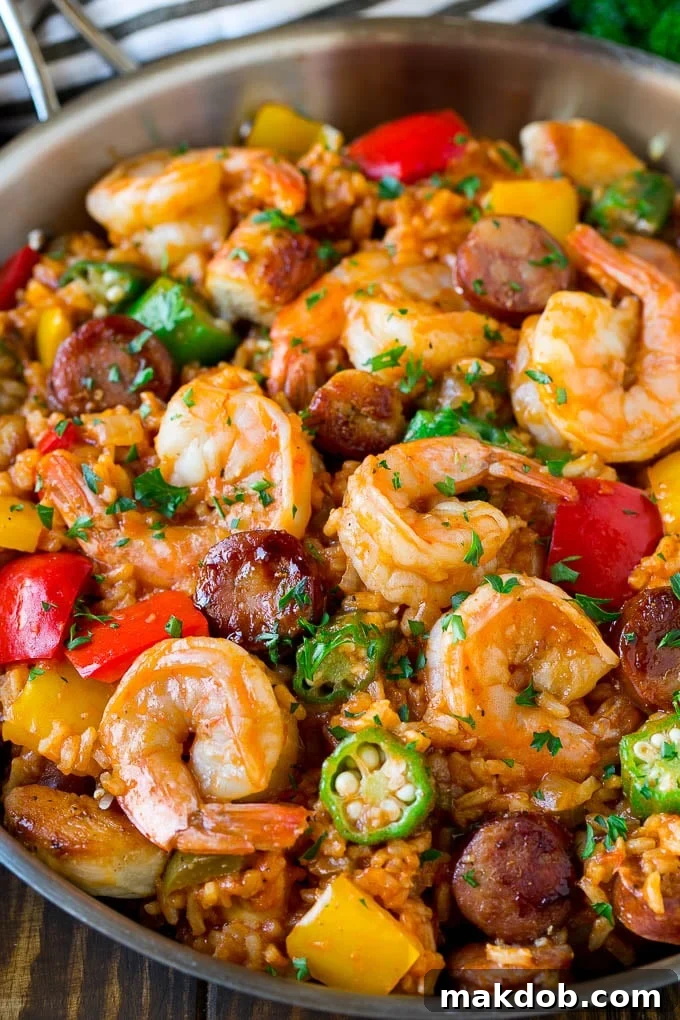
Bu jambalaya tarifi, tavuk, karides ve sosisin pirinç ve sebzelerle birlikte lezzetli bir sosta pişirildiği bir karışımdır. Bir restoranda sipariş edebileceğiniz gibi tadı olan kolay bir tek kap yemek!
I’m a huge enthusiast of Cajun cuisine, and for my family, I regularly prepare New Orleans BBQ Shrimp and hearty Gumbo. This exceptional jambalaya recipe has quickly become a new beloved staple in our household. It’s an incredibly satisfying dish, generously packed with a delightful combination of succulent chicken, flavorful sausage, plump shrimp, and an abundance of vibrant vegetables, all infused with an explosion of rich, authentic Cajun flavors.
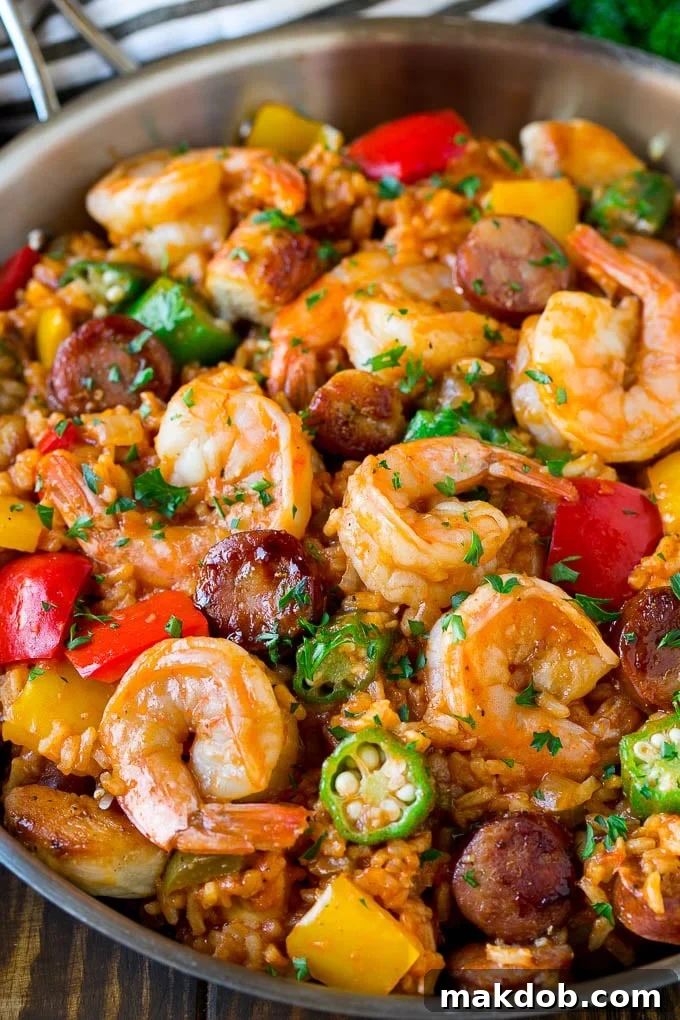
Whenever I spot jambalaya on a restaurant menu, it’s an absolute must-order for me. That irresistible combination of savory meats, fresh seafood, and perfectly tender, seasoned rice is truly unbeatable! Over the years, I’ve perfected an easy-to-follow, one-pot jambalaya recipe that allows you to recreate that incredible restaurant-quality taste right in your own kitchen – arguably even better.
What is Jambalaya? Unpacking this Iconic Louisiana Dish
Jambalaya is a celebrated rice dish with deep roots in Louisiana, a true culinary melting pot reflecting Spanish, African, and French influences. At its core, jambalaya is a hearty, one-pot meal where an array of meats and/or seafood are simmered harmoniously with the “holy trinity” of vegetables (onion, celery, and bell pepper) and rice, all bathing in a richly seasoned broth.
There are two primary styles of jambalaya: Creole and Cajun. Creole Jambalaya, often called “red jambalaya,” originated in New Orleans and typically includes tomatoes or tomato sauce, giving it a distinctive reddish hue. It often starts with a roux and includes a wider variety of proteins, from chicken and pork to various seafood. Cajun Jambalaya, on the other hand, hails from the rural areas of southwest Louisiana and is known as “brown jambalaya.” It typically omits tomatoes and instead derives its deep brown color and flavor from browning the meat (especially pork or sausage) thoroughly before adding other ingredients. This recipe leans towards the Creole style with the inclusion of tomatoes, offering a vibrant, rich flavor profile.
Why This One-Pot Jambalaya Recipe is a Must-Try
This particular jambalaya recipe stands out for its incredible balance of convenience and flavor. It’s a testament to the fact that you don’t need a complicated process to achieve restaurant-level deliciousness. Here’s why it’s destined to become your new favorite:
- One-Pot Wonder: Say goodbye to piles of dirty dishes! This entire meal comes together in a single pot, making cleanup a breeze.
- Bursting with Flavor: From the smoky notes of andouille sausage to the subtle sweetness of shrimp and the savory depth of chicken, every bite is a flavor explosion.
- Hearty & Satisfying: Loaded with proteins, rice, and vegetables, this jambalaya is a complete meal that will keep you full and content.
- Customizable Spice Level: Whether you prefer a mild kick or a fiery sensation, you can easily adjust the spice to suit your palate and your family’s preferences.
- Weeknight Friendly: Despite its complex taste, this jambalaya is surprisingly quick to prepare, making it an ideal choice for busy weeknights or casual entertaining.
Key Ingredients for Authentic Jambalaya Flavor
Crafting truly authentic and delicious jambalaya starts with selecting the right ingredients. Each component plays a vital role in building the layered flavors that define this classic dish:
- The Holy Trinity: This refers to diced onion, bell peppers (I love a colorful mix of red, green, and yellow for visual appeal and varied sweetness), and celery. These three vegetables form the aromatic foundation of almost all Cajun and Creole cooking.
- Proteins:
- Chicken: Boneless, skinless chicken breast, cut into bite-sized pieces, provides lean protein and a great texture. Thighs can also be used for extra richness.
- Andouille Sausage: This is a non-negotiable for true Cajun flavor. Andouille is a smoked, often spicy, pork sausage. Look for it in the refrigerated section near other pre-cooked sausages. If you can’t find it, a good quality smoked sausage like kielbasa can be a milder substitute, but for that authentic kick, andouille is king.
- Shrimp: Large peeled shrimp (16-20 count) add a delightful seafood element. They cook quickly, so they’re added at the very end to prevent overcooking, ensuring they remain tender and succulent.
- Rice: Long-grain white rice is traditional. Its grains separate nicely, absorbing all the wonderful flavors without becoming overly sticky.
- Tomatoes: Crushed tomatoes, undrained, contribute to the characteristic “red” or Creole style of jambalaya, adding tang and depth to the sauce.
- Seasoning: A robust Cajun seasoning blend is crucial. You can use a store-bought blend or make your own. Dried thyme and a bay leaf further enhance the aromatic profile, adding classic Southern charm.
- Okra: Sliced okra, fresh or frozen, adds a subtle earthy flavor and contributes to the dish’s body. Don’t worry about it making the dish “slimy” – when cooked properly in jambalaya, it adds a lovely texture.
Step-by-Step Guide: How to Make One-Pot Jambalaya
Creating this flavorful one-pot jambalaya is simpler than you might think. Follow these steps to achieve a perfectly balanced and deeply satisfying meal:
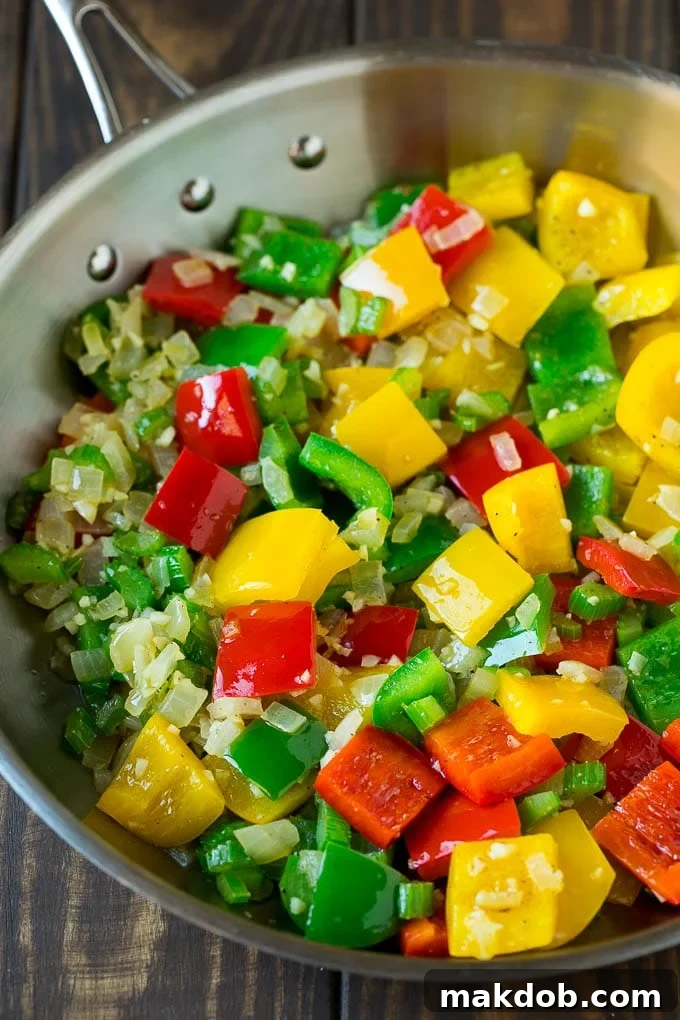
- Sauté the Vegetables: Begin by heating a portion of olive oil in a very large, heavy-bottomed pot or Dutch oven over medium heat. Add your diced onion, bell peppers, and thinly sliced celery – the “holy trinity” – and cook until they soften, about 4-5 minutes. Stir in the minced garlic for another 30 seconds until fragrant. Remove these sautéed vegetables and set them aside, covering them to keep warm. This step is crucial for building the flavor base.
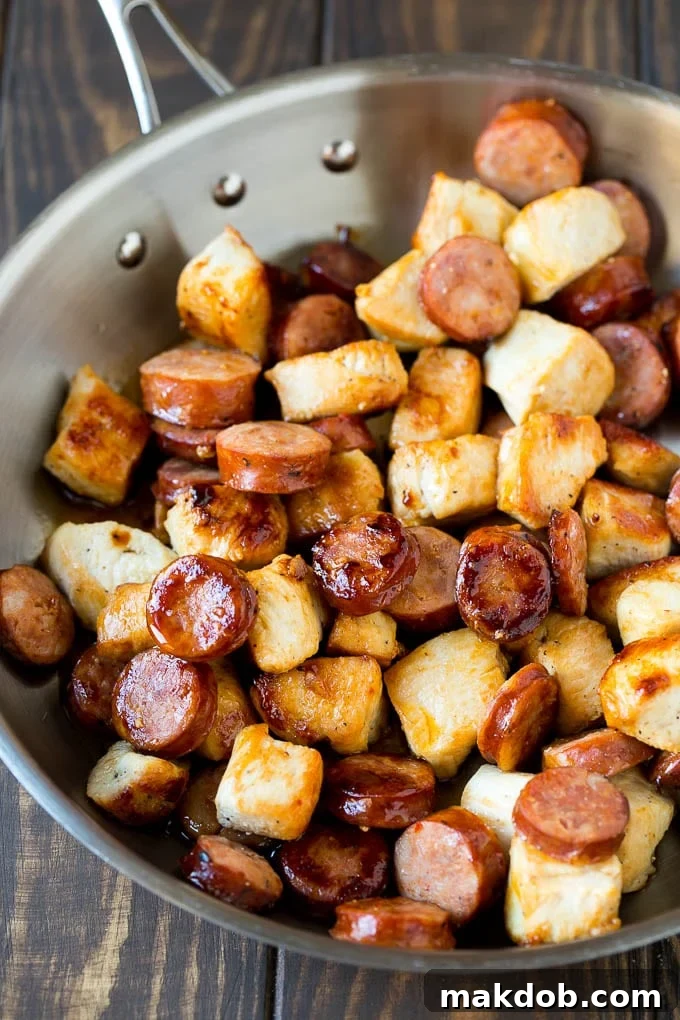
- Brown the Meats: Add the remaining olive oil to the pot. Season your bite-sized chicken pieces with salt and pepper, then add them to the hot pot. Cook until the chicken is nicely browned on all sides, usually 5-6 minutes, stirring occasionally. Next, add the sliced andouille sausage to the pot and cook for another 2-3 minutes until it’s also browned and has released some of its delicious smoky fats.
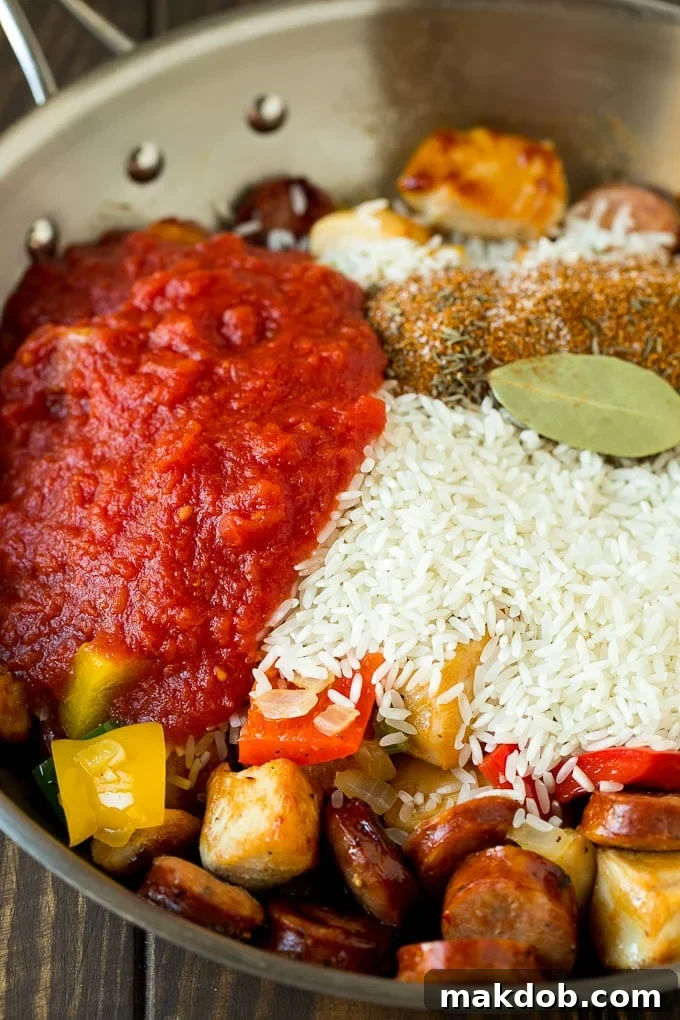
- Combine and Simmer: Return the reserved sautéed vegetables to the pot with the browned chicken and sausage. Pour in the chicken broth and undrained crushed tomatoes. Add the uncooked long-grain rice, Cajun seasoning, dried thyme, and a bay leaf. Season with additional salt and pepper to taste. Stir everything together gently to combine.
- Cook the Rice: Bring the mixture to a gentle simmer. Once simmering, reduce the heat to low, cover the pot tightly, and cook for approximately 25 minutes, or until the rice is tender and has absorbed most of the liquid. Make sure to stir the mixture every 6-8 minutes to prevent the rice from sticking to the bottom and to ensure even cooking.
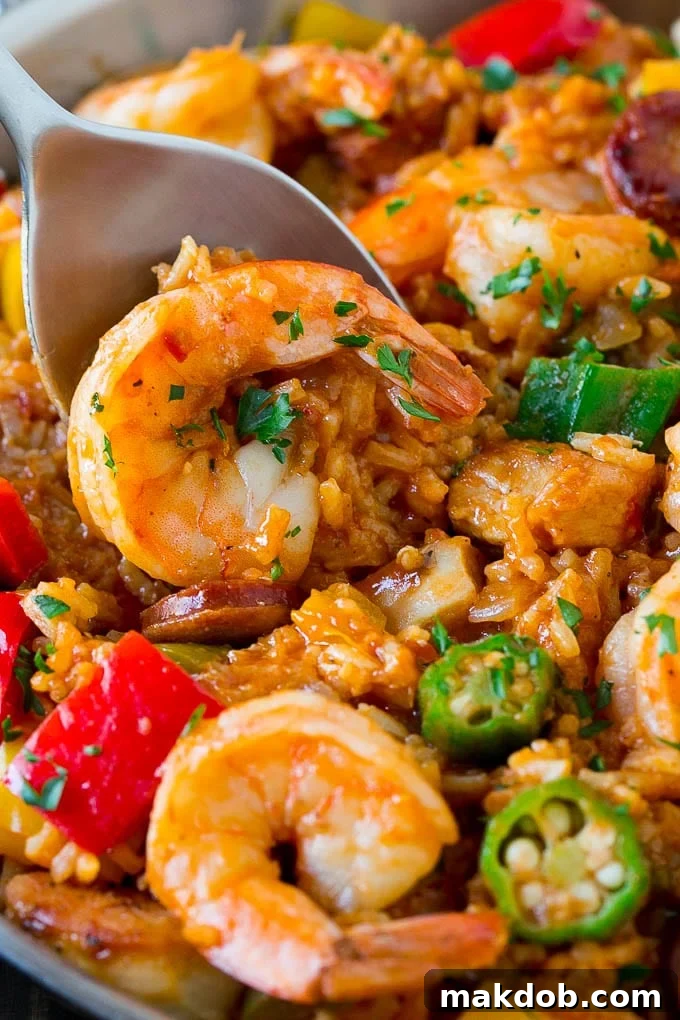
- Add Shrimp and Okra: Once the rice is tender, remove and discard the bay leaf. Stir in the peeled shrimp and sliced okra. Cover the pot again and continue to cook for an additional 3-4 minutes. The shrimp are ready when they turn pink and opaque, indicating they are cooked through. Be careful not to overcook them, as they can become tough.
- Finish and Serve: Remove the pot from the heat. Give the jambalaya a final gentle stir. Garnish generously with fresh chopped parsley before serving.
Pro Tips for Perfect Jambalaya Every Time
- Bell Pepper Variety: While any type of bell pepper works, I love using a mix of red, green, and yellow for both their vibrant color contrast and slightly different flavor profiles. Feel free to use just one color if that’s what you have on hand.
- Adjusting the Spice: If you crave more heat, consider adding a seeded and minced jalapeño or serrano pepper along with your other vegetables at the start. You can also increase the amount of Cajun seasoning or add a dash of cayenne pepper. For a milder version, especially when serving children, use a less spicy sausage like kielbasa and reduce the Cajun seasoning.
- Shrimp Size: I typically opt for larger shrimp, around 16-20 count, for a more substantial bite. Smaller shrimp will also work but may cook even faster.
- Andouille Sausage: Authentic andouille is key for that distinct smoky, spicy flavor. It’s usually found in the pre-cooked sausage section of most grocery stores. If unavailable, a smoked kielbasa can be a good substitute, but adjust seasoning accordingly.
- Choose the Right Pot: A large, deep soup pot or a substantial 12-inch deep skillet is essential to comfortably hold all the ingredients as they expand. A Dutch oven is also an excellent choice.
- Shrimp Tail Presentation: You can remove the tails from the shrimp for easier eating, or leave them on if you prefer a more elegant presentation. It’s entirely up to your preference!
- Okra Options: Frozen sliced okra works perfectly fine and is often more readily available than fresh. If you do find fresh okra, feel free to use it; just ensure it’s sliced.
- Don’t Skimp on Browning: Browning the chicken and sausage thoroughly before adding liquids is vital for developing deep, rich flavors and creating that authentic Cajun depth.
- Rice Matters: Stick to long-grain white rice for the best results. Other rice varieties may absorb liquid differently and alter the texture of your jambalaya.
Jambalaya vs. Gumbo: Understanding the Difference
While both jambalaya and gumbo are quintessential Louisiana dishes, often featuring similar ingredients like the “holy trinity,” chicken, sausage, and seafood, they are distinct in their preparation and final form. The key difference lies in their consistency and how the rice is incorporated:
- Jambalaya: This is primarily a rice-based dish. The rice is cooked directly in the same pot with the meats, vegetables, and broth, absorbing all the rich flavors as it simmers. The final product is a moist, flavorful rice dish with distinct grains.
- Gumbo: In contrast, gumbo is a thick, flavorful stew or soup. It typically starts with a roux (a mixture of fat and flour cooked to a specific color) which provides its characteristic thickness and nutty flavor. While gumbo often contains rice, the rice is always cooked separately and served *over* or *alongside* the gumbo, rather than being simmered within the stew itself.
Both dishes are incredibly delicious, but understanding their fundamental structural differences helps appreciate the unique culinary heritage of Louisiana.
Serving Suggestions and Perfect Pairings
This chicken, shrimp, and sausage jambalaya is a complete meal on its own, incredibly satisfying and flavorful. However, if you’re looking to round out your spread, here are a few ideas for perfect pairings:
- Crusty Bread or Cornbread: Ideal for soaking up any extra flavorful sauce.
- Simple Side Salad: A light, crisp green salad with a vinaigrette dressing provides a refreshing contrast to the richness of the jambalaya.
- Hot Sauce: For those who love extra heat, a bottle of your favorite Louisiana-style hot sauce on the side is a must.
- Coleslaw: A creamy or vinegar-based coleslaw offers a cool, crunchy element.
Storage and Reheating Tips
- Refrigeration: Leftover jambalaya can be stored in an airtight container in the refrigerator for up to 3-4 days.
- Freezing: Jambalaya freezes exceptionally well! Allow it to cool completely, then transfer it to freezer-safe containers or heavy-duty freezer bags. It can be frozen for up to 3 months. Thaw overnight in the refrigerator before reheating.
- Reheating: For best results, reheat jambalaya gently on the stovetop over medium-low heat, adding a splash of chicken broth or water to moisten it if needed, until heated through. You can also microwave individual portions.
Frequently Asked Questions About Jambalaya
- Can I make jambalaya without shrimp? Absolutely! If you’re not a fan of shrimp or have allergies, you can simply omit them. The chicken and sausage will still make a incredibly delicious and hearty dish.
- What kind of rice is best for jambalaya? Long-grain white rice is traditional and recommended. It holds its shape well and absorbs flavors beautifully without becoming mushy. Avoid using quick-cooking or instant rice.
- Is this jambalaya recipe gluten-free? Yes, this recipe is naturally gluten-free, provided your chicken broth and Cajun seasoning do not contain gluten. Always check ingredient labels to be sure.
- Can I use a different type of sausage? While andouille sausage provides the most authentic flavor, you can substitute with other smoked sausages like kielbasa or even chorizo (for a Spanish twist). Just be mindful of their spice levels.
Once you experience the incredible flavors and effortless preparation of this one-pot jambalaya, you’ll undoubtedly find yourself adding it to your regular meal rotation. It delivers a medium spice level, perfect for most palates. However, if you’re preparing this for younger children or those sensitive to heat, consider opting for a milder smoked sausage, such as kielbasa, and slightly reducing the amount of Cajun seasoning to tailor the spice level to your family’s preference.
Whether you’re seeking a robust and comforting meal for a busy weeknight, or looking to infuse your gatherings with vibrant Louisiana spirit, this chicken, shrimp, and sausage jambalaya is guaranteed to be a crowd-pleaser and leave everyone craving more!
More Delicious One-Pot Meals to Explore
- Arroz con Pollo
- Chicken and Rice Casserole
- Salsa Chicken
- Greek Meatballs with Rice
- Chicken and Broccoli Casserole
Jambalaya Recipe
Pin
Sara Welch
15 minutes
45 minutes
1 hour
Main
Cajun
6
Ingredients
- 4 teaspoons olive oil, divided use
- 3/4 cup onion, diced
- 1 cup bell peppers, cut into 1/2 inch pieces (combination of red, green and yellow bell peppers recommended)
- 1/2 cup celery, thinly sliced
- 2 teaspoons garlic, minced
- 1/2 pound boneless skinless chicken breast, cut into bite sized pieces
- 1 pound cooked andouille sausage, sliced
- Salt and pepper to taste
- 3 1/2 cups chicken broth
- 14 ounce can crushed tomatoes, do not drain
- 1 1/2 cups long grain rice, uncooked
- 1 1/2 tablespoons Cajun seasoning
- 1/2 teaspoon dried thyme
- 1 bay leaf
- 1/2 pound peeled large shrimp (tails can be removed or left on for presentation)
- 3/4 cup sliced okra, fresh or frozen
- 2 tablespoons chopped parsley
Instructions
- Heat 2 teaspoons of olive oil in a very large pot over medium heat. Add the onion, bell peppers and celery to the pan.
- Cook for 4-5 minutes or until vegetables have softened. Add the garlic and cook for 30 more seconds.
- Remove the vegetables from the pot and place on a plate; cover to keep warm.
- Add the remaining 2 teaspoons of oil to the pot. Season the chicken to taste with salt and pepper.
- Add the chicken to the pot and cook until browned, about 5-6 minutes, stirring occasionally.
- Add the sausage to the pot and cook until browned, approximately 2-3 minutes.
- Pour the vegetables back into the pot. Add the chicken broth, crushed tomatoes, rice, Cajun seasoning, dried thyme, salt and pepper to taste and bay leaf to the pot.
- Stir to combine and bring to a simmer. Cover the pot and turn the heat to low. Cook for 25 minutes or until rice is tender. Stir every 6-8 minutes.
- Remove the bay leaf. Add the shrimp and okra to the pot and stir. Cover the pot and cook for an additional 3-4 minutes or until shrimp are pink and opaque.
- Sprinkle with parsley and serve.
Nutrition
Carbohydrates: 47g |
Protein: 13g |
Fat: 16g |
Cholesterol: 24mg |
Sodium: 645mg |
Potassium: 639mg |
Fiber: 3g |
Sugar: 5g |
Vitamin A: 1830IU |
Vitamin C: 49.9mg |
Calcium: 61mg |
Iron: 2.3mg
Did you make this recipe?
Tag @dinneratthezoo on Instagram and hashtag it #dinneratthezoo