
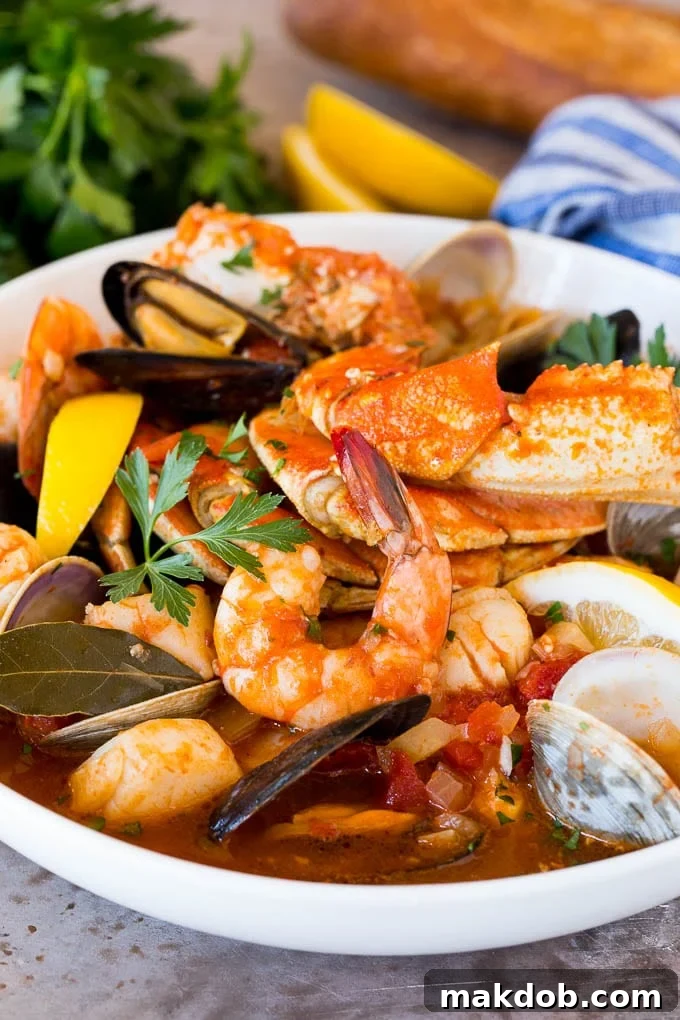
Authentic Cioppino: A San Francisco Seafood Masterpiece
Experience the rich flavors of the ocean with this authentic Cioppino recipe. This beloved San Francisco seafood stew masterfully combines fresh fish, succulent crab, plump shrimp, tender clams, and savory mussels, all gently simmered in a robust, tomato-based broth. It’s a truly fabulous dinner option – elegant enough to impress guests for a special occasion, yet surprisingly simple to prepare for a delightful weeknight meal.
As a family of dedicated seafood enthusiasts, our table frequently features delightful oceanic creations. From a comforting seafood pasta to an aromatic seafood paella, and even my signature bouillabaisse recipe, fresh catches are always a hit. Among these cherished recipes, this incredibly flavorful and authentic Cioppino stands out as a true crowd-pleaser. Serve it alongside warm, crusty garlic bread and a crisp green salad, and prepare for an chorus of rave reviews!
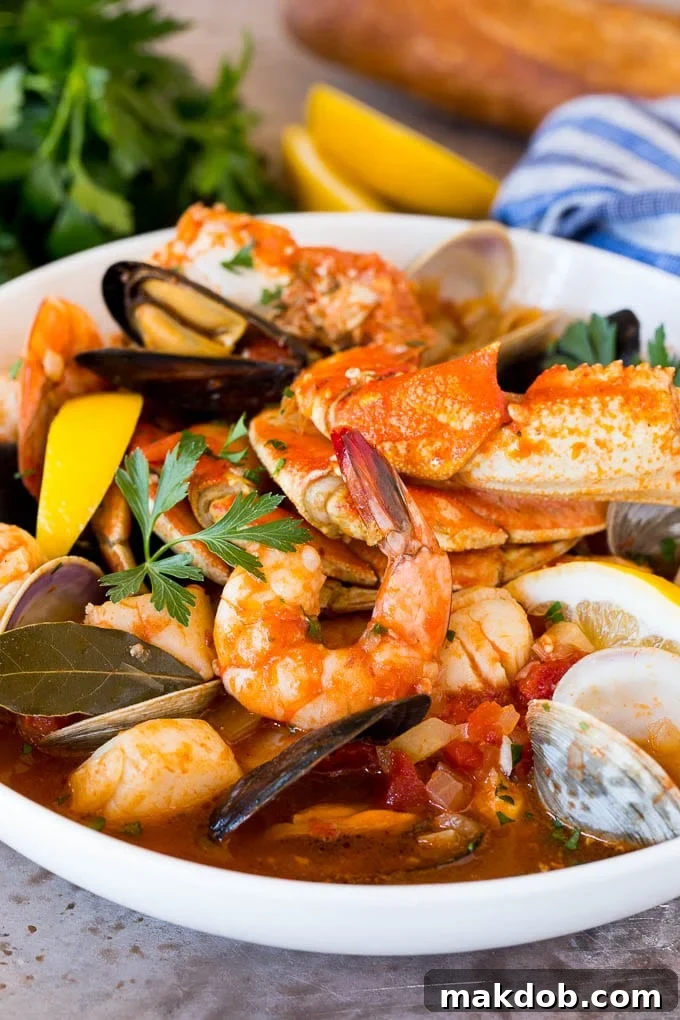
The Heart of San Francisco: Understanding Cioppino
Having lived near the vibrant culinary hub of San Francisco, I’ve had the pleasure of savoring many bowls of its regional classic, Cioppino. This stew is not just a dish; it’s a celebration of the city’s rich fishing heritage and Italian-American influence. Every spoonful is brimming with the taste of fresh seafood, and despite its impressive appearance, it’s remarkably straightforward to prepare in your own kitchen.
What Does Cioppino Mean? The History and Flavor Profile
Cioppino is an iconic Italian-American seafood stew that gained its fame in the bustling fishing wharves of San Francisco. The name “cioppino” is believed to be derived from an Italian dialect word, “ciuppin,” meaning “to chop” or “a chopped mixed fish soup,” reflecting its origins among Genoese fishermen. These fishermen, after returning from their daily catch, would contribute parts of their unsold or leftover seafood to a communal pot, creating a hearty, flavorful stew. This tradition blossomed into the beloved dish we know today.
At its core, Cioppino features an abundant selection of local Dungeness crab, tender chunks of various fish, and an assortment of shellfish – all lovingly simmered together in a rich, aromatic tomato-based broth. The stew is traditionally served with a side of crusty bread, most often San Francisco’s famous sourdough, which is perfect for soaking up every last drop of the delectable broth.
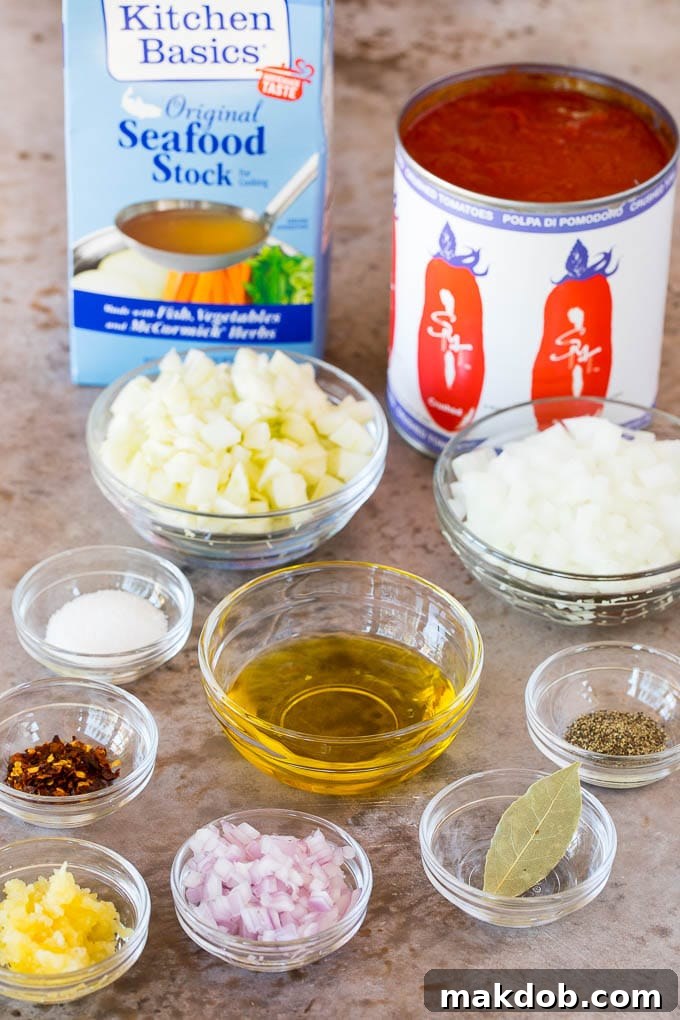
Crafting Your Cioppino: Essential Ingredients
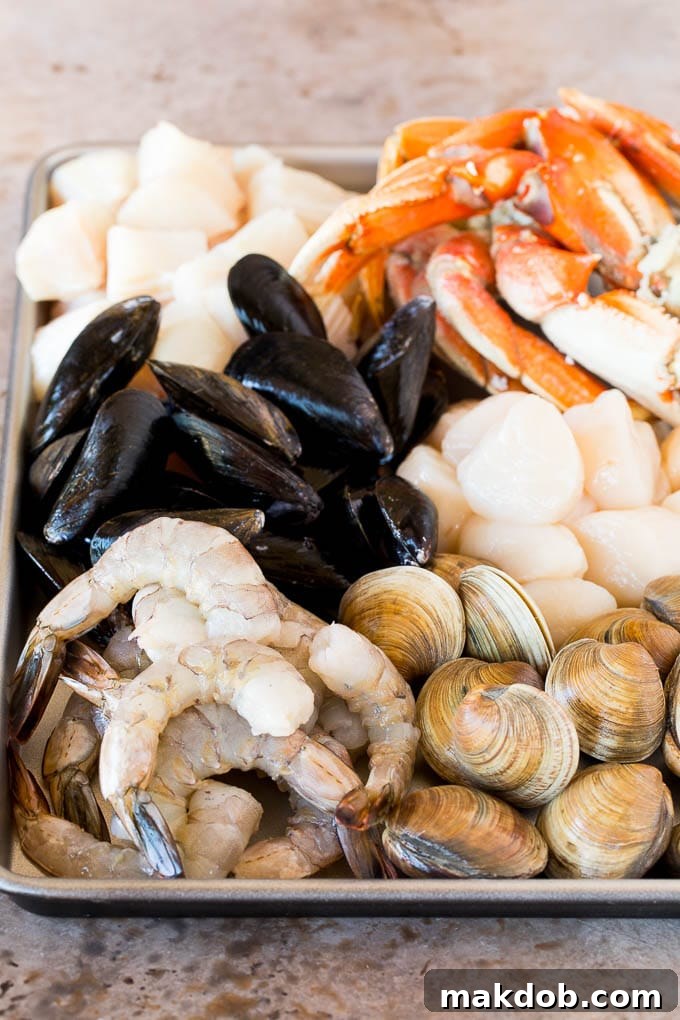
The beauty of Cioppino lies in its fresh, diverse seafood selection and a deeply flavorful tomato broth that ties everything together. Here’s a closer look at the key components:
- Crab: The traditional and highly recommended choice is Dungeness crab, celebrated for its sweet, delicate meat, and its native ties to the San Francisco Bay. If Dungeness crab isn’t available in your region, don’t despair; you can easily substitute it with other excellent options like king crab, snow crab, or even blue crab. Ensure the crab is fully cooked and cracked for easier enjoyment in the stew.
- Clams: Fresh, live clams are paramount for the best flavor and texture. Look for medium-sized varieties such as Littleneck or Manila clams. Before cooking, make sure to thoroughly scrub their shells to remove any grit. Crucially, discard any clams that do not open during the cooking process, as this indicates they were not alive or fresh.
- Mussels: Like clams, fresh, live mussels are essential. When preparing them, inspect each one; remove any “beards” (fibrous strands) that may be present, and discard any mussels with broken shells or those that don’t close when tapped lightly. As with clams, any mussels that remain closed after cooking should be discarded.
- Fish: Opt for a firm, white fish that holds its shape well when cooked. Excellent choices include cod, halibut, snapper, sea bass, or even swordfish. While salmon can be used for a richer flavor, be mindful not to overcook it, as it can become dry. Cut the fish into substantial 1 1/2 to 2-inch chunks to ensure they cook evenly and don’t fall apart in the stew.
- Scallops: For the most luxurious texture, large sea scallops are ideal. Their sweet, buttery flavor is a wonderful addition. If only smaller bay scallops are available, they can also work, but be extra vigilant with their cooking time, as they are smaller and prone to toughening quickly.
- Shrimp: You have flexibility here. You can use shelled shrimp for convenience or shrimp with shells intact for added depth of flavor in the broth (though this requires more work for diners). I typically prefer medium to large-sized shrimp that are already peeled and deveined to simplify preparation and eating.
- The Broth Base: This is the foundation of your Cioppino. It typically includes aromatic vegetables like onions, fennel, and garlic, simmered with crushed tomatoes, white wine, and seafood stock. High-quality ingredients here will make a significant difference.
How to Make This Flavorful Cioppino: A Step-by-Step Guide
Creating this magnificent seafood stew is a rewarding culinary journey. Here’s a detailed approach to assembling your Cioppino:
- Build the Flavor Base: Begin by heating olive oil in a large, heavy-bottomed pot or Dutch oven over medium heat. Add your finely diced yellow onion and fennel bulb. Sauté them gently for about 4-5 minutes, or until they have softened and become fragrant. This step is crucial for developing the foundational aromatics of the stew.
- Aromatic Boost: Introduce minced shallot, garlic, and a touch of crushed red pepper flakes (adjust to your preferred spice level). Cook for just 1 minute, stirring continuously to prevent the garlic from burning, which can turn bitter. This quick sauté enhances their flavors.
- Simmer the Broth: Pour in the crushed tomatoes, white wine, and seafood stock. Season with kosher salt, black pepper, and add a bay leaf. Bring the mixture to a gentle simmer, then reduce the heat to low and let it cook for at least 30 minutes, stirring occasionally. This simmering period allows the flavors to meld and deepen, creating a rich and complex broth that is the soul of the Cioppino.
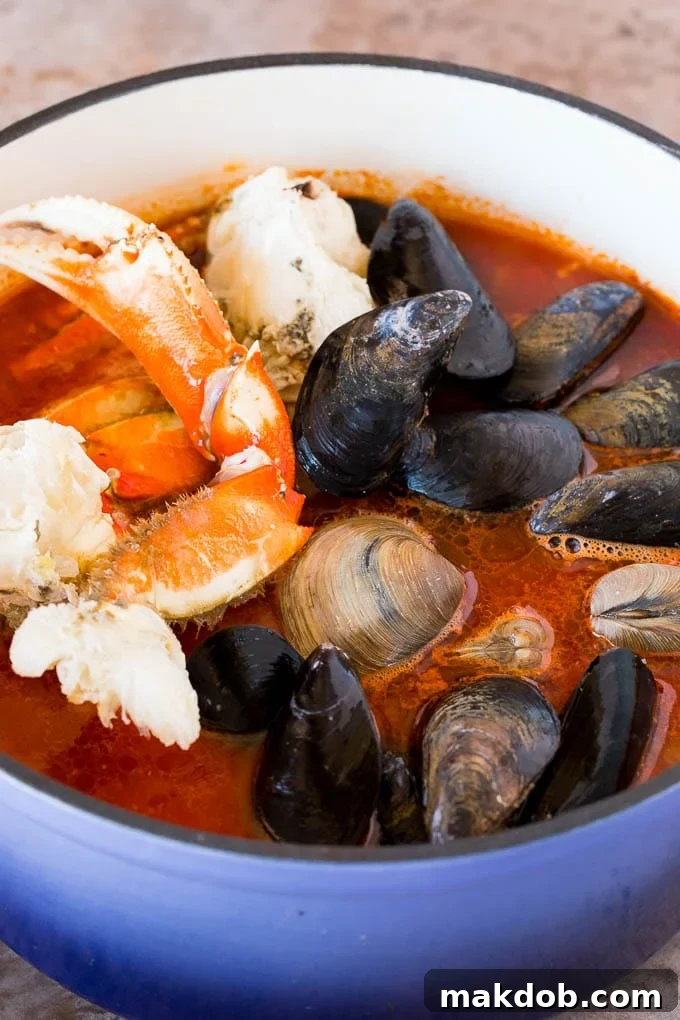
- Add the Heartier Seafood: Once the broth has developed, raise the heat slightly to maintain a gentle simmer. Carefully add the prepared crab, mussels, and clams to the pot. Cover and cook for about 4 minutes. These shellfish require a bit more time to open and cook through.
- Incorporate Delicate Seafood: Next, add the chunks of firm fish, shrimp, and sea scallops to the pot. Continue to simmer, uncovered or lightly covered, for another 4-6 minutes. Keep a close eye on the seafood: the fish should become opaque and flake easily, the shrimp should turn pink and opaque, and most importantly, the mussels and clams should fully open.
- Quality Check: As a safety measure and for the best dining experience, always discard any mussels or clams that do not open during the cooking process.
- Finish with Butter and Herbs: Stir in a knob of butter until it melts into the hot stew, adding a touch of richness and sheen. Finish by sprinkling generously with fresh chopped parsley.
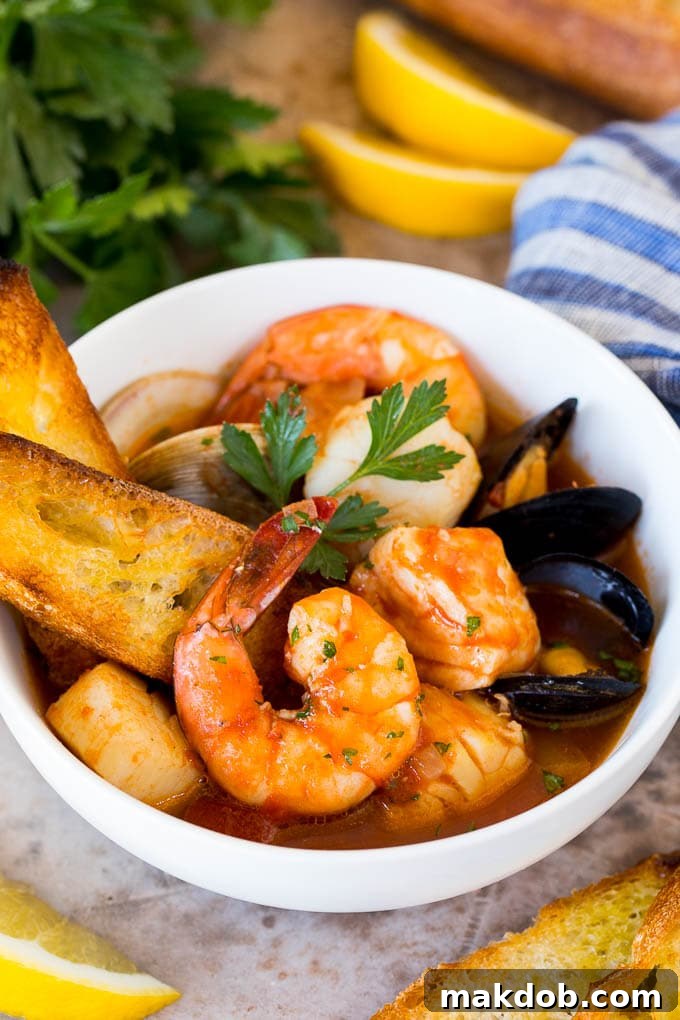
- Serve Immediately: Ladle the steaming Cioppino into large, shallow bowls. Garnish with extra parsley sprigs and fresh lemon wedges, if desired, for a burst of color and a hint of acidity. Serve immediately with plenty of crusty bread.
Expert Tips for the Perfect Cioppino Experience
Achieving a truly exceptional Cioppino is within reach with a few key considerations:
- Quality Seafood Stock: The base of your broth makes all the difference. While store-bought seafood stock is readily available at most seafood counters or in the prepared foods aisle, if you can’t find it, a fantastic substitute is a blend of equal parts clam juice and chicken broth. For an even richer flavor, consider making your own fish stock from fish bones and trimmings.
- Choose Your Tomatoes Wisely: For unparalleled flavor and texture in your broth, I highly recommend using San Marzano canned tomatoes. These Italian plum tomatoes are known for their sweet, balanced flavor and fewer seeds, creating a smoother, more vibrant sauce. They are usually found in larger cans alongside other canned tomato products in specialty or gourmet sections.
- Serve Fresh: Cioppino is truly at its best when served immediately after cooking. The delicate seafood can become rubbery if it sits too long or is reheated excessively. If you anticipate leftovers, consider cooking the seafood separately and adding it to reheated broth just before serving.
- The Essential Bread Pairing: The best accompaniment for this rich stew is undeniably a side of crusty bread. San Francisco sourdough is the classic choice, but any good quality rustic bread, especially grilled or generously buttered and toasted, will do. It’s perfect for dipping into the fragrant broth.
- Don’t Overcrowd the Pot: When adding the seafood, ensure your pot is large enough to accommodate all ingredients comfortably. Overcrowding can lower the temperature too quickly, leading to uneven cooking and tough seafood. Cook in batches if necessary.
- Proper Shellfish Handling: Always keep live clams and mussels refrigerated and in a breathable container (like a bowl covered with a damp cloth) until ready to use. Never store them in sealed plastic bags or submerged in water.
- Adjusting Spice Levels: The crushed red pepper flakes add a subtle warmth. Feel free to increase or decrease the amount to suit your personal preference for heat.
Flavor Variations and Creative Customizations
While this Cioppino recipe is fantastic in its traditional form, it also lends itself beautifully to creative enhancements and personal touches. Feel free to experiment and make the flavors uniquely your own:
- Expand Your Seafood Selection: Beyond the core ingredients, you can elevate your stew with other luxurious seafood options. Consider adding small lobster tails for an indulgent touch, or rings of calamari (add them towards the end of cooking to keep them tender). Bay scallops are a smaller alternative to sea scallops, just watch their cooking time closely.
- Introduce More Vegetables: Boost the nutritional value and complexity of your stew by incorporating additional vegetables. Diced carrots, celery, or colorful bell peppers (red, yellow, or orange) can be sautéed with the onions and fennel to add sweetness and texture. A handful of spinach or kale can also be stirred in at the very end until wilted.
- Aromatic Flavor Boosts: For a more pronounced fennel flavor, stir in a tablespoon of an anise-flavored liqueur, such as Pernod or Sambuca, during the last few minutes of cooking. This adds a subtle, sophisticated note. You can also experiment with different fresh herbs; swap out some of the parsley for fresh basil, thyme, or sliced green onions for varied aromatic profiles. A pinch of saffron can also add a beautiful color and exotic depth to the broth.
- A Touch of Cream: For a slightly richer, creamier broth, stir in a quarter cup of heavy cream or a splash of half-and-half just before serving. This will soften the acidity of the tomatoes and add a velvety texture.
- Different Wines: While dry white wine is standard, you can experiment with specific varietals like a crisp Sauvignon Blanc or a light Pinot Grigio. Avoid anything too sweet or heavily oaked.
- Citrus Zest: A tiny grating of orange or lemon zest can brighten the entire dish, adding an unexpected layer of fresh aroma.
Serving Suggestions and Wine Pairings
Cioppino is a meal in itself, but the right accompaniments truly enhance the dining experience.
- Garlic Bread: As mentioned, sourdough garlic bread is the ultimate partner. Toast thick slices of sourdough, rub with a cut garlic clove, drizzle with olive oil, and sprinkle with salt and pepper, or spread with garlic butter. It’s perfect for soaking up every last drop of the flavorful broth.
- Green Salad: A simple, crisp green salad with a light vinaigrette provides a refreshing contrast to the richness of the stew.
- Pasta or Rice: For a heartier meal, you can serve Cioppino over a bed of al dente linguine or spaghetti, allowing the pasta to absorb the broth. Alternatively, plain white rice can also be a good base.
- Wine Pairings: A dry, crisp white wine is an ideal complement. Consider a Sauvignon Blanc, Pinot Grigio, or an unoaked Chardonnay. The acidity will cut through the richness of the seafood and tomato broth beautifully.
Storage and Reheating
Cioppino is definitely best enjoyed fresh, but leftovers can be stored. Place any remaining stew in an airtight container and refrigerate for up to 2 days. When reheating, do so gently over low heat on the stovetop. Be cautious not to overcook the seafood, as it can become tough. If possible, separate the seafood from the broth before storing and reheat them separately, combining just before serving.
In my opinion, Cioppino offers one of the most magnificent ways to savor the bounty of the sea. It’s incredibly full of robust flavor, a joy to prepare, and undeniably impressive for any occasion. Don’t hesitate to dive into this sensational San Francisco classic!
More Seafood Recipes You’ll Enjoy
- Crispy Fried Calamari
- Flavorful Seafood Boil
- Hearty Shrimp Etouffee
- Perfectly Seared Scallops
- Refreshing Seafood Salad
Cioppino Recipe Card
Cioppino Recipe
Pin
Sara Welch
20 minutes
45 minutes
1 hour 5 minutes
Main
Italian
6
Ingredients
- 3 tablespoons olive oil
- 3/4 cup yellow onion finely diced
- 3/4 cup fennel bulb diced
- 2 tablespoons shallot minced
- 1 tablespoon garlic minced
- 1/2 teaspoon crushed red pepper flakes or more to taste
- 28 ounce can crushed tomatoes preferably San Marzano brand
- 4 cups seafood stock
- 1 1/2 cups white wine
- 2 teaspoons kosher salt
- 1/2 teaspoon black pepper
- 1 bay leaf
- 2 pounds crab legs and bodies preferably Dungeness crab
- 1 pound mussels scrubbed and debearded
- 1 pound clams scrubbed
- 1 pound firm fish such as halibut or cod, cut into 1 1/2 inch chunks
- 1 pound shrimp medium to large size
- 1/2 pound sea scallops
- 2 tablespoons butter
- 2 tablespoons parsley chopped
- parsley sprigs and lemon wedges for serving optional
Instructions
- Heat the olive oil in a large pot over medium heat. Add the onion and fennel and cook for 4-5 minutes or until softened.
- Add the shallot, garlic and red pepper flakes and cook for 1 minute, stirring constantly.
- Add the crushed tomatoes, white wine, seafood stock, salt, pepper and bay leaf to the pot, then bring to a simmer.
- Cook for 30 minutes, stirring occasionally.
- Add the crab, mussels and clams to the pot and cook for 4 minutes.
- Add the fish, shrimp and scallops and cook for another 4 minutes or until seafood is opaque and cooked through, and mussels and clams have opened.
- Discard any mussels and clams that do not open during the cooking process.
- Add the butter to the pot and stir until melted. Sprinkle with parsley, then serve. Garnish with parsley and lemon if desired.
Nutrition
Tag @dinneratthezoo on Instagram and hashtag it #dinneratthezoo