
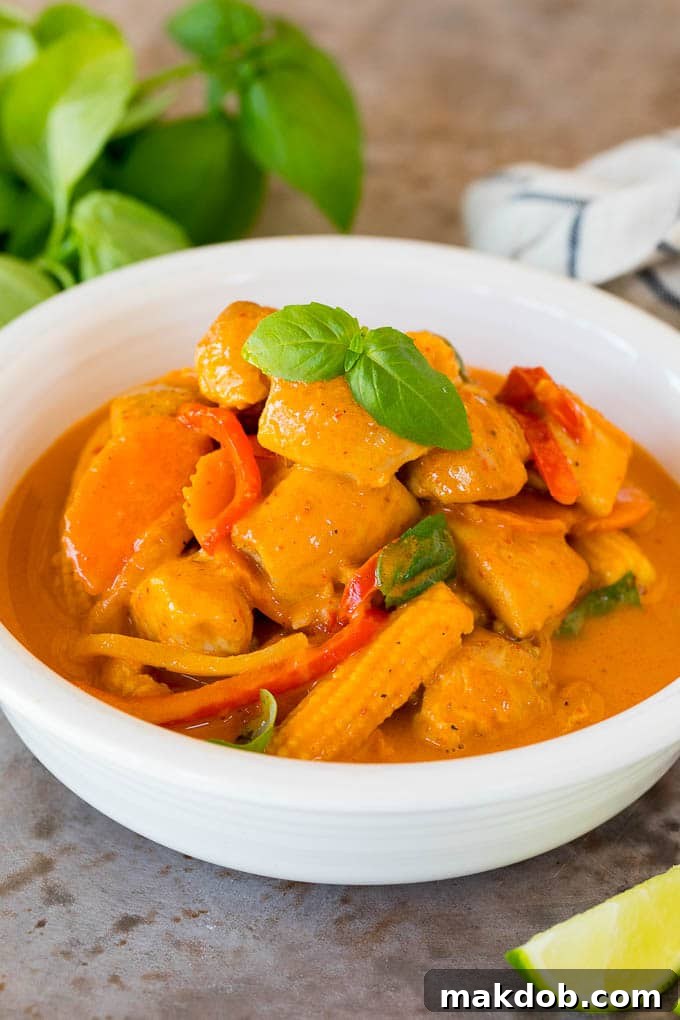
Authentic Thai Chicken Curry: A Homemade Delight Better Than Takeout
This exquisite Thai Chicken Curry recipe brings together succulent pieces of tender chicken and a vibrant array of colorful vegetables, all lovingly simmered in a rich, aromatic coconut red curry sauce. Imagine crafting a homemade version of your favorite restaurant dish – one that’s incredibly easy to prepare, tastes genuinely authentic, and promises to satisfy your Thai food cravings right in your own kitchen.
For many, a trip to a local Thai restaurant isn’t complete without indulging in a variety of beloved dishes. Personally, I always gravitate towards classics like a refreshing cucumber salad, savory peanut noodles, and, of course, a comforting bowl of chicken curry. Over the years, I’ve perfected my own Thai chicken curry recipe at home, and I genuinely believe it surpasses what you’d typically experience when dining out. It’s a testament to the fact that authentic, restaurant-quality flavors are entirely achievable with just a few simple steps and high-quality ingredients.
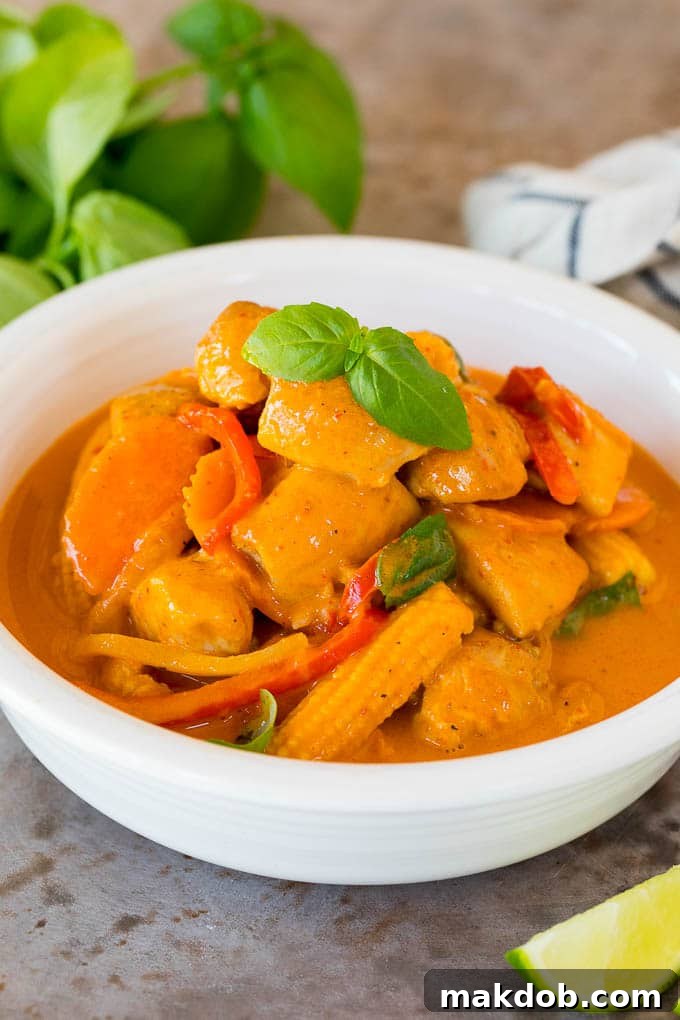
This Thai chicken curry has quickly become a cherished weekday staple in my household. Its beauty lies not only in its incredible flavor but also in its minimalist ingredient list, making it a fantastic way to utilize any leftover vegetables you might have on hand. Serve it alongside a generous portion of steaming jasmine rice, and you’ll have an effortless yet deeply satisfying dinner that everyone at your table will adore. This dish isn’t just a meal; it’s an experience, transforming your ordinary kitchen into a hub of exotic aromas and vibrant tastes.
What Exactly is Thai Chicken Curry? Exploring the Dish’s Rich Flavors
Thai Chicken Curry, particularly the red variety, is a cornerstone of Thai cuisine, celebrated for its perfect balance of sweet, savory, spicy, and tangy notes. At its heart lies a fragrant red curry paste, a complex blend of chilies, garlic, shallots, galangal, lemongrass, kaffir lime peel, and various spices. This paste forms the foundation, which is then mellowed and enriched by creamy coconut milk. The result is a vibrant, flavorful sauce that beautifully coats tender chicken and crisp-tender vegetables. It’s a dish that embodies the very essence of Thai cooking: bold, fresh, and deeply satisfying.
The magic of this curry comes from the interplay of its core components. The heat from the red chilies in the paste is perfectly complemented by the sweetness of coconut milk and a touch of brown sugar, creating a harmonious profile. Fresh herbs like basil and lime juice are added at the end, lending a bright, fresh finish that elevates the entire dish. Unlike some curries that rely on a thick, heavy texture, Thai red curry is often lighter, allowing the individual flavors of the chicken and vegetables to shine through while still providing a luxurious creaminess.
Crafting Your Own Thai Chicken Curry: A Step-by-Step Guide
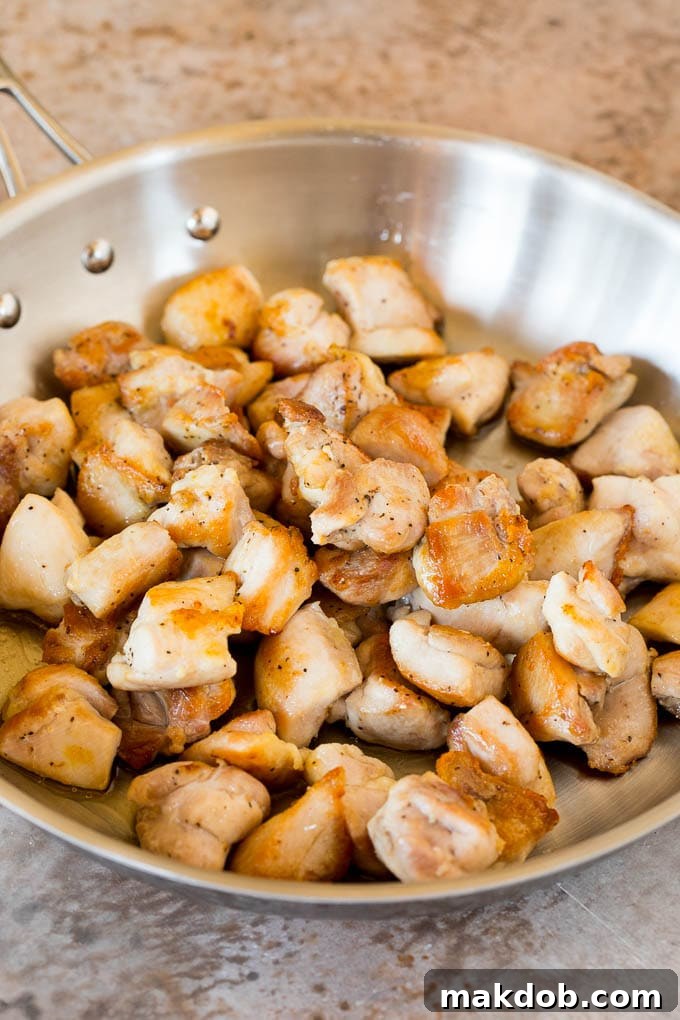
Creating this delicious Thai chicken curry at home is surprisingly straightforward, even for novice cooks. The process begins with carefully selected chicken thighs, renowned for their tenderness and rich flavor profile, which are cut into bite-sized pieces and browned to perfection in a large pan. This initial searing locks in their juices and builds a foundational layer of flavor for the curry.
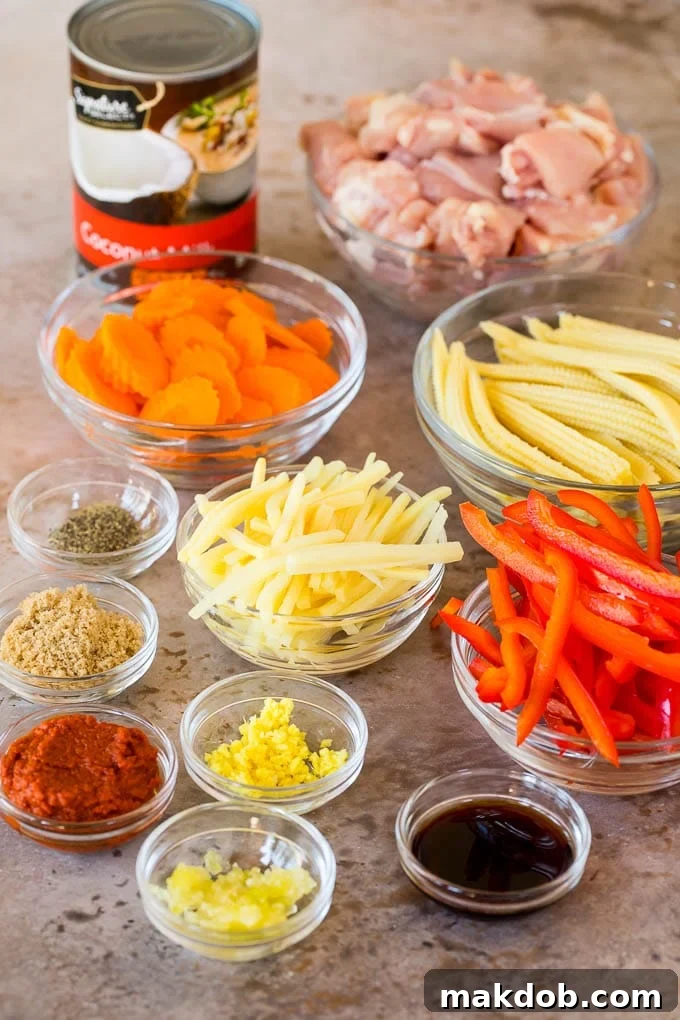
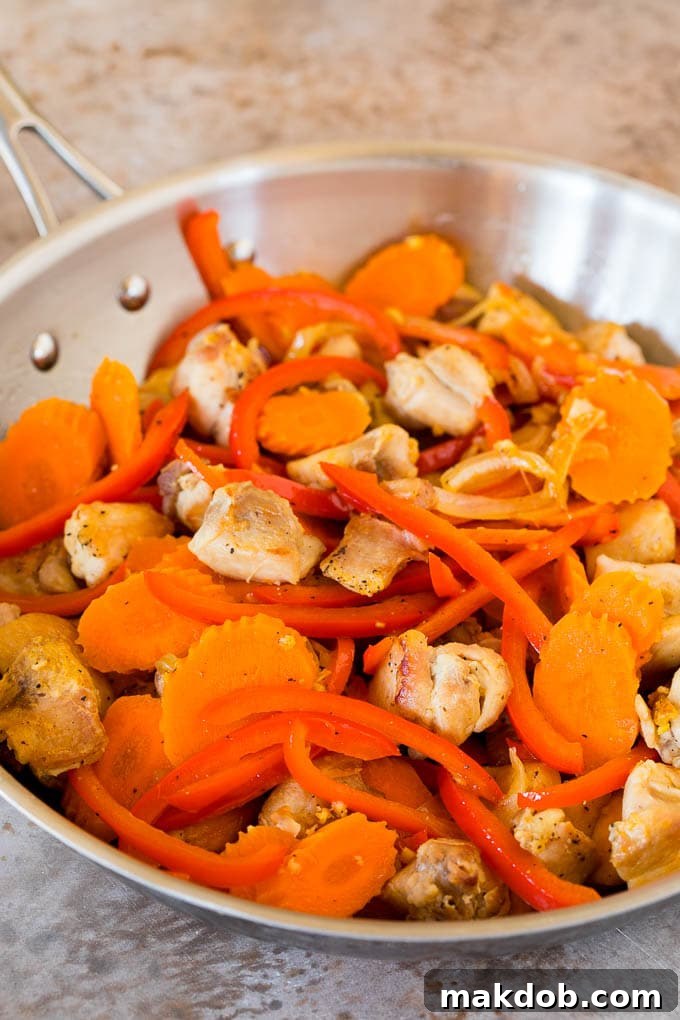
Once the chicken is beautifully golden, thinly sliced onions are introduced to the pan, softening and sweetening as they cook. This is followed by the aromatic duo of minced garlic and ginger, which are sautéed just until fragrant, infusing the entire dish with their distinctive, warm spices. The next crucial step involves incorporating your chosen vegetables, such as vibrant red bell peppers and thinly sliced carrots. These are cooked until they reach a perfect tender-crisp texture, ensuring they retain their delightful bite and nutritional value.
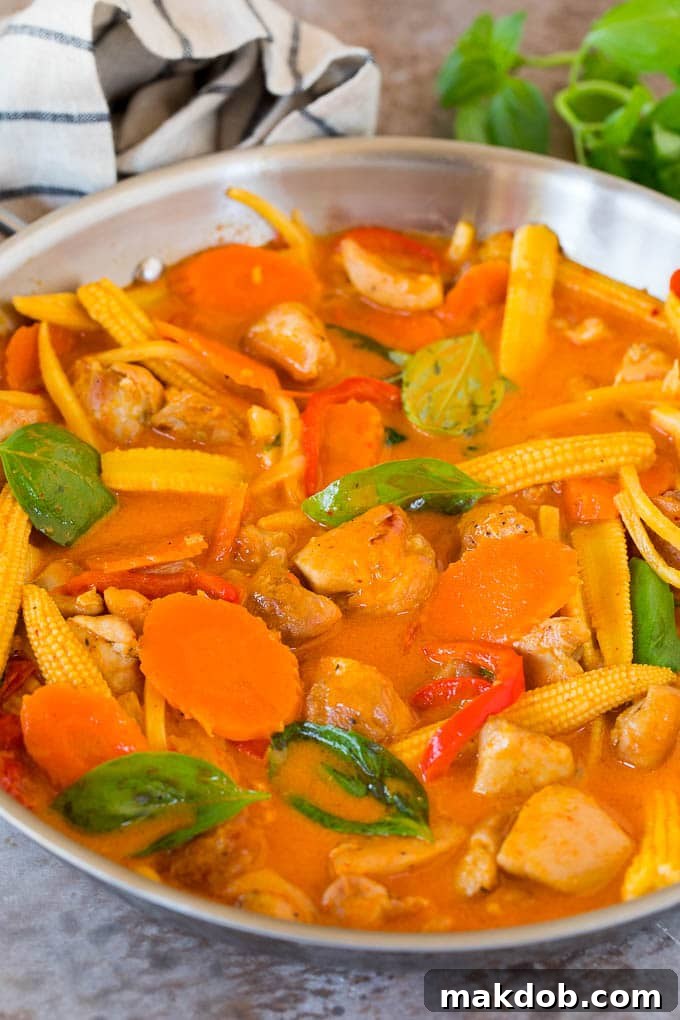
The heart of the curry is then added: a generous amount of rich coconut milk and pungent red curry paste. These ingredients are stirred thoroughly to combine, creating the luscious, creamy base of the sauce. The mixture is then brought to a gentle simmer, allowing all the flavors to meld and deepen beautifully. Finally, the curry is seasoned with a touch of brown sugar for balance, a splash of soy sauce for umami, and a squeeze of fresh lime juice for brightness. A handful of fresh basil leaves is stirred in just before serving, adding a final burst of herbaceous freshness. This vibrant, comforting curry is then ready to be served over fluffy rice, offering a taste of Thailand with every spoonful.
Pro Tips for Achieving the Perfect Thai Chicken Curry
To ensure your homemade Thai chicken curry reaches its full potential, consider these expert tips that will elevate your dish from good to absolutely outstanding:
- **Embrace Store-Bought Red Curry Paste:** While making curry paste from scratch is an art, high-quality store-bought jarred red curry paste offers incredible flavor and saves significant preparation time. Look for brands that list natural ingredients and avoid those with excessive additives for the best results. It’s a convenient shortcut that doesn’t compromise on authenticity.
- **Always Opt for Full-Fat Coconut Milk:** This is a non-negotiable for a truly rich and creamy Thai curry. Light coconut milk contains more water, which will result in a thinner, less flavorful, and potentially watery final product. Full-fat coconut milk provides the luxurious texture and deep coconut flavor essential to this dish. Shake the can well before opening to ensure the cream and liquid are well combined.
- **Timing is Key with Rice:** For a seamless dinner experience, start cooking your steamed rice at the same time you begin preparing the curry. This way, both components will be ready simultaneously, ensuring your meal is served hot and fresh.
- **Don’t Skip the Brown Sugar:** Thai cuisine is renowned for its balance of flavors – sweet, sour, salty, and spicy. Brown sugar plays a crucial role in achieving this equilibrium by rounding out the intensity of the curry paste and the tanginess of the lime. It adds a subtle sweetness that makes the other flavors pop without making the dish overly sweet.
- **Chicken Thighs for Superior Tenderness and Flavor:** I highly recommend using boneless, skinless chicken thighs for this curry. They are inherently more flavorful and forgiving than chicken breasts, remaining wonderfully tender and juicy even after simmering in the sauce. If you prefer chicken breast, ensure you don’t overcook it to avoid dryness. Slice it against the grain into uniform pieces for even cooking.
- **Proper Storage for Leftovers:** Any leftover Thai chicken curry can be stored in an airtight container in the refrigerator for up to 3 days. The flavors often deepen and become even more pronounced the next day, making it a fantastic meal prep option.
- **Sourcing Baby Corn and Bamboo Shoots:** This recipe features baby corn, which typically comes canned and can be found in the international foods aisle or the canned vegetable section of most grocery stores. Similarly, canned bamboo shoots are usually available in the same sections. These add authentic texture and flavor to the curry.
- **Avoid Freezing This Dish:** Unfortunately, Thai curries with coconut milk do not freeze well. Upon thawing, the coconut milk-based sauce tends to curdle and separate, resulting in an unappealing texture. It’s best enjoyed fresh or refrigerated for a few days.
Perfect Pairings: What to Serve with Your Thai Chicken Curry
The right accompaniment can significantly enhance your Thai chicken curry experience. While the curry itself is bursting with flavor, a complementary side can help to balance the meal and add textural contrast.
The most traditional and widely loved accompaniment to Thai curry is **steamed white jasmine rice**. Its delicate fragrance and fluffy texture perfectly absorb the rich, creamy sauce, making every bite a delight. However, for those looking for alternatives or a bit more nutritional value, there are plenty of other excellent options:
- **Brown Rice:** A healthier alternative, brown rice offers a nuttier flavor and chewier texture that stands up well to the robust curry.
- **Rice Noodles:** For a different carb base, soft and slippery rice noodles can be a fantastic choice, especially if you prefer slurping up your curry.
- **Coconut Rice:** Elevate the coconut theme by cooking your rice with a portion of coconut milk and a pinch of salt. This adds an extra layer of sweetness and aroma that beautifully complements the curry.
- **Quinoa:** A protein-rich, gluten-free grain, quinoa offers a slightly earthy flavor and fluffy texture, making it a wholesome and modern pairing.
- **Fresh Green Salad:** A simple, crisp green salad with a light vinaigrette can offer a refreshing contrast to the richness of the curry.
- **Roti or Naan Bread:** While more commonly associated with Indian curries, a warm, flaky roti or soft naan bread can be excellent for scooping up every last drop of that delicious sauce.
Customizing Your Thai Chicken Curry: Exciting Flavor Variations
This Thai chicken curry recipe is undeniably delicious as written, but it also serves as an excellent canvas for customization. Don’t hesitate to experiment with different ingredients to tailor it perfectly to your personal tastes and preferences:
- **Protein Swaps:**
- **Tofu:** For a vegetarian option, swap the chicken for firm or extra-firm tofu cubes. Press the tofu to remove excess water, then pan-fry or bake it until golden brown before adding it to the curry.
- **Shrimp:** Quick-cooking shrimp are a fantastic choice, adding a delicate sweetness to the curry. Add them in the last few minutes of simmering to prevent overcooking.
- **Seared Flank Steak:** Thinly sliced and quickly seared flank steak can offer a richer, more robust meat option.
- **Pork or Duck:** Experiment with other meats like thinly sliced pork tenderloin or pre-cooked duck for different flavor profiles.
- **Curry Paste Alternatives:**
- **Green Curry Paste:** If you prefer a spicier, more herbaceous curry, substitute red curry paste with green curry paste. Green curry typically uses fresh green chilies, offering a brighter, more pungent heat.
- **Massaman Curry Paste:** For a milder, richer, and slightly sweeter curry with influences from Indian and Malay cuisine, try Massaman curry paste. It often includes ingredients like cardamom, cinnamon, and peanuts.
- **Vegetable Medley:**
- While the recipe calls for carrots, bell peppers, baby corn, and bamboo shoots (which are typical in many Thai restaurant curries), feel free to get creative with your vegetable choices.
- **Root Vegetables:** Diced potatoes or butternut squash add heartiness and a pleasant sweetness. Add them early in the simmering process to ensure they cook through.
- **Leafy Greens:** Fresh spinach, bok choy, or kale can be stirred in at the very end until wilted, adding a healthy boost.
- **Other Options:** Consider adding sliced eggplant (Thai eggplant or regular), snow peas, green beans, mushrooms, or water chestnuts for variety in texture and taste.
- **Herbaceous Enhancements:**
- **Lemongrass:** Thinly sliced fresh lemongrass can be added along with the ginger and garlic for a potent citrusy aroma.
- **Kaffir Lime Leaves:** These highly aromatic leaves provide a distinctive citrus-floral note unique to Thai cuisine. Bruise them slightly before adding them to the simmering sauce and remove before serving.
- **Cilantro:** Fresh cilantro, either stirred in at the end or used as a garnish, offers a bright, refreshing counterpoint to the rich curry.
Why Choose Homemade Over Takeout?
Making Thai chicken curry at home offers several distinct advantages over ordering takeout. First and foremost, you have complete control over the ingredients, ensuring freshness and quality. You can adjust the spice level to your preference, add more of your favorite vegetables, or even swap out proteins to suit dietary needs or cravings. Homemade versions often contain less sodium and unhealthy oils than their restaurant counterparts, making them a healthier choice.
Beyond health benefits, there’s immense satisfaction in creating a delicious meal from scratch. The aromas that fill your kitchen as the curry simmers are intoxicating, and the act of cooking itself can be a relaxing and rewarding experience. Plus, it’s often more cost-effective to prepare a large batch at home, providing multiple servings for future meals.
Frequently Asked Questions About Thai Chicken Curry
Here are some common questions about making Thai Chicken Curry:
- **Can I make this curry vegetarian or vegan?** Absolutely! Simply swap the chicken for tofu, tempeh, or a medley of extra vegetables like cauliflower, chickpeas, and spinach. Ensure your curry paste is vegan-friendly (some contain shrimp paste).
- **What if I can’t find Thai basil?** Regular sweet basil works perfectly fine as a substitute, though Thai basil offers a slightly more anise-like flavor. You can also experiment with cilantro.
- **How do I adjust the spice level?** For less spice, use less red curry paste or choose a milder brand. For more heat, add a pinch of red pepper flakes or a sliced fresh bird’s eye chili during the simmering process, or garnish with chili oil.
- **My curry sauce is too thin/thick. How do I fix it?** If too thin, simmer uncovered for a bit longer to allow it to reduce. If too thick, add a splash more coconut milk or a little water or broth until it reaches your desired consistency.
This Thai chicken curry is so incredibly delicious and satisfying, you’ll find yourself reaching for your wok instead of the takeout menu time and time again!
Other Thai-Inspired Recipes You’ll Love to Try
- Sweet Chili Chicken
- Thai Fried Rice
- Cashew Chicken
- Peanut Chicken
- Thai Fish Cakes
Thai Chicken Curry Recipe
This authentic Thai chicken curry features tender chicken and vibrant vegetables, all simmered in a creamy, flavorful coconut red curry sauce. It’s an easy-to-make homemade version of a beloved restaurant favorite that truly tastes authentic!
Recipe Summary
Prep Time: 20 minutes
Cook Time: 30 minutes
Total Time: 50 minutes
Course: Main
Cuisine: Asian
Serves: 4
Ingredients
- 1 tablespoon vegetable oil
- 1 1/4 pounds boneless, skinless chicken thighs, cut into bite-sized pieces
- Salt and pepper to taste
- 1/2 cup onion, thinly sliced
- 2 teaspoons garlic, minced
- 2 teaspoons ginger, minced
- 1 red bell pepper, seeded, cored, and cut into strips
- 3 carrots, peeled and thinly sliced
- 3 tablespoons Thai red curry paste
- 14 ounce can full-fat coconut milk
- 1 1/2 teaspoons brown sugar
- 1/2 cup bamboo shoots
- 3/4 cup canned baby corn, halved
- 1 tablespoon soy sauce
- 2 teaspoons lime juice
- 1 cup fresh basil leaves (Thai basil if available), plus more for garnish
- Steamed rice for serving
Instructions
- Heat the vegetable oil in a large pan or Dutch oven over medium-high heat.
- Add the chicken to the pan in a single layer. Season the chicken with salt and pepper to taste. Cook for 4-5 minutes, stirring occasionally, until golden brown on all sides.
- Add the thinly sliced onion to the pan and cook for 3-4 minutes until it begins to soften. Then, add the minced garlic and ginger, cooking for an additional 30 seconds until fragrant.
- Stir in the carrots and red bell peppers. Cook for 4-5 minutes, or until the vegetables are crisp-tender. Season the vegetables lightly with salt and pepper to taste.
- Add the Thai red curry paste to the pan and stir it in thoroughly, ensuring it coats all the chicken and vegetables. Cook for 1 minute, allowing the paste to bloom and release its aroma.
- Pour the full-fat coconut milk into the pan. Add the brown sugar and stir well to combine all ingredients. Bring the mixture to a gentle simmer.
- Introduce the bamboo shoots and halved baby corn to the simmering curry. Continue to cook for 5 minutes, allowing the flavors to meld and the vegetables to heat through.
- Remove the pot from the heat. Stir in the soy sauce and fresh lime juice. Finally, gently fold in the fresh basil leaves.
- Serve the Thai chicken curry immediately over freshly steamed rice. Garnish with additional fresh basil leaves if desired for an extra touch of freshness.
Nutrition
Please note: Nutritional information is an estimate and may vary based on specific ingredients and preparation methods.
- Calories: 456 kcal
- Carbohydrates: 15g
- Protein: 31g
- Fat: 31g
- Saturated Fat: 23g
- Cholesterol: 135mg
- Sodium: 427mg
- Potassium: 846mg
- Fiber: 3g
- Sugar: 7g
- Vitamin A: 10106IU
- Vitamin C: 46mg
- Calcium: 74mg
- Iron: 5mg