
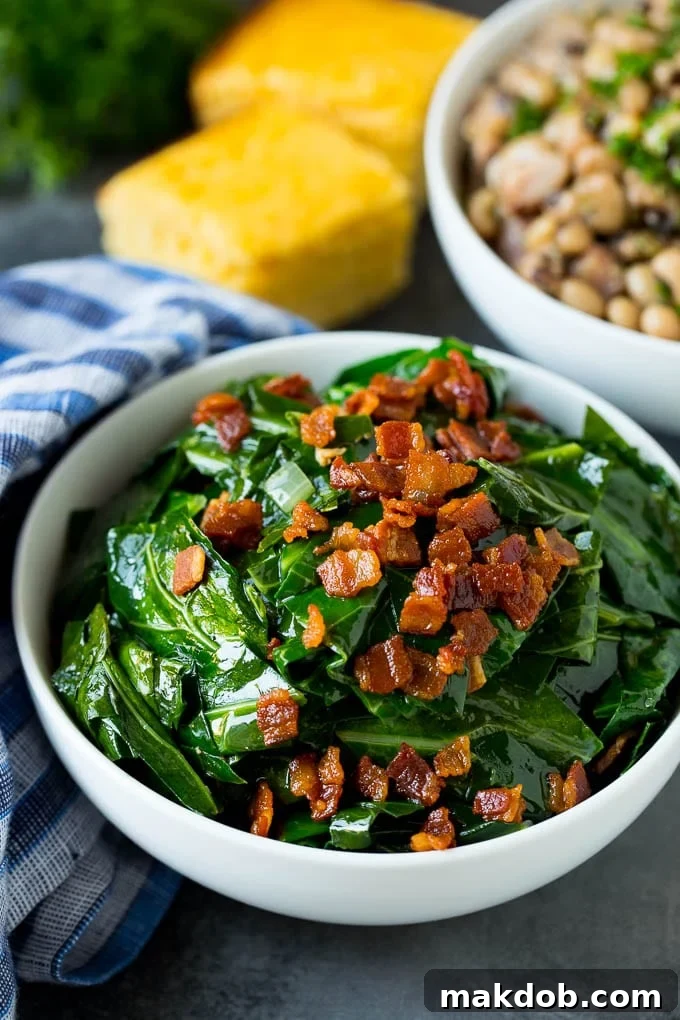
Welcome to the ultimate guide to creating the most delectable, Southern-style collard greens with bacon. This isn’t just a side dish; it’s a culinary journey into the heart of comfort food, a staple that transforms humble greens into a tender, flavorful masterpiece. Perfectly seasoned and simmered until they reach an irresistible succulence, these collard greens are more than just a vegetable—they’re an experience, designed to complement any main protein, from juicy roasted chicken to hearty beef or tender pork.
In the vast world of side dishes, few can rival the rich history and robust flavor of perfectly cooked collard greens. While often overlooked by the casual shopper, these leafy greens hold a special place in Southern kitchens for good reason. When prepared with care and the smoky addition of bacon, they unlock a depth of flavor that is truly unforgettable. This recipe promises an easy yet profoundly satisfying dish that will undoubtedly become a family favorite, standing proudly alongside other beloved comfort sides like creamy slow cooker mac and cheese and perfectly sautéed Brussels sprouts.
Imagine gathering around a table, the aroma of simmering greens filling the air, promising warmth and satisfaction. These smoky, savory collard greens are not just food; they are a celebration of tradition, a dish that brings people together. Serve them as a classic accompaniment to Hoppin’ John for a traditional New Year’s meal, or let them shine alongside your everyday dinners.
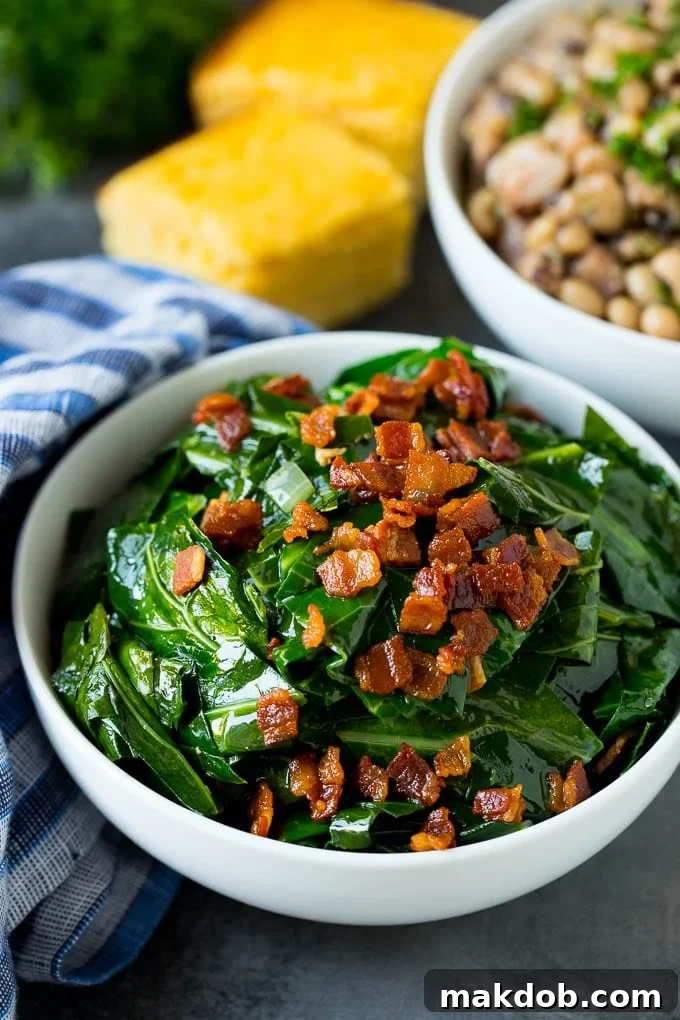
These collard greens are an ideal side dish recipe, versatile enough to pair with a wide array of main courses. Their savory, slightly tangy profile cuts through richness and adds a comforting element to any plate. Consider serving them with succulent baked chicken wings, a festive Cajun turkey, a comforting crock pot ham, or fall-off-the-bone slow cooker ribs. They add a touch of authentic Southern charm to any meal.
Table of Contents
- Essential Collard Green Ingredients
- How to Master Southern Collard Greens
- Expert Tips for the Perfect Dish
- Quick Selection Tip
- Recipe FAQs: Your Collard Greens Questions Answered
- Exciting Flavor Variations
- More Delightful Side Dishes You’ll Enjoy
- Collard Greens with Bacon Recipe Card
Essential Collard Green Ingredients
Crafting exceptional collard greens with bacon starts with a thoughtful selection of ingredients. You’ll need six slices of high-quality bacon, which forms the smoky, savory foundation of this dish. A half-cup of chopped onion and 1½ teaspoons of minced garlic provide aromatic depth, layering flavors that truly define Southern cooking. For the greens themselves, one pound of fresh collard greens, thoroughly cleaned and prepped, is essential. Chicken broth adds liquid for simmering and infuses the greens with moisture and flavor. Finally, a teaspoon of salt and ½ teaspoon of black pepper are your basic seasonings, enhanced by ½ teaspoon of hot sauce (or more, if you like a kick!) and a teaspoon of apple cider vinegar, which brightens the dish and cuts through any bitterness.
How to Master Southern Collard Greens
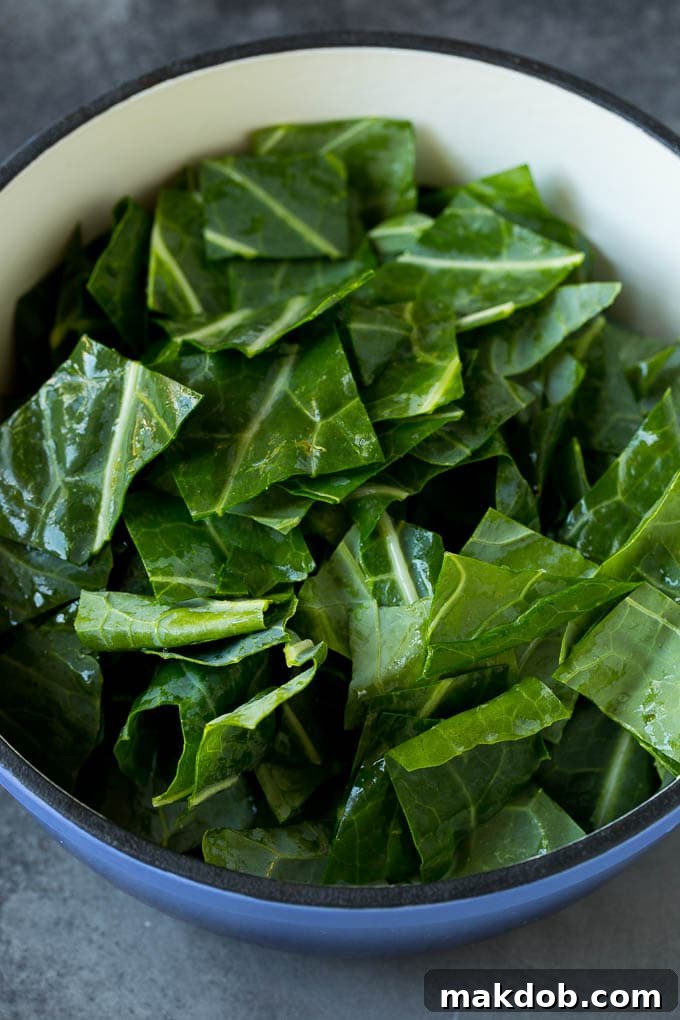
Making these classic Southern collard greens is a straightforward process, yielding incredibly rewarding results. Start by meticulously cleaning your collard greens under cold water, ensuring all dirt and grit are removed. This step is crucial for a pleasant eating experience. Next, prepare the greens by carefully cutting out the tough, woody stem from each leaf using a sharp knife. Once destemmed, roughly chop the leaves into manageable, bite-sized pieces.
In a large, heavy-bottomed pot, cook the diced bacon over medium-high heat until it turns deliciously crispy. The rendered bacon fat is a key component of the dish’s flavor profile. Remove about half of the cooked bacon and set it aside to use as a garnish later – this adds a delightful crunch and extra burst of flavor when serving.
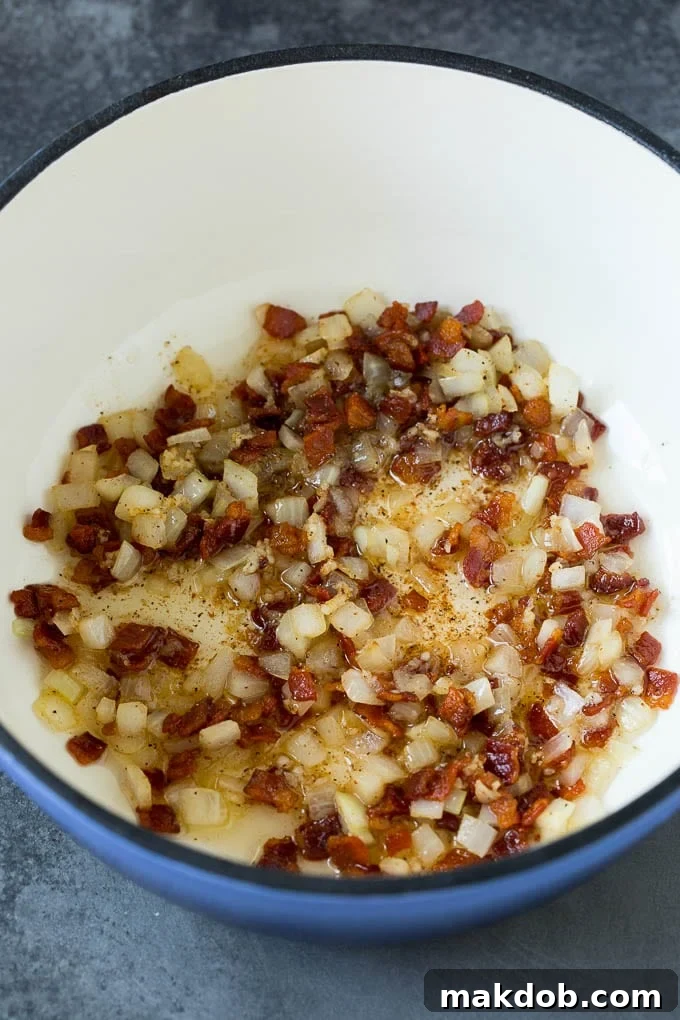
With the remaining bacon grease in the pan, add the chopped onion and minced garlic. Sauté them until they are fragrant and tender, which typically takes about 3-4 minutes for the onion and 30 seconds after adding the garlic to prevent burning. Stir in the salt and black pepper, allowing the aromatics to meld with the seasonings.
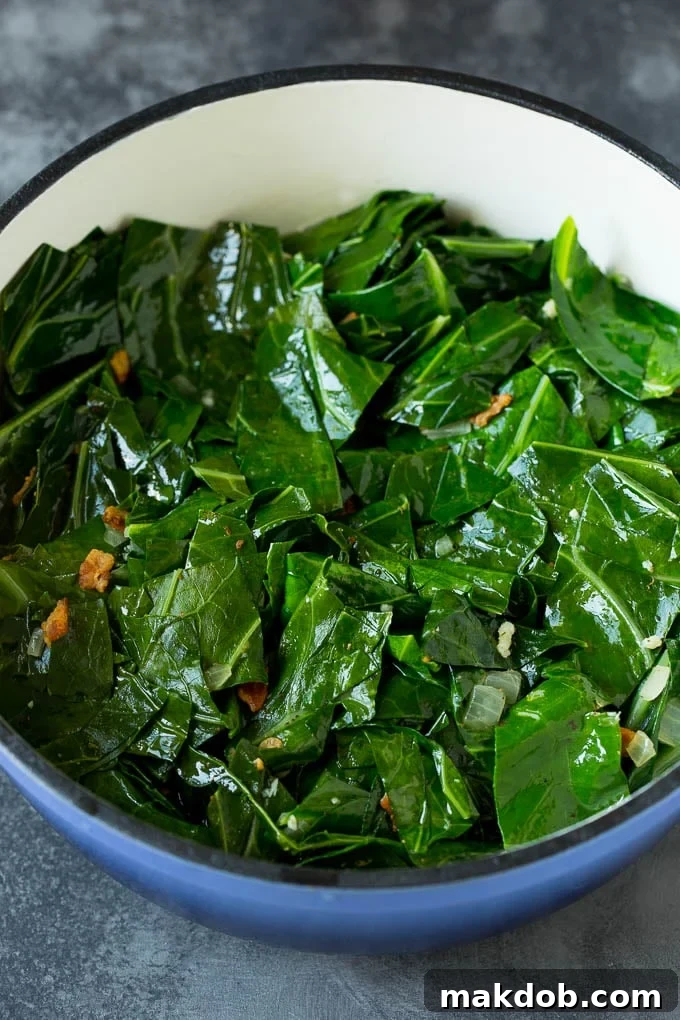
Now, it’s time for the star of the show: the collard greens. Add the chopped greens to the pot. You might find your pot overflowing at first, but don’t worry; they will quickly wilt down. Cook them for 2-3 minutes, stirring occasionally, until they have significantly reduced in volume. Pour in the chicken broth and bring the mixture to a gentle simmer.
Reduce the heat to low, cover the pot tightly, and let the greens simmer for 30-35 minutes. This slow cooking process is vital for breaking down the tough fibers of the collard greens, making them incredibly tender and allowing them to fully absorb all the rich flavors. Once tender, uncover the pot and stir in the hot sauce and apple cider vinegar. Continue to cook for an additional 5 minutes, allowing the flavors to meld and the vinegar to brighten the dish.
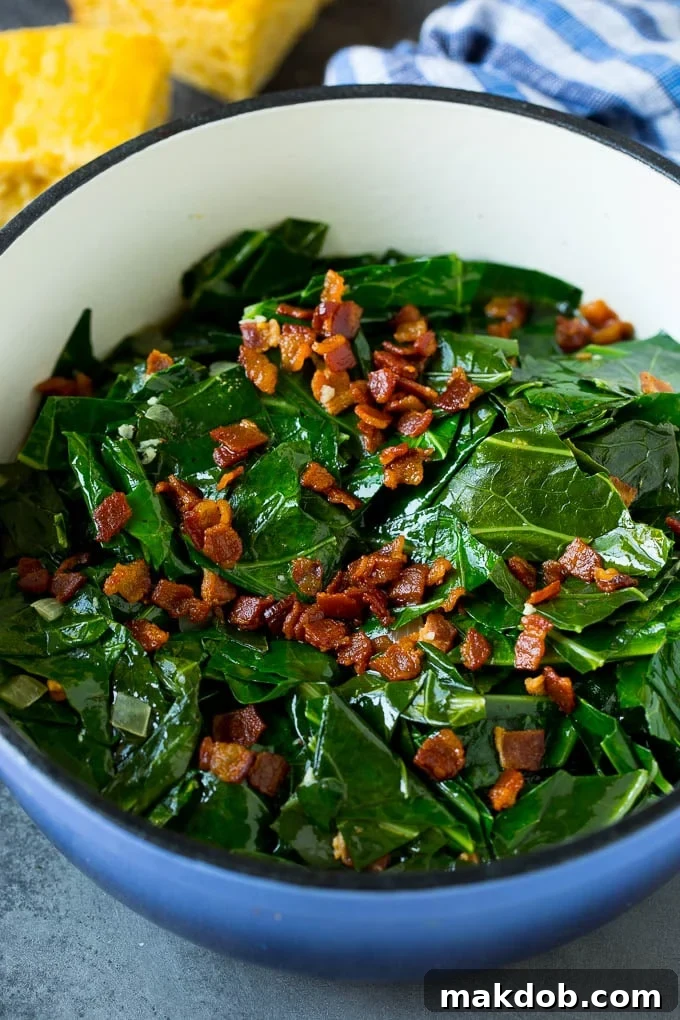
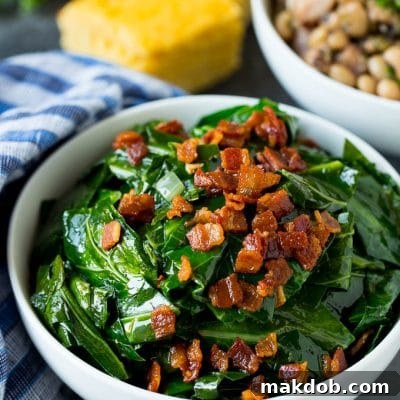
Finally, ladle the succulent collard greens into serving bowls, topping each portion with the reserved crispy bacon. Serve immediately and prepare to savor every bite of this classic Southern delicacy.
Expert Tips for the Perfect Dish
- Uniform Chopping for Even Cooking: To ensure your collard greens cook evenly and achieve that perfect tender texture, it’s important to chop them into pieces that are roughly the same size. This prevents some pieces from becoming overcooked and mushy while others remain tough. Aim for uniform 1½-inch pieces after removing the stems.
- Smart Prep Ahead of Time: Planning makes perfect! You can clean and prep your collard greens up to three days before you intend to cook them. Wash them thoroughly, remove the stems, chop them, and store them in an airtight container or a large zip-top bag in the refrigerator. If you’re really pressed for time, many grocery stores offer pre-washed and pre-chopped collard greens, which can be a fantastic shortcut.
- Storage and Reheating Advice: These delicious collard greens will stay fresh in an airtight container in the refrigerator for up to 3 days. They actually taste even better the next day as the flavors have more time to deepen and meld. When reheating, gently warm them on the stovetop over low heat, adding a splash of chicken broth or water if they seem too dry. Freezing is generally not recommended for this recipe, as the greens tend to become watery and lose their desirable texture upon thawing.
- The Ultimate Pairing: For an authentic Southern meal experience, serving your collard greens with a side of warm, buttery cornbread is an absolute must. The cornbread is perfect for soaking up the flavorful “pot liquor” – the delicious liquid left at the bottom of the pot after the greens are cooked – which is considered a delicacy itself.
- Don’t Rush the Simmer: The long, slow simmer is what transforms tough collard greens into tender, melt-in-your-mouth perfection. Resist the urge to cut down on the simmering time. Patience is key to achieving that signature Southern texture and allowing the flavors to fully develop.
Quick Selection Tip
When selecting fresh collard greens at the grocery store or farmer’s market, always look for leaves that are dark green and vibrant, not yellowed. Avoid any greens with brown spots, signs of wilting, or significant blemishes, as these indicate they are past their prime. Fresh, crisp leaves will yield the best results.
Recipe FAQs: Your Collard Greens Questions Answered
Collard greens are a leafy green vegetable belonging to the Brassica oleracea species, making them a relative of cabbage, broccoli, and kale. They are particularly popular in the Southern United States and have a significant cultural presence as a traditional soul food. These hearty greens are characterized by large, dark green leaves attached to tough, fibrous stems. While they share some properties with other sturdy greens like kale, turnip greens, and mustard greens, collards have a unique, slightly bitter flavor and a robust texture. Due to their toughness when raw, collard greens are best enjoyed when slow-cooked, which allows them to become incredibly tender and flavorful.
While some bitterness is inherent to collard greens and appreciated by many, there are effective ways to mellow it for a more universally appealing flavor. The best method involves a combination of slow cooking and strategic additions. The acidity from apple cider vinegar is a fantastic bitterness-cutter, brightening the overall taste. Simultaneously, the rich, smoky, and fatty elements from bacon (or other smoked meats) provide a counterpoint to the bitterness, enriching the greens with umami and depth. A long simmer also helps to break down the compounds responsible for the bitter taste, making the greens more palatable and tender.
The name “collard” is believed to be a corruption of the word “colewort” (also spelled “coleworte”). “Cole” is an old English term for various brassicas, including cabbage. The term “colewort” was used in medieval times to refer to varieties of cabbage that did not form a tight head, much like collard greens. Over time, “colewort” evolved into “collard,” specifically designating this popular leafy green that continues to be widely grown and enjoyed today, particularly for its resilient nature and nutritional value.
Absolutely! While this recipe highlights the classic bacon flavor, you can easily adapt it for vegetarian or vegan diets. Instead of bacon, use a smoked vegetarian alternative like smoked tempeh bacon or smoked paprika to replicate the smoky notes. Replace chicken broth with vegetable broth. For an extra layer of umami, consider adding a dash of liquid smoke or a tablespoon of nutritional yeast during the simmering process. You’ll still achieve tender, flavorful greens without the meat.
“Pot liquor,” or “potlikker,” is the highly flavorful, nutrient-rich broth left in the pot after cooking collard greens (or other leafy greens). It’s a cherished part of Southern cuisine, packed with vitamins and the concentrated essence of the greens, bacon, and seasonings. You should absolutely save it! Many enjoy drinking it straight, or it can be soaked up with cornbread. It’s too delicious and healthy to waste.
Follow Me
Exciting Flavor Variations
While the classic Southern-style collard greens recipe with bacon is undeniably delicious as written, it’s also wonderfully adaptable. Don’t hesitate to experiment with these exciting variations to customize the flavors to your personal preference and dietary needs.
- Alternative Meats for Smoky Depth: Bacon provides a fantastic smoky foundation, but you have other superb options. Consider using smoky ham hocks, which are a traditional choice for their rich, gelatinous texture and deep flavor. Alternatively, diced ham steak or smoked turkey wings can offer a similar savory, smoky essence. If you opt for ham hocks or smoked turkey wings, remember that they require longer cooking. Simmer them until they are very tender and the meat easily falls off the bone before adding the greens. Once cooked, remove the bones and shred or dice the meat, stirring it back into the finished dish for an incredible meaty addition.
- Explore Different Greens: While collards are the traditional and most common choice for this recipe, the cooking method works beautifully with other sturdy leafy greens. Feel free to substitute with kale for a slightly earthier flavor, spinach for a milder and quicker-cooking option, or turnip greens, mustard greens, or dandelion greens for a sharper, more peppery kick. You can even create a delightful blend by using a combination of different types of greens, adding layers of flavor and texture.
- Amp Up the Spice Factor: If you love a little heat, it’s incredibly easy to add a spicy kick to your collard greens. Simply stir in a pinch of red pepper flakes along with the other seasonings, or increase the amount of hot sauce to a full tablespoon (or even more!) according to your taste. A diced jalapeño or serrano pepper added with the onions can also provide a fresh, vibrant heat.
- Sweet and Savory Twist: For a slightly different profile, consider adding a touch of sweetness. A tablespoon of brown sugar or maple syrup can balance the savory and tangy notes, creating a more complex and rounded flavor. This is particularly appealing if you find collard greens to be too bitter.
No matter how you choose to prepare them, these collard greens are an incredibly rewarding way to enjoy your vegetables. Give them a try – you might just discover your new favorite side dish!
More Delightful Side Dishes You’ll Enjoy
Roasted Root Vegetables
55 mins
Honey Roasted Carrots
35 mins
Garlic Mashed Potatoes
40 mins
Roasted Green Beans
30 mins
Roasted Sweet Potatoes with Maple Butter
45 mins
Collard Greens Video
For a visual guide on how to prepare these incredible collard greens with bacon, watch our step-by-step video demonstration. See firsthand how to clean the greens, render the bacon to perfection, and simmer everything together to achieve that ideal tender texture and rich flavor. Our video makes it even easier to follow along and master this classic Southern dish.
(Video content removed to adhere to the “no Javascript” instruction. A static image or descriptive text replaces the interactive video player.)
Love This Recipe?
If you enjoyed making and tasting these collard greens, please consider leaving a 5-star 🌟🌟🌟🌟🌟 rating in the recipe card below and sharing your thoughts in the comments section further down the page. Your feedback helps other home cooks discover and enjoy this fantastic recipe!
Collard Greens with Bacon
Pin Recipe
Sara Welch
15 minutes
1 hour
1 hour 15 minutes
Side Dish
Southern American
4
Ingredients
- 6 slices bacon coarsely chopped
- 1/2 cup onion chopped
- 1 1/2 teaspoons garlic minced
- 1 teaspoon salt
- 1/2 teaspoon pepper
- 1 pound collard greens cleaned, stems removed, and cut into 1 1/2 inch pieces
- 2 cups chicken broth
- 1/2 teaspoon hot sauce or more to taste
- 1 teaspoon apple cider vinegar
Instructions
-
Place the coarsely chopped bacon in a large pot or Dutch oven over medium-high heat. Cook the bacon for 5-6 minutes, stirring occasionally, until it becomes wonderfully crispy. Carefully remove about half of the cooked bacon from the pan with a slotted spoon and set it aside; this will be used as a delicious garnish later. Leave the rendered bacon fat in the pot.
-
Add the chopped onion to the pot with the bacon grease. Sauté for 3-4 minutes, or until the onion has softened and become translucent. Next, add the minced garlic, salt, and pepper to the pot. Continue to cook for another 30 seconds, stirring constantly, until the garlic is fragrant, being careful not to burn it.
-
Add the cleaned and chopped collard greens to the pot. If the pot seems full, don’t worry, the greens will wilt down significantly as they cook. Stir and cook for 2-3 minutes until the greens have wilted and their volume has reduced. Pour in the chicken broth and bring the mixture to a gentle simmer.
-
Reduce the heat to low, then cover the pot tightly with a lid. Allow the collard greens to simmer slowly for 30-35 minutes, or until they are very tender. This long simmer is crucial for achieving the perfect texture. Once tender, uncover the pot and stir in the hot sauce and apple cider vinegar. Cook for an additional 5 minutes, allowing the flavors to meld beautifully.
-
Taste and adjust seasonings if necessary. Ladle the tender collard greens into serving dishes. Before serving, sprinkle generously with the reserved crispy bacon bits. Serve immediately and enjoy this comforting Southern classic.
Notes
- Chop your collard greens into pieces that are about the same size so that they cook in about the same amount of time.
- Look for collard greens that are dark green and not yellowed. Try to avoid greens with brown spots or that are wilted.
- The greens can be cleaned and prepped up to three days before you plan to use them. You can also buy a bag of pre-prepared greens to save some time.
- For added depth, you can simmer with a smoked ham hock, removing it before serving.
- Adjust the amount of hot sauce to your preference for a milder or spicier dish.
Nutrition Facts (per serving)
Calories: 190kcal
|
Carbohydrates: 9g
|
Protein: 8g
|
Fat: 14g
|
Saturated Fat: 4g
|
Cholesterol: 22mg
|
Sodium: 1263mg
|
Potassium: 430mg
|
Fiber: 5g
|
Sugar: 1g
|
Vitamin A: 5691IU
|
Vitamin C: 50mg
|
Calcium: 275mg
|
Iron: 1mg
Did you make this recipe?
Tag @dinneratthezoo on Instagram and hashtag it #dinneratthezoo