
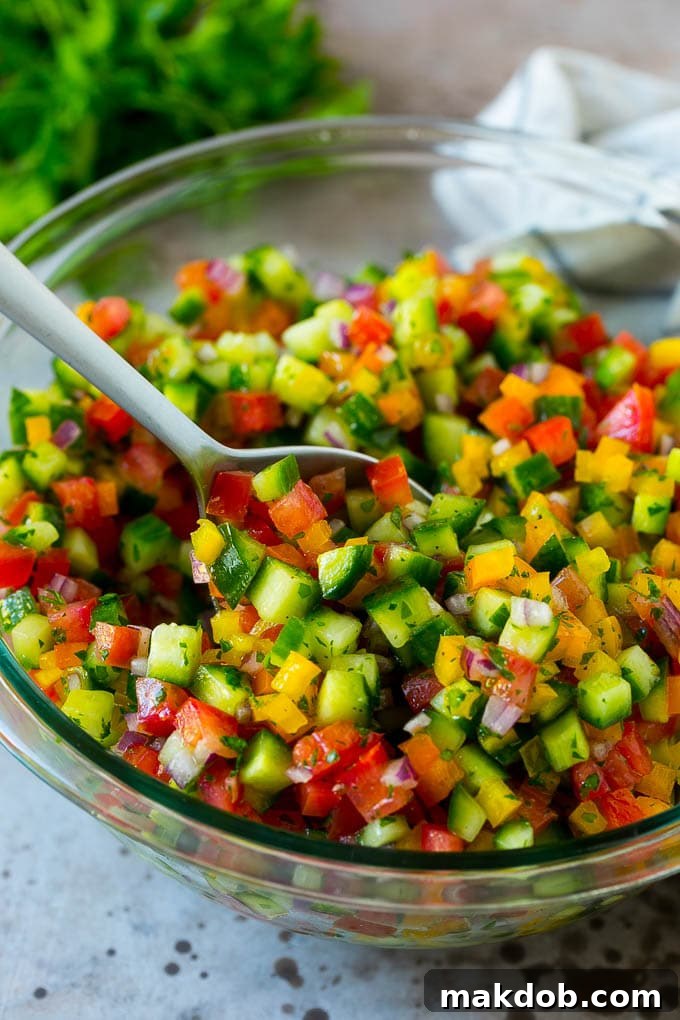
Welcome to the vibrant world of the Israeli Salad, a dish that’s more than just a side—it’s a celebration of fresh produce, simplicity, and bold flavors. This iconic salad, characterized by its finely diced ingredients and refreshing lemon-herb dressing, has become a staple in kitchens across the globe. Whether you’re a seasoned chef or a culinary novice, preparing this colorful and nutritious dish is a delightful experience that promises to elevate any meal. It’s not only a feast for the eyes but also a powerhouse of essential nutrients, perfectly embodying the healthy and delicious principles of Mediterranean cuisine.
Often referred to simply as “Chopped Salad,” this versatile creation holds a special place in Middle Eastern culinary traditions. Its bright, crisp textures and zesty dressing make it an ideal companion to a wide array of main courses, from succulent grilled meats to delicate baked fish. Imagine serving it alongside homemade falafel, tender chicken shawarma, or savory shish kabobs, complete with creamy hummus and warm pita bread. The Israeli Salad effortlessly transforms an ordinary dinner into a memorable culinary journey, bursting with the authentic tastes of the region.
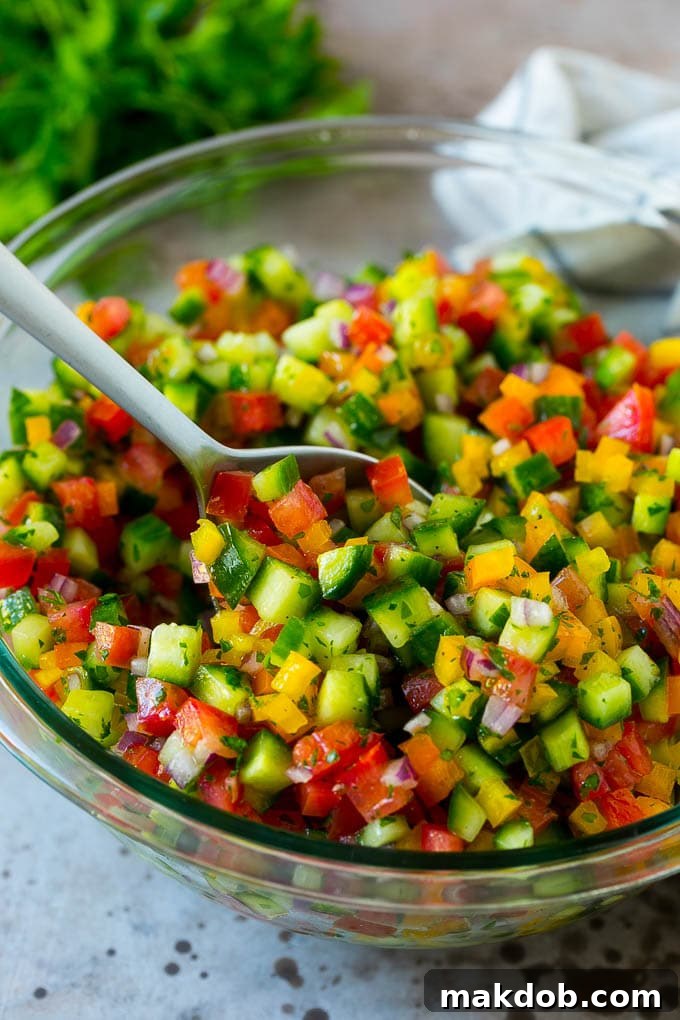
The beauty of this vegan Israeli salad lies in its straightforward preparation and universal appeal. It’s naturally gluten-free, low-carb, and easily adaptable to a keto diet, making it an excellent choice for almost any dietary preference. Its crisp and clean flavor profile is especially welcoming during warmer months, offering a delightful respite from heavier dishes. Perfect for backyard barbecues, casual potlucks, or elegant dinner parties, this chopped salad consistently draws rave reviews, proving that sometimes, the simplest ingredients yield the most extraordinary results.
Beyond its refreshing taste, the Israeli salad holds cultural significance as a daily accompaniment to almost every meal in Israeli households. It’s often served at breakfast, lunch, and dinner, demonstrating its versatility and integral role in the local diet. The act of finely chopping the vegetables is considered essential, as it allows all the flavors to meld together harmoniously in every single bite, creating a truly integrated taste experience that distinguishes it from other salads.
Table of Contents
- Unveiling the Israeli Salad: A Culinary Gem
- What is Israeli Salad? More Than Just a Side Dish
- The Essence of Freshness: Israeli Salad Ingredients
- Crafting the Perfect Chopped Salad: Step-by-Step Guide
- Mastering the Art: Tips for the Best Israeli Salad
- The Healthy Choice: Nutritional Powerhouse
- Perfect Pairings: Serving Israeli Salad
- Unleash Your Creativity: Israeli Salad Variations
- Frequently Asked Questions About Israeli Salad
- More Great Salad Recipes You’ll Love
- Love This Recipe?
- Authentic Israeli Salad Recipe
The Essence of Freshness: Israeli Salad Ingredients
The secret to an outstanding Israeli salad lies in the quality and freshness of its simple ingredients. Each component plays a crucial role in creating the signature taste and texture that makes this dish so irresistible:
- Cucumbers: The cornerstone of the salad, providing a crisp and refreshing crunch. Persian or English cucumbers are highly recommended due to their thin skins and minimal seeds, eliminating the need for peeling or deseeding. If using standard slicing cucumbers, you might want to peel them and scoop out the watery seed core to prevent the salad from becoming soggy.
- Tomatoes: Ripe, firm tomatoes are essential. Roma tomatoes are an excellent choice as they have a lower water content and fewer seeds, maintaining the salad’s integrity. Cherry or grape tomatoes, halved, also work wonderfully and add a burst of sweetness.
- Red Onion: Adds a sharp, pungent kick that balances the sweetness of the other vegetables. Finely minced red onion integrates seamlessly into the salad without overpowering it. For a milder flavor, you can soak the chopped onion in cold water for 10-15 minutes, then drain thoroughly before adding.
- Bell Peppers: These contribute a sweet, vibrant color and an extra layer of crunch. While the original recipe often uses green bell peppers, feel free to use any color—yellow, orange, or red—or a combination to enhance the visual appeal and flavor complexity.
- Fresh Parsley: A generous amount of fresh parsley is non-negotiable. Its herbaceous, slightly peppery notes are fundamental to the salad’s authentic flavor profile. Always opt for fresh over dried.
- Fresh Mint Leaves (Optional but Recommended): A touch of fresh mint elevates the salad with an invigorating coolness. While optional, it adds a distinct aromatic quality that truly makes the salad sing.
- Extra Virgin Olive Oil: Choose a good quality extra virgin olive oil. It forms the base of the simple yet flavorful dressing, lending a smooth, rich undertone that binds all the ingredients together.
- Fresh Lemon Juice: Absolutely vital! Freshly squeezed lemon juice provides the essential bright, tangy acidity that defines the Israeli salad’s dressing. Avoid bottled lemon juice, as its flavor cannot compare to fresh.
- Salt and Black Pepper: Simple seasonings that enhance and marry all the natural flavors. Season to taste, ensuring a balanced profile.
Crafting the Perfect Chopped Salad: Step-by-Step Guide
Making an authentic Israeli salad is incredibly simple, relying more on technique than complex culinary skills. The key is in the preparation of your vegetables:
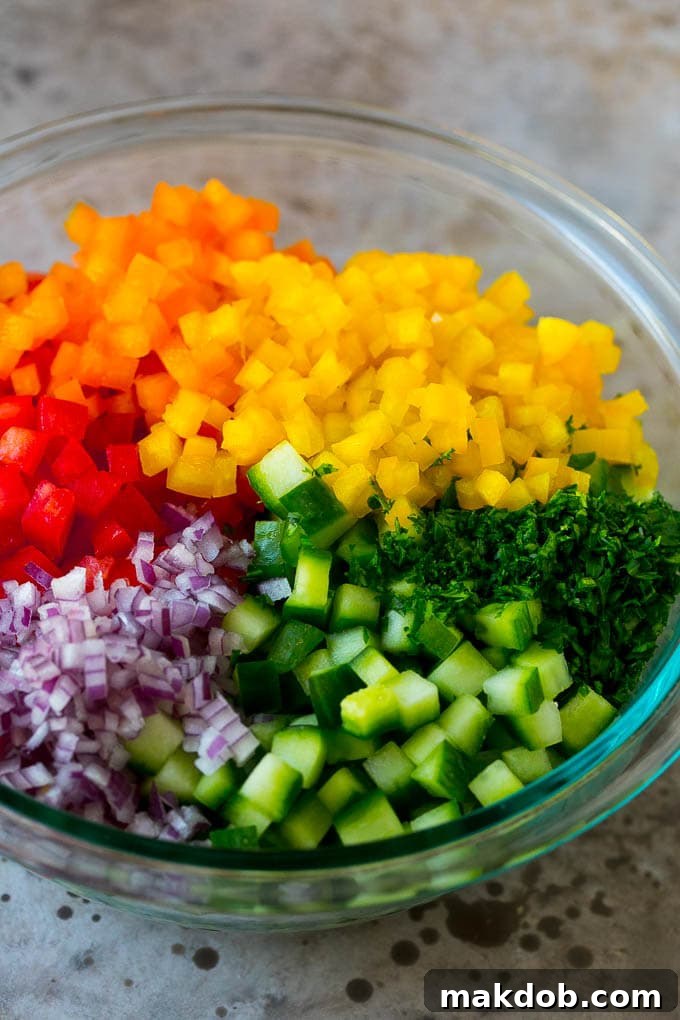
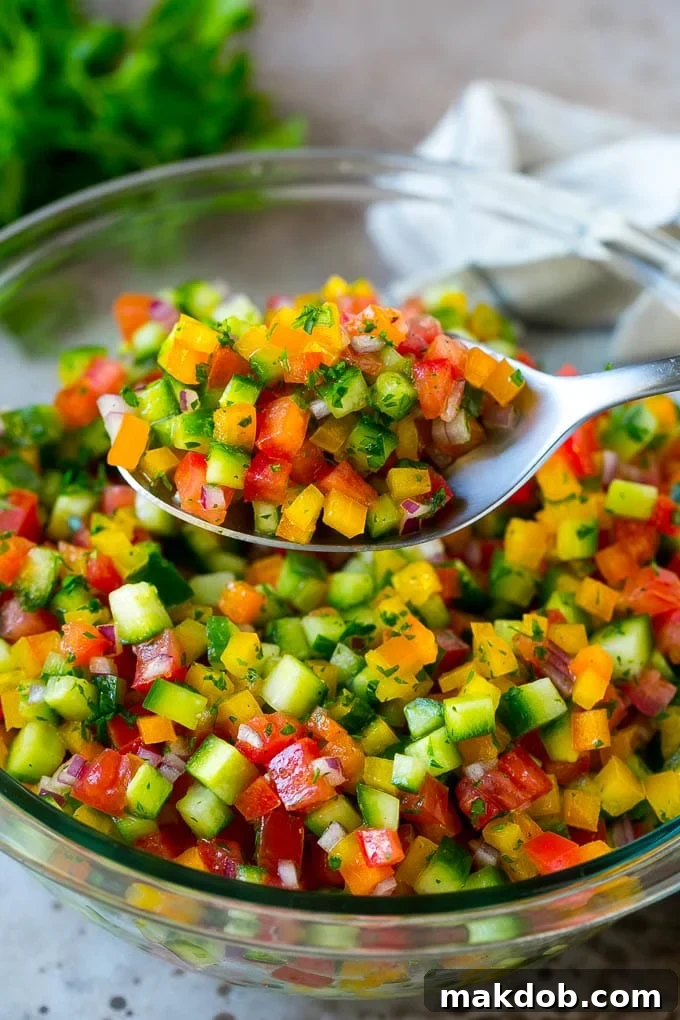
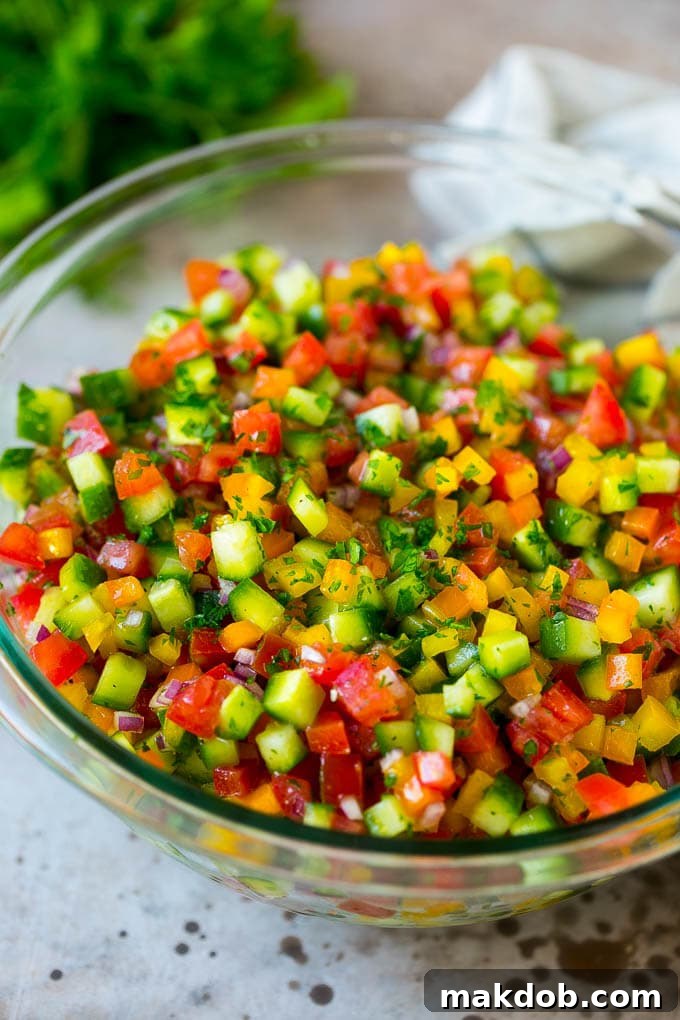
- Fine Chopping is Key: Begin by preparing all your vegetables. The hallmark of a true Israeli salad is the uniformly small, fine dice of all ingredients. This ensures that every spoonful offers a balanced mix of flavors and textures. For cucumbers, aim for about 1/4-inch dice. For tomatoes, after deseeding, chop them to a similar size. Red onions should be minced very finely, and bell peppers diced to match the other vegetables. Similarly, mince your fresh parsley and mint.
- Combine the Freshness: Once all your vegetables are perfectly chopped, transfer them to a large mixing bowl. The colors alone are a feast for the eyes!
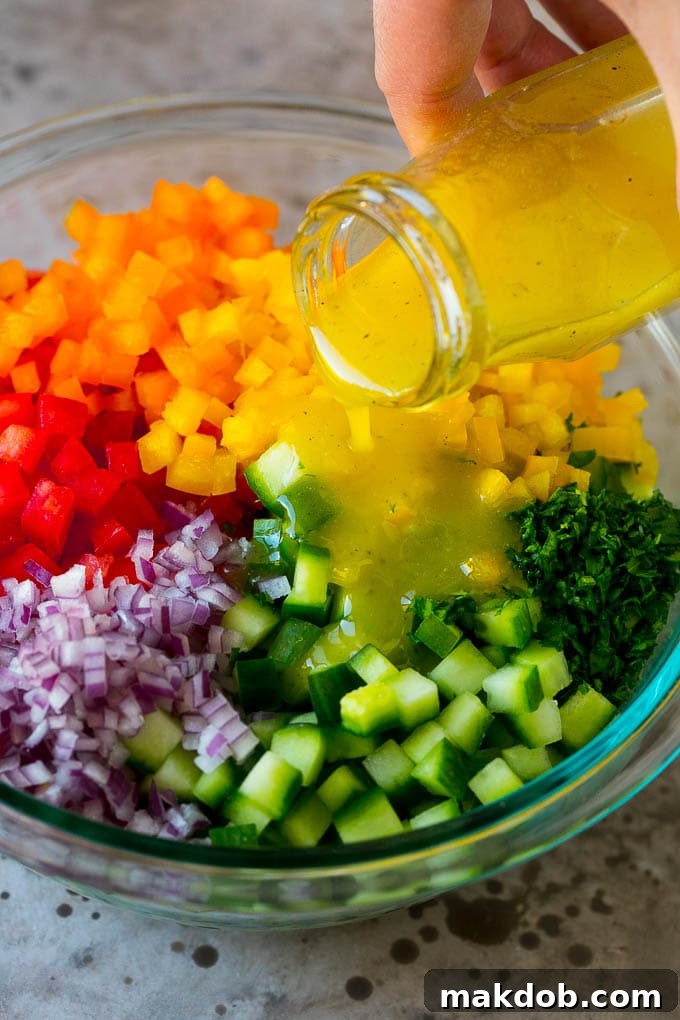
- Whisk the Zesty Dressing: In a separate small bowl, whisk together your extra virgin olive oil, freshly squeezed lemon juice, a pinch of salt, and a grind of fresh black pepper. Whisk until emulsified, creating a smooth, tangy dressing.
- Dress and Toss: Pour the prepared dressing over the chopped vegetables in the large bowl. Gently toss everything together using a spatula or salad servers, ensuring all the vegetables are evenly coated with the vibrant dressing. The goal is to distribute the flavors without bruising the delicate vegetables.
- Serve Immediately: For the absolute best experience, serve your Israeli salad immediately after tossing. This is when the vegetables are at their crispest and the flavors most pronounced.
Mastering the Art: Tips for the Best Israeli Salad
While the Israeli salad is renowned for its simplicity, a few expert tips can elevate your creation from good to absolutely unforgettable:
- Choose the Right Cucumbers: For optimal texture and less water, always reach for Persian or English cucumbers. Their thinner skins and fewer seeds mean you can skip the peeling and deseeding steps, saving time and retaining more nutrients. If you use traditional waxed cucumbers, make sure to peel them thoroughly and scoop out the watery seed core to prevent a soggy salad.
- Freshness is Paramount: The success of this salad hinges on the quality of your produce. Use the freshest, ripest vegetables you can find. Local farmers’ markets are often an excellent source for peak-season ingredients.
- The Power of Fresh Lemon Juice: This cannot be stressed enough. Always use freshly squeezed lemon juice. The bright, zesty flavor of fresh lemon is incomparable to bottled varieties and is essential for the authentic taste of the dressing.
- Embrace Fresh Herbs: Similarly, fresh herbs are a must. The vibrant notes of parsley and mint define the salad’s aromatic profile. Dried herbs simply won’t deliver the same refreshing burst of flavor. Don’t be shy with the herbs; they are a key player!
- Uniform Dicing for Perfect Bites: Take your time to chop all your vegetables into small, uniform pieces. This isn’t just for aesthetics; it ensures that every forkful contains a harmonious blend of all the ingredients, allowing the flavors to meld beautifully. A sharp knife makes this task much easier and safer.
- Mind the Tomatoes for Storage: While the salad can be prepared up to 2 days in advance, it’s best enjoyed fresh. Tomatoes tend to become mealy and release more water when refrigerated, affecting the salad’s texture. If you must prepare it ahead, store the dressing separately and toss just before serving.
- Experiment with Other Herbs: While parsley and mint are traditional, don’t hesitate to experiment with other fresh herbs. A touch of fresh dill can add a lovely anise-like flavor, or a sprinkle of basil could introduce a sweet, peppery note, especially if you’re leaning into a more Mediterranean fusion.
- Don’t Overdress: The dressing should lightly coat the vegetables, enhancing their natural flavors, not drowning them. Add the dressing gradually and toss, then taste and add more if needed. You want a bright, refreshing taste, not a heavy, oily one.
Quick Tip: Selecting Your Tomatoes
For the best structural integrity and flavor in your Israeli salad, Roma tomatoes are an ideal choice. Their firm flesh and lower seed count mean they’ll hold up well and won’t make your salad watery. If Roma tomatoes aren’t available, halved cherry or grape tomatoes offer a sweet alternative that also maintains good texture.
The Healthy Choice: Nutritional Powerhouse
The Israeli salad isn’t just delicious; it’s a testament to healthy eating, packed with nutrients and vibrant fresh ingredients. This salad is naturally:
- Rich in Vitamins and Minerals: Cucumbers are hydrating and provide Vitamin K. Tomatoes are an excellent source of Vitamin C and lycopene, a powerful antioxidant. Bell peppers are loaded with Vitamin C, Vitamin A, and other antioxidants.
- High in Fiber: The abundance of fresh vegetables contributes to a high fiber content, which is crucial for digestive health, blood sugar regulation, and promoting a feeling of fullness.
- Low Calorie and Hydrating: With its high water content from cucumbers and tomatoes, this salad is incredibly hydrating and naturally low in calories, making it a perfect choice for weight management.
- Heart-Healthy Fats: Extra virgin olive oil, a cornerstone of the Mediterranean diet, provides monounsaturated fats that are known to support heart health and reduce inflammation.
- Antioxidant-Rich: The colorful array of vegetables and fresh herbs are brimming with antioxidants, which help protect your body’s cells from damage caused by free radicals.
- Naturally Vegan and Gluten-Free: This salad fits perfectly into various dietary lifestyles without requiring any modifications, making it accessible to a wide audience.
Incorporating Israeli salad into your regular diet is an easy and delicious way to boost your intake of essential nutrients and support overall well-being. It’s truly a guilt-free pleasure that nourishes both body and soul.
Perfect Pairings: Serving Israeli Salad
The beauty of Israeli salad lies not just in its flavor but also in its incredible versatility. It complements a vast array of dishes and can even be transformed into a meal itself:
- Traditional Middle Eastern Fare: This salad is an absolute must-have alongside classics like falafel, chicken shawarma, grilled shish kabobs, or lamb chops. Its fresh, tangy profile cuts through the richness of these dishes beautifully.
- Mediterranean Inspired Meals: Pair it with grilled salmon, baked cod, or other seafood for a light and healthy dinner. It also goes well with couscous, rice pilaf, or quinoa dishes.
- As a Light Lunch: Enjoy a generous bowl of Israeli salad on its own for a refreshing and satisfying lunch. Add some crumbled feta or chickpeas for extra protein and substance.
- Stuffed in Pita: One of the most common ways to enjoy this salad is stuffed into warm pita bread, often with hummus or tahini, creating a delightful vegetarian sandwich. Add falafel or shawarma for a heartier option.
- Over Greens: For an extra dose of greens, serve the Israeli salad as a topping over a bed of crisp romaine lettuce or mixed greens.
- Brunch or Breakfast Addition: In Israel, it’s not uncommon to find this salad served at breakfast alongside eggs, labneh, olives, and fresh bread, offering a fresh start to the day.
- Picnics and Potlucks: Its robust nature (when served fresh) and vibrant appearance make it a fantastic choice for gatherings. It travels well and is always a crowd-pleaser.
FOLLOW ME
Unleash Your Creativity: Israeli Salad Variations
While the traditional Israeli salad is perfect in its simplicity, it also serves as an excellent canvas for culinary creativity. Feel free to adapt this recipe with additional ingredients to suit your taste and dietary needs:
- Boost the Protein: Transform this side dish into a complete meal by adding protein. Diced grilled chicken breast, thinly sliced grilled flank steak, or even hard-boiled eggs can add significant substance.
- Add Creaminess with Cheese: Crumbled feta cheese introduces a salty, tangy creaminess that pairs beautifully with the fresh vegetables. Goat cheese is another fantastic option for a slightly tangier, richer flavor.
- Embrace Olives: For an extra Mediterranean touch, incorporate sliced green olives or briny Kalamata olives. Their distinct flavor adds a delightful depth to the salad.
- Spice It Up: If you enjoy a bit of heat, mince half a jalapeño pepper and add it to the salad for a spicy kick. Alternatively, a pinch of crushed red pepper flakes in the dressing can provide a subtle warmth. For authentic Middle Eastern spice, a dash of sumac or za’atar in the dressing will elevate the flavor profile.
- Incorporate Grains: For a heartier salad that can serve as a meal, mix in some cooked and cooled grains. Quinoa, bulgur wheat, brown rice, or farro are excellent choices that add texture and nutritional value.
- Legume Love: Canned chickpeas or white beans, rinsed and drained, are wonderful additions that contribute fiber and plant-based protein, making the salad even more fulfilling.
- Nutty Crunch: A sprinkle of toasted pine nuts or chopped pistachios can add a delightful crunch and a hint of nutty flavor, complementing the fresh vegetables.
- Avocado Creaminess: Diced avocado adds a rich, creamy texture and healthy fats, making the salad more satisfying.
Frequently Asked Questions About Israeli Salad
Israeli salad is a traditional chopped salad, originating from Middle Eastern cuisine. It primarily consists of finely diced cucumbers, tomatoes, and onions, often with the addition of bell peppers and fresh herbs like parsley and mint. It’s typically dressed with a simple, zesty mixture of lemon juice and olive oil. Revered for its freshness and vibrant flavors, it’s served as a versatile side dish throughout Israel and the wider Mediterranean region, commonly found in pita bread as a sandwich filling or as part of a larger mezze platter.
Yes, this popular salad goes by several names. It is sometimes referred to as Arab salad, chopped salad, vegetable salad, or even “Salat Katzutz” (Hebrew for chopped salad). Despite the different names, the core components and preparation method remain largely the same, emphasizing finely diced fresh vegetables and a simple, bright dressing.
Absolutely! The classic Israeli salad recipe is inherently vegan, as it’s made entirely from fresh vegetables, herbs, olive oil, and lemon juice, without any animal products. It’s also naturally gluten-free, making it an excellent and inclusive option for those with dietary restrictions or preferences.
The key to an authentic Israeli salad is finely and uniformly dicing the vegetables. Aim for small, consistent cubes, generally around 1/4 inch. This specific chopping method ensures that all the flavors meld together perfectly in every bite and contributes to the salad’s distinctive texture.
More Great Salad Recipes You’ll Love
Farro Salad with Feta
30 mins
Taco Salad Recipe
30 mins
Crab Salad Recipe
11 mins
Orzo Salad with Vegetables and Feta
30 mins
Cherry Tomato Salad
16 mins
Love This Recipe?
Please leave a 5-star 🌟🌟🌟🌟🌟 rating in the recipe card below & a review in the comments section further down the page.
Authentic Israeli Salad Recipe
Pin
Time
Ingredients
- 1 1/2 cups cucumber finely diced (Persian or English cucumbers recommended)
- 1 cup Roma tomatoes seeded and finely diced
- 1/4 cup red onion minced
- 1 cup bell peppers finely diced (any color or a combination)
- 1/4 cup fresh parsley leaves minced
- 1 tablespoon fresh mint leaves minced, optional but highly recommended
- 1/4 cup extra virgin olive oil
- 2 tablespoons fresh lemon juice
- salt and freshly ground black pepper to taste
Instructions
-
In a large mixing bowl, combine the finely diced cucumber, tomato, minced red onion, diced bell peppers, and freshly minced parsley and mint (if using). Ensure all vegetables are cut to a uniform, small size for the authentic Israeli salad texture.
-
Prepare the dressing by whisking together the extra virgin olive oil, freshly squeezed lemon juice, salt, and black pepper in a small bowl until well combined.
-
Pour the vibrant lemon-olive oil dressing over the chopped vegetables. Gently toss everything together until all ingredients are evenly coated.
-
For the best taste and texture, serve your Israeli salad immediately. While it can be covered and refrigerated for up to 2 days, the tomatoes may soften, so immediate serving is highly recommended for optimal freshness.
Notes
- For this fresh salad, Persian or English cucumbers are ideal due to their thin skin and minimal seeds. If using traditional waxed cucumbers, peel them and scoop out the seeds for a better texture.
- Roma tomatoes are preferred for their firm flesh and lower seed content, which helps prevent the salad from becoming watery. Cherry tomatoes, halved, also make an excellent substitute.
- Feel free to use any color of bell pepper you have on hand – red, orange, or yellow bell peppers add a beautiful pop of color and sweetness.
- While the salad can be prepared up to 2 days in advance, note that tomatoes can lose their firm texture when stored in the fridge. For peak crispness and flavor, enjoy this salad freshly made.
- Always use freshly squeezed lemon juice for the dressing; bottled lemon juice simply doesn’t compare in terms of flavor.
- Fresh herbs like parsley and mint are crucial for the authentic taste of Israeli salad. Avoid dried versions for this recipe.
- Ensure all vegetables are uniformly diced into small pieces. This not only makes for an appealing presentation but also allows the flavors to meld perfectly in every bite.