
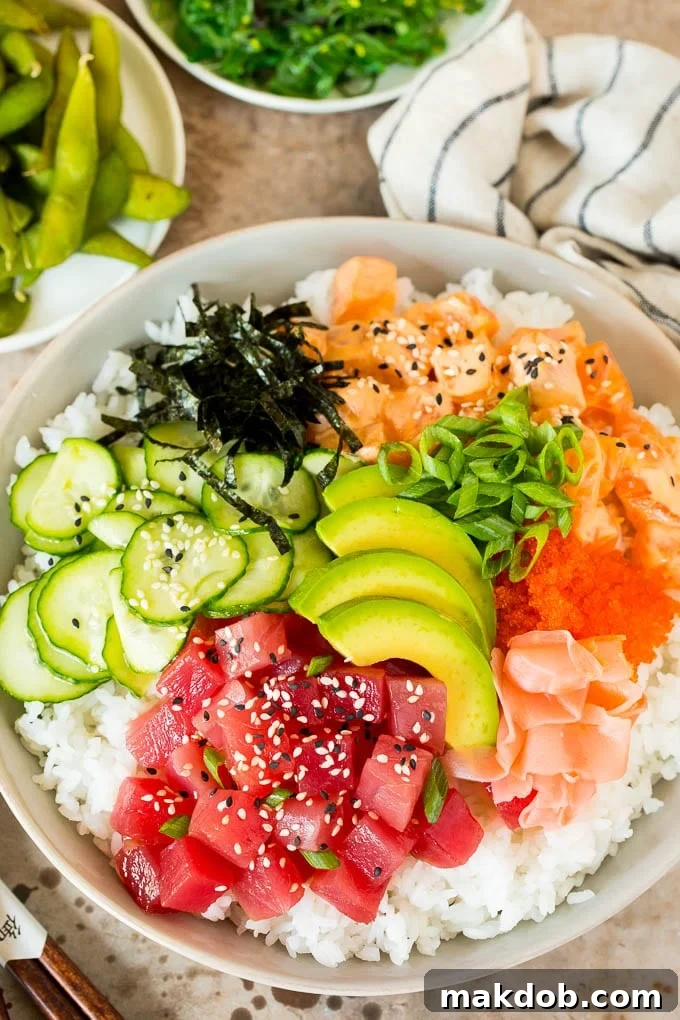
Welcome to the ultimate guide for creating a delightful sushi bowl at home! This innovative recipe brings together a vibrant array of fresh fish, creamy avocado, crisp cucumber, and savory seaweed, all perfectly balanced over a bed of seasoned sushi rice. Drizzled with a homemade spicy mayo and served alongside tangy pickled ginger and sharp wasabi, these deconstructed sushi bowls offer all the captivating flavors of traditional sushi rolls but with significantly less effort. Say goodbye to complicated rolling mats and hello to a quick, satisfying, and utterly delicious meal.
Our family shares an undeniable passion for Japanese cuisine. Over the years, I’ve honed my skills to bring some of our most beloved dishes right into our kitchen, from the rich flavors of salmon teriyaki to the savory skewers of yakitori and the crispy delight of shrimp tempura rolls. However, on those evenings when the thought of intricate sushi rolling feels like too much work, these incredibly easy sushi bowls become our go-to. They consistently receive rave reviews and disappear from the table in record time, proving that great taste doesn’t always require a lengthy process.
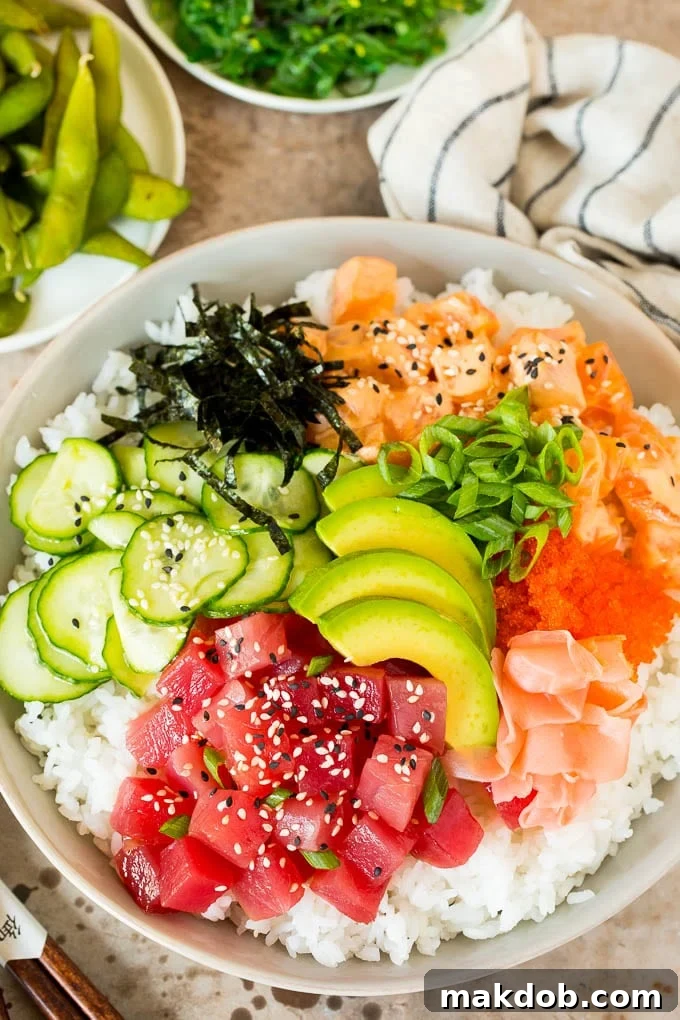
Sushi has long been one of my all-time favorite foods. However, enjoying it at a restaurant can quickly become an expensive indulgence. That’s why mastering this homemade sushi bowl recipe has been a game-changer. It’s not only a quick and simple meal to assemble, but it also delivers the authentic, fresh flavors you’d expect from a high-end Japanese establishment, all from the comfort of your own home. This guide will help you create a cost-effective, flavorful, and satisfying meal that will impress your family and friends.
Table of Contents
- Sushi Bowl Essentials: Ingredients
- Crafting Your Sushi Bowl: Step-by-Step
- Pro Tips for the Perfect Sushi Bowl
- Quick Prep Advice
- Endless Flavor Variations
- Frequently Asked Questions About Sushi Bowls
- Explore More Asian Recipes You’ll Adore
- Ultimate Sushi Bowl Recipe Card
Sushi Bowl Essentials: Ingredients
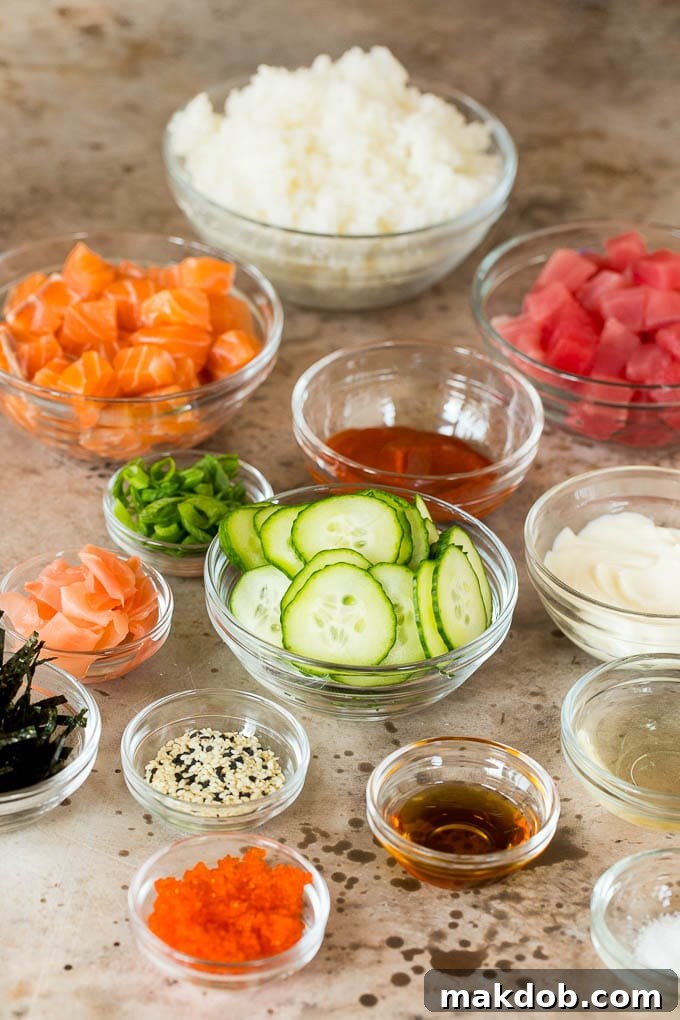
To embark on your homemade sushi bowl journey, gathering a few crucial ingredients is key. Each component plays a vital role in building the layered flavors and textures that make these bowls so irresistible.
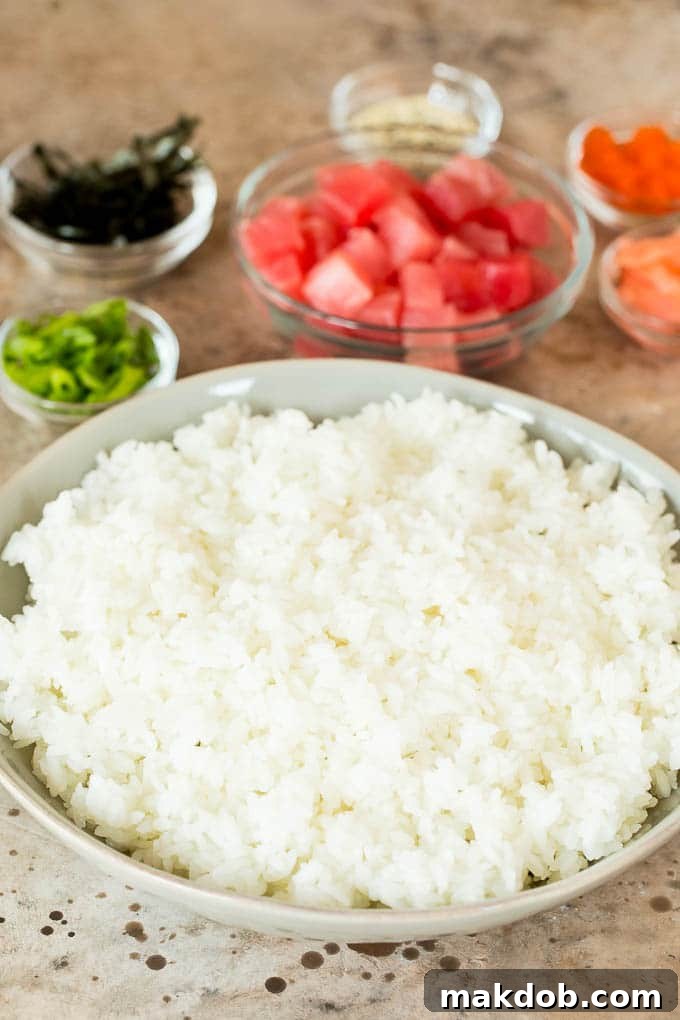
- Rice: The Foundation. The heart of any great sushi bowl is perfectly prepared sushi rice. This short-grain rice variety, known for its sticky texture when cooked and seasoned, is essential. You can typically find sushi rice in the Asian foods aisle of most major grocery stores or at your local Asian market. For optimal flavor and texture, prepare it according to a dedicated sushi rice recipe, ensuring it cools to room temperature before assembling your bowls. If sushi rice is unavailable, Calrose or another short-grain rice can serve as a suitable alternative.
- Nori: The Umami Wrap. Nori, dried sheets of seaweed, adds a distinct umami flavor and a satisfying crunch to your bowl. These dark green sheets are readily available in the ethnic foods section of most supermarkets. For sushi bowls, you’ll want to cut your nori sheets into small, bite-sized strips using a sharp knife or kitchen shears. This makes them easy to sprinkle over your creation and integrate into each forkful.
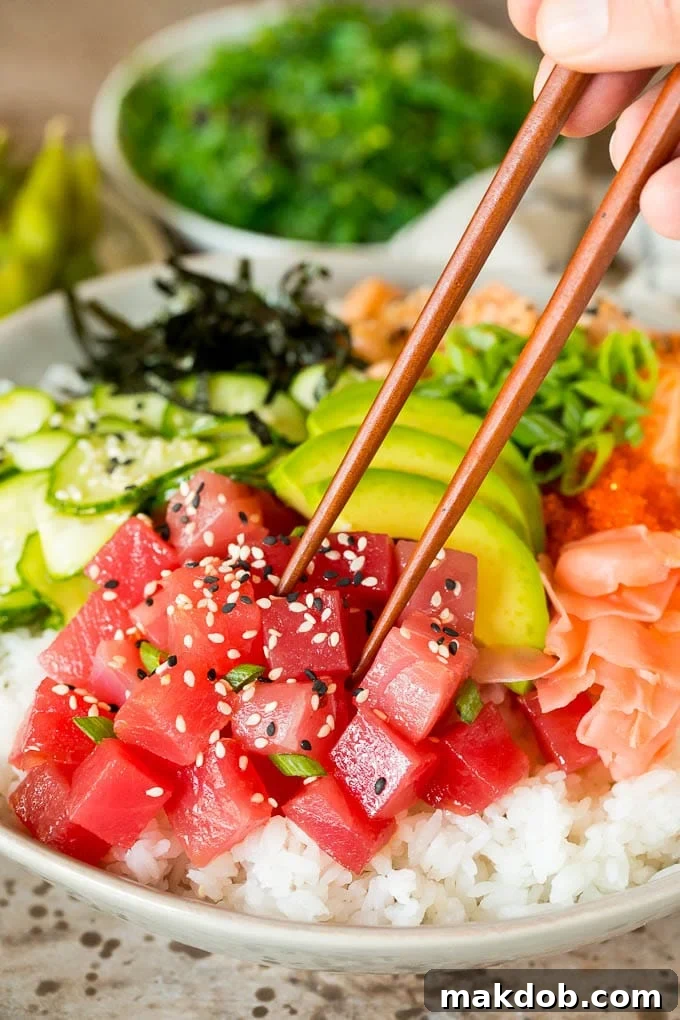
- Toppings: Fresh and Vibrant. The beauty of a sushi bowl lies in its customizable toppings. I personally favor an assortment of sashimi-grade fish like succulent salmon and rich ahi tuna, diced into perfect cubes. Complementing the fish are thinly sliced crisp cucumbers, creamy avocado, and a sprinkle of toasted sesame seeds. Other fantastic additions include edamame, shredded carrots, or even a vibrant seaweed salad for extra texture and nutrition.
- Sauce: The Flavor Unifier. A simple yet powerfully flavorful sauce can elevate your sushi bowl. My go-to is a homemade spicy mayo, a straightforward blend of mayonnaise and sriracha, which offers a creamy texture with a delightful kick. For those who prefer a non-spicy, creamy option, yum yum sauce is an excellent choice. Don’t hesitate to explore other sauce variations like soy sauce, ponzu, or a light vinaigrette made with rice vinegar and a touch of sesame oil.
- Garnishes: The Finishing Touch. Garnishes not only add visual appeal but also enhance the overall flavor experience. Essential garnishes include traditional soy sauce, a dollop of pungent wasabi for a spicy thrill, and sweet, tangy pickled ginger to cleanse the palate between bites. I often discover fresh pickled ginger and wasabi conveniently packaged at the sushi counter of my local grocery store. A sprinkle of tobiko (flying fish roe) or finely chopped green onions can also add bursts of color and subtle texture.
Crafting Your Sushi Bowl: Step-by-Step
Assembling your sushi bowl is a creative and straightforward process. Follow these steps to build a beautifully layered and delicious meal:
- Prepare the Rice: Begin by preparing your sushi rice according to the recipe’s instructions. Once cooked, spread it out on a shallow dish or baking sheet to cool down to room temperature. This is crucial for achieving the proper sushi texture and ensuring the fish remains fresh. Once cooled, evenly distribute the seasoned sushi rice among your individual serving bowls, forming a solid base.
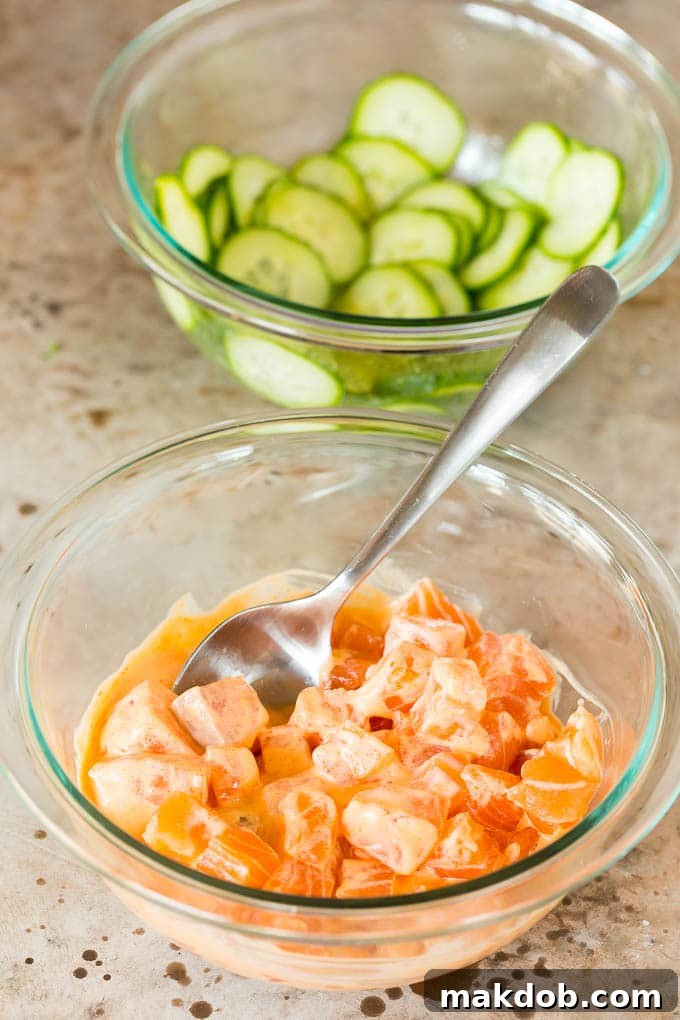
- Marinate the Cucumbers: In a small bowl, combine thinly sliced cucumbers with a splash of toasted sesame oil and a touch of rice vinegar. A pinch of salt and sugar can also be added for balance. Toss gently to ensure the cucumbers are well coated, allowing them to marinate slightly while you prepare the other components. This simple step adds a wonderful tangy and aromatic element to the bowl.
- Prepare the Spicy Mayo: Whisk together mayonnaise and sriracha in another small bowl until smooth and creamy. The amount of sriracha can be adjusted to your preferred level of heat. At this stage, you have two options: either toss your diced fish directly with this spicy mayo for an even coating, or reserve the sauce to drizzle over the finished bowl just before serving. Both methods yield delicious results, so choose what suits your preference.
- Layer the Fresh Ingredients: Thoughtfully arrange the diced sashimi-grade fish and creamy avocado slices over the rice in each bowl. Aim for an appealing presentation, as we eat first with our eyes! Next, spoon a portion of your marinated cucumbers alongside the fish and avocado.
- Add the Final Touches: Generously sprinkle strips of nori, toasted sesame seeds, and freshly chopped green onions over the colorful toppings in each bowl. These additions provide contrasting textures and an extra layer of savory flavor.
- Serve and Enjoy: If you opted not to toss the fish in the spicy mayo earlier, now is the time to artfully drizzle the creamy sauce over the entire bowl. Present your sushi bowls immediately with a side of soy sauce, additional wasabi, tangy pickled ginger, and a sprinkle of tobiko, if desired. Each component comes together to create a harmonious and satisfying dining experience.
Pro Tips for the Perfect Sushi Bowl
Achieving a truly exceptional sushi bowl involves a few insider tricks and careful considerations:
- Source Sushi-Grade Fish: This is arguably the most critical tip for a safe and delicious raw fish sushi bowl. Always use fish specifically labeled as “sashimi-grade” or “sushi-grade.” This indicates it has been handled and frozen in a way that makes it safe for raw consumption. You can find this quality fish at reputable seafood counters in high-end grocery stores, at specialty Asian markets, or sometimes even by directly asking the fishmonger at your local supermarket’s sushi counter if they can sell you sashimi portions. Building a good relationship with your fishmonger can be incredibly beneficial.
- Cucumber Choice Matters: For the best texture and minimal seeding, I highly recommend using seedless cucumber varieties such as Persian or English cucumbers. These have thinner skins and fewer seeds, offering a consistently crisp bite without excess moisture.
- Prep Ahead for Convenience: Both the marinated cucumber mixture and the spicy mayo can be prepared up to a day in advance. Store them separately in airtight containers in the refrigerator. This allows the flavors to meld beautifully and significantly reduces your assembly time on the day of serving, making quick sushi bowls even faster.
- Alternative Bases: While traditional sushi rice is classic, don’t limit yourself! For a healthier or different twist, consider using brown rice for its nutty flavor and added fiber, or even a base of mixed greens for a lighter, salad-style sushi bowl. Quinoa is another excellent option for those seeking a protein-rich grain alternative.
- Temperature is Key: Ensure all your cold ingredients, especially the fish, are well-chilled when assembling the bowls. The contrast between cool, fresh toppings and room-temperature rice is part of what makes sushi bowls so enjoyable.
- Sharp Knife for Clean Cuts: When dicing your fish and slicing avocado, a very sharp knife will make all the difference. Clean cuts not only look better but also preserve the integrity of the ingredients, preventing them from tearing or becoming mushy.
- Experiment with Presentation: Don’t underestimate the power of visual appeal. Arrange your ingredients neatly in sections over the rice, creating a colorful and inviting display. A little effort in presentation can elevate the dining experience significantly.
Quick Prep Advice
These delightful sushi bowls are always at their absolute best when served immediately. For minimal compromise, you can store fully assembled bowls, covered, in the refrigerator for a maximum of 4 hours. However, if you’re planning to prepare the bowls further in advance, it’s highly recommended to omit the avocado until the very last minute to prevent browning and maintain its fresh, vibrant appearance.
Endless Flavor Variations
While this sushi bowl recipe is incredibly delicious as written, its true charm lies in its adaptability. Feel free to unleash your creativity and customize the ingredients to perfectly match your personal preferences and dietary needs. Here are some ideas to spark your culinary imagination:
- Protein Power-Ups: Beyond the classic salmon and tuna sashimi, the possibilities for protein are vast. Consider using cooked shrimp, either whole or chopped, for a delightful texture. Real or imitation crab meat offers a sweet, delicate flavor. For plant-based options, pan-fried or baked tofu, seasoned to perfection, makes an excellent substitute. Other fantastic seafood choices include smoked salmon, seared scallops, hamachi (yellowtail), or even thinly sliced cooked octopus.
- Vegetable Medley: Enhance the nutritional value and crunch factor by adding more fresh vegetables. Shredded carrots introduce a touch of sweetness and vibrant color. Edamame (shelled soybeans) provides a satisfying bite and protein. A pre-made seaweed salad can add complexity and traditional Japanese flavors. Thinly sliced red bell pepper, radish, or even a touch of sweet corn can brighten up the bowl. For an exotic twist, try finely diced mango for a sweet and tangy counterpoint to the savory elements.
- Exciting Toppings: Get truly creative with your toppings to add bursts of flavor and texture. Crispy fried onions or shallots provide a wonderful crunch and savory depth. Furikake, a Japanese seasoning blend typically containing dried fish, sesame seeds, chopped seaweed, and sugar, is an instant flavor booster. For those who love a bit of heat, thinly sliced fresh jalapeños can add a fiery kick. Other intriguing options include masago (capelin roe) for a delicate pop, crispy tempura flakes for a light crunch, or even a sprinkle of toasted coconut for an unexpected tropical note.
FOLLOW ME
Frequently Asked Questions About Sushi Bowls
Yes, sushi bowls can certainly be a very healthy and balanced part of your diet. Fresh seafood is naturally lean and rich in beneficial omega-3 fatty acids. Vegetables like avocado and cucumber are packed with essential vitamins, minerals, and dietary fiber. To maximize the health benefits, consider using brown rice instead of white for extra fiber, and opt for light mayonnaise in your spicy mayo or choose a lighter dressing option. Adding a wider variety of colorful vegetables can also boost nutrient intake significantly.
While both sushi bowls and poke bowls feature fresh fish and a rice base, their preparation styles differ. A sushi bowl typically showcases fresh, often thinly sliced or diced fish, with minimal adornments to the fish itself, allowing its natural flavor to shine. The focus is on the combination of fresh, high-quality ingredients arranged aesthetically over seasoned rice. In contrast, a poke bowl originates from Hawaiian cuisine and prominently features fish that is diced into small, uniform pieces and heavily pre-marinated or coated in a flavorful sauce and seasonings, often before being added to the bowl. Both delicious, they offer distinct culinary experiences, but share common elements like rice, avocado, and cucumber as accompanying ingredients.
Only if it’s specifically labeled “sashimi-grade” or “sushi-grade” and has been properly thawed. This type of fish has undergone specific freezing processes to eliminate parasites, making it safe for raw consumption. Regular frozen fish from the grocery store is generally not safe for raw use and should always be cooked.
Sushi bowls are best enjoyed immediately due to the freshness of the raw fish and the texture of the rice. If you have leftovers or are preparing them slightly ahead, they can be stored in an airtight container in the refrigerator for up to 4 hours. Beyond that, the quality of the fish and rice can deteriorate. Always discard raw fish dishes if left at room temperature for more than 2 hours.
Absolutely! Sushi bowls are incredibly versatile for vegetarian and vegan diets. Simply replace the fish with plant-based proteins such as marinated tofu, tempeh, or edamame. You can load up on fresh vegetables like avocado, cucumber, shredded carrots, bell peppers, and seaweed salad. For the sauce, use vegan mayonnaise to create a spicy vegan mayo, or opt for a soy-ginger dressing. Ensure all other ingredients like nori and rice vinegar are vegan-friendly.
Why bother with expensive takeout when you can craft your very own vibrant and flavorful sushi bowls right in your kitchen? This easy-to-follow recipe brings the restaurant experience home, saving you money and letting you customize every bite. You’ll be delighted by how simple and rewarding it is!
Explore More Asian Recipes You’ll Adore
Stir Fry Noodles with Chicken
25 mins
Beef Chow Mein
35 mins
Potstickers Recipe
45 mins
Chicken Fried Rice
30 mins
Mongolian Beef
30 mins
Ultimate Sushi Bowl Recipe Card
Rating: 5 out of 5 stars from 18 votes
Easy Homemade Sushi Bowl Recipe
Pin Recipe
Author: Sara Welch
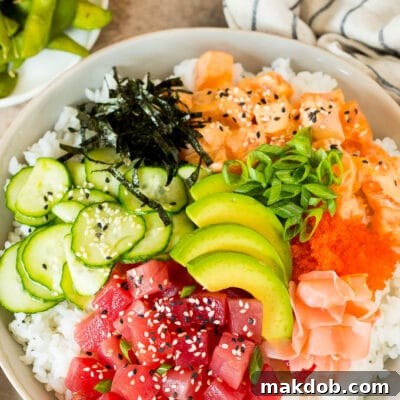
This sushi bowl recipe features a delightful assortment of fresh fish, creamy avocado, crisp cucumber, and savory seaweed, all served over perfectly seasoned rice. Finished with a zesty spicy mayo, tangy pickled ginger, and a kick of wasabi, these bowls deliver all the incredible flavors of traditional sushi rolls with remarkably less effort!
Prep Time: 30 minutes
Cook Time: 30 minutes
Total Time: 1 hour
Course: Main
Cuisine: Asian
Serves: 4
Ingredients
Adjust servings for:
- 1 recipe sushi rice, prepared according to recipe directions
- 2 tablespoons rice vinegar
- 1 teaspoon sugar
- 2 teaspoons toasted sesame oil
- Salt to taste
- 1 cup cucumber, thinly sliced (preferably Persian or English)
- 1 pound sashimi-grade seafood (such as salmon or tuna, diced; or use cooked shrimp or imitation crab)
- 1 avocado, peeled, pitted, and sliced
- 2 sheets nori, cut into strips
- 2 teaspoons sesame seeds
- 1/4 cup green onions, chopped
- 1/4 cup mayonnaise (for spicy mayo)
- 2 tablespoons sriracha (for spicy mayo, adjust to taste)
- Wasabi, pickled ginger, tobiko, and soy sauce, as desired for serving
Instructions
- Divide the prepared and cooled sushi rice evenly between four serving bowls.
- In a small bowl, whisk together the rice vinegar, sugar, sesame oil, and salt until the sugar and salt dissolve. Add the thinly sliced cucumbers and toss gently to coat. Set aside to marinate slightly.
- In another small bowl, whisk together the mayonnaise and sriracha to create your spicy mayo. You have the option to toss your diced fish directly with this sauce now, or you can drizzle it over the assembled bowls at the very end. Choose your preferred method.
- Artfully arrange 1/4 of the diced sashimi-grade seafood (or chosen protein) and sliced avocado over the rice in each bowl. Spoon 1/4 of the marinated cucumbers into each bowl, placing them alongside the other toppings.
- Generously sprinkle the nori strips, sesame seeds, and chopped green onions over the contents of each bowl.
- If you did not mix your fish with the spicy mayo earlier, now is the time to drizzle the creamy sauce over each bowl. Serve immediately with extra wasabi, tangy tobiko (if using), sweet pickled ginger, and a side of soy sauce for dipping, according to individual preference. Enjoy your delicious homemade sushi bowls!
Notes
- For detailed instructions on preparing perfect sushi rice, please refer to our dedicated sushi rice recipe here.
- It is absolutely essential to use only sushi-grade (sashimi-grade) fish when preparing this dish with raw seafood. This specialized fish is processed and frozen to ensure it is safe for raw consumption. Look for this labeling at reputable seafood markets or ask your fishmonger for guidance. Occasionally, you may even be able to purchase sashimi portions directly from the sushi counter at your local grocery store.
Nutrition
Calories: 586kcal | Carbohydrates: 70g | Protein: 34g | Fat: 19g | Saturated Fat: 4g | Cholesterol: 68mg | Sodium: 326mg | Potassium: 978mg | Fiber: 8g | Sugar: 2g | Vitamin A: 273IU | Vitamin C: 13mg | Calcium: 54mg | Iron: 4mg
Love This Recipe?
We’d be thrilled if you could leave a 5-star 🌟🌟🌟🌟🌟 rating in the comments section below and share your thoughts. Your feedback helps us improve and inspires others!