
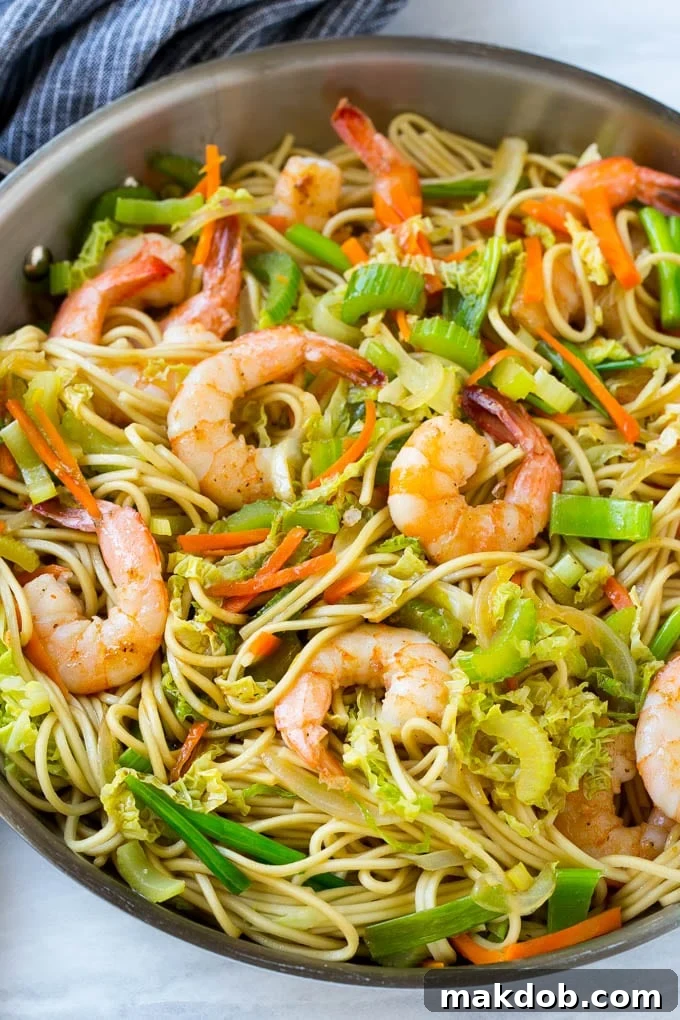
This recipe for shrimp chow mein is a quick and easy one pot meal with plenty of stir fried shrimp and vegetables tossed with noodles and a simple sauce.
Easy One-Pot Shrimp Chow Mein: Your Go-To Quick & Flavorful Weeknight Meal
Shrimp Chow Mein isn’t just one of my favorite Chinese dishes; it’s a culinary lifesaver that promises a delectable, restaurant-quality meal right in your own kitchen, with minimal fuss. Perfect as a standalone one-pot wonder, its vibrant flavors and satisfying textures make it an irresistible choice for any weeknight dinner. For those occasions when you’re hosting a larger gathering or simply craving an even more elaborate feast, this versatile dish pairs wonderfully with classic appetizers like Cream Cheese Wontons and complementary main courses such as Sesame Chicken, creating a spread that’s sure to impress.
Why You’ll Love This Easy Shrimp Chow Mein Recipe
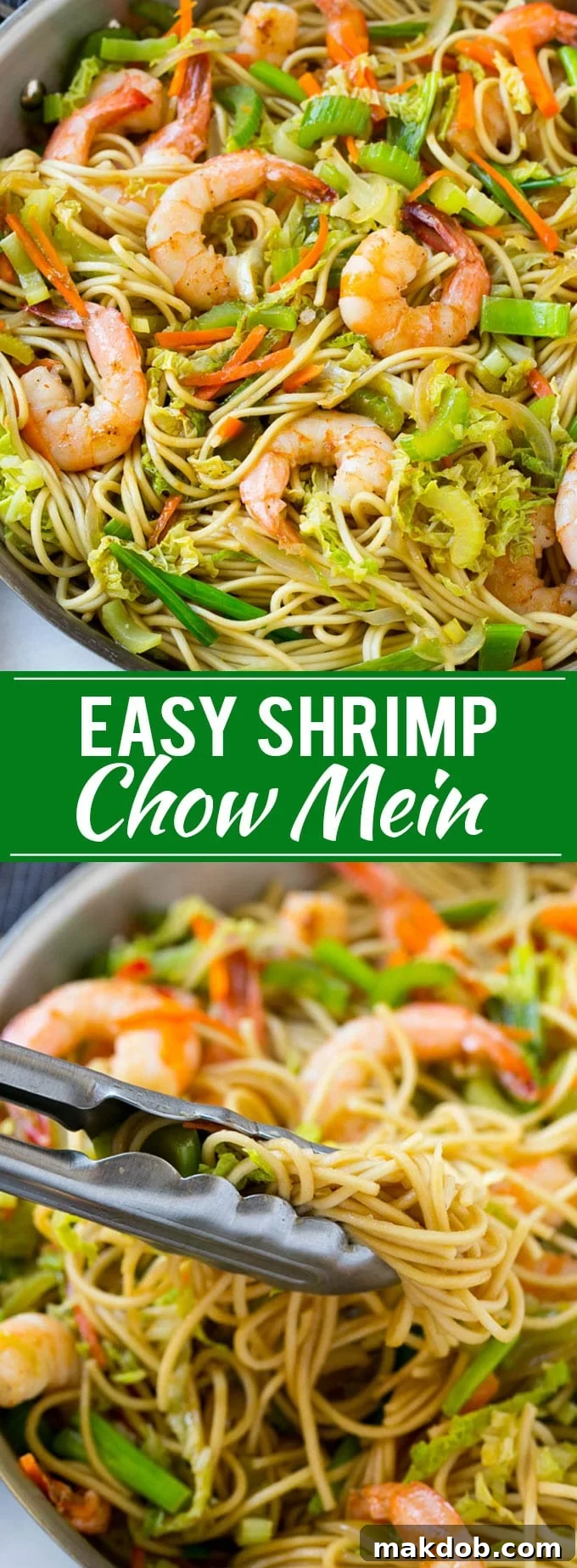
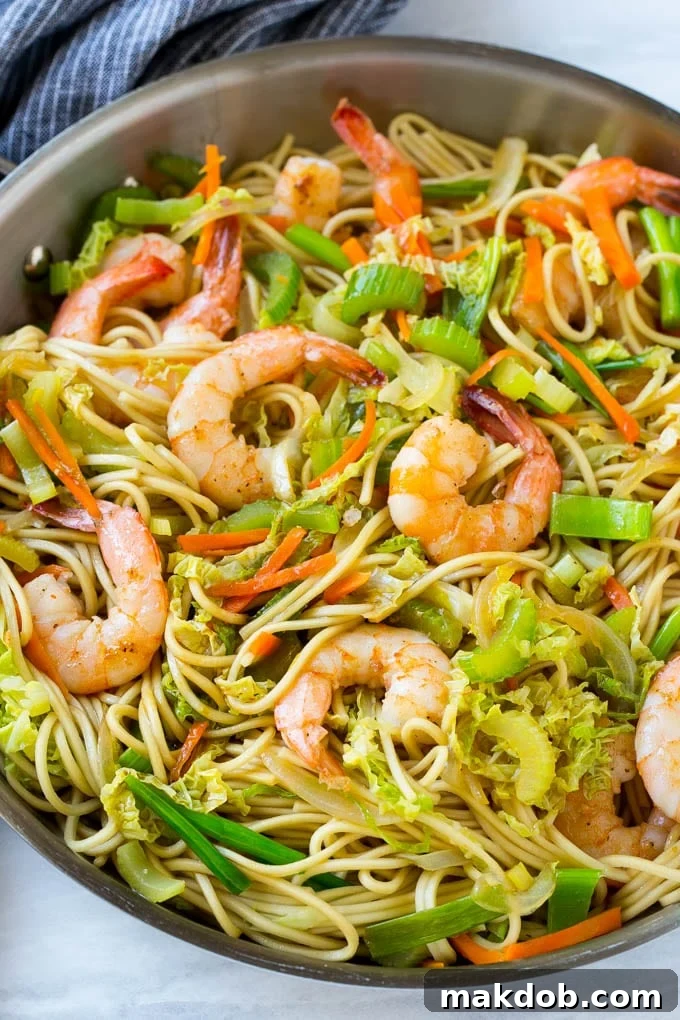
Welcome back to the world of effortless cooking! This super easy Shrimp Chow Mein epitomizes my love for one-pot meals. Truly, this might be one of the simplest one-pot creations I’ve shared yet, making it an absolute must-try for busy individuals and families alike. At its core, it’s a vibrant shrimp stir-fry, perfectly tossed with tender noodles and an incredibly simple, yet flavorful, four-ingredient sauce. The beauty of this recipe lies not just in its ease but also in its adaptability. While I personally adore the succulent shrimp, and my children can’t get enough of the slurp-worthy noodles – making it a guaranteed win-win for our household – you can easily substitute the shrimp with diced chicken, thinly sliced beef, or even firm tofu for an equally delicious meal. This dish offers the ultimate convenience without compromising on taste, delivering maximum flavor with minimum cleanup.
Crafting the Perfect Shrimp Chow Mein: A Step-by-Step Guide
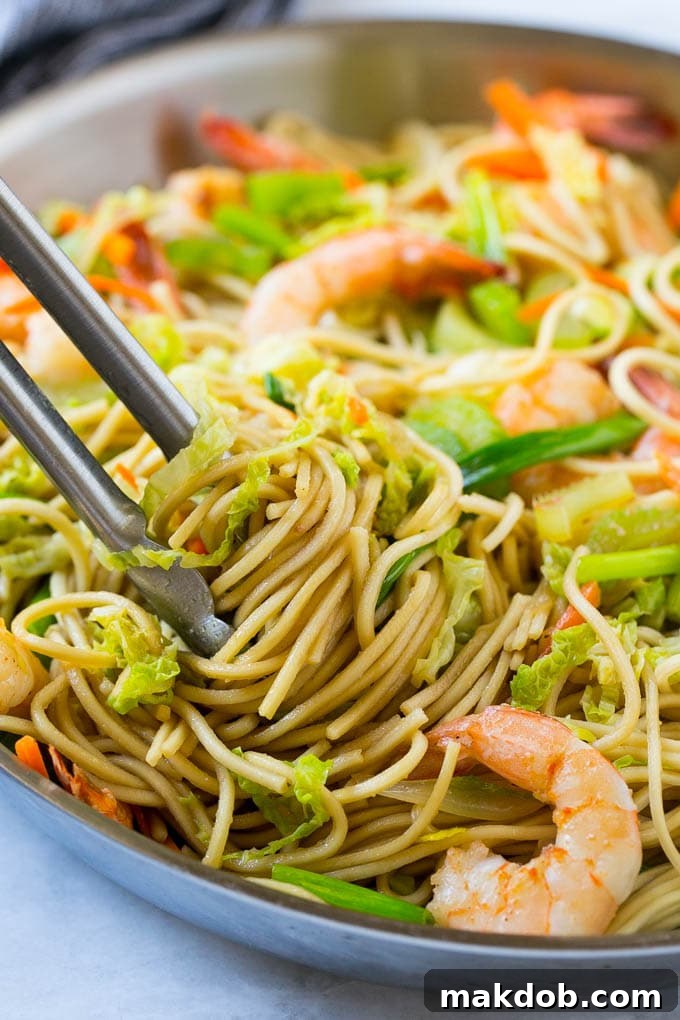
The secret to the incredible speed of this dish lies in its clever use of pre-cooked yakisoba noodles. You can typically find these convenient packets in the refrigerated section of most grocery stores, often alongside tofu and wonton wrappers, usually within the produce area. Because these noodles are already cooked, your preparation time is dramatically cut short. All you need to do is open the package, briefly rinse them under hot water to loosen them, and then toss them directly into your stir-fry. This ingenious shortcut ensures that dinner is on the table in approximately 20 minutes, a lifesaver on those hectic weeknights when time is of the essence.
And that wonderfully easy sauce I mentioned earlier? It’s a harmonious blend of everyday pantry staples: soy sauce for umami depth, honey for a touch of sweetness, fresh ginger and garlic for aromatic warmth, and a dash of toasted sesame oil for a nutty finish. Simple, yet incredibly effective in transforming ordinary ingredients into an extraordinary meal.
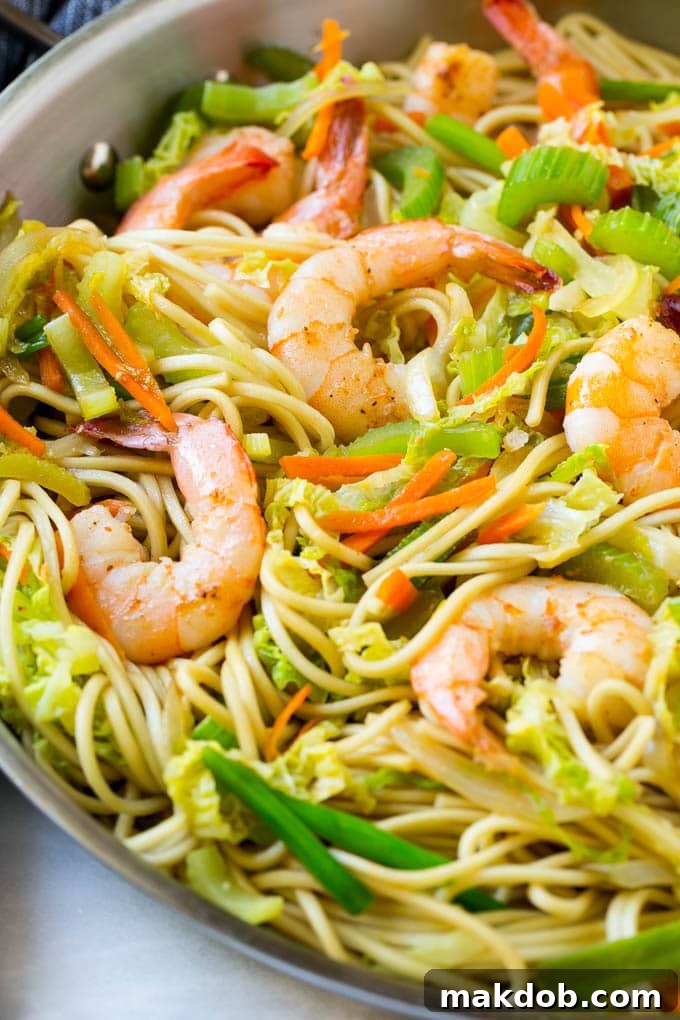
Key Ingredients for Flavorful Shrimp Chow Mein
- Shrimp: Fresh or frozen (thawed and patted dry) work best. Choose medium to large shrimp for a satisfying bite. Peeling and deveining them beforehand saves precious time.
- Yakisoba Noodles: The star of the show for quick cooking. If unavailable, pre-cooked lo mein noodles or even regular spaghetti (boiled and rinsed) can be used as alternatives, though yakisoba provides the best texture.
- Vegetable Medley: A classic mix of julienned carrots, thinly sliced white or yellow onion, thinly sliced celery, and shredded green cabbage provides crunch, color, and essential nutrients. Green onion tops add a fresh finish.
- The Simple Sauce:
- Soy Sauce: The foundation of savory flavor. Use low-sodium if preferred.
- Honey: Adds a subtle sweetness that balances the savory notes.
- Minced Fresh Ginger & Garlic: Essential aromatics that elevate the dish. Fresh is always best for maximum flavor.
- Toasted Sesame Oil: A finishing oil that imparts a distinctive nutty aroma and flavor.
Tips for the Best One-Pot Shrimp Chow Mein
- Prep Everything Ahead: Stir-frying is fast, so have all your ingredients chopped, measured, and ready before you start cooking. This is often called “mise en place” and is crucial for successful stir-fries.
- High Heat is Key: Use a large pan or wok over high heat to achieve that desirable “wok hei” (breath of the wok) and ensure your vegetables are crisp-tender, not soggy.
- Don’t Overcrowd the Pan: Cook your vegetables and shrimp in batches if your pan isn’t large enough to ensure they stir-fry rather than steam. Overcrowding lowers the pan’s temperature.
- Perfectly Cooked Shrimp: Shrimp cook very quickly. They are done when they turn pink and opaque. Overcooked shrimp become rubbery, so keep a close eye on them.
- Loosen Noodles Properly: Running yakisoba noodles under hot water helps them separate easily, preventing clumping in the pan.
- Customize Your Veggies: Feel free to add other quick-cooking vegetables like bell peppers, snow peas, broccoli florets, or bean sprouts. Adjust cooking times accordingly.
- Adjust Sweetness/Saltiness: Taste the sauce before adding it to the pan and adjust honey or soy sauce to your preference.
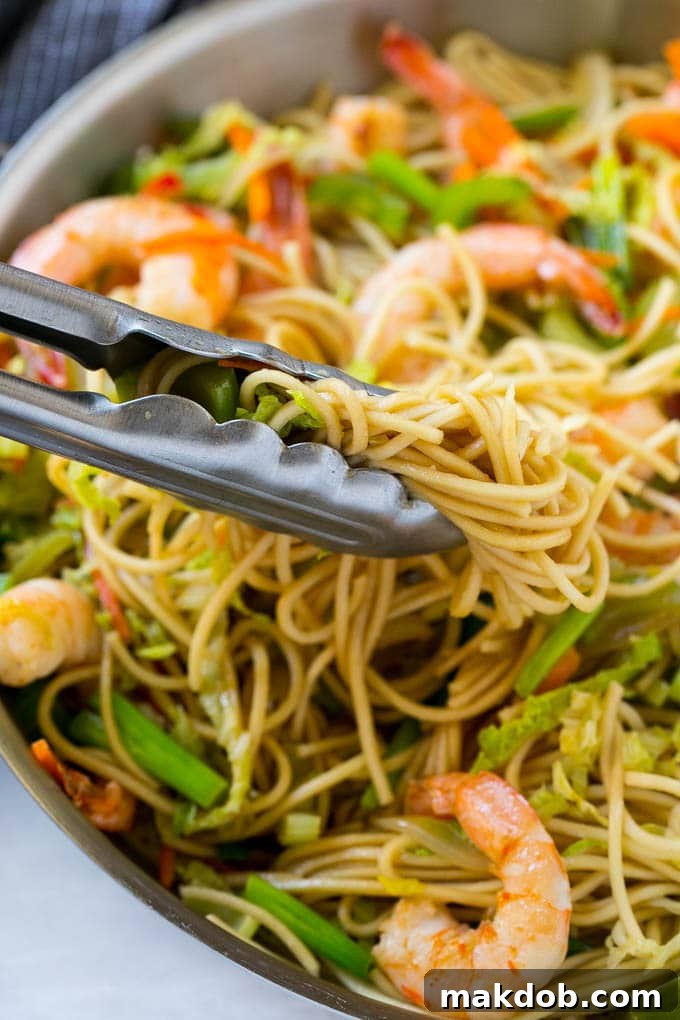
Variations and Substitutions
The true beauty of this Shrimp Chow Mein recipe lies in its incredible adaptability. It’s a fantastic base that invites customization, allowing you to create countless variations tailored to your family’s preferences or whatever ingredients you have on hand.
- Protein Power-Ups:
- Chicken Chow Mein: Dice 1 pound of boneless, skinless chicken breast or thighs. Cook them after the onions until browned and cooked through before adding other vegetables.
- Beef Chow Mein: Thinly slice 1 pound of flank steak or sirloin against the grain. Marinate briefly in a little soy sauce and cornstarch for extra tenderness, then stir-fry quickly before adding vegetables.
- Tofu Chow Mein (Vegetarian Option): Use 1 block of extra-firm tofu, pressed, diced, and pan-fried until golden and crispy before adding to the stir-fry.
- Mixed Seafood: Incorporate scallops, calamari, or even thinly sliced fish for a seafood medley.
- Vegetable Adventures:
- Broccoli Florets: Add small florets along with the carrots and celery for extra greens and crunch.
- Bell Peppers: Sliced red, yellow, or green bell peppers add color and a sweet-tart flavor.
- Mushrooms: Sliced shiitake or cremini mushrooms can add an earthy umami depth.
- Bean Sprouts: Toss in a handful of fresh bean sprouts at the very end for an authentic crunch.
- Snap Peas or Snow Peas: These vibrant green pods add a delightful sweetness and crisp texture.
- Baby Bok Choy: Roughly chop and add them towards the end of the vegetable cooking time.
- Noodle Alternatives:
- Lo Mein Noodles: If yakisoba noodles aren’t available, pre-cooked lo mein noodles are an excellent substitute.
- Spaghetti or Linguine: In a pinch, boil regular pasta according to package directions, rinse with cold water to prevent sticking, and then use in the stir-fry. The texture will be slightly different but still delicious.
- Sauce Enhancements:
- Spice It Up: Add a dash of sriracha, chili garlic sauce, or a pinch of red pepper flakes to the sauce for a fiery kick.
- Extra Umami: A teaspoon of oyster sauce can deepen the savory notes of the sauce.
- Peanut Butter: For a Thai-inspired twist, whisk in a tablespoon of creamy peanut butter into the sauce.
I’ve started keeping packets of yakisoba noodles in my fridge specifically for those busy nights when dinner needs to come together at the last minute. How can you go wrong with a balanced meal of protein, tender noodles, and an abundance of fresh vegetables, all cooked in a single pot?
What to Serve with Shrimp Chow Mein
While this Shrimp Chow Mein is robust enough to be a complete meal on its own, it also shines beautifully when accompanied by other Asian-inspired dishes. For a truly memorable spread, consider these delightful pairings:
- Appetizers: The mentioned Cream Cheese Wontons are always a hit. Also, crispy spring rolls, savory egg rolls, or delicate steamed dumplings would complement the chow mein perfectly.
- Additional Main Courses: Pairing with Sesame Chicken creates a satisfying duo. Other great choices include General Tso’s Chicken, Beef with Broccoli, or a simple stir-fried vegetable medley.
- Rice: A side of fluffy white rice or nutritious brown rice can help absorb extra sauce and round out the meal. Alternatively, Pineapple Fried Rice offers a sweet and savory contrast.
- Salads: A light, refreshing salad like a simple cucumber salad with a vinaigrette dressing, or even a Ramen Noodle Salad, can provide a nice textural and flavor balance.
- Soups: A clear wonton soup or a hot and sour soup can start the meal wonderfully.
Storage and Reheating
Leftover Shrimp Chow Mein is a delicious treat! Here’s how to store and reheat it to keep it tasting great:
- Storage: Allow the chow mein to cool completely. Transfer it to an airtight container and store it in the refrigerator for up to 3-4 days.
- Reheating:
- Stovetop: This is the best method for maintaining texture. Heat a tablespoon of vegetable oil in a pan or wok over medium-high heat. Add the chow mein and stir-fry for 3-5 minutes, or until heated through, stirring occasionally. If it seems a little dry, add a splash of water or chicken broth.
- Microwave: Place the chow mein in a microwave-safe dish. Heat on medium power for 1-2 minutes, stirring halfway through, until thoroughly warmed. Be careful not to overcook, as this can make the shrimp rubbery and the noodles dry.
Frequently Asked Questions About Shrimp Chow Mein
- What is the difference between Chow Mein and Lo Mein?
- While both are Chinese noodle dishes, the main difference lies in how the noodles are prepared. “Chow Mein” means “fried noodles,” where the noodles are often pan-fried until slightly crispy. “Lo Mein” means “tossed noodles,” where the noodles are boiled and then tossed with sauce and other ingredients, resulting in a softer texture. This recipe uses the spirit of Chow Mein with stir-fried elements but benefits from pre-cooked noodles for speed.
- Can I use frozen shrimp?
- Absolutely! Just make sure to thaw them completely before cooking. Pat them dry with paper towels to remove excess moisture, which helps them sear better and prevents them from steaming.
- Is this dish spicy?
- As written, this recipe is not spicy, making it kid-friendly. However, you can easily add heat by including a pinch of red pepper flakes with the vegetables, or a dash of sriracha or chili garlic sauce to the final sauce mixture.
- Can I make this dish gluten-free?
- Yes! Simply substitute the regular soy sauce with a gluten-free tamari. Ensure your yakisoba noodles (or chosen noodle alternative) are also gluten-free, as some brands may contain wheat.
Still hungry? Follow Dinner at the Zoo on Facebook, Twitter, Instagram and Pinterest for more great recipe ideas!
Other Delicious Asian-Inspired Recipes You’ll Love
- Sweet and Sour Chicken
- Teriyaki Pork Stir Fry
- Ramen Noodle Salad
- Pineapple Fried Rice
- Thai Peanut Noodles
Rating: 4.96 from 23 votes
Shrimp Chow Mein (One Pot Meal)
Author: Sara Welch
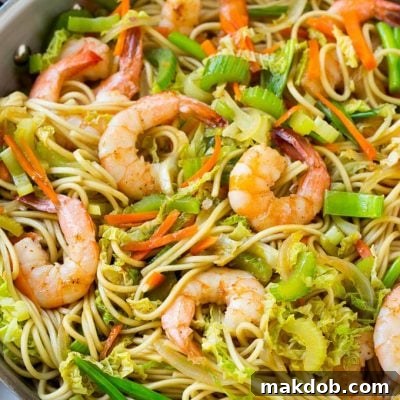
This recipe for shrimp chow mein is a quick and easy one pot meal with plenty of stir fried shrimp and vegetables tossed with noodles and a simple sauce.
Prep Time: 10 minutes
Cook Time: 20 minutes
Total Time: 30 minutes
Course: Main
Cuisine: Asian
Serves: 4
Ingredients
- 1 tablespoon of vegetable oil
- 1 pound of peeled and deveined shrimp
- 2 packages of refrigerated yakisoba noodles (approximately 11 ounces total)
- 1/4 cup of sliced green onion tops (only the dark green part)
- 1/2 cup julienned carrots
- 1/2 cup thinly sliced white or yellow onion
- 1/4 cup thinly sliced celery
- 1 cup shredded green cabbage
- 1/4 cup of soy sauce
- 1 tablespoon of honey
- 2 teaspoons minced fresh ginger
- 1 teaspoon minced fresh garlic
- 2 teaspoons of toasted sesame oil
- salt and pepper to taste
Instructions
- Heat half of the oil in a large pan over high heat. Add the white onion and cook for 3 minutes or until onion has started to brown and soften.
- Add the carrots and celery, cook for 3-4 minutes until vegetables have started to soften. Add the cabbage along with 2 tablespoon of water. Cook, stirring constantly, until cabbage is wilted and cooked through, about 2-3 minutes. Season the vegetables with salt and pepper to taste.
- Remove the vegetables from the pan and plate onto a plate.
- Heat up the remaining oil in the pan and add the shrimp. Season the shrimp with salt and pepper to taste. Cook for 2-3 minutes per side or until pink and opaque.
- Add the vegetables back into the pan with the shrimp.
- Remove the packets of yakisoba noodles from their package and run under hot water until you’re able to break up the noodles, 1-2 minutes. Add the noodles to the pan with the shrimp and vegetables.
- In a small bowl mix together the soy sauce, honey, ginger, garlic and sesame oil.
- Pour the sauce over the noodle mixture, tossing to coat evenly. Add the green onions and cook for 1-2 minutes more.
- Serve immediately.
Nutrition
Calories: 210kcal | Carbohydrates: 10g | Protein: 25g | Fat: 7g | Saturated Fat: 3g | Cholesterol: 285mg | Fiber: 1g | Sugar: 7g
Did you make this recipe? Tag @dinneratthezoo on Instagram and hashtag it #dinneratthezoo
This post was originally published on February 18, 2016, and has been comprehensively updated on [Insert Current Date – e.g., October 26, 2023] with fresh content, enhanced SEO, and new insights to help you master this delicious one-pot meal.