
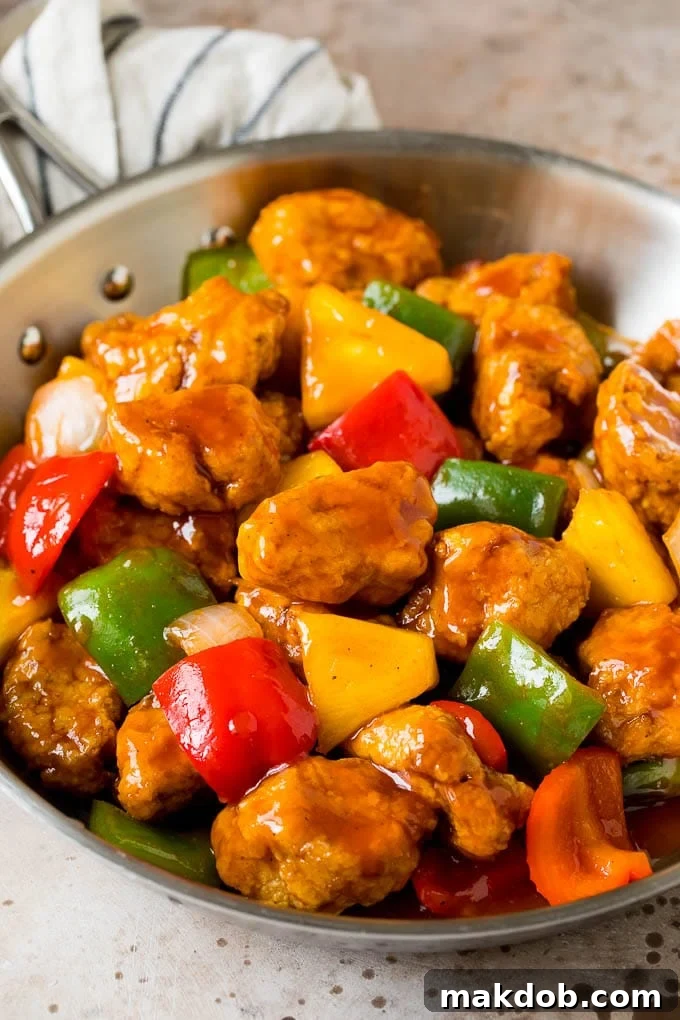
Welcome to the ultimate guide for crafting the most exquisite Sweet and Sour Pork right in your own kitchen! Forget waiting for takeout; this recipe features succulent chunks of pork tenderloin, perfectly breaded and fried to a golden crisp, then generously coated in a vibrant, homemade sweet and sour sauce alongside juicy pineapple and fresh, colorful vegetables. It’s a classic Chinese stir-fry dish, elevated to a restaurant-quality experience that’s truly unforgettable.
There’s immense satisfaction in recreating beloved Chinese restaurant favorites at home. Beyond mastering this incredibly flavorful sweet and sour pork, I often delight my family with other homemade Asian culinary gems such as Szechuan Chicken, a robust Beef and Broccoli Stir Fry, and these wonderfully crispy sweet and sour pork bites. Each dish brings authentic flavors and the joy of a shared meal.
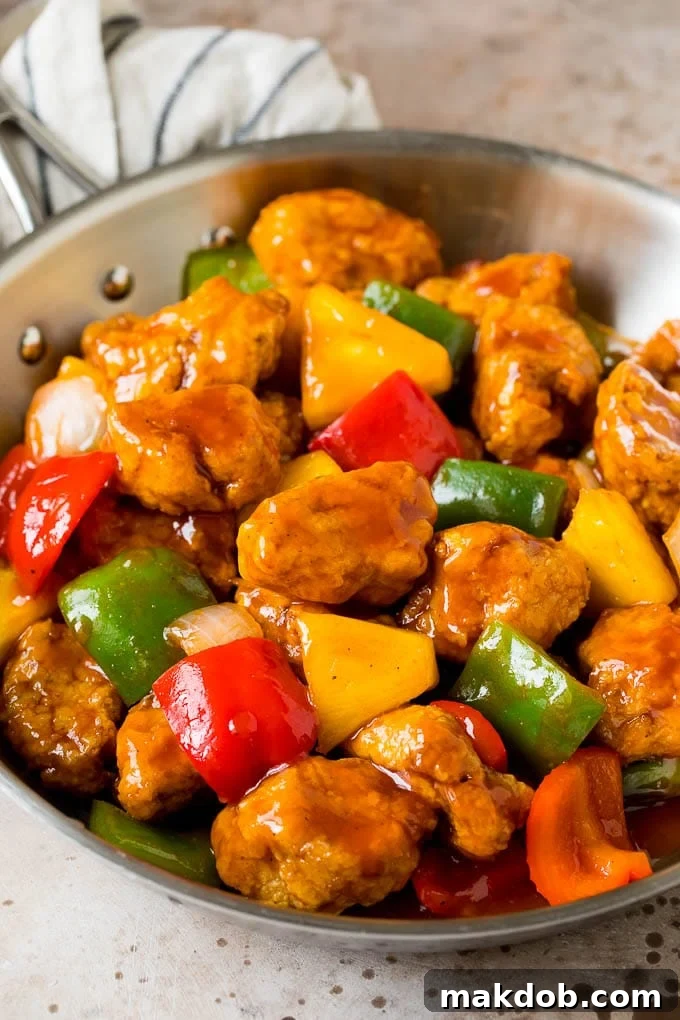
The allure of sweet and sour pork is undeniable. That irresistible combination of tender, crispy meat enveloped in a luscious sauce – simultaneously sweet, savory, and tangy – is what keeps me coming back to my local Chinese restaurant again and again. However, I’ve discovered the secret to replicating this exquisite dish at home, and to my pleasant surprise, it’s far simpler than one might imagine. With a little preparation and the right techniques, you can enjoy this culinary delight anytime.
For those planning an elaborate Chinese dinner, this crispy sweet and sour pork serves as a spectacular centerpiece. It pairs beautifully with a variety of side dishes, enhancing the overall dining experience. Consider serving it alongside a hearty Pork Fried Rice for a satisfying meal, or perhaps a unique Spam Fried Rice for an interesting twist. For a lighter yet equally flavorful option, vibrant Sesame Noodles make an excellent accompaniment. The versatility of this dish means there are endless delicious pairings to explore.
Table of Contents
- Essential Sweet and Sour Pork Ingredients
- Step-by-Step Guide: How to Make Sweet and Sour Pork
- Expert Tips for the Perfect Crispy Pork
- Quick Frying Tip
- Sweet and Sour Pork Recipe FAQs
- Delicious Flavor Variations & Substitutions
- More Asian Food Favorites to Try
- Sweet and Sour Pork Video Tutorial
- Love This Recipe? Leave a Rating!
- Full Sweet and Sour Pork Recipe Card
Essential Sweet and Sour Pork Ingredients
Creating truly outstanding homemade sweet and sour pork starts with selecting the right ingredients. For the crispy pork and vibrant stir-fry, you will need: premium pork tenderloin (the lean choice for tender bites), fresh eggs for the breading, all-purpose flour and cornstarch for that perfect crispy coating, vegetable oil for frying, aromatic onion, colorful bell peppers (green and red are traditional and add visual appeal), and sweet pineapple chunks (either fresh or canned). Don’t forget a pinch of salt and pepper to season the pork. For the signature sweet and sour sauce, gather granulated sugar, apple cider vinegar (for that essential tang), soy sauce (for umami depth), garlic powder, onion powder, ketchup (contributing to both color and sweetness), and a touch more cornstarch to achieve that perfect glossy, thick consistency. Each ingredient plays a crucial role in developing the complex flavors and textures of this classic dish.
Step-by-Step Guide: How to Make Sweet and Sour Pork
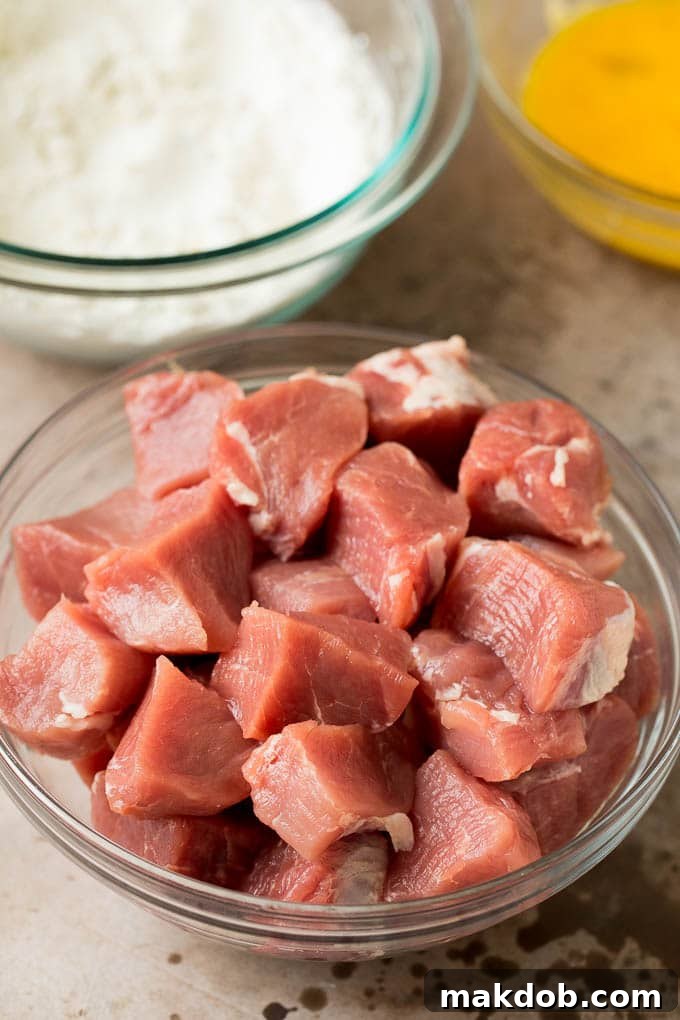
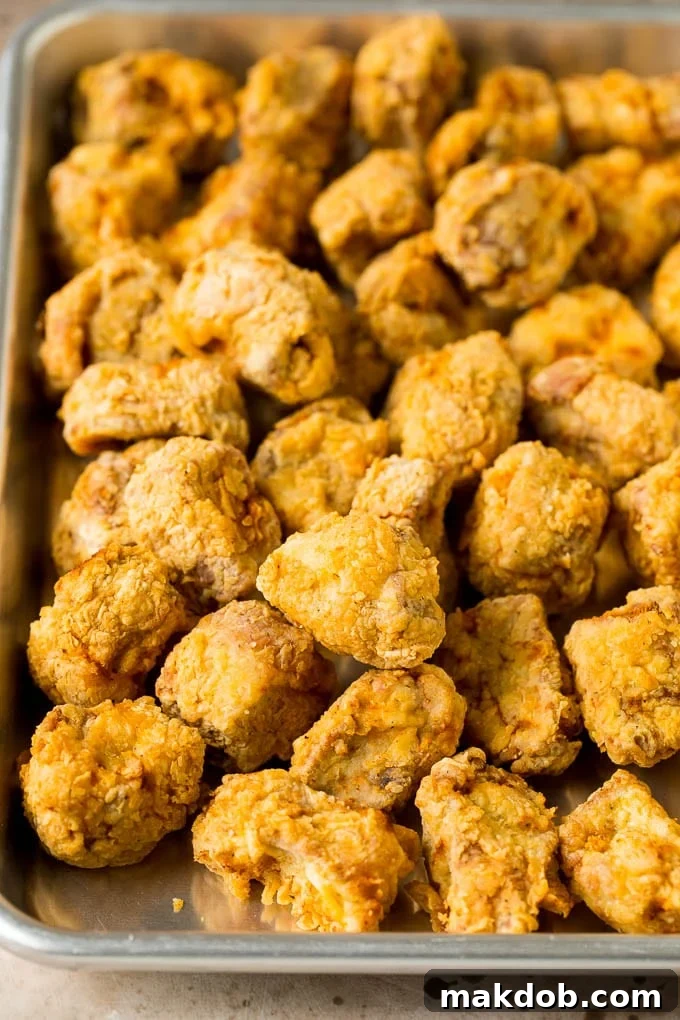
Crafting delicious sweet and sour pork is a rewarding culinary journey that yields impressive results. Begin by preparing your pork: cut the pork tenderloin into uniform, bite-sized pieces, ensuring even cooking. Next, create a simple breading station. First, dip each piece of pork thoroughly into beaten eggs, seasoned lightly with salt and pepper. Following this, dredge the pork in a seasoned blend of cornstarch and all-purpose flour, pressing gently to ensure a good coating. This dual-layer breading is key to achieving that desirable crispiness. Now, it’s time to fry. Carefully deep-fry the coated pork pieces in hot vegetable oil until they are beautifully golden brown and delightfully crispy. Work in batches to avoid overcrowding the pan, which can lower the oil temperature and result in soggy pork.
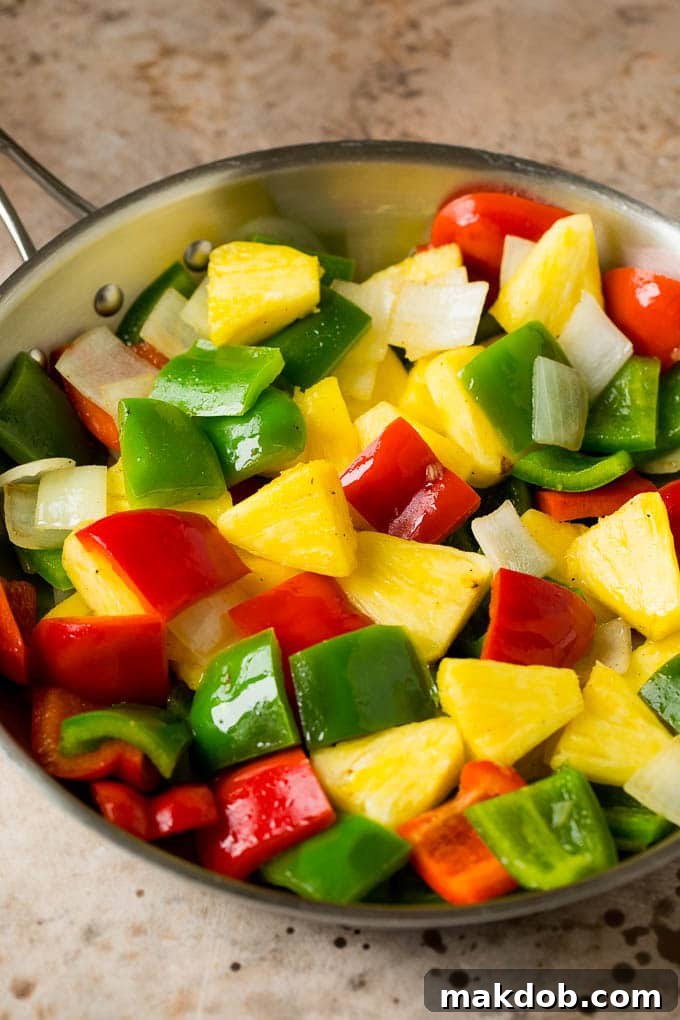
While your crispy pork is being prepared, turn your attention to the vibrant vegetables and luscious sauce. In a separate pan, sauté the chopped bell peppers, onions, and pineapple chunks until they are just tender-crisp. Meanwhile, in a small bowl, whisk together all the sauce ingredients – sugar, apple cider vinegar, soy sauce, garlic powder, onion powder, ketchup, and cornstarch – until smooth. Pour this flavorful sauce mixture over the sautéed vegetables and pineapple, bringing it to a gentle simmer. Cook for a few minutes, stirring constantly, until the sauce thickens and achieves a glossy, irresistible sheen. Finally, introduce the freshly fried crispy pork back into the pan with the thickened sauce and vegetables. Toss everything together until each piece of pork and every vegetable is thoroughly coated in the rich, sweet, and tangy sauce. Serve this magnificent dish immediately over a bed of fluffy steamed rice, and prepare to savor every single bite!
Expert Tips for the Perfect Crispy Sweet and Sour Pork
Achieving restaurant-quality sweet and sour pork at home is all about a few key techniques. Follow these expert tips to ensure your dish is nothing short of perfect:
- **Achieve Uniform Cuts:** For easier and more evenly sized pieces of pork, place your pork tenderloin in the freezer for approximately 20-30 minutes before cutting. This firms up the meat, making it much simpler to slice into consistent 1-inch cubes. Uniform pieces cook at the same rate, preventing some from being overcooked while others are underdone.
- **Pineapple Perfection:** While canned pineapple chunks are convenient and work perfectly well in this dish, I personally prefer using freshly cut pineapple. Fresh pineapple offers a brighter, more vibrant flavor and a slightly firmer texture that holds up beautifully in the stir-fry. Choose what best suits your preference and availability.
- **Serve Immediately for Optimal Crispiness:** The true magic of this dish lies in the contrast between the crispy pork coating and the luscious sauce. For the absolute best texture, sweet and sour pork is best when served immediately after tossing with the sauce. As the pork sits, its crispy coating will inevitably begin to absorb the sauce and soften. While still delicious, the texture won’t be as crisp as when freshly made.
- **Healthier Alternative: Pan-Searing:** If you’re conscious about calories and looking for a lighter version without deep-frying, you can definitely pan-sear the pork. Instead of deep-frying, use just 2-3 tablespoons of oil in a large skillet or wok over medium-high heat. Cook the breaded pork until golden brown and cooked through. While the pork may not achieve the same intense crispiness as deep-fried, it will still be incredibly flavorful and a delicious alternative.
- **Wok Wisdom:** For stir-frying the vegetables, a wok is an excellent tool as it provides high, even heat and a wide surface for tossing. However, a large, heavy-bottomed skillet works just as effectively. Ensure your pan is hot enough before adding vegetables to get a good sear.
- **Mastering the Batter:** The consistency of your flour and cornstarch dredge is important. Make sure it adheres well to the egg-coated pork. If it seems too thin, you can add a tiny bit more cornstarch.
Quick Frying Tip: The Importance of Oil Temperature
When deep-frying, it is absolutely crucial to use a frying thermometer to accurately monitor the temperature of your oil. This simple tool can make all the difference. If the oil is too hot, the exterior of the pork will burn quickly before the meat inside has a chance to cook thoroughly, resulting in an unpleasant texture and taste. Conversely, if the oil is too cold, the breading on the pork will absorb excessive oil, leading to greasy, heavy, and soggy pieces of meat. Aim for a consistent temperature around 350-375°F (175-190°C) for perfect golden, crispy results.
Sweet and Sour Pork Recipe FAQs
The vibrant red hue commonly seen in many restaurant-style sweet and sour pork dishes is typically achieved by adding a few drops of red food coloring to the sauce. While my homemade recipe does not use artificial coloring, the combination of ingredients like ketchup and soy sauce naturally gives the sauce a beautiful reddish-orange tint. If you prefer that iconic bright red appearance, you are absolutely welcome to add 1-2 drops of liquid red food coloring when you are preparing the sauce.
The name “sweet and sour pork” perfectly describes the exquisite balance of flavors found in this classic Chinese dish. The “sweet” element comes from ingredients like granulated sugar and ketchup, which provide a delightful richness. The “sour” component is primarily derived from apple cider vinegar, which lends a tangy, piquant counterpoint. This harmonious interplay of sweet and sour creates a complex and incredibly addictive flavor profile that defines the dish.
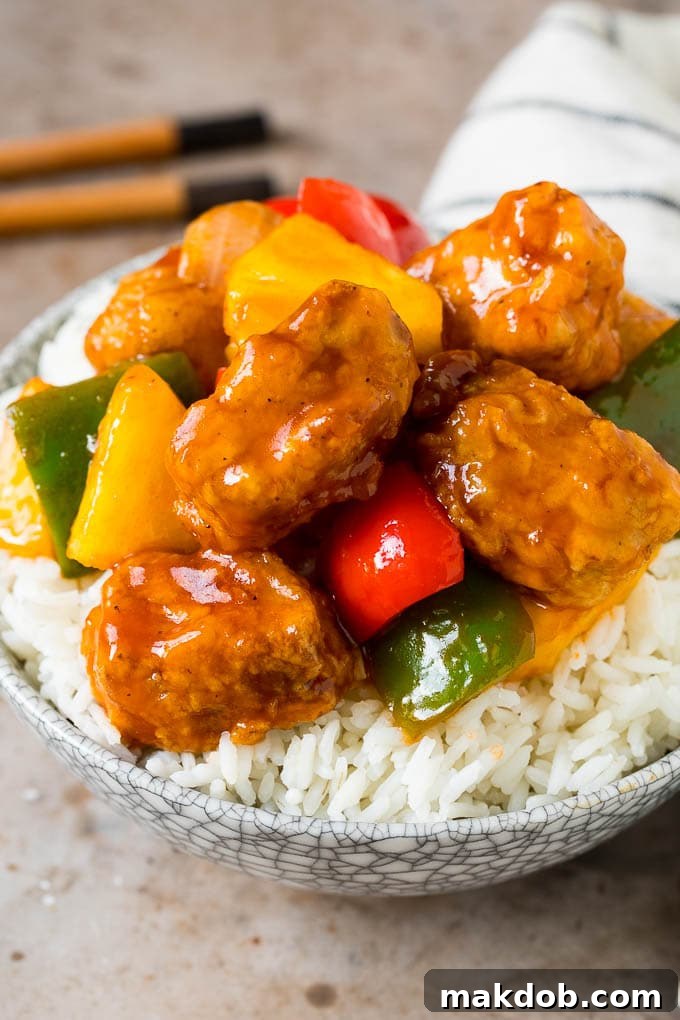
Sweet and sour pork offers a wonderful symphony of textures and tastes. You’ll experience bites of delightfully crispy pork, which provide a satisfying crunch that contrasts beautifully with the tender-crisp cooked bell peppers and onions. The sweet pineapple chunks add a burst of tropical sweetness and juiciness. All these elements are unified by the rich, glossy red sauce – sweet and tangy with a hint of savory depth. It’s an explosion of deliciousness that engages all your senses!
While the pork is best served immediately to retain its crispiness, you can certainly prepare some components ahead of time. The sauce can be made 1-2 days in advance and stored in an airtight container in the refrigerator. You can also chop all your vegetables and pineapple ahead of time. Fry the pork and combine with the sauce and vegetables just before serving for optimal results.
Store any leftover sweet and sour pork in an airtight container in the refrigerator for up to 3 days. When reheating, be aware that the pork will lose some of its crispiness. For best results, reheat in a skillet over medium heat, stirring occasionally, until warmed through. You can also use a microwave, but the texture won’t be as good. If you have an air fryer, reheating the pork separately in it for a few minutes can help restore some crispiness before combining it with the sauce and vegetables.
Follow me for more delicious recipes!
Delicious Flavor Variations & Substitutions
While this sweet and sour pork recipe is absolutely fantastic as written, it’s also incredibly versatile. Feel free to unleash your culinary creativity and customize the ingredients to perfectly suit your taste preferences and what you have on hand. Here are some exciting variations to try:
- **Alternative Proteins:** Instead of pork tenderloin, you can easily substitute pork shoulder for a richer flavor and slightly different texture. For those who prefer other meats, explore my equally delicious Sweet and Sour Chicken recipe, or for a seafood twist, try my Sweet and Sour Shrimp. Each offers a unique take on the classic sweet and sour profile.
- **Expanded Vegetable Medley:** Don’t limit yourself to just bell peppers and onions! This dish welcomes a variety of fresh vegetables. Consider adding crunchy water chestnuts, earthy sliced mushrooms, sweet baby corn, crisp snap peas, or thinly sliced carrots for extra texture, flavor, and nutritional value. Add harder vegetables earlier in the cooking process to ensure they soften adequately.
- **Garnishes and Toppings:** Elevate the presentation and add an extra layer of flavor with simple toppings. A sprinkle of toasted sesame seeds adds a nutty crunch, a handful of thinly sliced green onions provides a fresh, pungent bite, and a dash of crushed red chili flakes can introduce a subtle heat for those who enjoy a bit of spice.
- **Sauce Flavor Enhancements:** To create a sweeter sauce, consider adding a tablespoon of pineapple juice. You can easily use the juices drained from canned pineapple, or if using fresh, a quick pulse in a blender or juicer will yield enough. For a more complex, zesty flavor, incorporate some freshly minced ginger or a splash of rice vinegar in addition to the apple cider vinegar.
- **Dedicated Dipping Sauce:** If you’re specifically looking for a versatile sweet and sour sauce ideal for dipping appetizers like crispy egg rolls or savory wontons, be sure to try my dedicated recipe for luscious Homemade Sweet and Sour Sauce. It’s a fantastic staple to have on hand for various culinary uses.
Embrace the joy of cooking at home tonight. Skip the uncertainty of takeout and create your very own, incredibly flavorful sweet and sour pork. You absolutely won’t regret the effort; the taste of this homemade classic is truly unmatched!
More Asian Food Favorites to Try
If you loved this sweet and sour pork, you’re in for a treat! Explore more of our beloved Asian-inspired recipes that are perfect for weeknight dinners or special occasions. Each recipe is designed to bring authentic flavors and simple preparation to your home kitchen.
Homemade Potstickers Recipe
45 mins
Classic Chicken Fried Rice
30 mins
Easy Fried Wonton Recipe
1 hr
Sweet Honey Chicken
45 mins
Hearty Beef Chow Mein
35 mins
Sweet and Sour Pork Video Tutorial
Love This Recipe? Leave a Rating!
We sincerely hope you enjoy making and savoring this incredible homemade sweet and sour pork! If you tried this recipe and loved it as much as we do, please consider leaving a 5-star 🌟🌟🌟🌟🌟 rating in the recipe card below. Your feedback helps other home cooks discover and enjoy this delicious dish. Don’t forget to share your thoughts and experiences in the comments section further down the page!
Sweet and Sour Pork
Pin
SaveSaved

Time
Ingredients
For the Crispy Pork and Stir Fry
- 1 1/2 pounds pork tenderloin cut into 1-inch pieces
- 2 large eggs beaten
- Salt and freshly ground black pepper to taste
- 1/2 cup all-purpose flour
- 1/2 cup cornstarch
- 2 teaspoons vegetable oil plus 3-4 cups for deep frying
- 1/2 cup yellow onion cut into 1-inch pieces
- 1 medium green bell pepper cut into 1-inch pieces
- 1 medium red bell pepper cut into 1-inch pieces
- 3/4 cup pineapple chunks fresh or canned, drained if canned
For the Homemade Sweet and Sour Sauce
- 1/2 cup granulated sugar
- 1/3 cup apple cider vinegar
- 2 tablespoons soy sauce
- 1/4 teaspoon garlic powder
- 1/4 teaspoon onion powder
- 1/3 cup ketchup
- 1 tablespoon cornstarch
Instructions
Prepare the Crispy Pork
-
In a medium bowl, lightly beat the two eggs and season with a pinch of salt and pepper. Set aside.
-
In a separate shallow bowl or on a plate, whisk together the 1/2 cup all-purpose flour and 1/2 cup cornstarch. Season this mixture with a dash of salt and pepper for enhanced flavor.
-
Pour 3-4 inches of vegetable oil into a deep, heavy-bottomed pot or Dutch oven. Heat the oil over medium-high heat until it reaches a temperature of 350-375°F (175-190°C), using a frying thermometer to ensure accuracy.
-
Working in batches, dip each piece of pork tenderloin into the beaten egg, allowing any excess to drip off. Then, transfer the pork to the flour and cornstarch mixture, ensuring each piece is fully coated. Gently shake off any excess flour mixture.
-
Carefully place 7-8 breaded pork pieces into the hot oil. Fry for about 5 minutes, or until the pork is beautifully golden brown and thoroughly cooked through. Using a slotted spoon or spider, remove the fried pork and place it on a wire rack set over paper towels to drain excess oil. Repeat this process until all pork pieces are fried.
Cook the Vegetables and Sauce
-
While the pork is frying, heat the 2 teaspoons of vegetable oil in a large skillet or wok over medium-high heat. Add the chopped bell peppers and onion to the pan. Season lightly with salt and pepper to taste.
-
Sauté the vegetables for 4-5 minutes, or until they are just tender-crisp. Stir in the pineapple chunks and cook for another minute. Remove from heat briefly.
-
In a small bowl, thoroughly whisk together the 1/2 cup granulated sugar, 1/3 cup apple cider vinegar, 2 tablespoons soy sauce, 1/4 teaspoon garlic powder, 1/4 teaspoon onion powder, 1/3 cup ketchup, and 1 tablespoon cornstarch until smooth and no lumps remain.
-
Return the skillet with the vegetables and pineapple to medium-high heat. Pour the whisked sweet and sour sauce into the pan. Bring the mixture to a gentle simmer, stirring continuously. Cook for 2-3 minutes, or until the sauce has thickened to a glossy, desirable consistency.
-
Finally, add the freshly fried crispy pork pieces to the pan with the vegetables and thickened sauce. Toss everything gently to ensure all ingredients are beautifully coated in the flavorful sauce. Serve your homemade sweet and sour pork immediately over steamed white rice and enjoy!
Notes
- To make cutting the pork tenderloin into evenly sized pieces easier, place it in the freezer for about 20-30 minutes beforehand to firm it up.
- While canned pineapple chunks are convenient, using freshly cut pineapple will impart a brighter, more vibrant flavor and texture to your dish. Both options work well!
- For the best crispy texture, this sweet and sour pork is most enjoyable when served immediately after cooking, as the pork’s coating will soften over time when sitting in the sauce.
- Monitoring your oil temperature with a frying thermometer is crucial. If the oil is too hot, the pork will burn on the outside before cooking through. If it’s too cool, the breading will absorb too much oil, resulting in a greasy finish. Aim for 350-375°F (175-190°C).
- For a healthier alternative, pan-sear the breaded pork in 2 tablespoons of oil instead of deep frying. The pork will still be delicious, though less crispy.
- Don’t overcrowd the pan when frying pork or sautéing vegetables. Cook in batches to ensure even cooking and optimal crispiness/texture.