
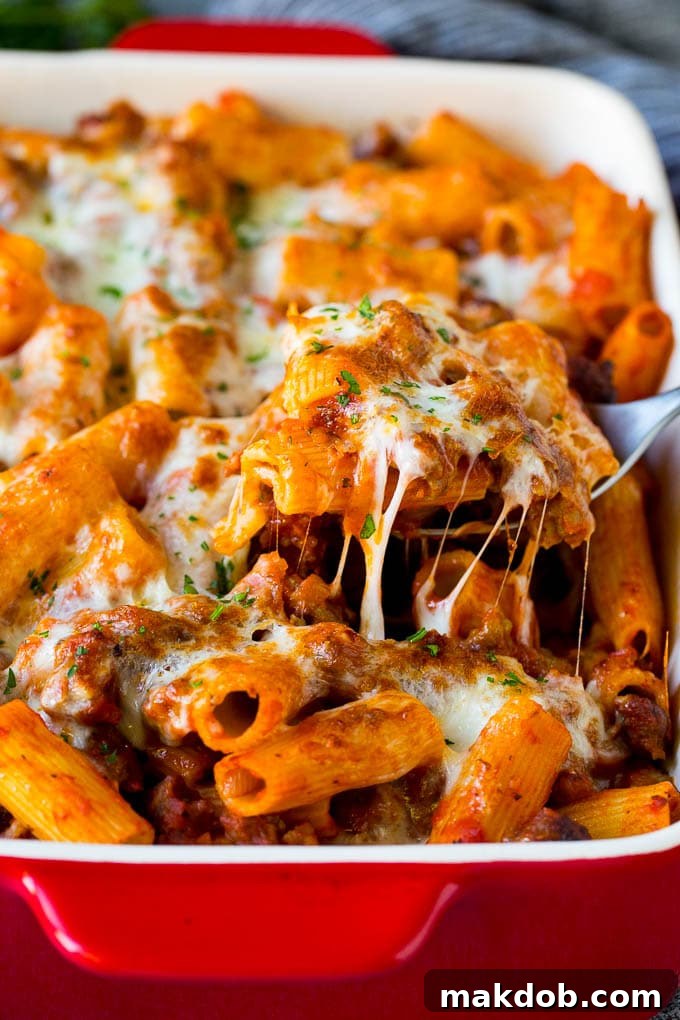
This Pasta al Forno is rigatoni pasta tossed in a savory meat sauce, then topped with plenty of cheese and baked to perfection. A hearty main course option that’s perfect for feeding a large group.
When it comes to feeding a hungry crowd or simply craving a deeply satisfying meal, few dishes compare to the timeless allure of Pasta al Forno. This Italian classic, which translates to ‘pasta from the oven,’ is a celebration of rich flavors and comforting textures, all baked into one glorious casserole. Imagine perfectly cooked rigatoni, coated in a robust, savory meat sauce, generously layered with melting cheese, and baked until bubbling golden-brown. It’s the kind of dish that brings people together, elicits smiles, and guarantees rave reviews from everyone at the table.
Beyond its incredible taste, Pasta al Forno is a marvel of practicality. It’s an ideal make-ahead meal for busy weeknights, a show-stopping centerpiece for dinner parties, and a freezer-friendly option that ensures a delicious homemade dinner is always within reach. Whether you’re a seasoned chef or a home cook looking to impress, this recipe offers a straightforward path to an authentic Italian dining experience. Forget the restaurant queues; our homemade version is brimming with authentic flavor and a hearty satisfaction that truly surpasses expectations.
For those times you’re looking to feed a large gathering, alongside this incredible Pasta al Forno, consider other hearty pasta dishes such as cheese tortellini in meat sauce, baked spaghetti, shrimp linguine, spinach lasagna, or chicken parmesan pasta. This particular pasta dish always garners rave reviews from family and friends!
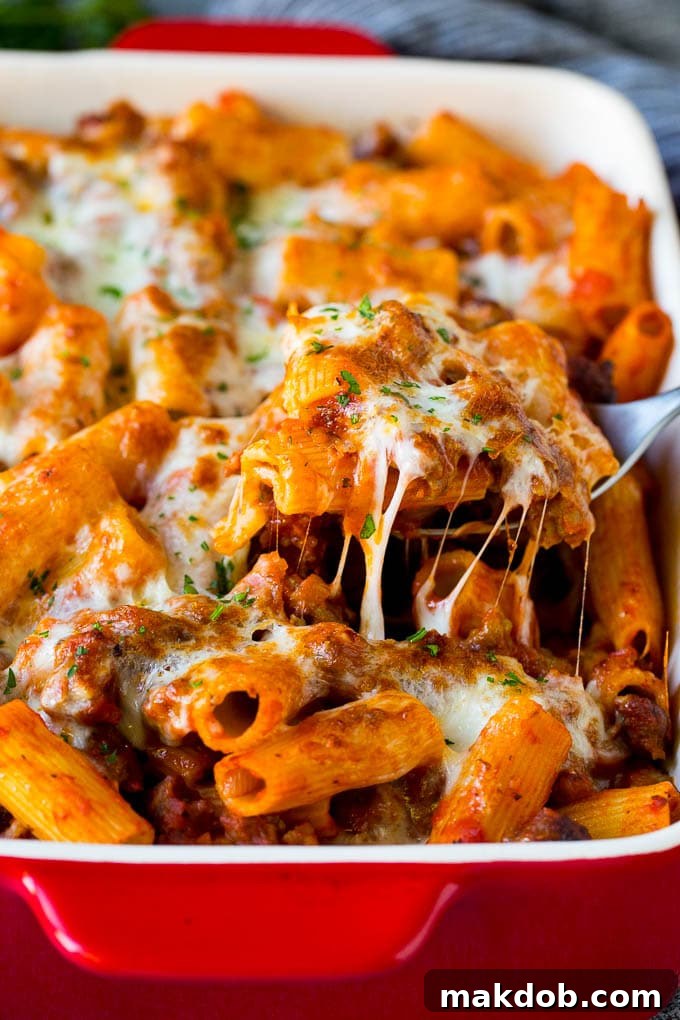
What is Al Forno Style? Exploring the Heart of Italian Baked Dishes
The term ‘Al Forno’ is an elegant Italian phrase that literally means ‘from the oven’ or ‘baked in the oven.’ This designation is reserved for dishes that undergo a transformative baking process, resulting in a unique depth of flavor and texture that cannot be achieved through stovetop cooking alone. While many cuisines feature baked dishes, the Italian tradition of ‘al forno’ holds a special place, often associated with family gatherings, Sunday lunches, and festive occasions.
In the context of pasta, ‘Pasta al Forno’ specifically refers to baked pasta dishes, typically characterized by pasta tubes or shapes enrobed in a rich sauce, often with meat or vegetables, and generously topped with cheese that melts into a golden, bubbly crust. This baking process allows the flavors to meld beautifully, creating a harmonious and incredibly satisfying meal. The magic of ‘al forno’ lies in the way the heat from the oven gently cooks the ingredients, developing complex flavors and a wonderfully gooey, cheesy top that is simply irresistible.
Historically, ‘al forno’ cooking in Italy often involved traditional wood-fired brick ovens, which imparted a distinctive smoky flavor and achieved unparalleled crusts. While most home cooks today rely on conventional ovens, the principle remains the same: indirect, sustained heat brings out the best in ingredients, particularly in dishes like pizzas, lasagnas, cannelloni, and various types of bread such as focaccia. This method ensures uniform cooking, allows cheese to bubble and brown without burning, and creates that delightful crispy-chewy texture contrast that is a hallmark of truly great Italian comfort food.
Crafting Your Perfect Pasta al Forno: A Detailed Guide
Creating this authentic Pasta al Forno involves a few key steps, each contributing to the dish’s irresistible charm and robust flavor. Follow this comprehensive guide to achieve baked pasta perfection:
Step 1: The Foundation – A Rich Meat Sauce
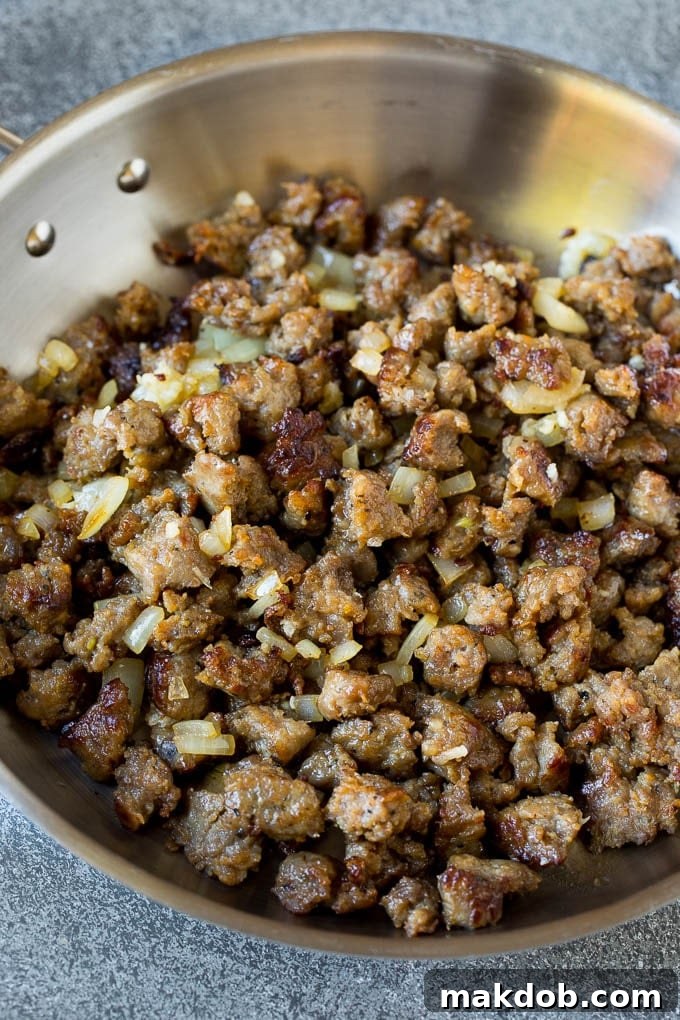
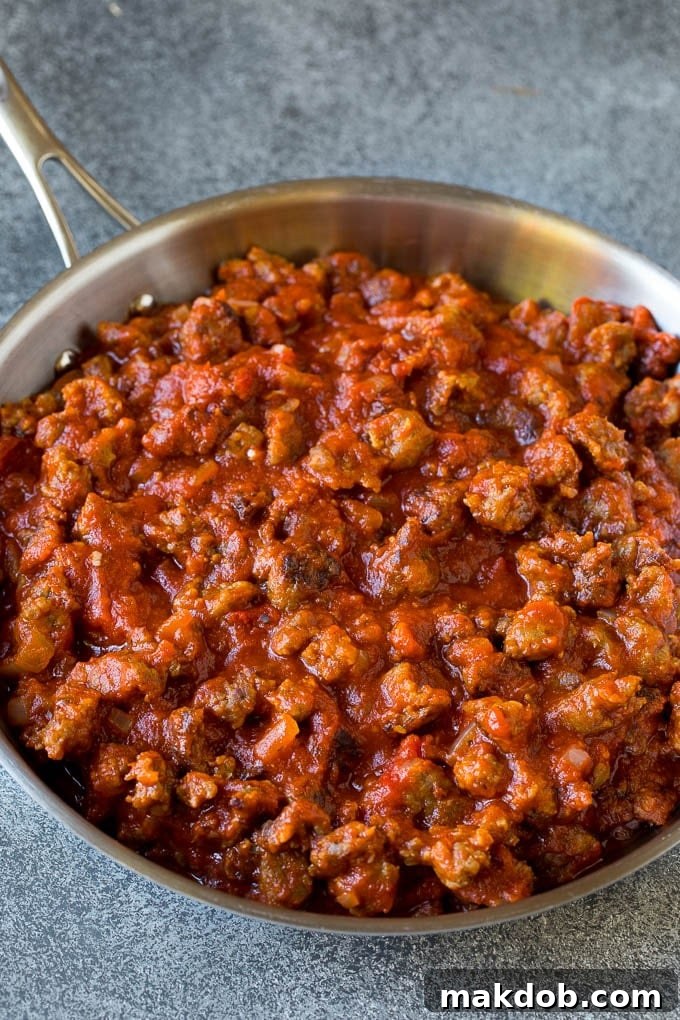
The heart of any great Pasta al Forno is its sauce. Begin by heating olive oil in a large, heavy-bottomed pan or Dutch oven over medium-high heat. Add your mild Italian sausage, ensuring the casings are removed. Break the sausage into small, crumbled pieces with a spoon as it cooks. Brown the sausage for about 3-4 minutes. Next, add the finely chopped onion to the pan, stirring it into the sausage mixture. Continue to cook for an additional 5 minutes, or until the sausage is thoroughly browned and cooked through, and the onion has softened and turned translucent. This crucial step renders the sausage fat and infuses the aromatics with incredible flavor. Finally, stir in the minced garlic and cook for just 30 seconds until fragrant; be careful not to burn it. Pour in the marinara sauce and tomato sauce, stirring to combine all ingredients. Bring the sauce to a gentle simmer and let it cook for at least 5 minutes, allowing the flavors to meld and the sauce to thicken slightly. This simmering time is vital for developing depth of flavor.
Step 2: The Pasta – Achieving Al Dente Perfection
While your sauce is simmering, bring a large pot of generously salted water to a rolling boil. Add 16 ounces of rigatoni or your chosen short pasta. Cook the pasta according to the package directions, but aim for an al dente texture – typically 1-2 minutes less than the suggested cooking time. Remember, the pasta will continue to cook and absorb moisture in the oven, so slightly undercooking it now prevents it from becoming mushy later. A generous amount of salt in the boiling water also ensures the pasta itself is seasoned from within, elevating the overall taste of the dish. Once al dente, drain the pasta thoroughly, but do not rinse it; the starch helps the sauce cling better.
Step 3: Bringing It All Together – The Assembly
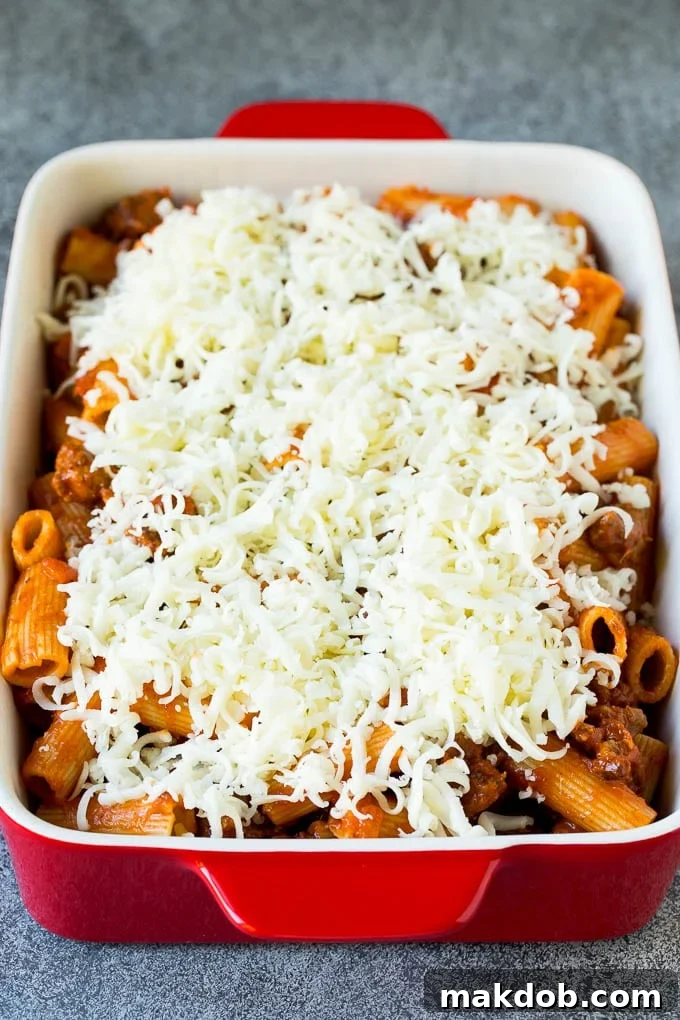
Preheat your oven to 350 degrees F (175 degrees C). Lightly coat a 9″x13″ baking pan with cooking spray to prevent sticking. In a large bowl, or directly in the pan if it’s large enough, gently toss the al dente cooked pasta with the simmering meat sauce until every piece of pasta is thoroughly coated. This ensures an even distribution of flavor in every bite. Pour the combined pasta and sauce mixture into your prepared baking pan, spreading it out evenly. Finally, generously top the entire dish with 2 cups of freshly shredded mozzarella cheese. This layer will melt into a golden, bubbly crust during baking.
Step 4: Baking to Golden Perfection
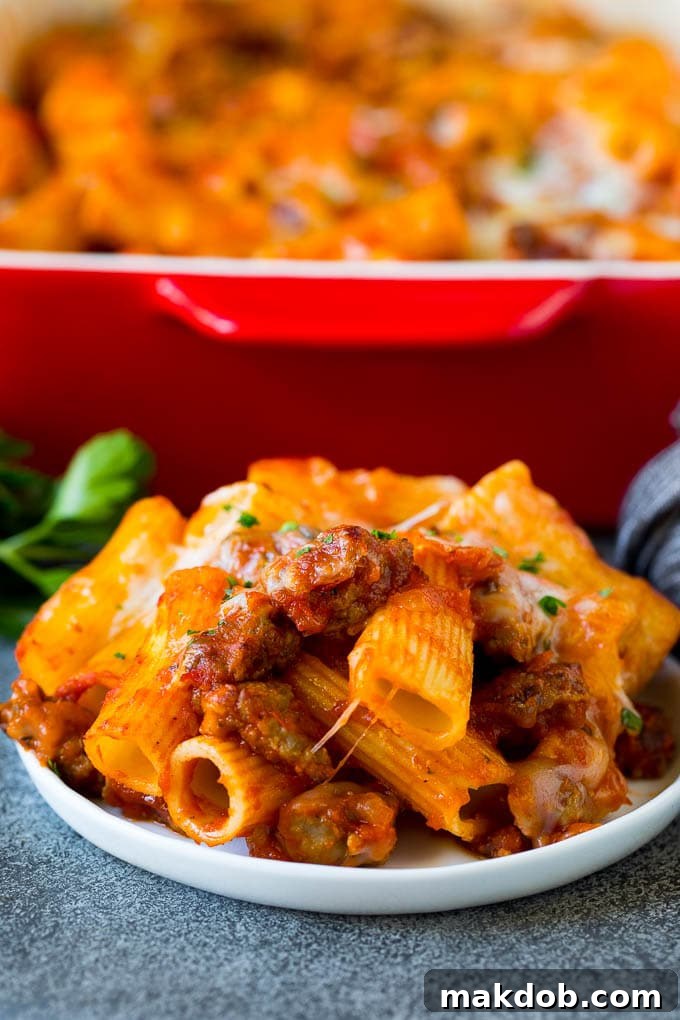
Cover the baking dish tightly with aluminum foil and bake for 20 minutes. This initial covered baking period allows the pasta to heat through and continue to absorb the sauce without the cheese browning too quickly. After 20 minutes, remove the foil and return the dish to the oven. Continue to bake for another 15-20 minutes, or until the pasta is bubbling around the edges and the mozzarella cheese on top is melted, golden brown, and delightfully bubbly. Once out of the oven, sprinkle the top with 2 tablespoons of freshly chopped parsley for a burst of color and freshness. Allow the Pasta al Forno to stand for 5 minutes before serving. This resting period allows the sauce and cheese to set slightly, making for easier and cleaner servings. Serve warm and enjoy your masterpiece!
Expert Tips for Pasta al Forno Perfection
To ensure your Pasta al Forno is consistently delicious and a true crowd-pleaser, keep these expert tips in mind:
- Choose Your Pasta Wisely: While rigatoni with its wide, ridged tubes is ideal for capturing thick sauces, this dish is versatile. Any short, sturdy pasta shape will work beautifully, such as penne, ziti, rotini, or fusilli. The key is to select a pasta that can withstand baking without becoming mushy and provides ample surface area for the sauce to cling.
- The Cheese Factor: Grate Your Own! This is perhaps the most impactful tip for achieving that perfect, gooey, stretchy cheese pull. Skip the convenience of pre-shredded bagged mozzarella. These often contain cellulose or other anti-caking agents that hinder smooth melting and can leave a grainy texture. Take a few extra minutes to grate a block of whole-milk mozzarella yourself. The difference in melt, flavor, and overall luxuriousness will be truly superior.
- Make-Ahead Mastery: Pasta al Forno is an ideal dish for meal preparation or entertaining. You can fully assemble this casserole, right up to the point of adding the cheese, up to 8 hours before you plan to bake it. Simply cover it tightly with aluminum foil and refrigerate. When it’s time to bake, you may need to add an extra 10-15 minutes to the initial covered baking time to ensure it heats through completely from a cold start. This flexibility makes it perfect for busy schedules and stress-free hosting.
- Storing and Reheating Leftovers: Don’t fret about having too much! Leftover Pasta al Forno is often just as good, if not better, the next day. Store any remaining portions in an airtight container in the refrigerator for up to 3 days. To reheat a large portion, cover it with foil and bake at 325 degrees F (160 degrees C) until warmed through. Individual servings can be quickly reheated in the microwave, though the oven method usually yields a more consistent and appealing texture.
- Sausage Selection: Our recipe features mild Italian sausage for its balanced flavor. If you crave a bit more heat, feel free to substitute with hot Italian sausage. For a leaner alternative, ground turkey or chicken sausage can also be used, though you might want to add a touch more olive oil when browning to prevent sticking and maintain moisture. The choice of sausage significantly influences the overall character of the meat sauce.
- Marinara Sauce Options: Whether you prefer the convenience of a high-quality store-bought marinara or enjoy the process of crafting your own homemade marinara sauce, both options will lead to delicious results. If using store-bought, look for brands with minimal added sugar and real, wholesome ingredients to ensure a rich and authentic taste.
- Season Your Pasta Water: Never underestimate the power of properly seasoned pasta water. It should taste like the sea. This is your only opportunity to infuse flavor directly into the pasta itself, which is crucial for the overall taste profile of the finished dish.
- Don’t Overcrowd the Pan: Ensure your baking dish isn’t overly packed. Giving the pasta and sauce a bit of room allows for even heating and ensures the cheese gets a chance to bubble and brown properly, creating that coveted golden crust.
Delicious Pasta al Forno Flavor Variations
One of the joys of Pasta al Forno is its incredible adaptability. While the classic recipe is undeniably delicious, feel free to get creative and customize it to suit your palate or whatever ingredients you have on hand. Here are some ideas to inspire your next culinary creation:
- Alternate Proteins: Expand beyond Italian sausage. Ground beef (80/20 for richness, or leaner for a lighter dish), ground turkey, or even diced cooked chicken can be wonderful substitutes. For a truly hearty option, consider adding pre-cooked, quartered meatballs to your sauce, simmering them gently to absorb all the rich flavors. Vegetarian? Consider adding lentils or a plant-based ground meat substitute for a meatless version.
- Vegetable Boosters: Sneak in extra nutrition and flavor by incorporating cooked vegetables. Sautéed spinach (wilted and squeezed dry), diced eggplant, sliced mushrooms, shredded zucchini, or colorful bell peppers can be added to the sauce along with the marinara. For a richer flavor, consider roasting the vegetables beforehand to bring out their sweetness and deepen their taste profile. Carrots and celery can also be finely diced and added to the initial sauté with onions for a classic soffritto base.
- Amplify the Flavor Profile: A handful of briny black or green olives (like Kalamata or Castelvetrano) can add a wonderful Mediterranean twist. For those who enjoy a little kick, a pinch of crushed red pepper flakes will introduce a subtle warmth to the sauce. A splash of heavy cream or mascarpone stirred into the sauce at the end can create a richer, more luxurious consistency, while a dash of red wine (such as a dry Chianti or Merlot) simmered with the meat adds complex depth to the sauce. A sprinkle of freshly grated Parmesan or Pecorino Romano cheese can also be stirred into the sauce for extra umami.
- Cheese Swaps and Layers: Mozzarella is classic, but other melting cheeses can offer different dimensions of flavor and texture. Try fontina for a nuttier, slightly pungent note, provolone for its sharp tang, or a mix of mozzarella and provolone for a balanced profile. For an extra creamy layer, you could even mix some ricotta cheese with an egg and a sprinkle of Parmesan, dolloping it over the pasta before adding the mozzarella for a delightful lasagna-like effect.
- Herb Power: While fresh parsley is a vibrant finish, consider stirring dried oregano or basil into the sauce while it simmers to deepen its Italian character. Fresh basil torn over the top after baking is also a fantastic aromatic addition that brightens the entire dish. A bay leaf added to the sauce during simmering and removed before combining with pasta can also add a subtle background note.
Can You Freeze Baked Pasta? Storage and Make-Ahead Strategies
Yes, absolutely! Pasta al Forno is an excellent candidate for freezing, making it an ideal choice for meal prepping, entertaining, or simply ensuring a delicious homemade Italian meal is always within reach for those busy days. This dish maintains its quality remarkably well in the freezer, allowing you to enjoy a comforting meal with minimal effort later.
- Freezing Unbaked: For Optimal Results
For the best texture and flavor, we highly recommend freezing Pasta al Forno before baking. Assemble the casserole completely, following all the steps up to adding the cheese layer. Tightly cover the baking dish with a layer of plastic wrap, ensuring it’s pressed against the surface of the cheese to prevent freezer burn, followed by a double layer of heavy-duty aluminum foil. Label it clearly with the date and freeze for up to 2 months. This method prevents the pasta from becoming overcooked or mushy during reheating, as it cooks for the first time in the oven when you’re ready to serve. - Baking from Frozen:
When you’re ready to enjoy your frozen Pasta al Forno, there’s no need for a lengthy thawing process. Simply remove the plastic wrap, keep the aluminum foil cover, and place the frozen casserole directly into a preheated oven at 350 degrees F (175 degrees C). You’ll need to increase the baking time significantly – typically add an extra 20-30 minutes to the initial covered baking period, or until the internal temperature reaches a safe level (around 165°F/74°C) and the sauce is bubbling. Then, remove the foil for the last 15-20 minutes to allow the cheese to melt completely, turn golden brown, and crisp beautifully. - Freezing Baked Leftovers:
If you have already baked leftovers, you can also freeze individual portions in airtight freezer-safe containers for convenient single meals. Ensure the pasta has cooled completely before freezing. Thaw overnight in the refrigerator and reheat in the oven (covered) or microwave. While still delicious, be aware that the pasta texture might be slightly softer compared to baking from frozen. - Vacuum Sealing: For longer storage and even better preservation of texture and flavor, consider portioning out unbaked or fully baked Pasta al Forno into vacuum-sealable bags before freezing. This removes air, which is a primary cause of freezer burn, extending its freezer life.
Serving Suggestions for Your Pasta al Forno
To complete your authentic Italian dining experience, serve your hearty Pasta al Forno with a few simple yet complementary accompaniments. A crisp green salad, dressed lightly with a vinaigrette, provides a refreshing contrast to the richness of the pasta. Warm, crusty garlic bread is absolutely essential for soaking up any remaining savory sauce, ensuring not a drop goes to waste. A glass of robust red wine, such as Chianti, Sangiovese, or a dry Merlot, would beautifully complement the savory meat and tomato flavors. For a non-alcoholic option, sparkling water with a lemon twist is always a good choice. This dish is designed to be the star of the meal, so keep the sides fresh and uncomplicated.
Troubleshooting Common Pasta al Forno Issues
Even seasoned cooks encounter challenges, but don’t let them deter you. Here’s how to troubleshoot common issues with your Pasta al Forno:
- Pasta is too dry: If your baked pasta turns out dry, it often means the pasta wasn’t fully coated in sauce, or it absorbed too much liquid during baking. Ensure your pasta is cooked to a firm al dente before combining with the sauce, and that the sauce is ample. You can add a splash of extra marinara or even a touch of pasta water (reserved from cooking) to the sauce before baking to increase moisture.
- Cheese isn’t melting/browning properly: The culprit here is almost always pre-shredded cheese, which contains additives that hinder smooth melting. Use freshly grated whole-milk mozzarella for the best results. Also, ensure your oven temperature is accurate and allow enough uncovered baking time at the end. For an extra golden finish, a quick broil for the last minute or two (watch very closely to prevent burning!) can achieve that perfect crust.
- Sauce is too thin/thick: If your sauce is too thin, let it simmer uncovered on the stovetop for a bit longer to allow some of the liquid to evaporate and reduce. If it’s too thick, add a little water, vegetable broth, or extra marinara sauce until it reaches your desired consistency before combining with the pasta.
- Pasta is mushy: This is typically due to overcooking the pasta before it goes into the oven. Always cook your pasta 1-2 minutes less than the package directions for an al dente result. It will continue to absorb liquid and cook to perfection in the oven, achieving that ideal tender-but-firm bite.
Once you experience the comforting aroma and incredible taste of this homemade Pasta al Forno, it’s sure to become a cherished recipe in your culinary repertoire. Its combination of rich meat sauce, perfectly baked pasta, and gooey, golden cheese creates a dish that truly embodies Italian comfort food. So, gather your ingredients, set aside some time, and prepare to delight your family and friends with this unforgettable meal. Buon appetito!
More Delicious Pasta Recipes You’ll Enjoy
- Seafood Pasta
- Pasta Puttanesca
- Cajun Shrimp Pasta
- Pasta Carbonara
- Mushroom Bacon Pasta
Authentic Pasta al Forno Recipe
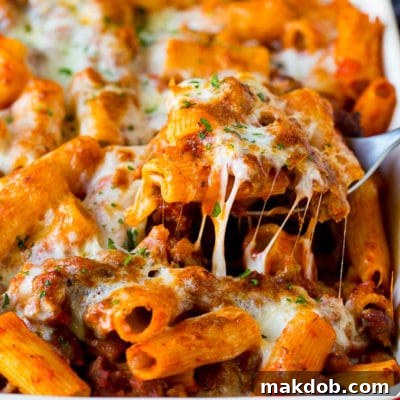
Pasta al Forno
This Pasta al Forno is rigatoni pasta tossed in a savory meat sauce, then topped with plenty of cheese and baked to perfection. A hearty main course option that’s perfect for feeding a large group.
Course: Main
Cuisine: Italian
Serves: 8
Prep Time: 20 minutes
Cook Time: 1 hour 15 minutes
Total Time: 1 hour 35 minutes
Ingredients
For the sauce
- 2 teaspoons olive oil
- 2 pounds mild Italian sausage, casings removed
- 1/2 cup onion, finely chopped
- 2 teaspoons garlic, minced
- 24 ounce jar marinara sauce
- 8 ounce can tomato sauce
For assembly
- 16 ounces rigatoni or other short pasta, cooked according to package directions in salted water
- 2 cups mozzarella cheese, shredded
- 2 tablespoons fresh parsley, chopped
- Cooking spray
Instructions
- Preheat the oven to 350 degrees F (175 degrees C). Coat a 9″x13″ pan with cooking spray.
For the sauce
- Heat the oil in a large pan over medium high heat. Add the sausage to the pan.
- Cook the sausage for 3-4 minutes, breaking it up into small pieces with a spoon. Add the onion to the pan. Cook for an additional 5 minutes or until sausage is browned and cooked through and onion is softened.
- Add the garlic and cook for 30 seconds until fragrant. Add the marinara sauce and tomato sauce to the pan and bring the sauce to a simmer.
- Let the sauce simmer for 5 minutes or until just thickened.
For assembly
- Toss the cooked pasta with the sauce, ensuring all pasta is coated.
- Pour the pasta mixture into the prepared pan and top evenly with mozzarella cheese.
- Bake covered with aluminum foil for 20 minutes. Then, uncover and bake for another 15-20 minutes or until pasta is bubbling and cheese is melted and golden brown.
- Sprinkle with fresh parsley. Let stand for 5 minutes before serving to allow the sauce and cheese to set.
Nutrition Information (per serving)
Calories: 601kcal | Carbohydrates: 51g | Protein: 35g | Fat: 27g | Saturated Fat: 13g | Cholesterol: 102mg | Sodium: 726mg | Potassium: 863mg | Fiber: 4g | Sugar: 7g | Vitamin A: 680IU | Vitamin C: 10mg | Calcium: 189mg | Iron: 4mg
Did you make this recipe? Share your creation! Tag @dinneratthezoo on Instagram and use the hashtag #dinneratthezoo.
Share on Twitter
Pin on Pinterest